
Historiska museet
Gold, picture stones and a thousand years of Swedish history under one roof
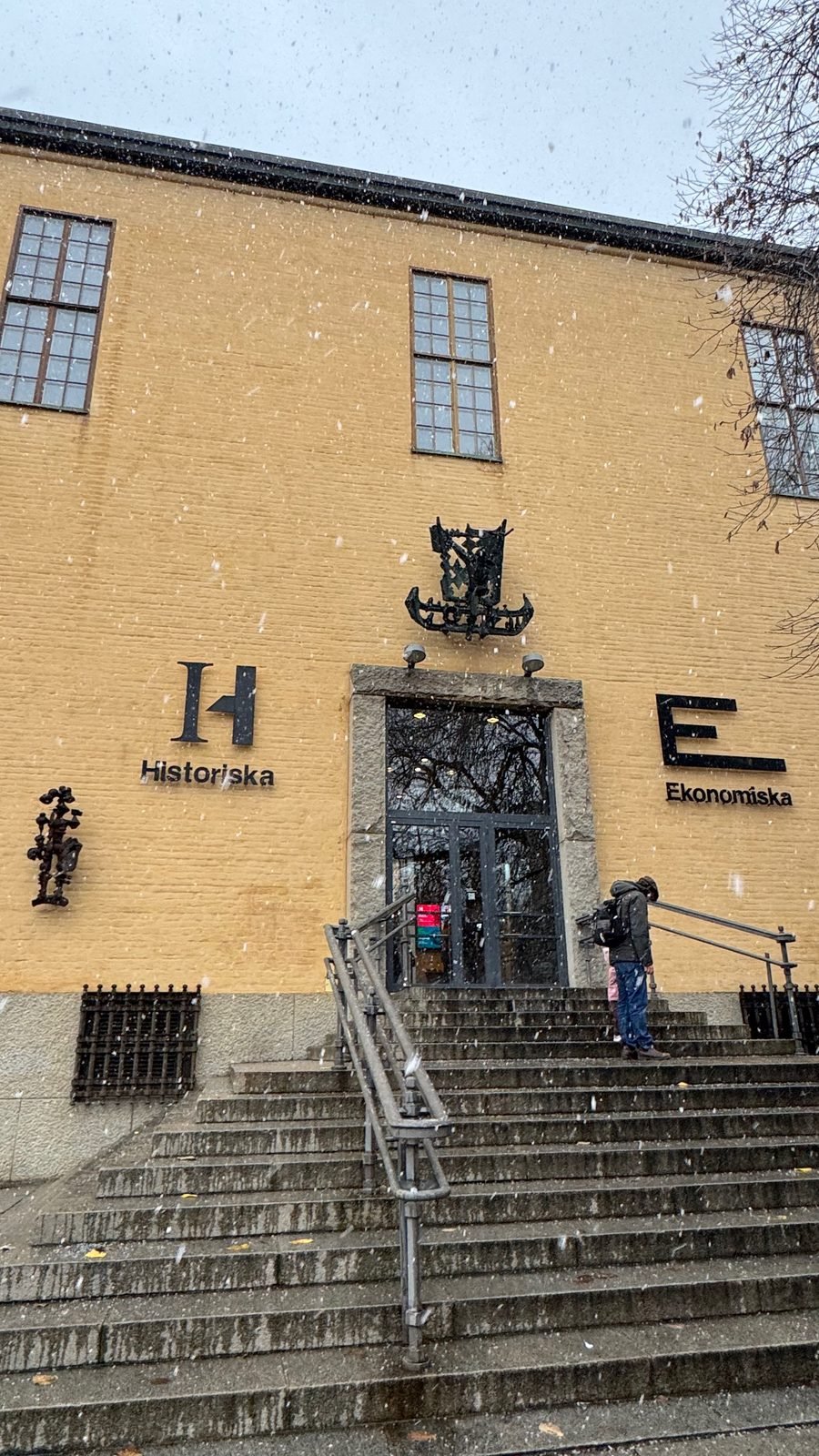
- Why visitGuldrummet, the Vendel helmet, Gotland picture stones and the history of Sweden in one building.
- Best forHistory lovers, families and first-time visitors to Stockholm.
- AddressNarvavägen 13–17, Stockholm.
- Opening hoursSeptember–May: Tuesday–Sunday 11:00–17:00, Wednesday until 20:00. Monday closed, except in school holidays. Check the museum’s website before you go.
- AdmissionAdults 180 SEK. Children and youth up to 18 years: free. The ticket also gives entry to the Economy Museum (Ekonomiska museet) in the same building.
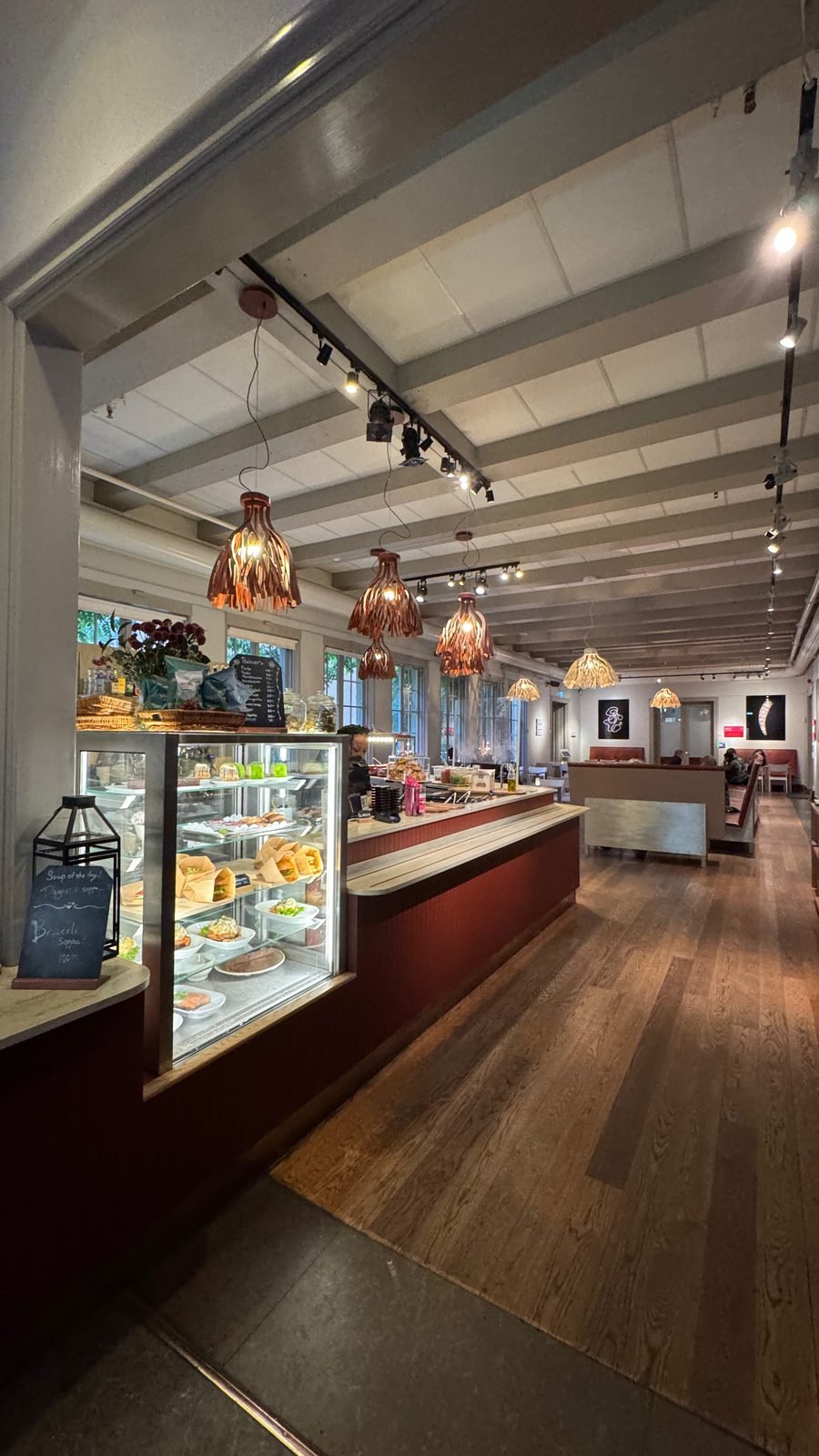
- FacilitiesRestaurant Rosengården, lockers, toilets, lecture rooms and a museum shop.
- AccessibilityStairs and lifts, toilets on every floor, lockers.
- Official websitehistoriska.se
A huge building on two floors
Historiska museet is a huge building. It has two floors and a basement.
The ground floor has the entrance, the restaurant, lecture rooms, toilets and lockers. Vikingarnas värld, the Viking exhibition, is on the ground floor too. So is the way down to the basement, where Guldrummet, the Gold Room, is.
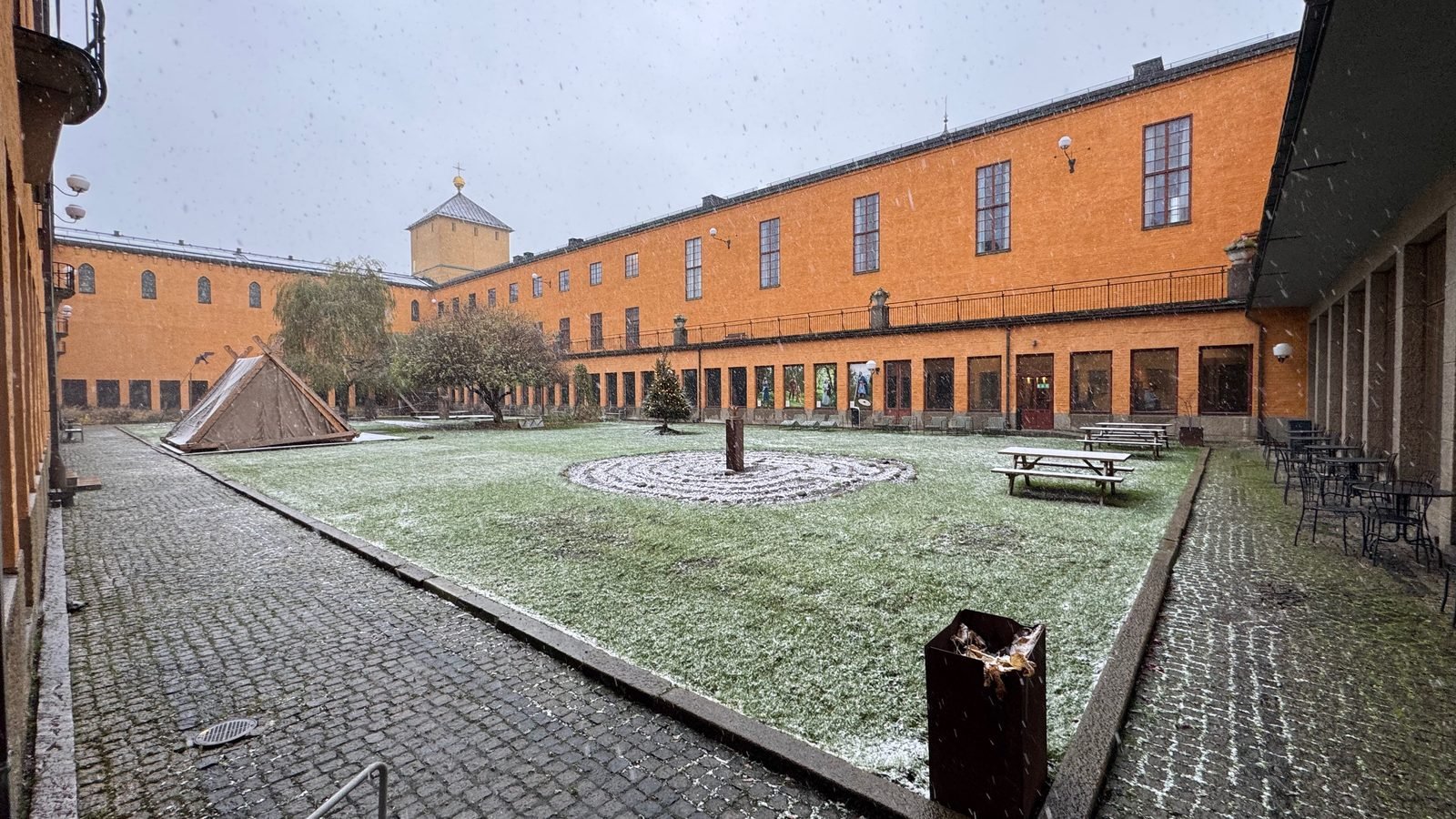
On the first day of snow in Stockholm, I walked across the inner courtyard. It is probably really beautiful in summer.
The Vendel helmet and the boat graves
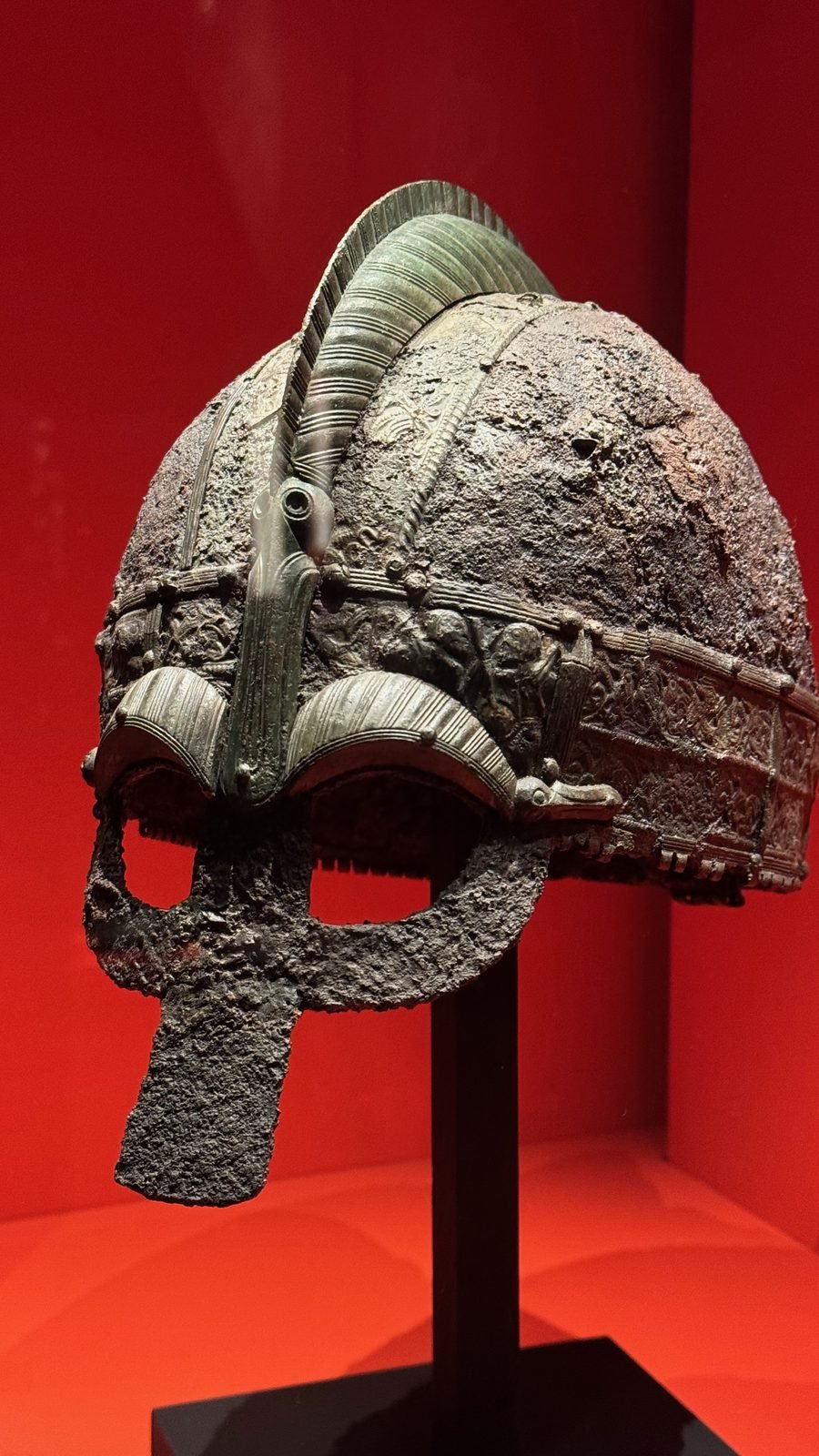
In some places in Uppland, families buried one man from each generation in a rich grave with a boat. The boats were not burned, so they are well preserved. One of the richest grave fields is in Vendel.
The helmet from Vendel grave 12 is iron and bronze. It is from 550–650 AD. It has a crest, eyebrow guards and a face guard. Stand in front of it for a minute.
Picture stones from Gotland
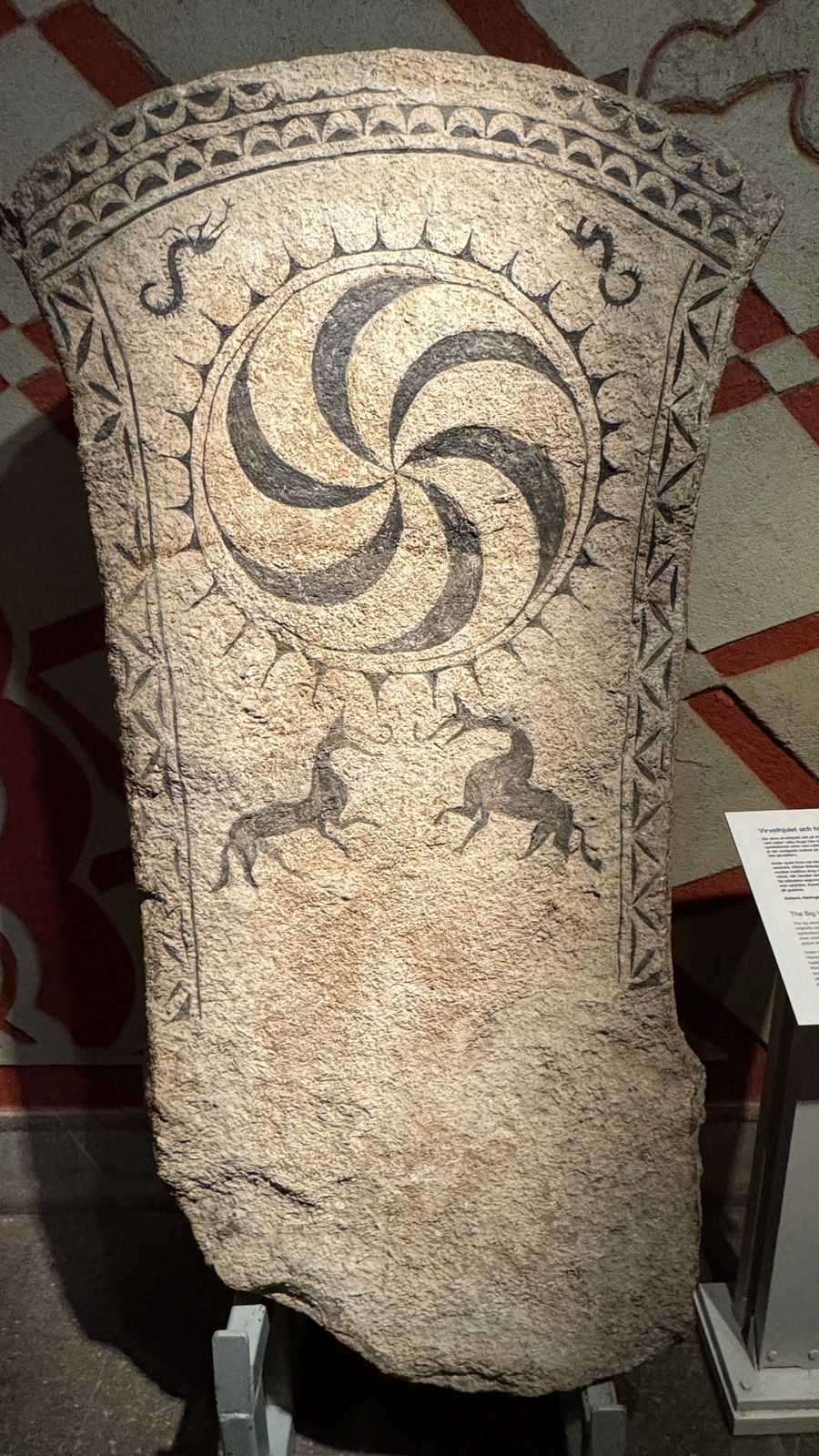
The picture stones are tall limestone slabs from Gotland. The stone from Havor has a big whirl in the middle, from about 400–550 AD. The sign says the whirl may show the sun rolling across the sky.
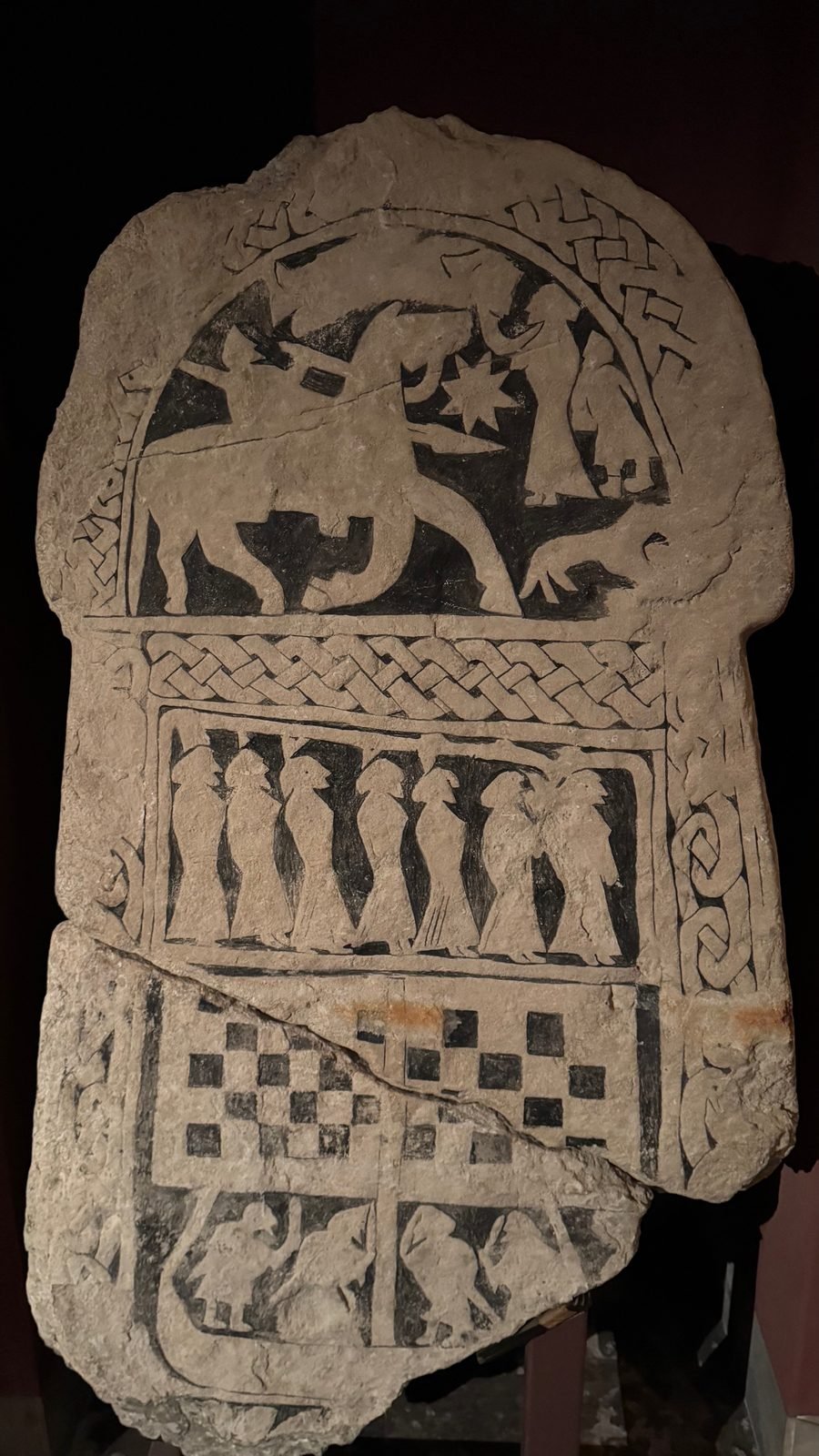
The stone from Bota is younger, about 700–900 AD. At the top a rider is welcomed, probably to Valhalla. Below, seven figures walk in a row. A procession? Or hanged men? The sign does not decide. Neither will I.
Guldrummet, the Gold Room
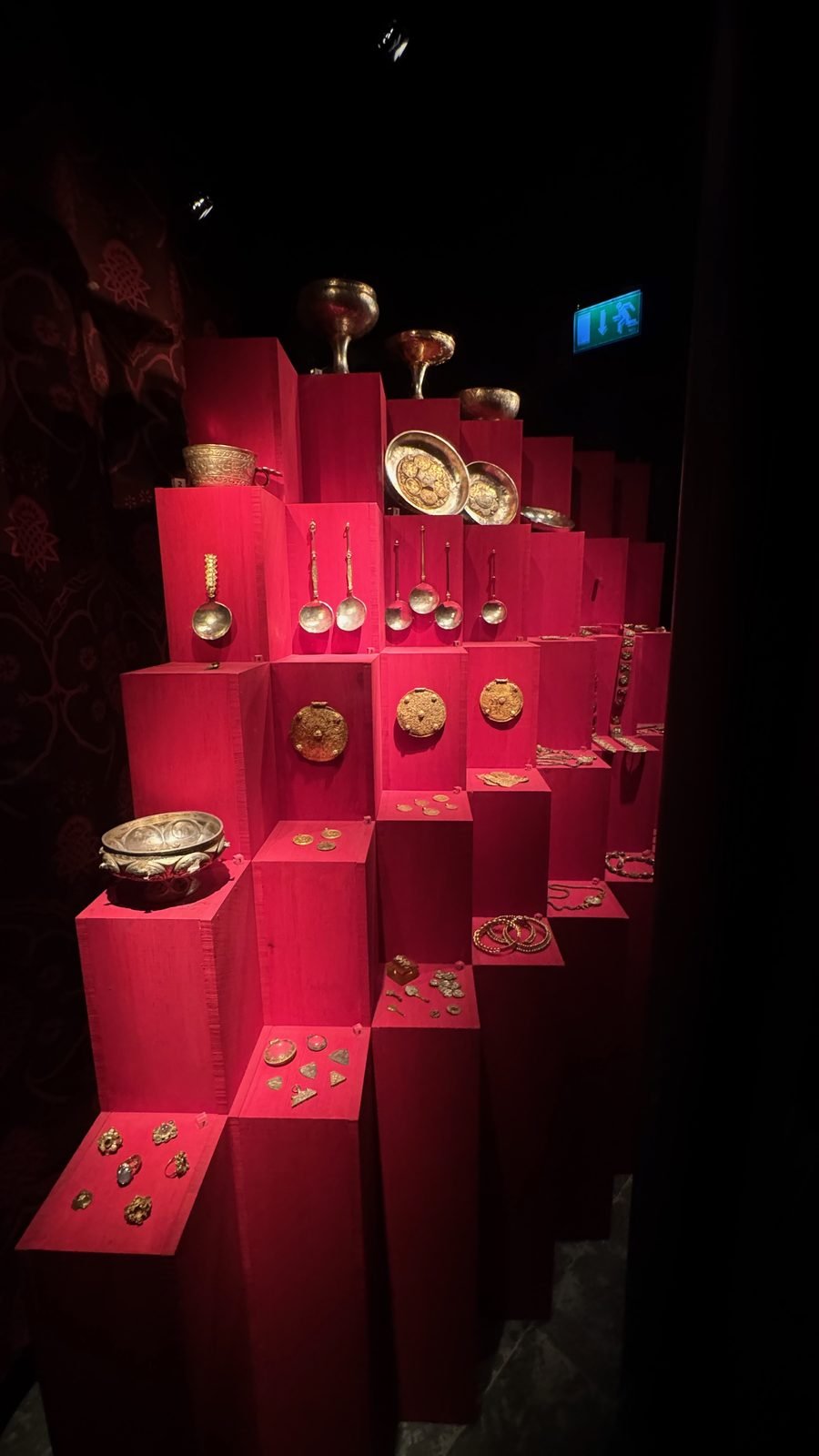
The basement holds Guldrummet. The room is dark, and the gold glows.
One object stopped me: the reliquary of Saint Elisabeth of Hungary. Its base is a late Roman cup of agate. Emperor Frederick II had it made into a reliquary for her skull. How did it end up in Stockholm? The answer is war.
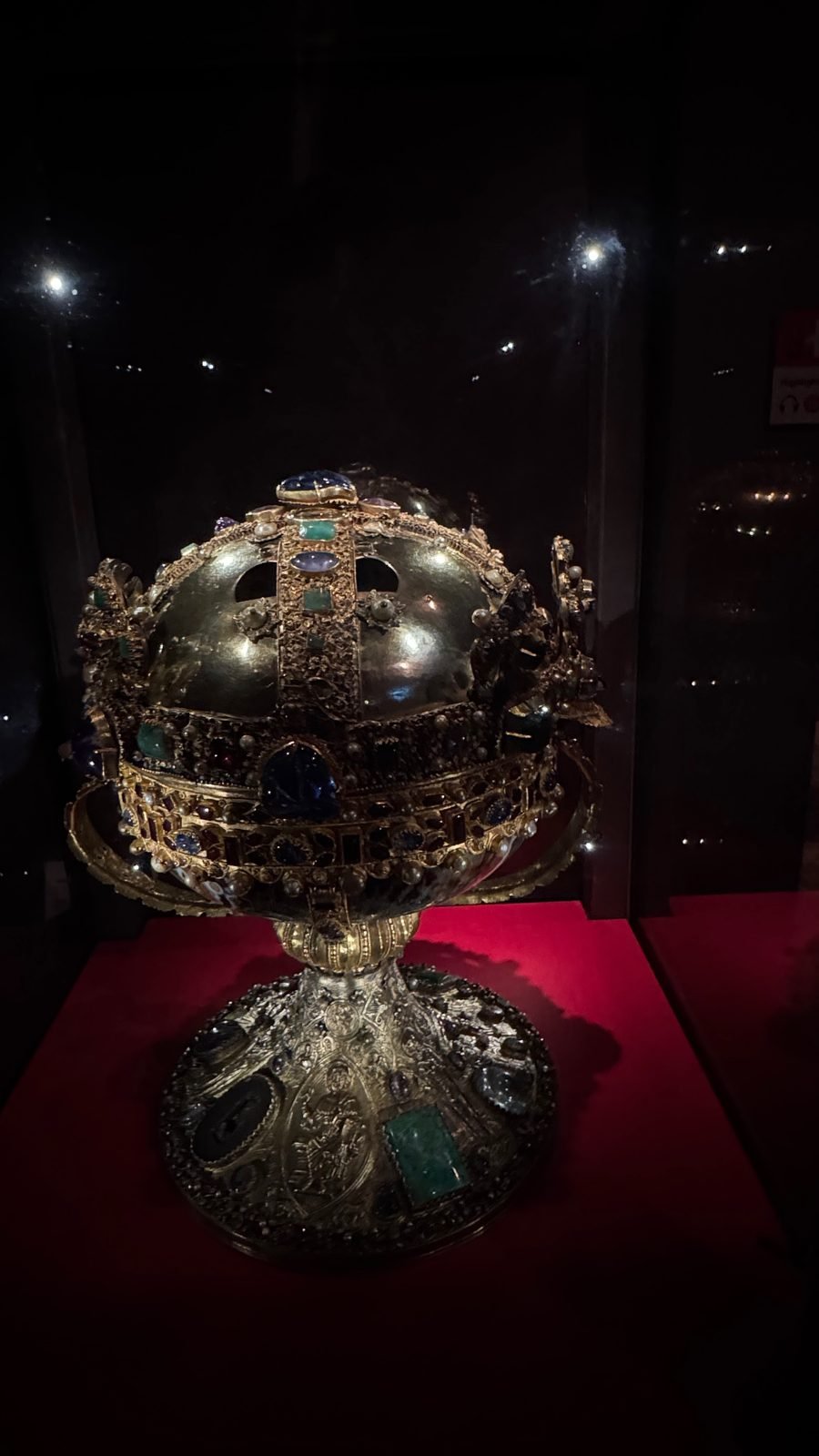
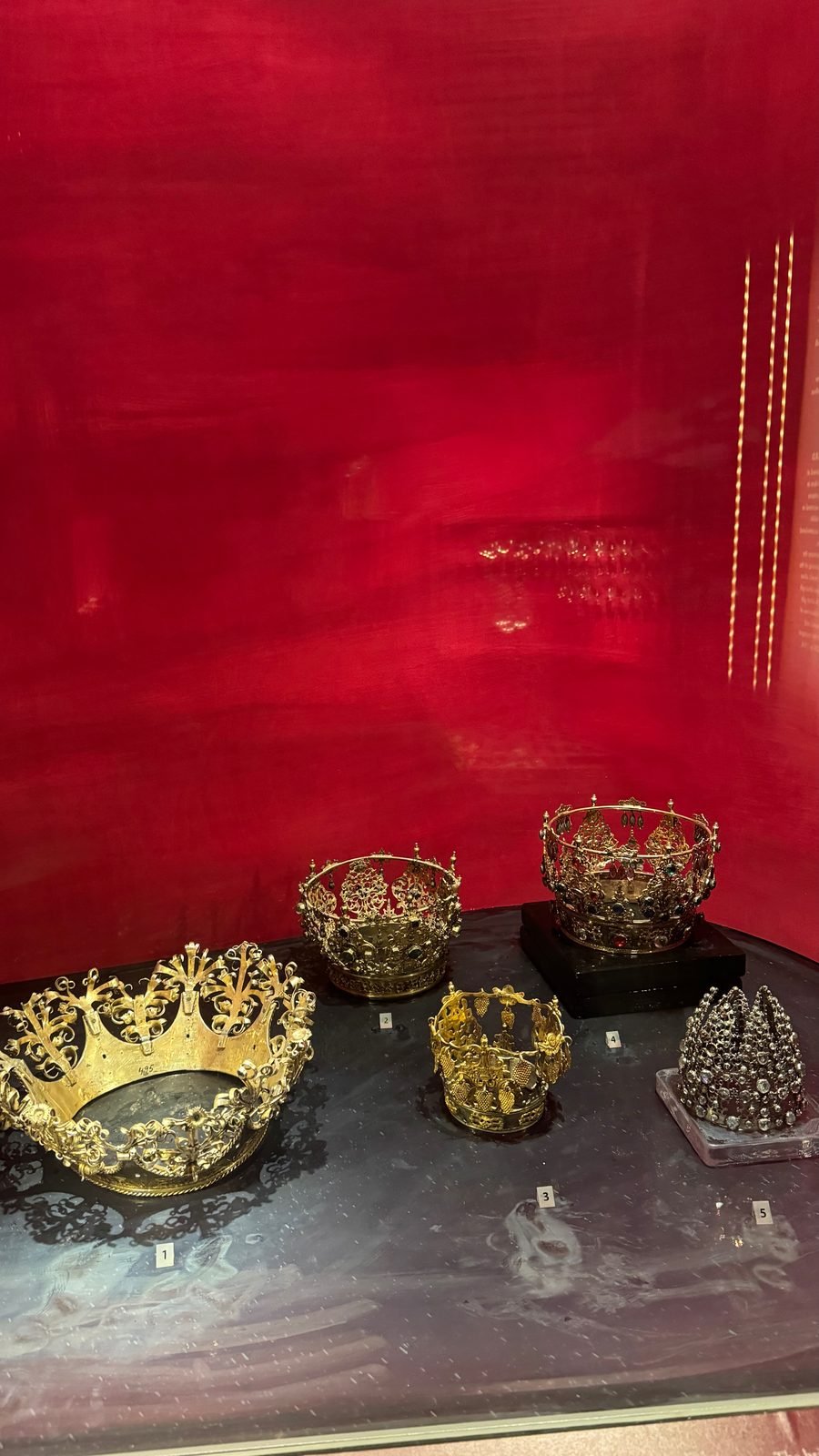
The bridal crowns tell a different story. Since the Middle Ages, churches lent crowns to brides for the wedding day. The crowns are gilded silver.
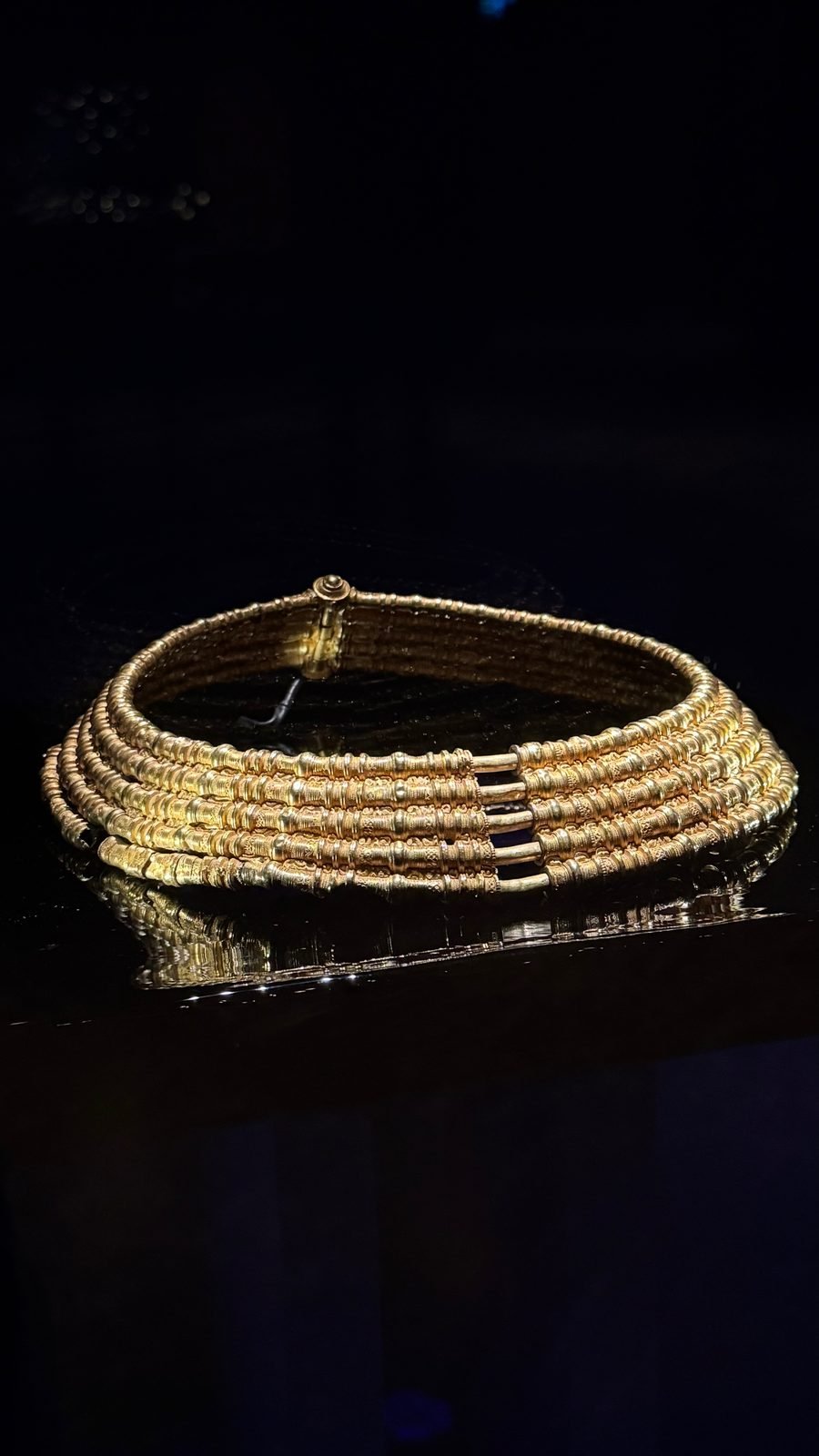
The gold collar from Färjestaden on Öland has five rings. It is about 1,500 years old. Small figures of animals and people sit between the rings. They probably belonged to stories that nobody remembers now. I wrote more about them in my post on the three gold collars of Ålleberg, Färjestaden and Möne.
Where did all the gold come from?
I was surprised by the amount of gold, and by how important the objects are. A sign at the entrance says the Gold Room holds 52 kilos of gold and over 200 kilos of silver. At today’s gold price, 52 kilos of gold is worth about 7 million US dollars.
So where was all this gold made? Sweden is known for mining iron ore and copper, not gold. The signs in the museum give an answer.
All the gold and silver came to the North as bars, ingots or coins. Very little jewelry was imported. From the year 0 to 550 AD, most of the gold came as Roman gold coins. People got the coins through trade, as loot, or as pay for soldiers. Only in the Middle Ages did Sweden begin to mine its own deposits.
The jewelry was made here. Smiths melted the coins and old jewelry down and made new pieces. One showcase holds a hidden store of materials from a smith near Skara, from 400–550 AD. It has silver bars, broken gold jewelry waiting to be melted, and half-finished objects. Before the birth of Christ, goldsmiths had workshops on Gotland. These workshops were started under influence from the Black Sea region.
The gold traveled far. The hands that shaped it were local.
War booty from the Thirty Years’ War
The reliquary came to Sweden as war booty in the Thirty Years’ War, 1618–1648. It is not alone. Swedish armies took a lot during that war, and many of the looted objects are among the most important in Sweden today.
Many of them ended up with Queen Kristina. The most famous is a book. Codex Gigas, the Devil’s Bible, was taken when Swedish soldiers plundered Prague in 1648. It came to Stockholm in 1649 and went into Queen Kristina’s collections, in the library of the royal castle Tre Kronor. Today it is at Kungliga biblioteket, the National Library of Sweden. I wrote about my visit there in my article on the Codex Gigas, the Devil’s Bible. Codex Argenteus, the Silver Bible, was taken in Prague too.
Kristina gave up the throne in 1654 and took many books and manuscripts with her to Rome. There is more about her in my article on Queen Christina at 400.
So the loot is split between buildings. The books are in the libraries, and objects like the Elisabeth reliquary are here at Historiska museet. Should they stay in Sweden? I asked that question about the Codex Gigas. It fits here too.
The history of Sweden, floor by floor
The upper floor holds the main exhibition about the history of Sweden. It has a lot of objects, from the Middle Ages to about the 1700s. Kings, regents and queens are all there. The facts are shown as a timeline, and that was really nice to see.
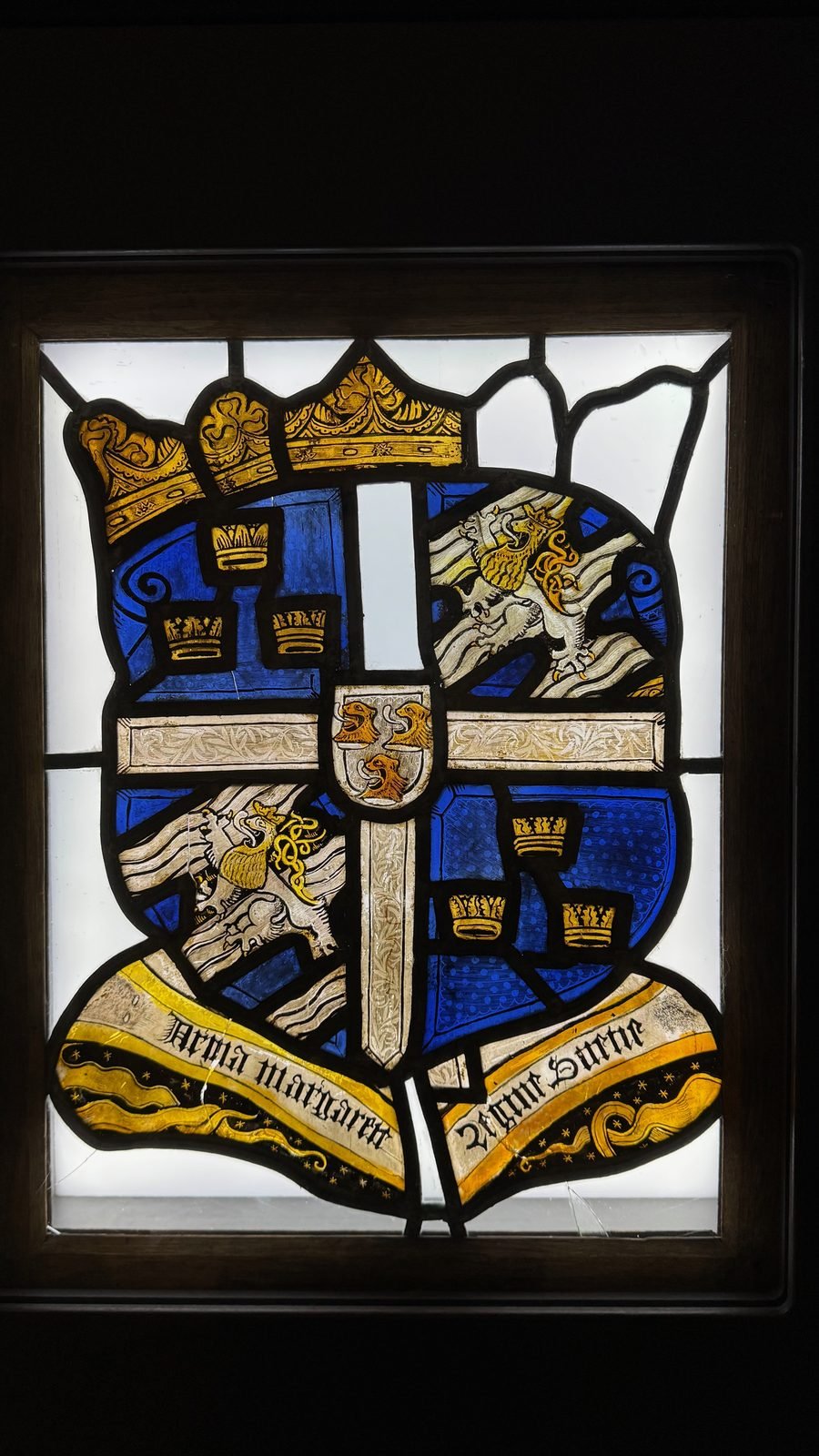
I really liked the section about Queen Margareta. She ruled three kingdoms without a crown of her own. I wrote a long article about Margareta I and the Kalmar Union. The houses of kings and queens are linked in many ways, often through the women of the Swedish royal houses.
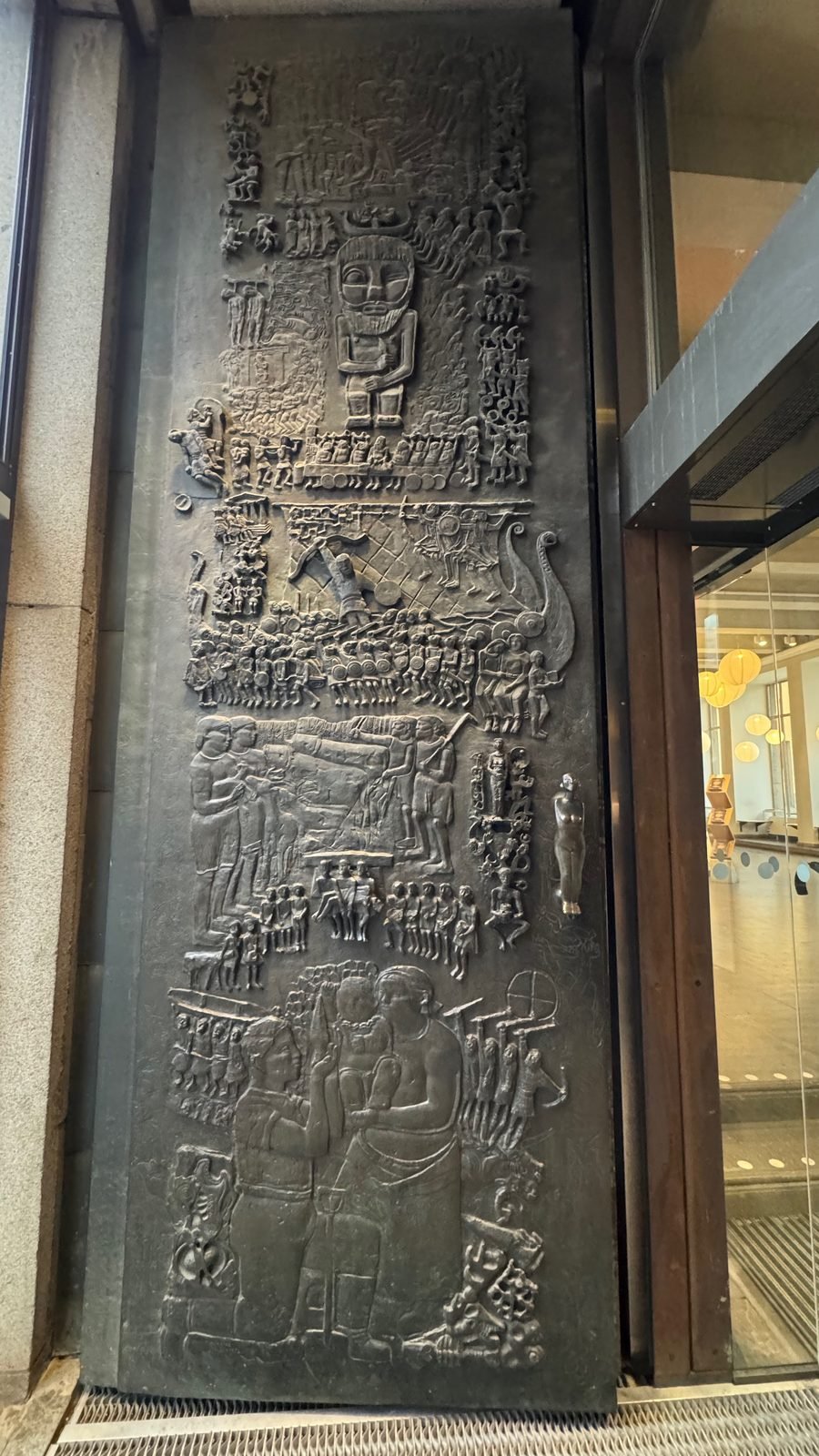
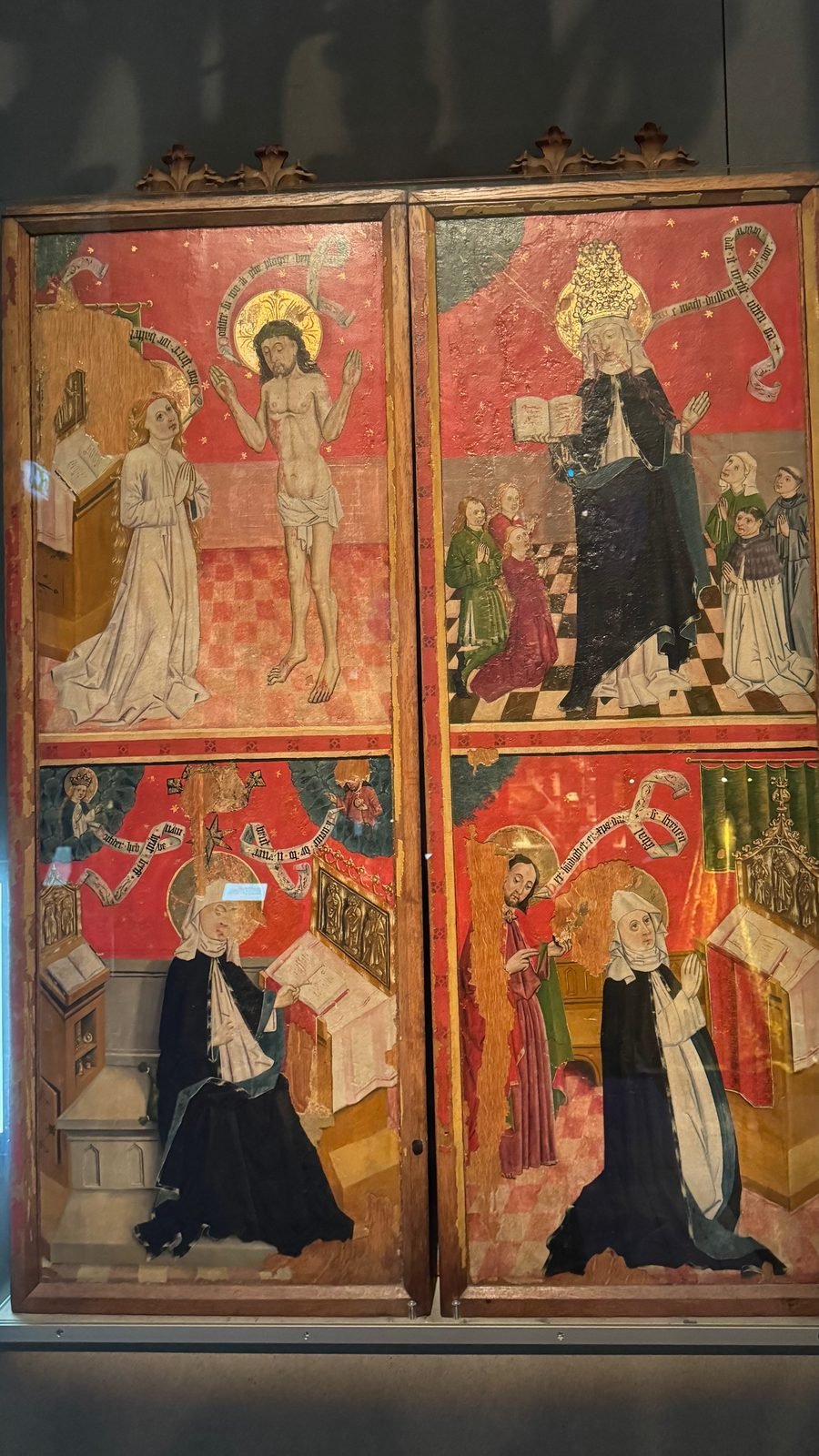
There is also a section about Saint Birgitta: her life, and how artists showed her. The doors of the altarpiece from Appuna show four scenes from her life.
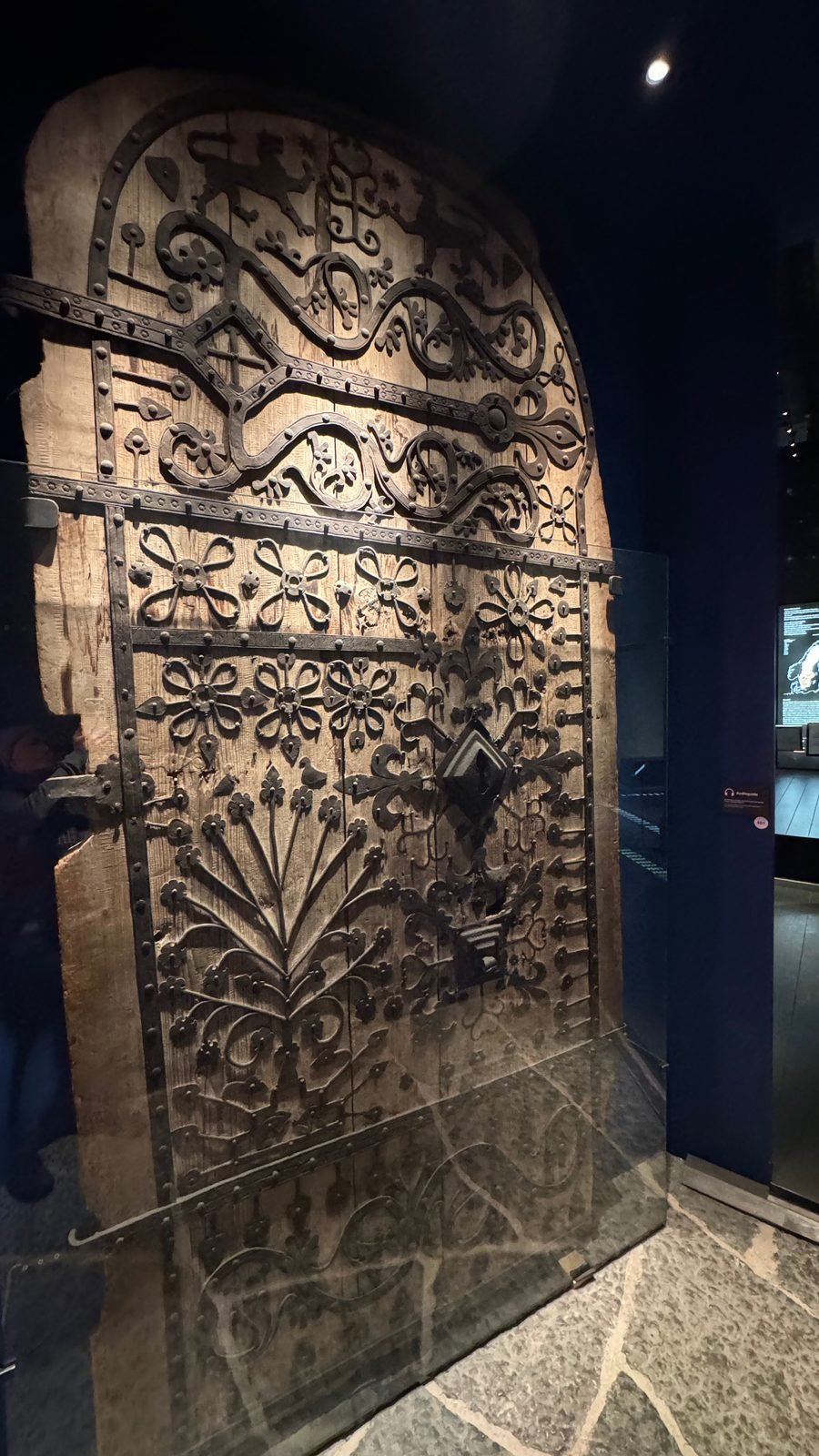
Small details make history human. A church door from Björksta, from the 1400s, has iron decoration of paradise. An inscription in runes names the smiths: master Röding and Bo Fris. Another sign asks what a day’s wage could buy. In the 1300s it was 1.5 kilos of butter or 8 liters of beer.
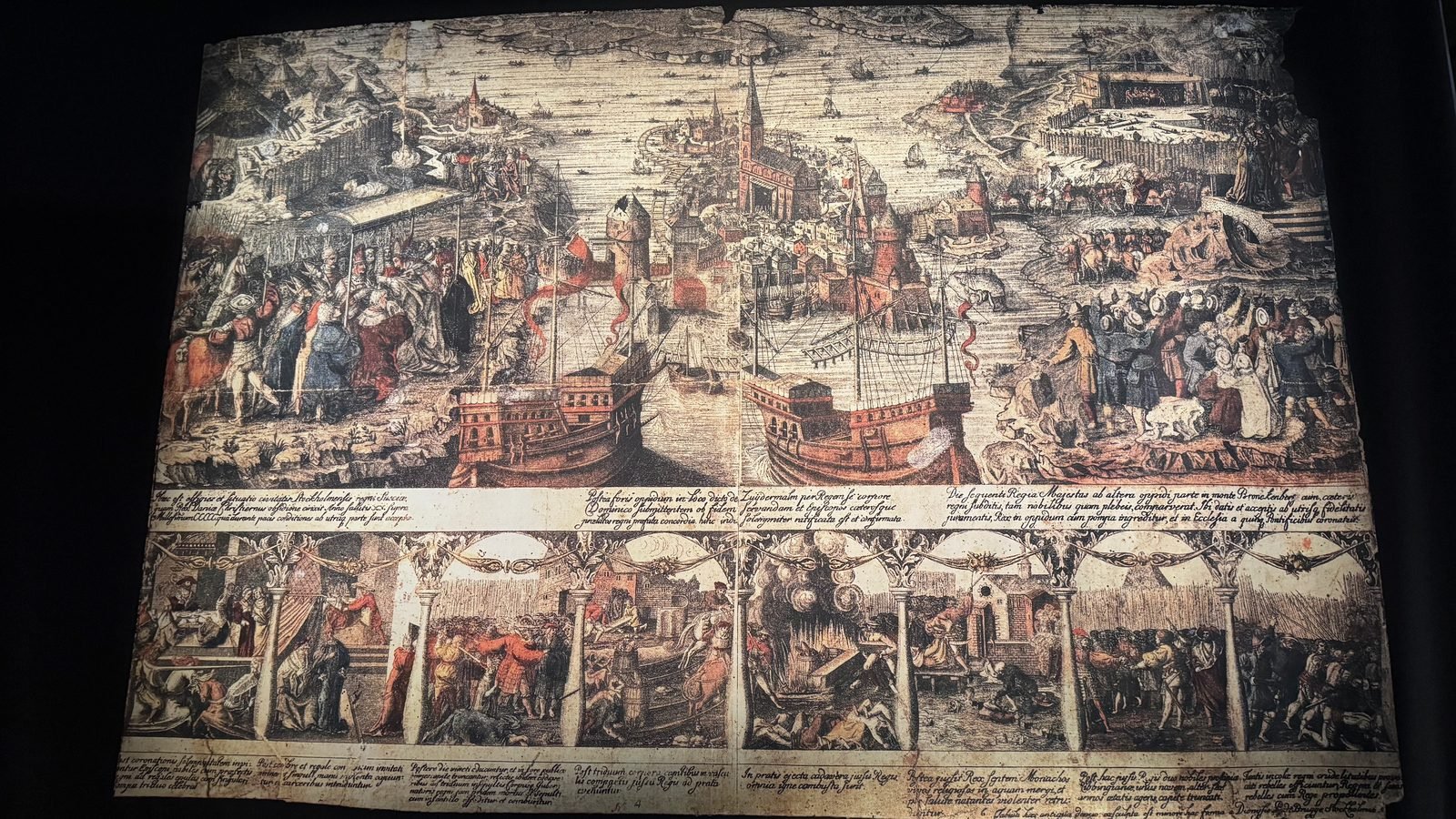
The Blodbadsplanschen shows the Stockholm Bloodbath on Stortorget in November 1520. In 1524 Gustav Vasa ordered the picture as propaganda against Christian II. Stortorget is in Gamla Stan. You can stand there yourself on my private Gamla Stan walking tour.
Medieval church art and Barockhallen
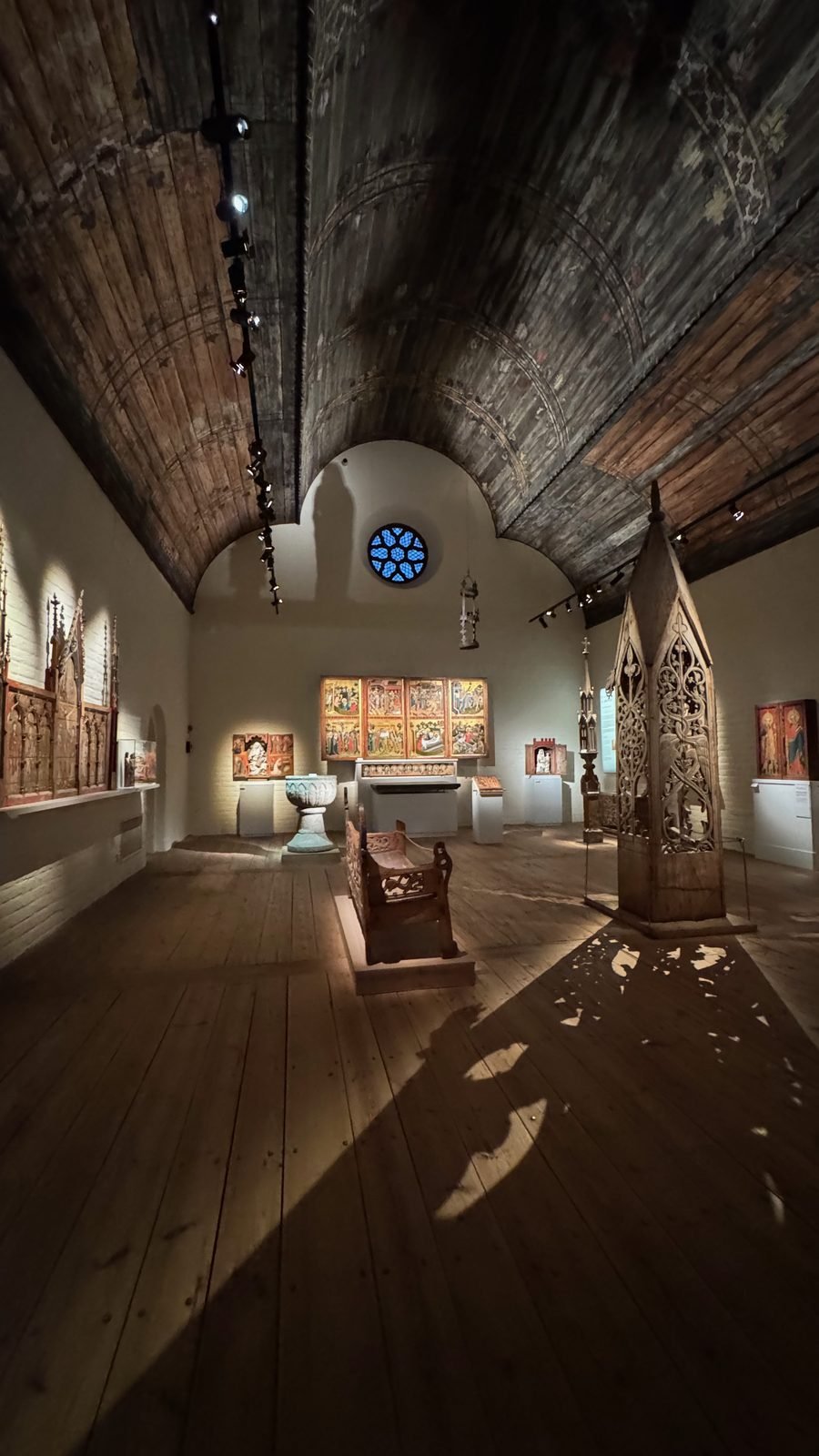
The medieval halls and Barockhallen are on the upper floor, next to the history of Sweden.
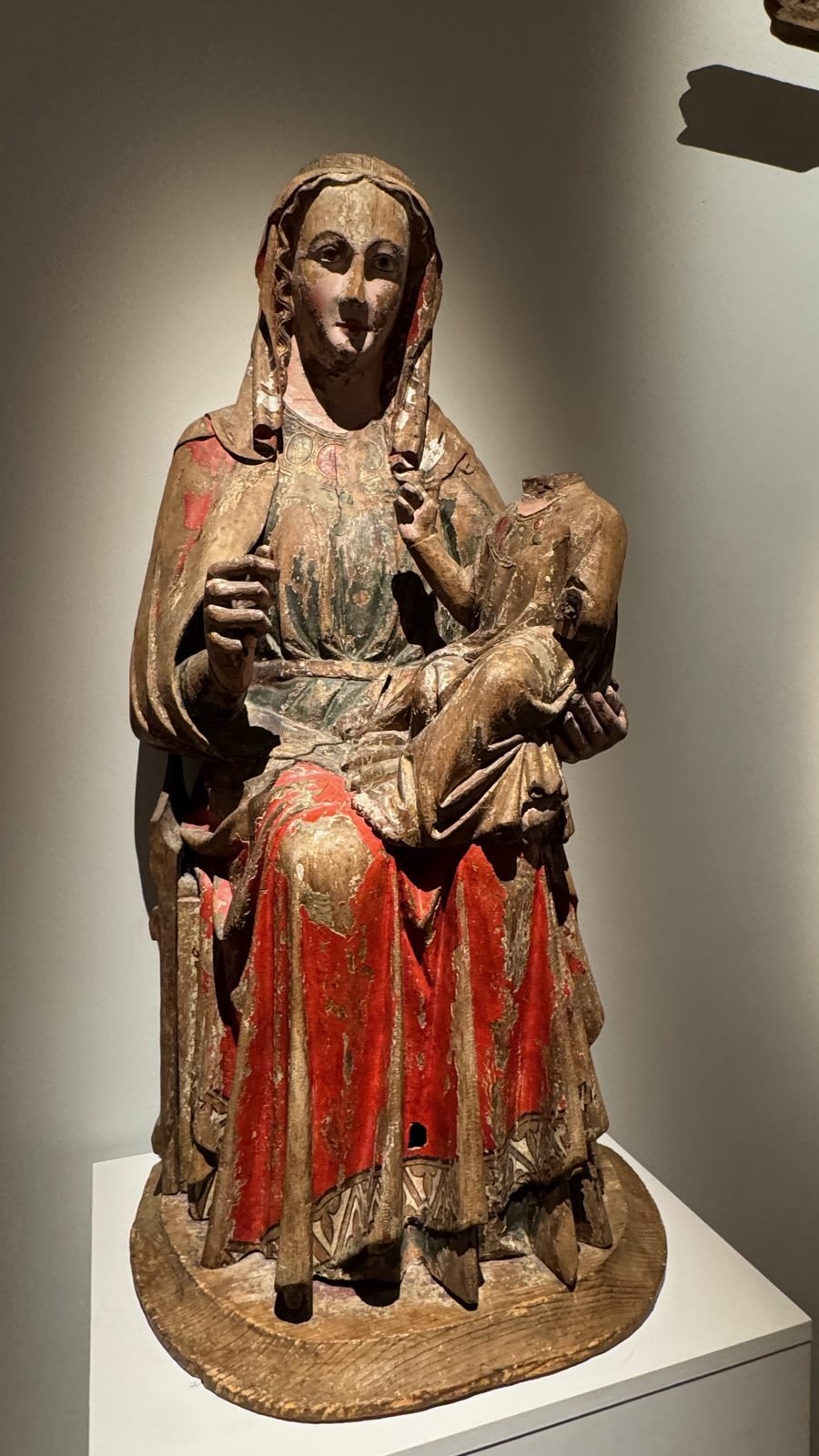
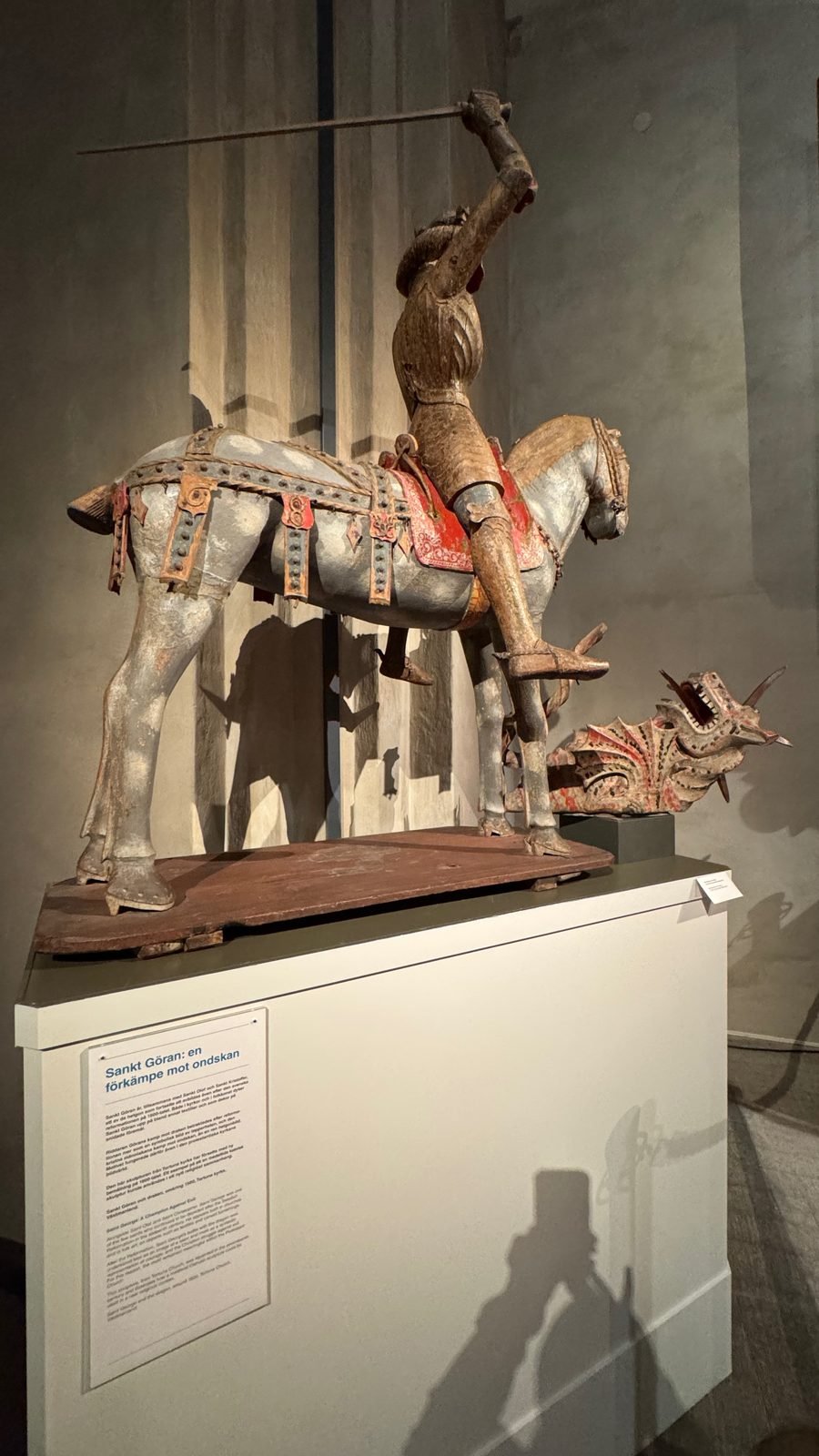
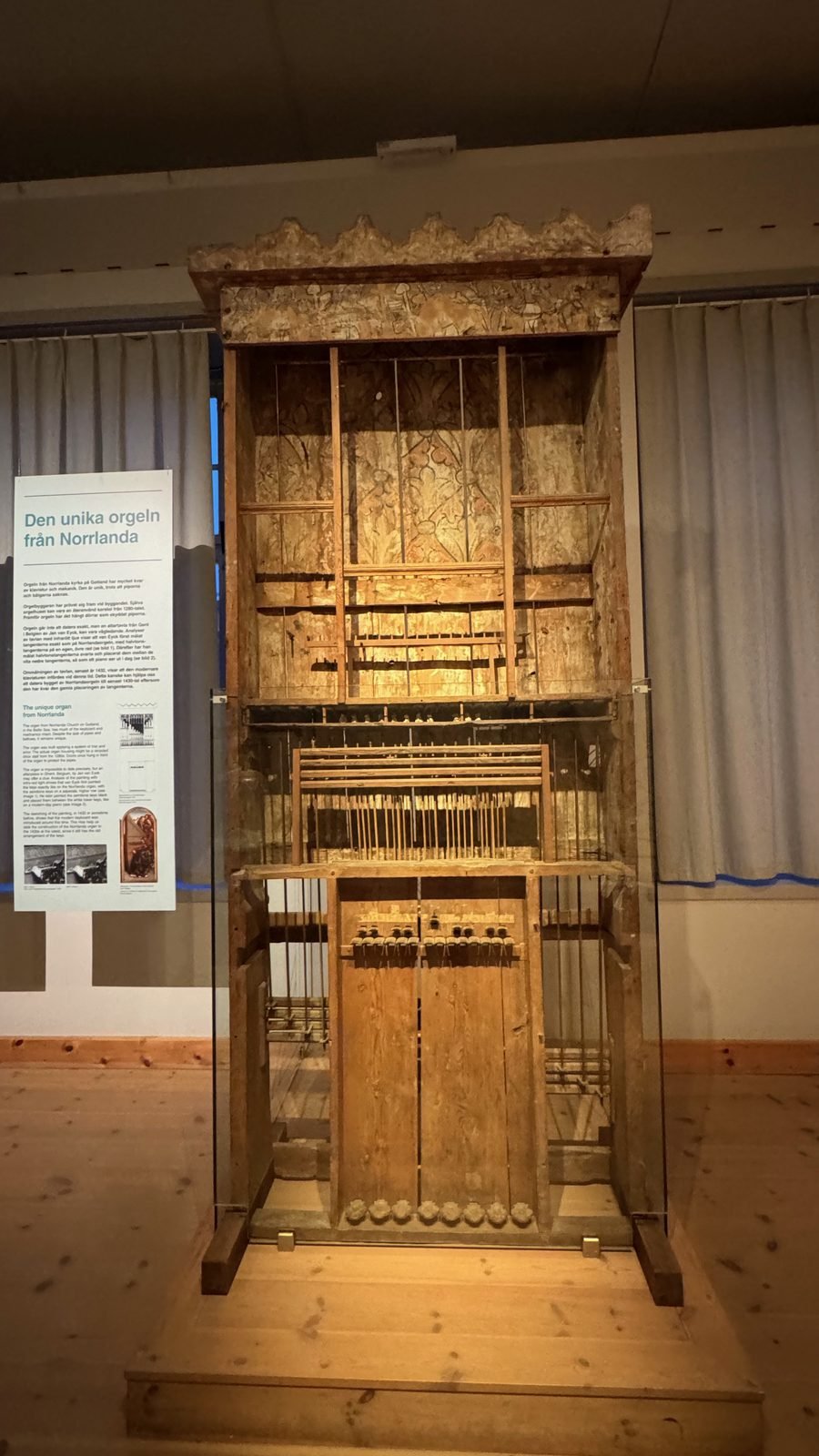
The medieval halls are full of painted Madonnas and altarpieces. Saint George fights the dragon in a sculpture from about 1500, from Tortuna church. One sign calls the organ from Norrlanda the world’s oldest organ. The organ itself is not here. Only its outer case is on show, made of painted wood.
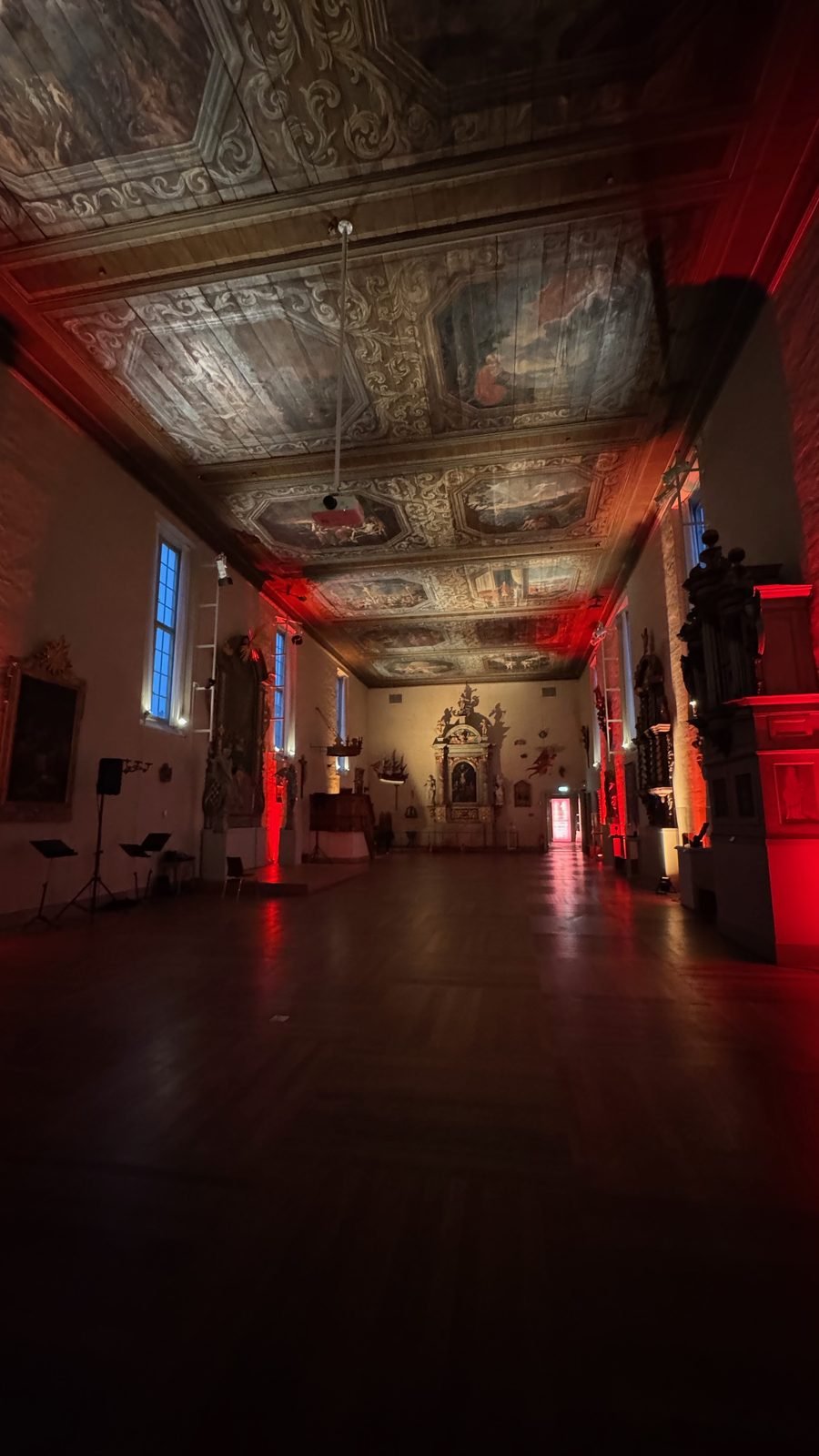
Barockhallen has church art from about 1530 to 1800. It is set up as a church, with an altar at one end and an organ at the other. It is also used for concerts.
Vikingarnas värld
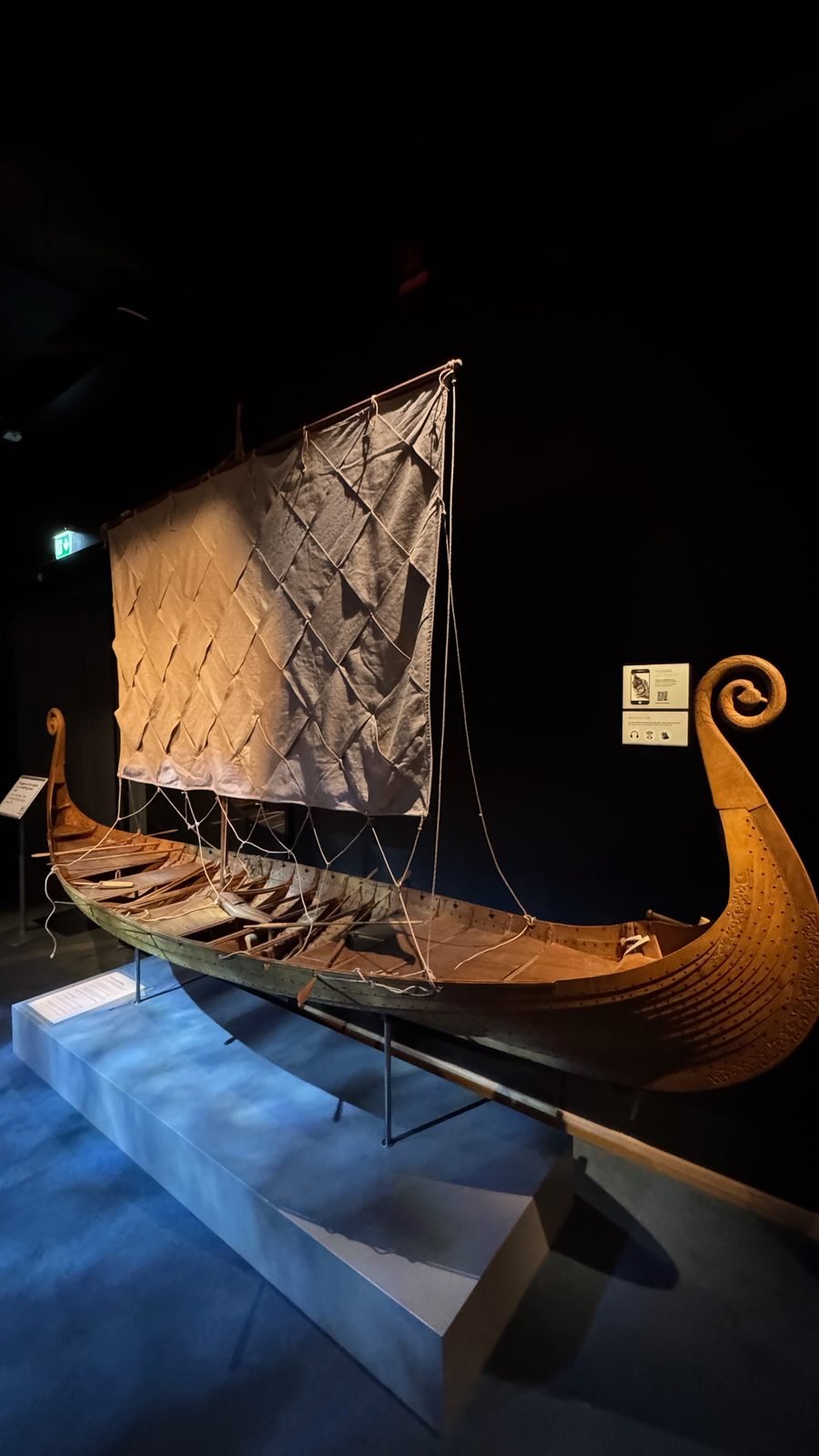
The Viking exhibition is on the ground floor. The museum calls it one of the world’s largest Viking exhibitions. A ship with a square sail stands in the dark room. For more Vikings in Stockholm, see my article on the Viking Museum in Stockholm. The Helgö Buddha is in this exhibition too. I wrote about it in my post on the Helgö Buddha and the place of my ancestors.
School classes and lunch
The museum is often full of school classes, from small children to teenagers. In Sweden, museum visits are part of school. Other students come too.
The restaurant, Rosengården, was a very nice place. At lunch it serves dagens lunch, a lunch offer with daily dishes. The price is good, and the offer includes salad and tea or coffee. The restaurant and café has the same opening hours as the museum, and you do not need a ticket to eat there.
The Economy Museum (Ekonomiska museet) is in the same building, and the museum ticket includes it. It gets its own article soon.
Photo gallery
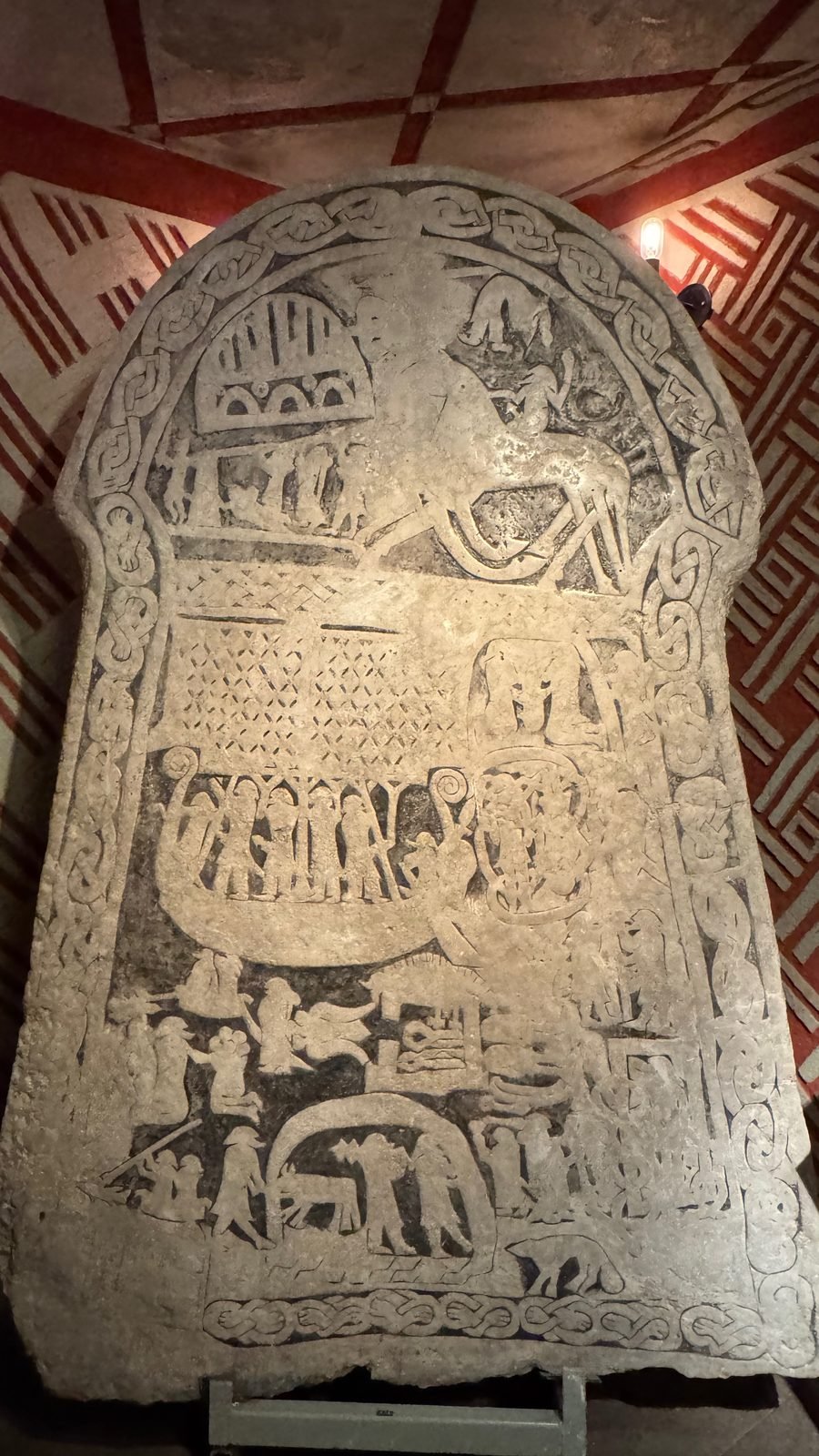
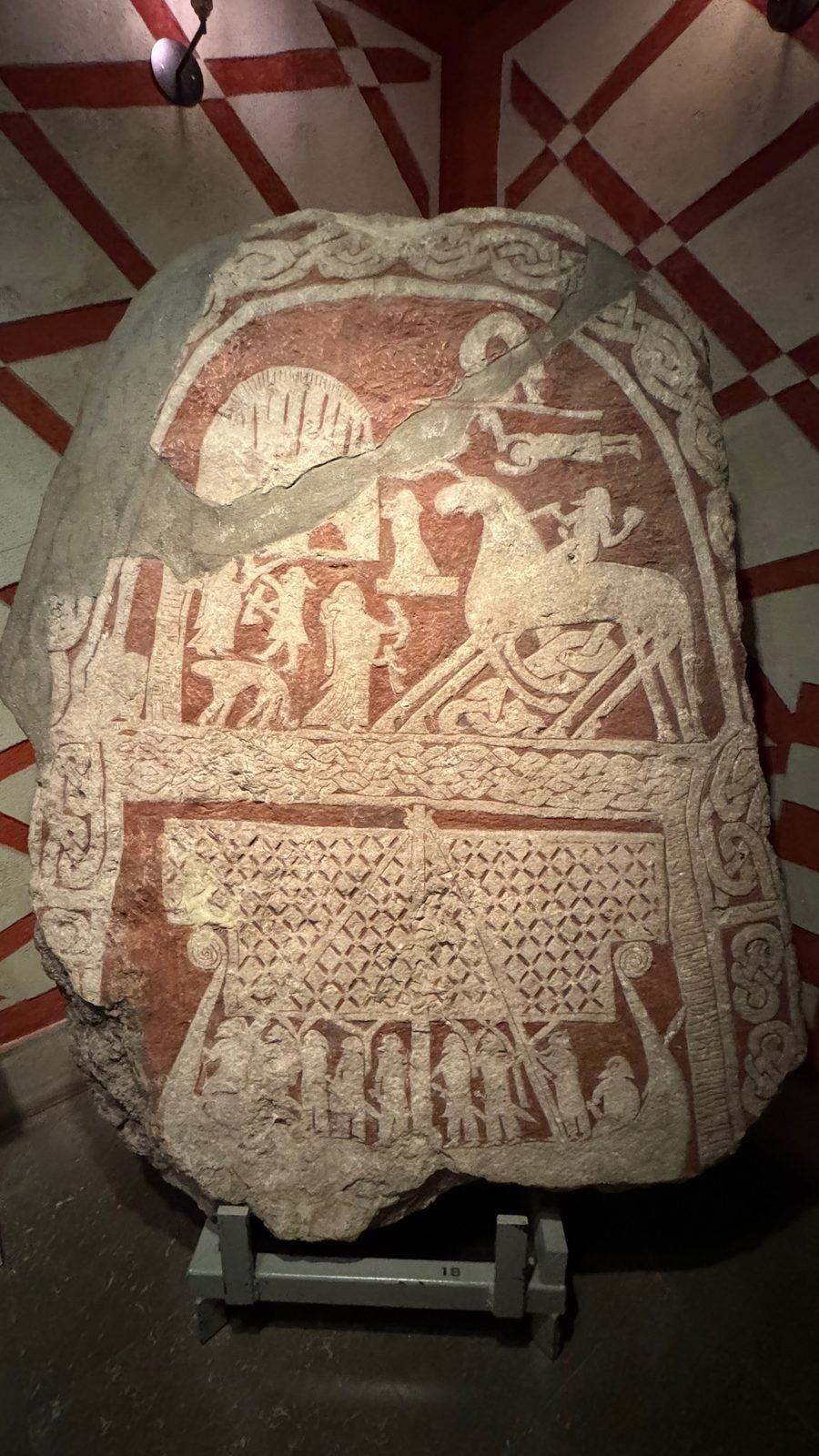
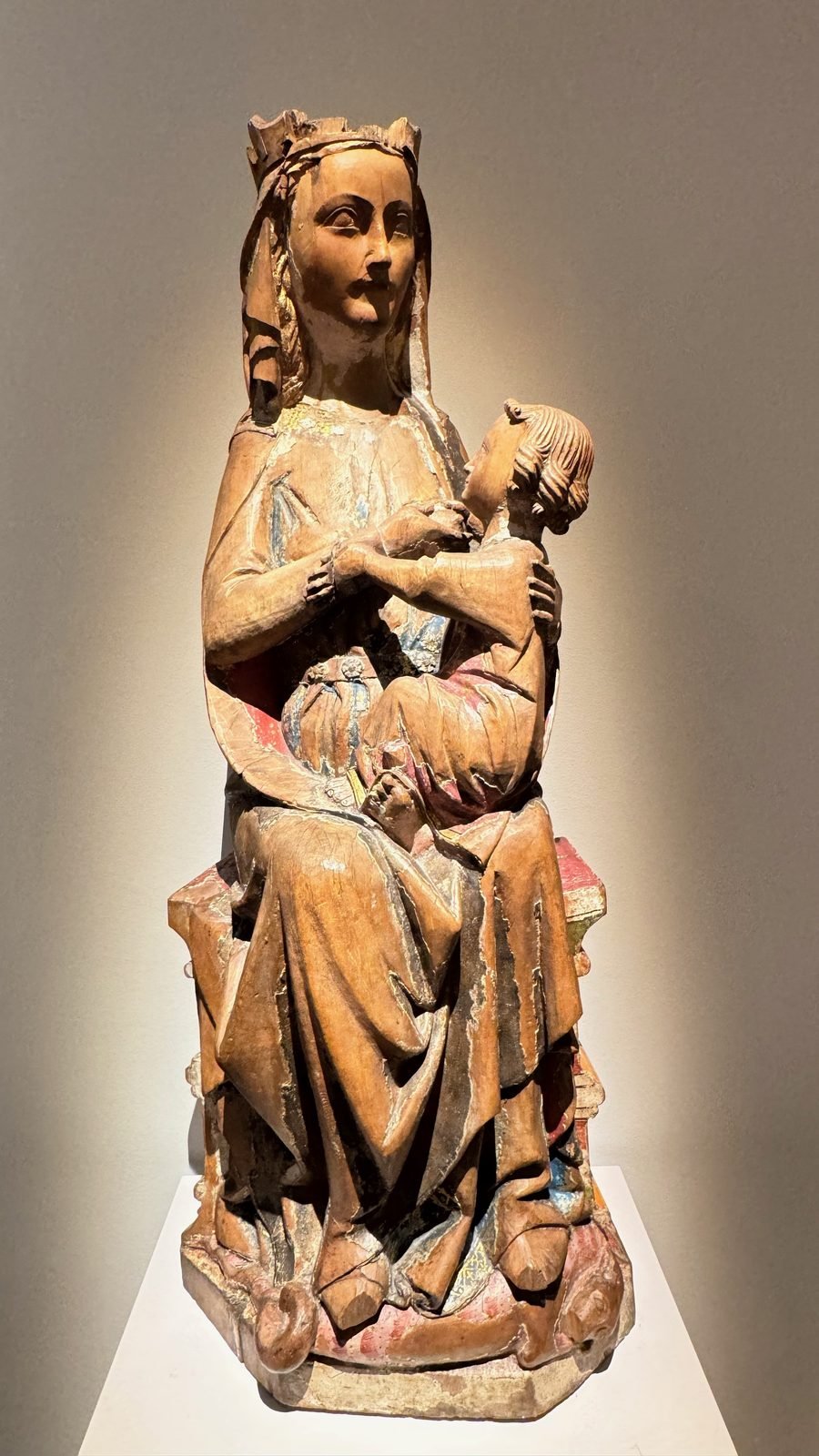
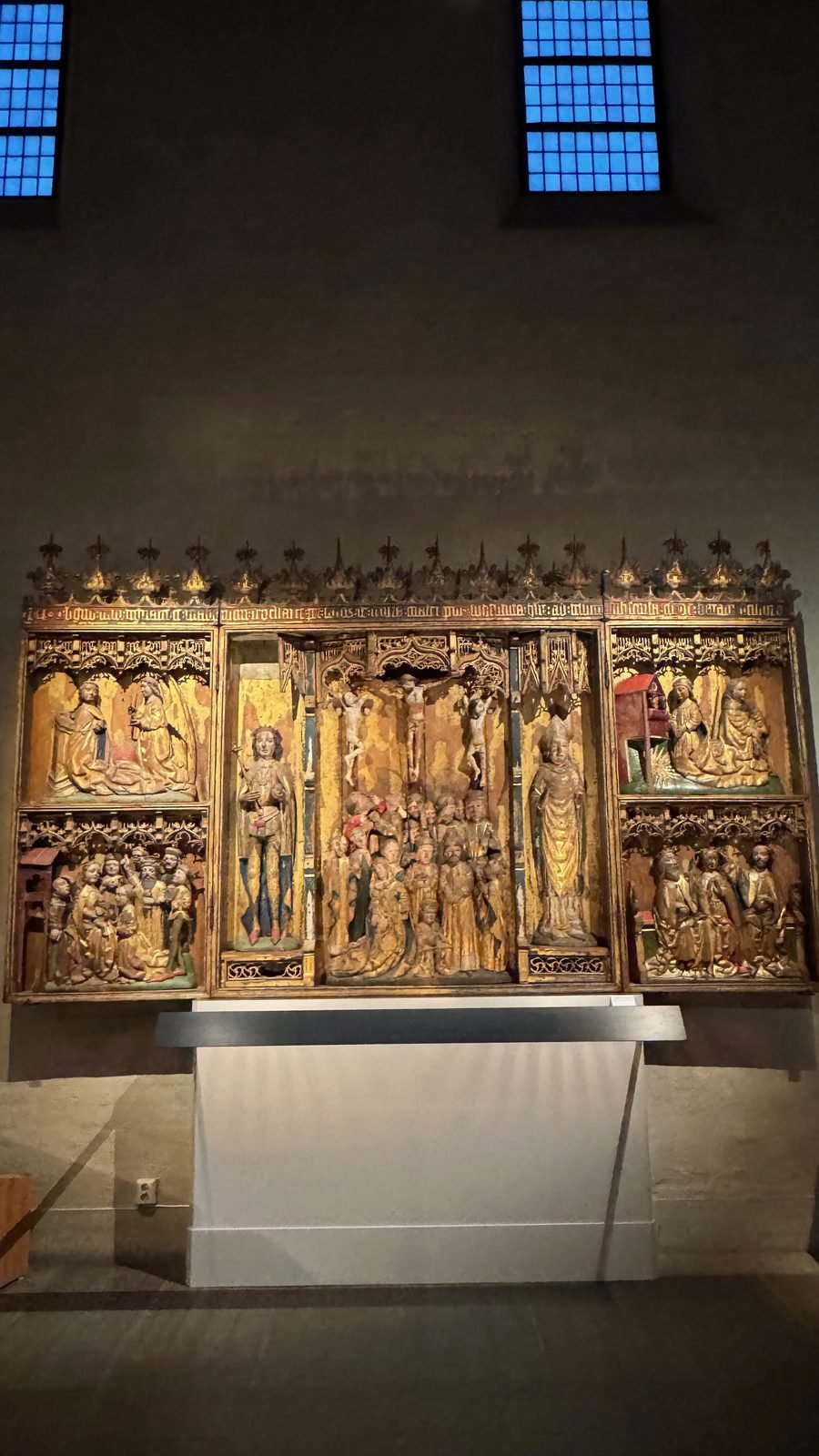
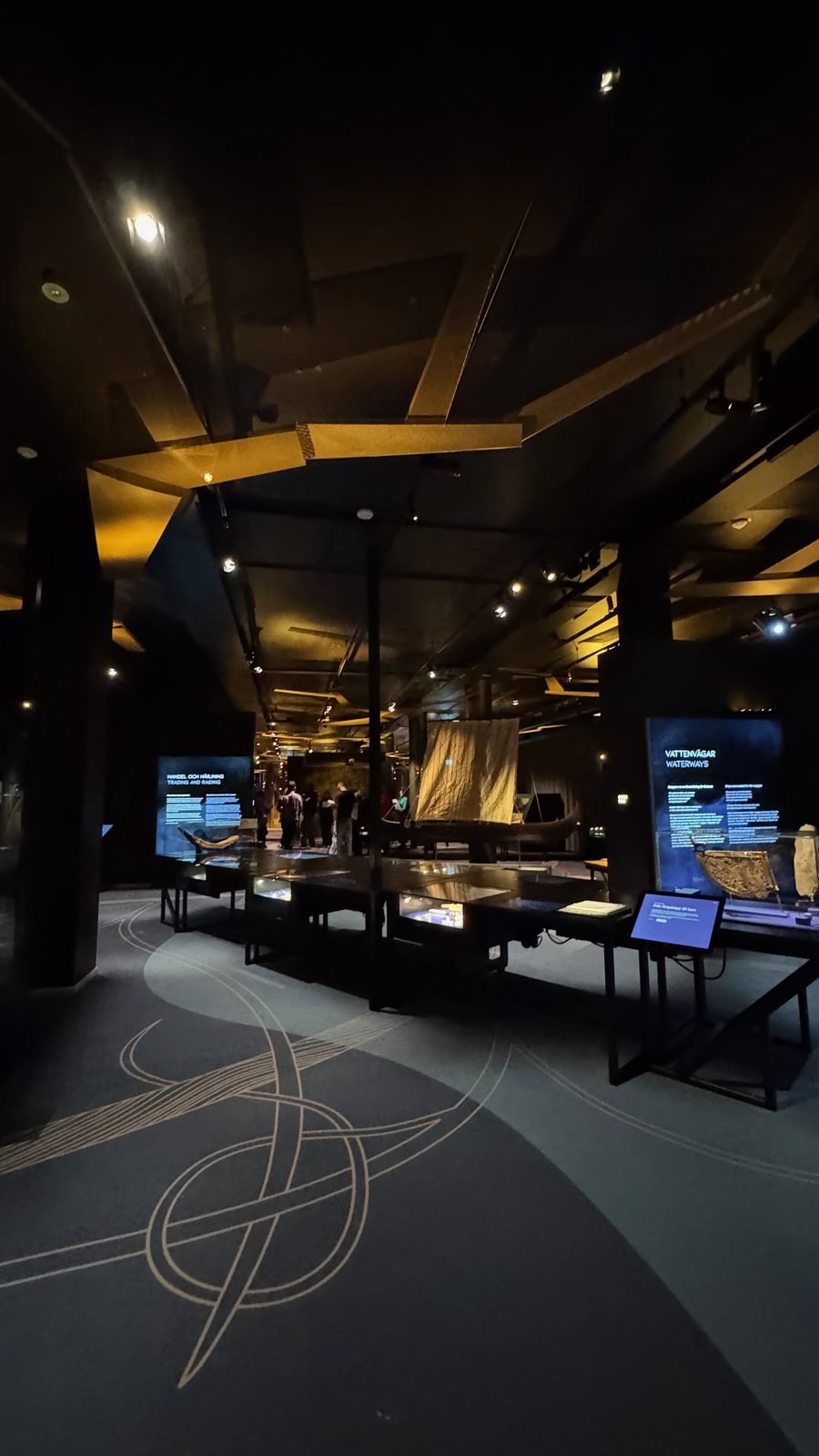
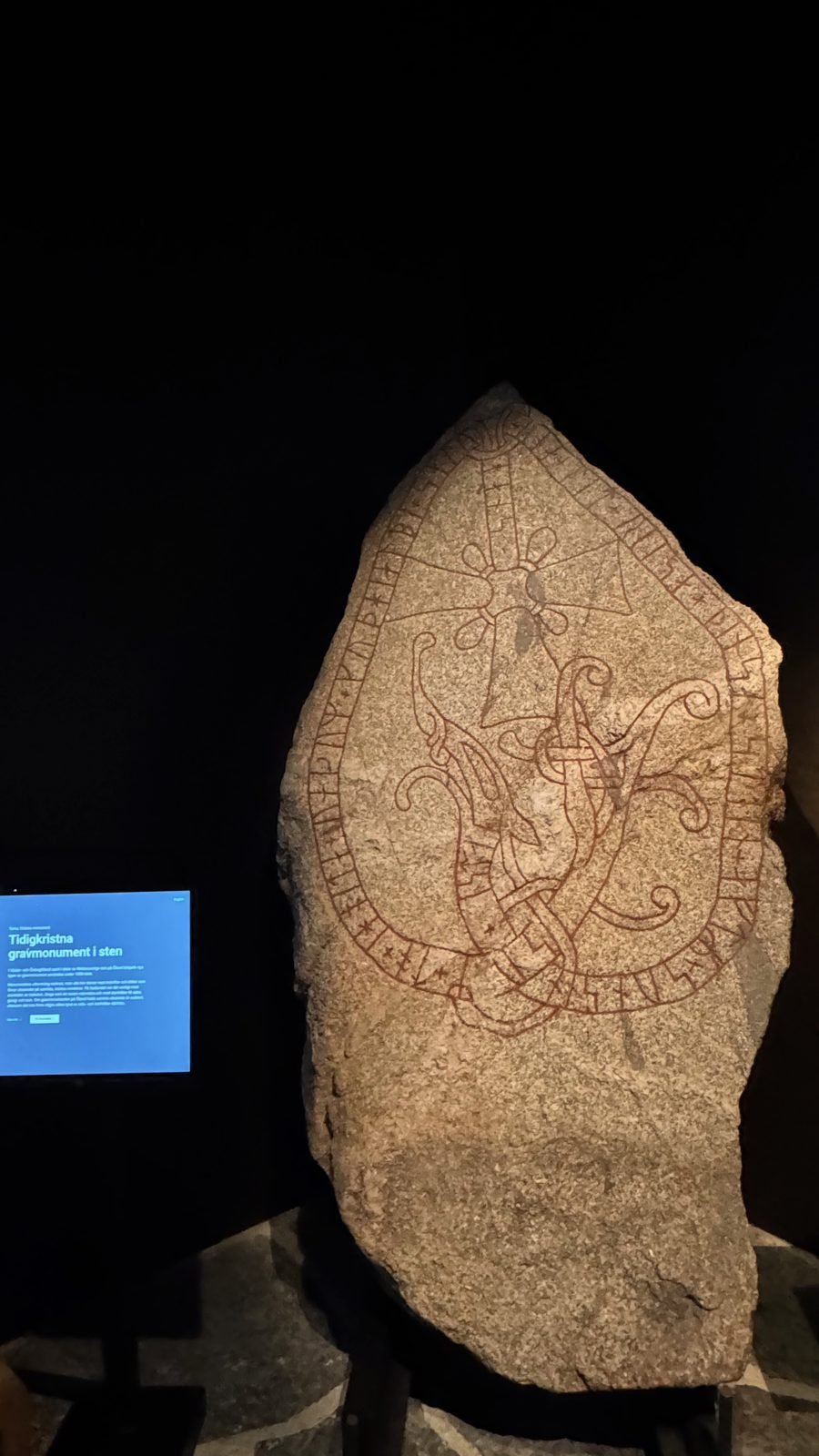
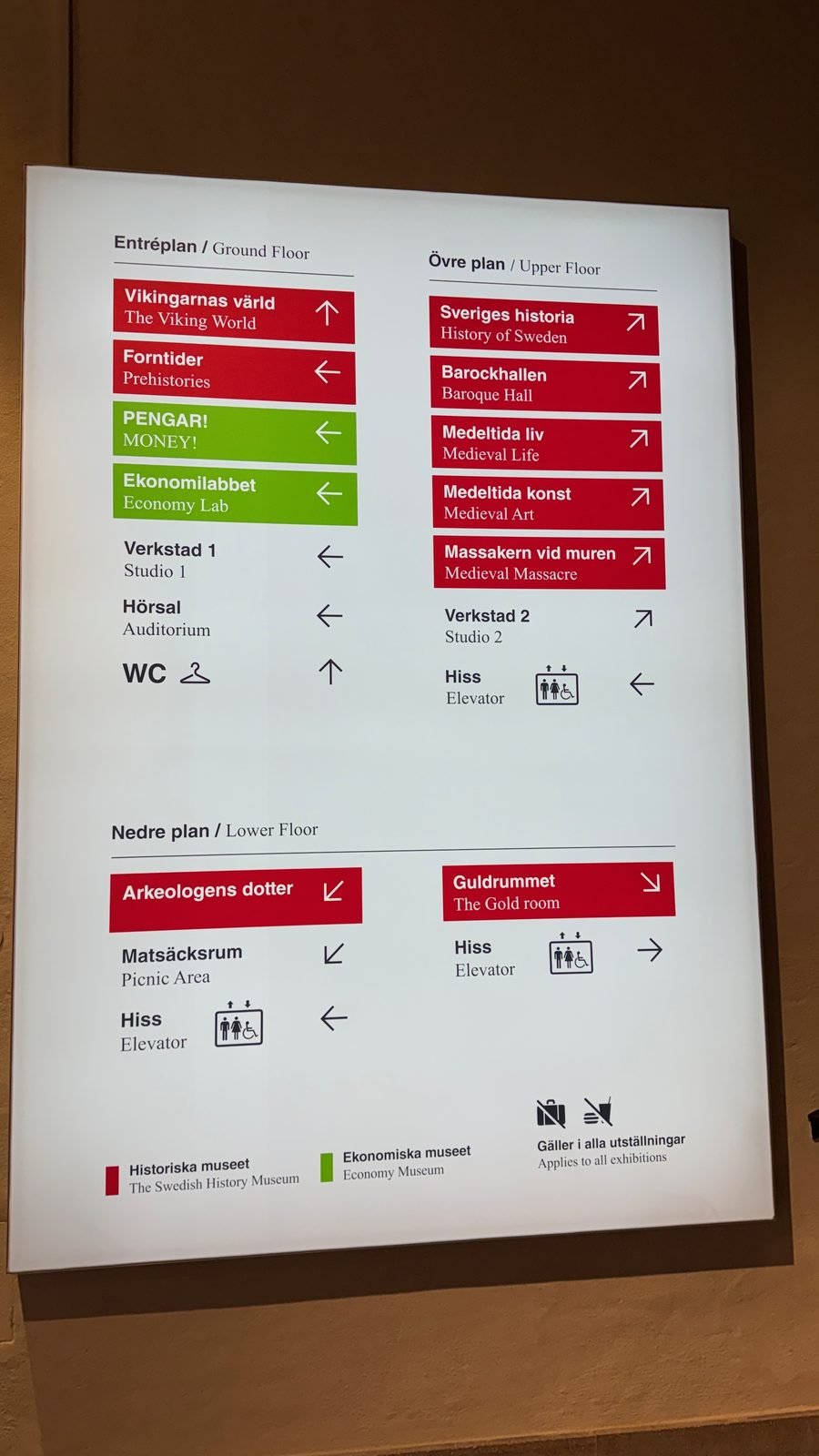
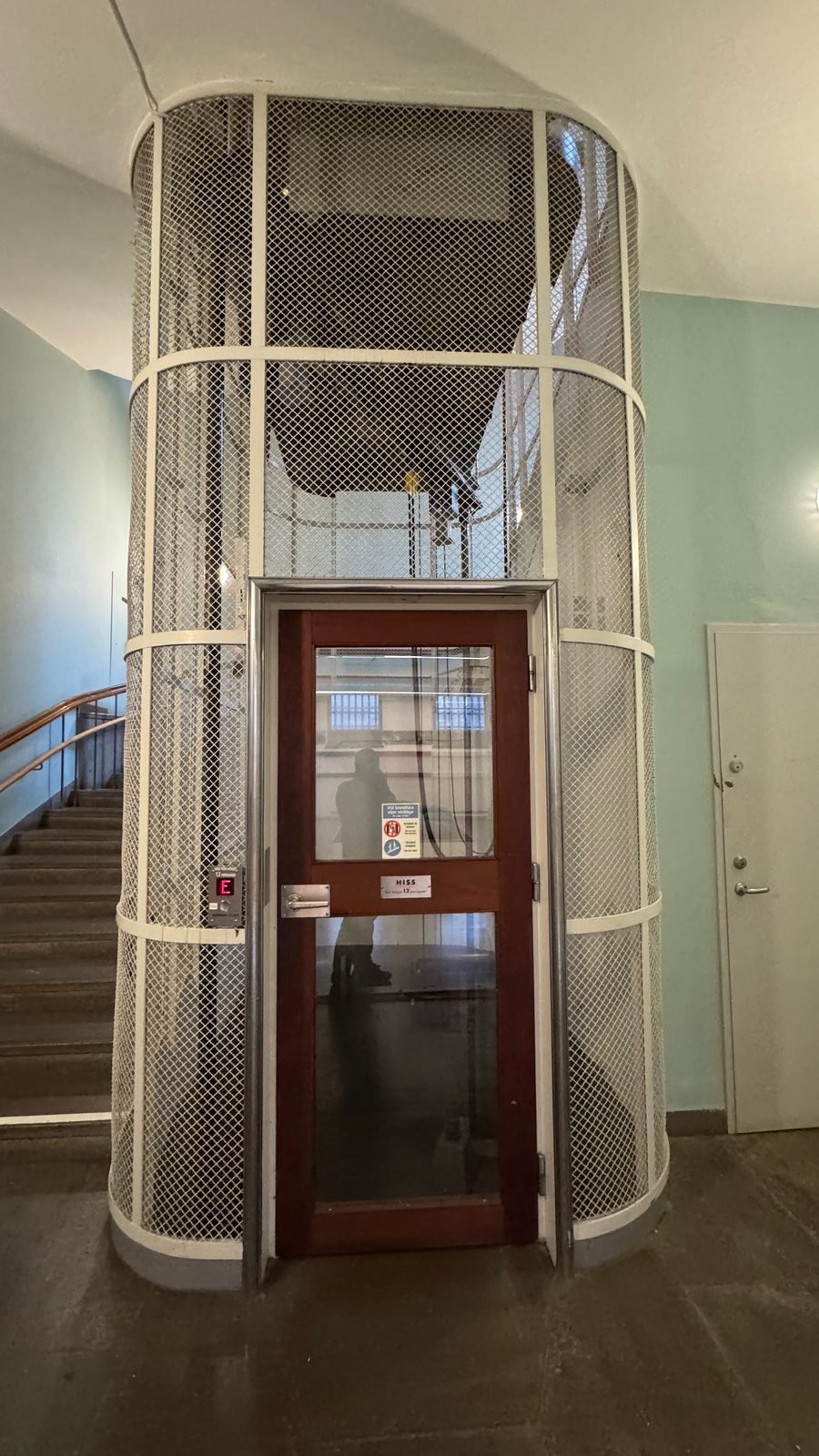
All photographs on this page were taken by Zayera Khan during a visit to the museum, and are her own property. Please do not reuse them without permission.
What is my verdict?
Everything seemed fairly accessible to me. The building is big, so plan for time. The museum recommends 1 to 2.5 hours for a visit, and I would add lunch. Not every museum is this easy to move around in. I wrote about that in my Medium story on why museums are inaccessible.
How much of Sweden’s history do you think fits under one roof?
Questions and answers
What is in Guldrummet at Historiska museet?
The Gold Room holds 52 kilos of gold and over 200 kilos of silver, among them gold collars, Viking silver and medieval reliquaries.
How much is a ticket to Historiska museet?
Adults 180 SEK. Children and youth up to 18 get in free. The ticket includes the Economy Museum in the same building.
Is Historiska museet accessible?
There are stairs and lifts, toilets on every floor and lockers.
How long do I need at Historiska museet?
The museum recommends 1 to 2.5 hours.
Sources: Historiska museet – Opening hours; Historiska museet – Travel trade, admission and visit length; Historiska museet – The Swedish History Museum; on-site signs at Historiska museet, November 2026.