Sweden Country Guide
What I want every first-time visitor to know about money, trains, seasons and manners, from someone who has called Sweden home since 1984.
I came to Sweden from Nigeria as a child in 1984. I learned the language, the winters and the unwritten rules the slow way. By getting them wrong.
Today I live in Stockholm and work as a tour guide. My guests often ask the same questions in the first hour. Can I pay with cash? Why is everyone so quiet on the train? Where did the sun go?
This guide answers those questions before you land. It is long on purpose. Use the contents list below to jump to what you need now, and come back to the rest later.
Sweden at a glance
Sweden is a big country with few people. About 10.6 million of us share 450,295 km², which makes Sweden the third-largest country in the EU. Most people live in the south. The north is forest, mountains and long distances.
The basics
- Capital
- Stockholm
- Government
- Parliamentary democracy and constitutional monarchy. The head of state is King Carl XVI Gustaf.
- Neighbors
- Norway and Finland. The Öresund Bridge connects Malmö with Copenhagen in Denmark.
- Language
- Swedish. Most people speak very good English. The official minority languages are Finnish, Meänkieli, Sami, Romani Chib and Yiddish.
- Currency
- Swedish krona (SEK). Sweden is in the EU but does not use the euro.
- Time zone
- CET (UTC+1). Summer time is CEST (UTC+2).
- Electricity
- 230 V. Plug types C and F.
- Country code
- +46
- Emergency number
- 112
- Medical advice
- 1177. From a foreign phone, call +46 771 11 77 00.
- Tap water
- Safe, cold and very good. Refill your bottle.
- Driving
- On the right, with headlights on at all times.
Nature in numbers
Sweden has 31 national parks, the newest being Nämdöskärgården in the Stockholm archipelago. Forest covers almost 70 percent of the land. There are around 100,000 lakes.
The highest mountain, Kebnekaise in Lapland, reaches 2,096.8 meters at its rocky north peak. The south peak used to be higher, but its glacier keeps melting. In September 2025, it measured 2,088.4 meters.
Words that open doors
| Swedish | Say it like | Meaning |
|---|---|---|
| Hej | hey | Hello |
| Hej då | hey DOH | Goodbye |
| Tack | tack | Thank you |
| Ja / Nej | yah / nay | Yes / No |
| Ursäkta | OOR-shek-ta | Excuse me |
| Förlåt | fur-LOAT | Sorry |
| Varsågod | VAR-sho-good | You’re welcome, or here you go |
| Skål! | skohl | Cheers! |
| Hur mycket kostar det? | hoor MEE-keh KOS-tar deh | How much is it? |
| Var är …? | var air | Where is …? |
| Talar du engelska? | TAH-lar doo ENG-el-ska | Do you speak English? |
| Trevlig helg! | TREV-lig hely | Have a nice weekend! |
Å, Ä and Ö are separate letters, not accents. They come last in the Swedish alphabet.
Swedes answer in English the second they hear an accent. Try the Swedish anyway. People notice.
Passports and entry rules
Sweden is in the Schengen Area. Citizens of the EU, the EEA and Switzerland only need a valid passport or national ID card.
Many other nationalities can visit without a visa for up to 90 days in any 180-day period. This includes people from the United States, the United Kingdom, Canada, Australia and Japan. Check the rules for your passport with the Swedish Migration Agency (Migrationsverket) before you book.
New in 2026: the Entry/Exit System (EES)
If you are not an EU citizen, border staff now record your fingerprints and take a photo the first time you enter the Schengen Area. This replaces the passport stamp. Your first crossing takes longer, so plan extra time at the airport.
ETIAS is not here yet
ETIAS is a travel authorization for visitors who do not need a visa. As of September 2026, it has not started. When it does, you will apply online and pay €20. Only use the official EU website for ETIAS. Many fake sites charge extra fees.
Your passport
It must be valid for at least three months after you leave the Schengen Area. It must also be less than ten years old.
Money and costs
Sweden is expensive. I will not pretend otherwise. But you can plan for it.
Cards, not cash
Almost everyone pays by card or phone, even for a single coffee. Some cafés, museums and buses do not accept cash at all. Bring a contactless card and tell your bank you are traveling. Apple Pay and Google Pay work almost everywhere.
You will see the word Swish on signs at flea markets and small stalls. Swish is a Swedish payment app. It needs a Swedish bank account and BankID, so most visitors cannot use it. Ask: “Kan jag betala med kort?” (Can I pay by card?)
What things cost in Stockholm in 2026 (roughly)
- Coffee in a café
- 35–55 SEK
- Cinnamon bun
- 35–50 SEK
- Weekday lunch of the day
- 120–160 SEK, usually with salad, bread, water and coffee
- Main course at dinner
- 250–400 SEK
- Beer or wine in a bar
- 80–130 SEK
- Hostel bed
- 300–500 SEK
- Public transport
- 43 SEK for a single ticket
Daily budget per person
These are my rough 2026 estimates for Stockholm. Smaller towns cost a little less.
- Tight budget
- 700–1,000 SEK a day: a hostel bed, supermarket food, a 24-hour transport ticket and one museum
- Mid-range
- 1,500–2,500 SEK a day: a simple hotel room, lunch and dinner out, one or two sights
- Comfortable
- 3,500 SEK a day and up: a good hotel, restaurant dinners and private tours
How to spend less
- Eat your big meal at lunch. Look for dagens lunch (lunch of the day) on weekdays.
- Shop at budget supermarkets such as Willys and Lidl.
- Drink tap water. Restaurants serve it for free.
- Buy food in the supermarket. Since April 2026, the VAT on food in shops is 6 percent instead of 12. The lower rate runs until the end of 2027.
- Return bottles and cans. Most have a deposit called pant, 1–2 SEK each. Feed them into the machines in supermarkets and get a voucher.
- Use the free museums. Stockholm has several. I list them in my guide to museums in Stockholm by district.
Tipping
Service is included in the price. Nobody expects a tip. For a very good dinner, I round up or add about ten percent.
Getting around
Sweden works well without a car. Trains are comfortable and public transport is reliable. I only recommend a car if you want to go deep into nature, far from train lines.
From Arlanda Airport to Stockholm
- Arlanda Express: The fastest option, about 18 minutes to Central Station. A standard single ticket costs around 340 SEK. It is cheaper if you book online or travel in a group.
- Flygbussarna airport coach: About 45 minutes to Cityterminalen, next to Central Station. Around 129 SEK online.
- Commuter train (pendeltåg): A normal SL ticket plus an extra airport station fee. Slower, but often cheaper.
- Taxi: Choose a company that shows a fixed price on the rear window. Expect 500–700 SEK.
Other airports and flights
The largest airports are Stockholm Arlanda, Göteborg Landvetter and Malmö Airport. For Lapland, you can fly north to Kiruna or Luleå, or take the night train and wake up in the mountains.
Public transport in Stockholm (SL)
SL runs the metro, buses, trams, commuter trains and some ferries. There are no ticket machines. You buy tickets in the SL app, load them onto an SL card, or tap a contactless bank card at the gate.
- Single ticket
- 43 SEK, valid for 75 minutes
- 24 hours
- 180 SEK
- 72 hours
- 360 SEK
- 7 days
- 470 SEK
These are adult prices. People under 20 and over 65 pay a reduced price. When you tap a bank card, each tap buys a single ticket. If you travel more than four times in one day, a 24-hour ticket costs less. Each person needs their own card or ticket. Check current prices with SL, Stockholm public transport.
Trains between cities
SJ and a few private companies run trains between the big cities. Stockholm to Gothenburg takes about three hours. Stockholm to Malmö takes about four and a half. Book early for the best prices. Night trains run from Stockholm to Kiruna and Abisko in Lapland. I use the Resrobot app to plan journeys across the whole country.
Long-distance buses
FlixBus and Vy Buss are cheaper than trains but slower.
Driving
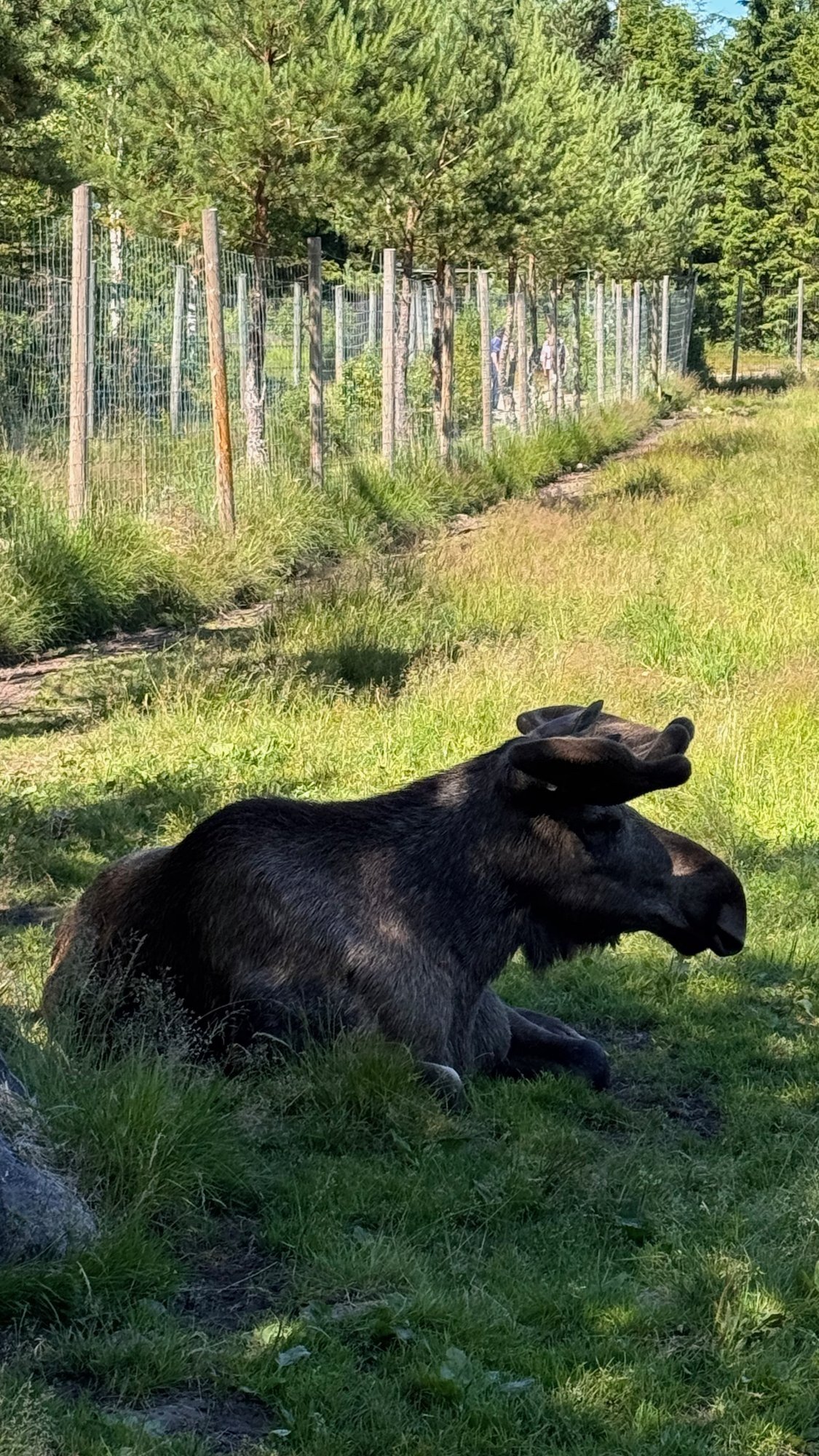
Winter tires are required from 1 December to 31 March when there are winter road conditions. Watch for moose, especially at dawn and dusk. Speed cameras are common. The speed limit is usually 30–50 km/h in towns, 70–90 km/h on country roads and up to 120 km/h on motorways. Signs always win. In cities, parking is expensive. Most people pay with an app such as EasyPark.
Cycling
Stockholm, Gothenburg and Malmö have good bike lanes and city bikes to rent. Helmets are not required for adults, but I wear one.
When to visit
Each season shows you a different Sweden. The change in daylight is the first thing I explain to my guests.
Summer (June–August)
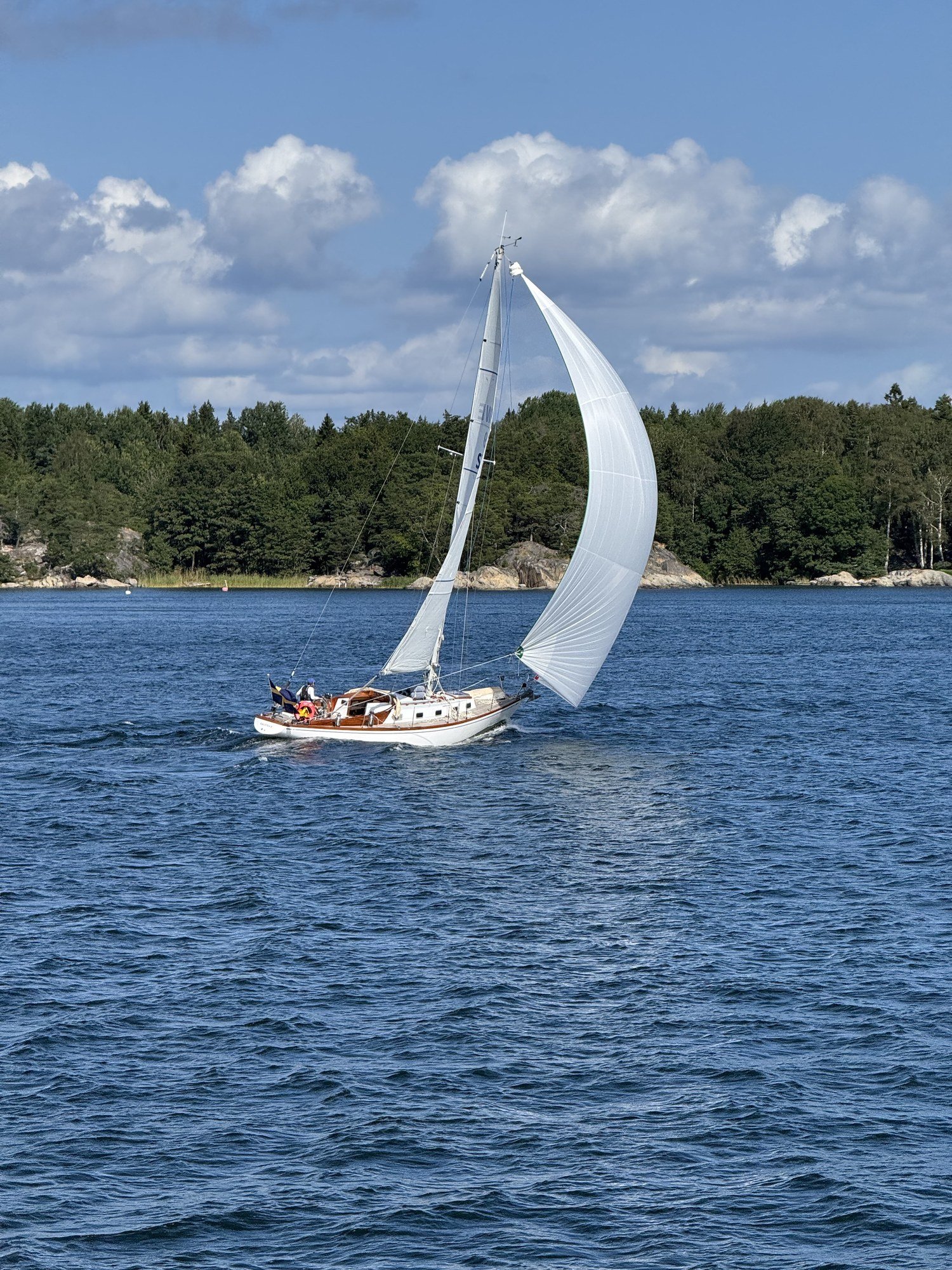
Temperatures of 15–25°C in the south. Stockholm has up to about 18 hours of daylight, and the far north has the midnight sun. This is festival season, with Midsummer in late June. It is also the busiest and most expensive time, so book early. Bring an eye mask. In July, many Swedes go on holiday, and some small restaurants and shops close for weeks.
Autumn (September–November)
Colors in the forest, berries and mushrooms, and fewer tourists. September is often mild and clear. Then the rain and the dark come quickly. The clocks go back on the last Sunday of October.
Winter (December–February)
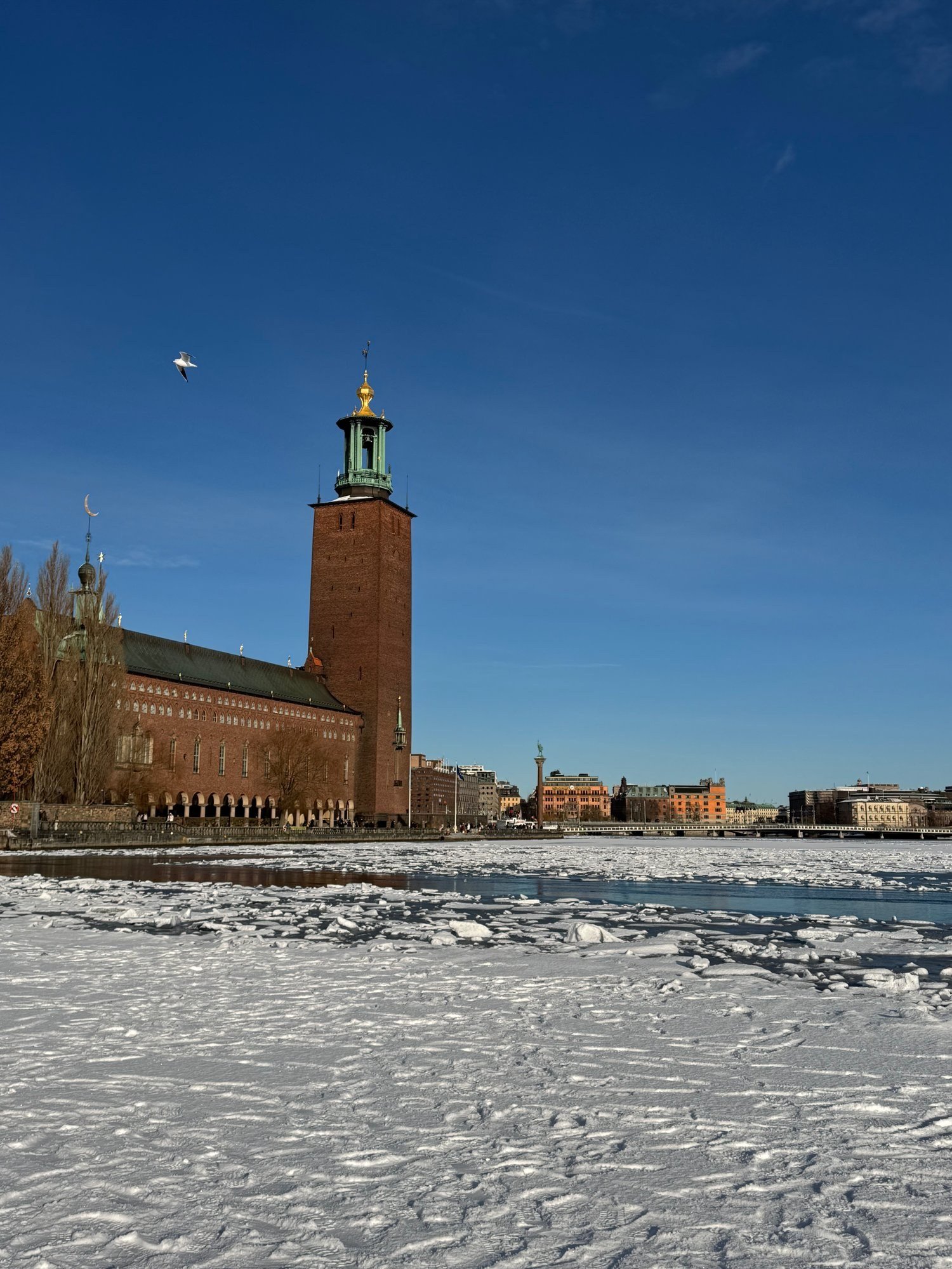
Stockholm gets about six hours of daylight in December. In the south, temperatures stay around −5 to +2°C. In the north, they can fall below −30°C. This is the time for the northern lights in Lapland, Christmas markets and candles in every window. Lucia, on 13 December, fills churches and schools with songs and candlelight.
The dark is real. Many Swedes take vitamin D in winter, and some use light lamps at home. My advice: go out at midday when the light is there, and spend the dark hours the Swedish way, with candles, fika and museums.
Spring (March–May)
The light comes back fast, but snow can still fall in April. On 30 April, Valborg, towns light big bonfires to welcome spring. Cherry trees bloom in Kungsträdgården in Stockholm in April.
My pick: Late May to mid-June, or September. The weather is good, the crowds are smaller and the prices are lower.
Trip ideas
People often ask me how many days they need. My answer is usually: more than you planned. Here are three routes I suggest.
Four days in Stockholm
- Day 1: Gamla stan, the Royal Palace and the Nobel Prize Museum
- Day 2: Djurgården, with the Vasa Museum, Skansen and ABBA The Museum
- Day 3: A boat trip into the archipelago
- Day 4: Moderna Museet on Skeppsholmen, then Södermalm
Seven days of cities and coast
- Days 1–3: Stockholm
- Day 4: Uppsala as a day trip
- Days 5–6: Gothenburg and its car-free southern archipelago
- Day 7: Malmö, with a short train trip over the Öresund Bridge to Copenhagen
Ten days from south to north
- Days 1–3: Stockholm
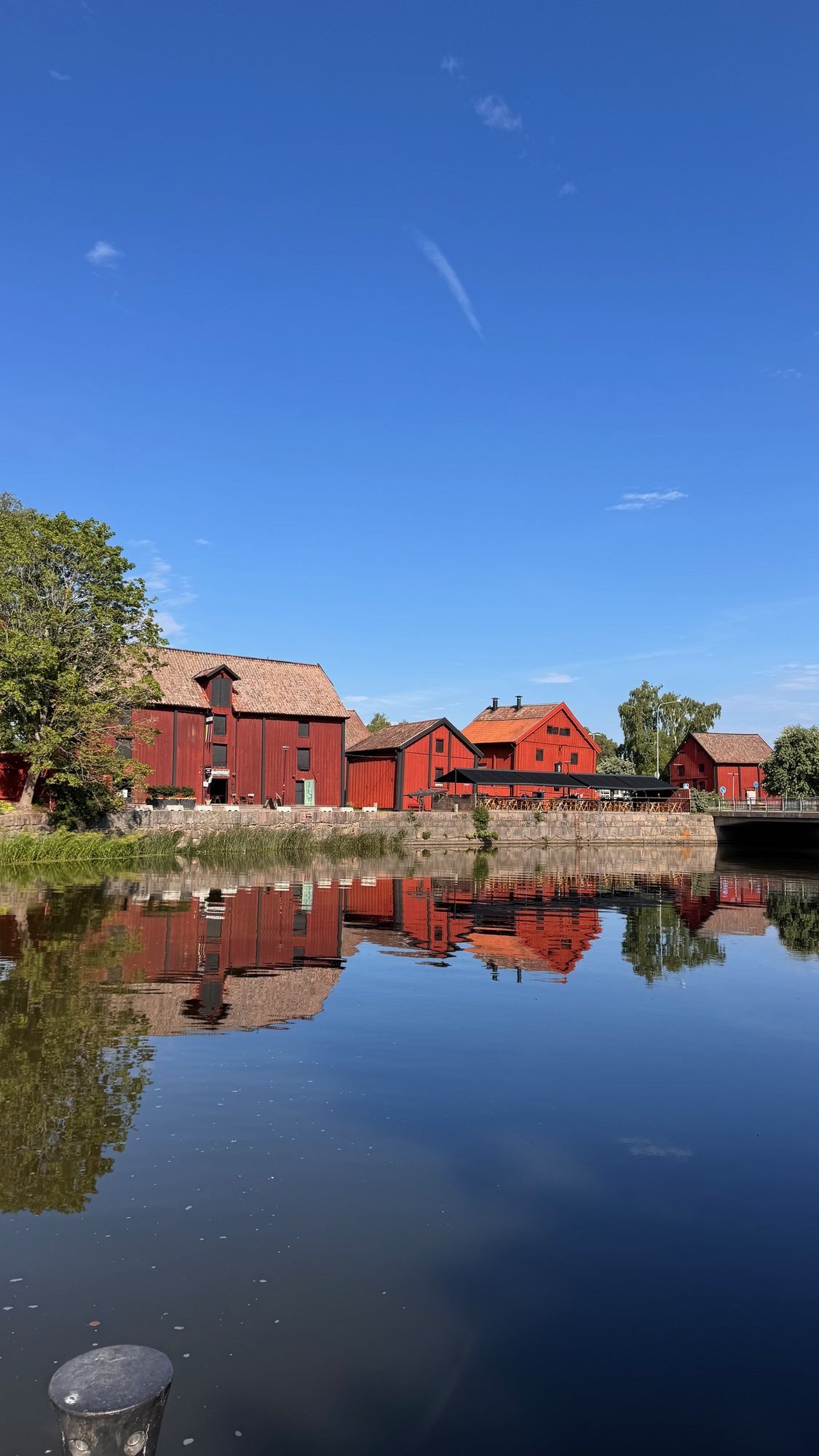
- Days 4–5: Dalarna, with lakes, red cottages and Midsummer traditions
- Days 6–7: Åre in the mountains
- Days 8–10: Swedish Lapland: Kiruna, the Icehotel and Abisko
If you love museums, look at a city card such as the Stockholm Pass or the Gothenburg City Card. Count what you will really visit before you buy one.
Want a route made for you? I plan and guide private tours in Stockholm. See my tours and prices in Stockholm.
Where to stay
Book early for summer and Midsummer. The prices below are my rough 2026 estimates for one night in Stockholm. Outside the big cities, prices are often lower.
- Hostels (vandrarhem)
- 300–900 SEK. The Swedish Tourist Association (STF) runs clean hostels across the country, with guest kitchens and private rooms.
- Budget and chain hotels
- 800–1,300 SEK. Simple rooms, and breakfast is often included. Swedish hotel breakfasts are generous.
- Mid-range hotels
- 1,300–2,200 SEK. Good locations and big breakfast buffets. Often the best value.
- Luxury hotels
- From 2,500 SEK. Historic buildings, spas and fine dining. The Grand Hôtel in Stockholm is the classic.
- Apartments
- 800–2,500 SEK. A kitchen and more space, good for families and longer stays.
- Cabins (stugor)
- 600–2,000 SEK. By a lake or in the forest, often with a sauna. You usually need a car.
- Camping
- Wild camping for a night is free under the right of public access. Campsites cost roughly 200–500 SEK. Book July early.
Places to sleep that you will remember
- Icehotel, Jukkasjärvi: Artists build new rooms from Torne River ice every winter. Part of the hotel stays frozen all year.
- Treehotel, Harads: Rooms built high in the trees, each by a different architect.
- A ship in Stockholm: af Chapman, an old sailing ship on Skeppsholmen, is an STF hostel.
- Manor houses: Old country estates with gardens and long dinners.
Places worth the trip
- The Stockholm archipelago: About 30,000 islands, rocks and skerries. Take a Waxholmsbolaget boat, swim from the rocks and eat at an island café.
- The Vasa Museum: A warship that sank on its first voyage in 1628. It was lifted from the seabed in 1961, and almost all of it is still there.
- Gamla stan: Stockholm’s old town, with narrow lanes, the Royal Palace and Stortorget, the oldest square in the city.
- Northern lights in Abisko: Clear skies make Abisko one of the best places to see the aurora, from about September to March. The Aurora Sky Station sits on a mountain above the village.
- Abisko National Park and Kungsleden: Mountains, the midnight sun in June and July, and the start of Kungsleden, a trail of about 440 km to Hemavan.
- Visby on Gotland: A medieval town inside its old town wall, on the UNESCO World Heritage List. In August, Medieval Week fills the streets.
- The Göta Canal: 190 km of canal and locks, opened in 1832. Travel it by boat, or cycle the old towpaths.
- Icehotel, Jukkasjärvi: Worth a visit even if you do not sleep there.
Cities beyond Stockholm
Stockholm is my home, but Sweden has more to show. These are the five largest municipalities.
| City | People | Why go |
|---|---|---|
| Stockholm | 999,239 | The capital, built on 14 islands. Museums, water everywhere and the archipelago. |
| Gothenburg | 613,278 | West coast seafood, the Liseberg amusement park and a car-free archipelago. |
| Malmö | 367,924 | The Öresund Bridge to Copenhagen, food from all over the world and long beaches. |
| Uppsala | 249,726 | Sweden’s oldest university, from 1477, a large cathedral and the royal mounds at Gamla Uppsala. |
| Linköping | 168,714 | A university city with the Swedish Air Force Museum. |
Smaller towns are often the nicest surprise. Helsingborg looks across the water to Denmark, Jönköping sits on Lake Vättern, and Norrköping has old textile mills along a waterfall.
Phones, internet and apps
Mobile coverage is good, even in much of the countryside. EU visitors can use their home plan with no roaming fees. Other visitors can buy a prepaid SIM or eSIM from Telia, Tele2, Telenor or Tre. Most cafés, hotels and trains have free Wi-Fi.
Apps I suggest
- SL: Tickets and journeys in Stockholm
- Resrobot: Public transport across all of Sweden
- SJ: Train tickets between cities
- Waxholmsbolaget: Archipelago boats around Stockholm
- EasyPark: Parking
- Too Good To Go: Leftover food from cafés and shops at a low price
- A translation app: For menus and signs
Customs and everyday life
Swedes can seem quiet at first. It is not coldness. It is respect for your space. Once someone invites you home, you are welcome.
Values you will feel
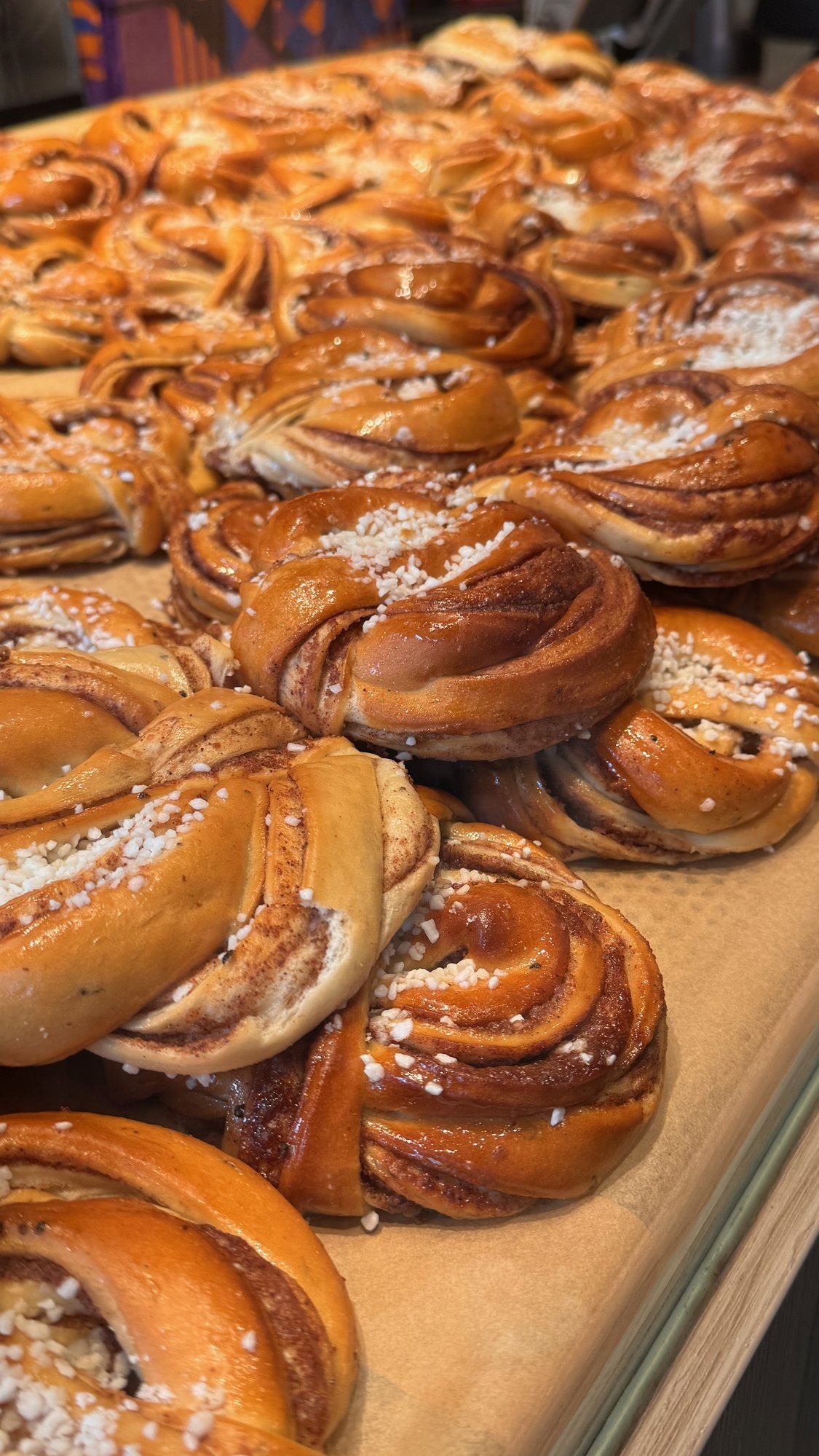
- Fika: A coffee break with something sweet. It is a small social ritual, at home and at work. On 4 October, Sweden even celebrates Cinnamon Bun Day.
- Lagom: Not too much, not too little. Just right.
- Jantelagen: A quiet rule against showing off. People are proud of their work, but they rarely say so loudly.
- First names: Everyone uses first names, even with a boss or a doctor.
Everyday manners
- Be on time. On time means on time.
- Take a queue number. At pharmacies, some shops and service desks, pull a nummerlapp from the machine and wait for your number.
- On escalators, stand on the right and walk on the left.
- Take off your shoes when you enter someone’s home.
- Keep your voice low on public transport. Many trains have a quiet carriage (tyst avdelning).
- Sort your waste. Paper, plastic, glass, metal and food waste often go into separate bins.
Opening hours
Most shops open around 10:00 and close at 18:00 or 19:00 on weekdays, earlier on Saturdays. On Sundays, many small shops open for fewer hours or stay closed. Large supermarkets are often open every day until 21:00 or 22:00.
Traditions I love
- Midsummer: A maypole, flowers in the hair, herring, new potatoes, strawberries and songs before every snaps.
- Christmas Eve: The julbord buffet, warm glögg, and Donald Duck on TV at 15:00, a tradition since 1960.
- Easter: Children dress up as Easter witches and go door to door for candy.
- Valborg: Bonfires and songs to welcome spring. Students in Uppsala and Lund celebrate all day.
- Crayfish parties: In August, people eat crayfish outdoors, wear paper hats and sing.
Holidays that change opening hours
- Valborg
- 30 April
- National Day
- 6 June
- Midsummer Eve
- A Friday between 19 and 25 June
- Crayfish parties
- August
- Lucia
- 13 December
- Christmas Eve
- 24 December, the main Christmas day in Sweden
On public holidays and on Midsummer, Christmas and New Year’s Eve, many shops close or open for fewer hours.
The right of public access
This is my favorite Swedish law. Allemansrätten, the right of public access, lets everyone use nature, including privately owned land, as long as you respect it.
You can
- Walk, cycle, ski and swim almost anywhere in nature
- Pick berries, mushrooms and most wildflowers (not protected species)
- Camp for a night or two, out of sight of homes
You cannot
- Enter private gardens or walk close to houses
- Walk across fields with crops
- Light a fire during a fire ban. In summer, check the local rules before you light anything.
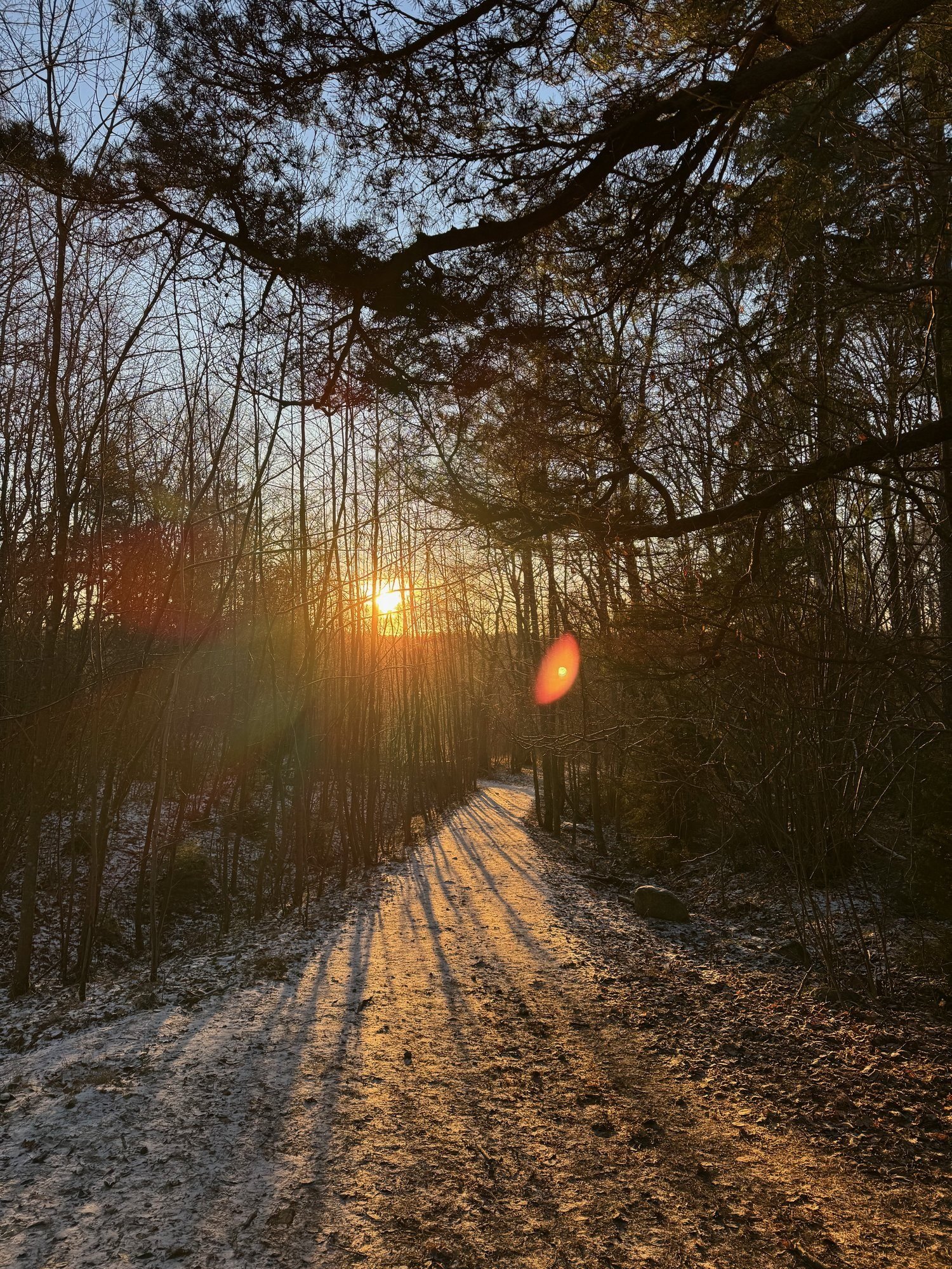
National parks and nature reserves have their own rules. Read more at the Swedish Environmental Protection Agency’s page on the right of public access. The Swedish saying is simple: don’t disturb, don’t destroy. I see this right as a responsibility too. The forest is shared. We borrow it.
Food and drink
Swedish food is simple, seasonal and honest. Much of it comes from long winters: things that are pickled, cured and kept.
Dishes to try
- Köttbullar: Meatballs with potatoes, cream sauce and lingonberries
- Gravlax: Cured salmon with a sweet mustard and dill sauce
- Sill: Pickled herring, a must at Midsummer and Christmas
- Räksmörgås: An open shrimp sandwich, a summer classic
- Ärtsoppa och pannkakor: Pea soup and pancakes, traditionally eaten on Thursdays
- Janssons frestelse: A potato and anchovy bake
- Toast Skagen: Shrimp in a creamy dill sauce on fried bread, often a starter
- Pytt i panna: Fried cubes of potato and meat, with a fried egg and pickled beetroot
- Renskav: Thin slices of reindeer meat, a dish from the north with roots in Sami food culture
- Västerbottensost: A hard, sharp cheese from the north. Try it in a cheese pie.
- Tunnbrödsrulle: Street food: soft flatbread rolled around mashed potato and a sausage
- Surströmming: Fermented herring. Open the tin outdoors. You will understand why.
Something sweet
- Kanelbulle and kardemummabulle: Cinnamon and cardamom buns
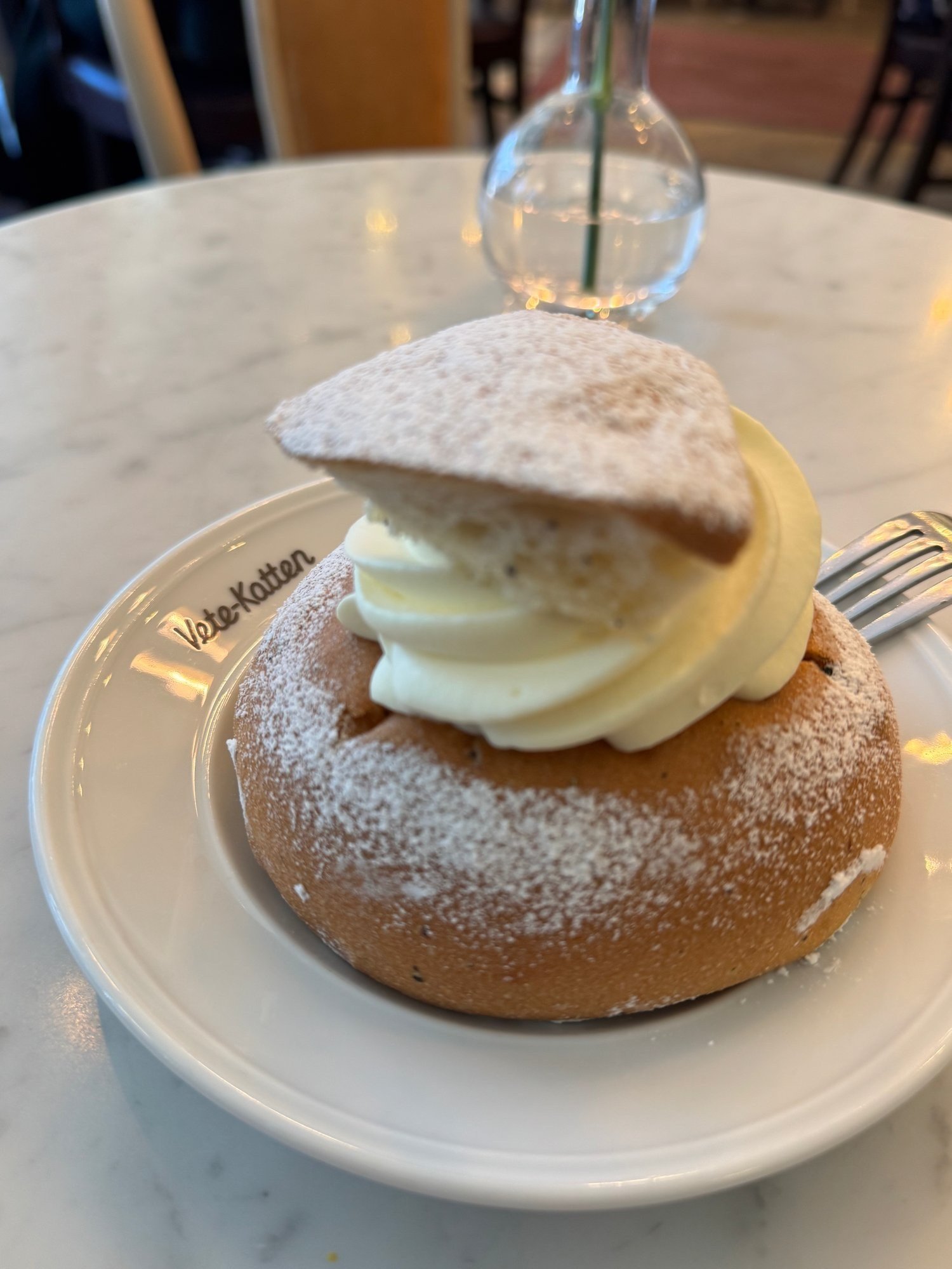
- Semla: A cardamom bun with almond paste and cream, eaten in late winter
- Prinsesstårta: A green, marzipan-covered cake
- Chokladboll: A no-bake chocolate oat ball
- Kladdkaka: A sticky chocolate cake
- Pepparkakor: Thin ginger cookies, everywhere at Christmas
- Lördagsgodis: Saturday candy. Children, and many adults, pick loose candy from big walls in the shop.
Drinks and alcohol
Swedes drink a lot of coffee, and it is strong. Grocery stores sell light beer (lättöl) and medium beer (folköl), up to 3.5 percent. Anything stronger to take away is only sold at Systembolaget, the state-owned alcohol shop. You must be 20 to buy there, and 18 to drink in bars and restaurants.
Most stores close at 19:00 or 20:00 on weekdays and at 15:00 on Saturdays. They are closed on Sundays and public holidays. At Christmas and Easter, try julmust and påskmust, sweet malt sodas.
Special diets
Vegetarian and vegan food is easy to find, and menus often mark it clearly. Halal food is easiest to find in the larger cities.
Where and when to eat
- Food halls: Östermalms saluhall in Stockholm and Stora Saluhallen in Gothenburg
- Lunch: Weekday dagens lunch often includes a salad bar, bread and coffee.
- Dinner: Swedes eat early, often between 18:00 and 20:00. Book popular restaurants ahead.
- Fine dining: Stockholm has several restaurants with Michelin stars.
Stockholm for free, or almost free
Stockholm is expensive, but some of its best moments cost nothing.
- Walk through Gamla stan, the old town, early in the morning before the groups arrive.
- Watch the changing of the guard at the Royal Palace. It starts at 12:15 Monday to Saturday and at 13:15 on Sundays and public holidays. It is free. Check the Royal Guard schedule from the Swedish Armed Forces for the day.
- Visit free museums such as the Swedish History Museum (Historiska museet) and the Royal Armoury (Livrustkammaren). The collection at Moderna Museet is also free. Sweden has more museums per person than any other country. Read my article on Sweden’s museum record.
- Ride the metro for the art. Most of the 100 stations have art. Start with the blue line at T-Centralen and Kungsträdgården.
- Take the Djurgården ferry from Slussen. It takes a normal SL ticket. Longer archipelago boats (Waxholmsbolaget) need their own tickets.
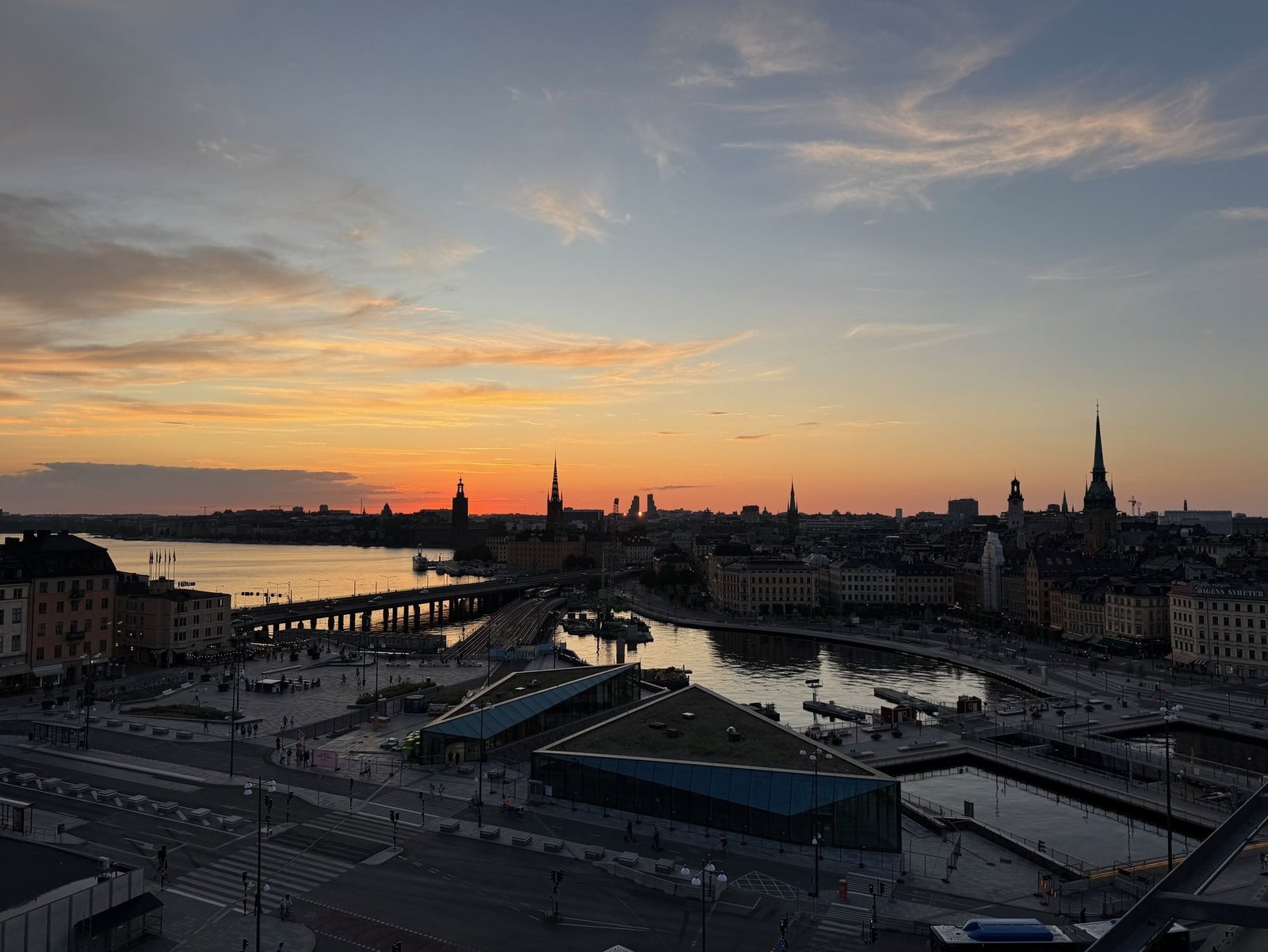
- Watch the sunset from Monteliusvägen on Södermalm, over the water and the city hall.
- Go into nature. Tyresta National Park is about an hour from the city by public transport.
Want to see Stockholm with a guide? I lead private walking and car tours in English, Swedish and German. See my Stockholm tour guide services.
Health, safety and inclusion
Sweden is a safe country to visit. Use normal city sense. Watch your bag in crowded places, such as Central Station and the busy streets of Gamla stan. Sweden is also a good country for women who travel alone.
- Police, not urgent: Call 114 14.
- Drink-driving: The limit is 0.2 per mille, much lower than in many countries. Do not drink and drive.
- Ticks: From spring to autumn, check your skin after walks in grass and forest. Ticks can carry TBE and Lyme disease. If you will spend a lot of time in the Stockholm archipelago, ask a pharmacy about the TBE vaccine.
- Cold water: Lakes and the sea can be cold, even in July. Swim where others swim.
- Northern winter: In Lapland, it can go below −30°C. Dress in layers and tell someone your route.
Health
Call 112 in an emergency. For medical advice, call 1177 or visit 1177, Sweden’s health care guide, which has information in English and several other languages. For medicine, look for the word Apotek. Grocery stores sell some basic painkillers in small packs. EU visitors should bring their European Health Insurance Card. Everyone else should have travel insurance.
LGBTQ travelers
Same-sex marriage has been legal in Sweden since 2009, and discrimination is illegal. Stockholm Pride takes place every summer, usually in late July or early August. As a queer woman, I feel at home in Stockholm. Smaller towns are often relaxed too, just less visible.
Accessibility
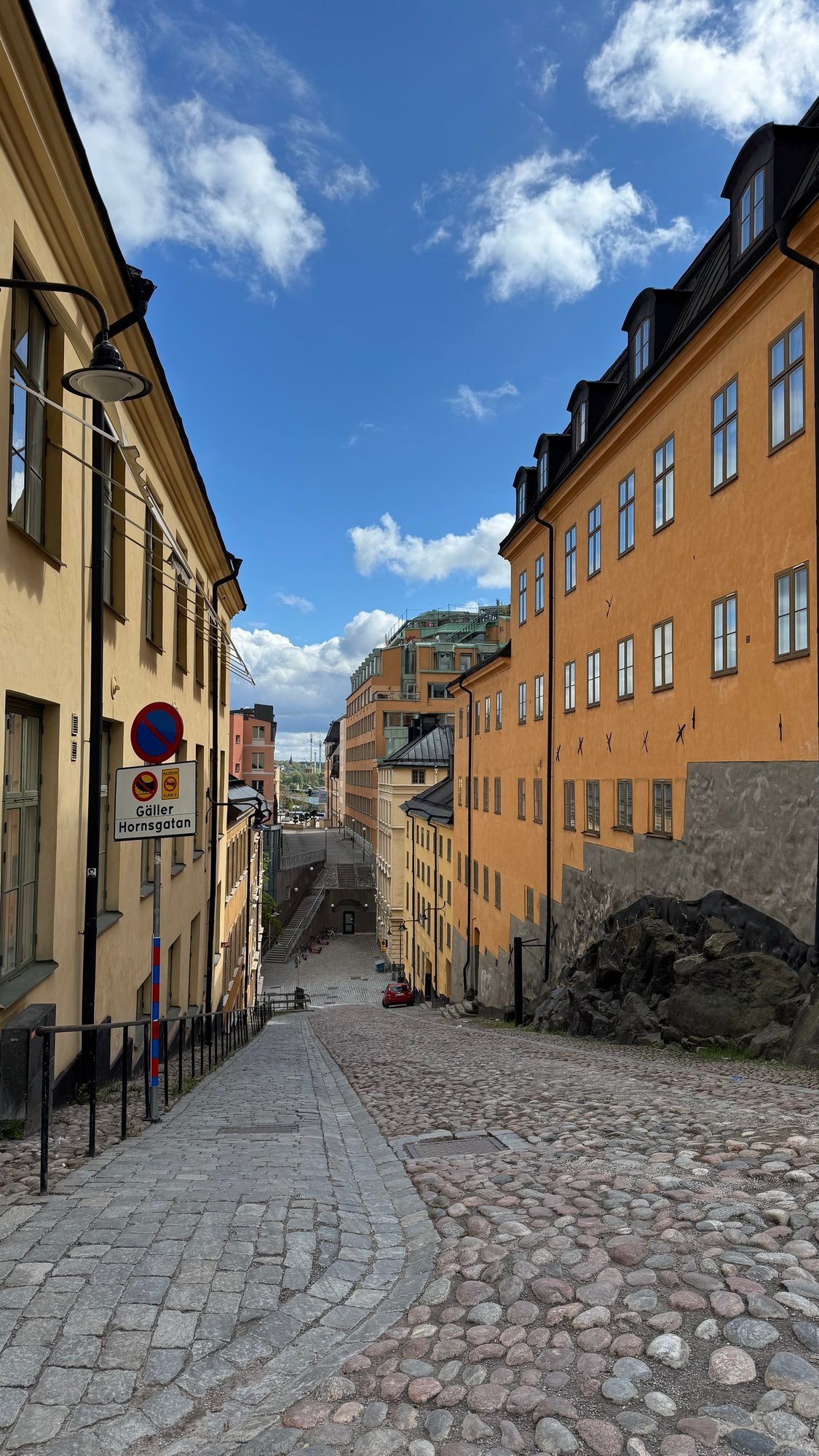
Most metro stations in Stockholm have lifts, and most city buses are low-floor. The cobblestones and steep lanes in Gamla stan and parts of Södermalm are hard for wheelchairs and strollers. Museums vary, so check each one before you go.
Mistakes I see visitors make
- Packing for the month on the calendar instead of the weather forecast.
- Bringing a lot of cash.
- Planning to buy wine on a Sunday.
- Waiting until May to book a room for Midsummer.
- Expecting shops to open late on Sundays and holidays.
- Standing on the left side of the escalator.
- Seeing only Stockholm. Uppsala is less than an hour away by train, and small towns such as Nyköping are easy day trips.
- Staying indoors. Nature is free, close and yours to use.
Questions visitors ask me
Do I need cash in Sweden?
No. Cards and mobile payments work almost everywhere, and some places do not accept cash at all.
Is Sweden expensive?
Yes. Eating lunch out instead of dinner, shopping at budget supermarkets and using free museums helps a lot.
Do I need a visa or ETIAS to visit Sweden?
EU citizens do not. Many other nationalities can visit for up to 90 days without a visa. ETIAS has not started yet. Check the rules for your passport before you travel.
When is the best time to visit Sweden?
Late May to mid-June, or September, for good weather and fewer crowds. Come in winter for the northern lights and Christmas markets.
How many days do I need in Sweden?
Four days is enough for a first look at Stockholm. Plan seven to ten days if you want to add Gothenburg, Malmö or Lapland.
Do people in Sweden speak English?
Yes, almost everyone, and very well.
Can I drink the tap water in Sweden?
Yes. Swedish tap water is safe and very good.
Is Sweden safe for LGBTQ travelers?
Yes. Sweden has strong legal protections, and Stockholm has an open and visible LGBTQ community.
One last thing
Sweden rewards visitors who slow down. Take the long fika. Sit by the water without a plan. Let the silence on the train be restful.
Which Sweden will you meet: the bright one in June, or the dark, candlelit one in December?
Välkommen till Sverige.
Facts about Sweden
Numbers from 2025–2026
For the curious. I checked every number against official sources in September 2026. Numbers change, so the year is next to each one.
People
- Population
- 10,613,531 (July 2026)
- Growth
- 17,800 more people in 2025, the lowest growth this century
- Births
- 97,500 in 2025. On average 1.42 children per woman, the lowest ever recorded in Sweden.
- Life expectancy
- Women 85.55 years, men 82.52 years (2025)
- Born abroad
- About 2.2 million people, just over 20 percent of the population (2025)
- Municipalities
- 290 municipalities in 21 regions. 180 of them had fewer people at the end of 2025 than a year before.
Travel and tourism
- Guest nights
- 72 million in 2025, up 4.3 percent from 2024
- From abroad
- 18.6 million guest nights in 2025, up 10.8 percent
- Top countries
- Germany (3.85 million guest nights), Norway (3.54 million), Denmark (2.23 million), the United States (1.71 million) and the Netherlands (1.05 million), all 2025
Work and money
- Unemployment
- 8.8 percent of people aged 15–74 (2025)
- Employment
- 69.0 percent of people aged 15–74 (2025)
- Collective agreements
- Cover 88 percent of employees (2025)
- Union members
- About 5 in 10 manual workers and more than 7 in 10 salaried employees (2025)
- Swedish-founded companies
- IKEA, H&M, Volvo, Ericsson, Scania and Spotify, among others
Taxes
- Tax level
- More than 41 percent of GDP, the eighth-highest in the OECD (2024)
- Local income tax
- 32.38 percent on average (2026). Lowest in Österåker, 28.93 percent. Highest in Dorotea, 35.65 percent.
- Corporate tax
- 20.6 percent (2026)
- VAT
- 25 percent as standard. 12 percent on hotels and on meals eaten in restaurants. 6 percent on books, public transport and culture, and, from 1 April 2026 to 31 December 2027, on food in shops and takeaway food.
Family and society
- Parental leave
- 480 paid days per child. 90 days are reserved for each parent.
- Education
- School and university are free for Swedish and EU students.
- Waste
- About 40 percent of household waste was recycled in 2025, food waste included. Most of the rest is burned for heat and electricity.
- Right of public access
- Written into the Swedish constitution
Sweden in Europe and the world
- European Union
- Member since 1995
- Schengen
- Part of the Schengen Area since 2001
- The euro
- Swedes voted no in 2003. Sweden still uses the krona.
- NATO
- Member since 7 March 2024, after about 200 years without military alliances
Curious facts
- Donald Duck at Christmas: Millions of Swedes watch the same Disney cartoons at 15:00 on Christmas Eve. The tradition started in 1960.
- Saturday candy: Lördagsgodis comes from health advice in the 1950s: eat candy once a week, not every day.
- Names need approval: The Swedish Tax Agency must approve a child’s first name. In 1996, parents protested the law with a 43-character name. It was rejected.
- Julmust: This Christmas malt soda is often reported to outsell Coca-Cola in Sweden in December.
- Swedish inventions: Dynamite (Alfred Nobel), the three-point seat belt (Nils Bohlin at Volvo, 1959) and the first implanted pacemaker (Stockholm, 1958).
Read next
- Museums in Stockholm by district
- The Nobel Prize Museum in Gamla stan
- Private tours with Zayera in Stockholm
All photos on this page were taken by Zayera Khan. Zayera Khan is the photographer and copyright owner. Please do not reuse them without permission.
Sources: Statistics Sweden (SCB); SL; EU Travel to Europe (EES and ETIAS); Sweden’s national parks; Tarfala Research Station on Kebnekaise; Arlanda Express; Flygbussarna.
Sources for the facts section: SCB, population 2025; SCB, life expectancy; SCB, people born abroad; SCB, labor market 2025; SCB, local income tax 2026; Visit Sweden, guest nights 2025; Swedish Tax Agency, food VAT; National Mediation Office, unions and agreements; Ekonomifakta, tax as a share of GDP; Avfall Sverige, household waste.