
EES & ETIAS: New Europe Entry Rules (Dates, Biometrics, Fees)
What non-EU travelers must know about Europe’s two new border systems: EES, which is now in use, and ETIAS, which has no start date yet.
Update (30 September 2026): In July 2026, the EU removed the Q4 2026 start date for ETIAS. There is no new date yet. EES has been fully operational since 10 April 2026. Information checked with official EU sources.
Timeline (simple)
EES started: 12 October 2025, with a gradual rollout by country and border crossing point. Fully operational since 10 April 2026. EES replaces manual passport stamps for non-EU/EEA/Swiss travelers on short stays in the Schengen Area. It applies to both visa-exempt and visa-required travelers.
ETIAS start: No date yet. The EU removed the Q4 2026 target in July 2026. ETIAS is not in operation, and you cannot apply yet. Planned fee: €20, for visa-exempt travelers.
What EES means at the border
Your first trip under EES: You register biometrics (face and fingerprints) and passport details at a kiosk or with a border guard. After that, your entries and exits are logged digitally. Queues can still be long at some borders.
Who is not in scope: EU citizens are not subject to EES. Residents with a valid permit are also exempt. Cyprus and Ireland do not use EES, so normal border rules apply there.
What ETIAS is (and is not)
ETIAS is a travel authorization, not a visa. It will apply to visa-exempt visitors to 30 European countries. When it starts, you apply online before you travel. The planned fee is €20.
The EU will give notice first. It says it will announce the start date several months in advance, and a transition period will follow.
Beware of look-alike sites. Some sites already take “applications” and charge extra service fees. ETIAS does not collect applications yet. When it starts, use only the official Europa site.
How to prepare (checklist)
Now: Expect EES registration on your first entry. Allow extra time at the border.
ETIAS: No action is needed yet. Check the official site before you book trips for 2027 and later. When ETIAS starts, apply online, pay €20, and travel with the same passport you used to apply.
FAQs
Is EES in use now?
Yes. EES started on 12 October 2025 and has been fully operational since 10 April 2026.
Do children need fingerprints?
No. Children under 12 are exempt from fingerprinting under EES. They still have their face photographed.
When will ETIAS be required?
There is no date yet. The EU removed the Q4 2026 date in July 2026. Until ETIAS starts, you do not need it.
How much will ETIAS cost?
The planned fee is €20 per application. Travelers under 18 and over 70 do not pay the fee.
Official EU information on EES and ETIAS at travel-europe.europa.eu (opens in a new tab)
Where EES is used
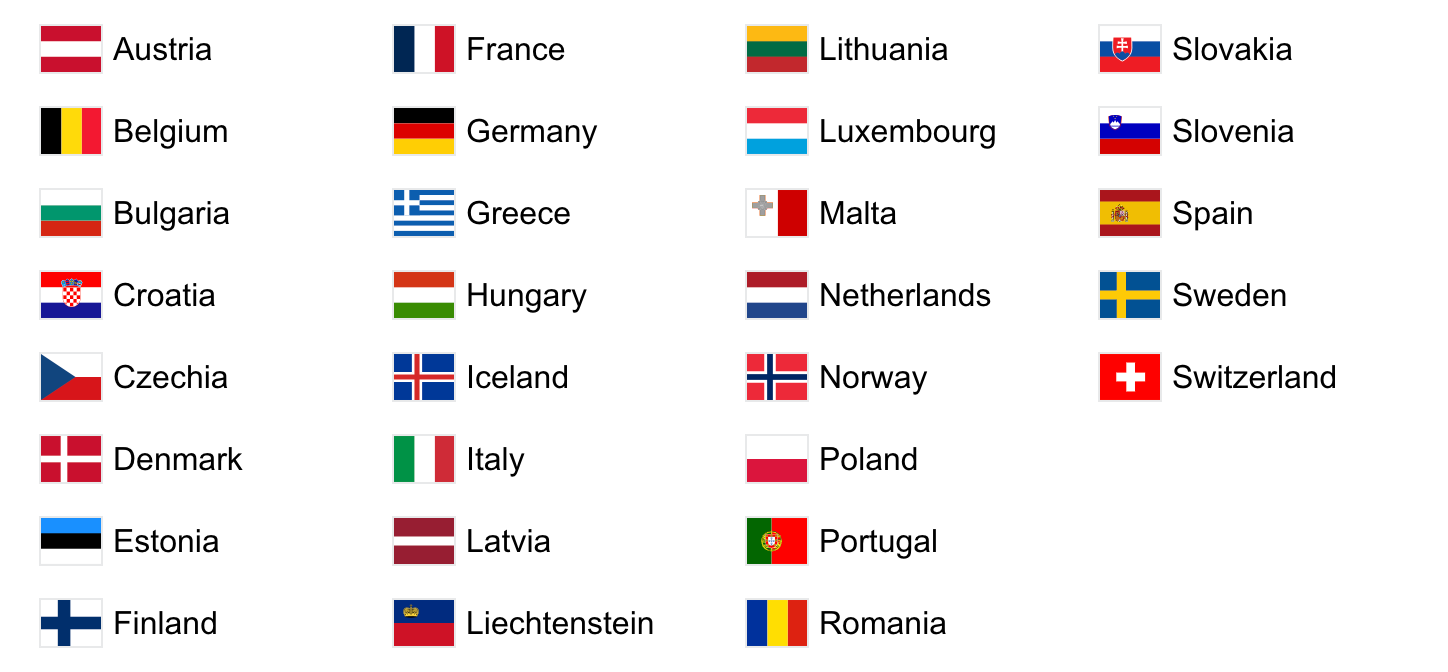
EES is used in 29 European countries: Austria, Belgium, Bulgaria, Croatia, Czechia, Denmark, Estonia, Finland, France, Germany, Greece, Hungary, Iceland, Italy, Latvia, Liechtenstein, Lithuania, Luxembourg, Malta, the Netherlands, Norway, Poland, Portugal, Romania, Slovakia, Slovenia, Spain, Sweden, and Switzerland.
Cyprus and Ireland are EU countries, but they do not use EES.
EES in detail
The EU started the Entry/Exit System (EES) on 12 October 2025 and rolled it out step by step. Since 10 April 2026, it is fully operational. EES is an electronic border system. It replaces passport stamps for non-EU travelers on short stays.
Who does it apply to?
Non-EU/EEA/Swiss citizens who visit the Schengen Area for short stays (up to 90 days in any 180-day period).
Exemptions: EU citizens; citizens of Iceland, Liechtenstein, Norway, and Switzerland; nationals of Andorra, Monaco, San Marino, and the Vatican; people with a long-stay visa or residence permit; and family members of EU citizens who have a residence card. This also covers people with rights under the EU–UK Withdrawal Agreement.
What is recorded?
At each border crossing, EES records:
- Personal data (name, date of birth, travel document details).
- Biometrics: facial image and fingerprints (no fingerprints for children under 12).
- Date, time, and place of entry and exit.
- Records of refused entry.
The data is stored for three years. If you stay longer than you are allowed, it is stored for five years.
What changes in practice?
- Border guards no longer stamp passports.
- Border checks are digital, often at kiosks or e-gates.
- After your first registration, you usually give only a photo or fingerprint when you enter again (within three years).
- If you refuse biometric registration, you can be refused entry.
Practical tips for travelers
- Check your status. Does EES apply to your nationality?
- Use a biometric passport that meets ICAO standards.
- Track your days. EES enforces the 90/180-day rule automatically.
- Prepare for biometrics: photo and fingerprints on your first entry.
- Allow extra time at the border.
- Follow the instructions at each airport, land border, or port. The process can differ.
- Check for updates before you travel, especially about ETIAS.
EES changes how Europe manages its external borders. In the long term, it means faster digital checks. For now, it means new steps to know about when you enter or leave Schengen.
More about EES from the European Commission (opens in a new tab)