
The History of Money in Sweden: Coins, Copper Plates and the First Banknotes
A visit to the Economy Museum in Stockholm, from Viking silver to a cashless country.
The coins surprised me. Not the small ones. The big ones.
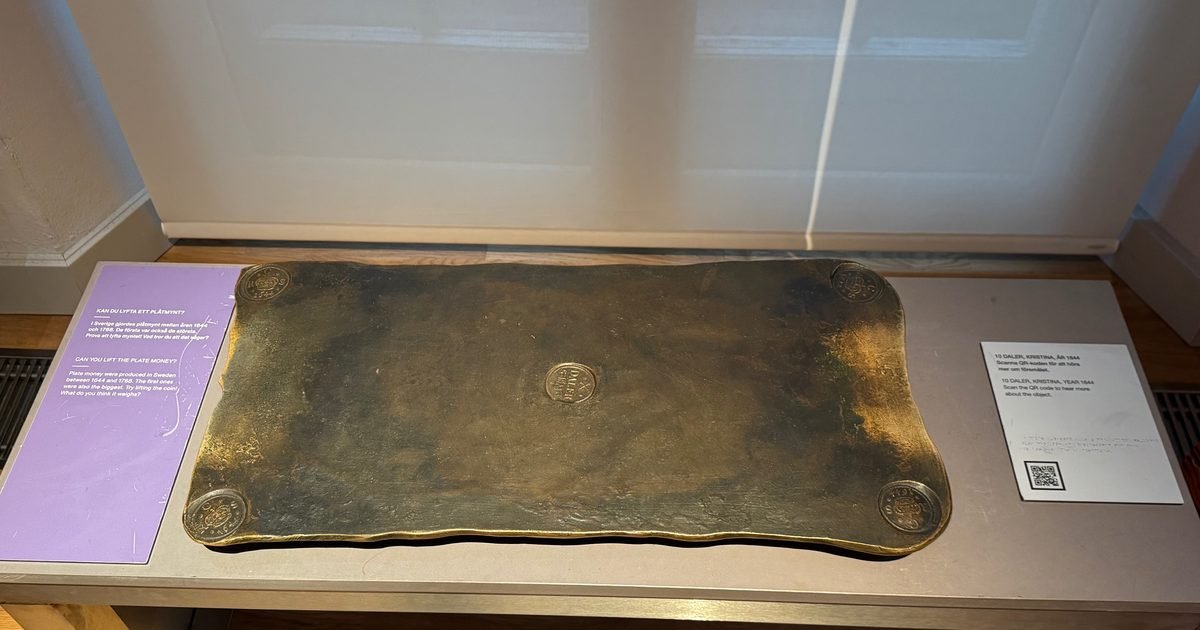
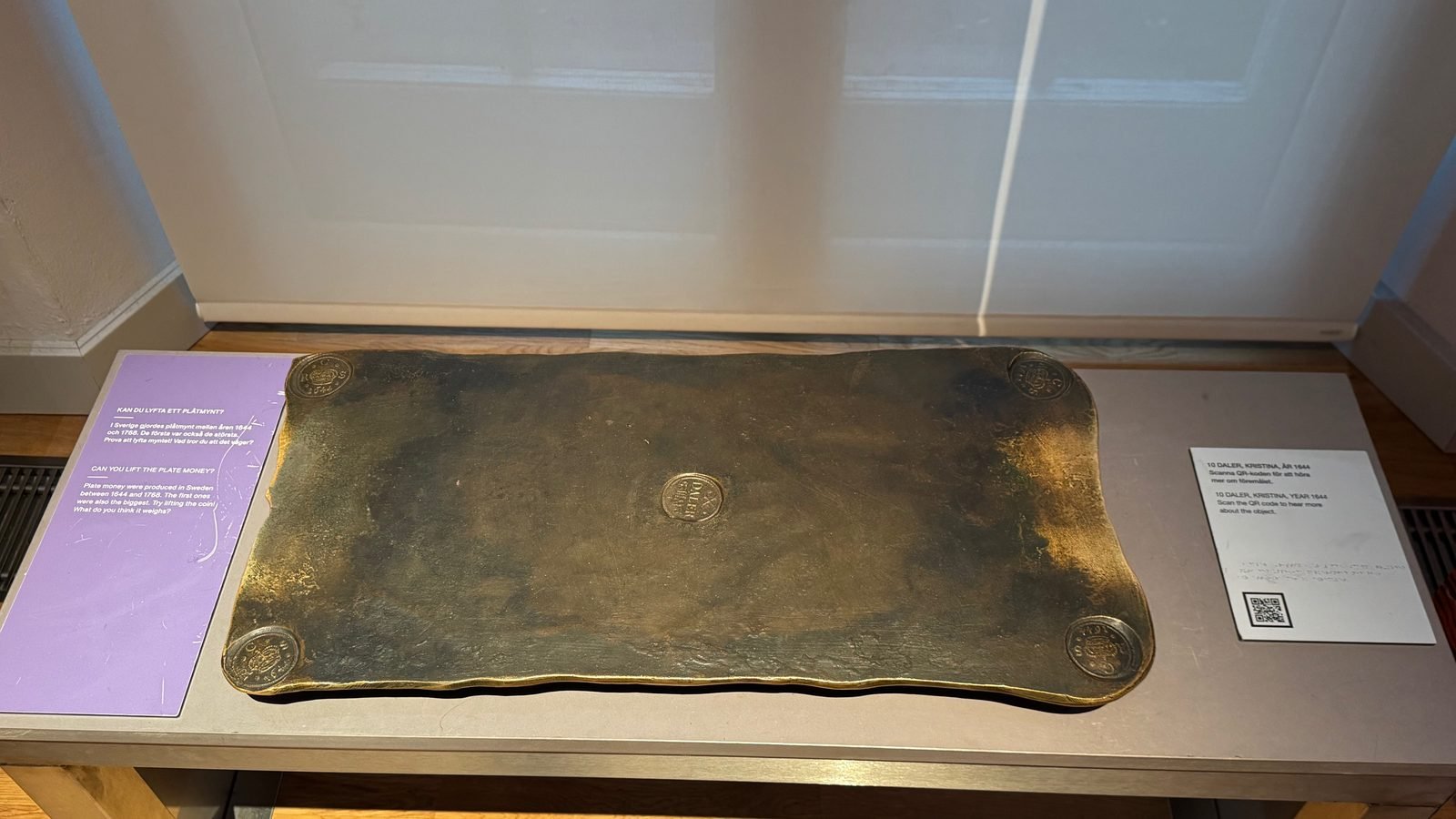
At the Economy Museum in Stockholm, the world’s largest coin lies in a glass case. Next to it is a copy of the plate that you can lift. It is heavy, and it is square. I always thought of coins as small and round. Here, money looked like a metal tray.
The Economy Museum (Ekonomiska museet – Kungliga Myntkabinettet) shares a building with Historiska museet on Narvavägen. The exhibition takes you through about a thousand years of Swedish money. It is very informative. If you are curious about how money and the economy developed, it is worth a visit.
Before coins: food, cloth and foreign silver
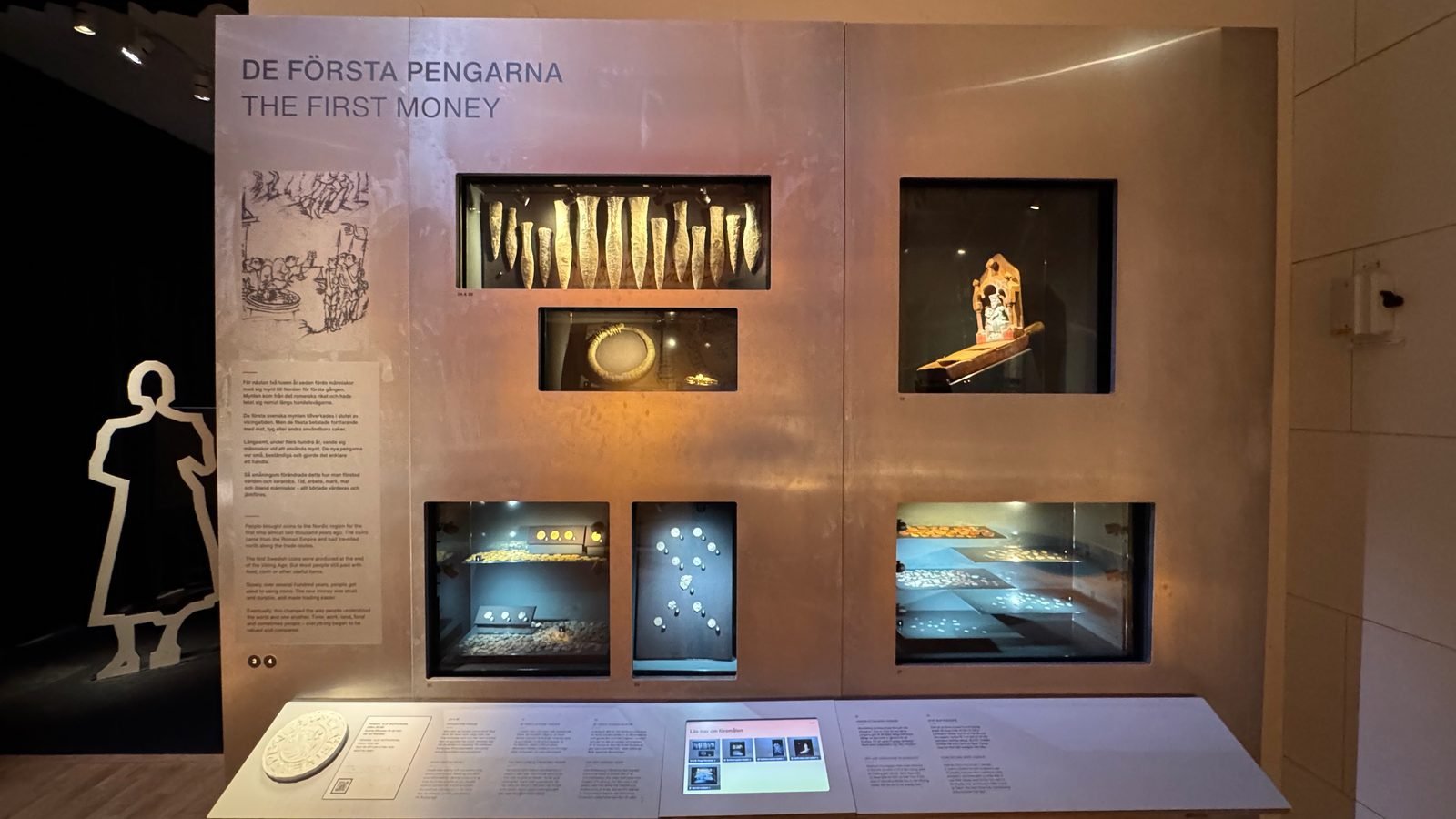
People first brought coins to the Nordic region almost two thousand years ago. The coins came from the Roman Empire. They traveled north along the trade routes.
For a long time, most people did not pay with coins. They paid with food, cloth or other useful things. In the Viking Age, silver was valued by weight. If you needed a smaller amount, you cut the coin into pieces.
The first Swedish coins, about 995
King Olof Skötkonung ordered the first Swedish coins in about the year 995. They were made in Sigtuna, north of Stockholm. They were small, round silver coins called penningar. The first craftsmen came from England, and the coins copied English designs.
Slowly, over several hundred years, people got used to coins. Coins were small, they lasted, and they made trade easier. Over time, people started to put a price on time, work, land and food. Sometimes on people too.
Medieval money: the örtug and three crowns
A sign in the exhibition gives a short timeline:
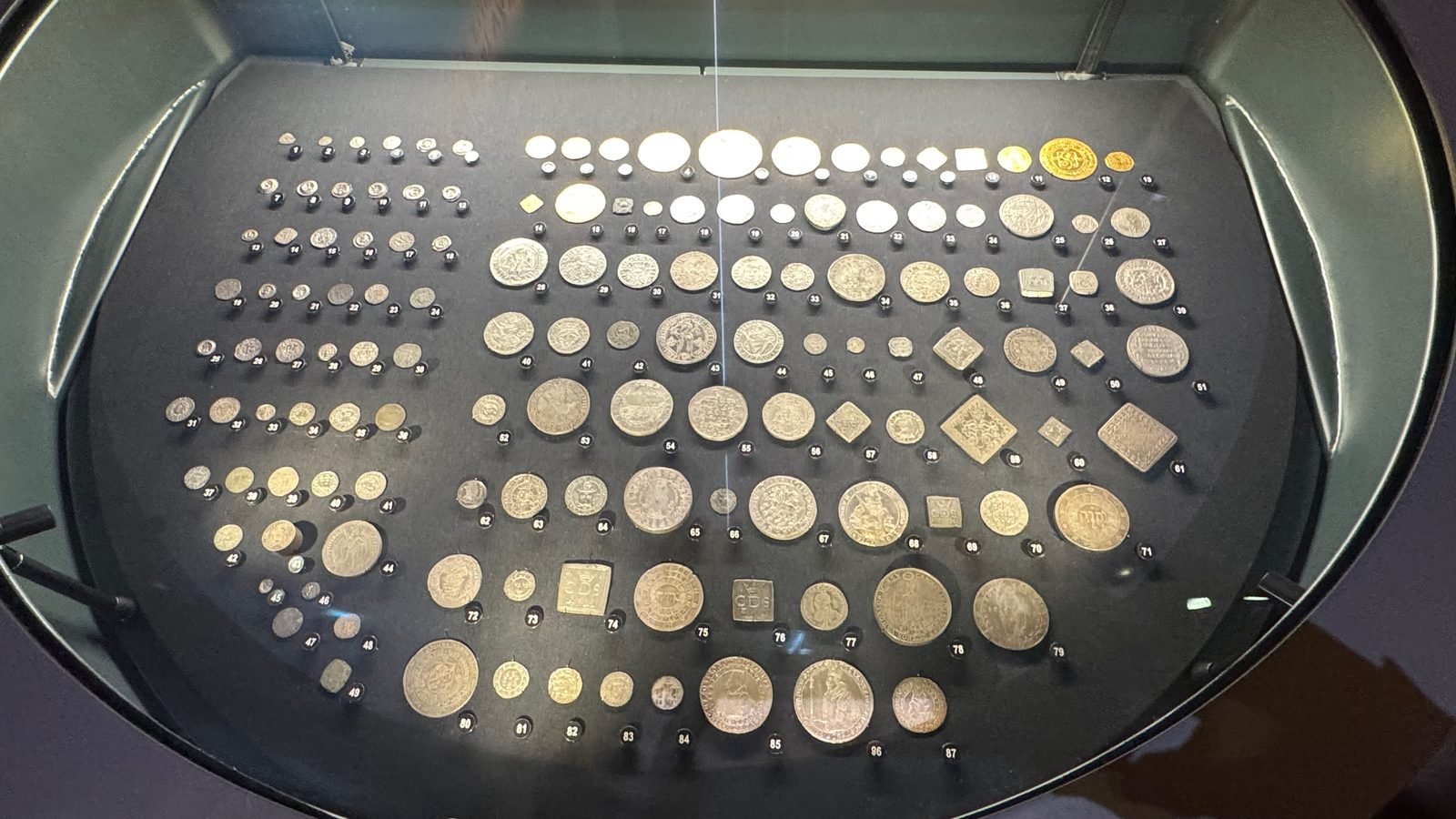
- Around 1290, Sweden got a common coinage. More people started to use coins every day.
- Around 1340, a new denomination came: the örtug.
- In the 1370s, the first coins with three crowns appeared. Sweden still uses this symbol today.
- In 1592, Sweden had its highest inflation ever: 800 percent.
Copper country and the world’s largest coin
In parts of the 17th century, two-thirds of the world’s copper came from Sweden. Most of it came from the copper mine in Falun.
Sweden paid with silver coins, but it had much more copper than silver. Coins had to be worth their own metal. A copper coin with the same value as a silver coin had to be much bigger.
The result was plate money (plåtmynt). These were flat, square plates of copper with stamps in the corners.
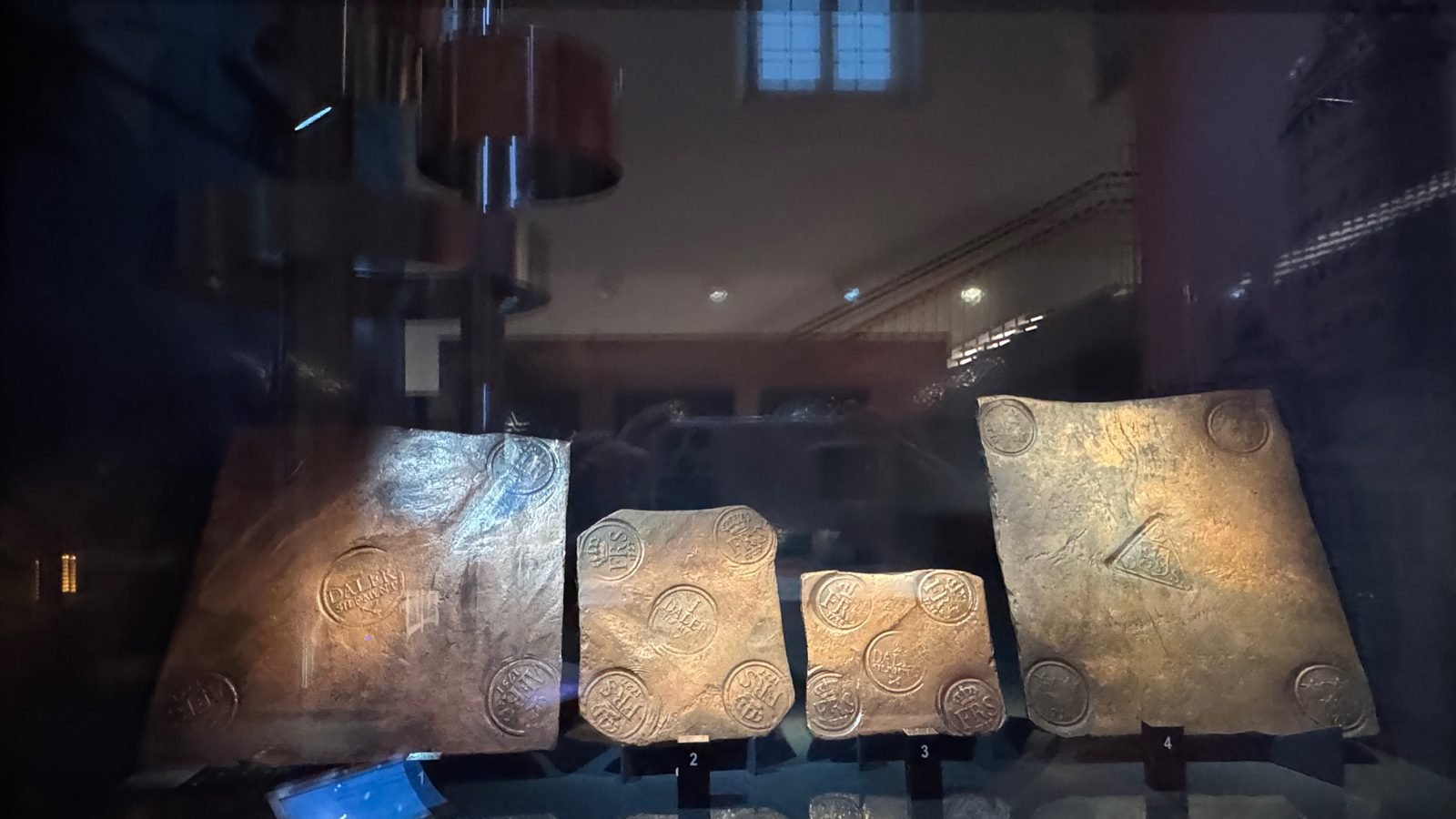
The largest is the 10 daler plate from Avesta, made in 1644, when Queen Kristina was on the throne. It weighs 19.7 kilos. The museum calls it the world’s largest coin. Avesta made 26,774 of them in 1644 and 1645. Only eight remain today. Six are in the museum’s collections.
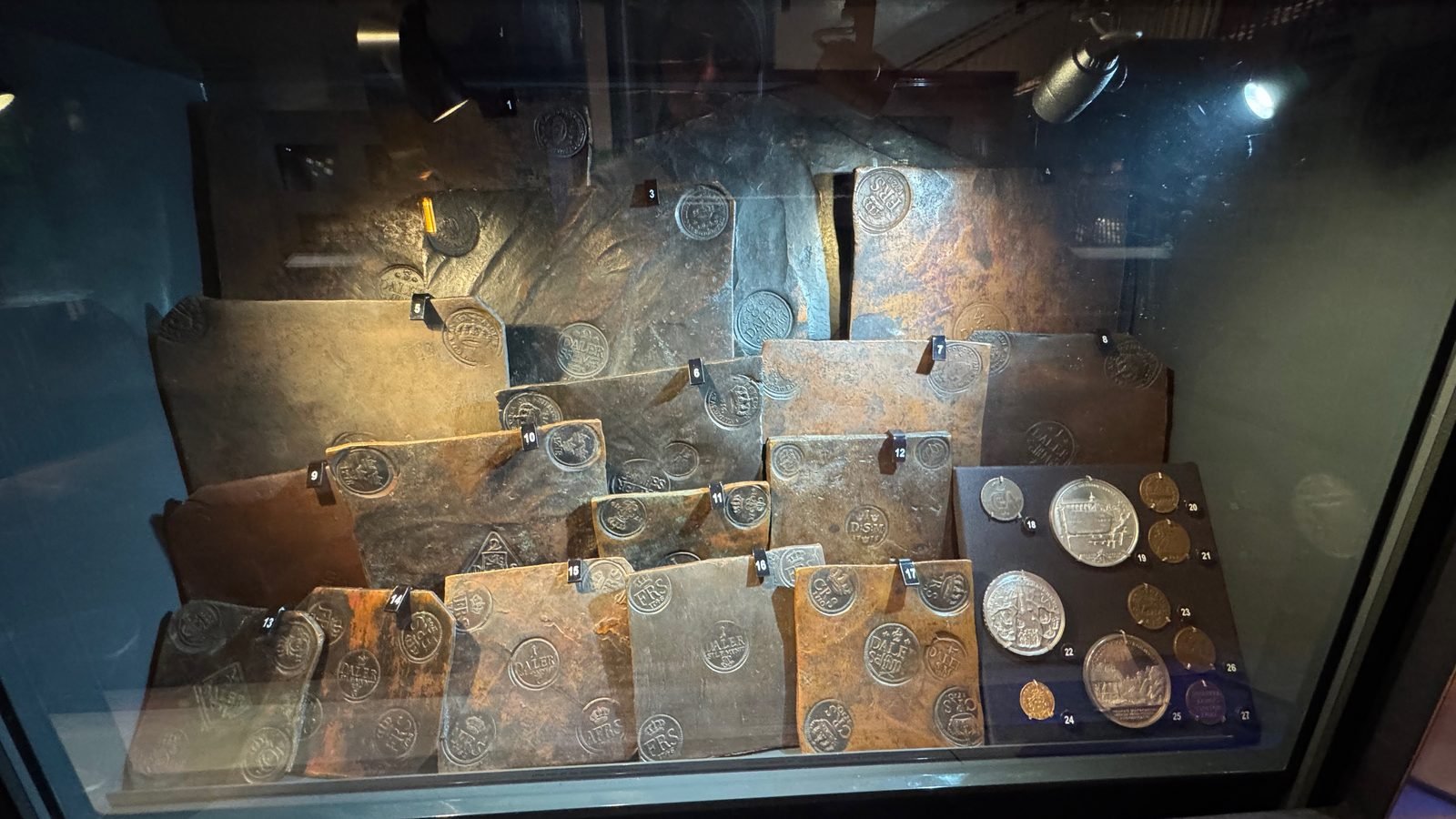
Plate money was made in other values from 1649 to 1769. On 1 January 1777, it stopped being legal tender.
One of the copper plates in the display was made in Kengis, in Tornedalen. Kengis was the northernmost mint in the world. Many Sámi people worked at the mill there, among other things moving the copper.
A shipwreck full of copper
In the summer of 1783, the Danish ship Nicobar sailed to India. It carried 5,000 Swedish copper plates. The ship sank in a storm off the coast of South Africa. More than 200 years later, divers found the wreck and its copper. Part of that hoard is in the exhibition.
Stockholms Banco and Europe’s first banknotes
Imagine paying for a house with a cart full of copper. Johan Palmstruch had a better idea. In 1656, he got permission from King Karl X Gustav to start Sweden’s first bank, Stockholms Banco.
In 1661, the bank gave out Europe’s first banknotes. They were called kreditivsedlar (credit notes). A paper note was much easier to carry than a 20-kilo plate. The museum shows a 5 daler note from 1662. No notes from the first year have survived.
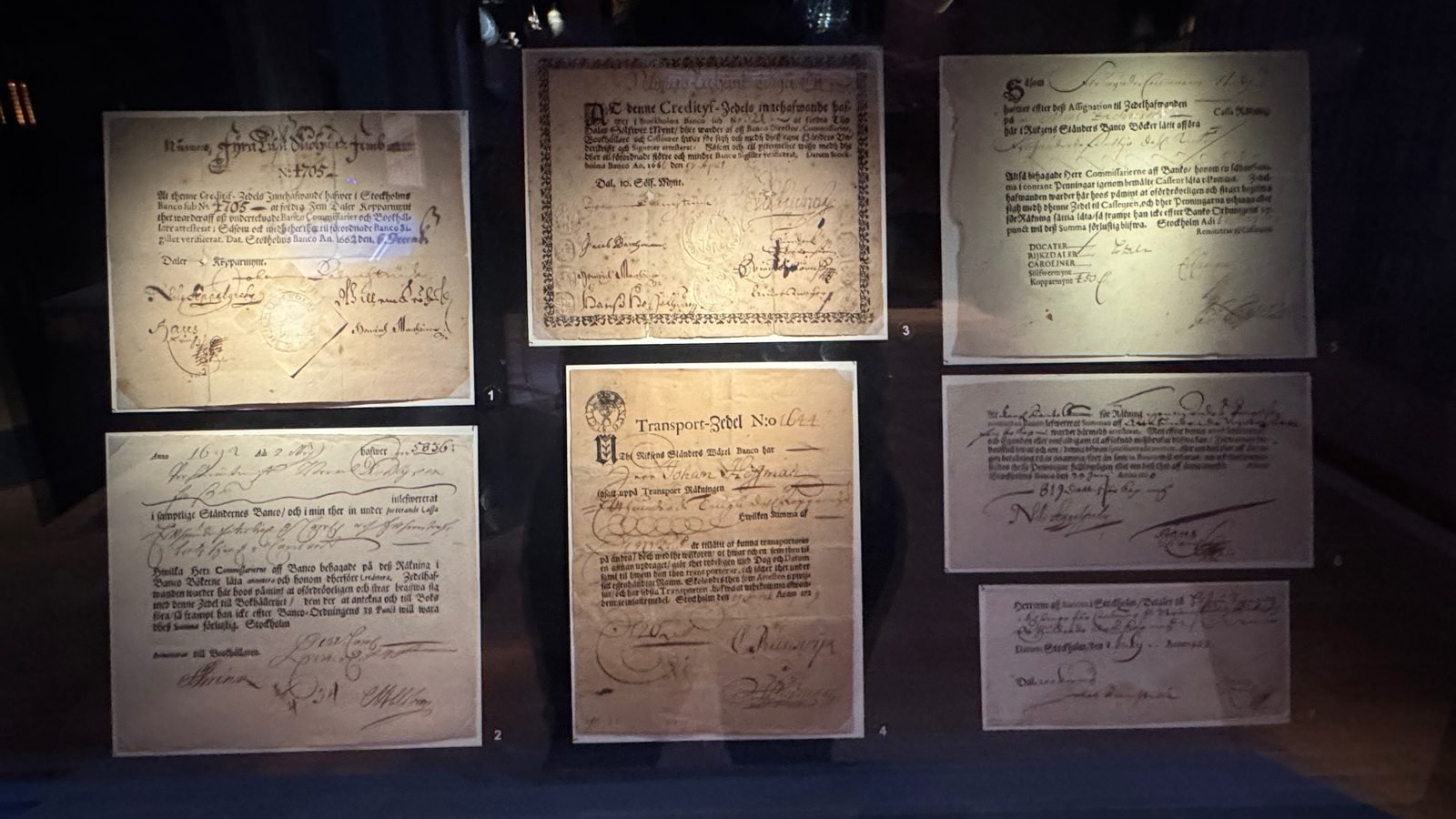
Like a modern banknote, it had a fixed value. And like a modern banknote, it was only worth something if people trusted the bank.
The bank gave out too many notes. People lost trust, and the bank collapsed. Palmstruch was sentenced to death for mismanagement, but he was pardoned.
1668: the world’s oldest central bank
In 1668, a new bank was founded from what was left of Stockholms Banco. It was called Riksens Ständers Bank. Today it is Sveriges Riksbank, the world’s oldest central bank. It moved into Axel Oxenstierna’s palace in Gamla Stan.
At first, banknotes were banned. But they came back. In the 18th century, banknotes became more common than coins in Sweden.
The krona arrives
In 1776–1777, the riksdaler became the main coin. Plate money and the old medieval way of counting money ended.
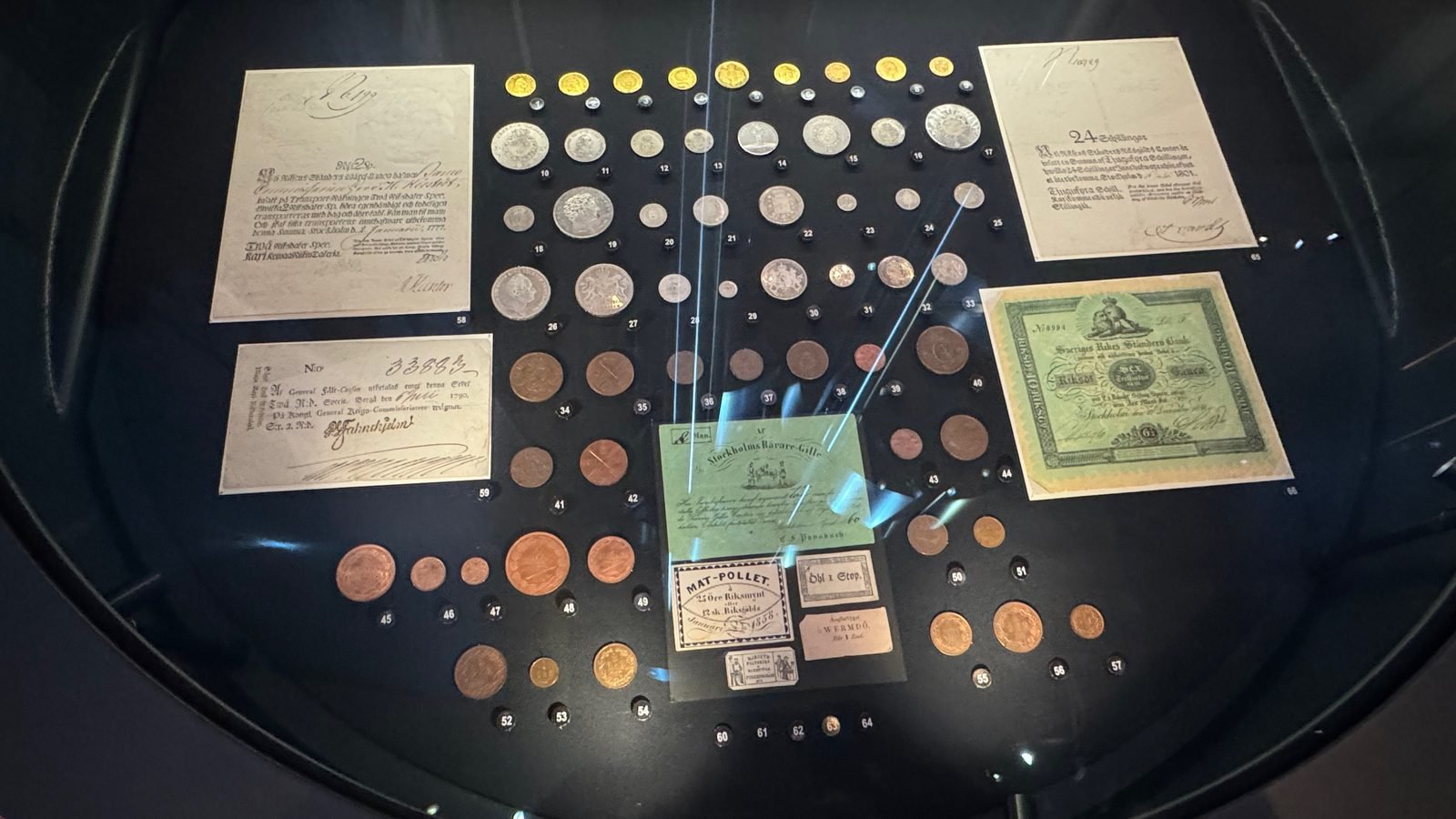
In 1855, Sweden started to use the decimal system: one riksdaler riksmynt was divided into 100 öre.
In 1873, Sweden joined the Scandinavian Monetary Union. The krona was introduced, and it is still Sweden’s money today.
Poverty, tokens and emigration
Many people in 19th-century Sweden were poor. More than 1.2 million Swedes emigrated to the United States between 1845 and 1930. That was almost a fifth of the population.
At some mills, workers did not get real money. They got tokens that they could only use at the mill, in exchange for certain goods, such as alcohol.
From coins to a cashless country
The exhibition ends with the 20th century, the story of how Sweden went from poverty to welfare.
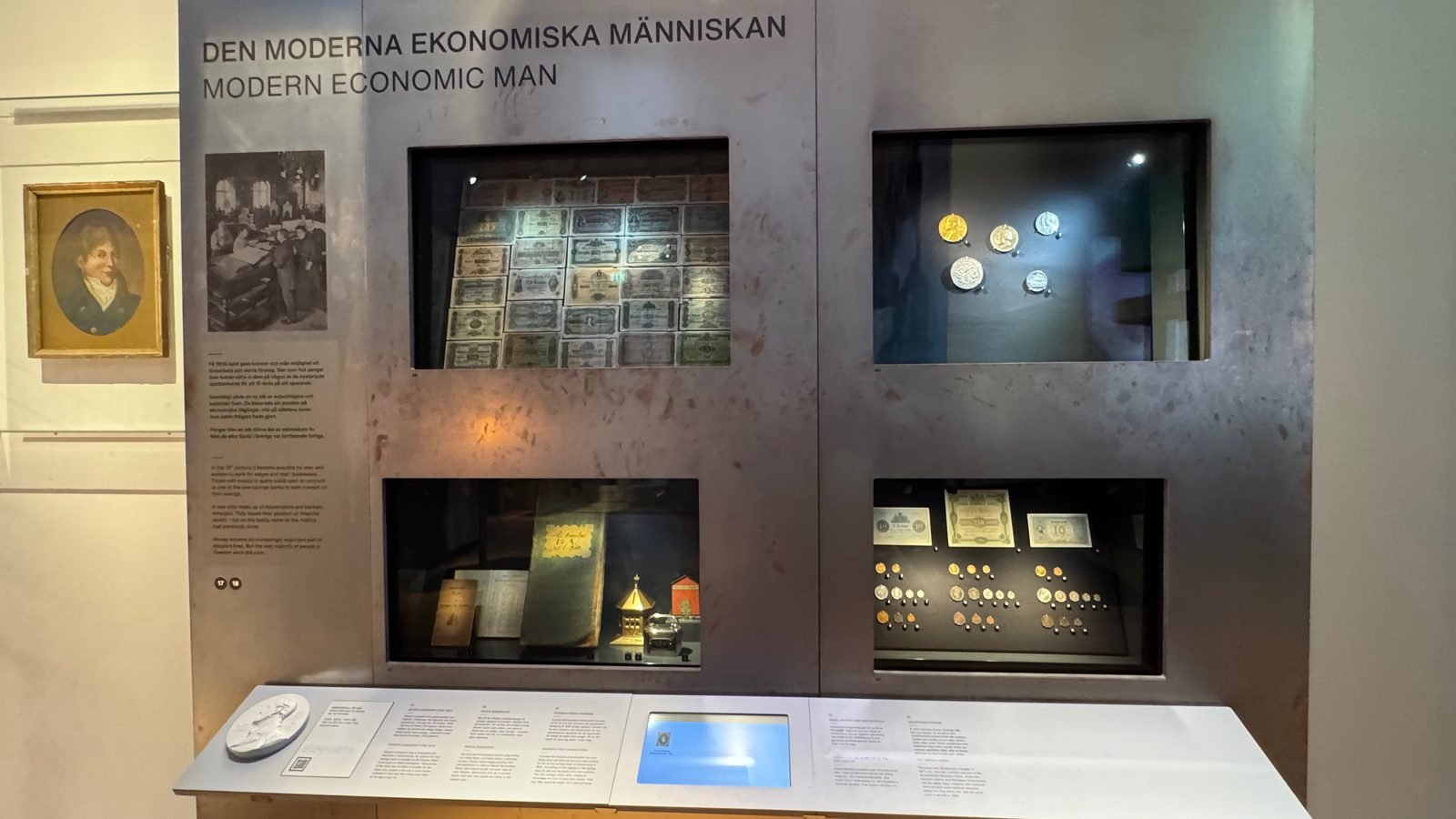
Today, Sweden is almost cashless. The Riksbank says that only about one in ten purchases in shops is paid with cash. Sweden and Norway have the lowest amount of cash in circulation compared with GDP in the world.
So the story of Swedish money has gone from a 20-kilo copper plate to a phone. I wonder what the next step will be. And whether we will still trust it.
Visiting the Economy Museum
The Economy Museum is at Narvavägen 13–17, in the same building as Historiska museet. One ticket covers both museums. The building has elevators, toilets on each floor and lockers.
Read more in my guide to Historiska museet, and in my post on Queen Kristina, who was on the throne when the largest coin was made.
Sources
- Exhibition signs, Economy Museum, Stockholm (visited November 2026).
- Sveriges Riksbank: 1668 – Sveriges Riksbank is founded
- Sveriges Riksbank: Stockholms Banco (PDF)
- Sveriges Riksbank: Payments Report 2025
- Göteborgs Stadsmuseum: The first money in Sweden
- Economy Museum: History of the museum