What Does Sverige Mean? The Story Behind Sweden’s Name*
The name is more than 600 years old. The feeling of being Swedish is much younger.
*If you have better facts and better sources, please send them to me, Zayera Khan, the owner of this website.
I live in Stockholm, in a country that calls itself Sverige. But what does the word mean? And when did people start to use it?
The short answer: Sverige means the realm of the svear. The long answer is more interesting. A name on paper does not make a nation. Sweden had a name long before most people felt Swedish.
Two words in one
Sverige is two old words put together. The first part comes from svear. The svear were a people who lived around Lake Mälaren.
The second part is rike. It means realm or kingdom. You see the same word in Riksdag, the Swedish parliament.
The name svear is probably a name the people gave themselves. Wikipedia says it likely comes from an old Germanic root that means “one’s own” or “self”. If that is correct, the svear were simply “our own people”.
1384: the first Swerighe
Historian Dick Harrison opens his chapter on Sweden with one date. In his book Det svenska rikets födelse (2020), he writes that the name first appears in writing in a document from Kalmar, dated 1384. The spelling was Swerighe.
By then, Harrison writes, the Swedish realm worked as one unit. The people inside it knew that. So did foreigners who looked at it. The old local powers had lost to a new and growing political system.
Other sources give a different picture. Wikipedia says the form Swerike appears from the end of the 1200s, and Svearike from the 1300s. Letters from the 1300s in the Swedish National Archives use Swerike too.
Wikipedia also says the spelling with a g became common toward the end of the 1400s. The k turned into a g in speech, in the same way as mik became mig, “me”.
So which is first? It depends on what you count. The idea of “the realm of the svear” is older than 1384. The spelling close to today’s may come from that Kalmar document, or from later. The sources I read do not agree.
When Sverige was only part of Sweden
In the Middle Ages, the name did not cover all of today’s country. Wikipedia says it meant the old land of the svear, Svealand. It did not always include Götaland, the land of the götar.
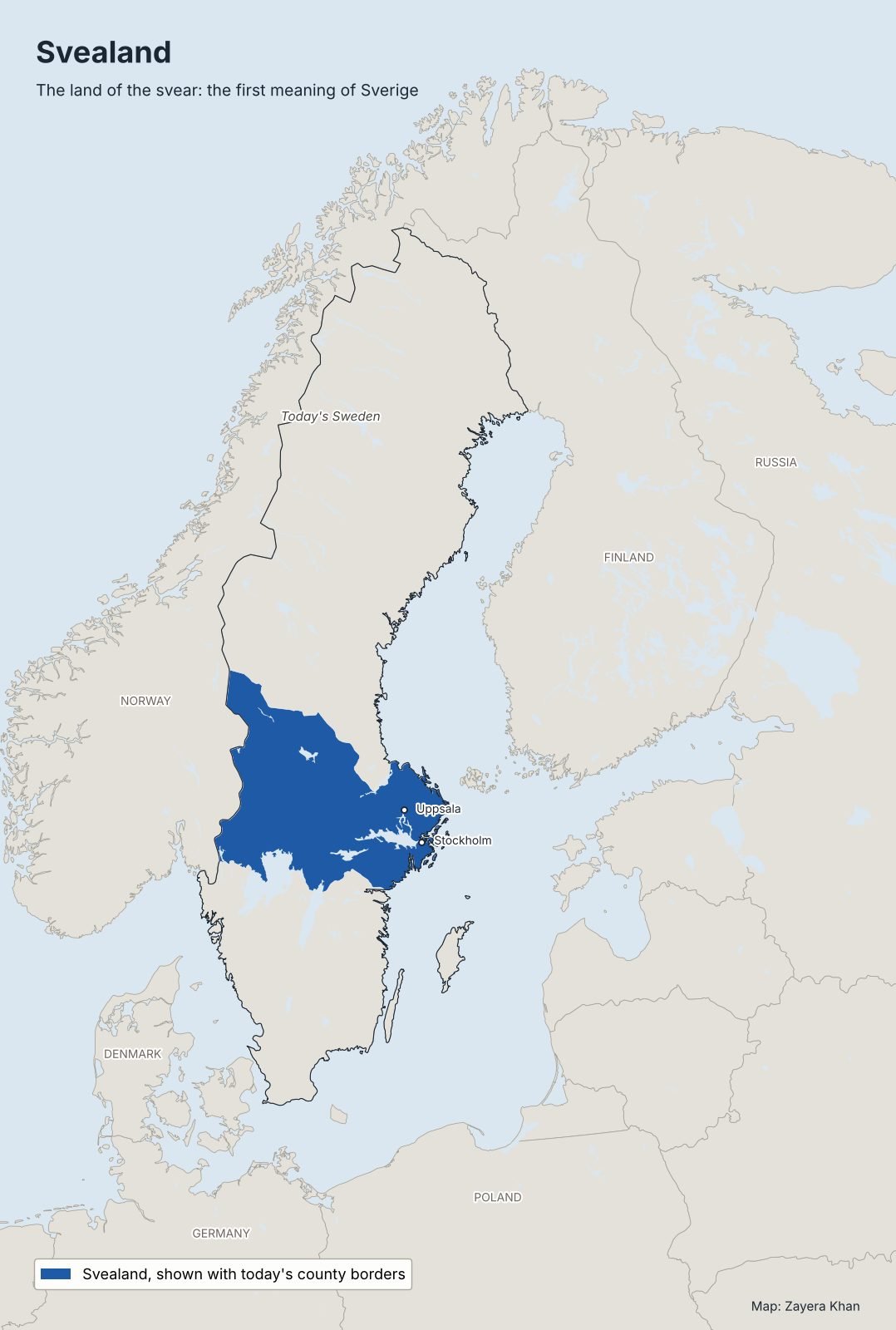
Harrison describes a long process. Chiefs ruled small realms around Lake Mälaren in the Vendel period. Over more than five hundred years, this became the power that Birger jarl and his family shaped. Piece by piece, kings, lords and farmers joined.
Harrison makes one point clear. These people could have chosen another path: another realm, another religion, another monarchy. Nothing was decided in advance. It took hard work to build the medieval realm, with its church, towns, castles and laws.
Birger jarl’s own position came partly through a woman. He married Ingeborg Eriksdotter, the sister of King Erik Eriksson. I wrote more about women like her in my article on how Swedish royal houses are linked through women.
A name is not a nation
This is the core of Harrison’s chapter. Having a name did not mean that everyone felt Swedish.
In the late Middle Ages, kings asked “Swedish men” to fight and to pay tax against the enemies of the realm. Harrison writes that most people did not listen.
In the 1500s of Gustav Vasa and the 1600s of Axel Oxenstierna, being Swedish meant something else than today. It meant to accept the rule of the Swedish king and the Lutheran faith. It did not mean to speak Swedish, to know Swedish history or to share Swedish values.
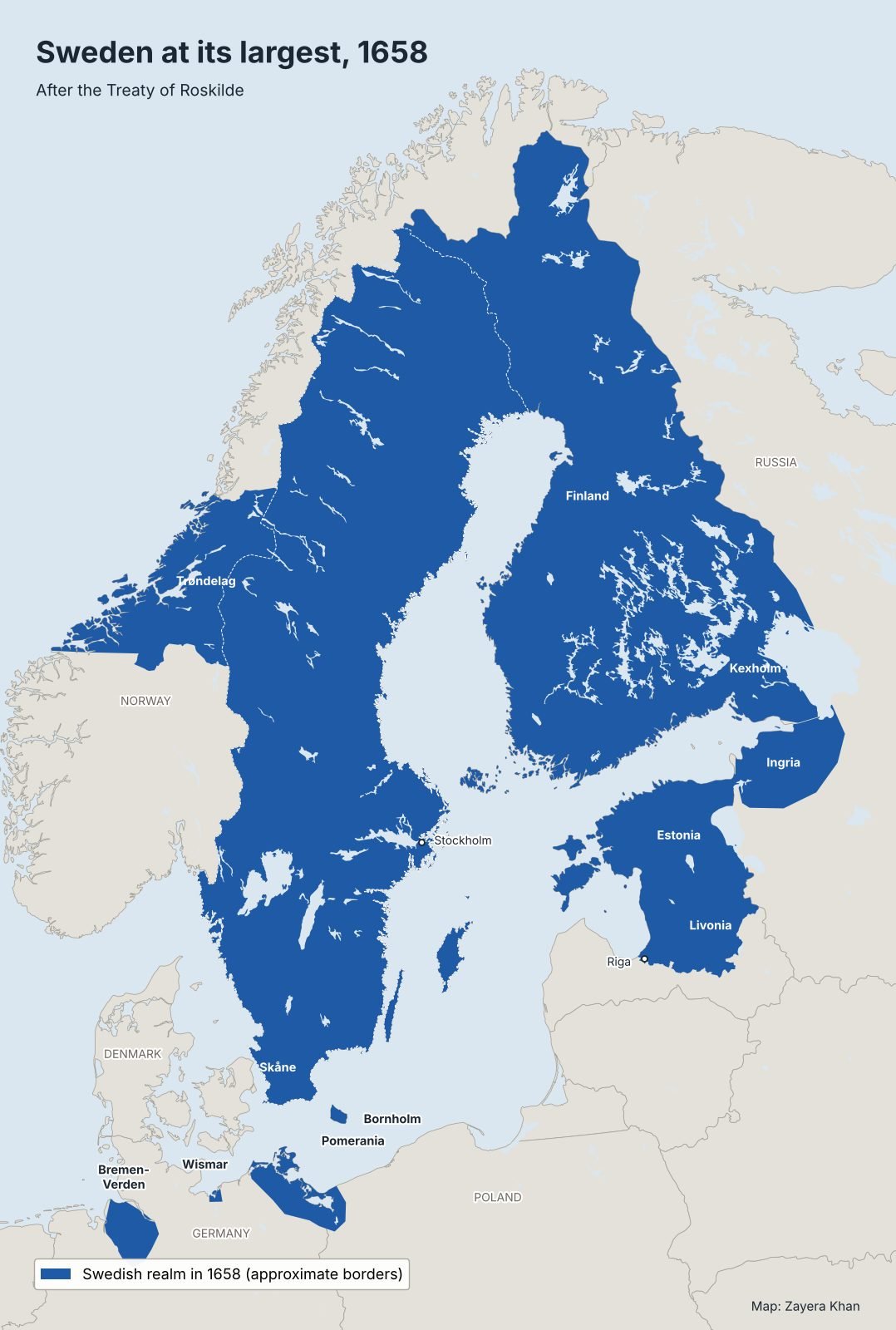
Harrison places the real Swedish national feeling in the 1800s. It grew in the same romantic era that gave birth to German, French and Italian nationalism.
The love of Vikings, red cottages and husmanskost, traditional Swedish home food, is a recent thing. Ancient it is not.
Sweden, Svea rike and Ruotsi
The English name Sweden has its own story. Wikipedia says English took it from Dutch Zweden around 1600. Before that, English used names like Swedeland.
Finland calls the country Ruotsi. Wikipedia says this name probably comes from an old Swedish word linked to rowing, perhaps through Roslagen, the coast north of Stockholm.
In Swedish, the old form lives on. Svea rike is the formal and poetic name. In everyday speech, some Swedes joke and say Svedala.
Words often carry more history than we notice. I wrote about another one in my Medium story about the misuse of the word Caucasian.
So, who is Swedish?
The name Sverige is more than 600 years old. The national feeling is about 200 years old. In between, the meaning of the word changed many times. It went from a people by a lake, to a king’s realm, to a nation.
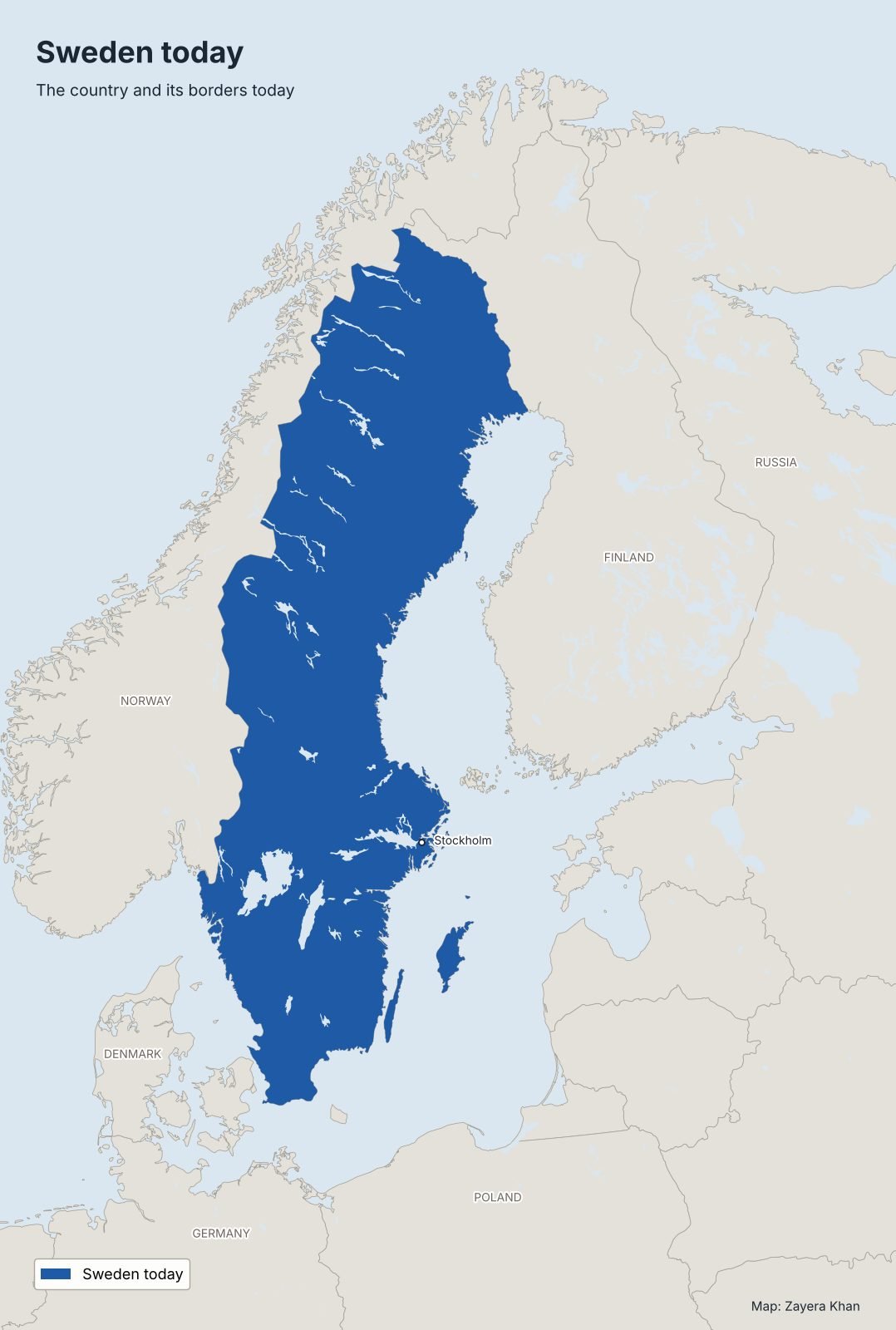
If being Swedish once meant to obey a king and a church, what does it mean today? And who decides?
See it with a local guide
Many places in this story are close to Stockholm, around Lake Mälaren. If you want to see them with someone who lives here, read about my private tours in Stockholm.
Sources
- Dick Harrison, Det svenska rikets födelse. Sveriges dramatiska historia. Historiska Media, 2020. Chapter “Sverige”, pages 164–165.
- Riksarkivet, Svenskt Diplomatariums huvudkartotek (SDHK): 1300s letters with the form Swerike.
- Wikipedia: Name of Sweden
- Wiktionary: Sverige
- Wikipedia: Treaty of Roskilde (map of 1658)
*If you have better facts and better sources, please send them to me, Zayera Khan, the owner of this website.