
Greta Johansson: Sweden’s First Female Olympic Champion*
She had no coach and only one event she could enter. It took Stockholm 114 years to put her on a pedestal.
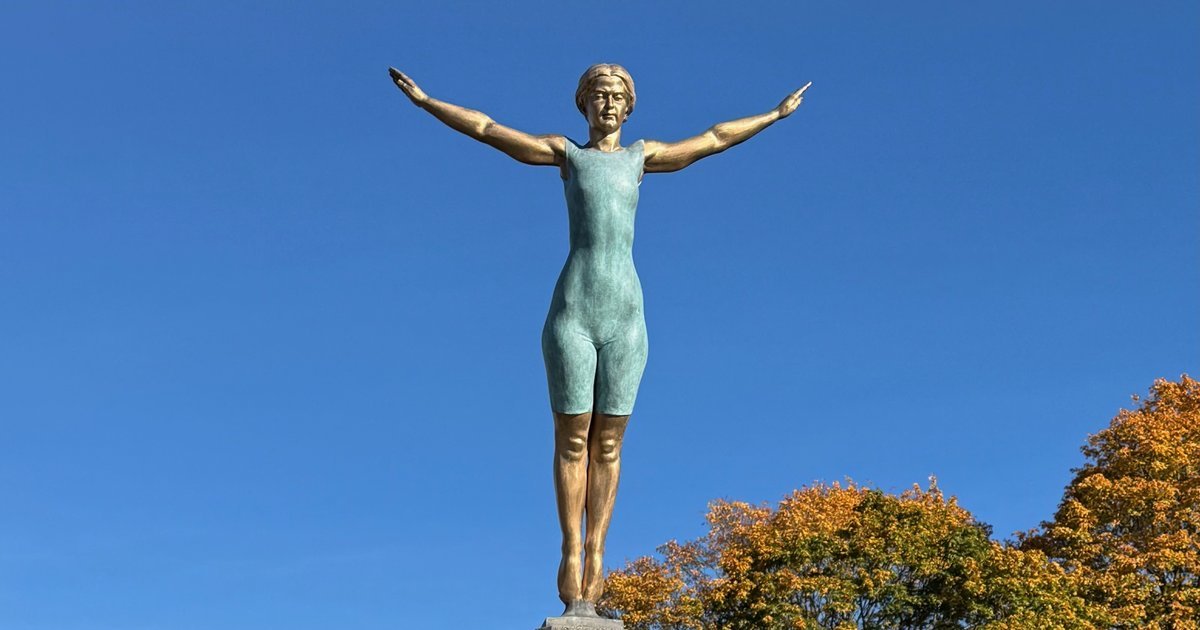
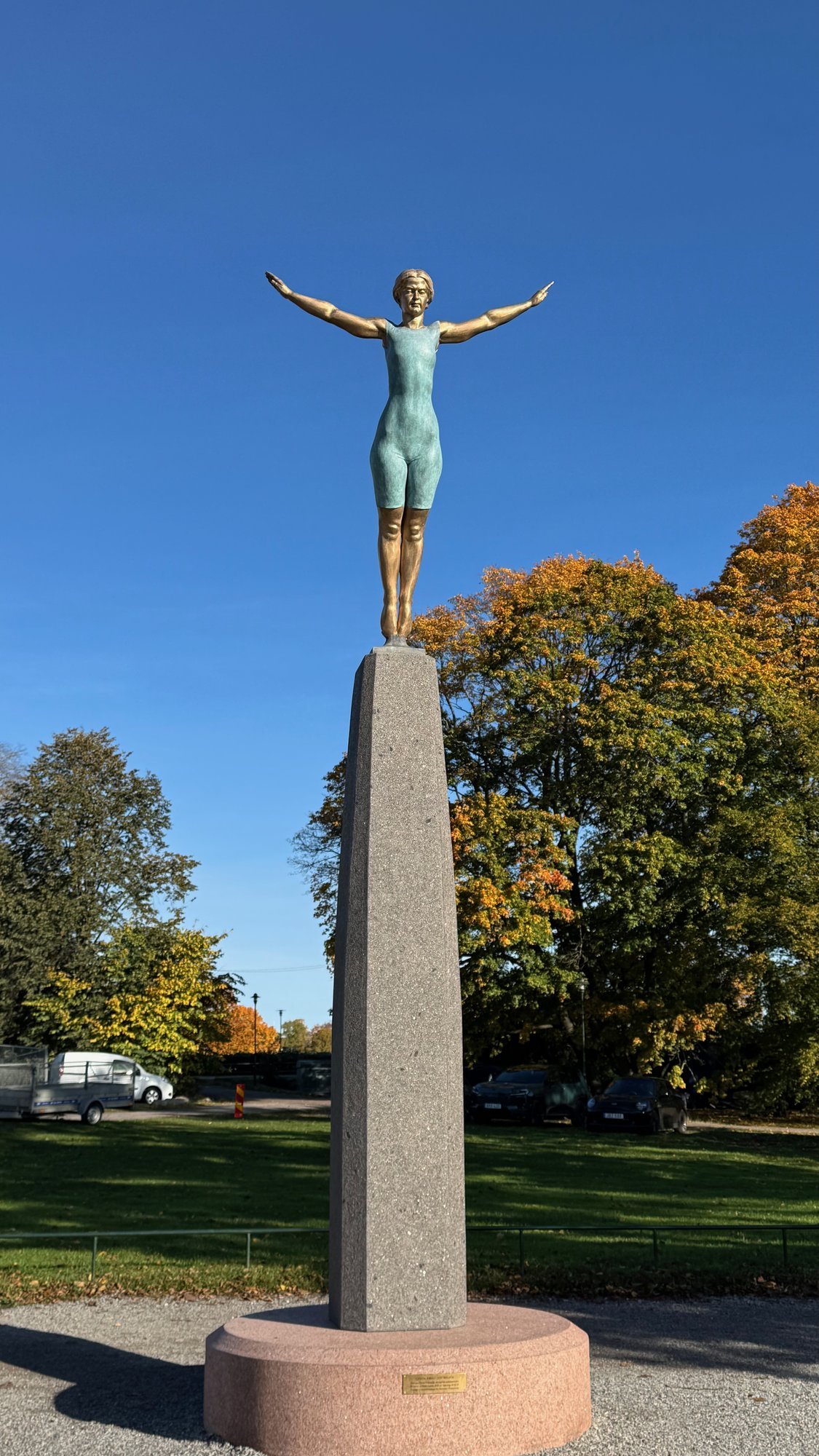
On 18 October 2026, I visited Djurgårdsbrunnsviken in Stockholm to see a new statue. A bronze woman stands on a tall stone column. Her arms are spread wide. She is about to dive.
Her name is Greta Johansson. Swedes call her Guld-Greta, “Gold Greta”. In 1912 she won Olympic gold in diving, here, in this bay. She was 17. She was the first Swedish woman to win an Olympic gold medal.
The statue came in June 2026. That is 114 years after her gold. Why did it take so long?
A free ticket to the bath
Greta was born in Stockholm on 9 January 1895. Her full name was Anna Teresia Margareta Johansson. Olympedia says she grew up on Kungsholmen, in poor conditions. Her father was a miller and a doorman, according to SKBL, the Swedish women’s biographical dictionary.
Her way into sport was a school ticket. In 1905, at age ten, her school gave her a free ticket to Strömbadet, an open-air bath near Norrström. According to SKBL, this took her to the swimming school of Stockholms Kappsimningsklubb.
Today we talk about access to sport. For Greta, access was a piece of paper from her school.
No coach, so trial and error
Who taught her? Mostly she taught herself. Late in life, Greta wrote a letter about her training in the summers of 1902 to 1912. Her profile on Simidrottslandslagen says she learned by “trial and error”, because women athletes had no coach. SKBL also notes a shortage of trainers for women. It names some sessions at Mälarbadet led by Emil Lundberg.
One woman did help her: the diver Lisa Regnell. SKBL and the Simidrottslandslagen profile both name Regnell as Greta’s first diving teacher. In 1912, Regnell took the silver medal. The student beat the teacher. Lisa Regnell’s name is not on the plaque.
One event for women, three for men
Women’s swimming and diving were new. Sweden held its first national championships for women in these events in 1910 (SKBL). The Stockholm Games of 1912 were the first Olympics with women’s swimming and diving.
The program was not equal. Olympedia lists four diving events in 1912: three for men and one for women. Men could compete in springboard, platform and plain high diving. Women could only enter plain high diving, a straight dive from a high tower with the body held still.
Greta had one chance, and she won.
Gold at 17
The women’s plain high diving event took place on 10–13 July 1912. Olympedia lists 14 divers from three countries. SKBL says that all the judges placed Greta first. The writer John Lönnegren praised her “beautiful style and excellent body position” (quoted in SKBL).
Greta also swam. She went out in the first round of the 100 m freestyle. The Swedish 4 × 100 m relay team, with Greta in it, came fourth out of four teams. Not every day is a gold day.
The rule that stopped her
In 1913, Greta started to work as a swimming and diving teacher. She earned money from her sport. Under the amateur rules of the time, that ended her competitive career (Simidrottslandslagen, Sportbibeln). She was 18.
The amateur rules said that Olympic athletes must not earn money from sport. That rule was easy to follow for people with money. It was harder for a young woman from a poor family who needed a job.
Mrs. Brandsten and “the father of American diving”
In Stockholm, Greta met Ernst Brandsten, a diver who also competed for Sweden in 1912. They moved to the United States in 1913, according to SKBL and Olympedia. The sign at the statue says 1914. They married in the United States. The year of the wedding is not in the sources I read.
In California, the couple trained divers. Olympedia says both of them trained divers at Stanford University. The International Swimming Hall of Fame describes Ernst as the coach of Stanford swimming from 1915 to 1948. It describes Greta as a physical education teacher, first at the University of California and then at Stanford. Coach for him, teacher for her.
The couple also ran Searsville Lake Park near Stanford, a place for swimming, boating and camping. They ran it for 27 years, the San Mateo Daily Journal writes.
According to SKBL, historians often call Ernst “the father of American diving”. No source gives Greta a matching title. The Hall of Fame took Ernst in as an Honor Coach in 1966. Greta followed seven years later, in 1973, as an Honor Diver. The Hall of Fame calls her the “first female Olympic diving champion”. Her own work as a teacher is easy to miss next to his.
So who was the mother of American diving?
“More acrobatics than sport”
In 1972, Ulrika Knape won Olympic gold in high diving in Munich. That was 60 years after Greta’s gold. Greta gave an interview to the newspaper Dagens Nyheter. Sportbibeln writes that she called modern diving “mera akrobatik än sport“, or “more acrobatics than sport”.
Sixty years later, she still had clear views on her sport.
Greta Johansson Brandsten died in San Mateo, California, on 28 January 1978 (Olympedia). SKBL gives the date as 18 January.
A statue at last
On 8 June 2026, Crown Princess Victoria unveiled the statue, the local newspaper Mitt i reports. The sculptor is Peter Linde. SCIF (Sveriges Centralförening för Idrottens Främjande) commissioned it. SCIF also organized the 1912 Games, which people often call the “Sunshine Olympics”.
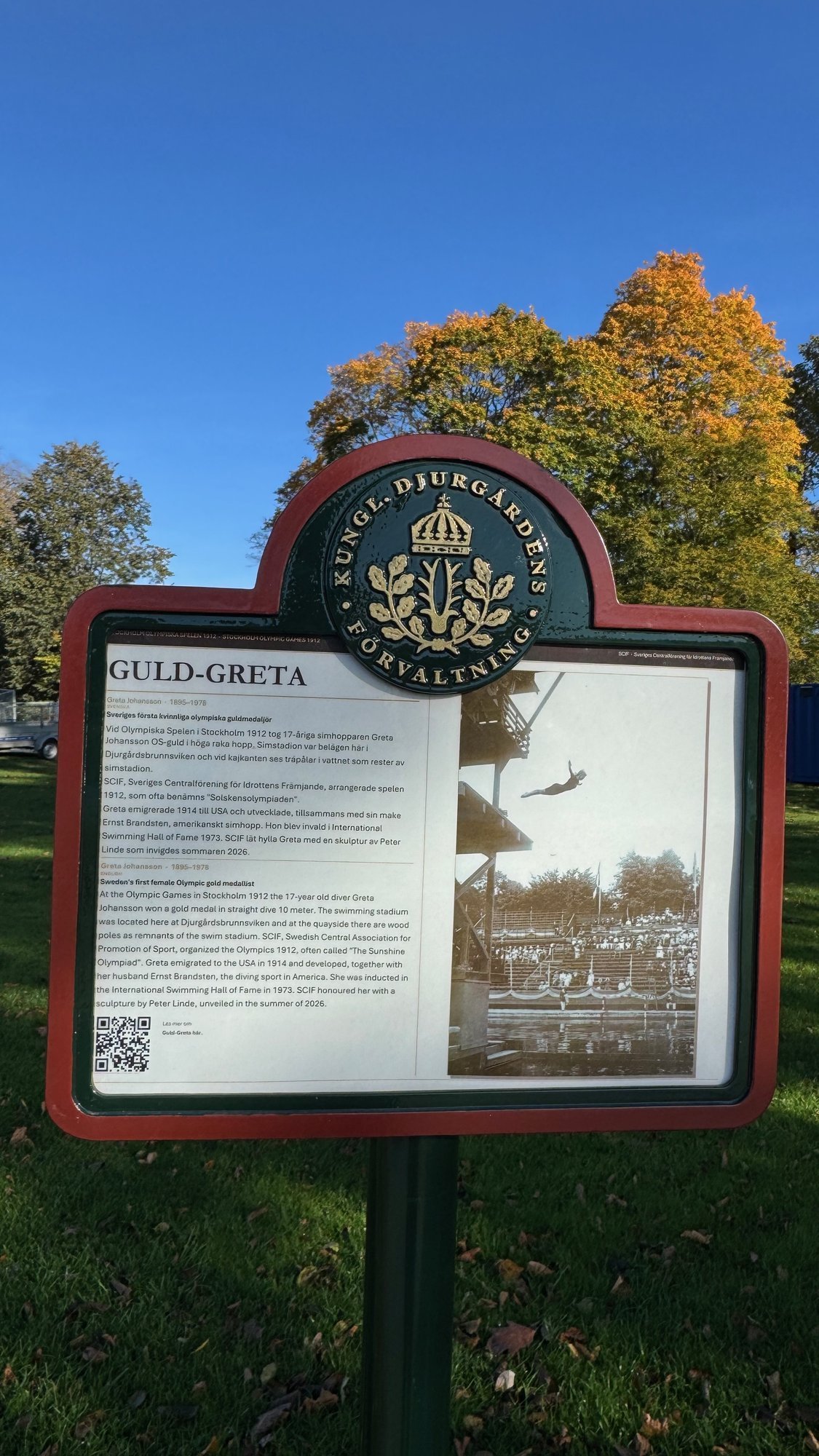
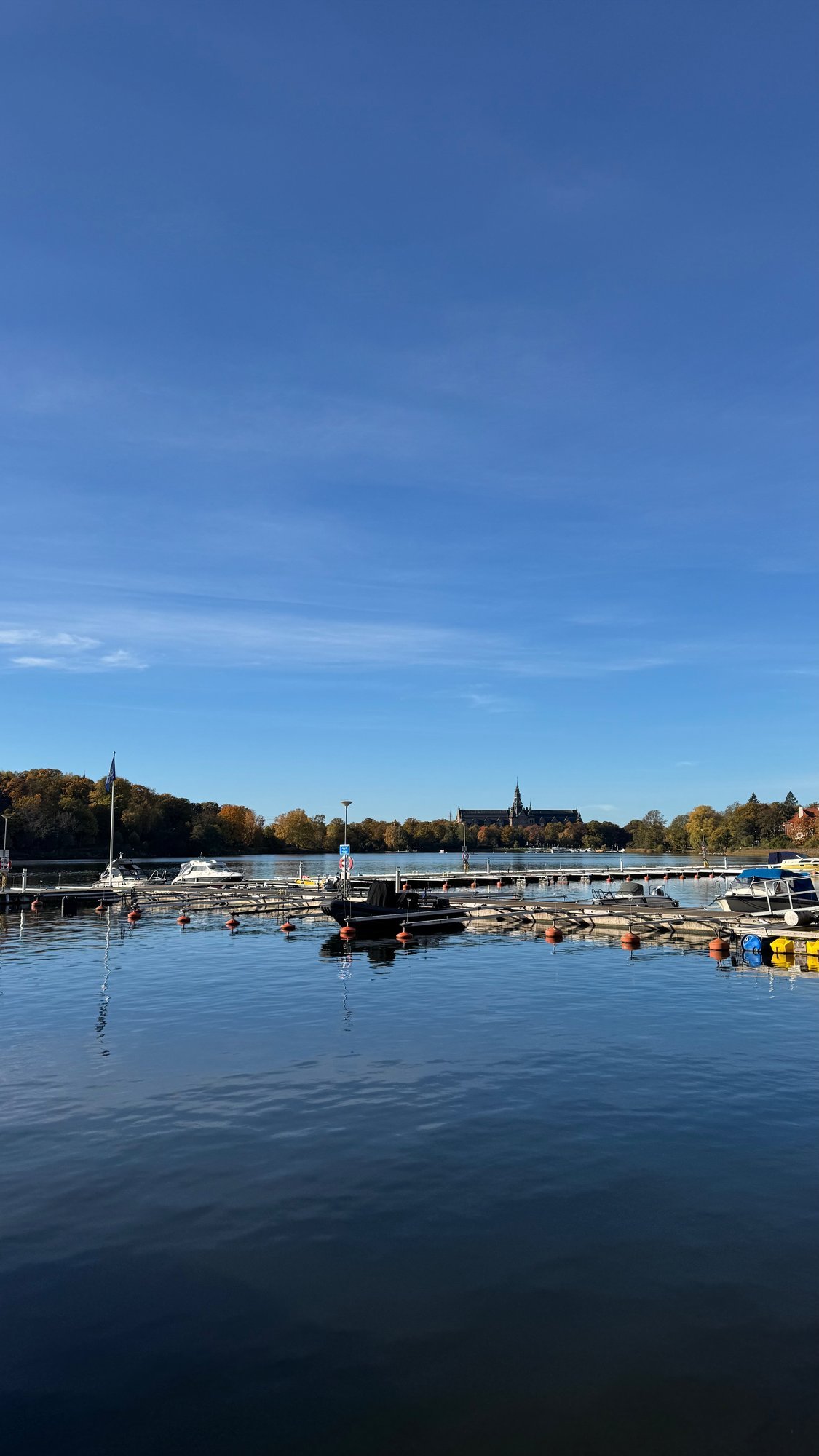
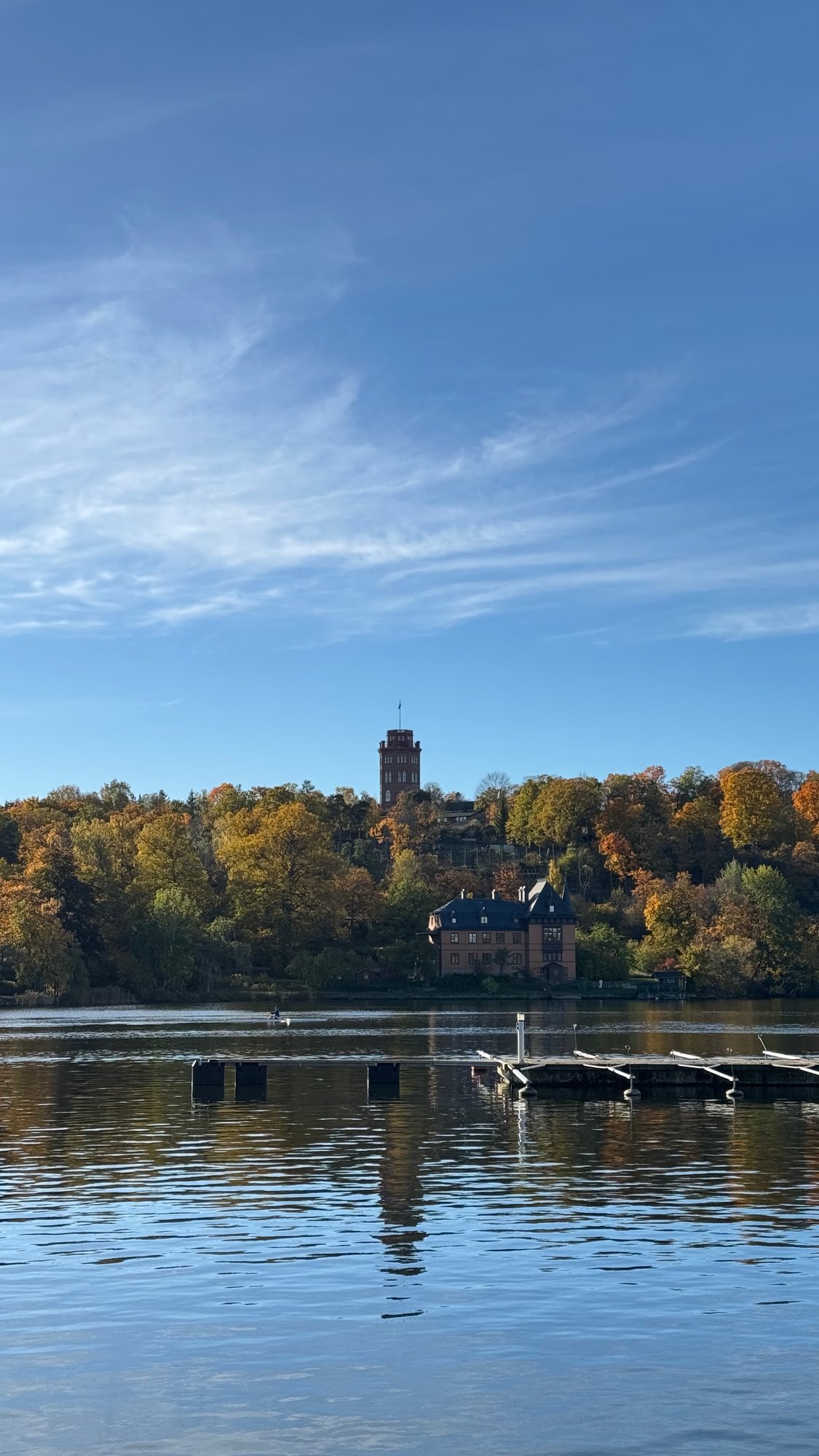
The bronze stands at Djurgårdsbrunnsviken, on Ladugårdsgärdet near Villa Källhagen. The 1912 swimming stadium stood here. A sign by Kungliga Djurgårdens Förvaltning says that the wooden posts at the quay are remains of the stadium.
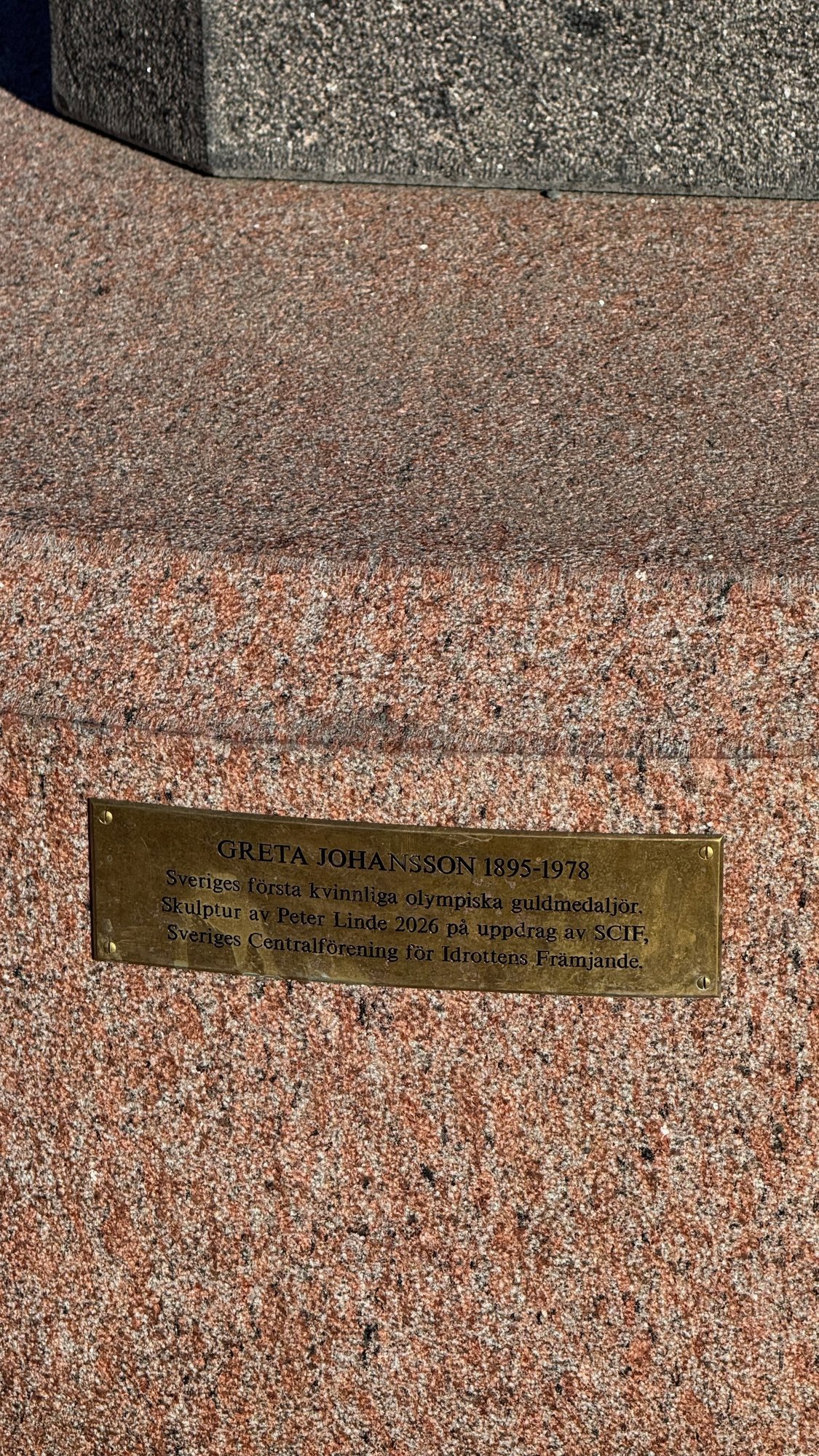
The plaque says: “Sveriges första kvinnliga olympiska guldmedaljör“, Sweden’s first female Olympic gold medalist.
There is also a film about her life. SVT Play shows Guld-Greta – en hisnande kärlekshistoria (Svensk Simidrott).
Visit Guld-Greta
The statue is outdoors and free to see. It stands by a flat gravel path near the water. Read the sign next to it. It has text in Swedish and English and an old photo of a dive in 1912. Then look at the water. Picture a wooden diving tower, full stands, and a 17-year-old who taught herself to dive.
Greta had one event, no coach and one summer. She still won. Next time you see a statue of a famous man in Stockholm, will you ask which woman is missing?
Sources
Reference and sports sources
- SKBL: Lennart K Persson, “Anna Teresia Margareta (Greta) Johansson”, 2018
- Olympedia: Greta Johansson
- Olympedia: Diving at the 1912 Summer Olympics
- International Swimming Hall of Fame: Greta Johanson Brandsten, 1973 Honor Diver
- Simidrottslandslagen: Greta Johansson
- Svensk Simidrott: “En hyllning till Guld-Greta”, 9 June 2026
News
- Mitt i: “Guldgreta blir staty på Gärdet”, 8 June 2026
- Sportbibeln: Daniel Sörensen, “Greta Johansson lämnade Sverige efter sitt historiska OS-guld”, 8 June 2026
- San Mateo Daily Journal: Joan Levy, “Searsville Lake Park was home to Olympians”
On site
- The brass plaque and the “Guld-Greta” sign by Kungliga Djurgårdens Förvaltning and SCIF, photographed on 18 October 2026.