
Water in Religion: Connection or Coincidence?
From wuzu to baptism to the Ganges: the same element, on every continent.
Water in my own life
One of my first memories is of water. I am a small child, bathing in a small tub on a veranda in Karachi.
Later, in Nigeria, we had a water tank outside the house. I sat outside it, cleaned myself and played. I used only tiny bits of water. Water was precious.
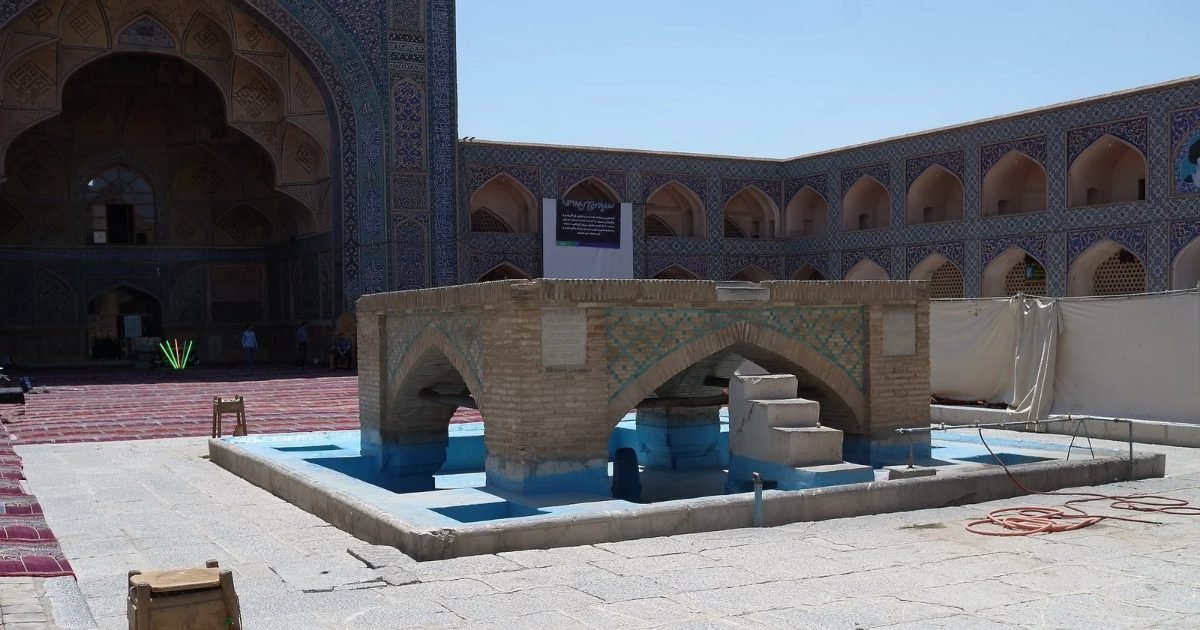
I grew up Muslim. Wuzu, the washing before prayer, was very important. I also grew up with the Indian and Pakistani tradition of keeping clean. Washing has been important to me my whole life. It still is.
I have been to Mecca and drunk Zamzam water there.
Here in Sweden, I learned to swim at the age of 11. I have been a regular swimmer since then. I also do kallbad, cold-water bathing, and bastu, the sauna. I feel that water relaxes me. Hot water, cold water, the sauna: for me, all of it has healing and relaxing properties.
So water is essential to me. And I am not alone. Christians baptize with water. Hindus bathe in the Ganges. Jews immerse in a mikveh. Shinto worshippers rinse their hands and mouth before they pray. So I asked a simple question. Is this a coincidence, or are these traditions connected?
In short
- Why do so many religions use water?
- Water cleans the body, keeps us alive and can take life. Most faiths turn these three facts into signs of purity, new life and the sacred.
- Are the water rituals connected?
- Some are. Christian baptism grew out of Jewish ritual immersion. Hindu and Zoroastrian respect for water share an older root. Others, such as Shinto and Yoruba practice, grew without contact.
- Which religions use water as an essential part?
- Among them are Islam, Judaism, Christianity, Mandaeism, Hinduism, Zoroastrianism, Sikhism, Buddhism, Shinto and Yoruba religion.
Three ways faiths use water
- Washing for purity. You wash before you pray or enter a holy place. Examples: wuzu in Islam, temizu in Shinto.
- Immersion for new life. You go under water and come up changed. Examples: Christian baptism, the Jewish mikveh, Mandaean baptism.
- Sacred sources. A river, well or spring is holy in itself. Examples: the Ganges, the Jordan, Zamzam.
One family of faiths: Judaism, Christianity, the Mandaeans and Islam
Judaism: the mikveh
Mikveh means a “collection” of water. Jews practiced ritual immersion long before Christianity existed. A person goes into the mikveh, goes fully under and comes out purified. Wikipedia says the water must come from a natural source.
Christianity: baptism and holy water
The word baptism comes from Greek for “immersion” or “dipping”. John the Baptist baptized people in the Jordan River, and Jesus was baptized there. Early Christians took the Jewish immersion and gave it a new meaning: the death of the old life and the birth of a new one.
Catholic churches keep holy water at the door. Orthodox churches bless the waters on 6 January, the feast of Theophany.
In Ethiopia, the feast is called Timkat and falls on 19 January. Priests carry a replica of the Ark of the Covenant to a river or pool. They bless the water and sprinkle it over the crowd. Some people go into the water. UNESCO added Timkat to its list of intangible cultural heritage in 2019.
The Mandaeans: baptism every Sunday
The Mandaeans are a small faith from Iraq and Iran. They see John the Baptist as their greatest prophet. For them, baptism is not a one-time event. They are baptized again and again, on Sundays, and only in running water. They go under three times, are marked three times on the forehead and drink three times. They call every river yardena, after the Jordan.
Islam: wuzu, ghusl and Zamzam
Wuzu (Arabic: wudu) comes from the Quran, Surah 5:6. Wash your face, your arms up to the elbows and your feet up to the ankles, and wipe your head. Ghusl is a full-body wash. Muslims and Jews also wash the dead before burial.
The same verse says what to do when there is no water: use clean earth instead (tayammum). So the rule is about more than dirt. It is about intention.
Zamzam is a well inside the Great Mosque in Mecca. Tradition says Ibrahim left Hajar and their baby Ismail in a dry valley. Hajar ran seven times between the hills of Safa and Marwa to look for water, and a spring came up. Pilgrims still walk her route. A hadith in Ibn Majah says: “The water of Zamzam is for whatever it is drunk for.”
India and Iran: an older shared root
Hinduism: the Ganges
The Ganges is the goddess Ganga. According to UNESCO, devotees believe that bathing in the Ganges frees them from sin and from the cycle of birth and death.
The largest bathing festival is the Kumbh Mela. UNESCO calls it the largest peaceful gathering of pilgrims on earth. In Prayagraj, pilgrims bathe where the Ganga, the Yamuna and the mythical Saraswati meet.
Zoroastrianism: an offering to the waters
Zoroastrianism and Vedic Hinduism share old roots. Both call the waters āpas, from the same older word, Wikipedia says. In the Zoroastrian Ab-Zohr rite, the priest makes an offering to the waters. Here people purify the water, not the other way around.
Sikhism: amrit
In 1699, Guru Gobind Singh founded the Khalsa at Anandpur Sahib. He filled an iron bowl with water, added sugar and stirred it with a double-edged sword while prayers were recited. This sweet water, amrit, is still used at initiation. Before that, the first Sikhs drank water that had been poured over the Guru’s feet.
Buddhism: bathing the Buddha
At Vesak and at the Thai New Year, Songkran, Buddhists pour scented water over statues of the Buddha. It is a sign of respect and cleansing. Young people also pour water over the hands of their elders.
Buddhism also has a famous doubt about water. In the Pali texts, the Buddha says that bathing at Prayag and other holy rivers cannot wash away evil deeds. What counts is a pure heart.
Far apart, yet similar
Shinto: temizu and misogi
Every staffed Shinto shrine has a stone basin. Visitors rinse their hands and mouth before they approach the shrine. This is temizu, a short form of misogi, which means washing the whole body in a river, the sea or under a waterfall. Misogi goes back to a legend: the god Izanagi washed himself in a river, and the sun goddess Amaterasu was born.
Yoruba: the river goddess Osun
In Nigeria, the Osun River is the home of Osun, the Yoruba goddess of fertility. Her sacred grove at Osogbo has shrines and sculptures along the river. UNESCO made it a World Heritage Site in 2005. Once every Yoruba town had a sacred grove. This is probably the last one.
Connection or coincidence?
Both, in different ways.
Some links are borrowed. John the Baptist used an old Jewish practice, and Christianity grew from it. The Mandaeans still keep John’s repeated baptism. Islam and Judaism also share a water story. In the Book of Genesis (21:19), Hagar is alone in the desert with her thirsty son Ishmael, and God shows her a well. In Islam she is Hajar, her son is Ismail, and the well is Zamzam. Same mother, same child, same water.
Christianity also took over older springs and gave them the names of saints. I write about this in my article on sacred springs, holy wells and healing baths.
Some links share a root. Vedic India and ancient Iran used the same old word for the waters. Their respect for water likely comes from a common past.
Some grew with no contact at all. Japan and the Yoruba did not learn from each other or from the Middle East. Yet they reached for water too. That is not chance either. Every human body knows the same three things:
- Water removes dirt. So it became the sign for removing guilt.
- Going under water and coming up again looks like dying and being born.
- In a dry land, a spring decides whether you live.
Many faiths also question their own water rituals. The Buddha said bathing cannot clean bad deeds. Islam allows earth instead of water. Both point the same way: the water carries a meaning, and the meaning is what counts.
I wrote about common ground between two of these faiths in my Medium story about tolerance in Christianity and Islam.
What water carries
A small tub on a veranda in Karachi. A water tank in Nigeria, where every drop counted. Wuzu. Zamzam. Swimming, kallbad and bastu in Sweden.
Water has followed me my whole life.
Maybe the faiths change, but the gesture stays the same. We purify ourselves and present ourselves as new before we step into spirituality, seva (selfless service) or prayer.
What do you do with water before something important?
Sources
- Bible Odyssey: Origins of baptism
- Book of Genesis, chapter 21 (Bible Gateway)
- UNESCO: Timkat, Epiphany in Ethiopia
- Encyclopaedia Iranica: Mandaeans, religion
- The Quran, Surah 5:6 (Quran.com)
- Sunan Ibn Majah 3062: Drinking from Zamzam (Sunnah.com)
- UNESCO: Kumbh Mela
- Majjhima Nikaya 7: The Simile of the Cloth (dhammatalks.org)
- Thailand Foundation: Bathing ceremony during Songkran (Siam Society article)
- Kokugakuin University, Encyclopedia of Shinto: Temizuya
- Japan Tourism Agency: The misogi purification ritual at Shirayama-Hime Shrine (PDF)
- UNESCO: Osun-Osogbo Sacred Grove
- Wikipedia: History of baptism
- Wikipedia: Masbuta
- Wikipedia: Aban
- Wikipedia: Ab-Zohr
- Wikipedia: Amrit Sanskar
- Wikipedia: Water and religion