Spårvägsmuseet
Old trams, buses and trains in a brick gasworks building in Hjorthagen
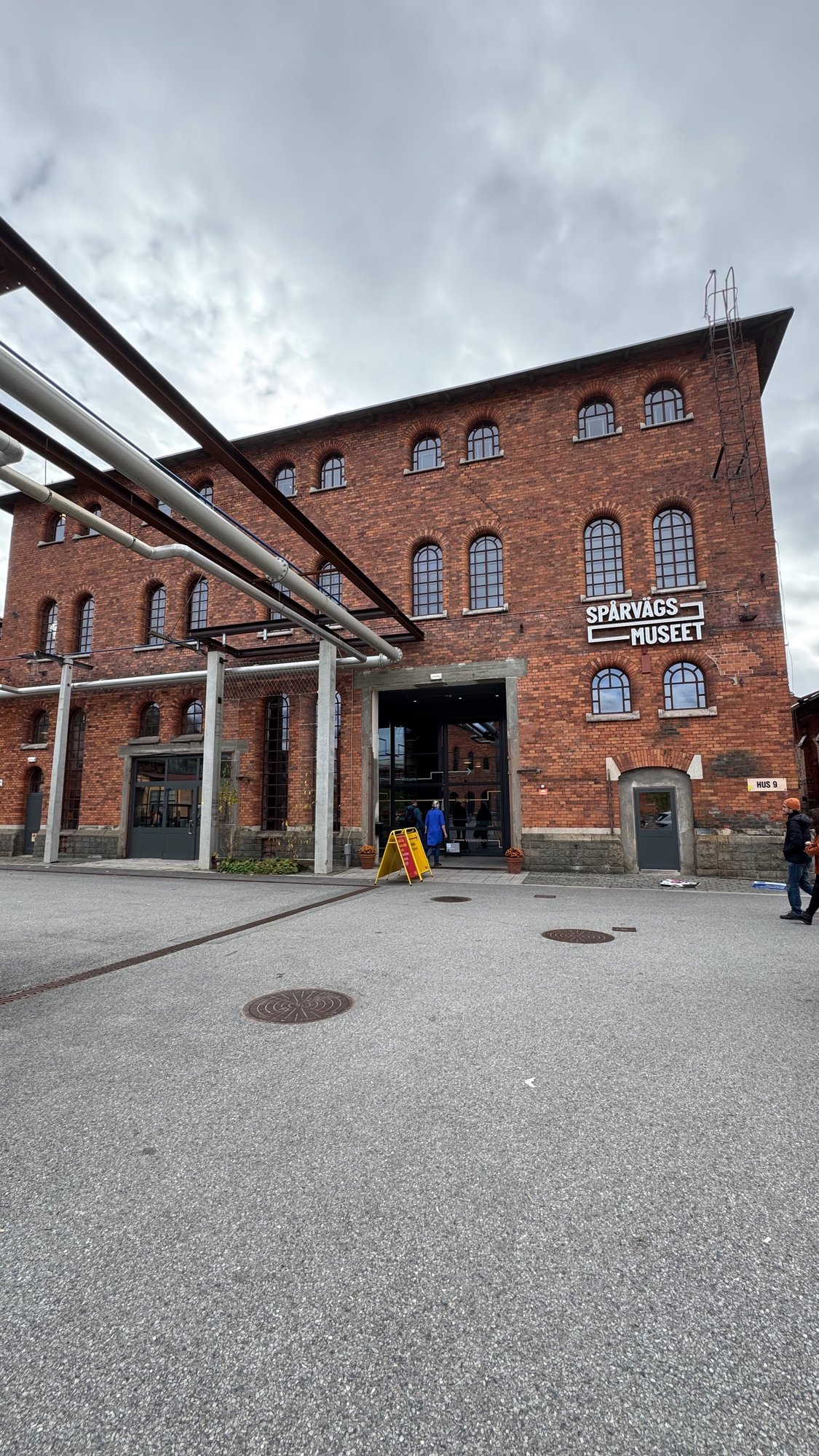
- Why visitYou walk between real trams, buses and trains from Stockholm’s past, in a large industrial hall with steel roof beams.
- Best forFamilies with children, transport fans, and anyone who likes industrial buildings.
- AddressGasverkstorget 1, 115 42 Stockholm
- Opening hoursTuesday to Sunday 11:00–17:00. Closed on Mondays. Closed on several holidays, for example Good Friday, Easter Eve, Easter Day, 1 May, 6 June, Midsummer Eve and Midsummer Day, and the Christmas and New Year days. Thursday evenings 17:00–21:00 have free admission in the autumn season, from 3 September to 10 December. The museum is closed on 3 December.
- AdmissionAdults 150 SEK. Students and pensioners 75 SEK. Free for visitors under 18. You buy tickets in the museum’s reception.
- Guided toursThe museum offers tours in the exhibitions and in the metro. The museum’s website does not list times and prices for them. Call 08-123 337 01 or write to sparvagsmuseet@sl.se.
- FacilitiesCafé, shop, cloakroom and lockable lockers near the reception on floor 1. A lunch room for packed food is on floor 2, with a microwave.
- AccessibilityThe floors are smooth, and there are no thresholds between the rooms. The lift goes to all floors and is 110 cm wide. Accessible toilets with a changing room are on floor 1 by the café and on floor 4. You cannot enter the old vehicles and driver cabins. Hearing loop in the lecture hall. At many stations you can listen to recorded text with headphones. Tactile 3D-printed miniatures stand at all vehicles on floors 1–3. A guide dog is welcome. A companion for a visitor with a disability enters free. You can borrow a pushchair or baby carrier.
- Getting thereRed metro line to Ropsten, exit toward Hjorthagen, then about 10 minutes on foot. Bus 6 (stop Drevergatan) or bus 57 (stop Jaktgatan). Shuttle boat 80 to Ropsten, then about 10 minutes on foot.
- ParkingThe museum has no parking of its own. Paid parking is nearby. Cycle parking is nearby.
- Official websitesparvagsmuseet.se
About the museum
Spårvägsmuseet (the Stockholm Transport Museum) tells the story of public transport in Stockholm. It starts with horse-drawn trams and ends with modern transit. SL, Stockholm’s public transport authority, runs the museum.
The main exhibition has 13 vehicles on floors 1 to 3. You also see uniforms, tickets, art from the metro and old advertisements. Floor 4 shows the history of Stockholm’s public transport in order of time, from rowing boats and horse traffic to ideas for the future. The museum also says that you can try driving a simulated train and bus, and ride a small metro.
History in short
- Around 1920. Tramway director Ernst Hjortzberg starts to collect material from Stockholm’s public transport, when the horse-drawn trams go out of use.
- 1922. The collection is shown in a depot building. Many sources see 1922 as the founding year.
- 1944. The museum moves to Tulegatan and opens to the public.
- 1963. The museum moves to a space under Odenplan metro station.
- 1990. The museum moves to the Söderhallen bus depot on Tegelviksgatan on Södermalm.
- 2017. The Södermalm site closes on 10 September.
- 2022. The museum opens on 21 May in Hus 9 of the old Värtagasverket gasworks.
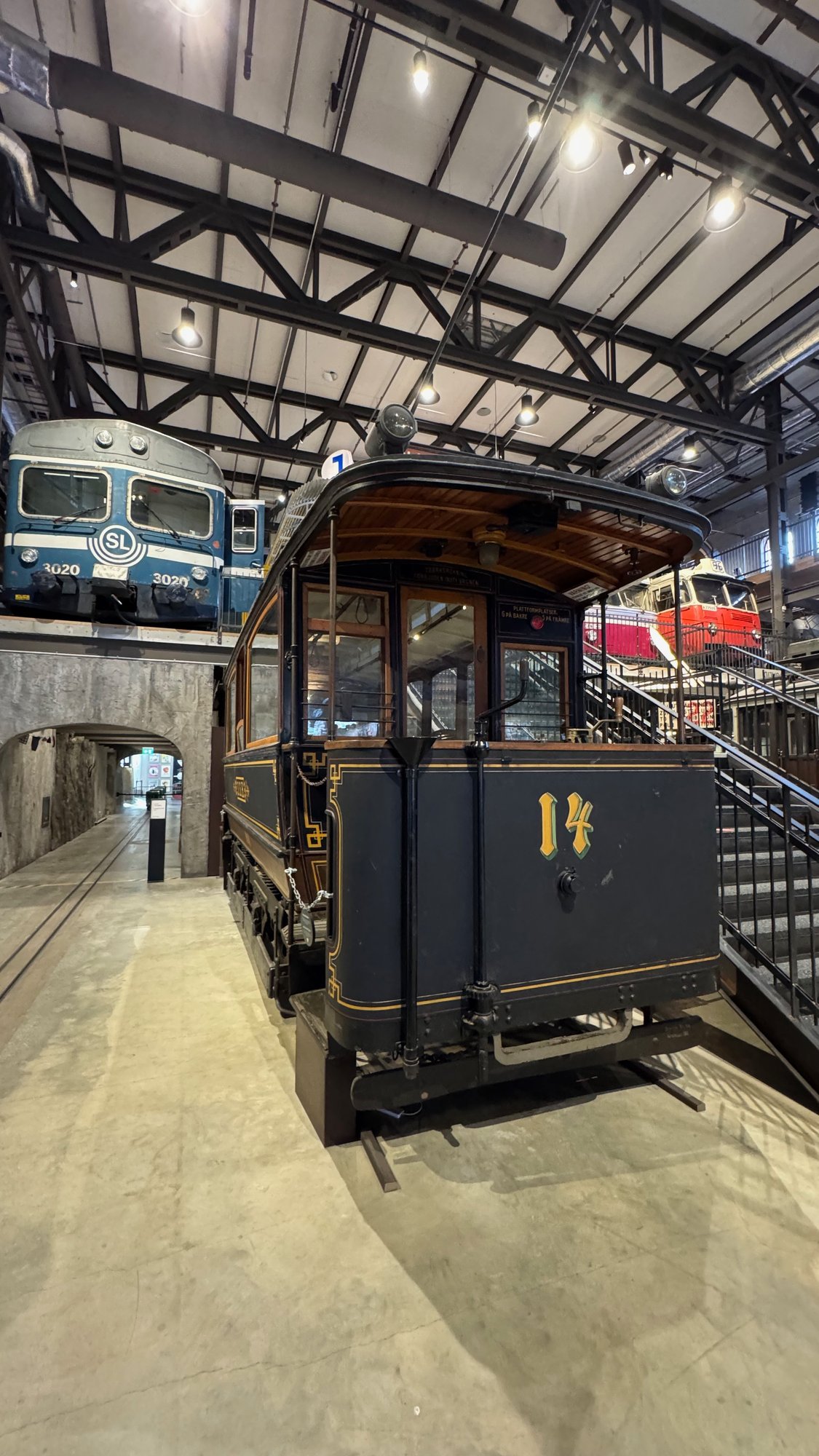
The sign on tram number 14 in the hall says Slussen–Tegelviktorget. Tegelviksgatan is the street of the museum’s old home on Södermalm.
The building and Gasverket
The museum is in Hus 9, the former Regenerationshuset. The museum says that the building is from 1893 and that Ferdinand Boberg designed it. It is part of Gasverket, a former gasworks area in Norra Djurgårdsstaden. The area is still a building site in part, so follow the signs and the barriers.
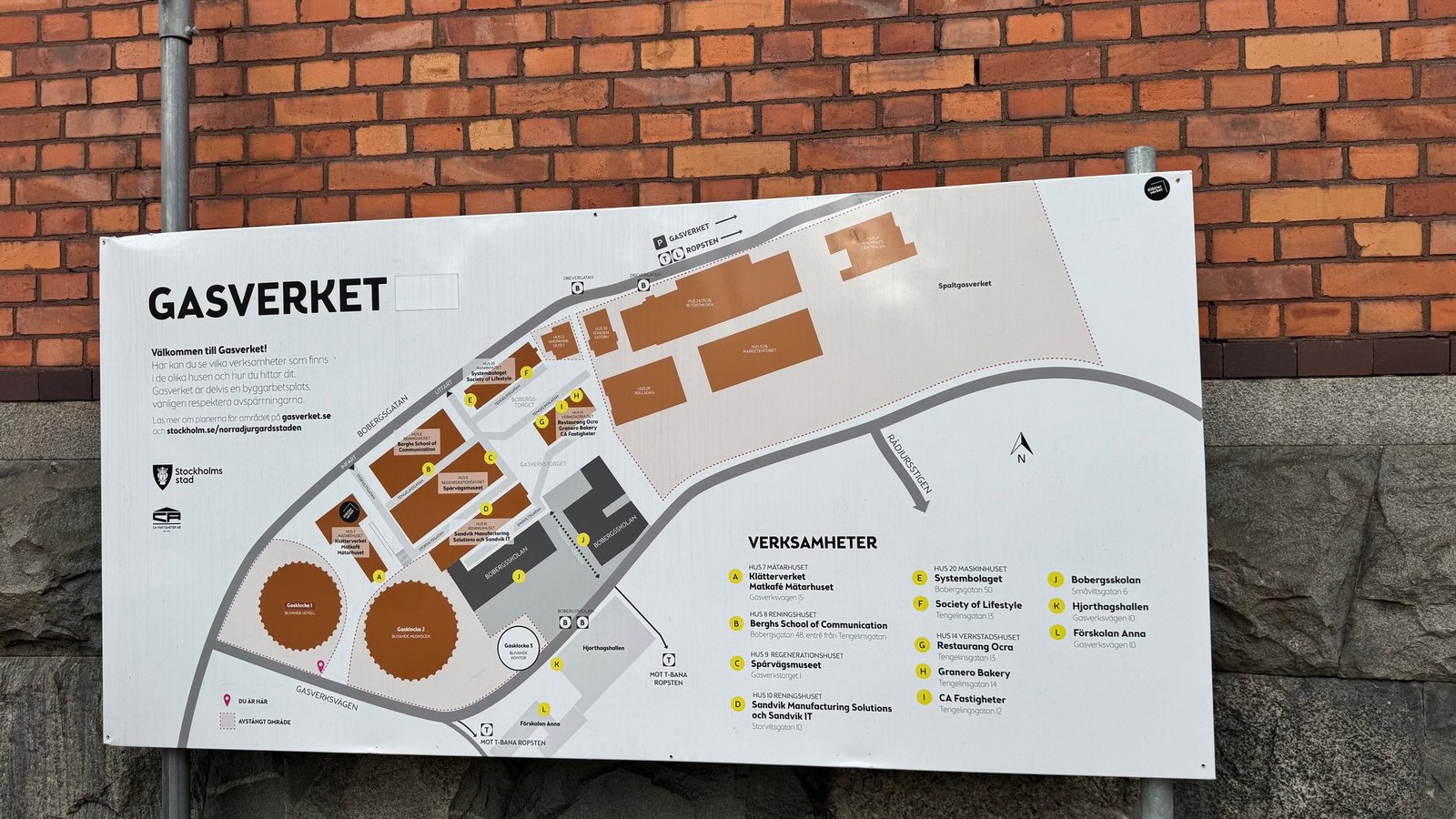
The red brick walls have tall arched windows. Steel pipes run along the facade. Inside, the hall keeps its high roof with black steel beams. The map sign near the entrance lists the businesses in the area and shows the two big gasholders.
The hall and the vehicles
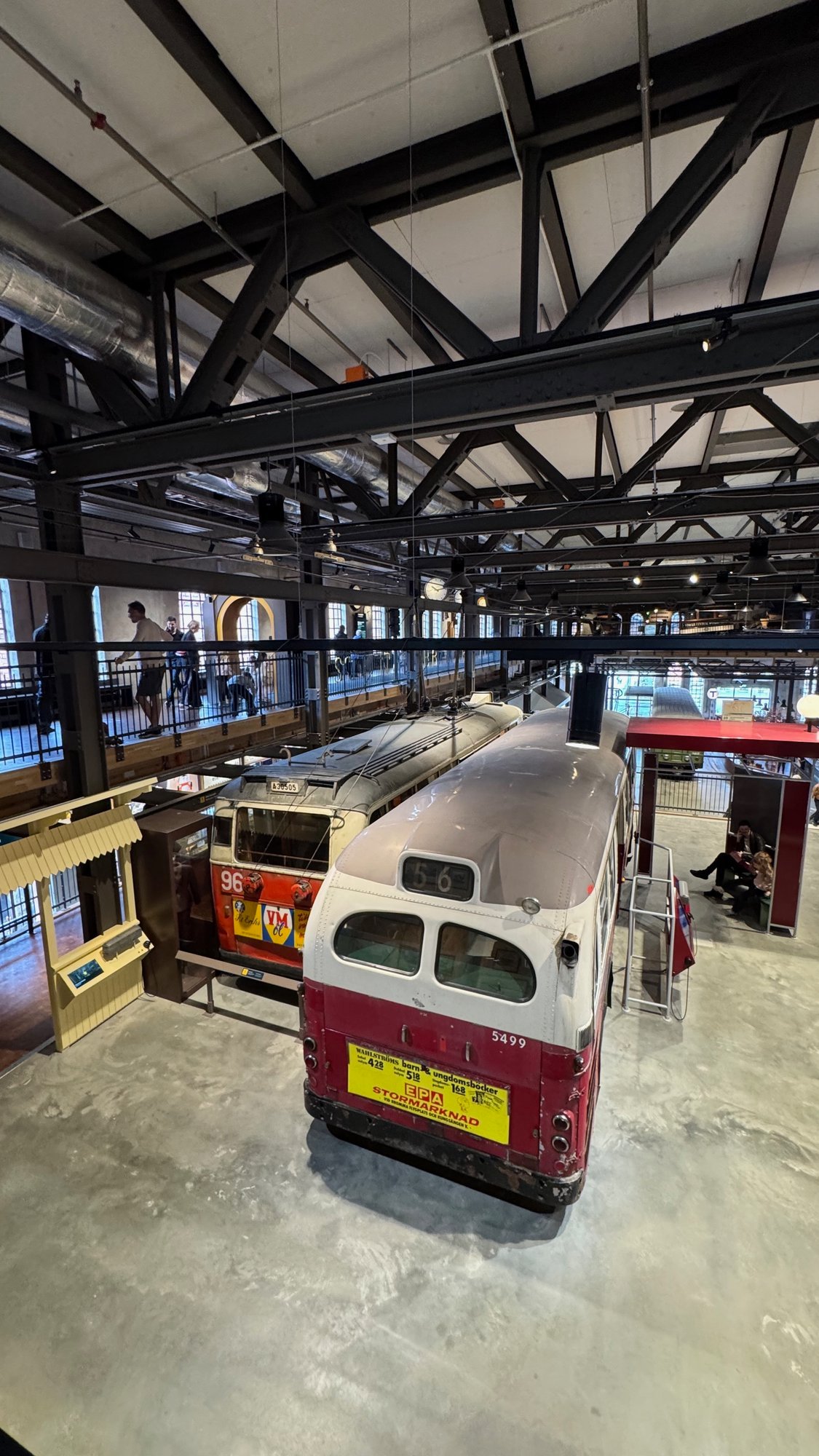
You enter the main hall from the reception. A staircase leads up to a second level where more vehicles stand. On the day of my visit I saw a black tram with the number 14, a blue SL train with the number 3020, a blue tram with the number 92 and several buses.
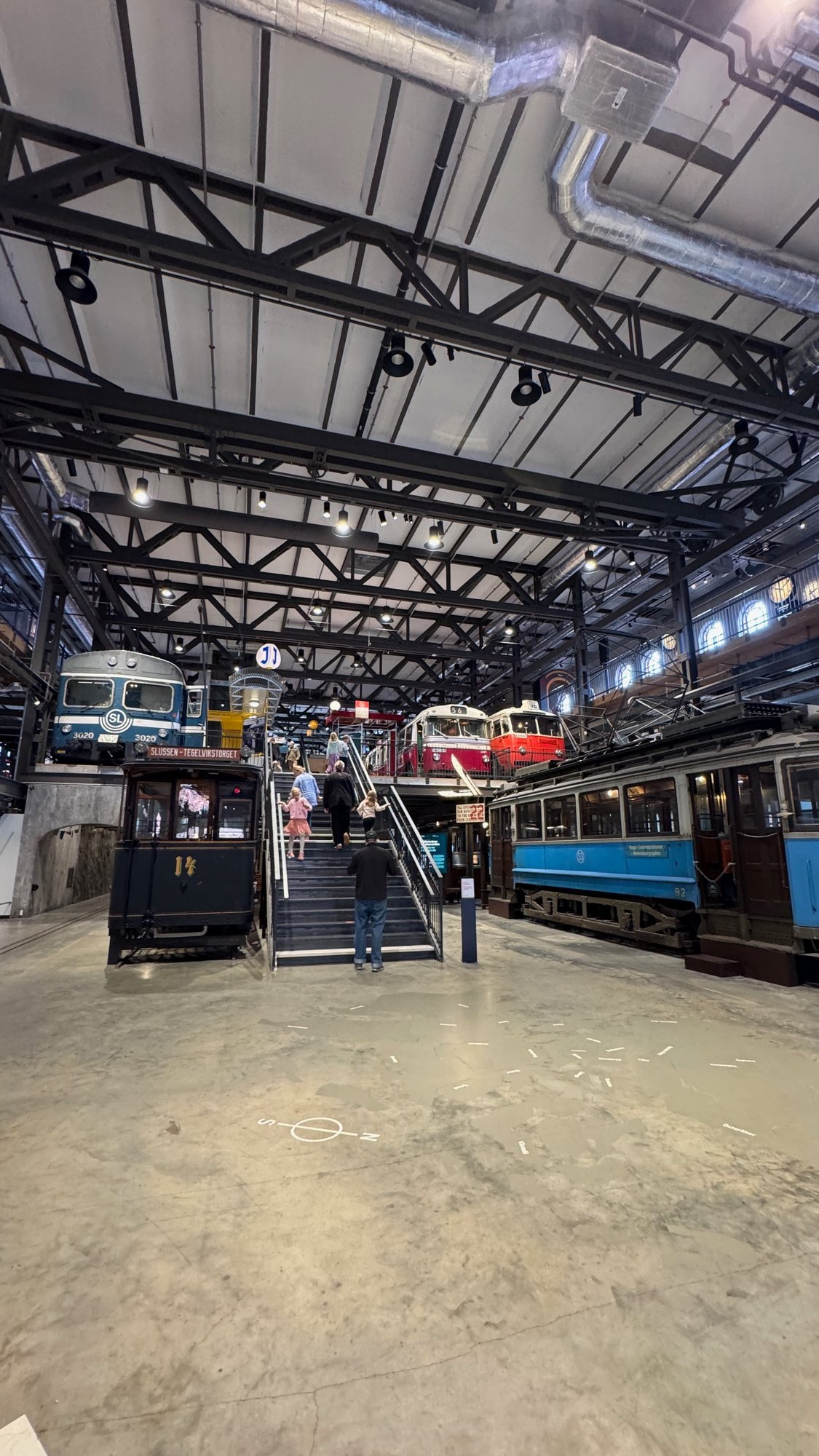
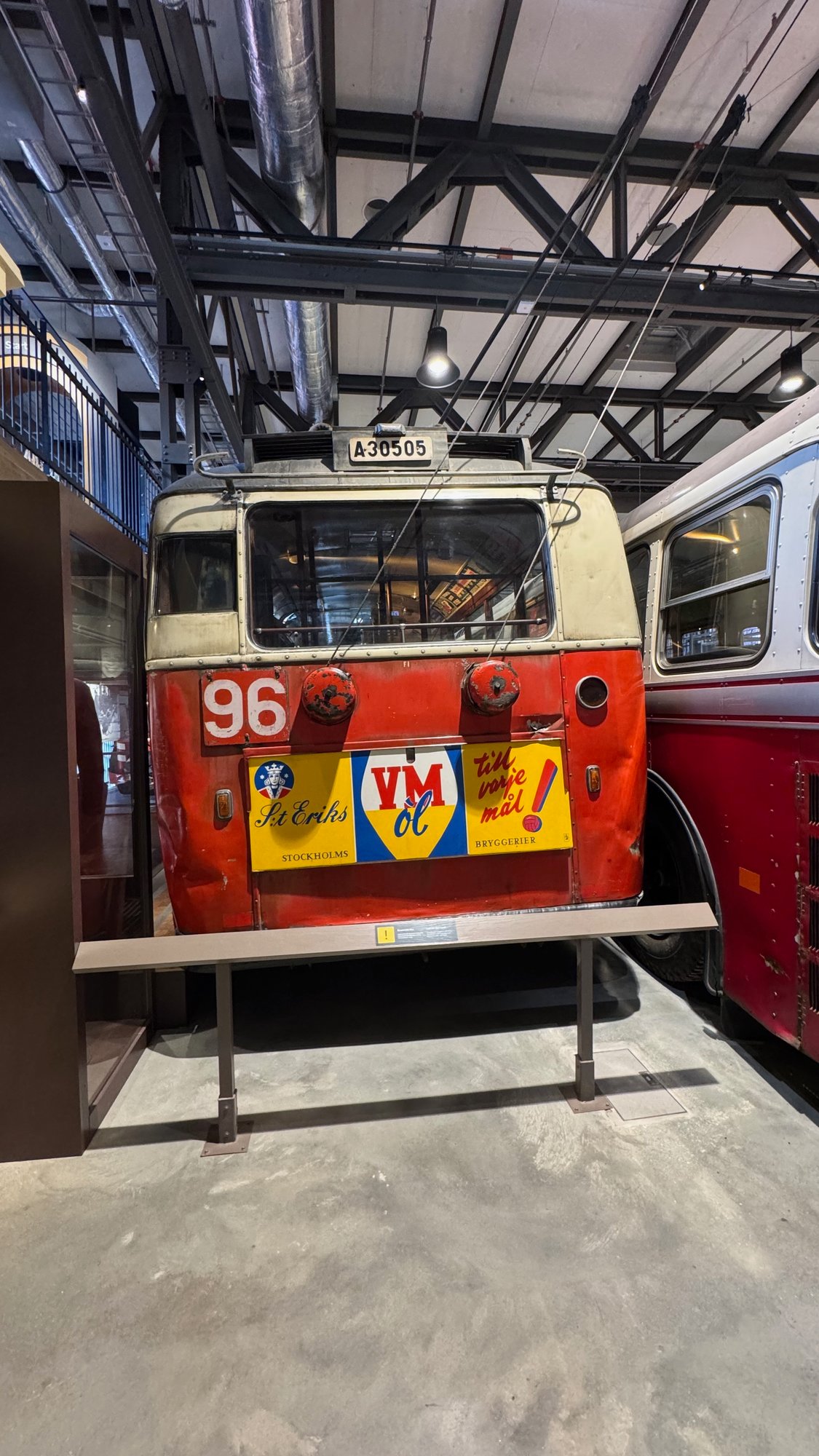
Tram number 14 has a dark body with gold lines and a wooden roof. It has an open rear platform. On the upper level you see a red and white bus with the number 56 and a red trolleybus with the number 96. The back of trolleybus 96 still carries an old advertisement for VM öl from St Eriks Bryggerier. It says till varje mål (with every meal).
You cannot go into the old vehicles or the driver cabins. At each vehicle on floors 1 to 3 you find a small 3D-printed model that you can touch. At some stations you can put on headphones and listen to a recorded text.
Archipelago life
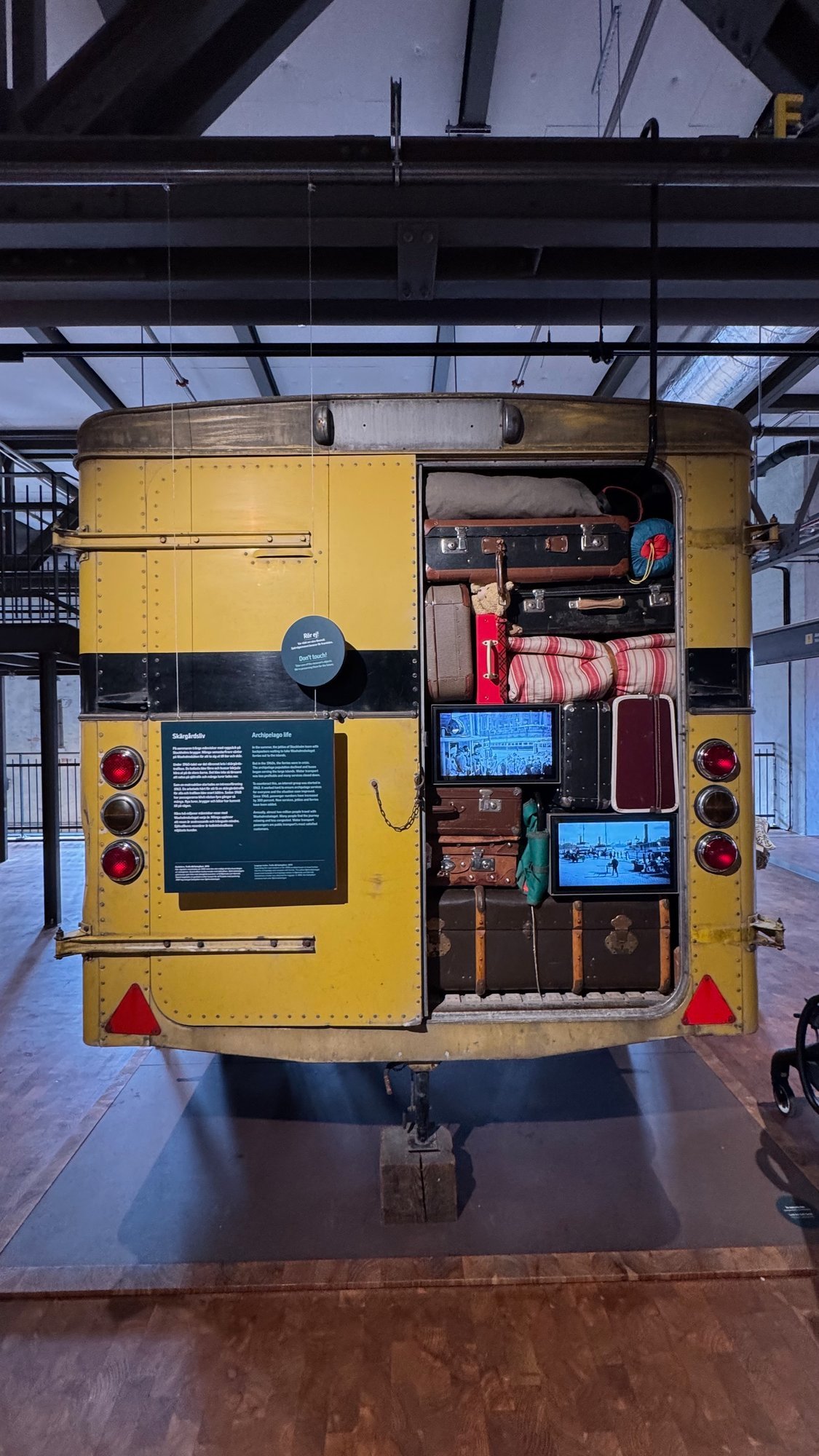
At the back of a yellow bus, the museum shows Skärgårdsliv (Archipelago life). The luggage compartment is open and full of old suitcases, a blanket and a teddy bear. Two small screens show old film. The panel next to it tells this story:
In summer, the jetties in Stockholm are full of people with backpacks. They wait for the Waxholmsbolaget ferries that go out to the islands. But in the 1960s the archipelago traffic was in crisis. Fewer people lived on the islands, and buses began to serve the large islands. Water transport made less profit, and many services closed. In 1963 an interest group started to work for archipelago traffic for everyone. The situation soon became better. The panel says that since 1968 the number of passengers has risen by 300 percent. Each year almost two million people travel with Waxholmsbolaget, and the panel says that water transport passengers are the most satisfied customers of public transport.
Women in public transport
Another part of the museum has the title Fler kvinnor får plats! (More space for women!). It shows old SL posters, black-and-white photographs of women workers and a small screen. One poster advertises an extra-jobbet (extra job). Several text panels in Swedish and English go with it. Read them in the museum. My photos are too small to quote them.
Café and shop
The café serves warm dishes, soup, sandwiches, salads, pastries, and hot and cold drinks. It has vegetarian, vegan and children’s dishes, and gluten-free and lactose-free choices. It is open Tuesday to Sunday 11:00–17:00. The museum shop sells goods with a public transport theme.
Tips for your visit
- Put coats and bags in the cloakroom or in a locker near the reception.
- Children under 12 must have an adult (18 or older) with them all the time.
- The museum advises you to leave a pushchair at home on busy weekends and holidays. You can park it inside, and you can borrow a pushchair or a baby carrier.
- You can eat your own food at the café shelf on floor 2.
- You can only buy an entrance ticket in the reception. Tickets for lectures and other programs come from the museum’s booking system.
Photo gallery
All photos on this page were taken by Zayera Khan on 19 September 2026. The historical photographs, posters and objects that you see in them belong to the museum and to the rights holders. Hours and prices can change. Check the museum’s website before you go.
Sources
- Spårvägsmuseet: opening hours and prices
- Spårvägsmuseet: tickets
- Spårvägsmuseet: accessibility
- Spårvägsmuseet: getting here
- Spårvägsmuseet: practical information
- Spårvägsmuseet: food and drink
- Spårvägsmuseet: exhibitions
- Spårvägsmuseet: easy-read page (building, address)
- Wikipedia: Spårvägsmuseet (history and moves).
- Signs and panels in the museum, read on 19 September 2026: Skärgårdsliv, Fler kvinnor får plats! and the Gasverket map sign.