
Postmuseum
Sweden’s postal story, inside its oldest post office building
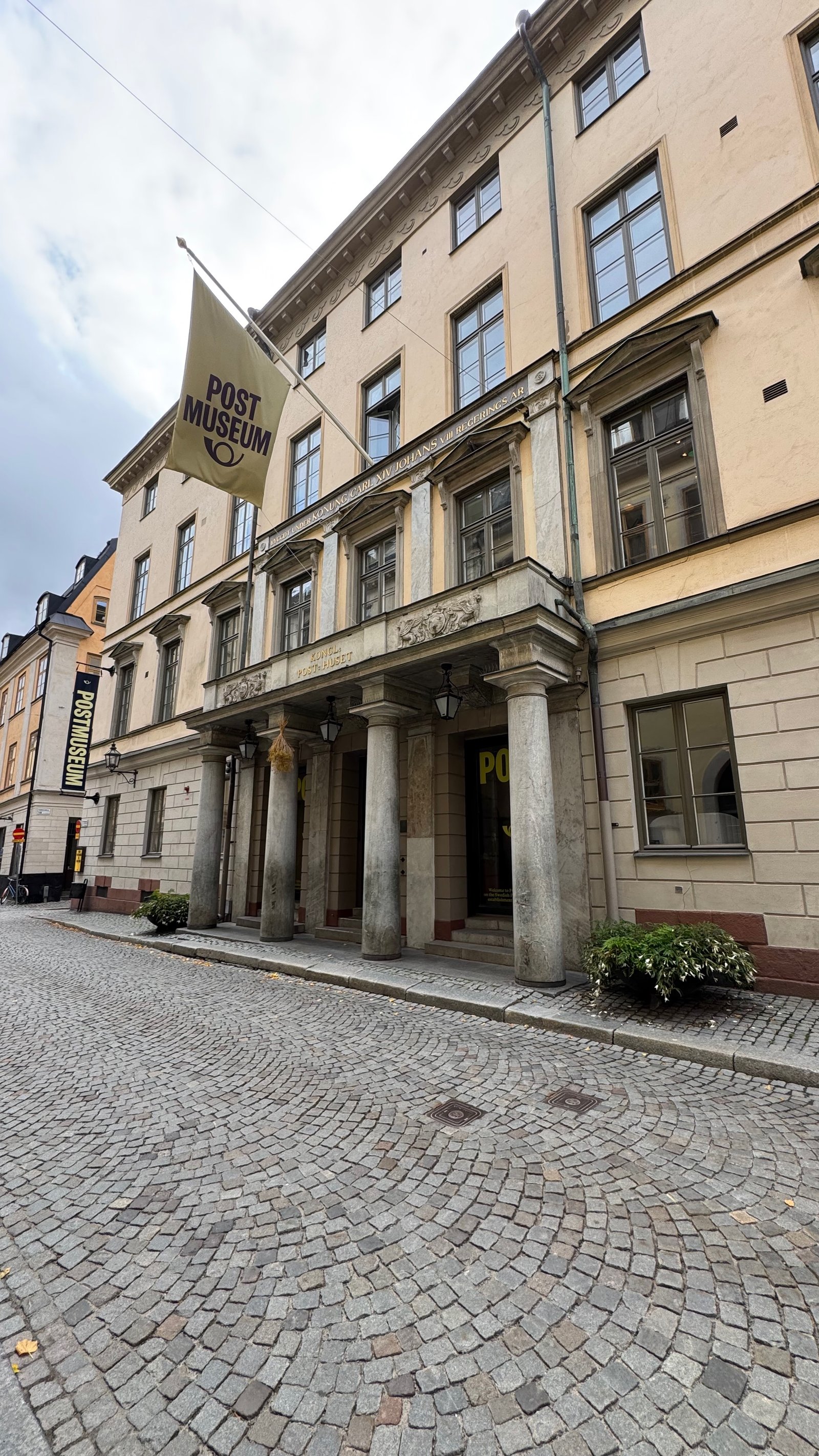
- Why visitYou see almost 400 years of Swedish postal history in a small, walkable museum, inside the actual building where it started – and if you’re bringing children, they get their own postal-terminal play space to run.
- Best forStamp collectors, design-history fans, and families with children.
- AddressLilla Nygatan 6, Gamla Stan, 111 28 Stockholm
- Opening hoursTue–Fri 11:00–17:00. Sat–Sun 10:00–16:00. Closed Monday. Booking ahead is recommended for Friday–Sunday visits, especially for Postis on weekends, since it fills up.
- Guided toursRegular public tours run on open days. Tailored group tours can be booked.
- Group size
- FacilitiesAn accessible toilet with a changing table is on the ground floor, with more toilets on floors one and two. A stroller room on the ground floor holds prams and wagons. There is also a picnic room, a museum shop, a library, and Restaurant AVI, open to everyone, not only museum visitors.
- AccessibilityA lift (208 cm deep, 128 cm wide) is in place, with visual and audio floor announcements, plus ramps through the building and an automatic door opener at the entrance. The main entrance has a high curb and a few steps.
- ParkingEasiest to find a spot on Riddarholmen or near the Royal Palace.
- Official websitepostmuseum.se
About the museum
Postmuseum stands in the oldest building the Swedish postal service ever owned. The house at Lilla Nygatan 6 dates back to the 1600s, and the Post Office bought it in 1720 – its first permanent home, after decades of running the mail out of postmasters’ private houses. From then until 1869, this one building was Stockholm’s only post office.
The Swedish postal service itself is even older than the building. Axel Oxenstierna, Sweden’s Lord Chancellor, set it up in 1636 in Queen Christina’s name. His plan, known as Postbådhen, created a relay system: postbones carried the mail in stages between fixed towns, instead of one rider covering an entire route alone. By 1645, the network already reached 29 offices across the country, and the same year saw Sweden’s first newspaper, Ordinarie Posttijdender, go out through the same postal routes.
The building kept adding roles over the centuries. In 1884, it became home to Postsparbanken, the postal savings bank, giving ordinary Swedes a place to save small sums – its very first branch opened right here. Postmuseum itself opened in 1906, and it is owned today by PostNord, Sweden’s national postal service.
How the mail traveled
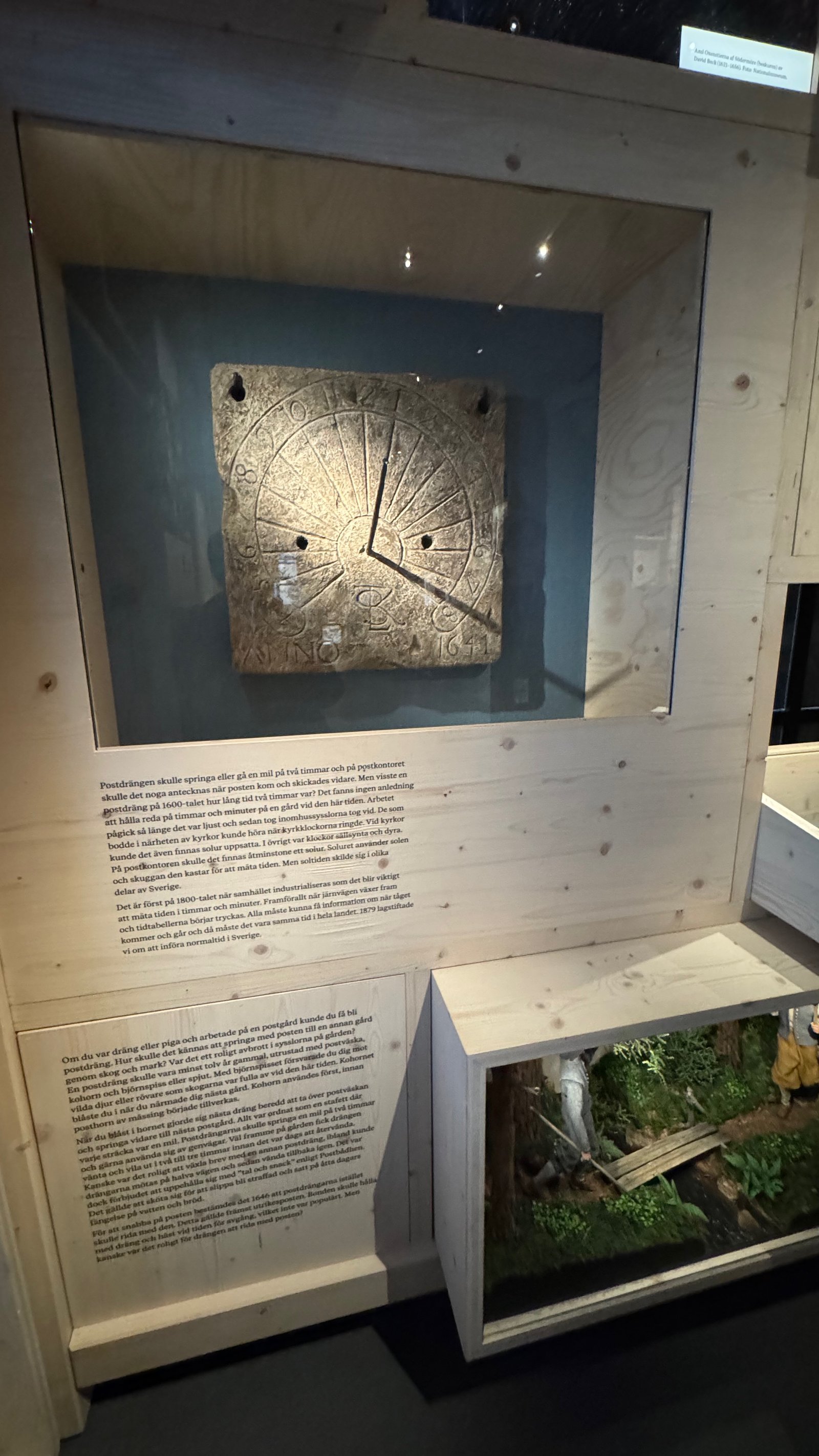
One of the museum’s own objects makes the earliest post system real: a carved stone sundial from 1641, once used at a post station to check the time. A postboy was expected to run or walk a Swedish mile – about ten kilometers – in two hours, and stations needed some way to keep track, since clocks were still rare and expensive. Outside of that, people mostly went by church bells and the sun.
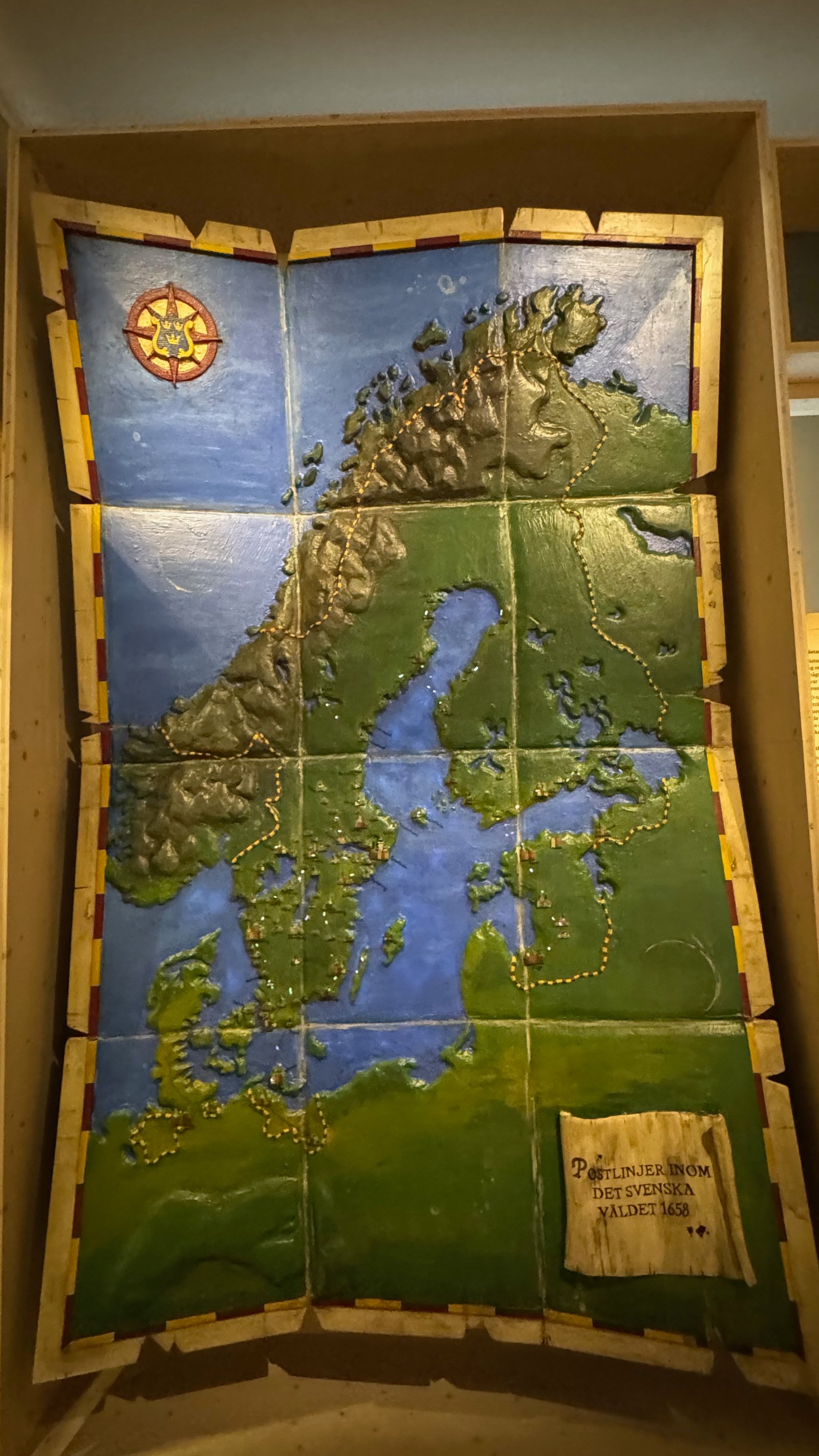
A large relief map in the museum, titled Postlinjer inom det svenska väldet 1658, shows just how far that early network already reached – postal routes running the length of Sweden and Finland and along the Baltic coast, only a few decades after Oxenstierna’s original plan.
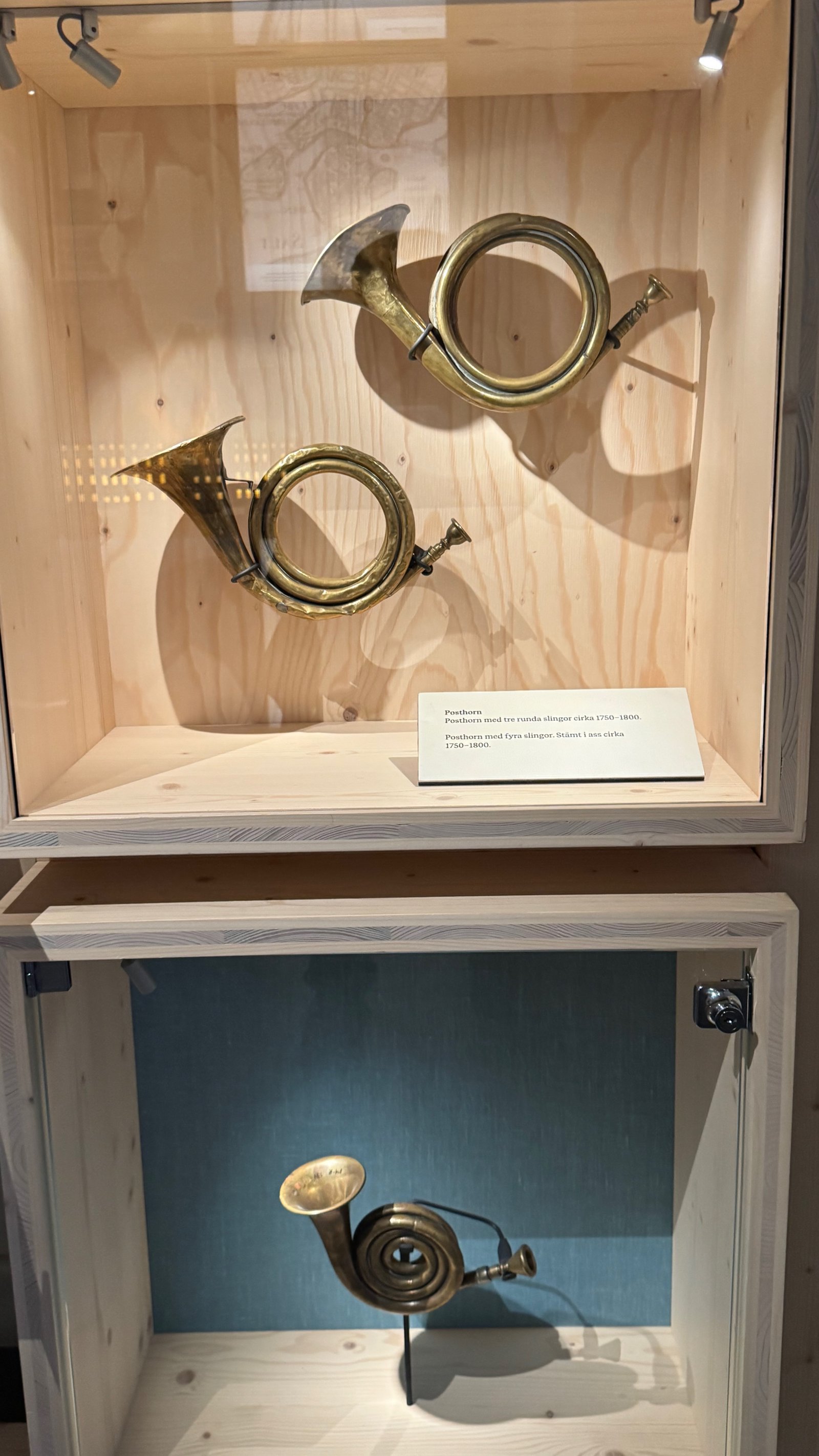
The posthorn became the sound of the mail arriving. The museum displays several antique brass posthorns from around 1750 to 1800, the same instrument a postboy would once have blown to announce himself at the next farm or station.
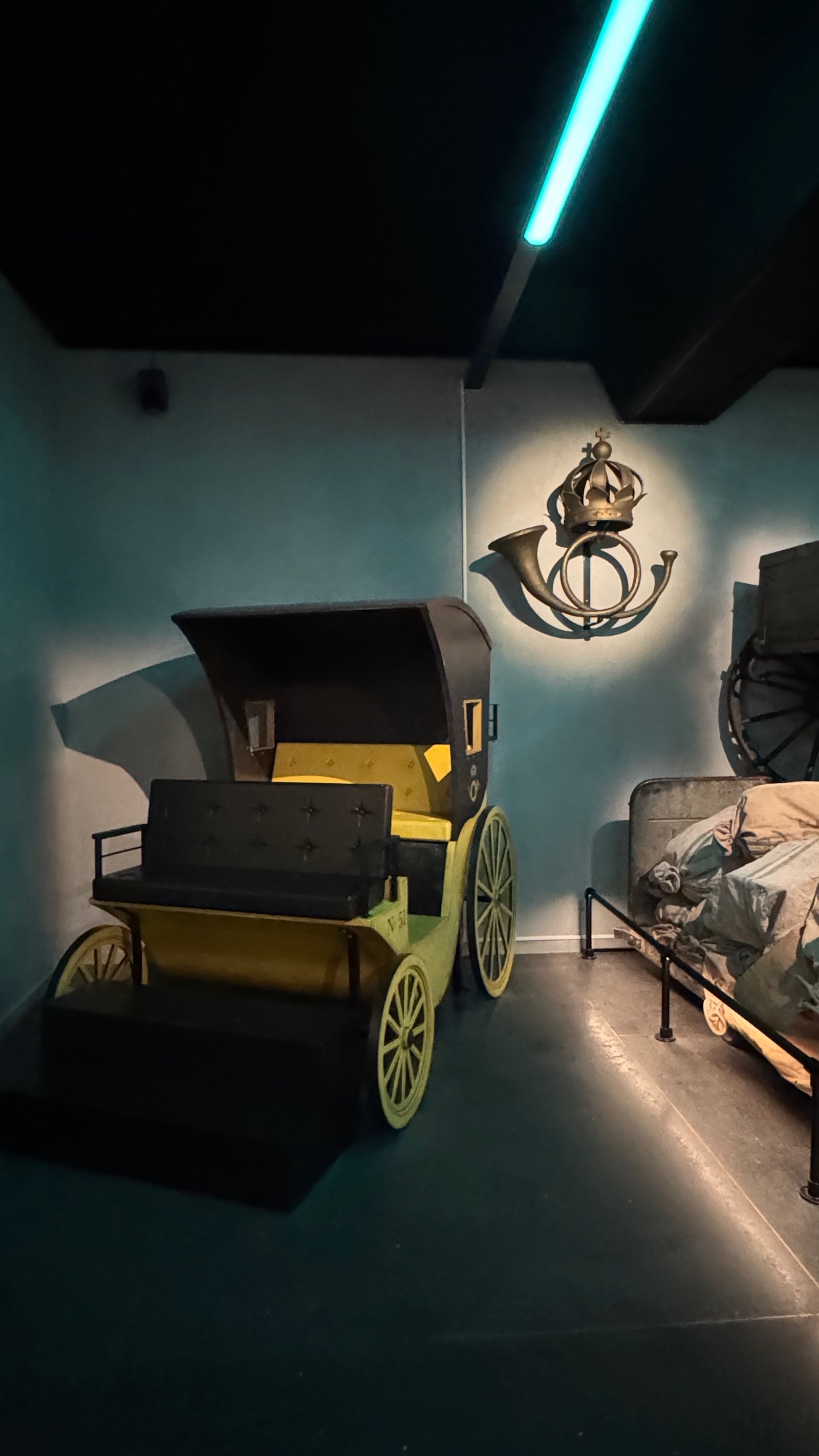
Royal mail moved differently. The museum also shows a grand 18th-century mail carriage, painted yellow and black, parked beneath a gilded crown-and-posthorn crest that marked official postal property.
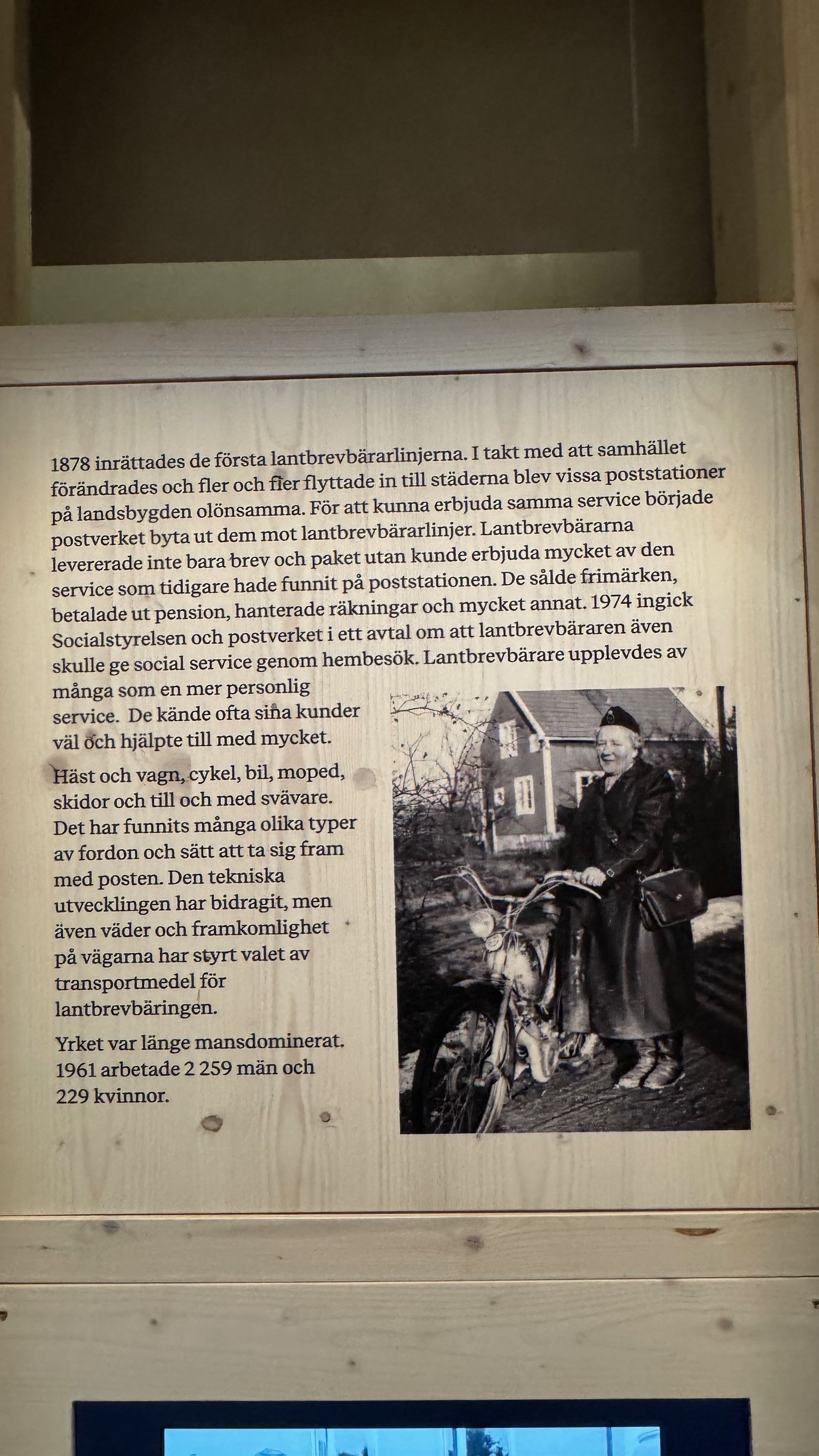
Out in the countryside, it was rural letter carriers, lantbrevbärare, who kept people connected. The first rural routes started in 1878, and carriers did far more than deliver letters – they sold stamps, paid out pensions, and handled bills, often becoming a familiar, trusted face on their route. From 1974, they even carried out social-care home visits under an agreement with Sweden’s social services authority. The job was long male-dominated: in 1961, 2,259 men worked as rural letter carriers, against only 229 women.
Current exhibitions
The museum runs five exhibitions at once, each with its own focus:
- POST – the main exhibition, walking you through almost 400 years of Swedish postal history, from the 1600s to today, mixed with short films and information texts.
- The Treasure Chamber – traces Swedish stamps from 1855 to 1936, including letters carrying the very first Swedish stamps, a rare 1858 letter sent from Stockholm to London, and a unique stamp sheet with four Shilling Banco stamps alongside two of the world’s first colonial stamps, from Mauritius.
- A Small Corner of Sweden – shows recent Swedish stamps together with profiles of the artists who designed them.
- Hello! – built around communication itself: type on an old typewriter, or practise handwriting with chalk on blackboards.
- Postis – the children’s exhibition, described below.
Stamps through the 1900s
Stamp history didn’t stand still after 1855. For the postal service’s first 65 years, every Swedish stamp was a “bruksfrimärke” – a workhorse stamp meant to stay in circulation for years, showing only the reigning king, numbers, or the coat of arms. The first stamp with a real picture on it, showing Stockholm’s Posthuset, didn’t appear until 1903.
Everything changed in 1920, with Sweden’s first jubilee stamp, marking 300 years since the postal service organized itself for both state and private mail in 1620. By the late 1940s, though, people had grown tired of dull, formulaic jubilee stamps. When Erik Swartling took over as the postal service’s director general in 1946, he pushed for an artistic renewal – and 1949 brought two carefully designed stamps, one for August Strindberg’s jubilee and one for the Lingiad gymnastics event.
That shift opened the door to pure picture stamps, showing a subject purely for its own sake, with no tie to an anniversary, a monarch, or a national symbol. The first came in 1954, depicting Bronze Age rock carvings. From the late 1960s on, these picture stamps often leaned into a kind of folk-home nostalgia – rock carvings, rune stones, folk costumes, timbered churches, wildlife – alongside newer themes like sport and industry. Annual Nobel Prize stamps ran from 1961 to 2004, and Christmas stamps have appeared every year since 1990.
For families and children
A large part of the museum is built just for children: Postis, a colorful, screen-free play exhibition shaped like a working postal terminal, for ages zero to ten. Children sort packages by color, shape, weight, and size, scan barcodes, and even use a toy X-ray machine to see what’s inside. They can staff a service counter, run a payment terminal, deliver letters by matching numbers to mailboxes, and sell baked goods at a café counter. A separate art studio lets them make their own postcards and send them off with real stamps. Quieter corners, including a couch area and a nursing room, are there for younger children and their caregivers.
Photo gallery
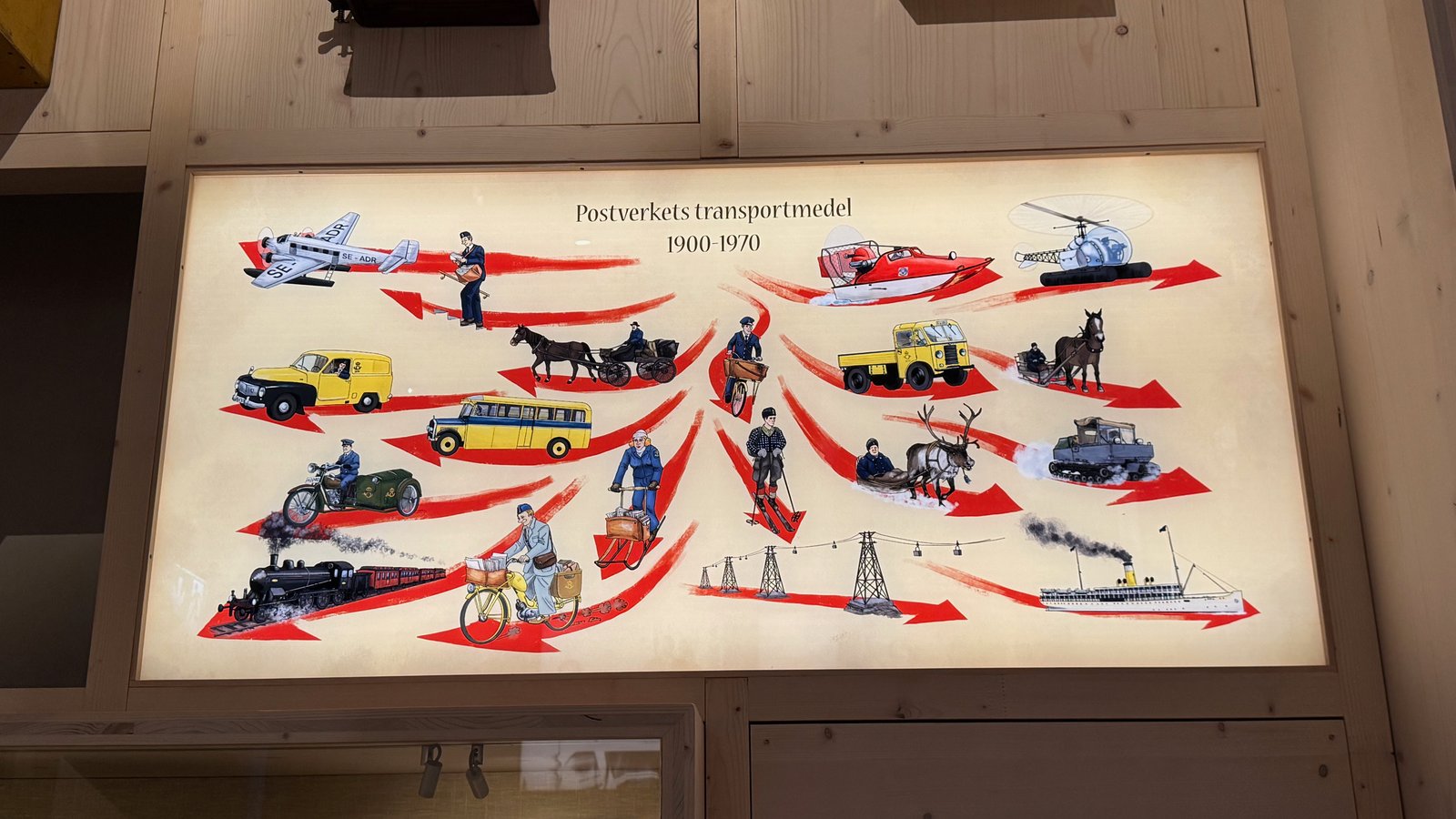
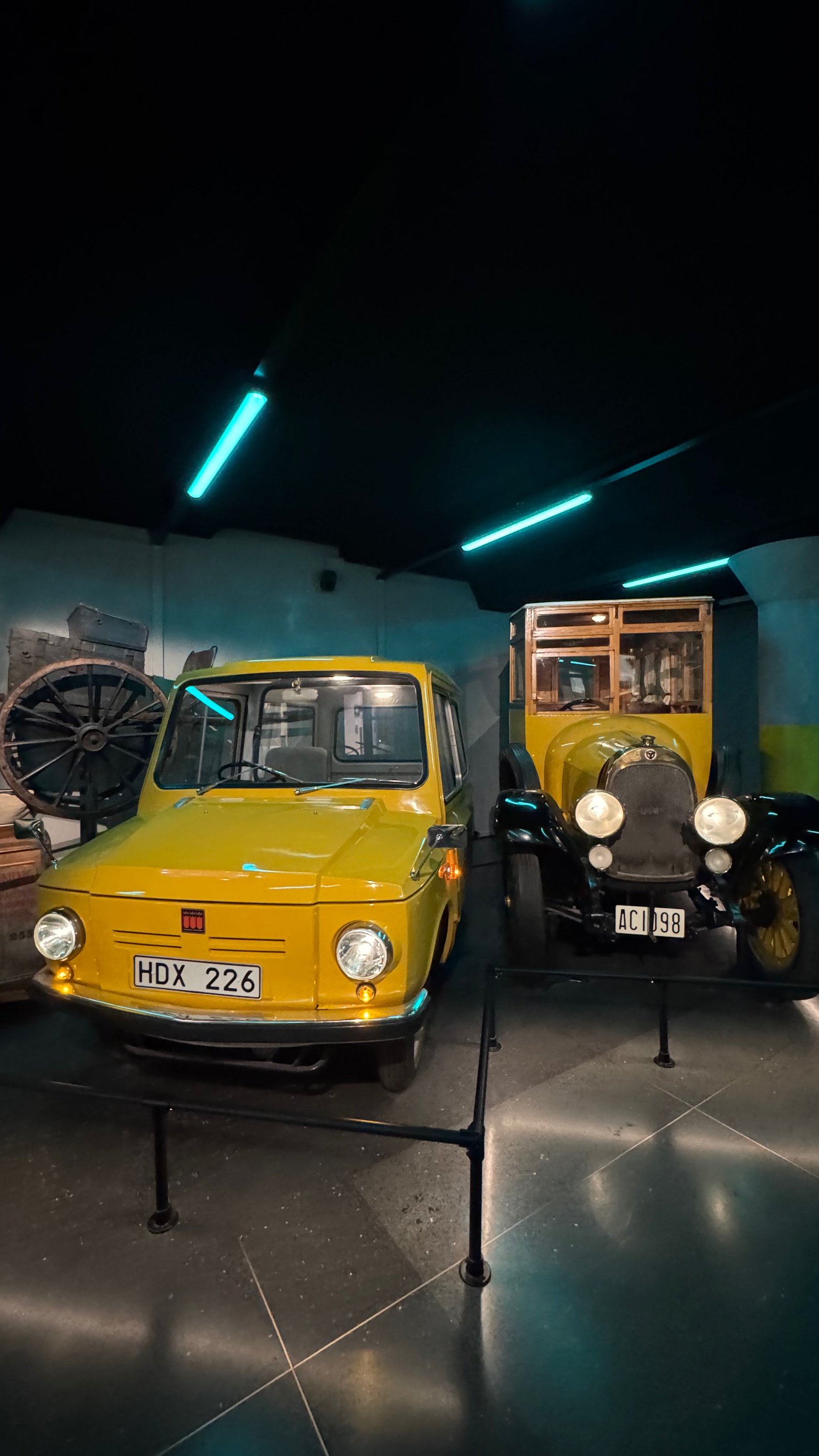
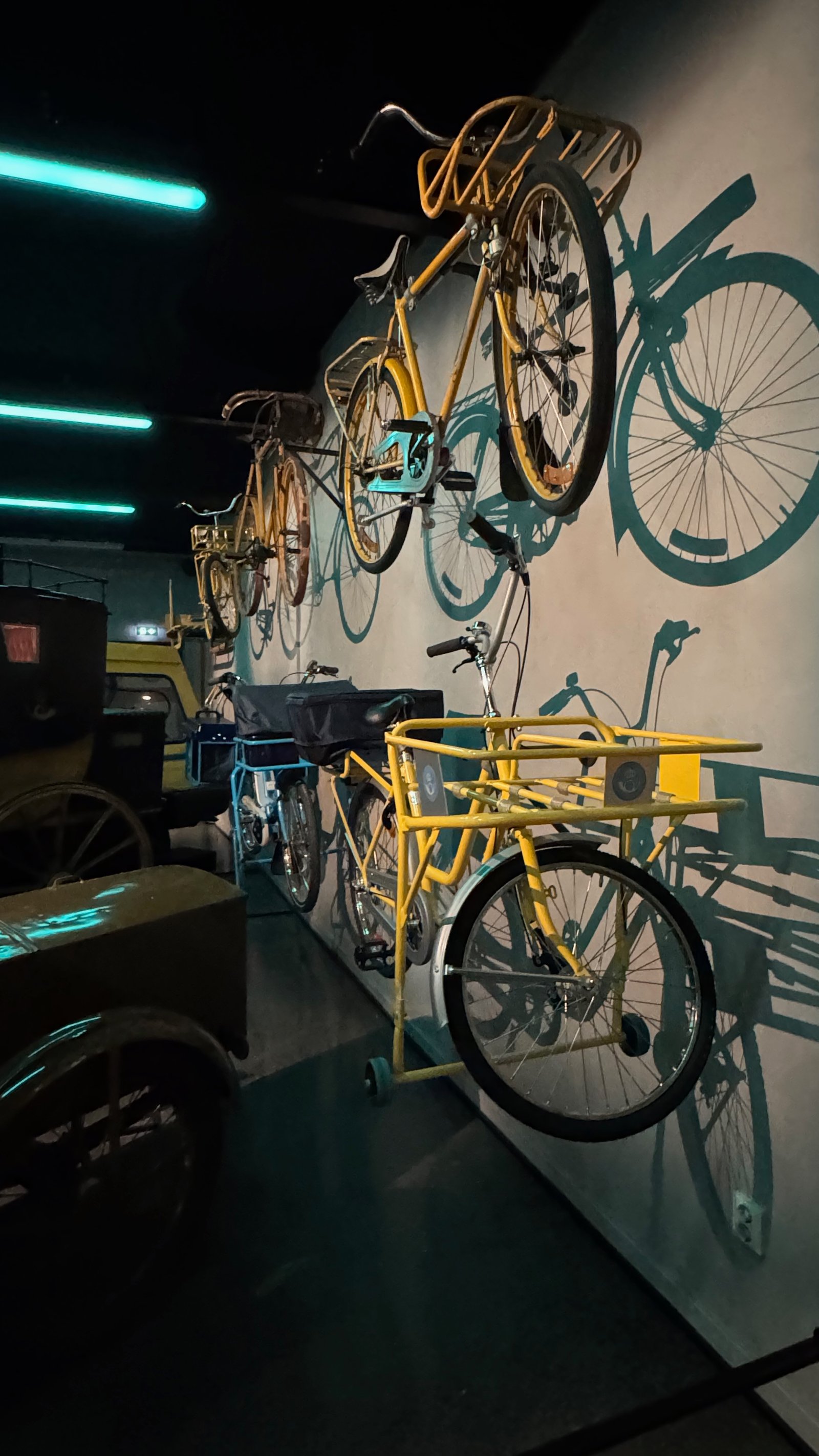
All photographs on this page were taken by Zayera Khan during a visit to the museum, and are her own property. Please do not reuse them without permission.
Restaurant and café
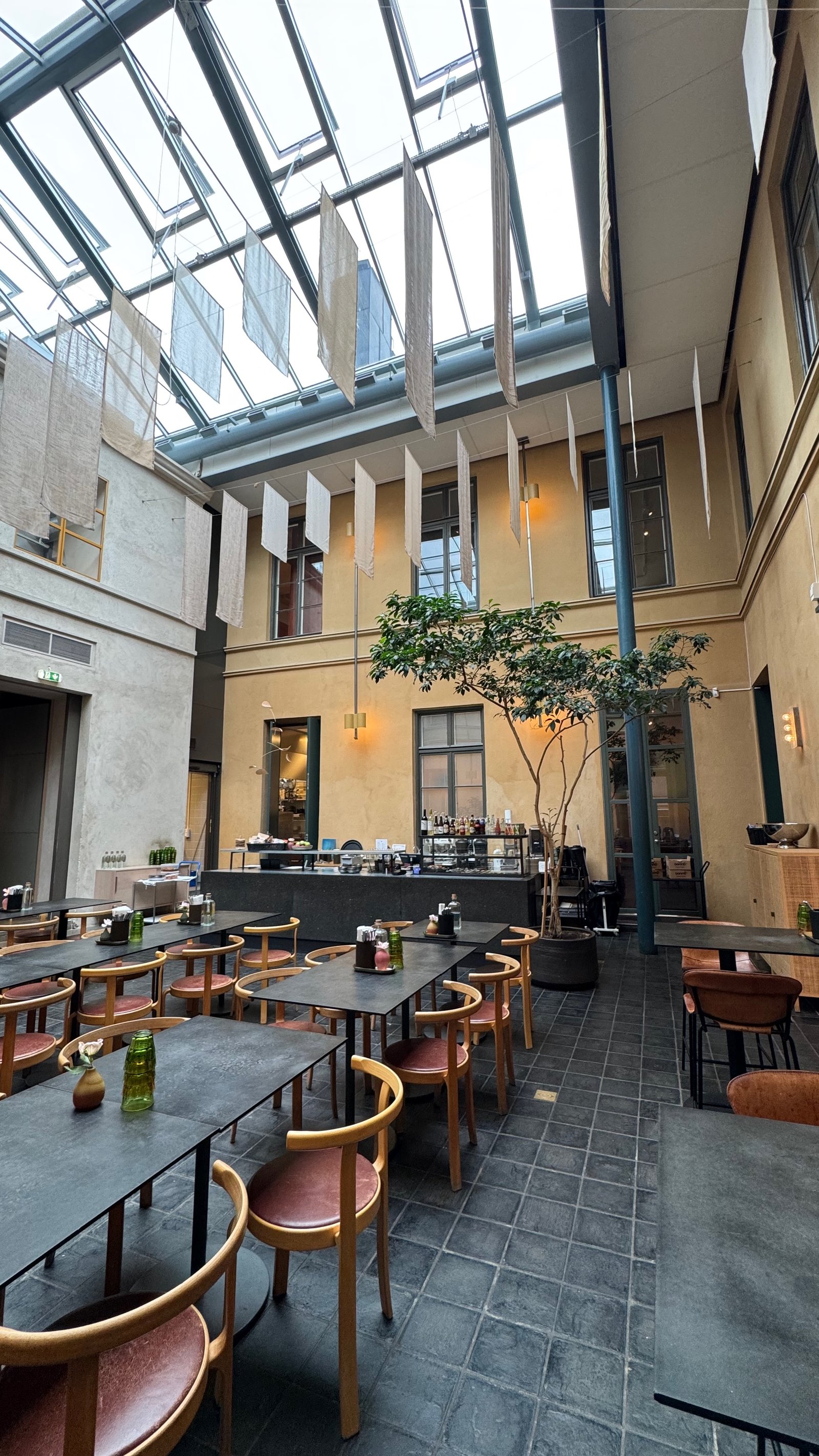
Restaurant AVI runs inside the museum, open to anyone – you don’t need a museum ticket to eat there. It sits in a bright atrium under a ten-metre glass roof built over the old courtyard, with pale linen banners hanging overhead and halls opening off both sides for mingling. Trees and plants inside give the space an outdoor feel despite being indoors.
It’s also a real event venue, not just a lunch stop. AVI seats up to 100 guests in a single hall, or up to 160 across two adjoining halls, and can host mingling events for up to 240 guests across the building’s various spaces. They take bookings for conferences, private parties, weddings, and other large gatherings, cook everything on-site, and arrange drinks, a bar, and music on request.
The museum shop
Before you leave, the shop is worth a stop. It carries what the museum calls the country’s largest selection of Swedish stamps, along with yearly stamp sets, gift kits, collector’s accessories, engravings, postcards, greeting cards, and stationery – good hunting if you like writing real letters.
Sources: Postmuseum – Visit Us; Postmuseum – About Postmuseum; Postmuseum – Exhibitions; Postmuseum – The Treasure Chamber; Postmuseum – Posthistorisk tidslinje; Postmuseum – Museum Shop; Postmuseum – Restaurang; Restaurang Avi – Festvåning; Barn i stan – Postis; Wikipedia – Frimärken i Sverige; on-site museum information panels.