Östasiatiska museet in Stockholm: the East Asian museum is open again
After two years behind closed doors, the yellow building on Skeppsholmen shows an old collection and new exhibitions
- Why visitOne of Sweden’s main collections of art and archaeology from China, Japan and Korea, back after a two-year closure and with new exhibitions.
- Best forAnyone who likes Buddhist sculpture, ancient Chinese objects and quiet galleries. A good second stop on Skeppsholmen.
- AddressTyghusplan 4, Skeppsholmen, Stockholm.
- Getting thereBus 65 from Stockholm Central Station stops at the museum. You can also walk from Kungsträdgården metro station across the bridge to Skeppsholmen.
- Opening hoursTuesday 11:00 to 20:00. Wednesday to Sunday 11:00 to 17:00. Closed on Monday. These hours apply from 19 September 2026. Special days: open Monday 26 October and Monday 4 January, 11:00 to 17:00. Closed 24, 25 and 31 December and 1 January. Open 26 and 27 December, 11:00 to 17:00. Check the museum website before you go, because hours can change.
- AdmissionDay ticket 160 SEK. Seniors 140 SEK. Annual pass 200 SEK (the museum says it includes three museums). Under 19 years free. Check the website for current prices.
- Guided toursThe museum lists tours in its calendar. Check the activities page for dates.
- FacilitiesCafé Tyghuset, a museum shop and a webshop.
- AccessibilityThe museum says a new elevator meets current accessibility standards. The street entrance has stone steps with handrails. Ask the museum which entrance to use with a wheelchair.
- Official websiteostasiatiskamuseet.se
The Museum of Far Eastern Antiquities was closed for two years. It reopened on 19 September 2026. I went on 3 October, two weeks later.
I did not go only for the new. I wanted to see what stayed. This article follows my photos: the building, the hall, the galleries, the shop and the lawn outside.
The reopening on Skeppsholmen
The museum sits in a yellow building on Skeppsholmen. The museum says it closed for two years to renovate, to build new exhibitions and to update the old ones. Entry was free on the opening day. The museum is part of Världskulturmuseerna, the National Museums of World Culture.
Wikipedia says the Swedish Parliament founded the museum in 1926. It says the archaeologist Johan Gunnar Andersson was the first director, and that the first collection came from his finds in China in the 1920s. I found this only on Wikipedia, so treat it as one source.
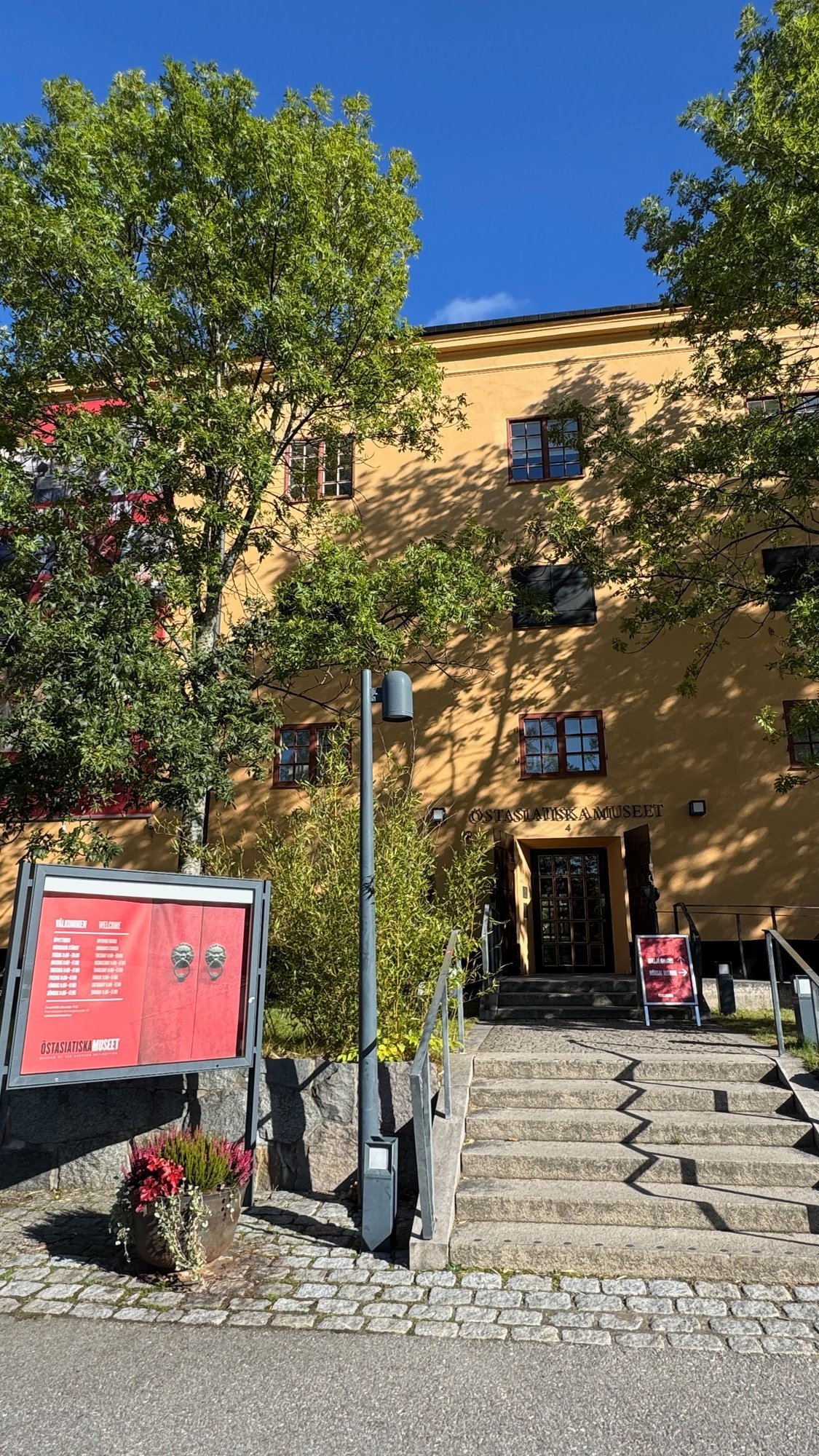
At the door, a red board on the left shows the opening hours. The name of the museum stands in letters above the entrance. Stone steps lead up to it.
The entrance hall
The hall is wide. The floor is gray stone and the columns are white. A carved stone animal sits on a low stand next to the reception desk. The desk is red, and so are the screens above it. They show the ticket prices. A wooden stair goes up at the far end.
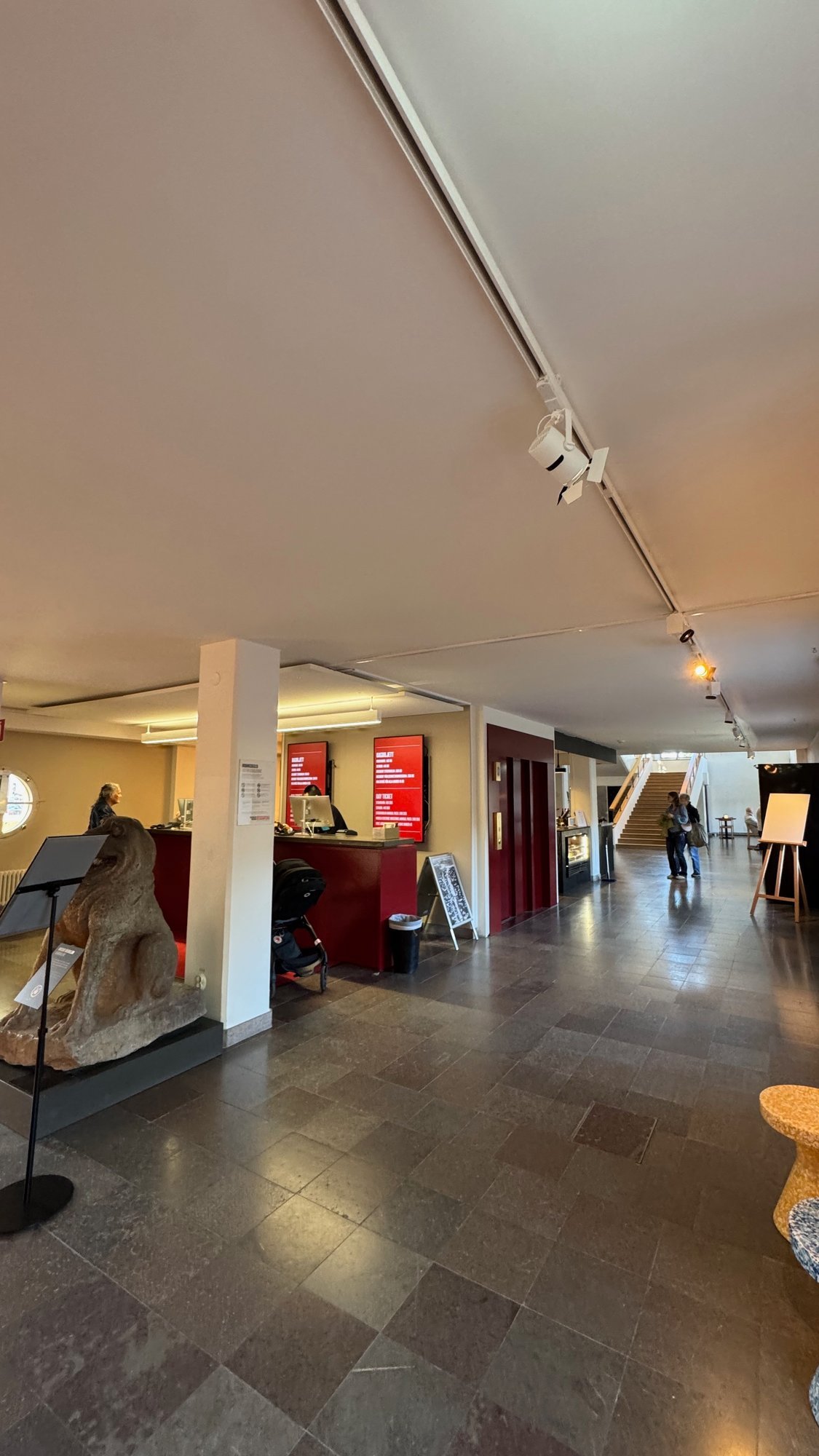
A day ticket costs 160 SEK. Seniors pay 140 SEK. Everyone under 19 enters free.
The galleries: Shang, Zhou and Buddhas
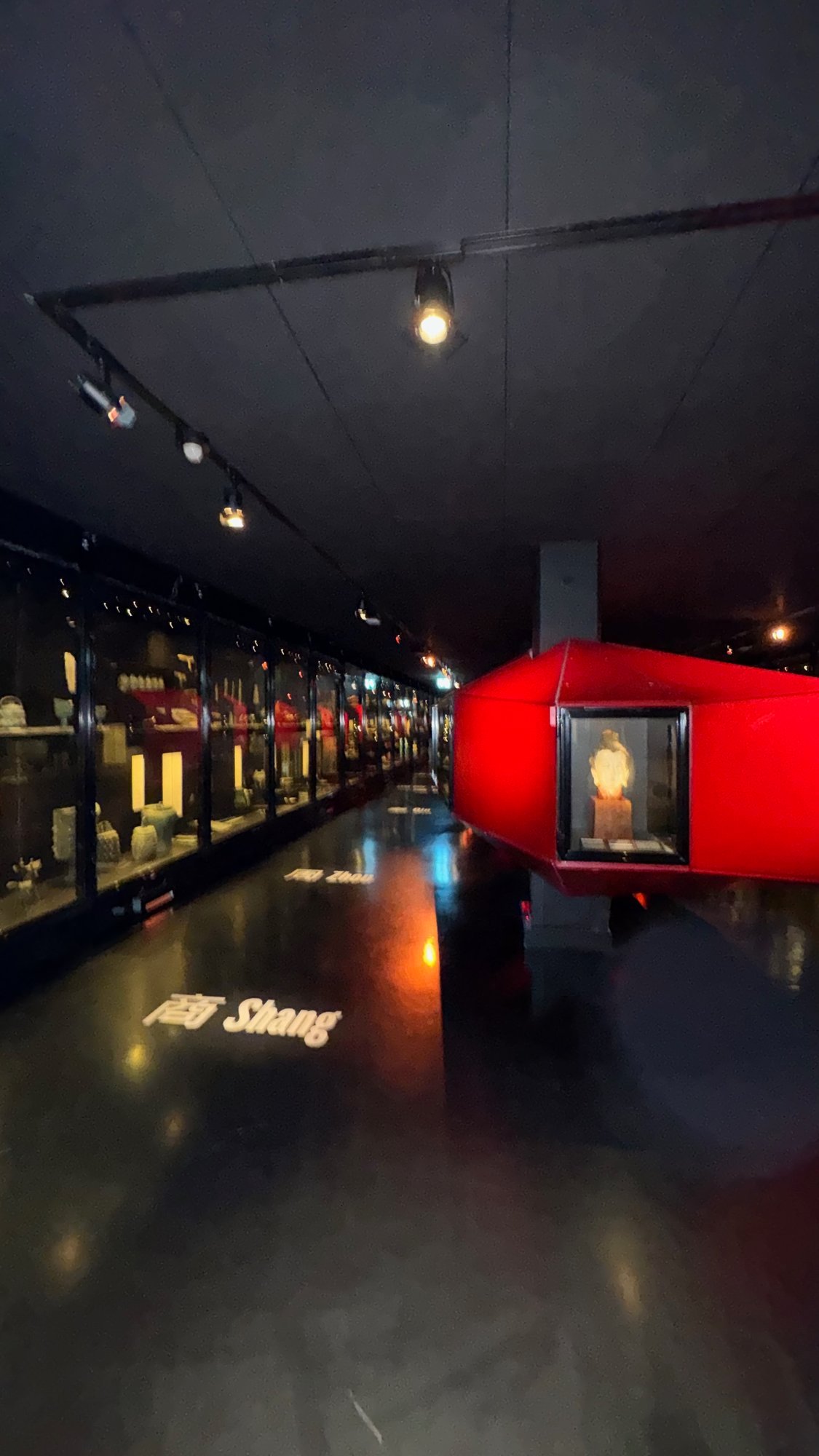
Then the light drops. In one dark hall, glass cases line the left wall. Chinese period names are projected on the black floor. I saw Shang and Zhou. At the end of the hall, a red angular case holds one sculpted head. A small light shines on it.
Another room is lighter. The floor is bare concrete and the cases are black. Seated gilded Buddha figures stand at the back. A tall case in the middle holds many small round objects. To the right, a case holds an armor and a portrait. In front of me, a low case shows a printed sheet.
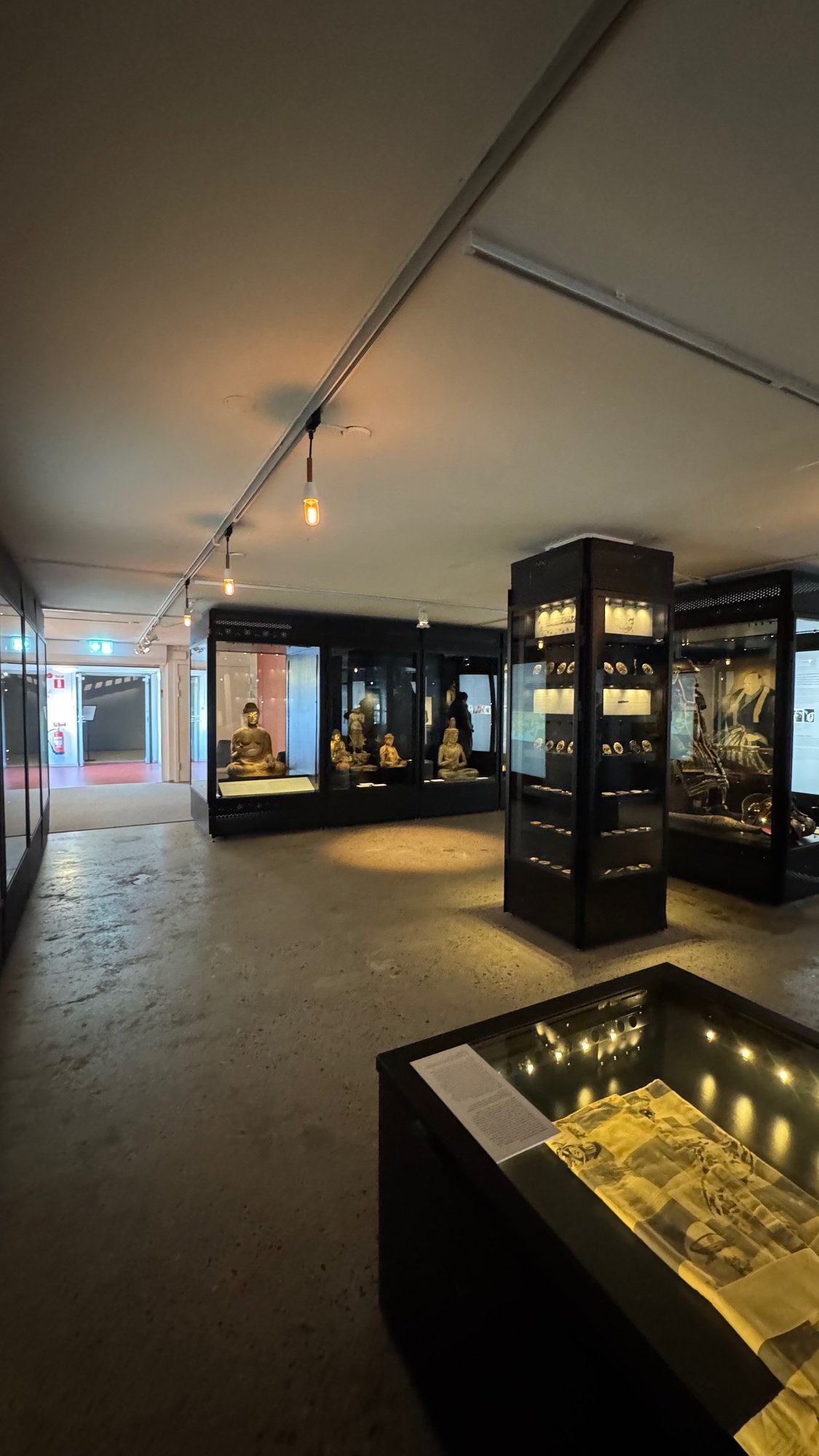
Wikipedia lists Buddhist sculpture and 19th-century Japanese armor among the highlights of the collection. My photos do not show the object labels, so I cannot name the pieces. The museum says the traditional displays from Japan, China and Korea stay.
Three new exhibitions
The museum lists three new exhibitions with the reopening. Qi Baishi – mästarens pensch is an immersive exhibition, the first of its kind at the museum. I våra liv – asiatiskt kulturarv i rörelse (In Our Lives) looks at Asian cultural heritage in motion. The Sun of Zeelandia is an artwork by Kao Jun-Honn.
My photos in this article show the building and the permanent displays. They do not show these three exhibitions.
The museum also renovated a workshop called Ateljé ginkgo for visitor activities, and it installed a new elevator.
The shop and the long table
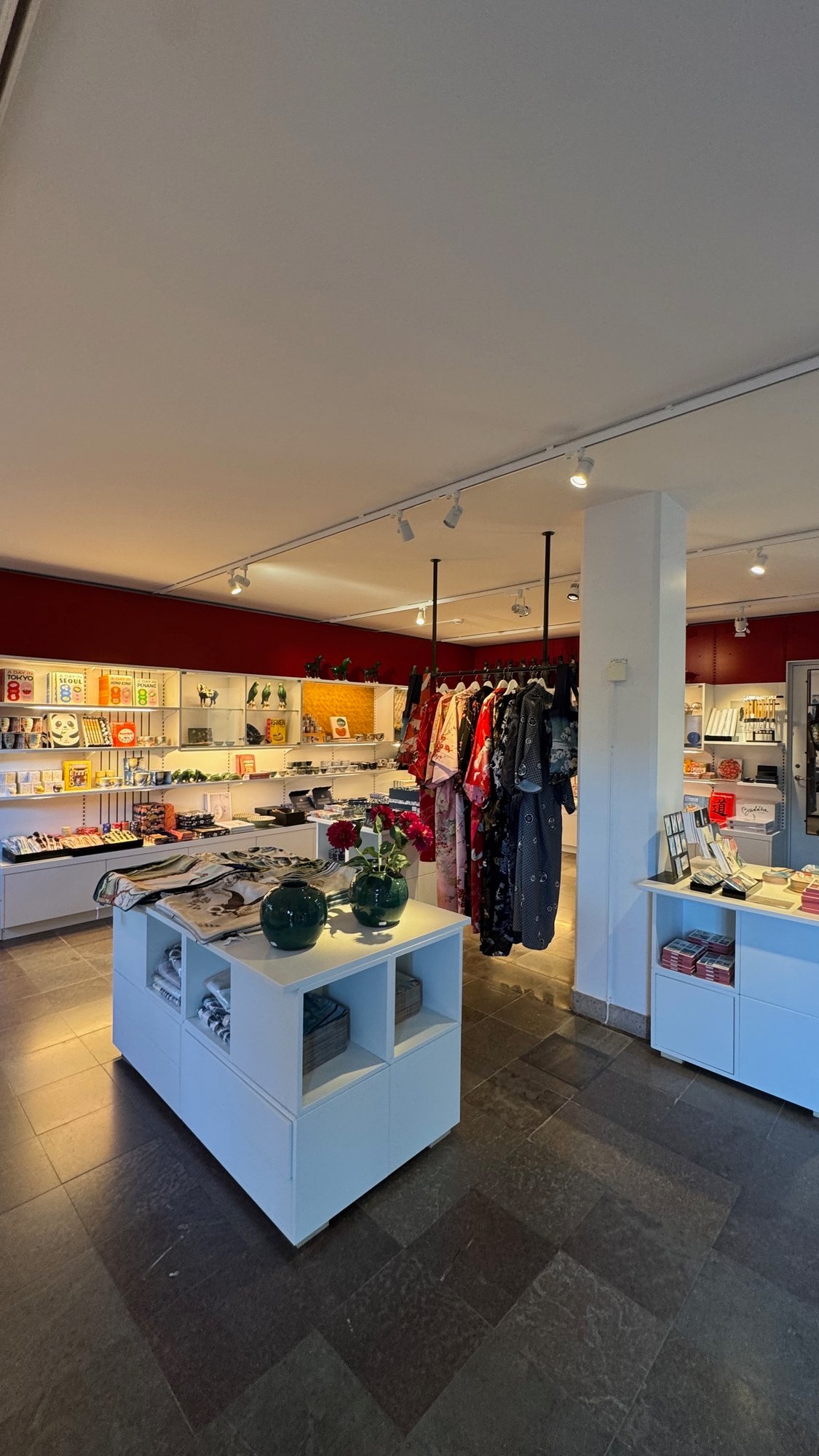
The museum shop has a red wall and white display tables. Shelves hold cups, books and small figures. A rail near the middle carries colorful robes. Picture books from the A Day in series, with Tokyo and Seoul on the covers, stand on the top shelf.
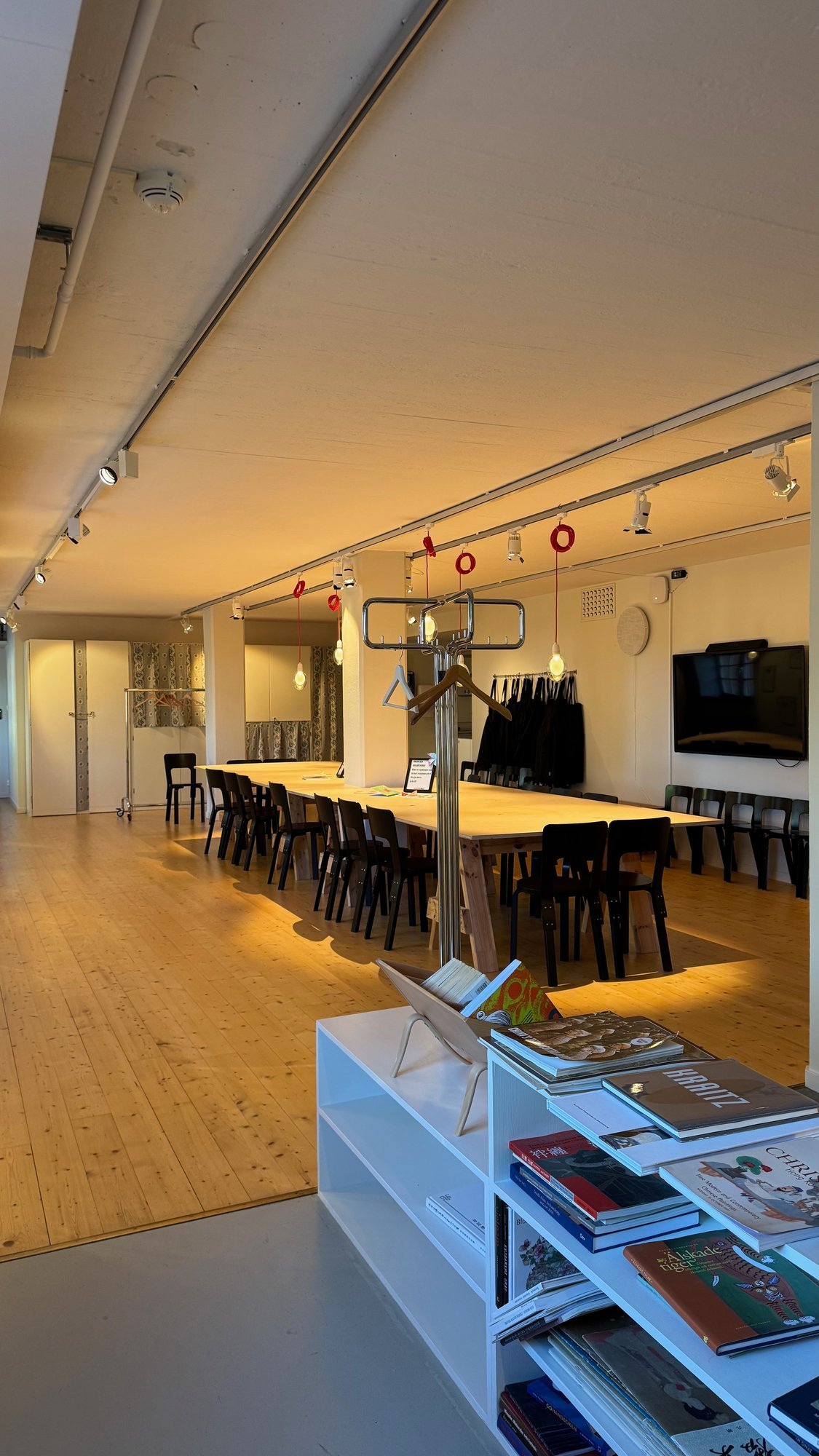
Upstairs, I found a bright room with a wooden floor. A long wooden table stands in the middle, with black chairs on both sides. Bare light bulbs hang from red cords. A screen is fixed to the wall. In the front, shelves hold books about Asian art. I do not know the name of this room, and I do not know if it is the new Ateljé ginkgo.
Outside on the lawn
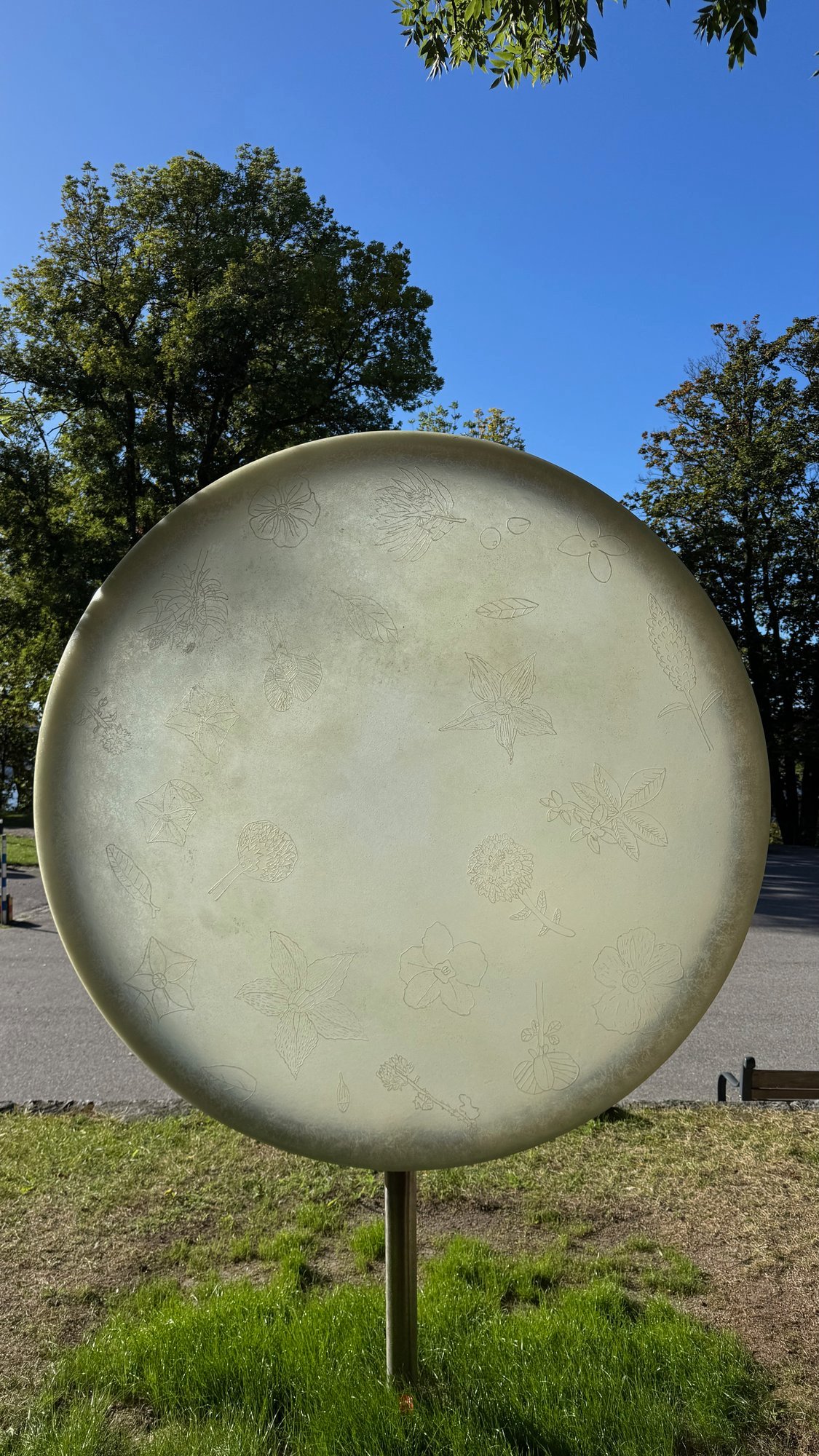
On the lawn outside stands a large pale disc on a thin pole. Engraved drawings of flowers and leaves cover its face. My photos show no sign with the name of the artist, so I cannot say who made it.
Photo gallery
All photographs on this page were taken by Zayera Khan during a visit to the museum, and are her own property. Please do not reuse them without permission.
A museum that closes for two years can come back as a new place, or as the same place with new paint. After one visit, I think it is a bit of both. What do you think?