Medelhavsmuseet
Ancient Cyprus, Egypt, Greece and Rome, in a former bank near Gustav Adolfs torg
- Why visitYou see objects from ancient Cyprus, Egypt, Greece and Rome. You see them in a hall with a glass roof and a marble floor, in the middle of the city.
- Best forVisitors who like ancient history, rainy-day plans in the city centre, and anyone who wants a quiet museum with a café.
- AddressFredsgatan 2, Stockholm. The building is close to Gustav Adolfs torg.
- Opening hoursMonday closed. Tuesday to Friday 11:00–20:00. Saturday and Sunday 11:00–17:00. Bagdad Café is open for lunch on Mondays, 11:00–14:00.
- AdmissionDay pass 160 SEK. Senior day pass 140 SEK. Free for everyone under 19. Free for asylum seekers with a valid LMA or UT card. Free for members of ICOM or the Swedish Museums Association with a valid card. On the last Friday of each month, you and a companion pay for one ticket.
- Annual passAnnual pass Stockholm: 200 SEK. Free entry to Medelhavsmuseet, Östasiatiska museet and Etnografiska museet for 365 days from the day you buy it. Annual pass Världskulturmuseerna: 350 SEK. Free entry to all four museums in the same way.
- FacilitiesCoin-free lockers. Baby changing. Bagdad Café. Museum shop. A library and archive. Reception phone: +46 10 456 12 98.
- AccessibilityAutomatic door openers on all doors. Lift to all floors. All exhibitions are open to wheelchair users. A wheelchair is available to borrow. A toilet for visitors with disabilities is near the main entrance. Some areas have low light. The accessibility section below has more detail.
- Getting thereMetro to Kungsträdgården or T-Centralen. Bus 62 or 65 to Gustav Adolfs torg. Bus 3 or 52 to Tegelbacken. Parking is in a garage on Regeringsgatan. Spaces near the Opera House are limited.
- Official websitemedelhavsmuseet.se
About the museum
Medelhavsmuseet is the Museum of Mediterranean and Near Eastern Antiquities. It opened in 1954. The museum shows objects from the Mediterranean region and the Near East. The collection grew from Swedish excavations, and from objects that Swedish royalty, diplomats and travellers brought home. The Swedish Cyprus Expedition, which worked from 1927 to 1931, is one of the main sources.
Medelhavsmuseet is one of four museums that belong to the national authority Världskulturmuseerna. The other three are Etnografiska museet and Östasiatiska museet, both in Stockholm, and Världskulturmuseet in Gothenburg.
Wikipedia adds two more facts. The museum started when the Egyptian Museum (made in 1928) and the Cyprus Collection joined together. The museum moved to its present building in 1982. I did not find these two facts on the museum’s own pages. Treat them as less certain.
I visited in September and October 2026. The photos on this page are from these visits.
The building and the hall
The museum is in a former bank that was built in 1905. The museum says the interior is neo-classical and has no equal in Scandinavian building history.
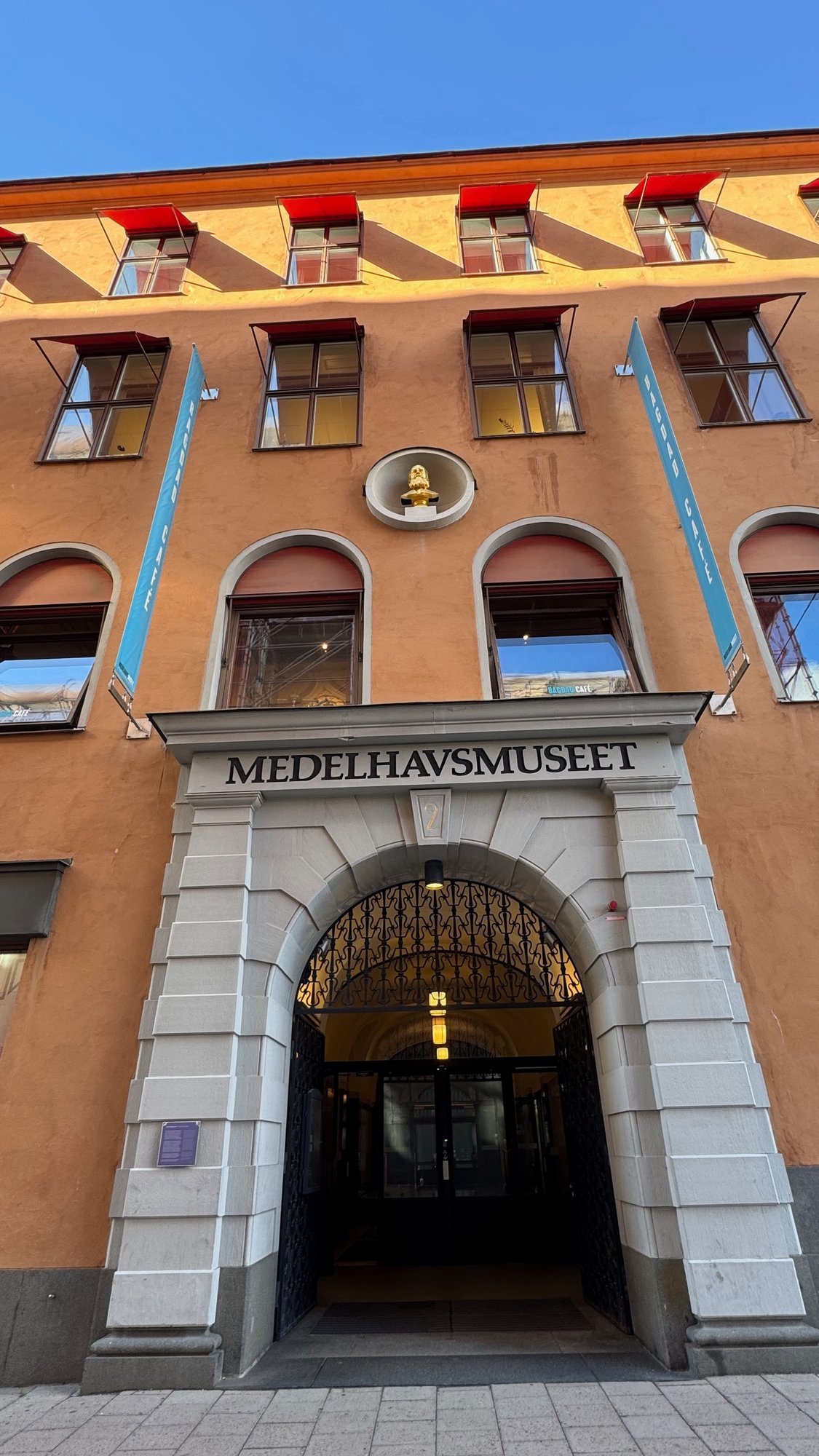
From the street, you see an orange building with red awnings over the windows. Two blue banners hang on the front. One says Medelhavsmuseet. One says Bagdad Café. Above the entrance, a small golden bust stands in a round niche. A stone portal frames the entrance, and a wrought-iron gate closes the arch.
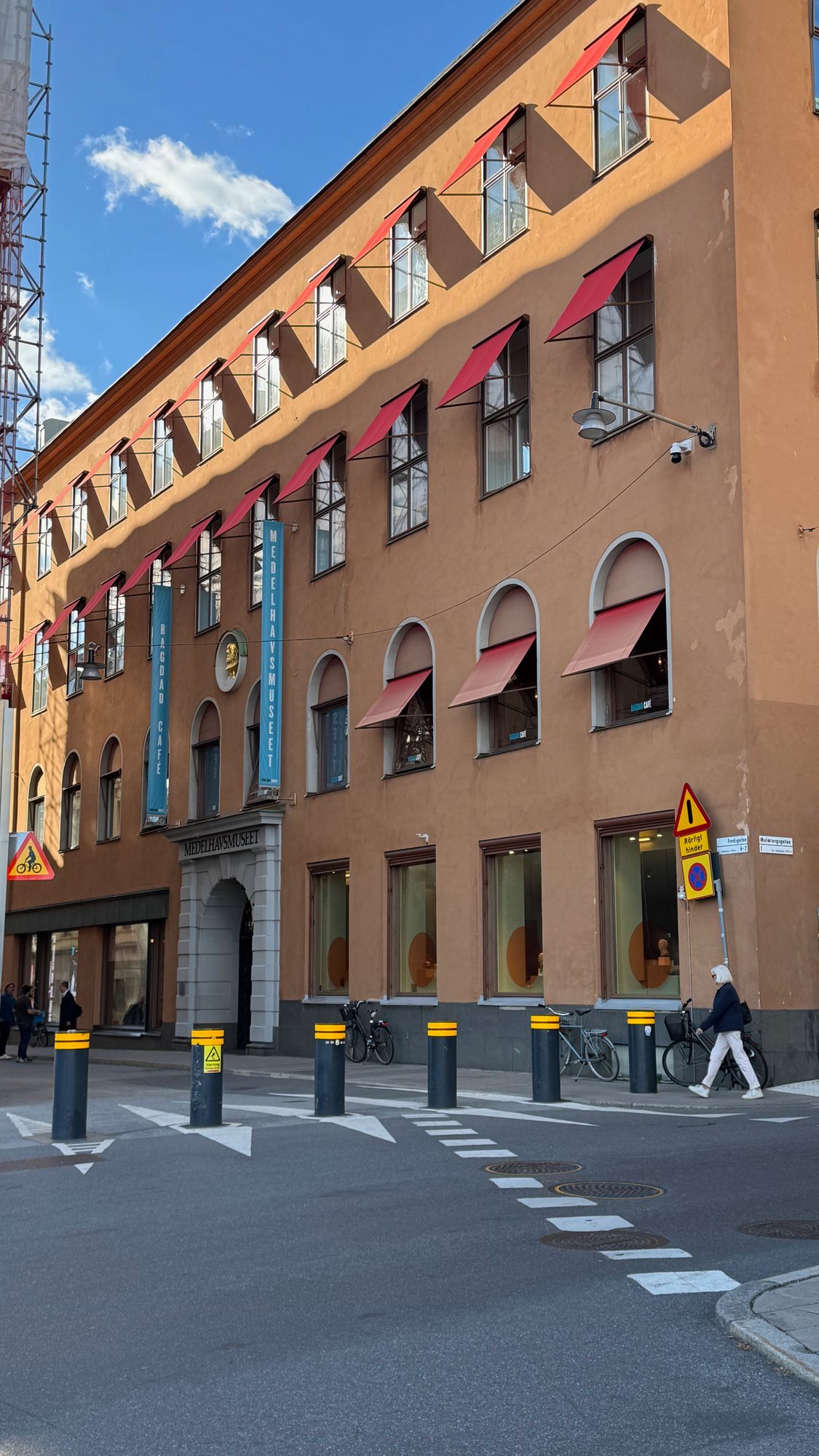
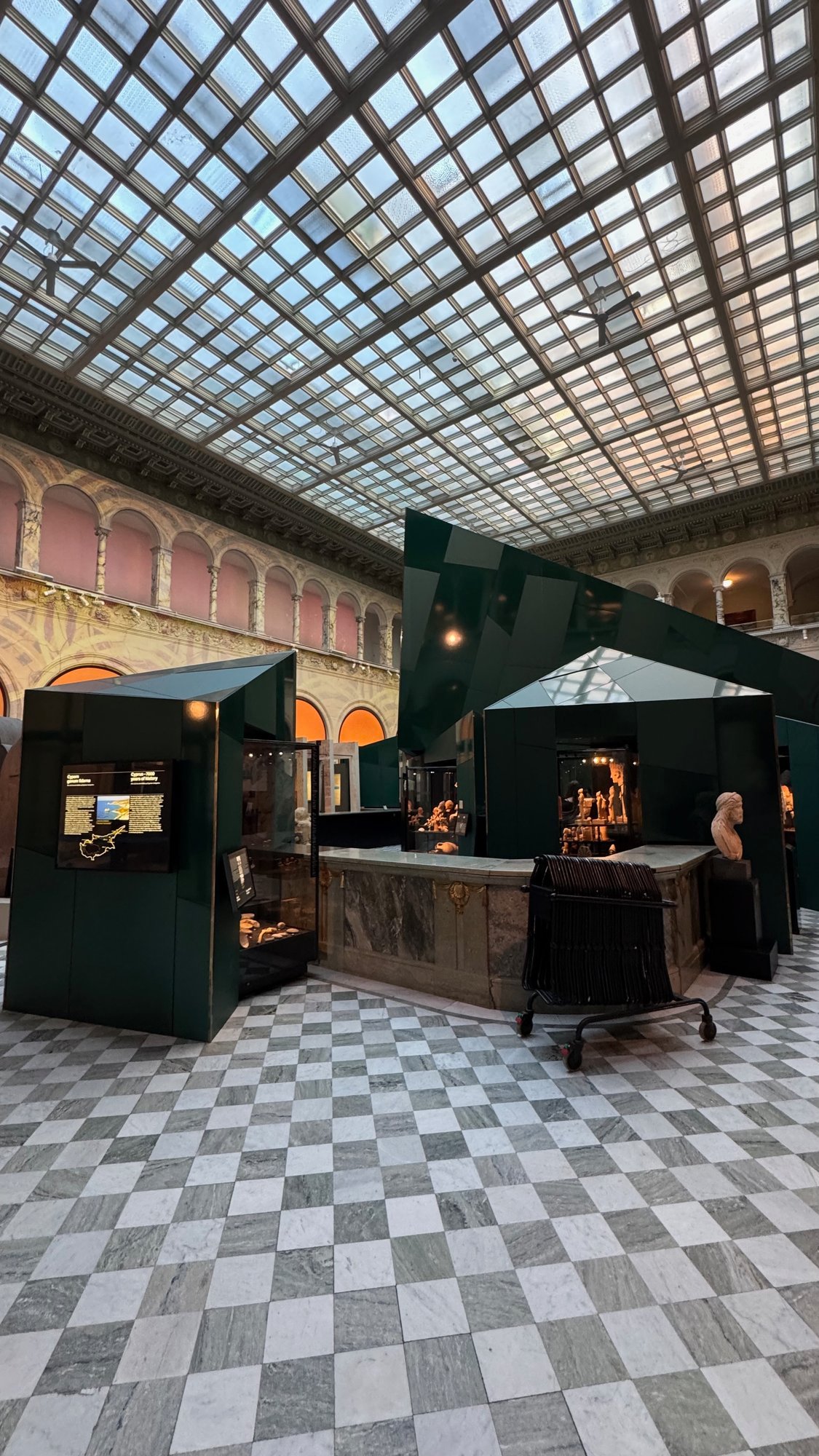
Inside, the hall is the part I remember best. A large glass roof lets in daylight. The floor is a chequered marble pattern in grey and white. Arched galleries run around the walls. On the upper wall, a pattern was projected when I visited. I saw winged symbols in the arches.
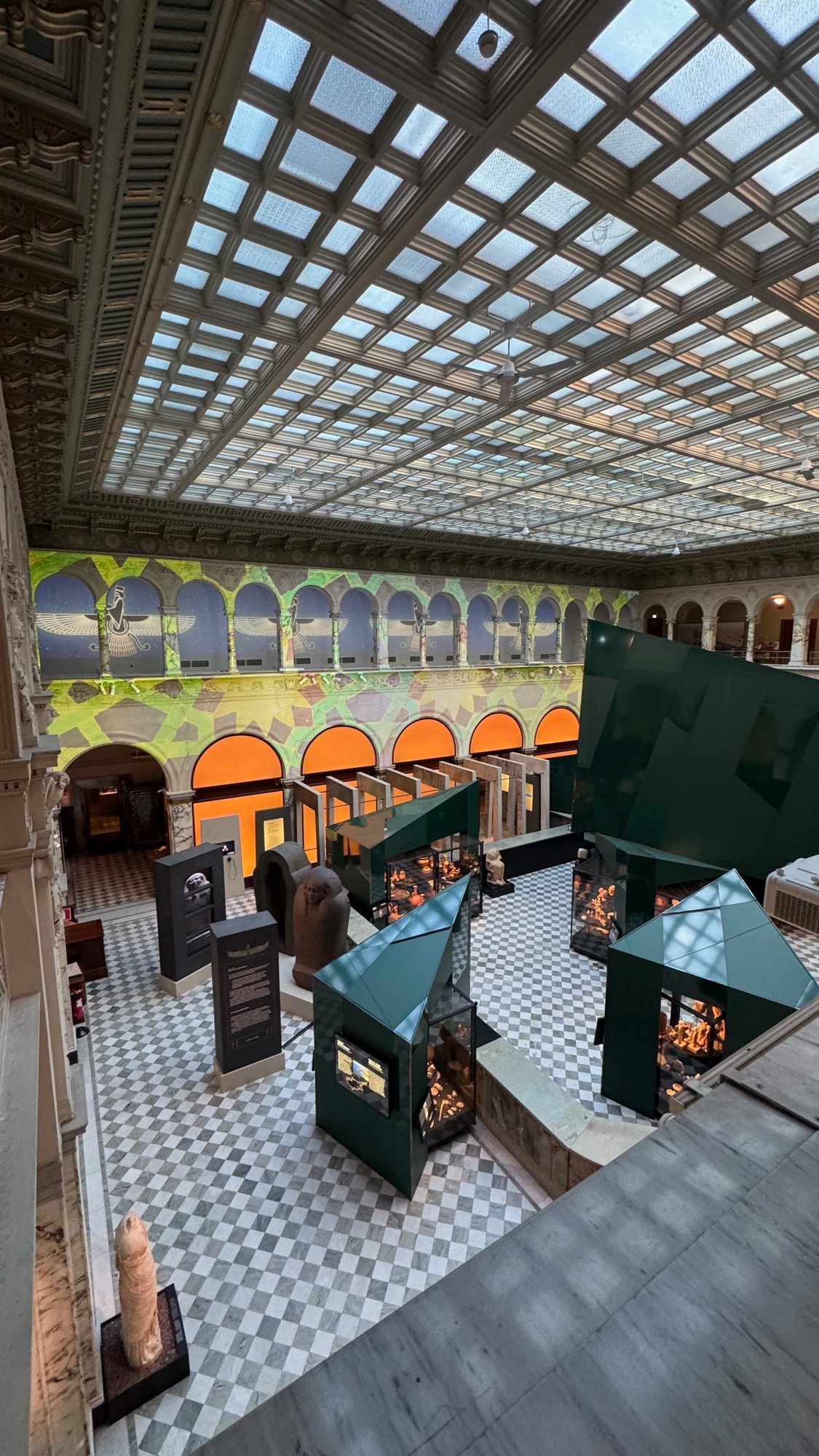
Green display cases with angled roofs stand on the floor of the hall. Some of them hold small objects with warm light. You can walk between them and look at each one from close.
Exhibitions
The museum lists five permanent exhibitions and one temporary exhibition. The list is from the museum’s website in October 2026. The program can change.
- Egypt (Egypten). Permanent.
- Cyprus – 7,000 years of history (Cypern genom tiderna). Permanent.
- Ancient Greece and Rome (Antikens Grekland & Rom). Permanent.
- The Gold Room (Guldrummet). Permanent. The museum shows golden jewellery here.
- Between us, Only Rapture. Permanent.
- Democracy does not exist – We make it! (Demokrati finns inte – Vi gör den!). Temporary. It runs until 15 April 2027.
Red walls and painted faces
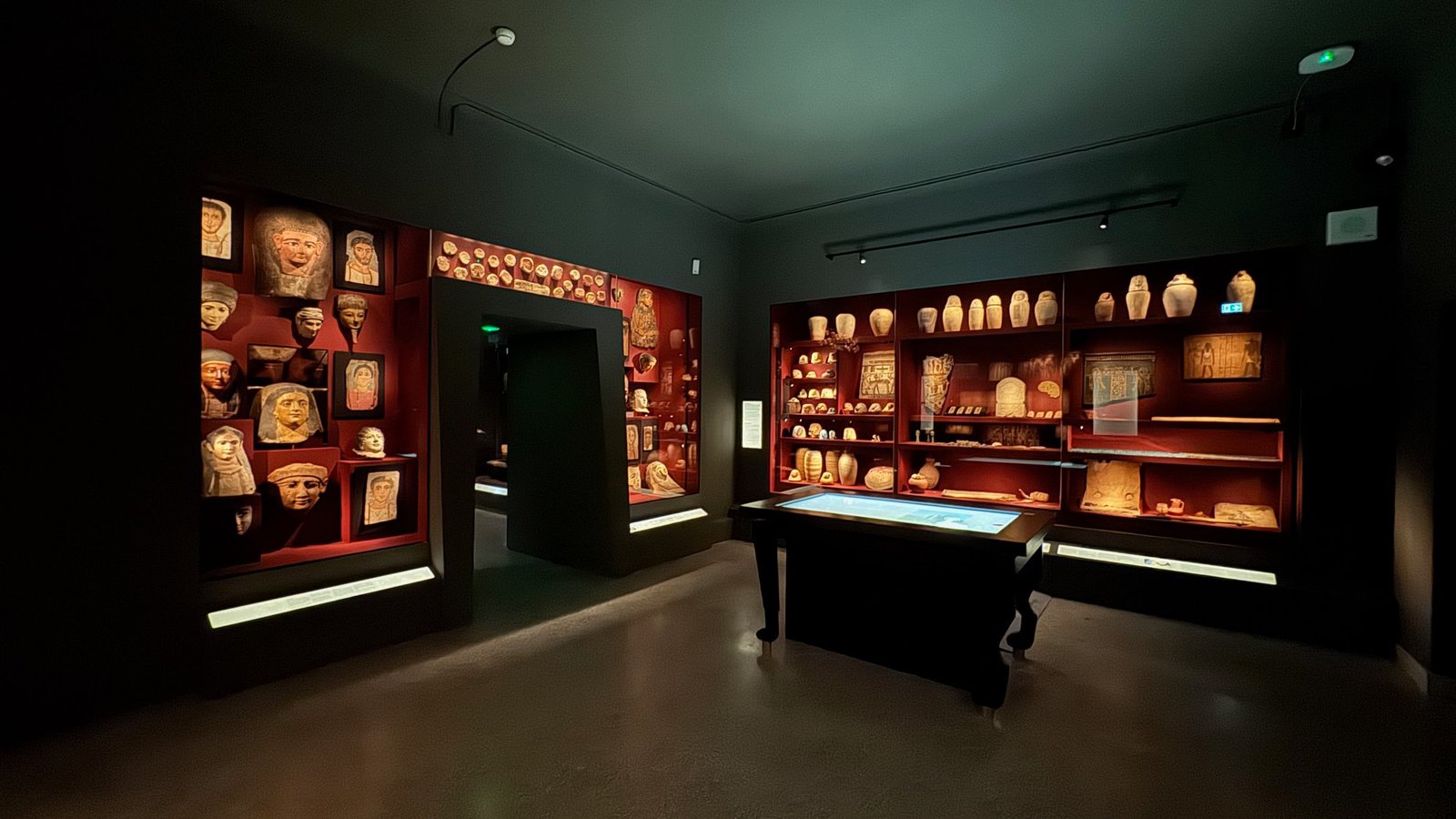
One room has dark walls and red display walls. On the left, painted portrait faces and masks hang on the red background. On the right, shelves hold jars, tablets and small objects. A table with a touch screen stands in the middle. The room is dark, and the light is on the objects.
Hundreds of clay figures
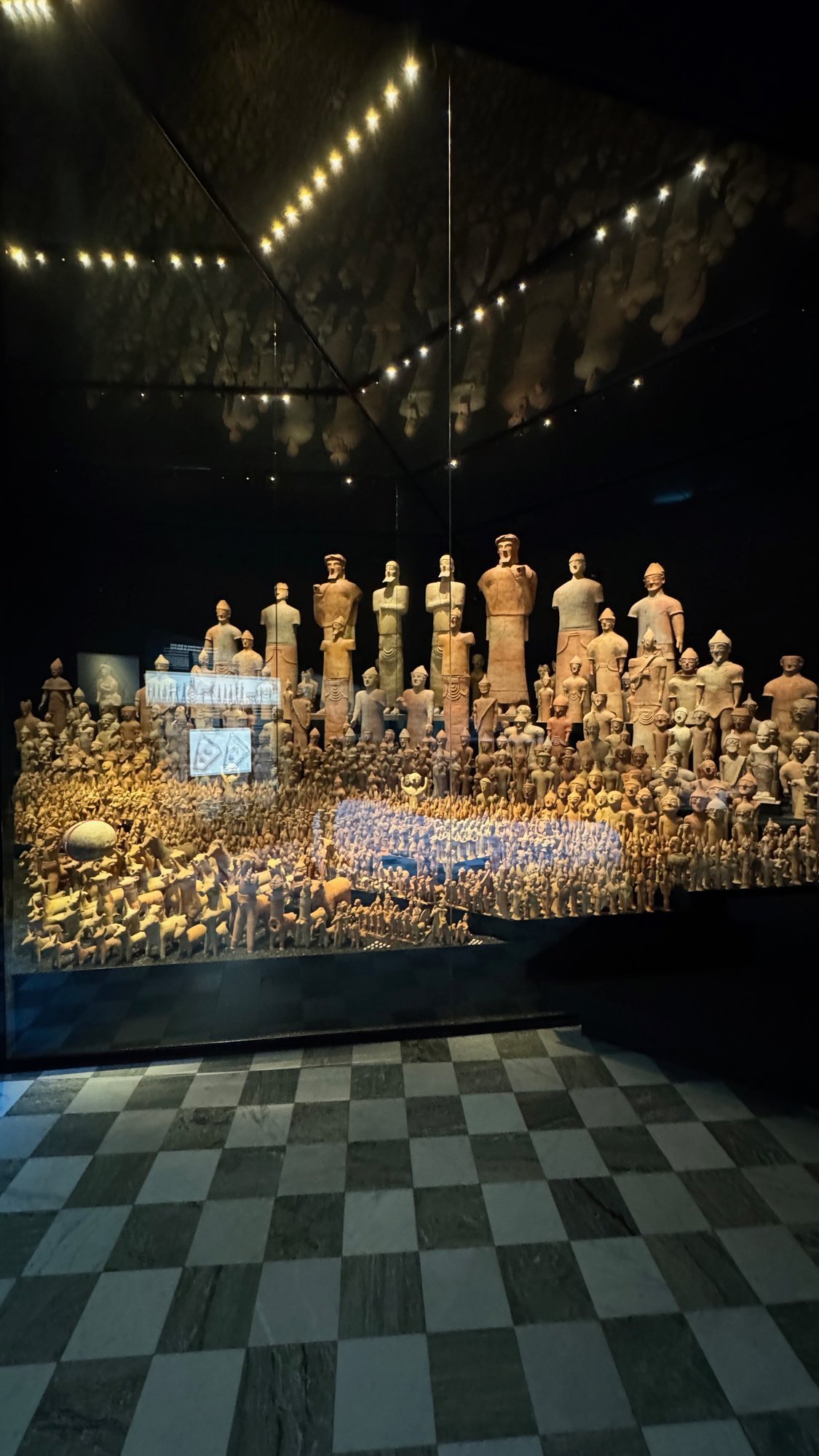
In one dark room, a large glass case holds hundreds of clay figures. The tall figures stand at the back. The small figures stand in front. Clay animals stand on the left. The ceiling of the case is a mirror, so the figures seem to continue upward.
Democracy does not exist – We make it!
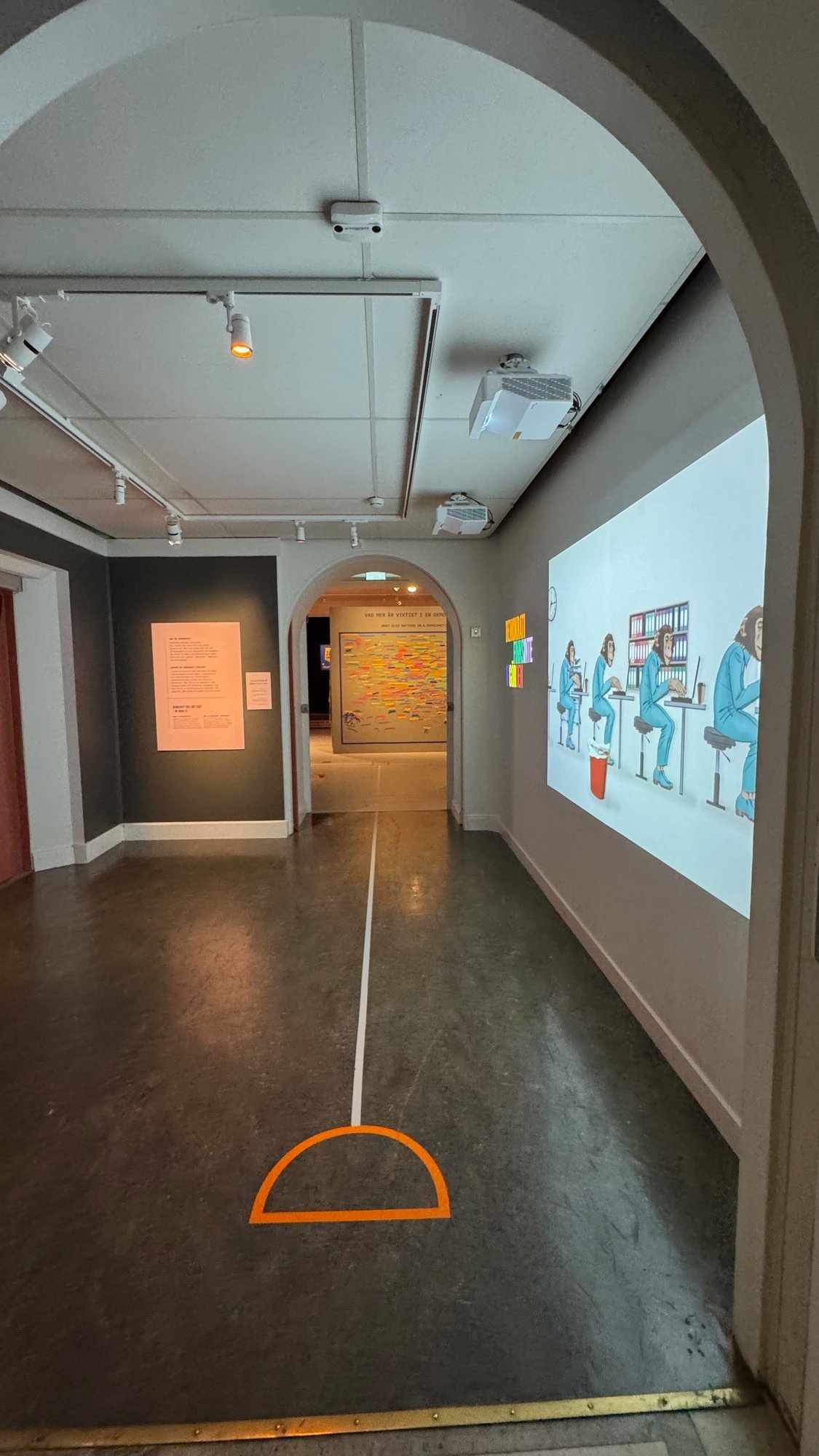
The temporary exhibition is in a series of rooms with arched doorways. I walked through a corridor with a projected animation. The animation shows apes in blue suits who work at desks. On the floor, a white line leads to an orange half circle. In the next room, a wall of coloured notes answers a question in Swedish and English: what else matters in a democracy? The panels in this part of the museum are in Swedish and English.
Bagdad Café and shop
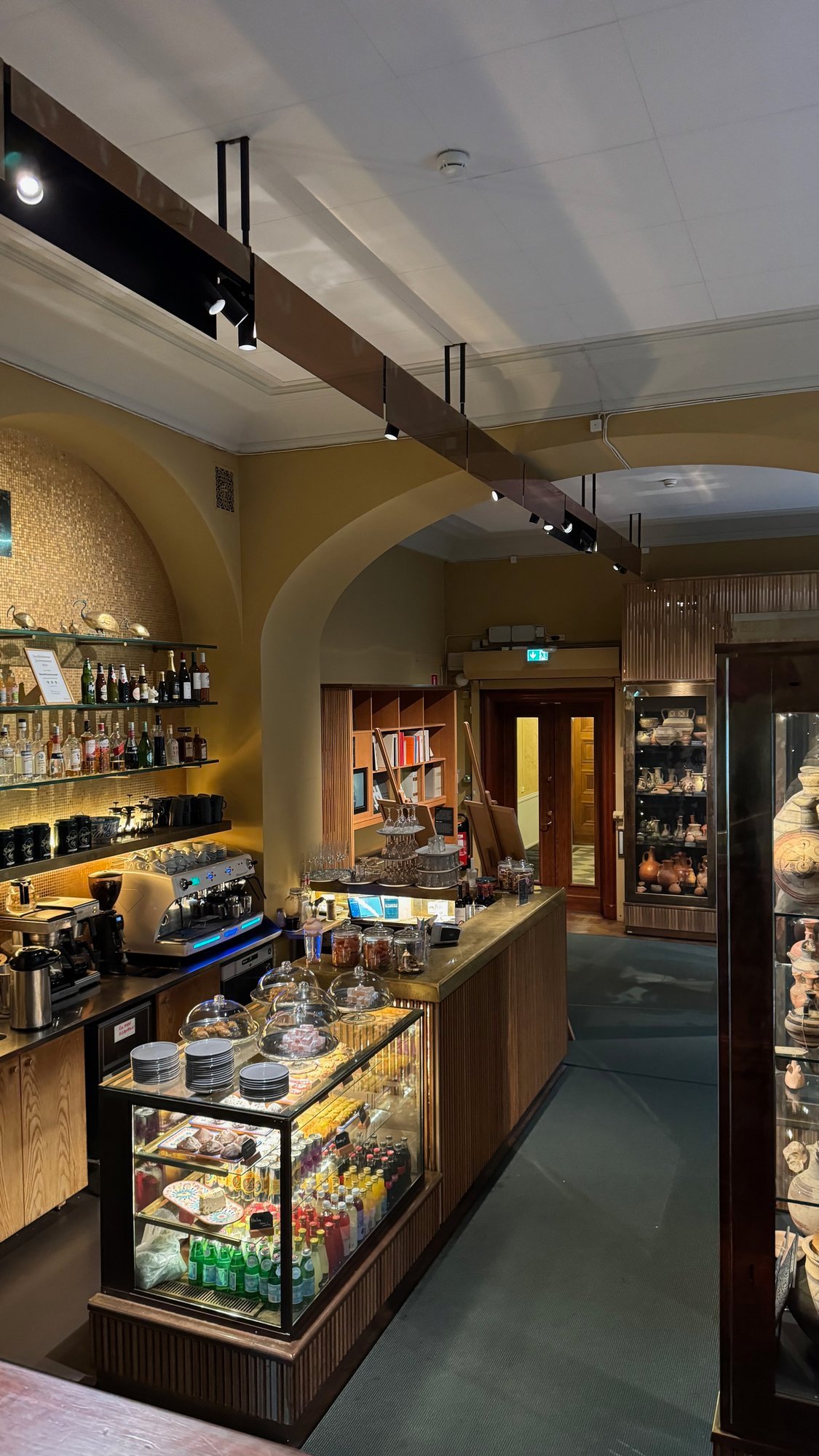
Bagdad Café is the museum’s restaurant. It follows the museum’s opening hours. On Mondays the museum is closed, but the café is open for lunch from 11:00 to 14:00. The kitchen closes one hour before the museum closes. When I visited, the counter had a coffee machine, a glass display with pastries and drinks, and bottles on shelves. A display case with pottery stands next to the counter. The room has warm yellow walls and wooden furniture.
The museum shop
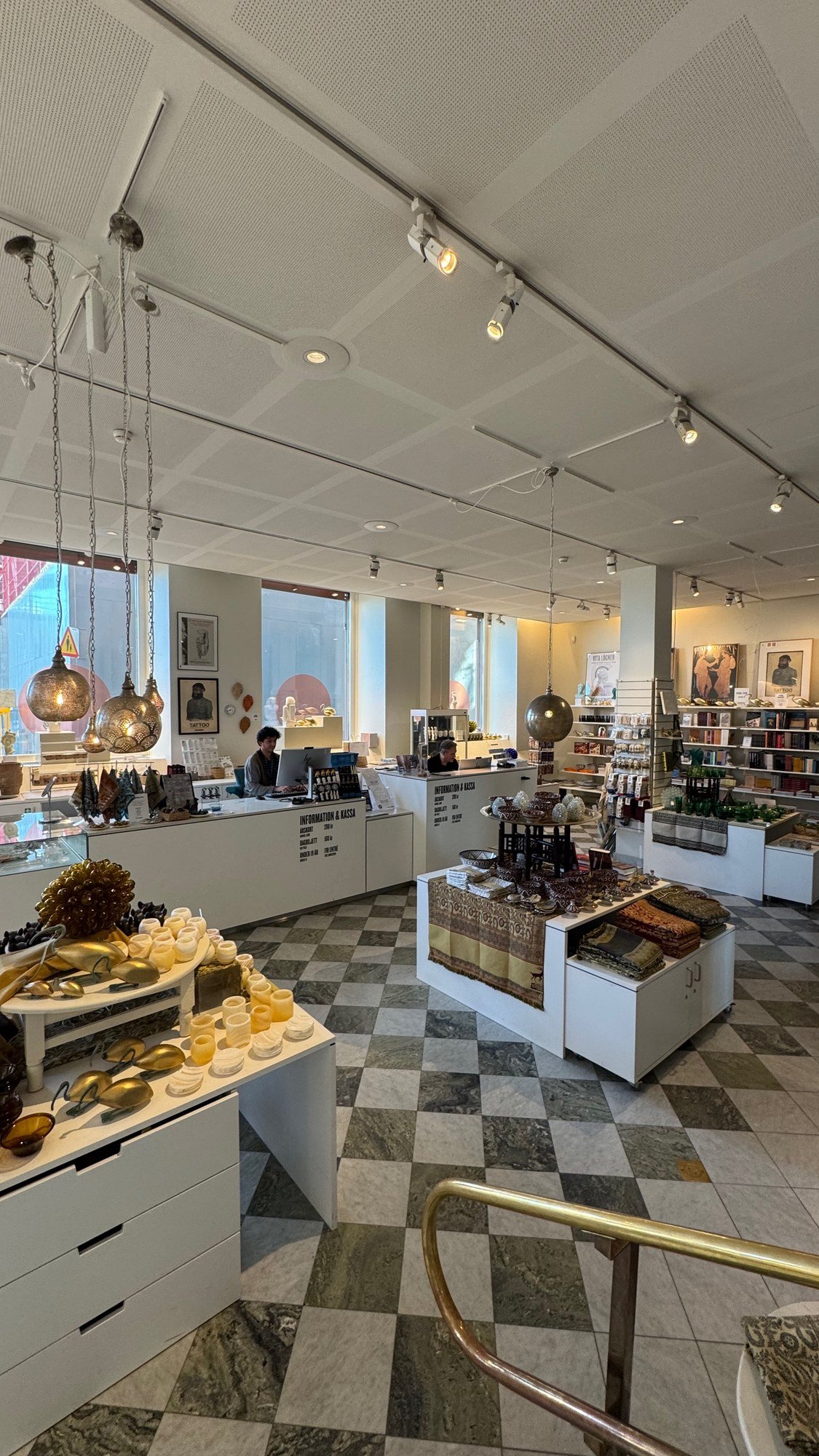
The museum says it imports a large part of the shop’s goods straight from Egypt. The shop also sells jewellery, books and items for the home.
- Glass and lamps. Hand-blown recycled glass and brass lamps come from the workshops and lanes of Cairo.
- Scarves. Women in Naquada, in southern Egypt, weave the Egyptian cotton scarves by hand.
- Pottery. The museum buys pottery from Morocco and from Fayoum, an oasis that keeps its pottery and craft traditions alive.
- Soap. The soaps come from Aleppo in Syria and have different scents.
- Busts. The shop has busts of gods, goddesses and philosophers from Greece, in different colours.
Tickets and annual passes
- Day pass. 160 SEK. Senior day pass: 140 SEK.
- Free entry. Everyone under 19. Asylum seekers with a valid LMA or UT card from the Swedish Migration Agency. Members of ICOM or the Swedish Museums Association, with a valid card.
- Two for one. On the last Friday of each month, you and a companion pay for one ticket.
- Annual pass Stockholm. 200 SEK. It gives you free entry to Medelhavsmuseet, Östasiatiska museet and Etnografiska museet for 365 days from the day you buy it. You also get a lower price for some programs and some activities for children and families at the same three museums. You get a newsletter with information, invitations and offers.
- Annual pass Världskulturmuseerna. 350 SEK. It gives you the same benefits at all four museums: Medelhavsmuseet, Östasiatiska museet, Etnografiska museet and Världskulturmuseet in Gothenburg. The 365 days start on the day you buy it.
Accessibility
This section follows the museum’s own accessibility page. I did not measure anything. If you have a special need, write or call the museum before you come.
Getting in and moving around
- Doors. All doors have automatic door openers.
- Lift. A lift goes to all floors.
- Wheelchair access. All exhibitions are open to wheelchair users. You can borrow a wheelchair at the museum.
- Glass collection. For the Greek and Roman glass collection, you need help from a member of staff.
- Toilets. A toilet for visitors with disabilities is near the main entrance. Baby changing is also available.
- Strollers. You can use a stroller on level 1 only. Staff can help you find a place to store it.
Hearing and light
The museum has a Univox guide system with a pocket receiver and a neckloop. The neckloop works with hearing aids that have a T-setting. The auditorium has a hearing loop.
In some places the light in the exhibitions is low. The museum says it can feel like darkness. I saw this in the rooms with red walls and the clay figures. Take your time, and let your eyes adjust.
Contact
For accessibility questions, email visning.stockholm@varldskulturmuseerna.se. For other questions, call reception on +46 10 456 12 98, or the switchboard on +46 10 456 12 00. You can also email info@medelhavsmuseet.se.
Rules for your visit
- Put backpacks, large bags and umbrellas in a locker. The lockers do not take coins.
- You can take photos. Do not use flash, a tripod or a selfie stick.
- Only guide dogs are allowed. The museum does not allow other pets.
- Do not bring your own food or drink into the museum.
The photos on this page were taken by Zayera Khan during visits to the museum in September and October 2026, and are her own property. Please do not reuse them without permission. Hours, prices and exhibitions can change. Check the museum’s website before you go.
Sources:
Medelhavsmuseet: start page;
Medelhavsmuseet: your visit;
Medelhavsmuseet: about the museum;
Medelhavsmuseet: accessibility;
Medelhavsmuseet: exhibitions;
Medelhavsmuseet: utställningar (Swedish);
Medelhavsmuseet: opening hours and contact (Swedish page, text sent by Zayera Khan on 3 October 2026);
Medelhavsmuseet: the shop (Swedish text sent by Zayera Khan on 3 October 2026);
Världskulturmuseerna: annual pass (Swedish text sent by Zayera Khan on 3 October 2026; varldskulturmuseerna.se/besok/arskort);
Wikipedia: Medelhavsmuseet.