
Judiska Museet
The Jewish Museum of Sweden, built on the site of Stockholm’s first synagogue
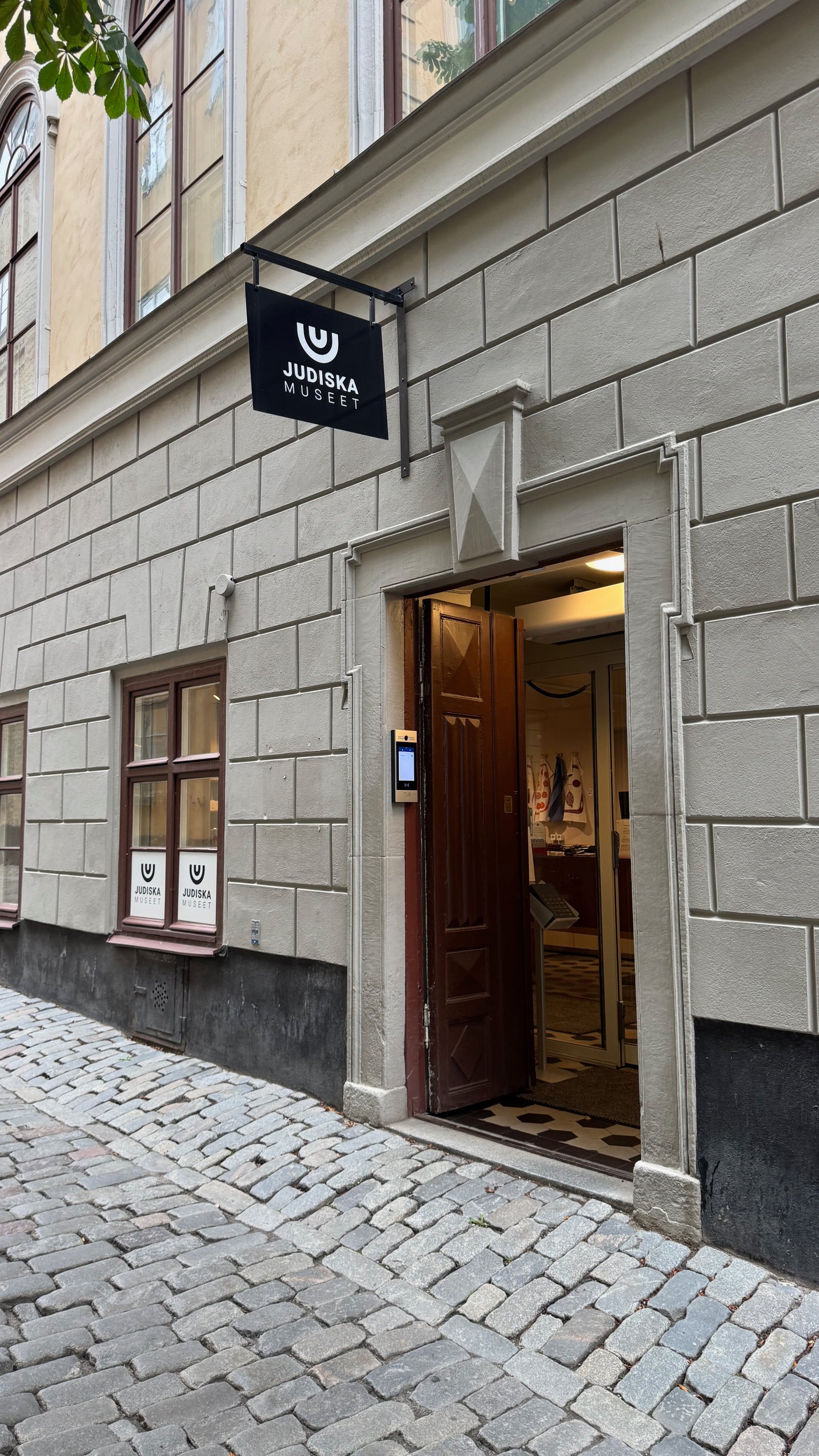
- Why visitYou stand inside Stockholm’s first synagogue and see wall paintings from the 1800s, found again during a renovation.
- Best forHistory lovers, and anyone curious about Jewish life in Sweden or the hidden layers of Gamla Stan.
- AddressSjälagårdsgatan 19, Gamla Stan, 111 28 Stockholm
- Opening hoursTue–Wed 11:00–17:00. Thu 11:00–20:00. Fri 11:00–16:00. Sat–Sun 11:00–17:00. Closed Monday.
- AdmissionAdult 120 kr. Reduced (students, pensioners) 100 kr. Free up to age 19. Free entry every Saturday, 11:00–12:00.
- Guided toursIncluded with a ticket, about 30 minutes, weekends only. Private group and school tours can be booked.
- AccessibilityStep-free entrance from Själagårdsgatan 19. A lift runs between the entrance and the main hall. The former women’s gallery is reached by stairs only. Companions and guide dogs enter free.
- Official websitejudiskamuseet.se
About the museum
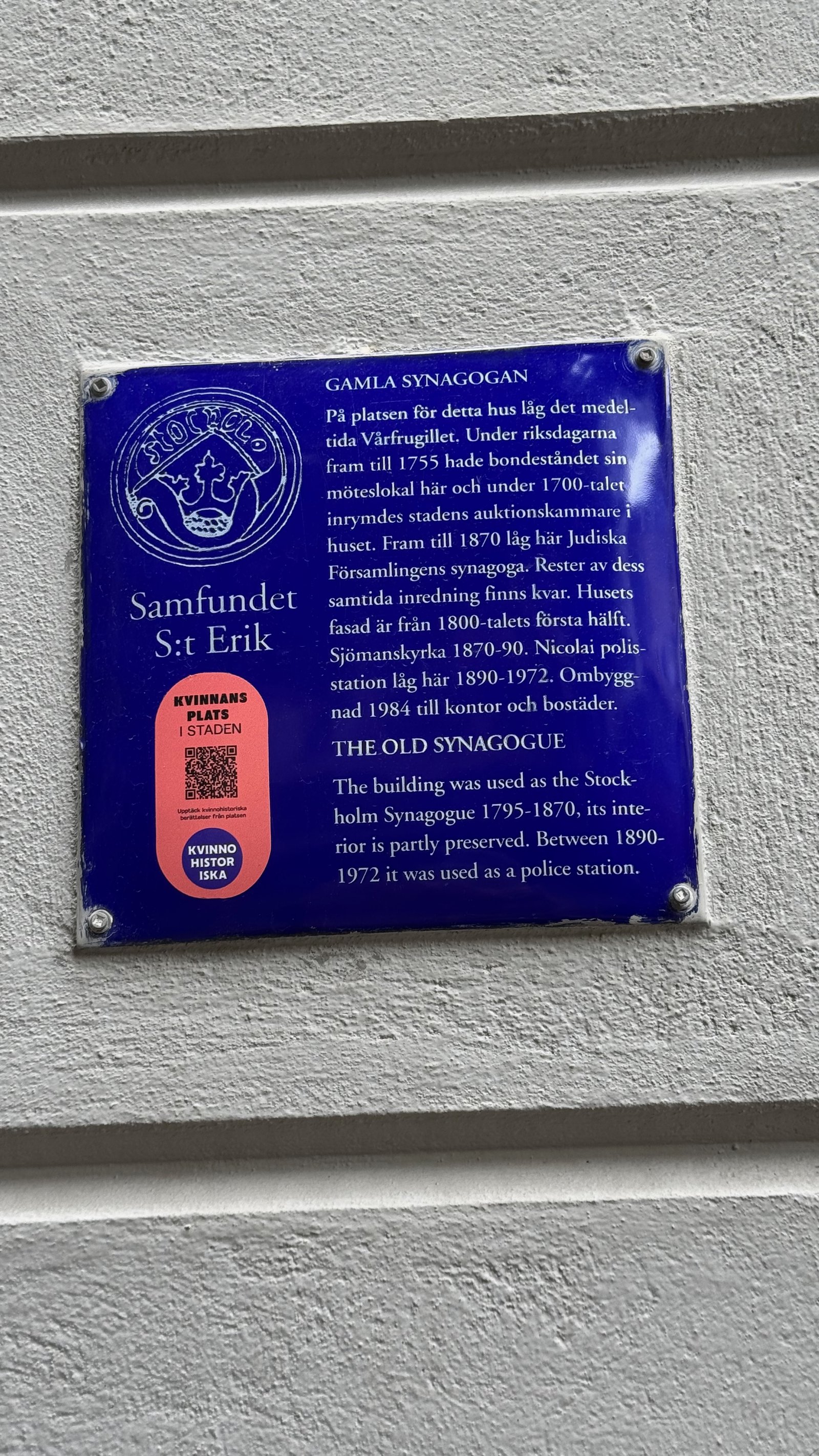
Judiska Museet stands in one of the narrowest streets of Gamla Stan, Stockholm’s old town. The building is not new to the museum’s story. From 1795 to 1870, this address held Stockholm’s first synagogue. The Jewish congregation built it soon after Sweden first allowed Jews to settle and worship here. After 1870, the congregation moved to a larger synagogue nearby, and this building changed hands many times – it served as a police station from 1890 to 1972.
The museum itself is younger. Viola and Aron Neuman founded it in 1987, first in an old rug warehouse in Frihamnen. In 1992, it moved to Hälsingegatan in Vasastan. In 2019, it moved a third time – back to this address in Gamla Stan, back to the site of the old synagogue itself.
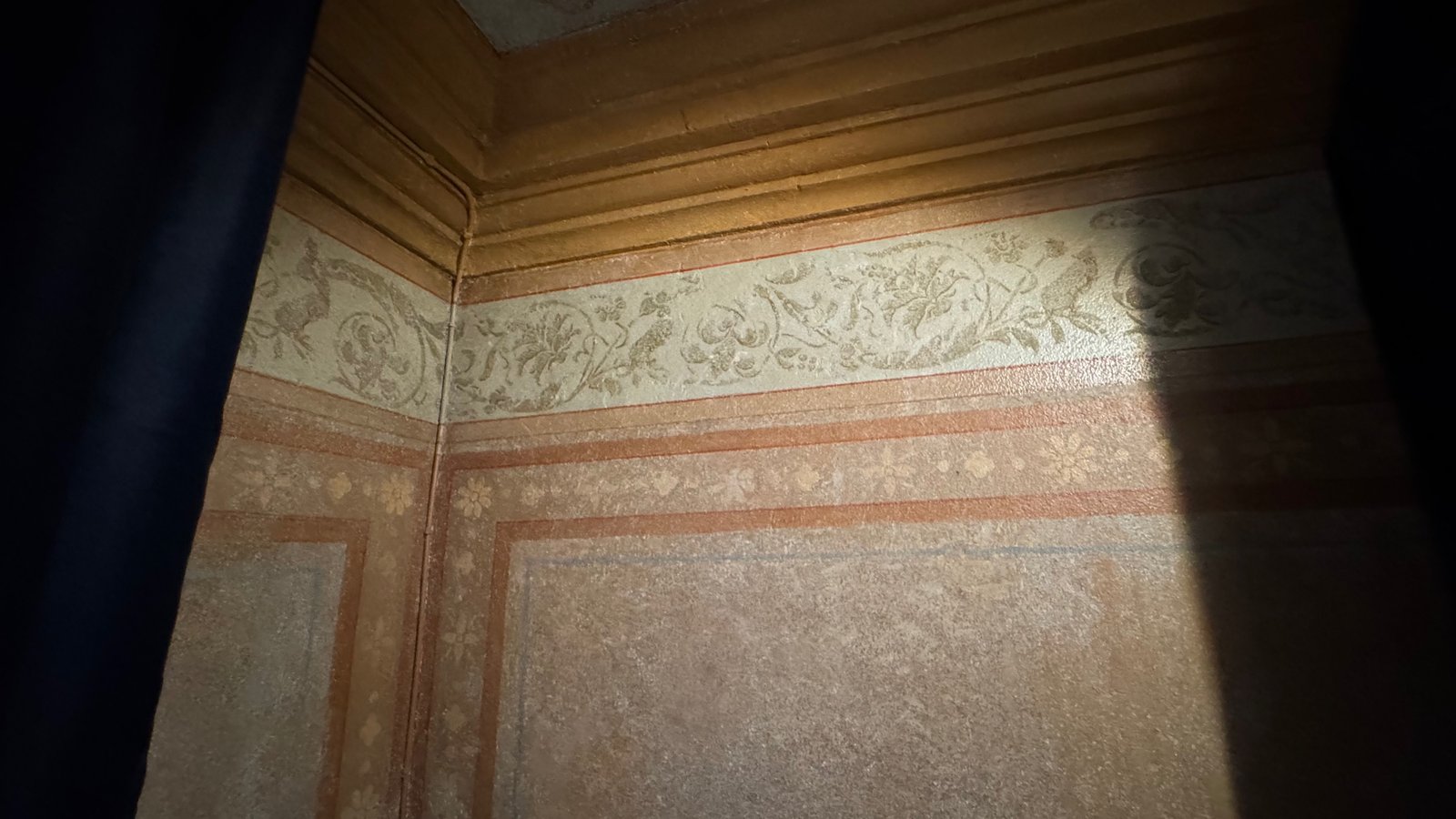
When the museum’s architects opened up the old synagogue hall for the 2019 move, they found something they did not expect. Under later layers of paint and wallpaper were the original wall paintings from the 1800s – floral borders, gold trim, soft pink panels. Workers used a diagram from 1811 to guide the restoration and bring the patterns back.
The wall paintings
These paintings matter beyond their beauty. Most synagogue art in this German-influenced style did not survive the Second World War. What stands in this small room in Gamla Stan is rare: an interior that shows how a Swedish synagogue actually looked, two centuries ago, still on its original walls.
Inside the museum
The permanent exhibition, The Jews & Sweden, traces Jewish history in the country from the 18th century onward: early immigration, daily life, and the founding of the first congregation. Other current exhibitions include Shul! The Old Town’s Synagogue, which tells the story of the building itself, The Cloud of Unknowing, a new installation inside the old synagogue room, and Det judiska Värmland, on Jewish heritage in the Värmland region.
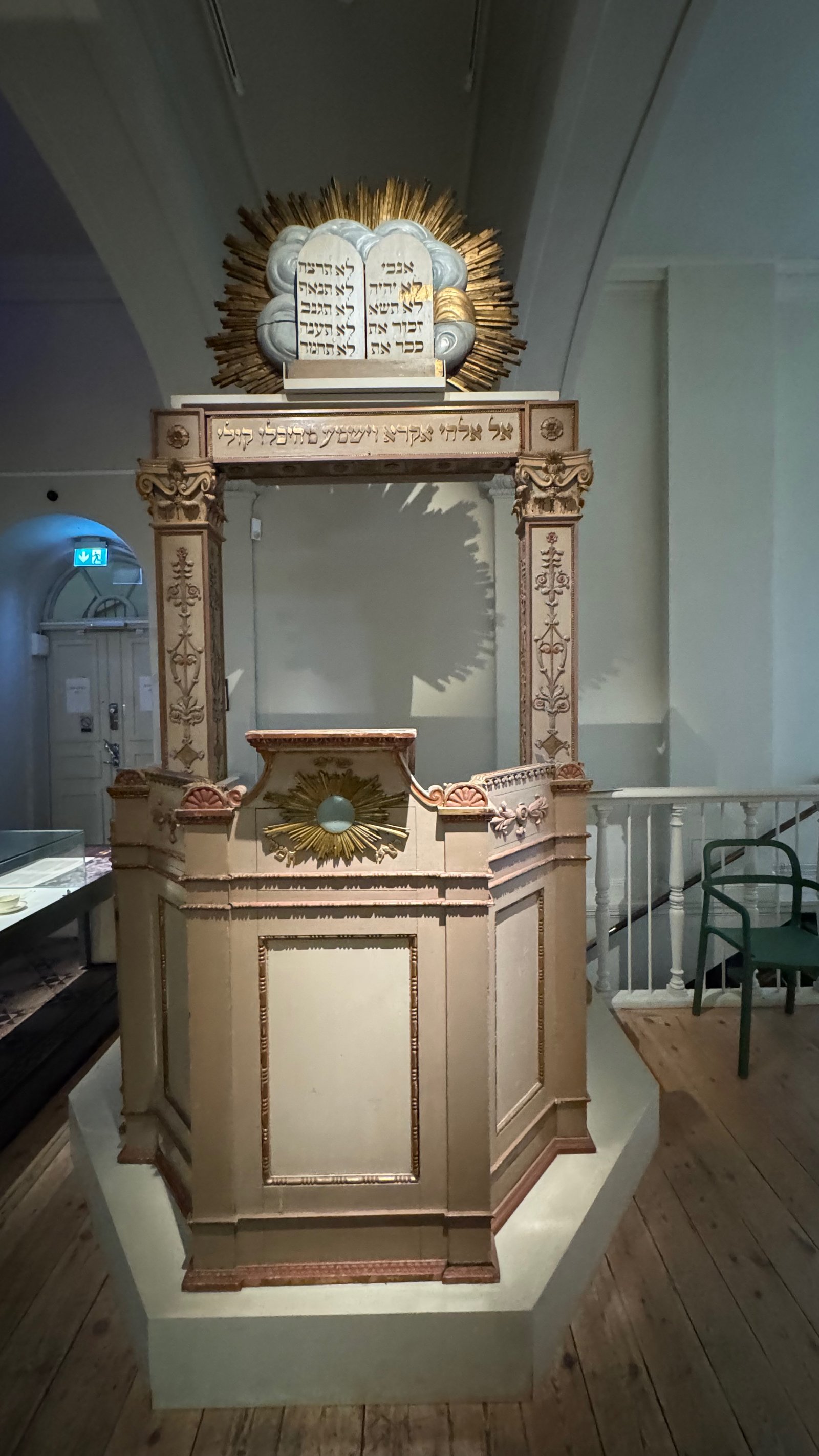
One object holds the room: a wooden Torah ark, saved from an older synagogue and topped with a gilded relief of the Ten Commandments. It once held the community’s Torah scrolls, and it now stands as the clearest link between the museum and the working synagogue this building used to be.
Photo gallery
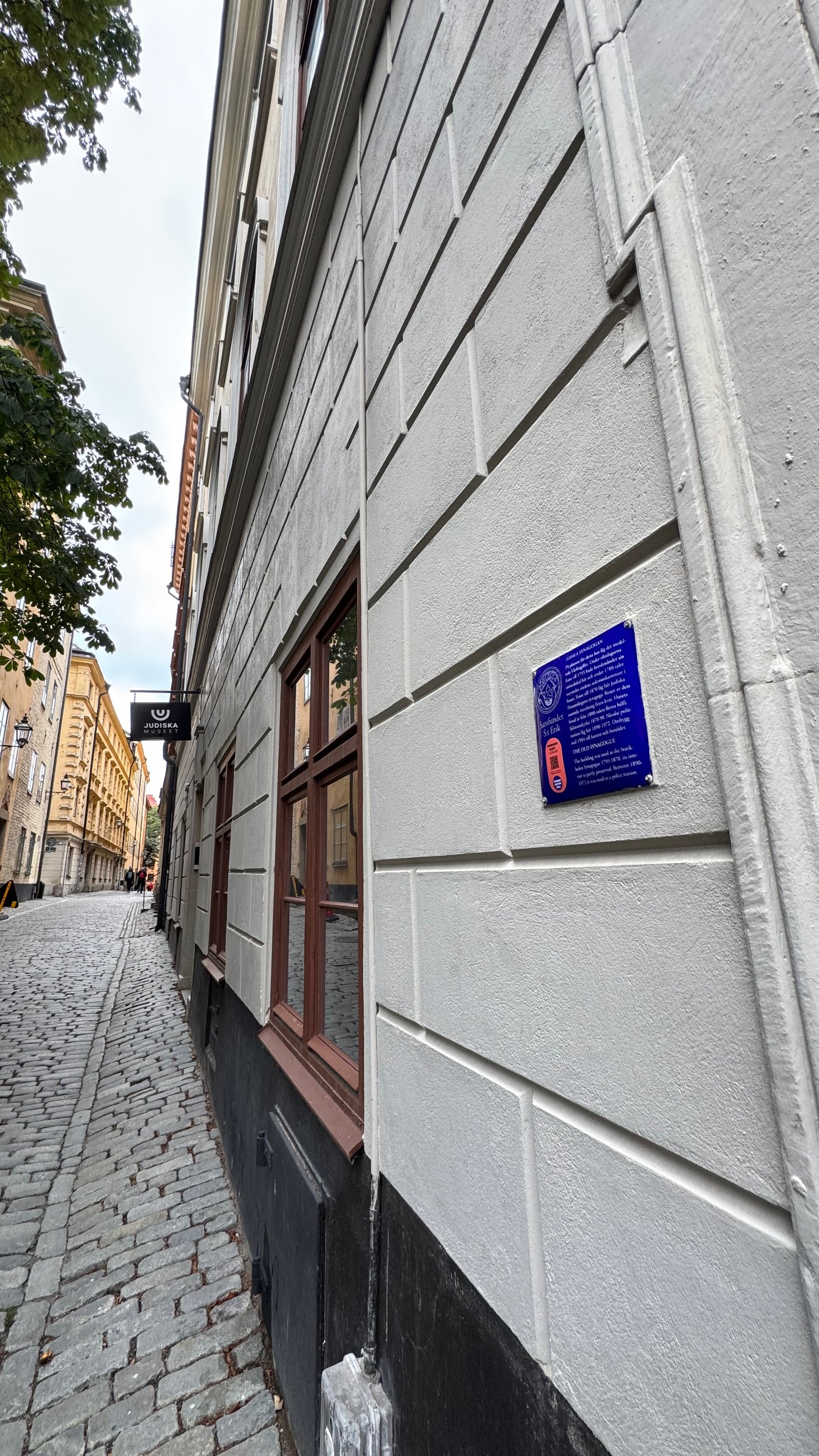
All photographs on this page were taken by Zayera Khan during a visit to the museum, and are her own property. Please do not reuse them without permission.