
Drottningholm Palace
Sweden’s best-preserved royal residence, on an island in Lake Mälaren
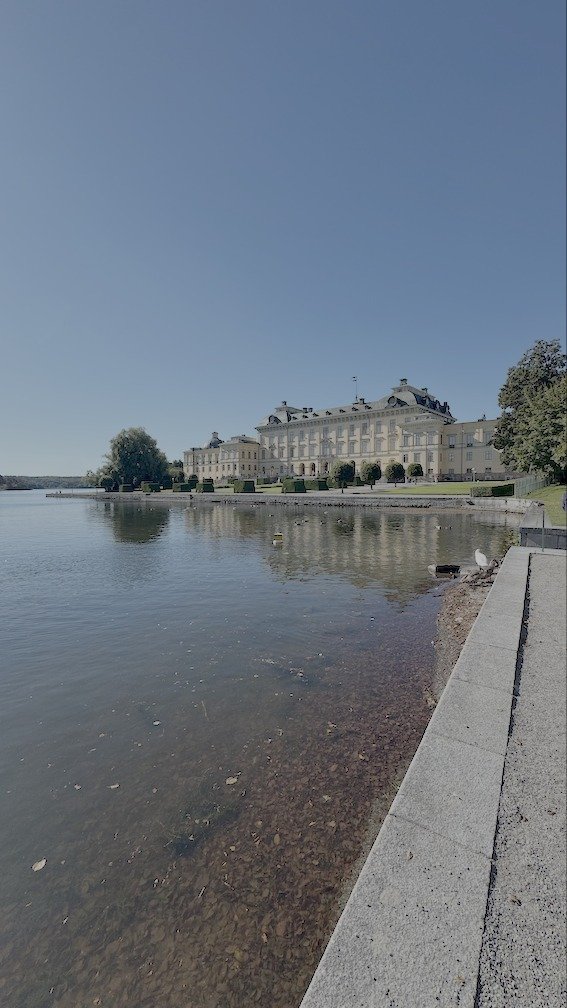
- Why visitYou see a working royal residence, a Baroque and English garden, an 18th-century Chinese pavilion, and a court theatre that still uses its original stage machinery – all on one island.
- Best forHistory lovers, garden lovers, and anyone who wants a half-day outside central Stockholm.
- Address178 02 Drottningholm, Lovön, Ekerö municipality
- Opening hoursSummer (May–September): daily, roughly 10:00–16:30, longer in June–August. Winter (October–April): Saturdays and Sundays only, roughly 12:00–15:30. The Chinese Pavilion and full Court Theatre tours close for winter. Hours shift by month, so check kungligaslotten.se before you go.
- AdmissionPalace state apartments: roughly 160–185 SEK. Chinese Pavilion: roughly 110 SEK. Court Theatre guided tour: roughly 130 SEK. Prices change, so treat these as a guide.
- Getting thereBy ferry: the Strömma summer boat runs from Stadshusbron (by City Hall), about 50 minutes, and is the nicest way to arrive, May–September only. By public transport: metro (green line) to Brommaplan, then bus 301, 323, or 177, about 45–60 minutes from T-Centralen, covered by an SL ticket. Car and bus parking are available near the palace – the grounds are a large park with several separate buildings, so plan to walk between them. Parking payment is app-based, which can be tricky if you’re visiting from abroad, so download the EasyPark app before you arrive for quicker, easier payment.
- AccessibilityThe formal gardens have flat, gravel paths that are wheelchair accessible. The palace ground floor is partly accessible. At the Chinese Pavilion, a ramp reaches the ground floor, but there is no lift up to the second floor. Contact the Royal Court in advance for specific accommodations.
- FacilitiesSlottscaféet (the Palace Café) serves lunches, fika, and light meals. Picnicking is allowed in the gardens. At the Chinese Pavilion, toilets are down the hill, a short walk from the building itself.
- Guided toursThe Court Theatre has no live guided tours on site – visitors use an audio guide instead. Private tours of the theatre, park, and Chinese Pavilion can be booked in advance.
- Official websitekungligaslotten.se
About the palace
Drottningholm began in 1580, when King John III had architect Willem Boy build a Renaissance stone palace for Queen Catherine Jagiellon. The name means “Queen’s Islet.” Queen Dowager Hedwig Eleonora bought the castle in 1661, and it burned to the ground that same year. She rebuilt it with architect Nicodemus Tessin the Elder, whose son Nicodemus Tessin the Younger finished the interiors after his father’s death in 1681. Through the 1700s, it served as the royal court’s regular summer home.
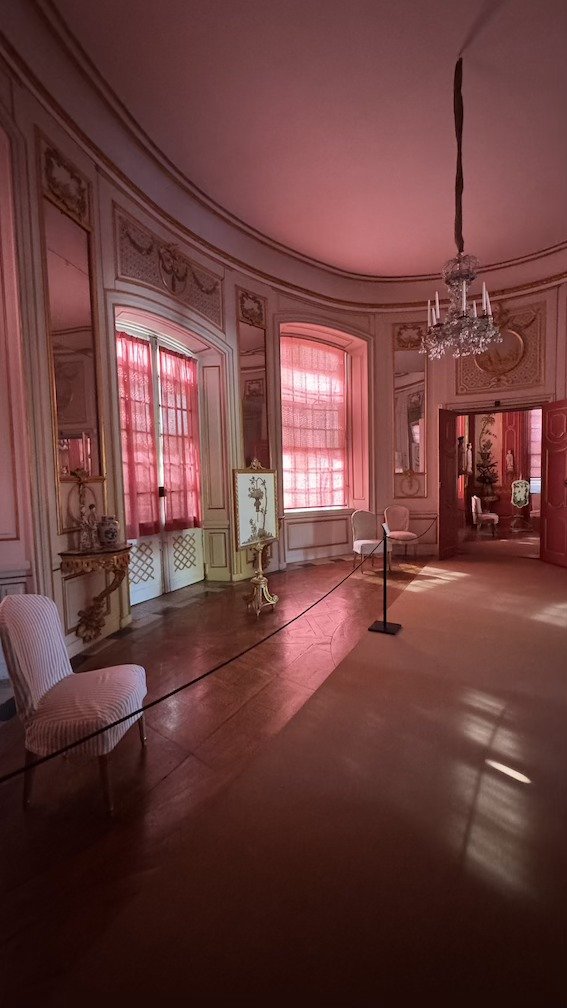
In 1744, King Frederick I gave Drottningholm to Crown Princess Louisa Ulrika as a wedding gift. She redecorated the interior in French rococo style and rebuilt the palace theatre after a fire in 1762, before selling the palace to the Swedish state in 1777. Under Gustav III, it hosted grand ceremonies and theatrical festivities, and he developed the English landscape garden. After the 1809 coup, the deposed King Gustav IV Adolf was held here under guard for eleven days.
The palace then fell into disuse: King Charles XIV John largely abandoned it as a symbol of the old dynasty, though a public tour is recorded as early as 1819. King Gustav V began a four-year restoration in 1907 to bring it back to its 18th-century look. Since 1981, King Carl XVI Gustaf and Queen Silvia have lived in the southern wing, making Drottningholm the only Swedish royal residence still in regular use by the royal family, while the rest stays open to the public. In 1991, it became a UNESCO World Heritage Site, recognised for its palace, theatre, Chinese pavilion, and gardens as a well-preserved 18th-century northern European royal residence, built in the spirit of Versailles.
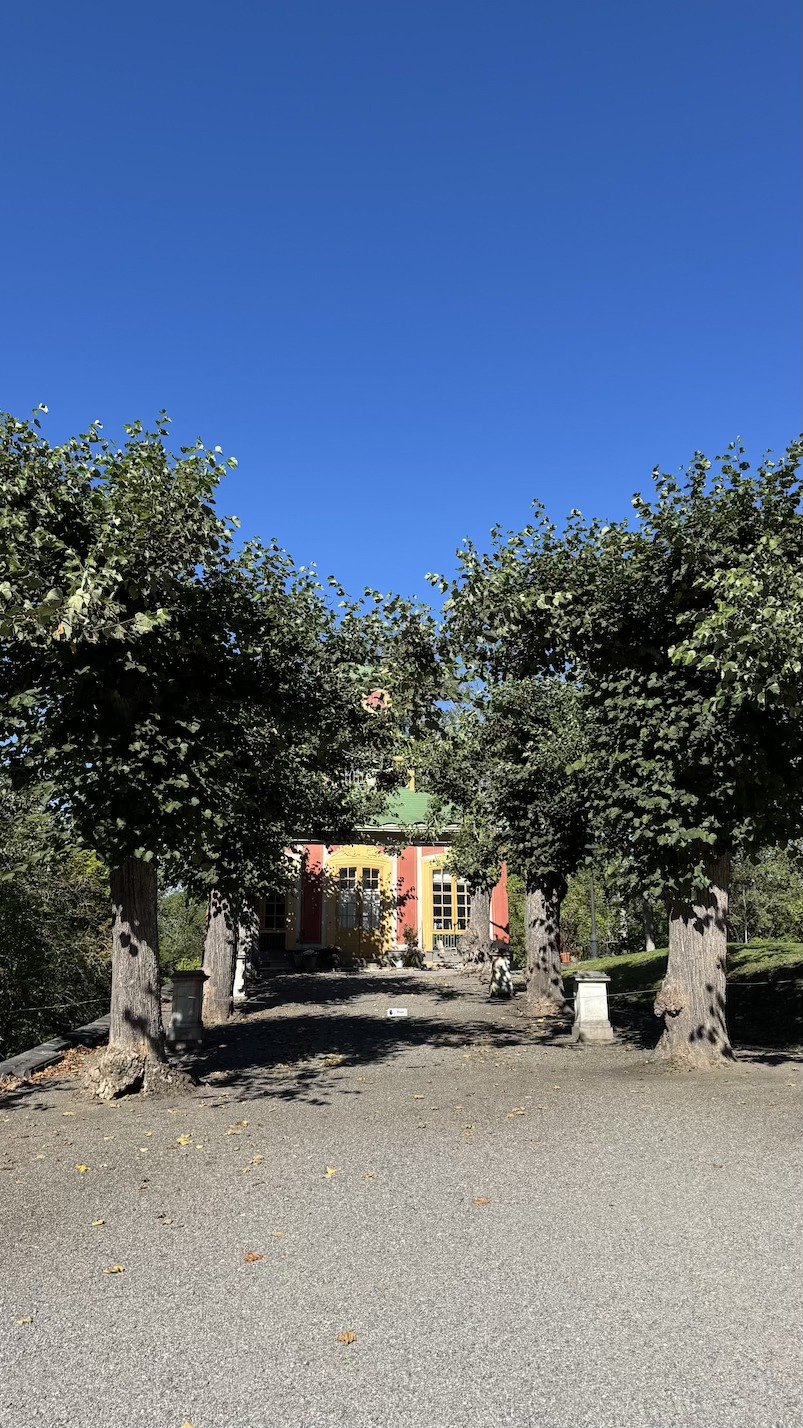
Photo gallery
All photographs on this page were taken by Zayera Khan during a visit to Drottningholm, and are her own property. Please do not reuse them without permission.
The Royal Domain
The Baroque Garden
Laid out under Hedwig Eleonora in the late 1600s, with sculptures by Adrian de Vries, the Baroque Garden sits directly behind the palace, its clipped hedges and straight paths designed to be seen from the palace windows above.
The English Garden
Developed later, under Gustav III, the English Garden takes a softer, more natural approach, with ponds, canals, and marble statues he bought in Italy – a deliberate contrast to the formal Baroque Garden nearby.
The Chinese Pavilion (Kina Slott)
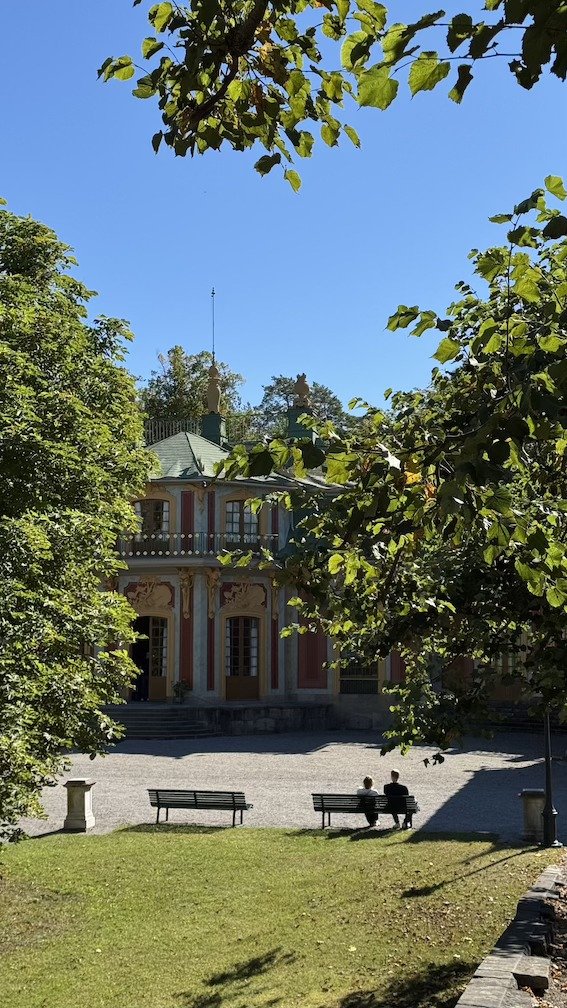
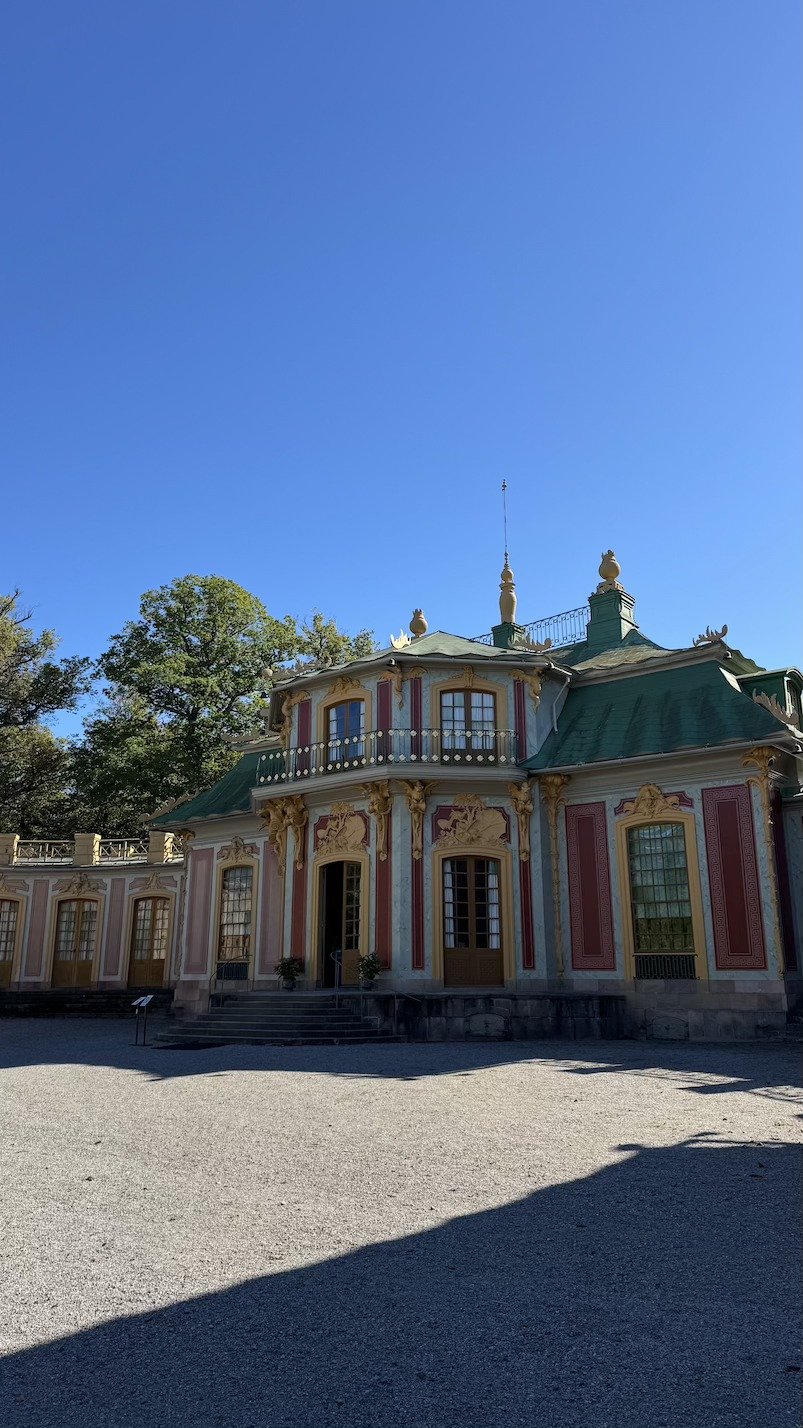
An 18th-century summer palace built in the chinoiserie style, the Chinese Pavilion was first given as a surprise birthday gift from King Adolf Frederick to Queen Louisa Ulrika, then rebuilt in more lasting materials a decade later. There’s a ramp at the entrance, but it only reaches the ground floor – there’s no lift, so wheelchair access doesn’t extend to the second floor. There are no live guided tours inside; visitors use an audio guide instead, and the toilets are down the hill, a short walk from the pavilion itself.
The Court Theatre
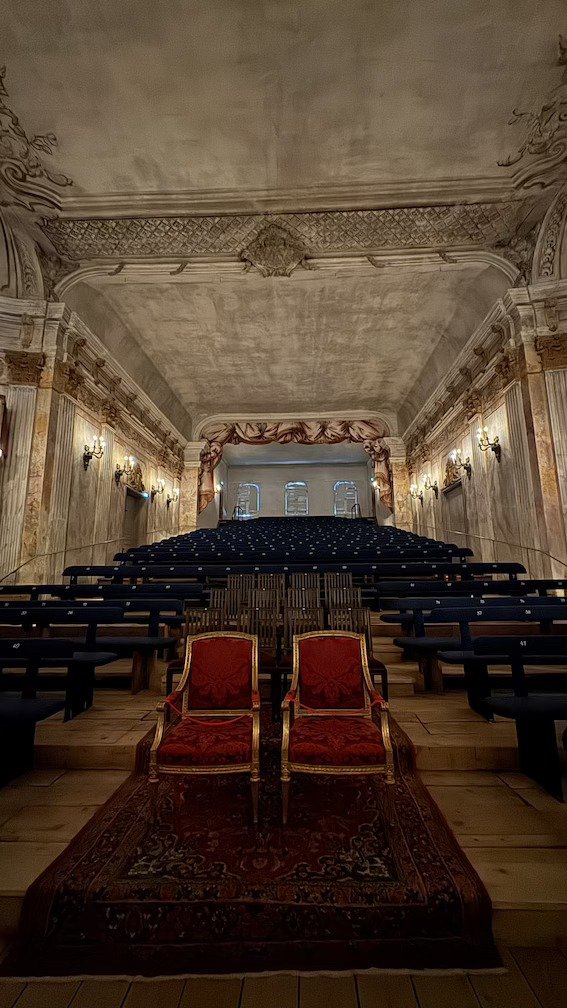
Completed in 1766, the Court Theatre is the best-preserved 18th-century theatre in the world. It’s the third theatre built on this spot: the first was pulled down for being too small, and the second burned to the ground. Its original stage machinery still works today – a chariot-and-pole system that can change an entire scene in six seconds, a wave machine made from giant painted corkscrews, thunder effects, and rigging for actors to fly in and out. It seated 450 people, arranged by strict hierarchy: the King and Queen sat on the balcony, while a separate “incognito” balcony let others watch the audience without being seen themselves.
During the summer season, the theatre was also a place people lived in: the architect had the first room, and theatre workers, actors, and their families lived there too – over 100 people in total. A curtain at the back of the hall was Gustav III’s own idea: it let the public take their seats after the court had already sat down, then lifted so they could watch the play as well.
After Gustav III was assassinated at the Stockholm Opera House in 1792, the theatre went unused until 1920. It was rediscovered the following year, in 1921, by theatre historian Agne Beijer, who preserved it with only minimal changes. Today it’s a working opera house each summer, and in 1991, together with the rest of Drottningholm, it was added to the UNESCO World Heritage list.
The Palace Church
Designed by Tessin the Elder and finished by his son in 1746, the Palace Church holds a 1730 organ still in use today.
Today
Drottningholm remains the King and Queen’s real, working home, and at the same time one of the most complete surviving pictures of an 18th-century European royal court – right down to a theatre that still changes its own scenery the way it did 250 years ago.