Carl Eldhs Ateljémuseum
A sculptor’s studio in Bellevueparken, Stockholm
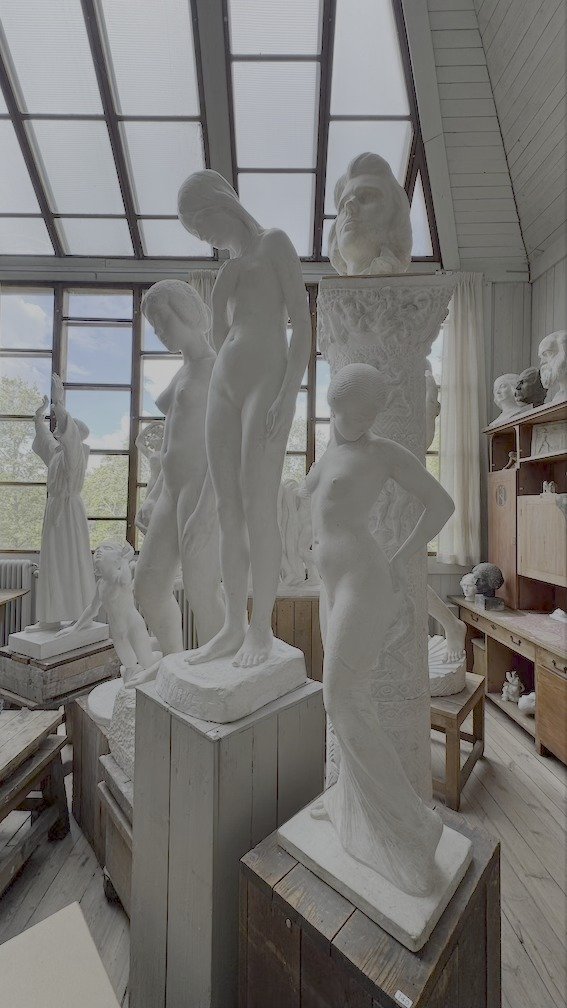
- Why visitYou see a real working artist’s studio, kept almost exactly as he left it, with his own sculptures, tools, and sketches still in place.
- Best forArt lovers, architecture fans, and anyone who enjoys a small, personal museum over a large one.
- AddressLögebodavägen 10, 113 47 Stockholm
- Opening hoursApril: Sat–Sun 12:00–16:00. May, September, October: Thu–Sun 12:00–16:00. June–August: Tue–Sun 12:00–16:00. Closes for the season at the end of October.
- Guided toursShort general tours run during open hours. Private group tours can be booked all year.
- Group sizeMaximum 30 people at a time.
- FacilitiesThere is a toilet on site.
- AccessibilityA temporary ramp is available on request.
- ParkingFree outdoor parking directly in front of the museum.
- Official websiteeldhsatelje.se
About the museum
Carl Eldhs Ateljémuseum is the working studio of Swedish sculptor Carl Eldh (1873–1954), kept today almost exactly as he left it. It stands in Bellevueparken, on a quiet corner of Stockholm between Norra Djurgården and Vasastan, and it is one of the few sculptor’s studios in Sweden that visitors can still walk into.
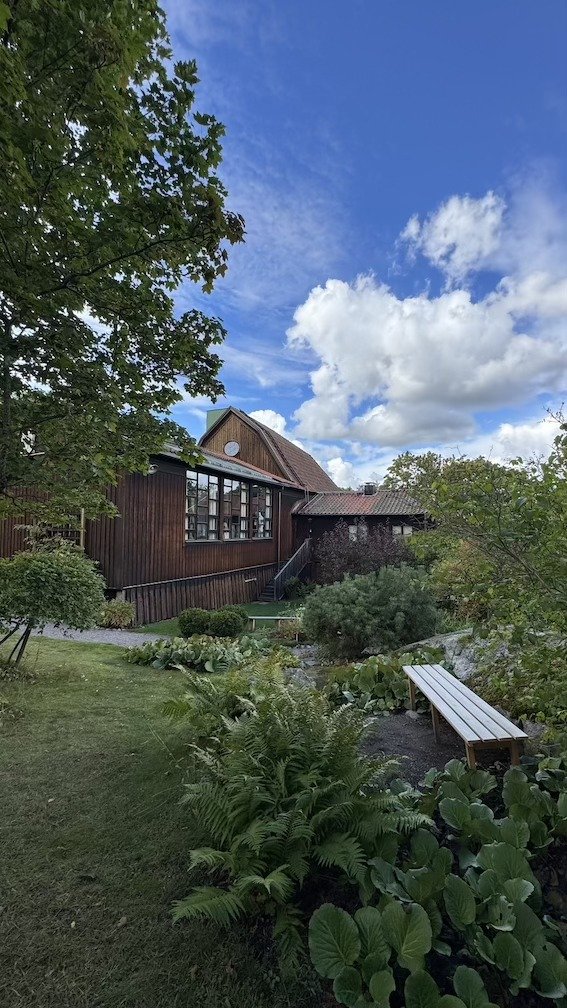
The building was designed in 1919 by architect Ragnar Östberg, a close friend of Eldh’s and the same architect behind Stockholm City Hall. Its standing, tarred wooden panels were modelled on an older 18th-century building nearby. Eldh chose this spot partly for practical reasons: the plaster foundries and craft workshops a sculptor depends on, including the Herman Bergman Fine Art Foundry, were close by in Vasastan.
Inside, the building has two large studios that face northwest to catch steady daylight, a rotunda used to receive visitors, and what were once Eldh’s private living quarters. The doors are unusually tall and wide – built to move plaster models and blocks of raw material in and out.
Eldh worked here from 1919 until shortly before his death in 1954, and he hoped the studio would one day open to the public. That happened in 1963, when his daughter Brita Eldh founded a foundation to run it as a museum and became its first curator. The building was restored and reopened in 1995, then again in 2013, when the old living quarters were converted into extra exhibition space.
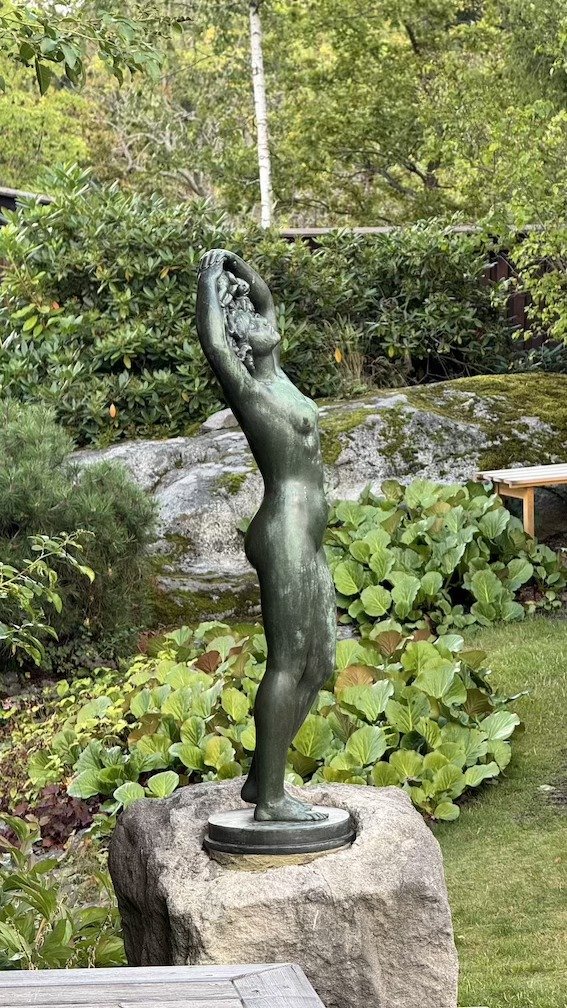
The garden is as much a part of the museum as the studio itself. Eldh’s sculptures stand among the trees and stones much as they might have in his lifetime, and the garden was given listed-building status in 2010 to protect it as part of his creative environment.
What you see today is mostly Eldh’s own work: finished sculptures, plaster casts and studies, his tools, sketches, photographs, and books, arranged much as they were when he was alive.
Photo gallery
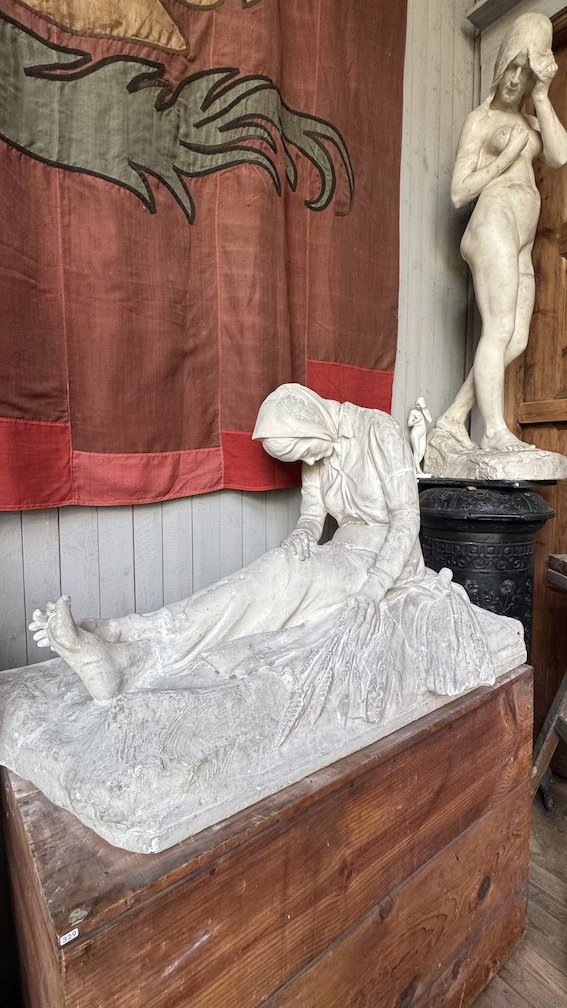
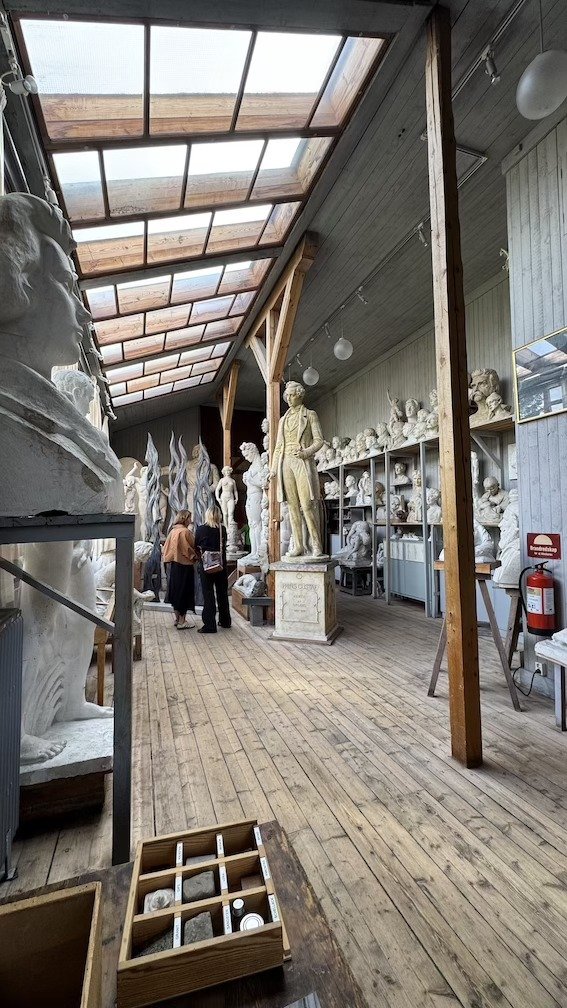
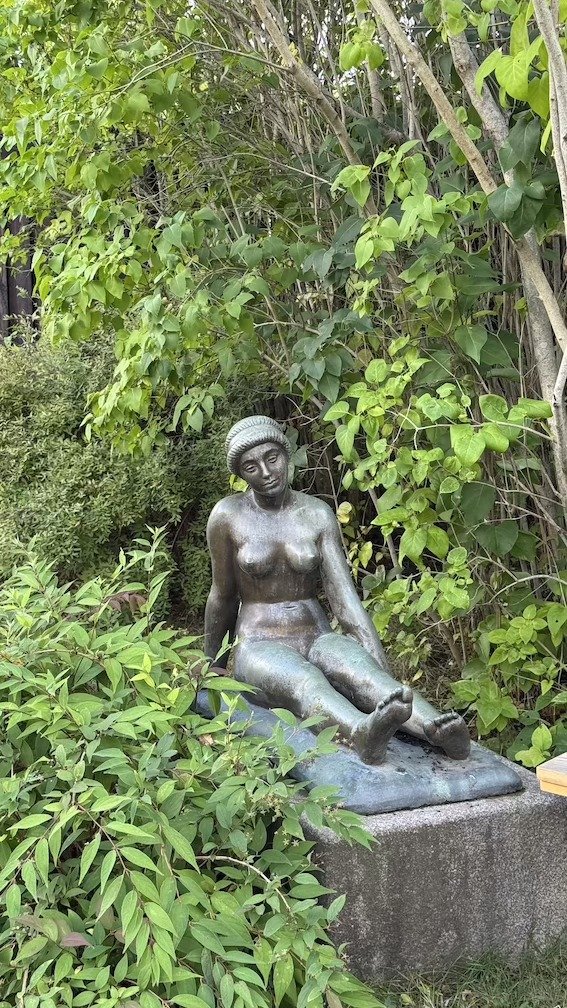
All photographs on this page were taken by Zayera Khan during a visit to the museum, and are her own property. Please do not reuse them without permission.
About the artist: Carl Eldh
Early life and training
Carl Johan Eldh was born on 10 May 1873 in Östhammar Municipality in Uppland, Sweden, the son of a blacksmith. He showed talent early: he carved a relief in oak at just 13 years old, and made his first public work, a wood relief for a church, in 1895. His younger brother, Albert Eldh, also became an artist.
Eldh trained first at technical evening classes in Stockholm, then moved to Paris, where he studied and worked at the Académie Colarossi from 1897 to 1904. Paris was the natural place for a Swedish sculptor of his generation to learn, and the work of Auguste Rodin left a lasting mark on him. In 1902, he won a gold medal at the Salon de Paris for his sculpture Sorgande moder (Grieving Mother), which was later cast in Carrara marble for the Ny Carlsberg Glyptotek museum in Copenhagen.
Career and style
Eldh settled in Stockholm for good in 1904 and built his reputation as a portrait sculptor known for capturing a sitter’s real character, not just their likeness. His early work had softer, more romantic forms; by around 1916, he had moved toward a stronger, more realistic style.
He had a long-running artistic relationship with the writer August Strindberg. From his studio window on Narvavägen, Eldh used to watch Strindberg on his daily walks through the city, and in 1904 he made a sculpture of exactly that: Strindberg på sin dagliga promenad (Strindberg on His Daily Walk). That early study eventually grew into his best-known public monument. The two were friends, not just artist and subject, and Eldh returned to Strindberg’s likeness again and again over the years – he also made self-portraits, and at least one piece showing the two of them together.
Eldh also worked closely with some of the leading architects of his time, including Ragnar Östberg, Ivar Tengbom, Erik Lallerstedt, and Isak Gustaf Clason, contributing sculpture to major buildings such as Stockholm City Hall, the Nordic Museum, and an Östermalm public school. Alongside this architectural work, he also took on commissions of his own, both private and public.
Famous works
- The Strindberg Monument (Tegnérlunden, Stockholm, unveiled 1942) – often nicknamed “Titanen” (The Titan), this is Eldh’s most famous public sculpture, showing August Strindberg standing tall and defiant. It grew out of the smaller studies he made from his studio window decades earlier.
- Ungdom (Youth, 1912) – Eldh’s most widely reproduced work. Cast copies of this bronze stand in parks across Sweden, including Liseberg in Gothenburg and Rottneros Park in Värmland.
- The Branting Monument (Norra Bantorget, Stockholm, unveiled 1952) – a large bronze relief, 5 metres tall and 6 metres wide, showing the Social Democratic leader Hjalmar Branting addressing a crowd of workers on May Day. Eldh worked on it on and off for over two decades; it was finished two years before he died. My own note: of everything standing at Bantorget, this is by far the grandest, most theatrical sculpture in the square.
- Sorgande moder (Grieving Mother, 1902) – the gold-medal-winning work that first brought him international attention, later cast in marble for the Glyptotek in Copenhagen.
- Portrait sculptures of King Oscar II and fellow writers Gustaf Fröding and Ernst Josephson, part of the same Stockholm park ensemble as his Strindberg monument.
- Self-portraits, and repeated studies of Strindberg – Eldh sculpted his own likeness as well as Strindberg’s, returning to his friend’s face many times over the years, including at least one piece that shows the two of them together.
- Private and public commissions – beyond his own personal works, Eldh regularly took on commissioned sculpture, both for private clients and for public spaces.
Legacy
Carl Eldh is remembered today as one of Sweden’s leading sculptors of the early 20th century, alongside his better-known contemporary Carl Milles. His work is held in the collections of Moderna Museet (the Museum of Modern Art) in Stockholm, and in museums in Gothenburg, Lund, and Copenhagen. Copies of Ungdom stand as far away as Minnehaha Park in Minneapolis, a sign of how far his reputation travelled through Swedish-American communities.
His studio in Bellevueparken remains his most personal legacy: a place where his sculptures, tools, and everyday working life are still visible, more than a century after he first opened its doors.