
Almgrens Sidenväveri
A working silk mill on Södermalm and the women who ran its looms
- Why visitYou see a silk mill from the 1800s with its old machines, and you learn who worked there, who bought the silk, and why the mill closed in 1974.
- Best forVisitors who like industrial history, textiles and women’s history. It is a quiet stop in the middle of Södermalm.
- AddressRepslagargatan 15 A, 118 46 Stockholm
- Opening hoursMonday to Saturday 12:00–16:00. Closed on Sundays and on several holidays.
- Admission140 SEK. Students and pensioners pay 120 SEK. Free for visitors up to 18 years old and for Go City Stockholm Pass holders. The museum takes card and Swish. It does not take cash.
- Guided toursAn open tour starts at 13:00. It lasts about 20 minutes, is included in the ticket and needs no booking. Group tours are for up to 25 people for one hour, from 2,500 SEK. For a tour in English, French or German, book 14 days before.
- FacilitiesShop. A toilet for disabled visitors is on floor 3.
- AccessibilityA lift goes to floors 1 and 3. The lift cabin is 102 × 139 cm and the door is 100 cm wide. The lift entrance is at 15D, in the courtyard on the right. Floors are uneven, and there are thresholds and narrow passages. Hearing loops are in the entrance and shop and in the lecture hall.
- Getting thereMetro or bus to Slussen. Commuter train to Södra station. The main entrance is at 15A.
- ParkingThree spaces for drivers with a disabled parking permit are on Repslagargatan.
- Official websitekasiden.se
About the museum
Almgrens Sidenväveri (Almgren’s Silk Weaving Mill) is a silk mill and a museum in one building on Södermalm. The mill started in 1833. The museum tells almost 200 years of history, and it shows that history in a global context. It covers the time before industrialisation in Sweden, the good years, the decline, the wider business, the textile crisis and the restart.
Södermalm had many textile mills in the 1800s. Cotton spinning mills, silk weaving mills and wool weaving mills worked here. Almgrens is the one that you can still visit.
History in short
- Early 1800s. Stockholm has many textile mills. About 20 of them make silk fabric.
- 1822. Knut August Almgren, 16 years old, starts work at one of these silk mills.
- 1833. The Almgren silk mill starts. The museum gives this year as the start of the mill.
- 1844. Knut August Almgren is appointed purveyor to the royal court of Sweden.
- 1862. The factory building on Repslagargatan is built.
- 1870s. The company makes 90,000 silk shawls each year.
- 1881. The mill installs several mechanical looms.
- 1930. Almgrens kappfabrik (coat factory) opens. More companies follow after the war.
- 1974. The silk mill is the last of the Almgren companies to close.
- 1991. The mill opens again, 17 years later.
Knut August Almgren and the jacquard looms
Knut August Almgren was 16 when he started to work at a silk mill in Stockholm. He was a good salesman. About ten years later he started his own silk mill.
His looms had the newest technology of the time: jacquard mechanics. The museum says that he smuggled this technology out of France himself. A jacquard loom uses punch cards. The holes in the cards store the pattern of the cloth. With this method, weaving was simpler and faster.
When you walk through the exhibition, you see long strips of punch cards hanging from the ceiling. The text panels are fixed to them. Each card is one line of a pattern.
The royal court
The mill made silk for rich and for normal customers. Wealthy customers ordered silk for wall coverings, furniture fabric, ribbons and clothes. The mill also made silk shawls at lower prices, so that women from all social groups could buy one.
In 1844 Knut August Almgren was appointed hovleverantör, in English a purveyor to the royal court of Sweden. This was an official title for a supplier to the court. The text panel in the museum does not say what the mill delivered to the court. It also does not name a royal family member. Ask the guide on the 13:00 tour if you want more detail.
The women of the mill
The mill had hundreds of workers, and most of them were women. In the 1800s many young women left the countryside to find work in the factories of the towns. Factory work was hard and tiring. But it gave more freedom than farm work or work as a maid in a household.
Many women in Stockholm did not marry. The museum says that, for some, this was perhaps a way to stay independent. Until 1921, a married woman was under the guardianship of her husband.
The working days were long and the pay was low. Childcare was hard to combine with factory work, so many children worked in the same factories as their parents. Weaving was a trade for men. The silk industry did not have enough workers, and in the late 1700s the trade opened to women. The museum also says that women got lower pay than men.
The panel lists the jobs that women did at the mill. There were väverskor (weavers), spolerskor (bobbin winders), varperskor (warpers), vinderskor (winders), nysterskor, franserskor (fringe makers) and sömmerskor (seamstresses).
The silk shawl
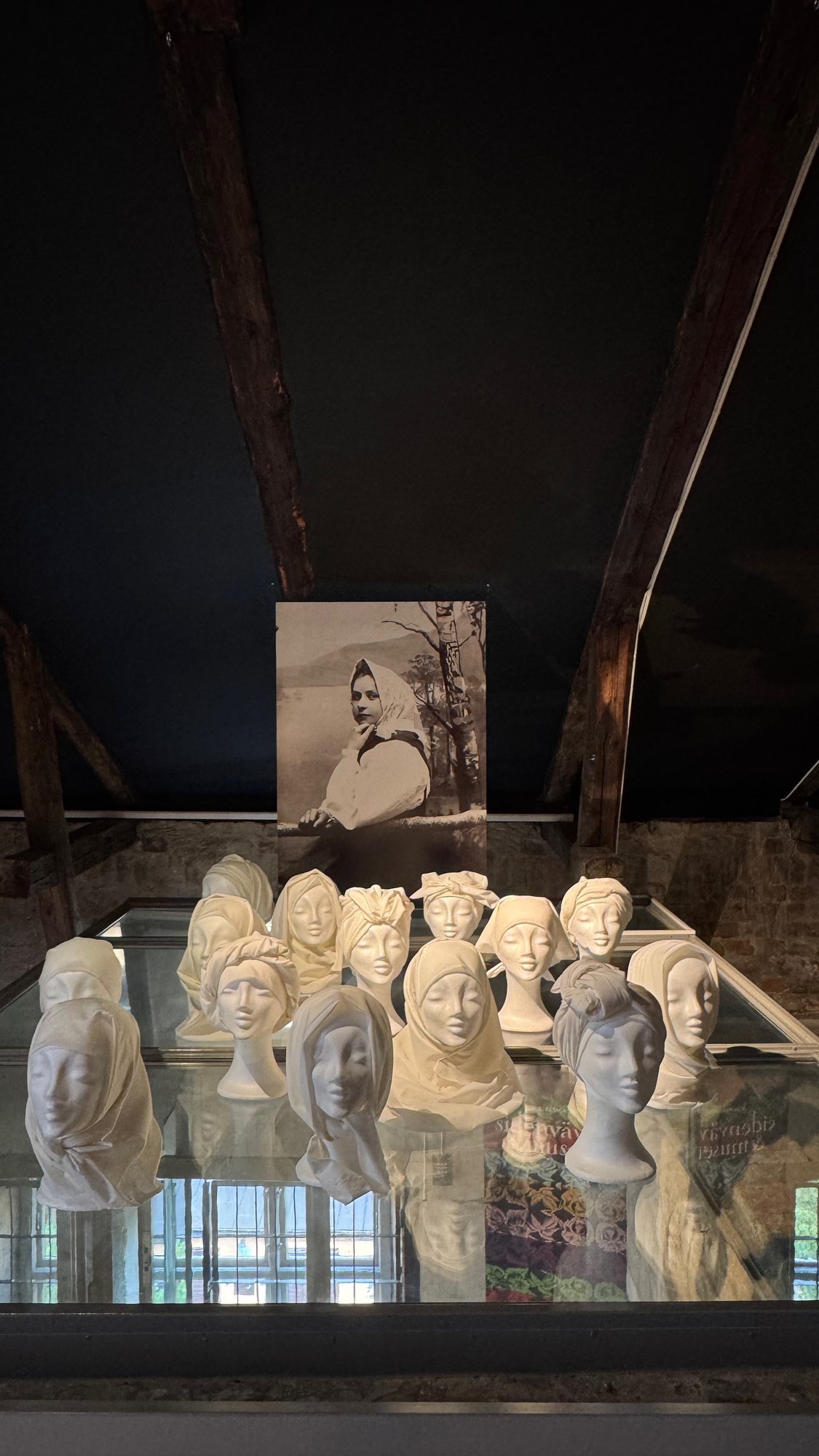
In the 1800s, Swedes covered their heads. Men usually wore a cap or a hat. Most women from the farming population wore a shawl. In church, adult women kept their hair covered, and men took off their hats.
A good shawl was a fashion item. A shawl made of silk in a factory was the most expensive kind. The mill made hundreds of different patterns, and its shawls were popular in all of Sweden.
People wore silk shawls in church and at feasts. They covered the head and shoulders, hung from the belt, or were folded around the hymn book. At weddings, people hung colourful silk shawls on the walls. A silk shawl was a common engagement gift. Girls often got their first silk shawl as a confirmation gift.
After 1900: ribbons, coats and ties
Swedish textile industry was strong in the first half of the 1900s. Many new factories opened in the Borås region. Unions and political reform improved pay and working conditions a lot.
After the war, large factories used modern machines and made cloth from artificial fibres, for example viscose and polyester. At Almgrens, time stood still. The mill kept its machines from the 1800s. Fewer people bought silk shawls, because modern women now preferred hats. Ribbons for fraternal orders and societies became the most important product. Old, loyal workers worked next to young women who stayed for a shorter time.
At the start of the 1900s, the Almgren family still owned the buildings. But they let Victor Brattberg run the company. He was a former office employee.
By the middle of the century the silk mill did not make a profit. Brattberg started several new companies in fashion and ready-to-wear clothes. He formed Almgrens kappfabrik (coat factory) in 1930. After the war came Almgrens manufaktur, Almgrens konfektion and Almgrens kravattfabrik (tie factory). He made each of his four sons the manager of one company.
The new companies had their offices at Kornhamnstorg 6 in the Old Town. The coat factory was the exception. It was on the second floor of the same building as the old silk mill. It made coats in standard sizes for clothes shops all over Sweden. Private customers could also order changes. The ready-to-wear company made dresses designed by Ingrid Brattberg, or under licence from French fashion houses.
The TEKO crisis and the closing in 1974
TEKO is the Swedish name for the textile and clothing industry. It includes the making of cloth and the making of clothes. In the early 1950s more than 100,000 people worked in it. Good pay and working conditions made Swedish goods more expensive than goods from low-pay countries.
In the 1960s and 1970s this led to the TEKO crisis. Swedish textile production nearly disappeared. Almost only the companies that moved their production abroad survived. Many textile workers lost their jobs. The Almgren companies closed too. The silk mill was the last one, and it closed in 1974. Nobody knew then that the old mill would open again 17 years later.
The museum also puts this story in a world view. Most of the world’s textiles and clothes now come from Asia. Working conditions there are similar to those in Sweden in the 1800s, and the industry is still dominated by women with low pay. The museum also states that textile production is one of the industries with the highest impact on the environment and climate. It names reuse of textiles and clothes as one step toward a better future.
The factory building
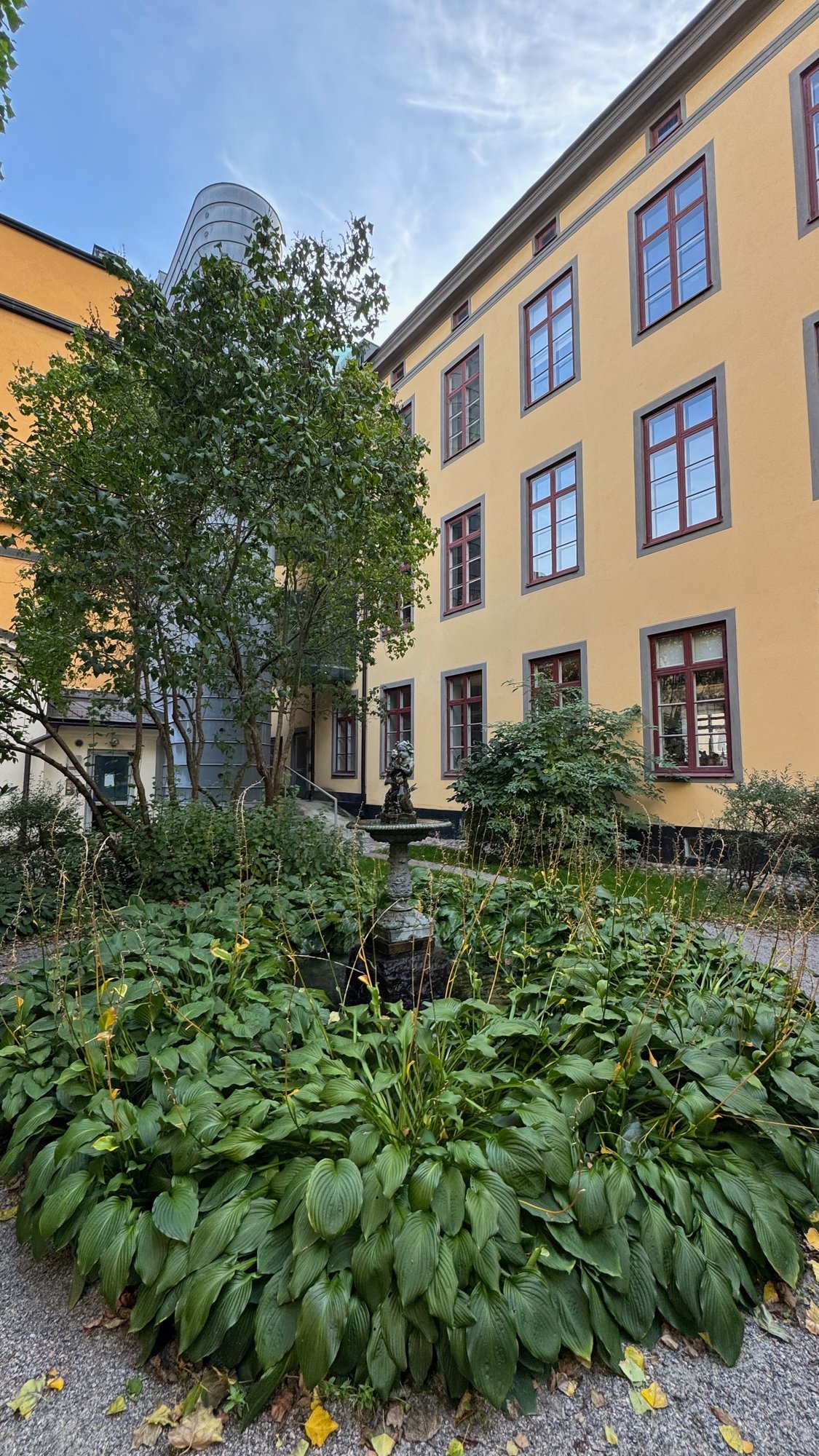
The factory was built in 1862 and follows the model of French silk mills. The mill got gas heating in the 1880s. In 2020 the building was listed as a protected building (byggnadsminne). You enter through a courtyard with a small fountain and green planting. A yellow building with red window frames and a grey tower is part of the view.
The Factory exhibition
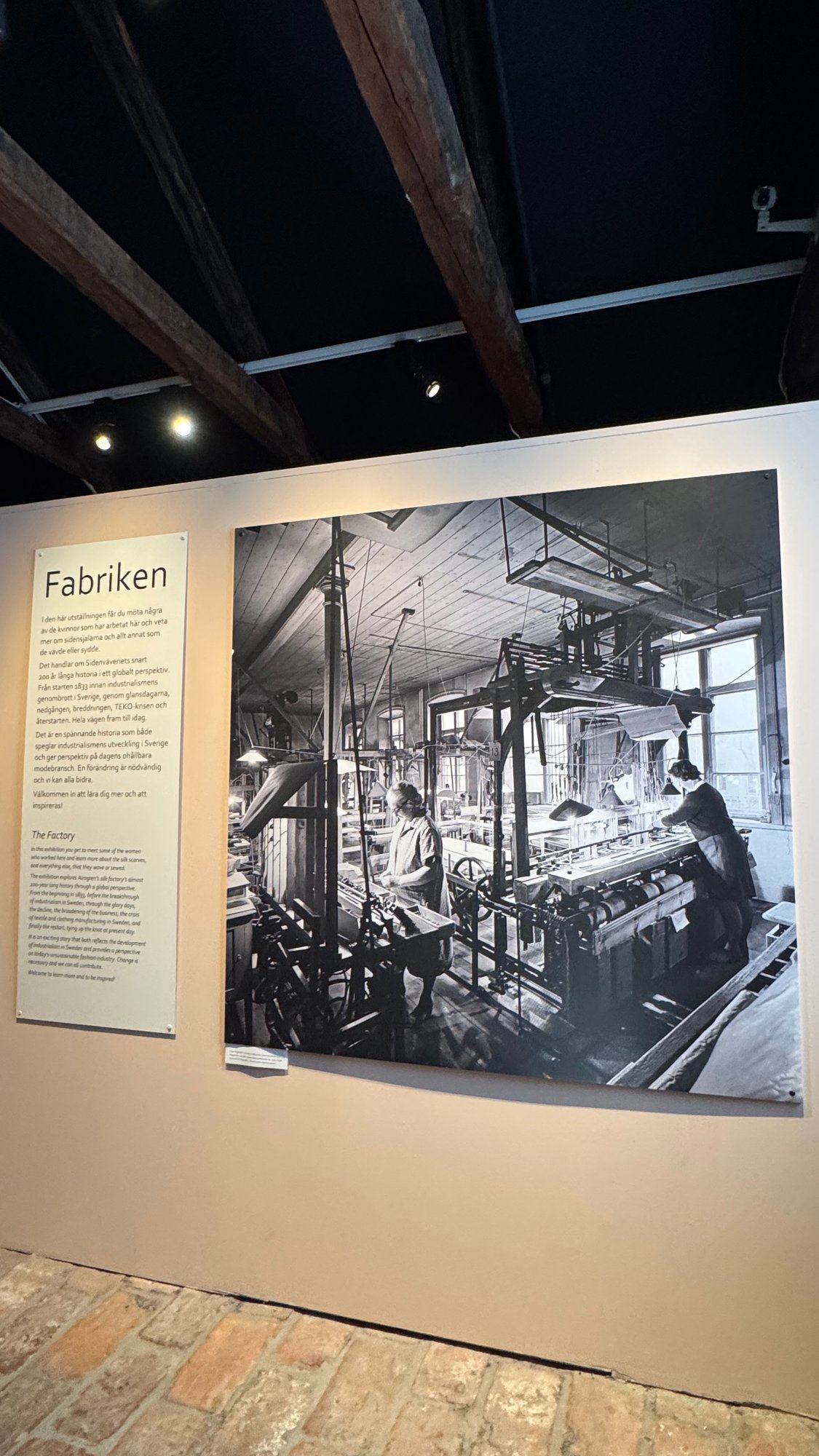
The exhibition Fabriken (The Factory) shows some of the women who worked here. You also learn more about the silk shawls and the other things that they wove or sewed. The text panels are in Swedish and English.
The machines
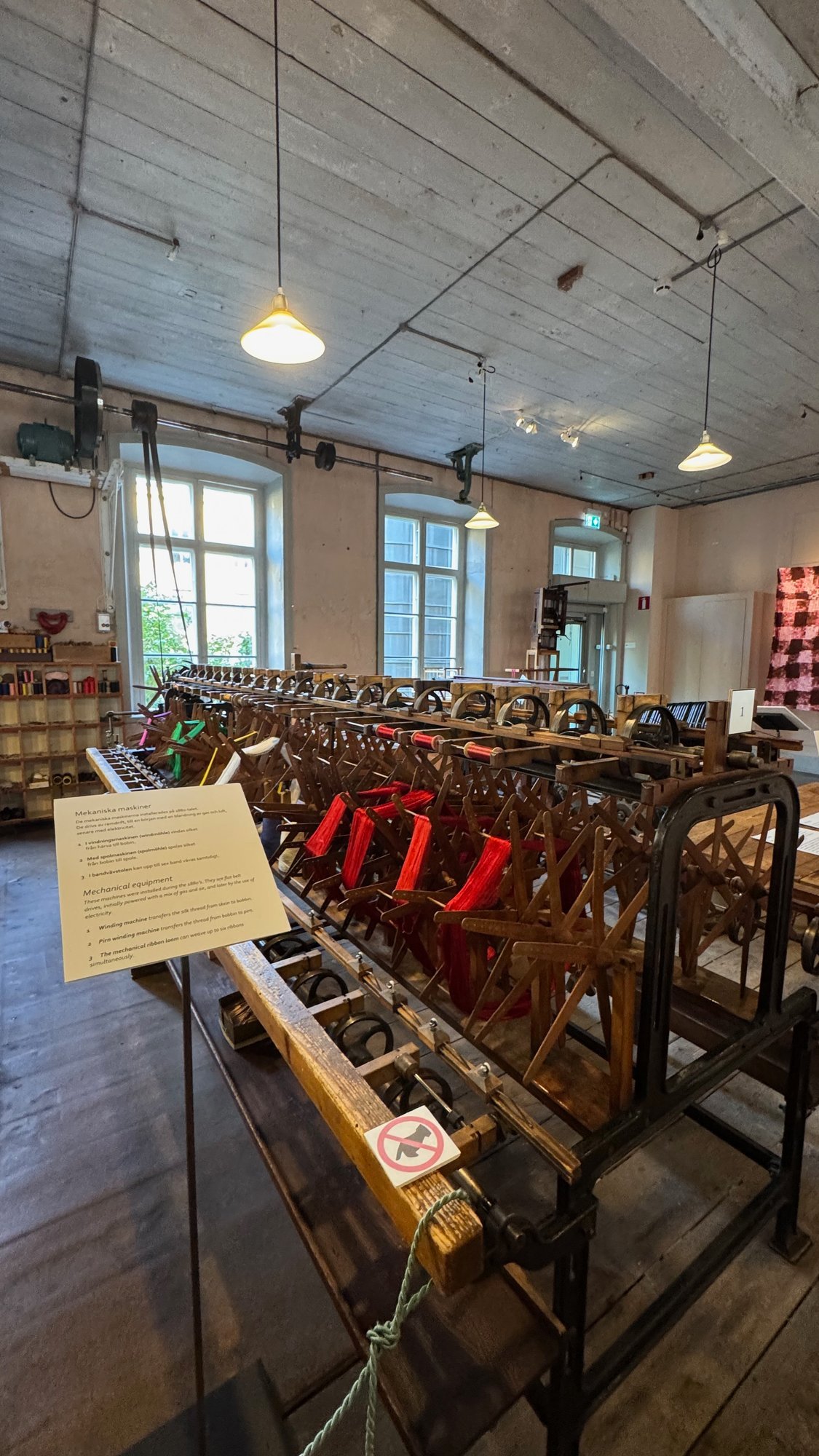
The museum keeps machines from the time when the mill made silk by machine. The sign “Mekaniska maskiner” (Mechanical equipment) stands next to a winding machine with red silk skeins on wooden reels. The sign says that the machines were installed in the 1880s. This is the same time that the mill got its first mechanical looms, according to the exhibition text.
Shop
The shop is at the entrance. It sells silk goods. Check the museum’s website for the current range and prices.
Photo gallery
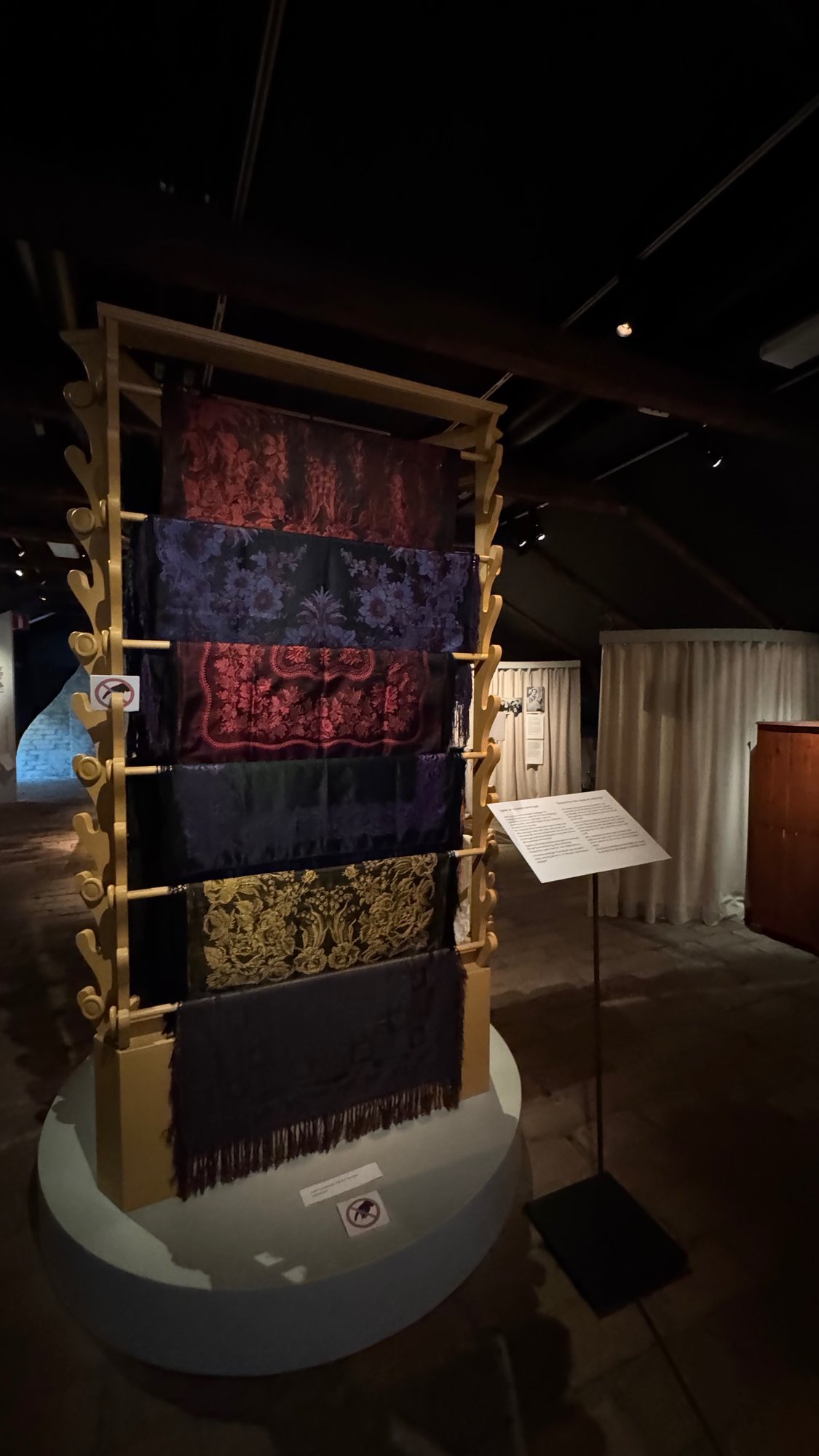
All photos on this page were taken by Zayera Khan. The historical photographs and objects that you see in them belong to the museum and to the rights holders. The history on this page comes from the exhibition panels at the museum and from the official website.
Sources
- Almgrens Sidenväveri, official website (opening hours, prices, tours, access).
- Exhibition panels at the museum, read on 2 October 2026: Fabriken, Stockholms tidiga textilindustri, Sidenarbeterskor, Sjalar – både mode och