
Prins Eugens Waldemarsudde in Stockholm: the painter prince, his home and his garden
A prince who wanted to be judged as an artist. He left his home, his paintings and his garden on Djurgården to the people of Sweden.
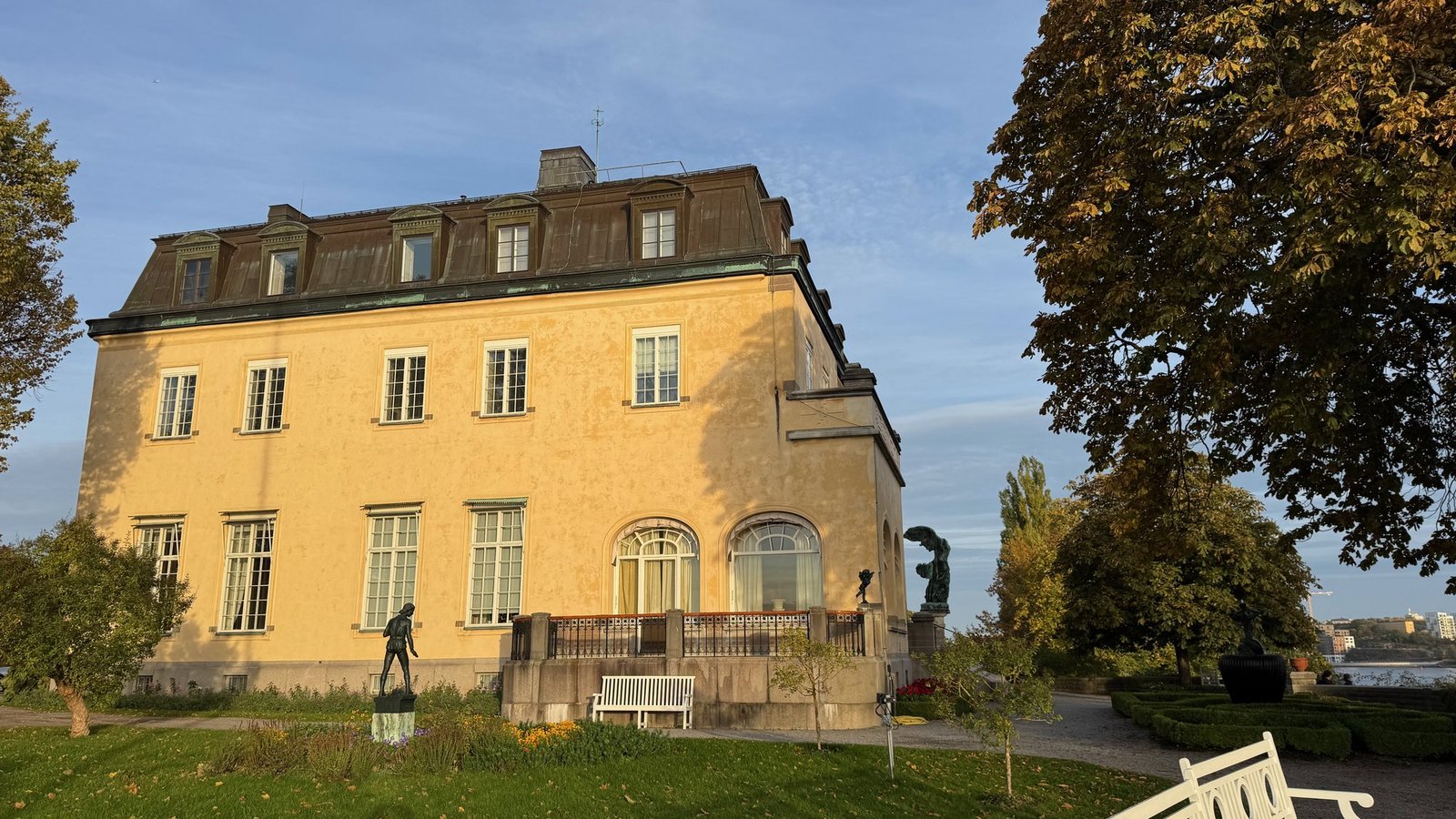
- Why visitThe home, art collection and garden of Prince Eugen (1865–1947), one of Sweden’s great landscape painters. The rooms look much as they did when he died.
- Best forArt lovers, garden lovers, and anyone who wants a calm walk by the water.
- AddressPrins Eugens väg 6, 115 21 Stockholm, on southern Djurgården.
- Getting thereTram 7 or bus 67.
- Opening hoursMuseum: Tuesday to Sunday 11:00–17:00, Thursdays until 20:00. Closed on Mondays. Park: every day 08:00–21:00. In 2026, the museum is also closed on 24, 25 and 31 December.
- AdmissionAdults 180 SEK. Pensioners and students 160 SEK. Youth up to 20 years free. Annual pass 460 SEK. The park is free.
- IntroductionsShort introductions to the exhibitions, about 30 minutes, are included in the ticket. No booking is needed. There is also an audio guide.
- FoodRestaurant Prinsens kök in the museum (you need a museum ticket). Café Ektorpet in the park.
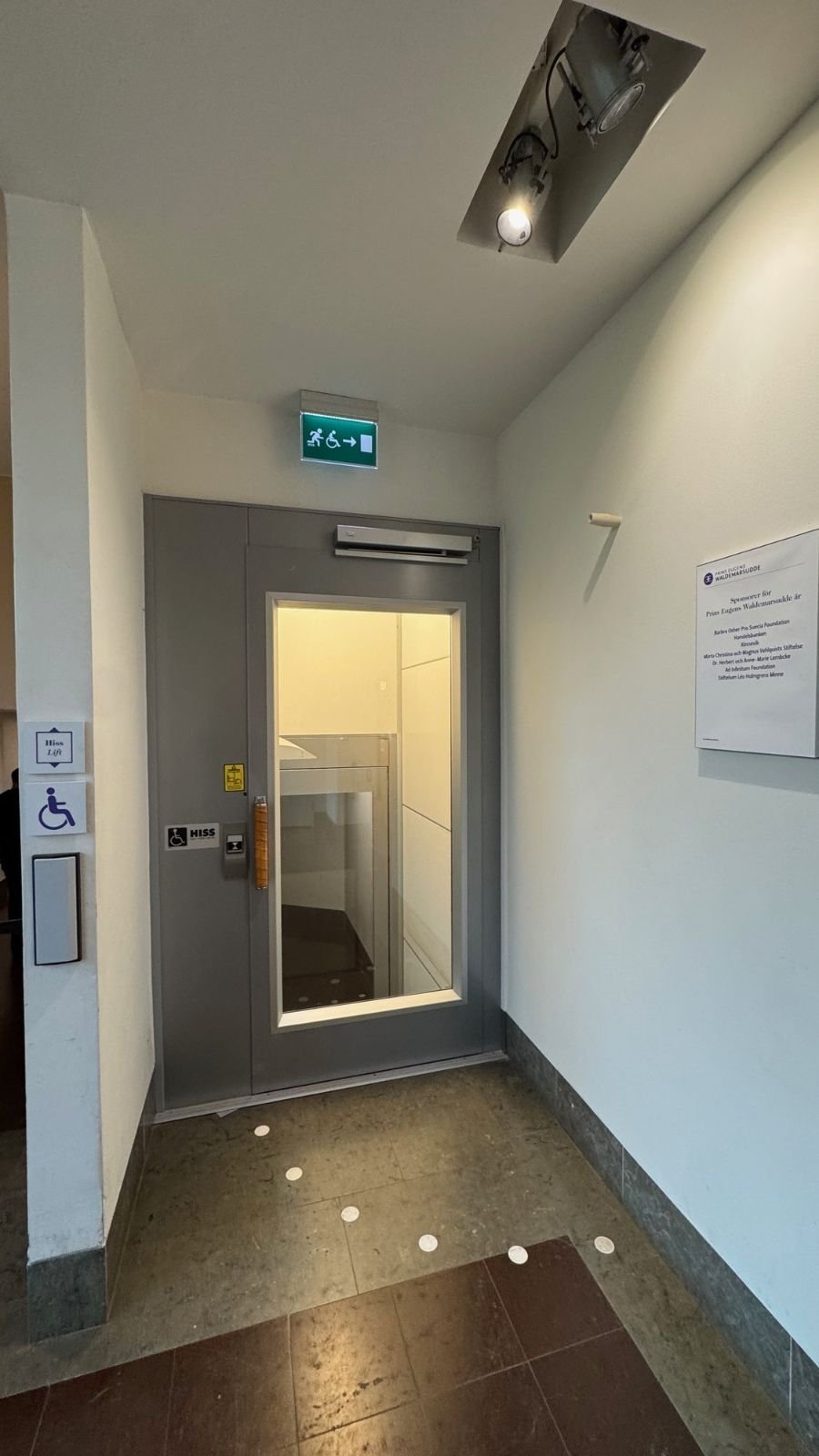
- AccessibilityA ramp, an automatic door and lifts to all floors. Wheelchairs to borrow. The park is hilly. Details below.
- Official websitewaldemarsudde.se
I visited Prins Eugens Waldemarsudde on 15 October 2026. I did not take a guided tour. I took the photos of the walk there, the house, the gallery and the garden on this page that day.
The garden with its sculptures is an amazing place to stroll around, at any time of the year.
Waldemarsudde lies on a point of land on Djurgården, with water on three sides. Prince Eugen bought the property in 1899. He built his home here, filled it with art, and planned every flower bed himself. When he died in 1947, he left it all to the Swedish state. The museum opened in the summer of 1948.
Prince Eugen: the prince who wanted to paint
Childhood
Eugen Napoleon Nikolaus was born on 1 August 1865 at Drottningholm Palace. He was the fourth and youngest son of Oscar II and Queen Sophia. He was Duke of Närke from birth. Populär Historia writes that his mother, Queen Sophia, had modern ideas about school. She put her sons in a school with children from other social classes. In the winter, they had snowball fights with the boys from the local school in Klara.
A choice his parents did not want
Like all of Oscar II’s sons, Eugen had to become an officer. He did not like it, and Populär Historia says he asked his father many times to release him. The king said no until 1898. In 1885–86, Eugen studied at Uppsala University and took lessons from the painter Wilhelm von Gegerfelt. Then he made his decision. In a letter to his parents in 1886, he wrote that he had decided to devote himself to painting, and that the only place to study was Paris.
His parents were not happy. To paint as a hobby was one thing. To paint as a career was another. Queen Sophia answered that she had nothing against it, if he had more than just “prince talent”. Populär Historia says that question worried Eugen all his life: did people praise his art, or his title?
Paris
From 1887 to 1889, he studied in Paris, with the French painters Léon Bonnat and Pierre Puvis de Chavannes. Swedish Wikipedia says he used the cover name Monsieur Oscarsson and signed his works “Eugène”. He became friends with the young Swedish painters in Paris, among them Anders Zorn, Richard Bergh and Carl Larsson. Zorn and Bergh became two of his closest friends. These painters were called the Opponents, because they protested against the old teaching methods of the Royal Academy of Fine Arts in Stockholm.
This put Eugen in a hard place. As an artist, he agreed with his friends. As a prince, he could not openly turn against a royal academy. Populär Historia says he chose to work for change from inside the Academy, while he stayed close to his friends in private. In 1889, the Academy made him its first honorary member.
The red prince
As a young man, people called him “the red prince”, for his liberal views. Populär Historia says that in heated talks with his father, he could argue for the end of the monarchy. He supported the fight for the right to vote. In 1899, he walked in a march in Stockholm for the eight-hour working day. Wikipedia says he also gave money to August Strindberg’s Intimate Theatre, even though the court disliked Strindberg.
A private life
Prince Eugen never married. His private life was secluded. There are rumors that he was gay, but we do not know the facts.
What the sources do show is how much his friendships meant to him. Populär Historia names the writer Helena Nyblom and her daughter Ellen, his mother, and later in life Countess Ebba Bonde.
War and resistance
During the Second World War, Sweden’s royal house and government stayed officially neutral. Prince Eugen did not. Populär Historia says he spoke out against Nazism and fascism and opened his home to the resistance. Antinazis of many nationalities met at Waldemarsudde, and the prince took part in the work. Wikipedia says he joined public meetings for Jewish and political refugees.
His death
Prince Eugen died at Waldemarsudde on 17 August 1947, aged 82. Wikipedia says he was the first member of the Swedish royal family to be cremated. His urn lies by the shore, behind the Old House.
His art: clouds, water and light
The Royal Court calls Prince Eugen one of the leading landscape painters of his time. He helped create the national Swedish landscape style of the 1890s.
The Tyresö years. From 1894 to 1909, he spent his summers at Lilla Tyresö, south of Stockholm. The museum says the varied nature there deepened his landscape painting. Here he painted some of his best-known works, with simple lines, big shapes, rolling land and towering clouds.
Waldemarsudde as a motif. When he moved to Waldemarsudde in 1905, he found new motifs right outside his window: the inlet to Stockholm in every season, white archipelago boats, summer nights, and the factories and their smoke on the other shore.
New colors. From the 1910s, he used bolder, fresher colors. He found new landscapes on the open plains near Vadstena, where he built a summer house in 1915–16. In the 1930s, he spent his summers on Österlen in Skåne. Late in life, he tried gouache as a new medium.
Murals. The prince believed art should reach everyone. The museum says he made 12 monumental works, mostly in public places: schools, hospitals and churches. The largest is Staden vid vattnet (The City on the Water) in the Prince’s Gallery at Stockholm City Hall, painted 1916–22 and more than 40 meters long. Wikipedia says he also painted the altarpiece in Kiruna Church.
Design. In 1915, he designed the Waldemarsudde pot, a flowerpot. It is still made today at the porcelain factory in Lidköping, and the museum shop sells it. He also designed chairs and silver objects.
A gallery of Prince Eugen’s paintings
These seven paintings span 35 years of his work, from the dark forest of 1892 to a bright cloud from 1927. Prince Eugen died in 1947, so his paintings are now in the public domain. The images come from Wikimedia Commons. Not all of these paintings hang at Waldemarsudde.


Paintings to know
These are some of Prince Eugen’s paintings named by the museum, the Royal Court and Wikipedia. The museum shows a selection of his own works all year, but it changes, so not all of them may be on display when you visit.
The 1890s
- Våren (Spring, 1891) and Skogen (The Forest, 1892), his breakthrough after Paris. Wikipedia says people joked that Skogen, with its tall tree trunks, was “the prince’s family tree”. In Swedish, stam means both trunk and family line.
- Det gamla slottet (The Old Castle, 1893), painted in the countryside in Södermanland.
- Molnet (The Cloud, 1895 and 1896), painted at Tyresö. It is one of his most famous works.
- Hagastämningar (Haga Moods, 1898), a triptych for the royal foyer of the Royal Opera. Wikipedia says it brought the landscape into modern Swedish decorative painting.
At Tyresö and Waldemarsudde, 1900s
- Det stilla vattnet (The Still Water, 1901) and Det klarnar efter regn (Clearing After Rain, 1904), both from Tyresö.
- Trädgårdseken (The Garden Oak, 1902) and Gamla Waldemarsudde I (1904), early views of Waldemarsudde.
- På utgående (Outward Bound, 1906) and Rökar, Oljefabriken (Smoke, The Oil Factory, 1907), views of the water and the factories.
Later years
- Solfläck (Patch of Sun, 1915), a Djurgården motif in bolder colors.
- Det regnar på Omberg (Rain on Omberg, 1925) and Jagande skyar (Racing Clouds, 1930–35), from the plains near Vadstena.
- Hamnen i Kivik (Kivik Harbor, 1931), from Österlen.
- I nödhamn (In a Port of Refuge, 1939), painted in dark tones just after the war began.
- Snötyngd buske (Bush Heavy with Snow, 1942). The museum says it shows the joy of painting of the 77-year-old artist, in the winter of the war.
The English titles are my translations, except The Old Castle, The Cloud and Haga Moods, which come from the Royal Court.
His legacy
The gift. In his will, Prince Eugen gave his home and his collections to the Swedish state, with shares to help pay for the upkeep. The gift included the buildings, the garden, the furniture and his art. The museum says that meant about 3,200 works by the prince himself, and about 3,500 works by nearly 450 other artists, mostly Swedish. Today the collection has about 7,500 works. Since 1 July 2017, the museum has been an independent foundation with state grants.
A collector of his own time. He collected for 60 years, from 1887 to 1947. He often bought new works straight from the artists, and not only from famous names. The artist with the most works in the collection is his friend Karl Nordström, with about 50. Wikipedia says he bought Ernst Josephson’s painting Strömkarlen after Nationalmuseum turned it down. The museum says that in 1893 he organized the first big exhibition of Josephson’s art, together with the painters Hanna and Georg Pauli. The next year, he helped bring Edvard Munch’s work to Stockholm for the first time.
The women in the collection. The museum says openly that works by women are fewer than 10% of the collection. It says this was typical of collections from the time. Hanna Pauli, Julia Beck, Anna Boberg and Vera Nilsson are among the women represented. This year, the museum shows new gifts by two landscape painters, Anna Nordgren and Charlotte Wahlström. The museum says they got a lot of attention in their own time, but are rarely talked about today.
Art for everyone. He chaired the Swedish Handicraft Society (Föreningen för Svensk Hemslöjd) from its start in 1899 until his death. He worked for adult education for 35 years. On his 80th birthday, in 1945, King Gustaf V created the Prince Eugen Medal for outstanding artistic work. It is still awarded today.
The walk to Waldemarsudde
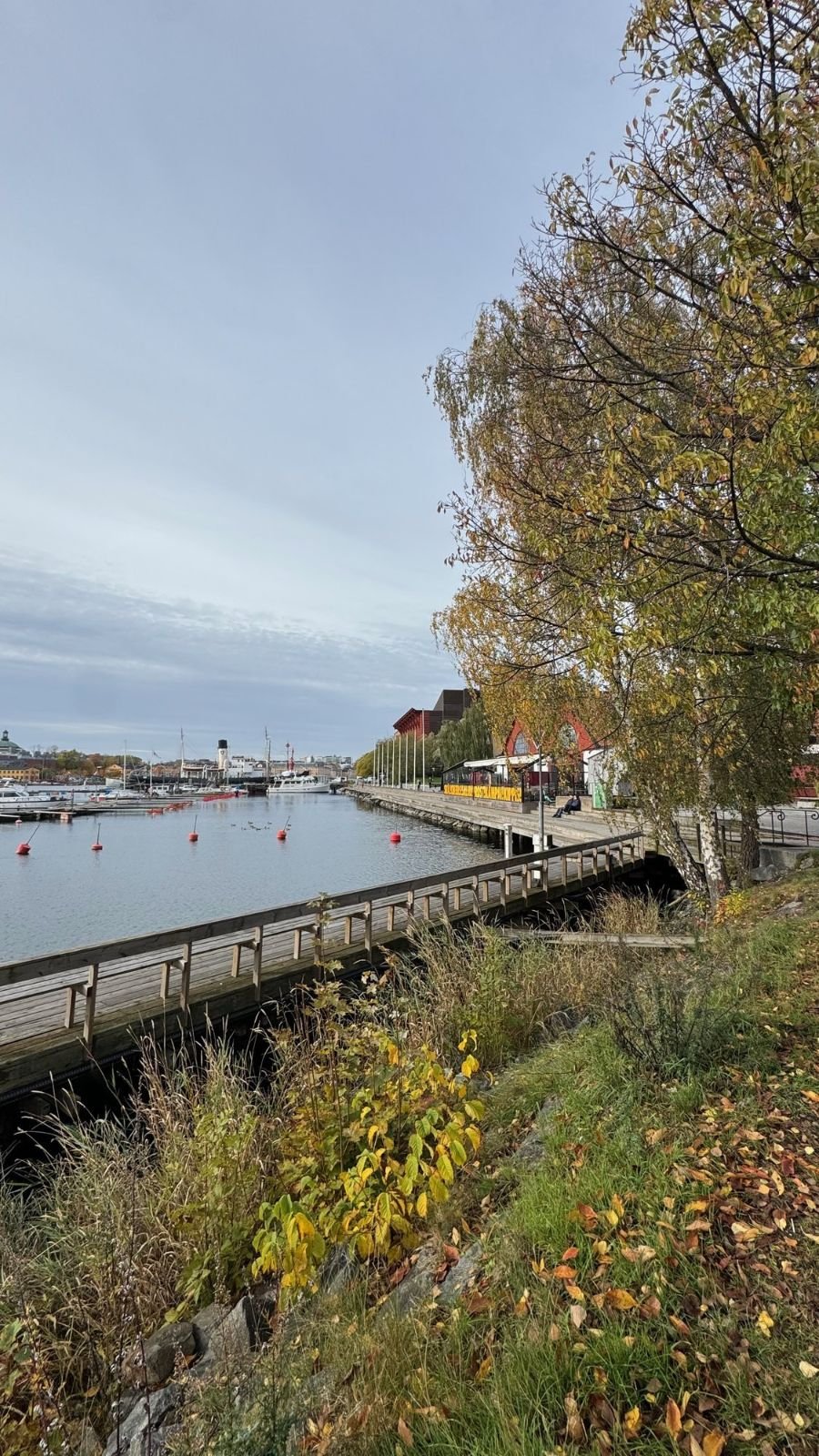
The way to Waldemarsudde runs along the water on southern Djurgården. In my photos from 15 October, autumn trees line the path, boats lie at the quays and a yellow tram passes on the road.
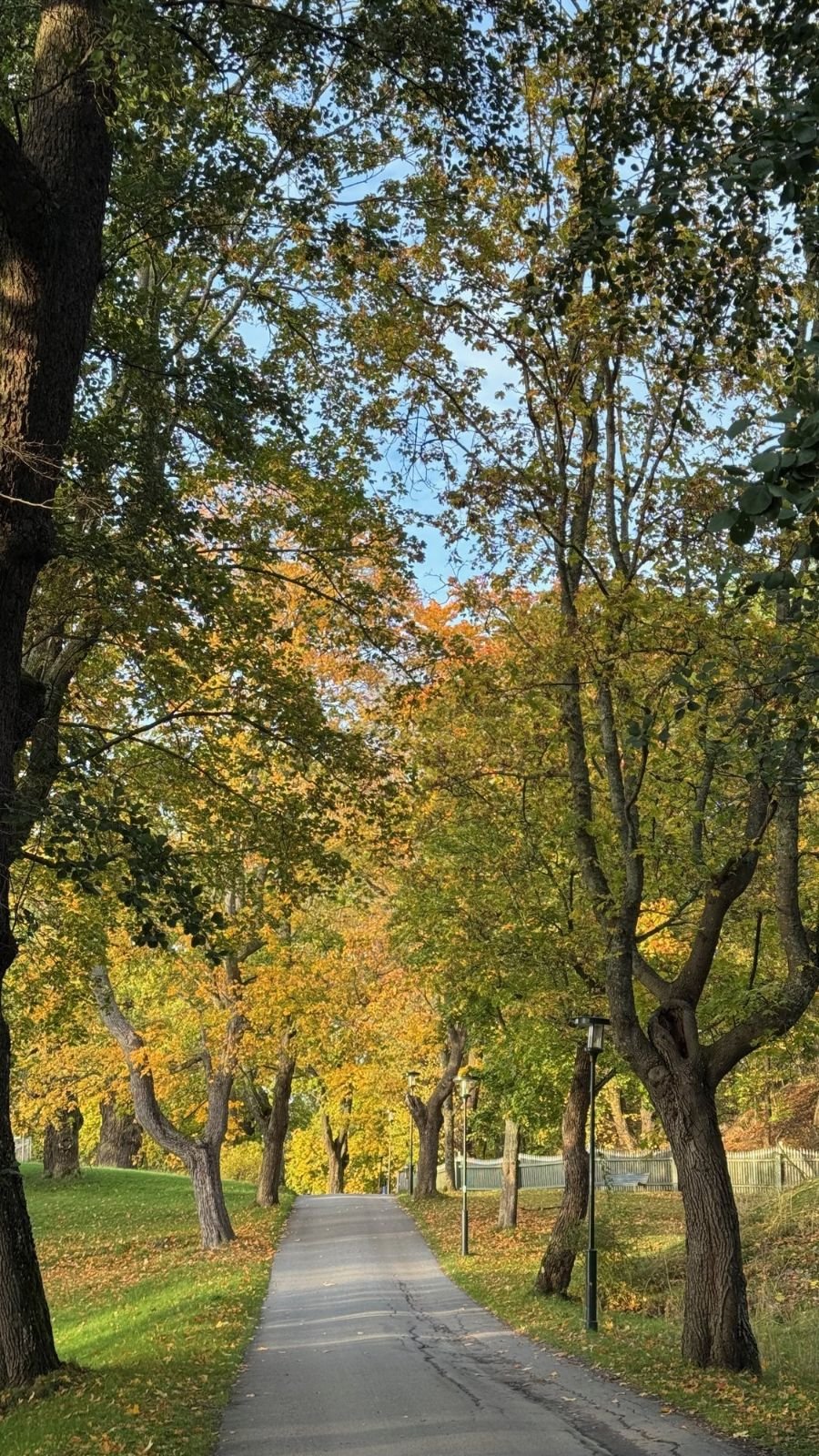
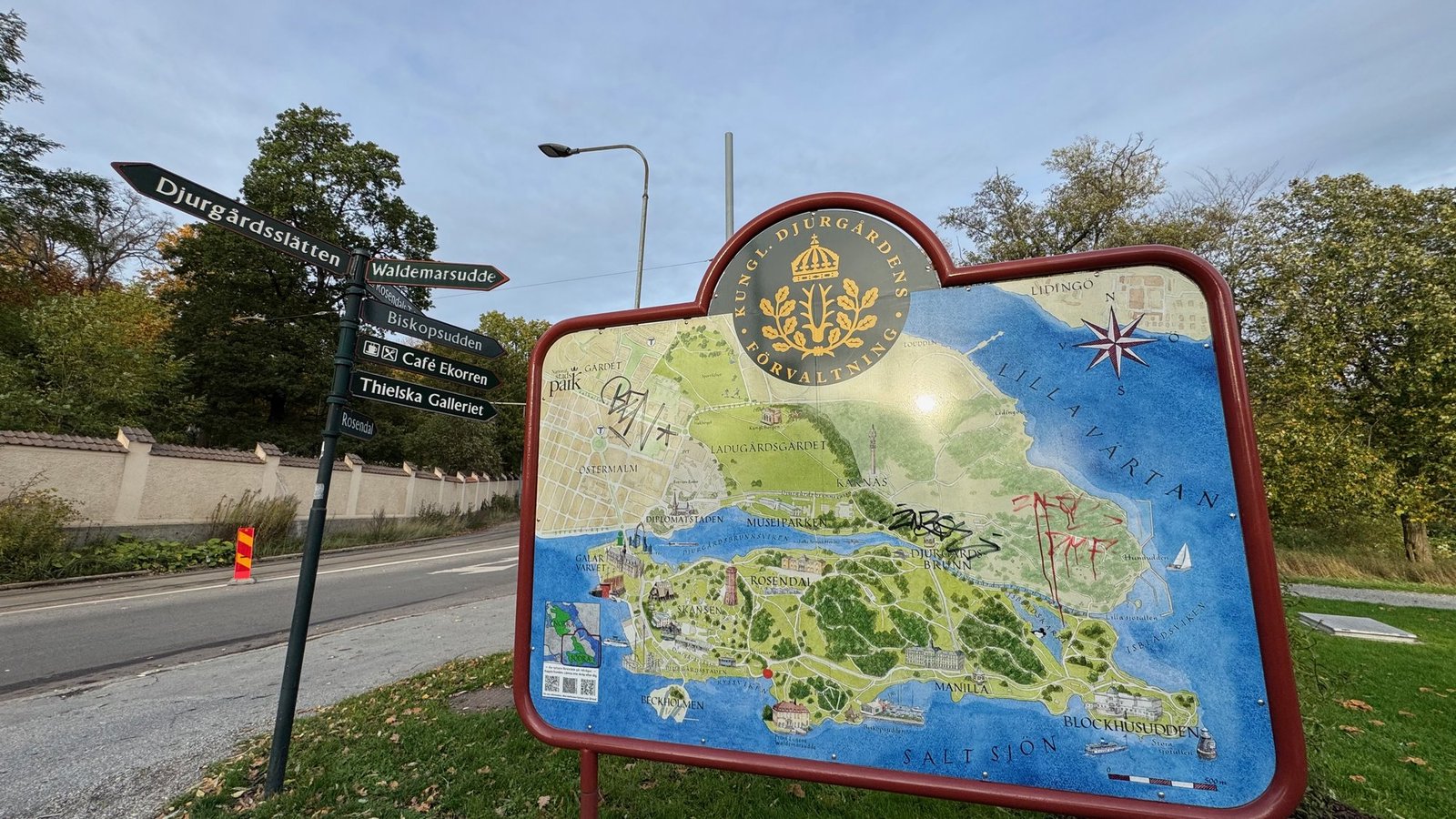
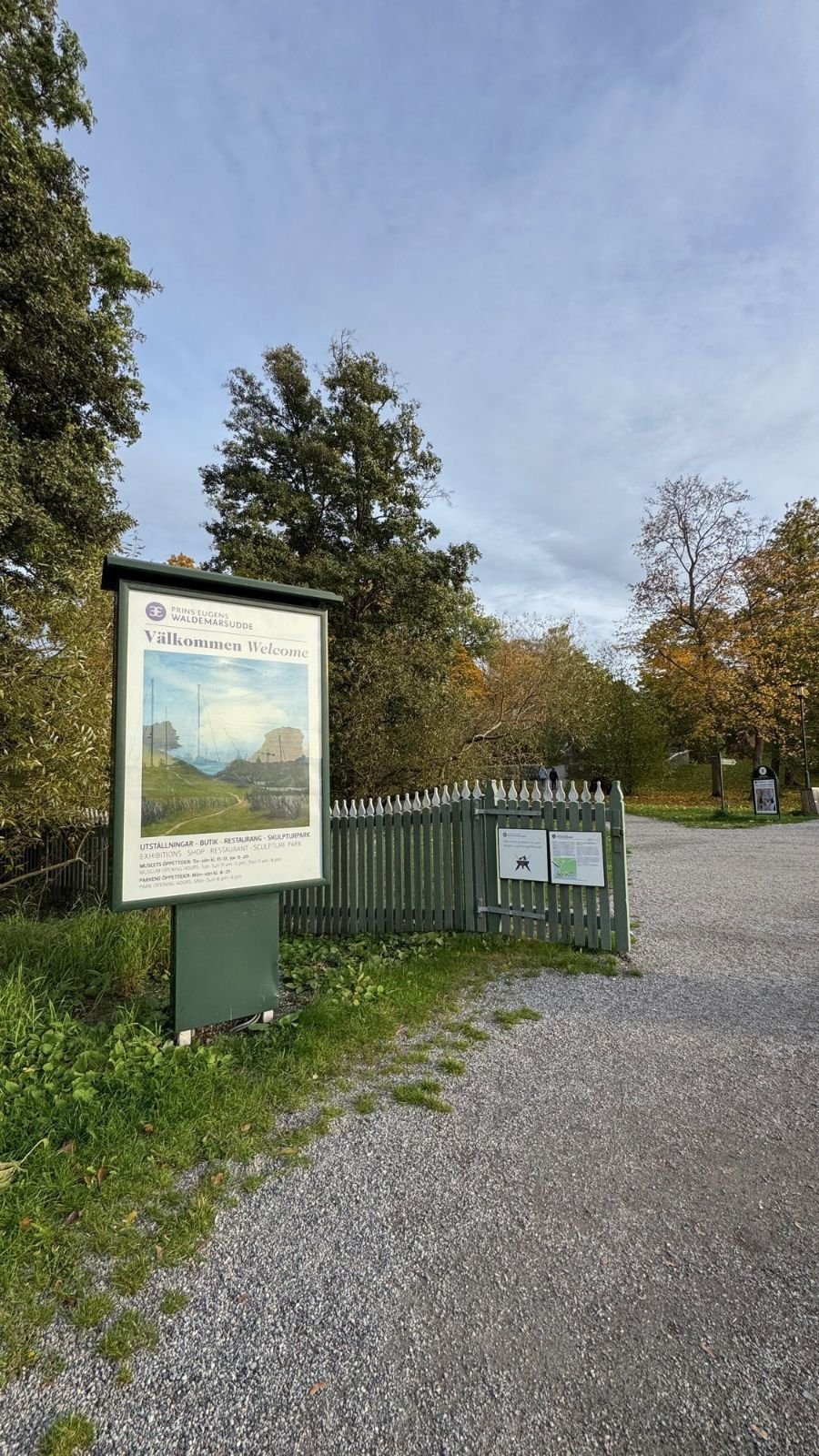
By the road, a large map of Djurgården stands next to black signposts. They point to Waldemarsudde and to Thielska Galleriet, another art museum on Djurgården. The last part is a narrow road under tall trees. At the park entrance, a welcome sign stands by a green wooden fence.
The house and its rooms
The architect Ferdinand Boberg designed the house with the prince. Building began in March 1903, and the house was ready in the summer of 1905. In October, the prince threw a housewarming party for 16 friends, among them Carl Larsson and Anders Zorn.
The museum says the house was built for light and air, the ideals of the new century. The reception floor is kept much as it was when the prince died in 1947. His private rooms on the middle floor are now exhibition rooms, as he wished. He had his studio on the top floor.
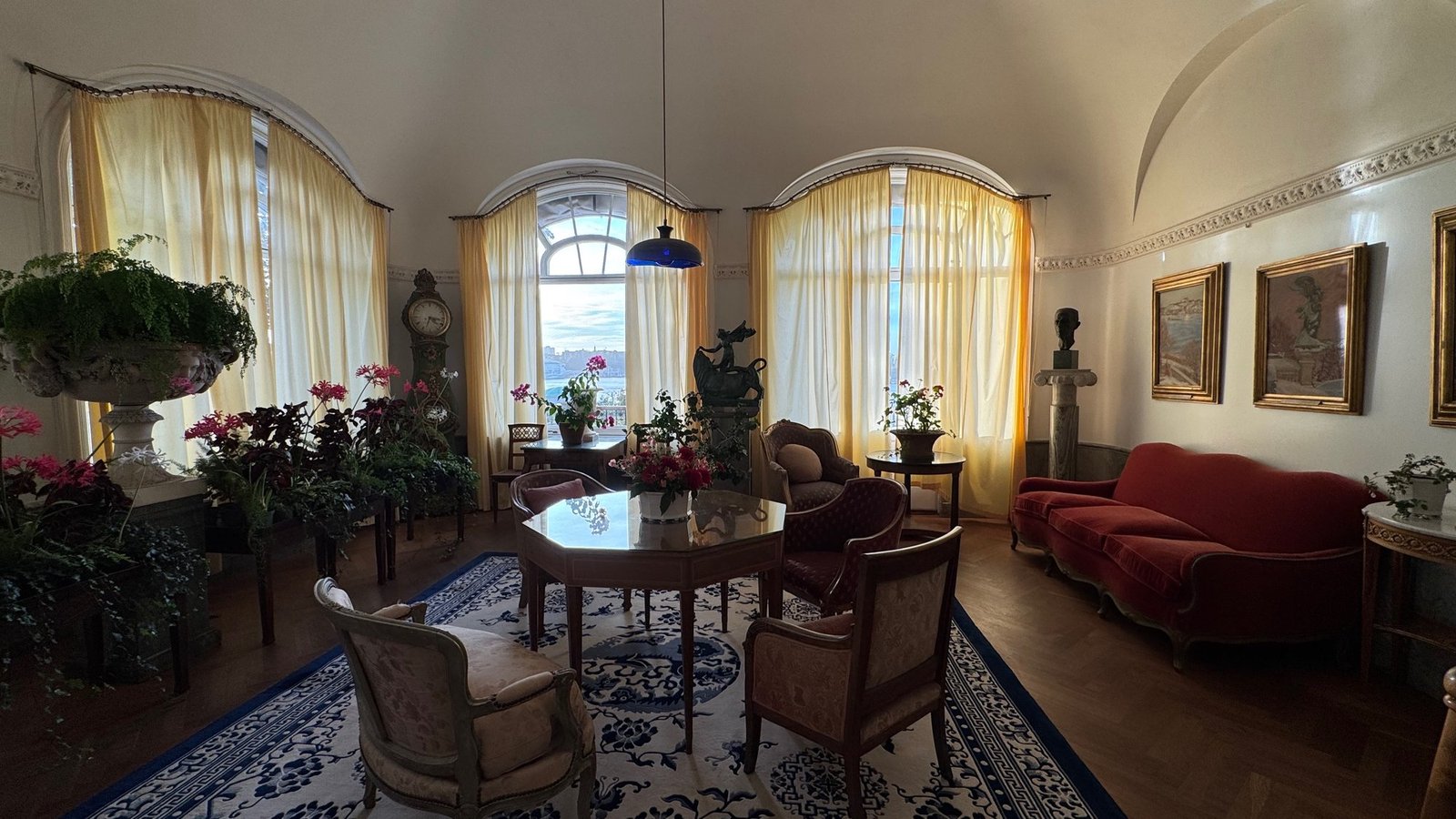
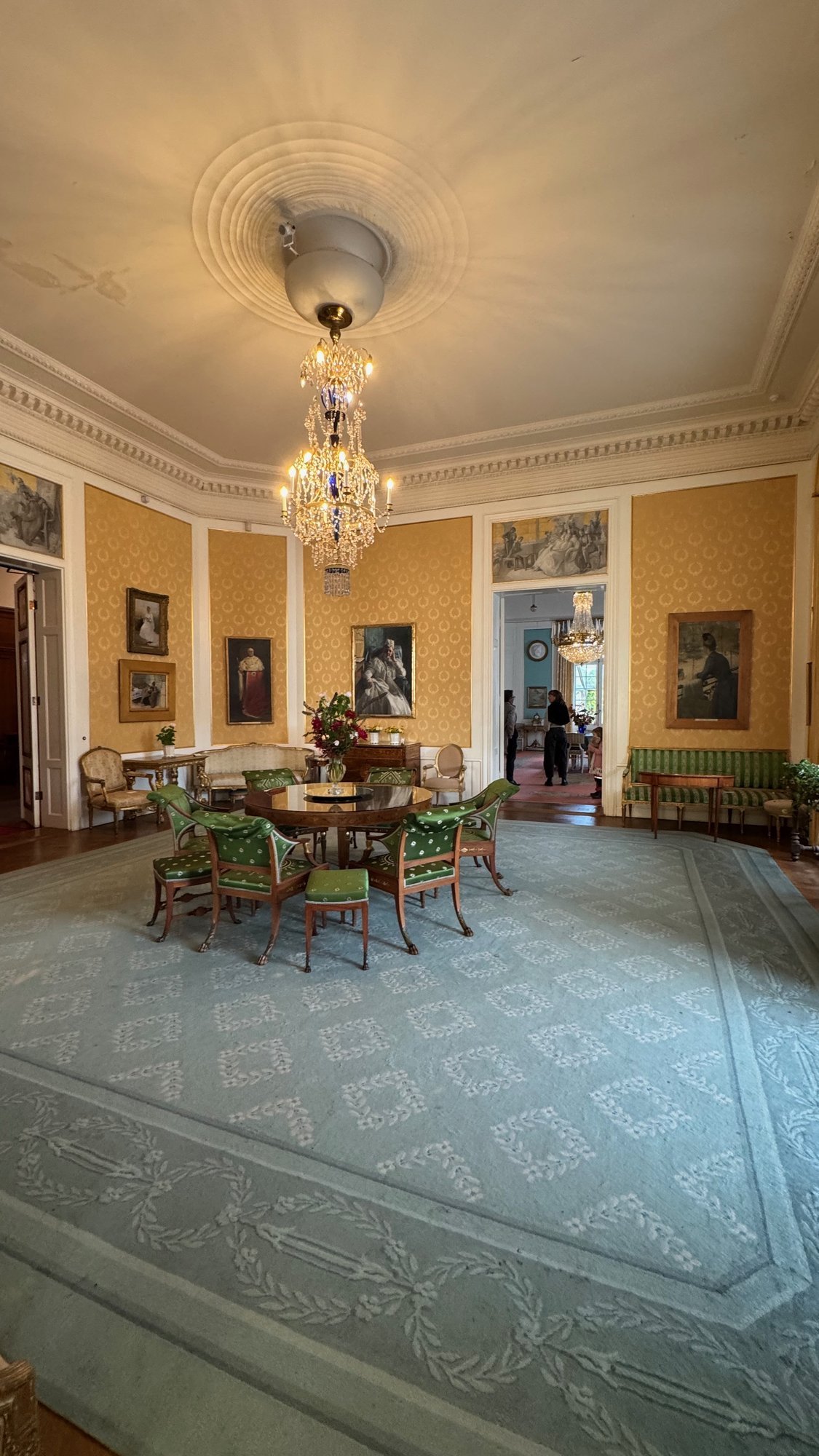
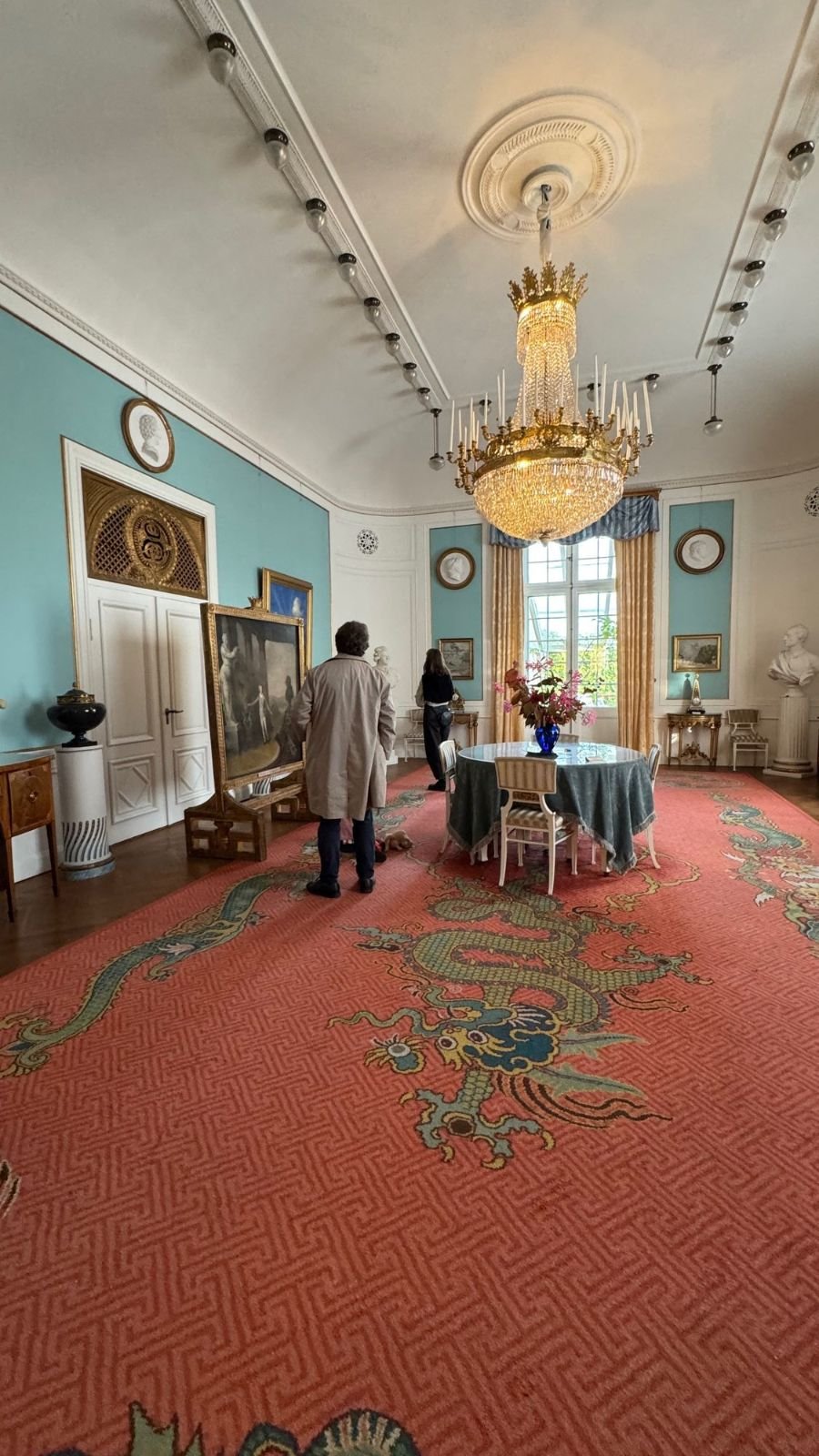
In my photos from the reception floor, one room has three arched bay windows, yellow curtains, flowering plants and a red sofa. Another has yellow walls, a crystal chandelier and green chairs around a round table. A third has light blue walls and a red carpet with green dragons. The museum lists a Flower Room, a dining room, a drawing room and a library on this floor. Most of my photos have no signs, so I do not name each room.
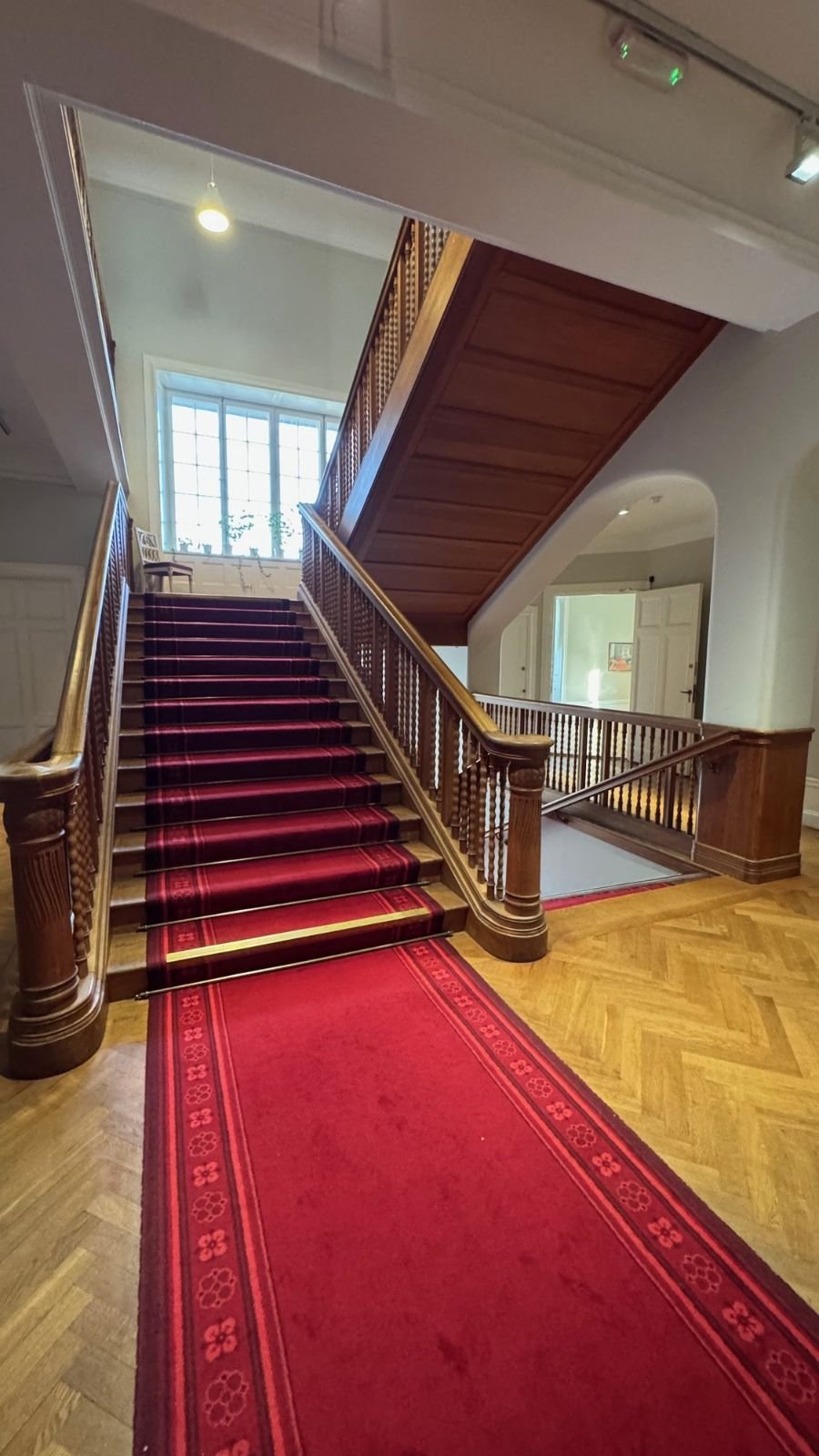
The library is easy to know. It has green walls, full bookshelves, deep leather chairs and a red carpet. By the red-carpet staircase, a white marble sculpture of a man stands on a wooden post.
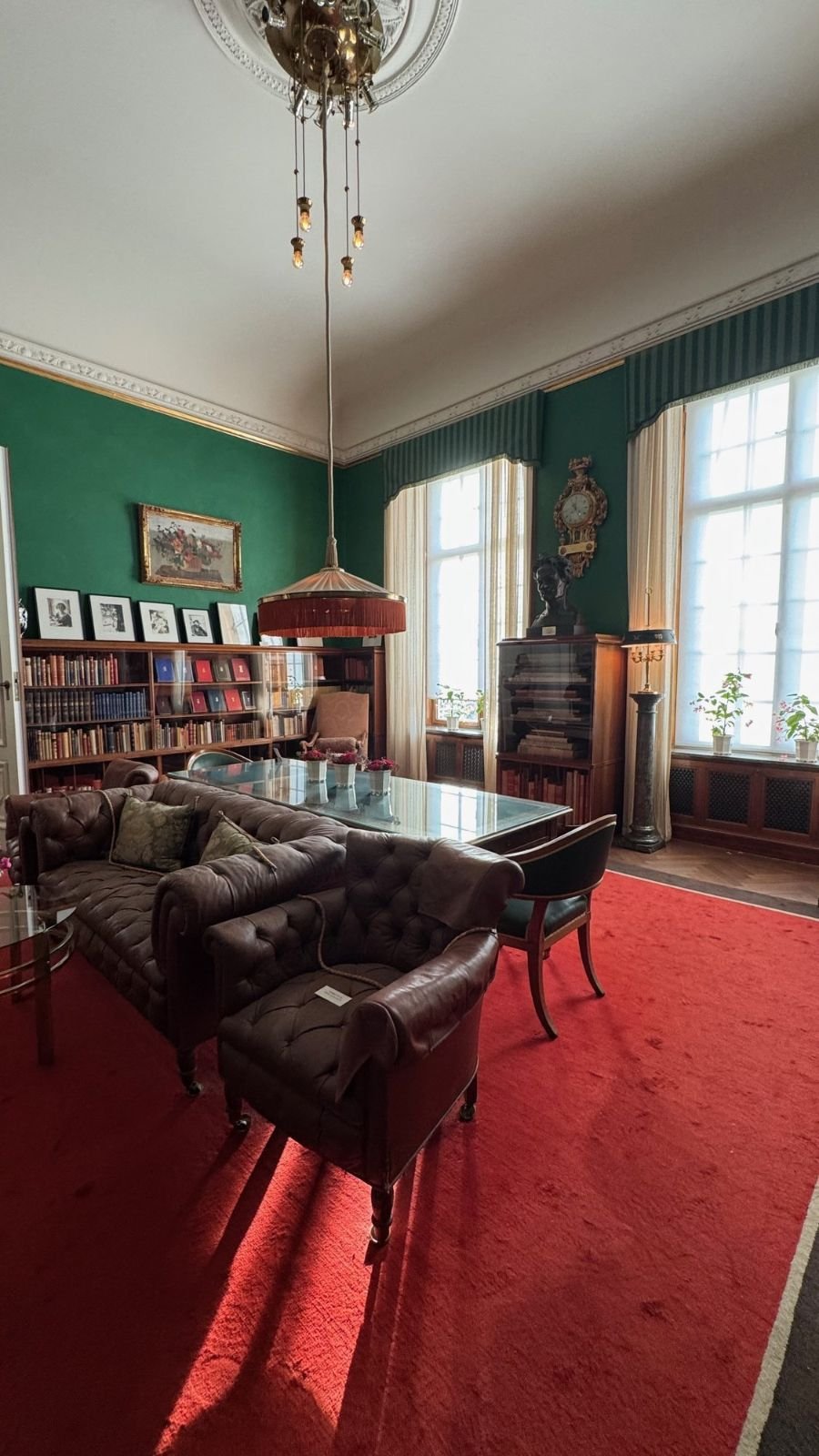
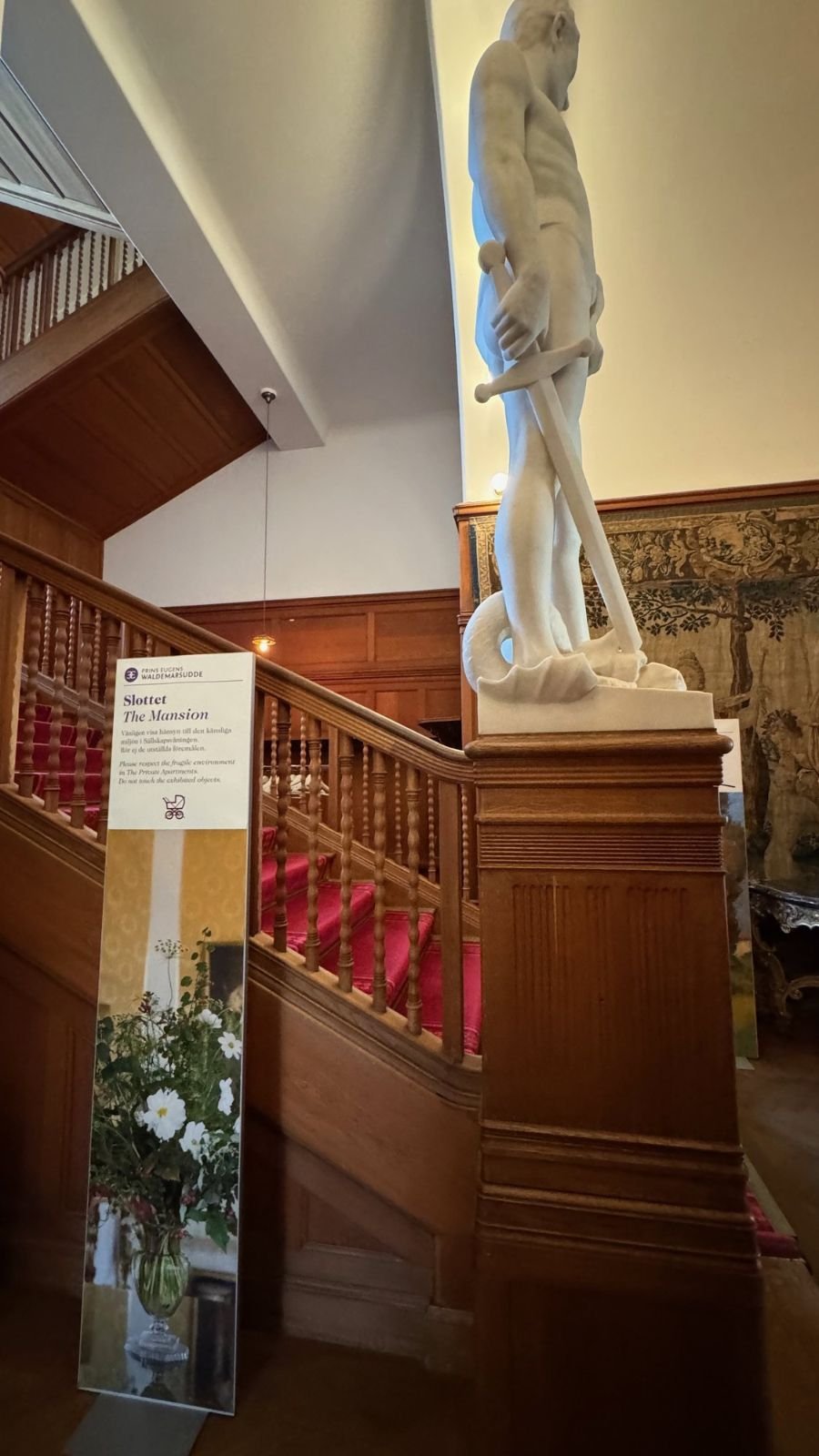
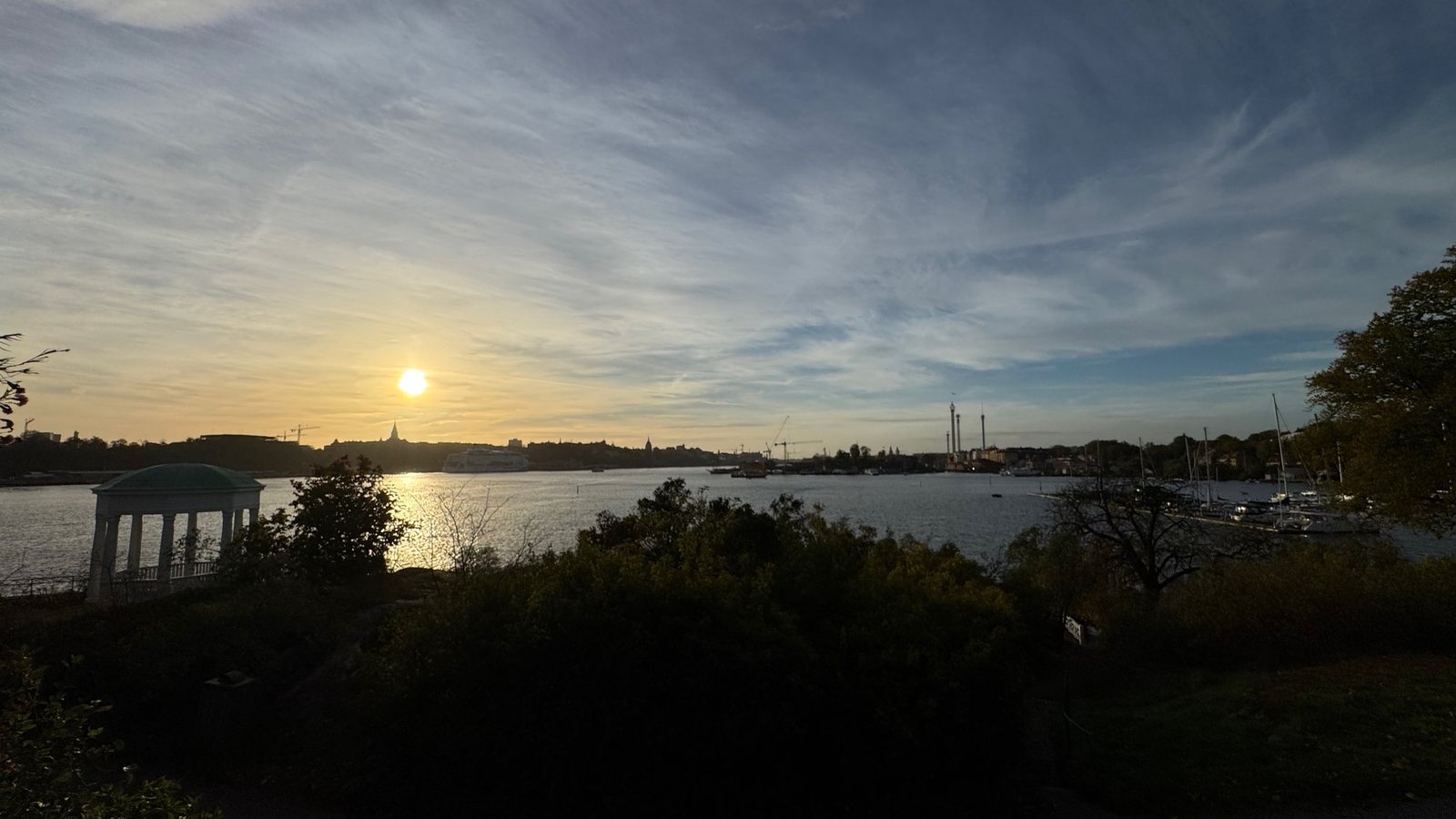
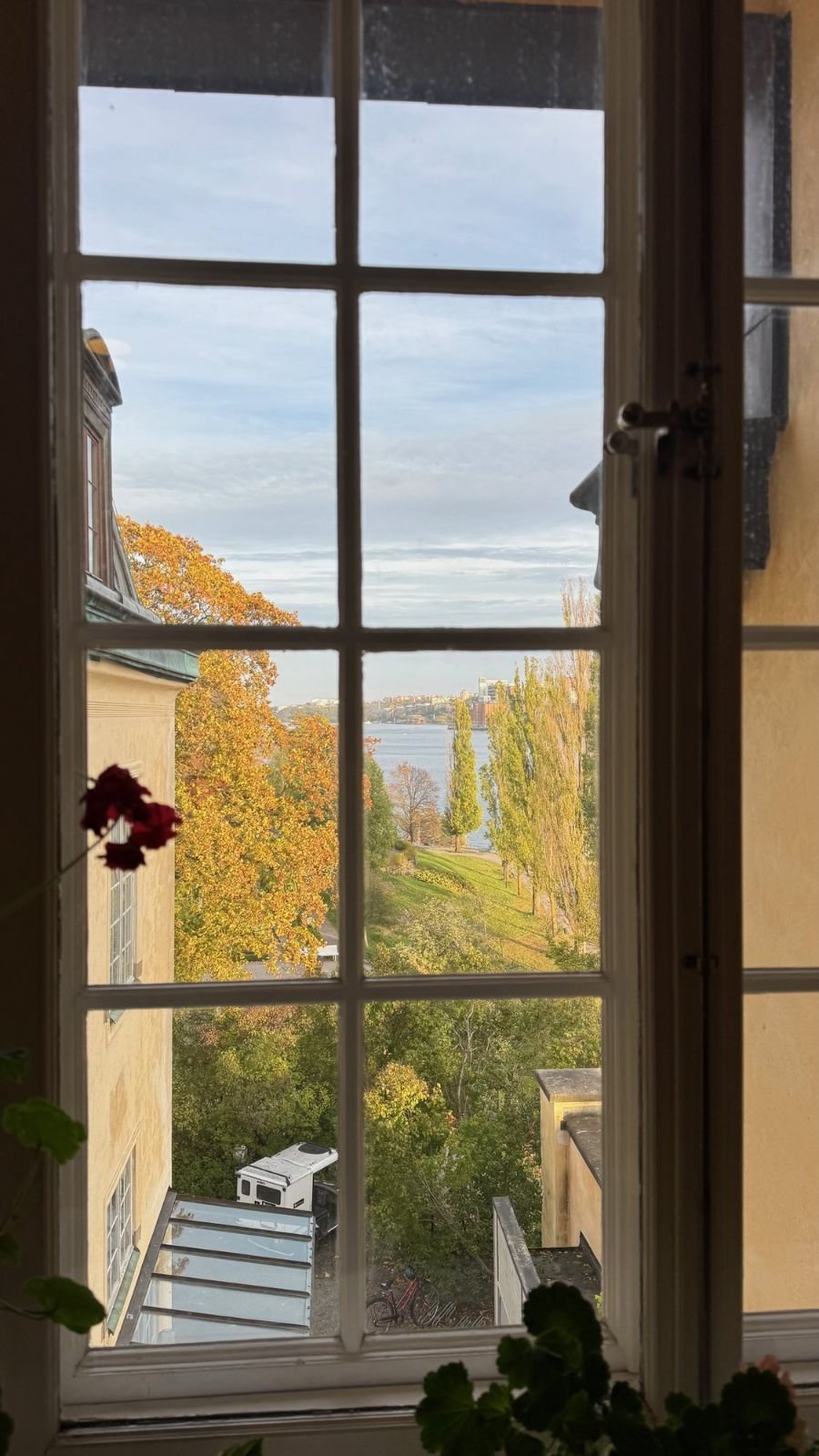
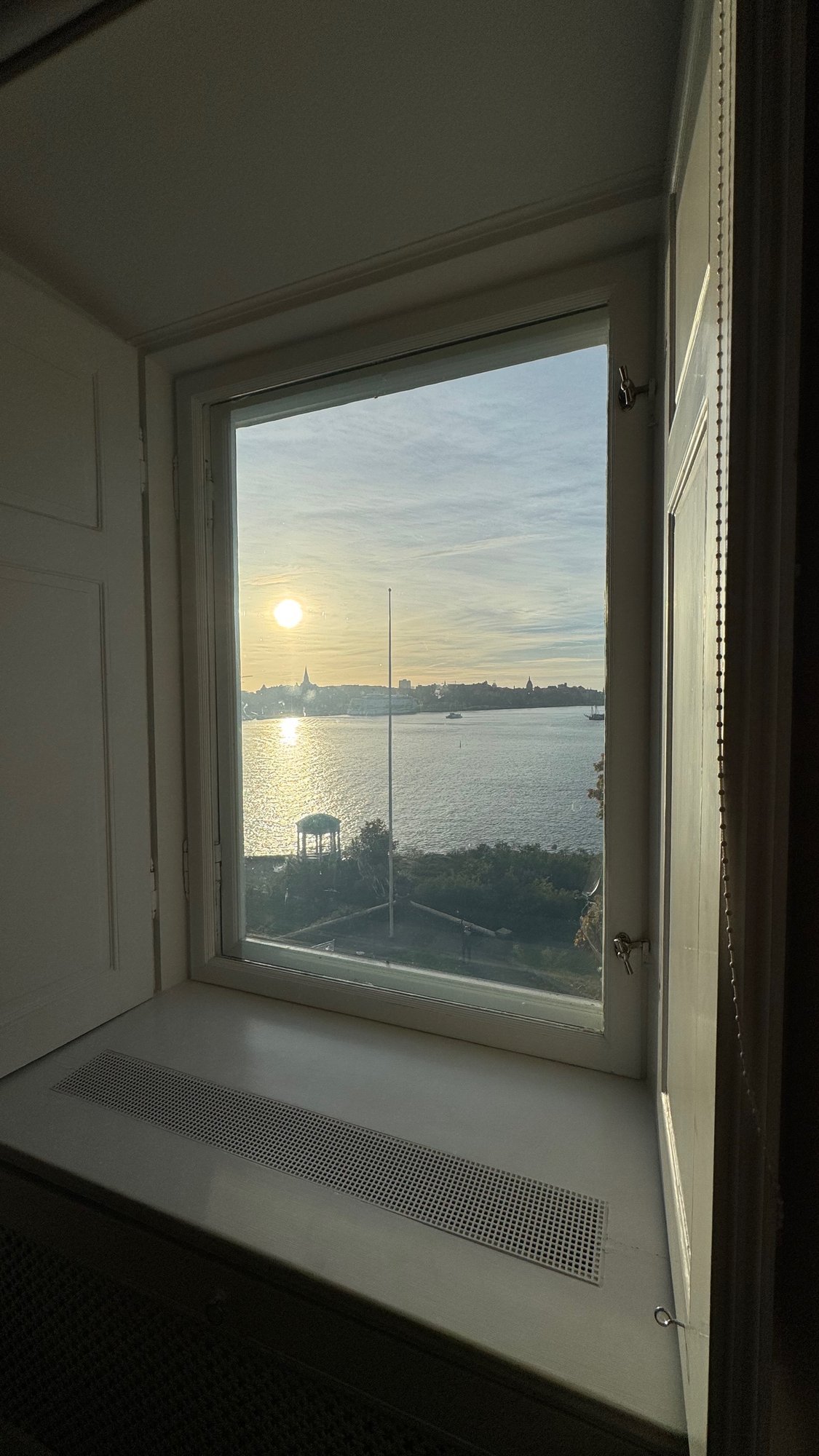
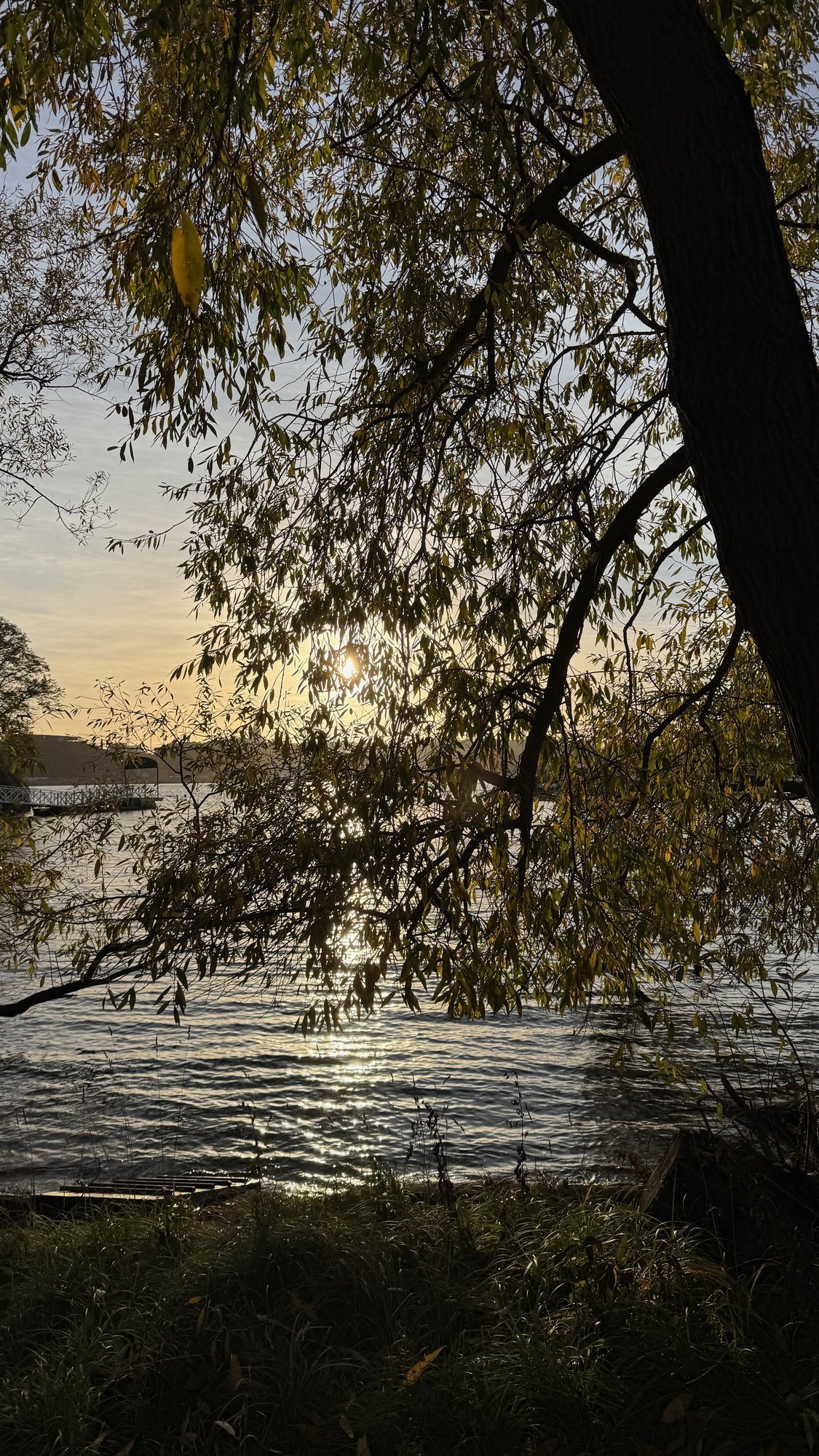
The windows frame the water. From one, you see autumn trees and the inlet. From another, the sun over Saltsjön.
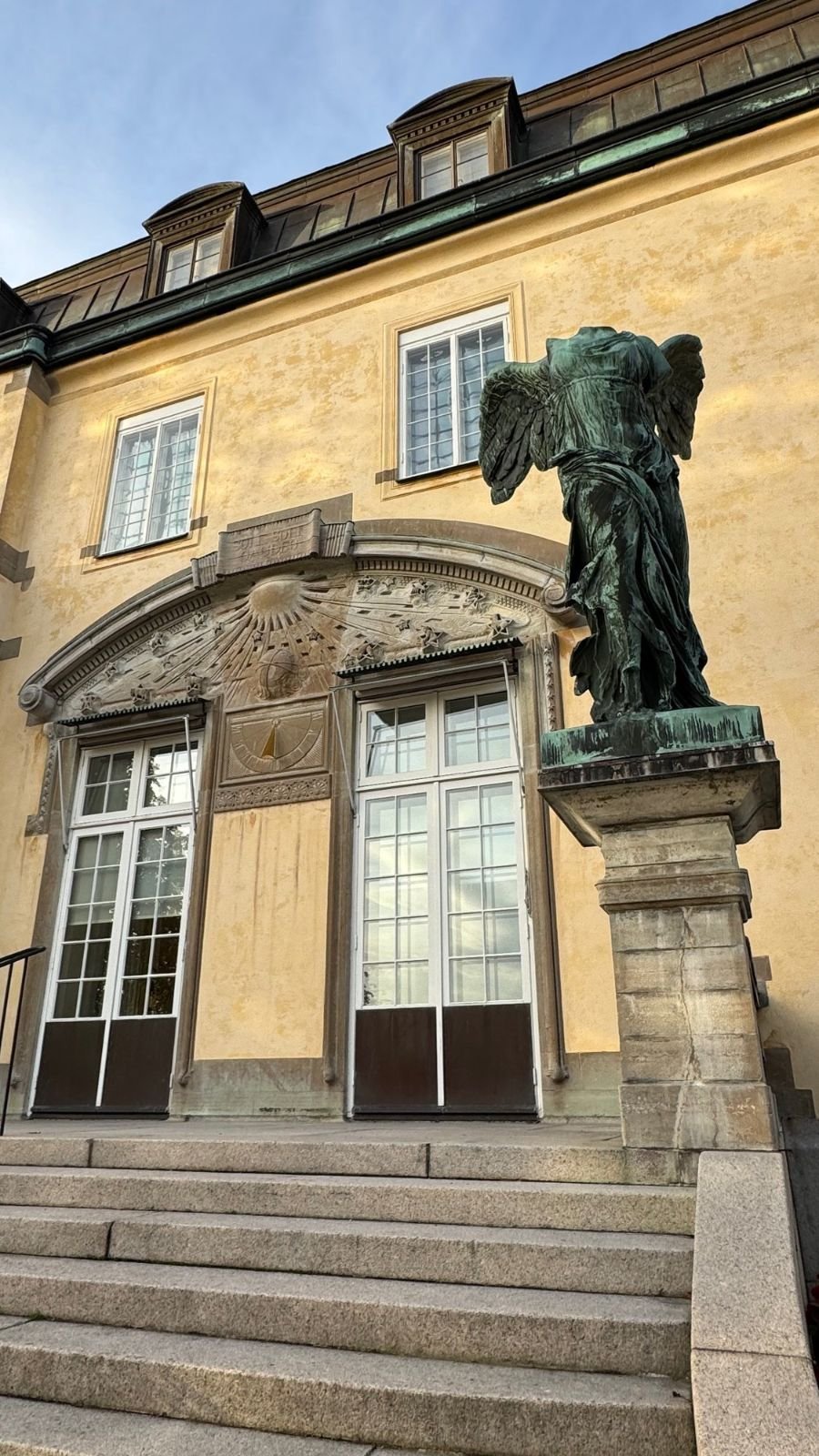
Wikipedia says the garden side has a sundial over the terrace door, with the words Sole, sole gaudio: “The sun, the sun is my joy”.
The gallery building and this season’s exhibitions
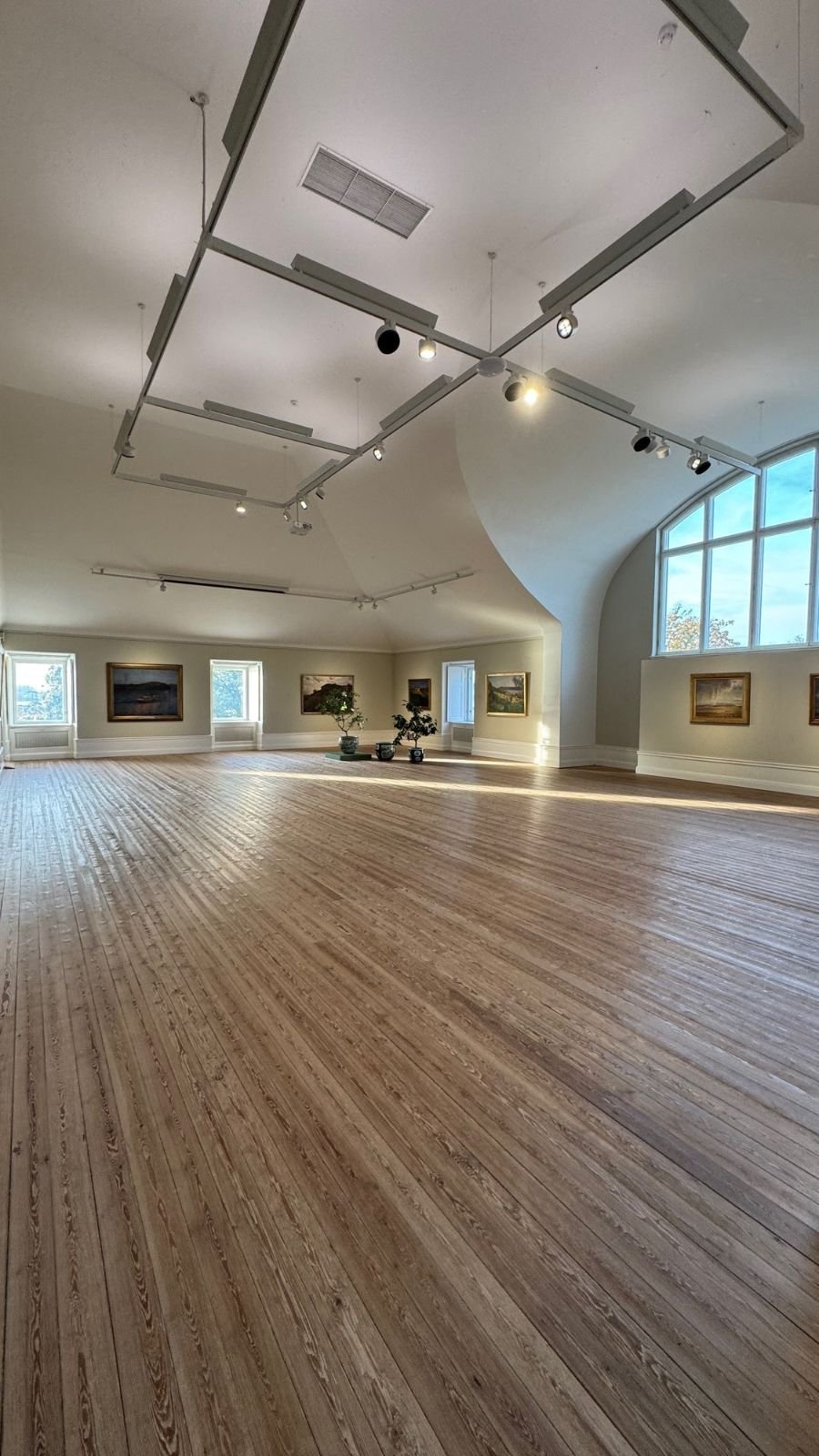
The collection grew fast after 1905, and the house soon had too little wall space. So the prince built a separate gallery, also by Boberg. It was ready in 1913. On the advice of the German museum director Alfred Lichtwark, the light comes from the roof, so the walls are free for art. The museum says Nationalmuseum and private galleries copied the idea. In 1945, the prince added two rooms to show his own art.
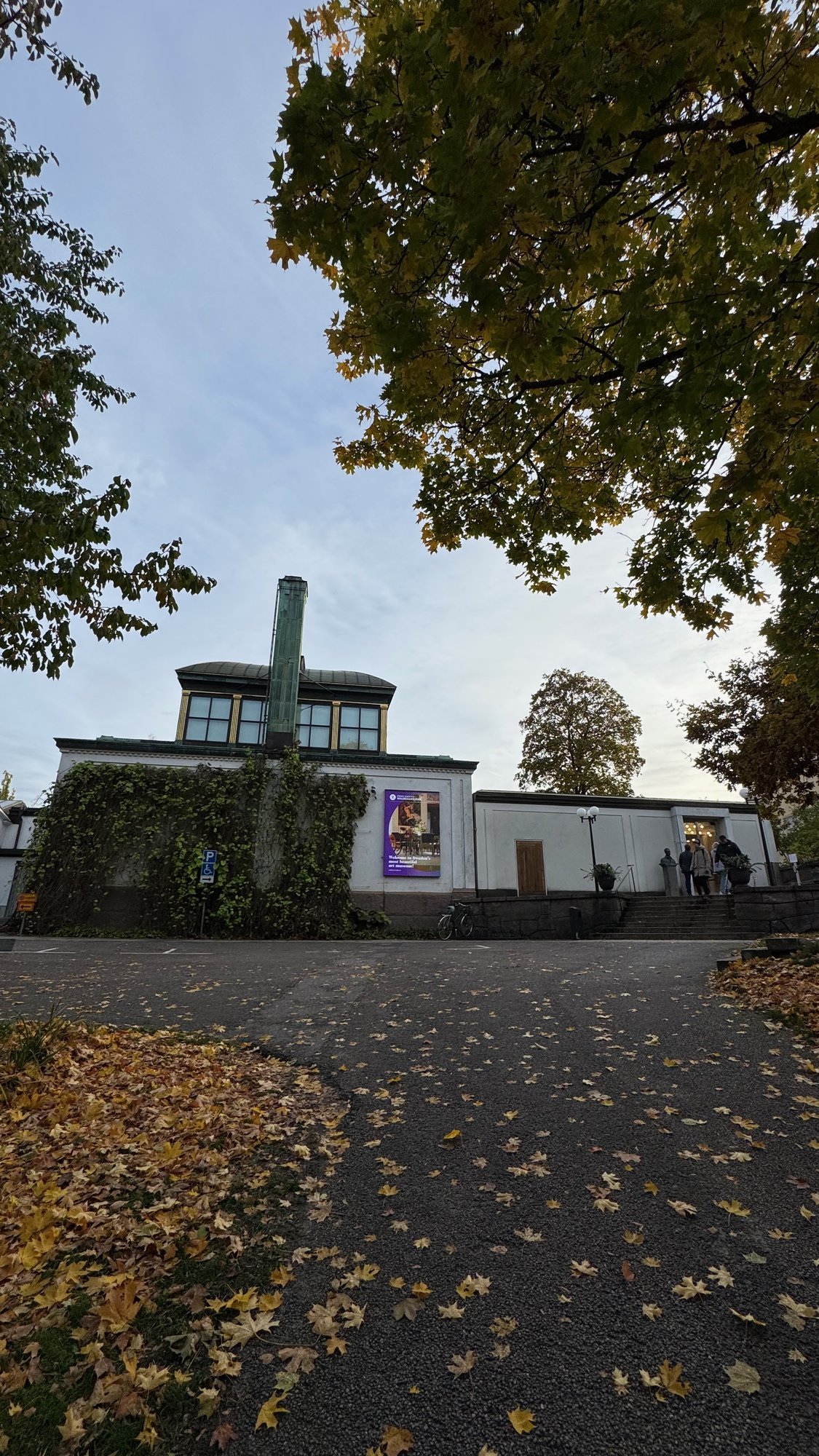
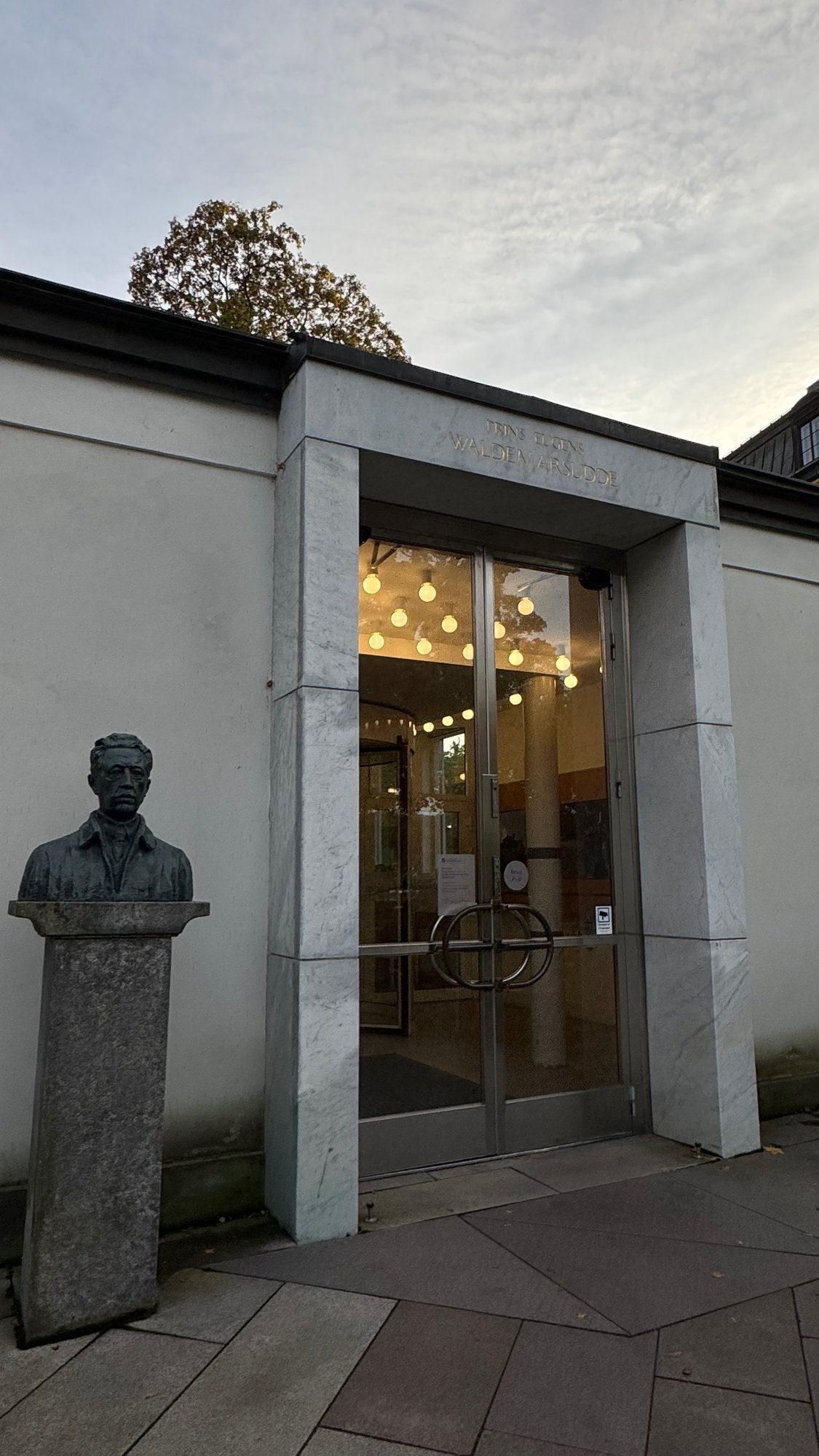
A path covered with yellow leaves leads to the white gallery building. A bronze bust stands beside the glass entrance doors. The museum says Carl Eldh’s bronze portrait of Karl Nordström stands on the gallery terrace. It may be this bust, but my photo shows no sign.
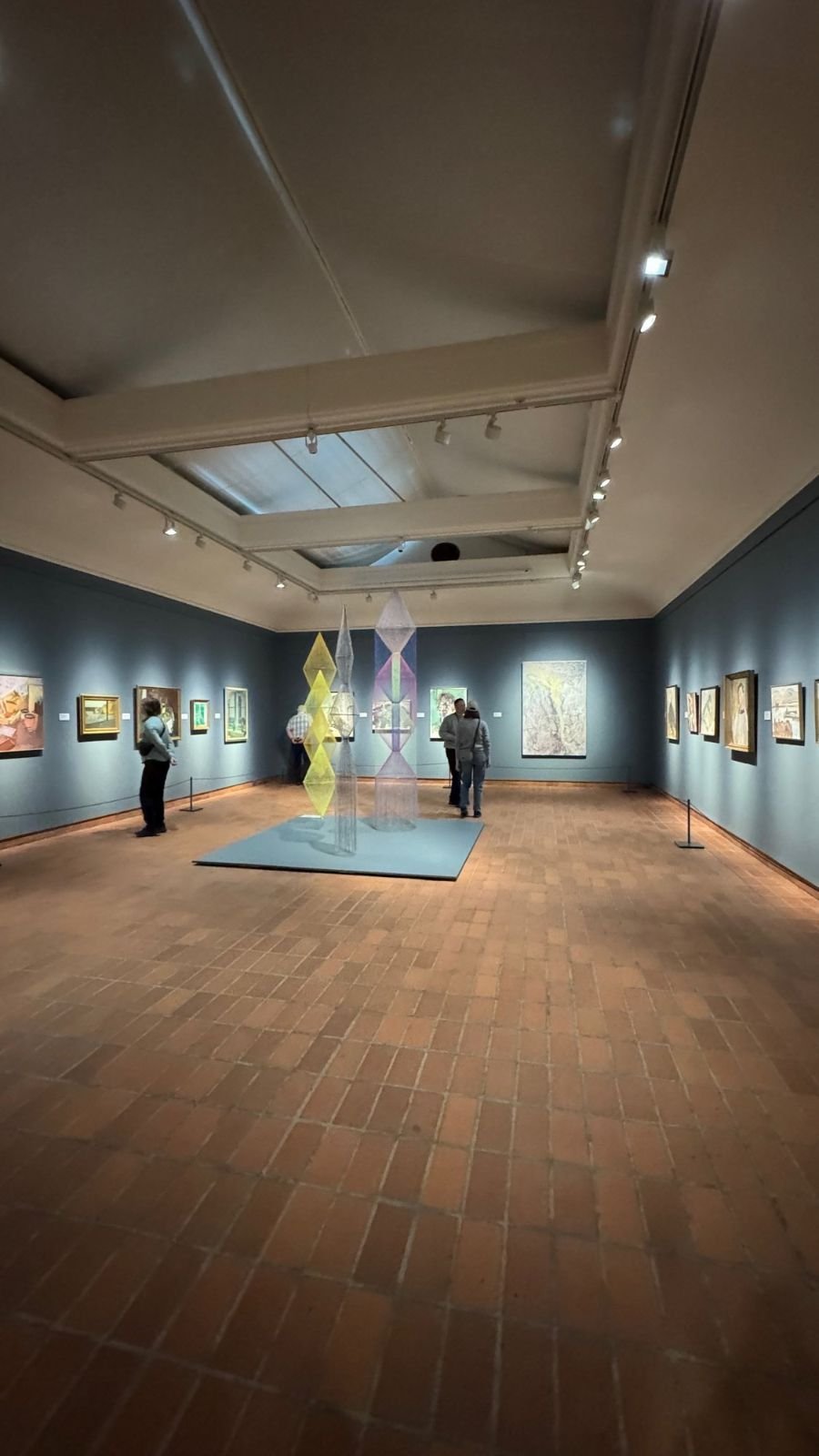
Inside, the rooms open into each other in a long line. From the stairs, you look down into a large hall with paintings, a hanging textile work and a crystal lamp. One room has blue walls, a brick floor and a colorful hanging installation.
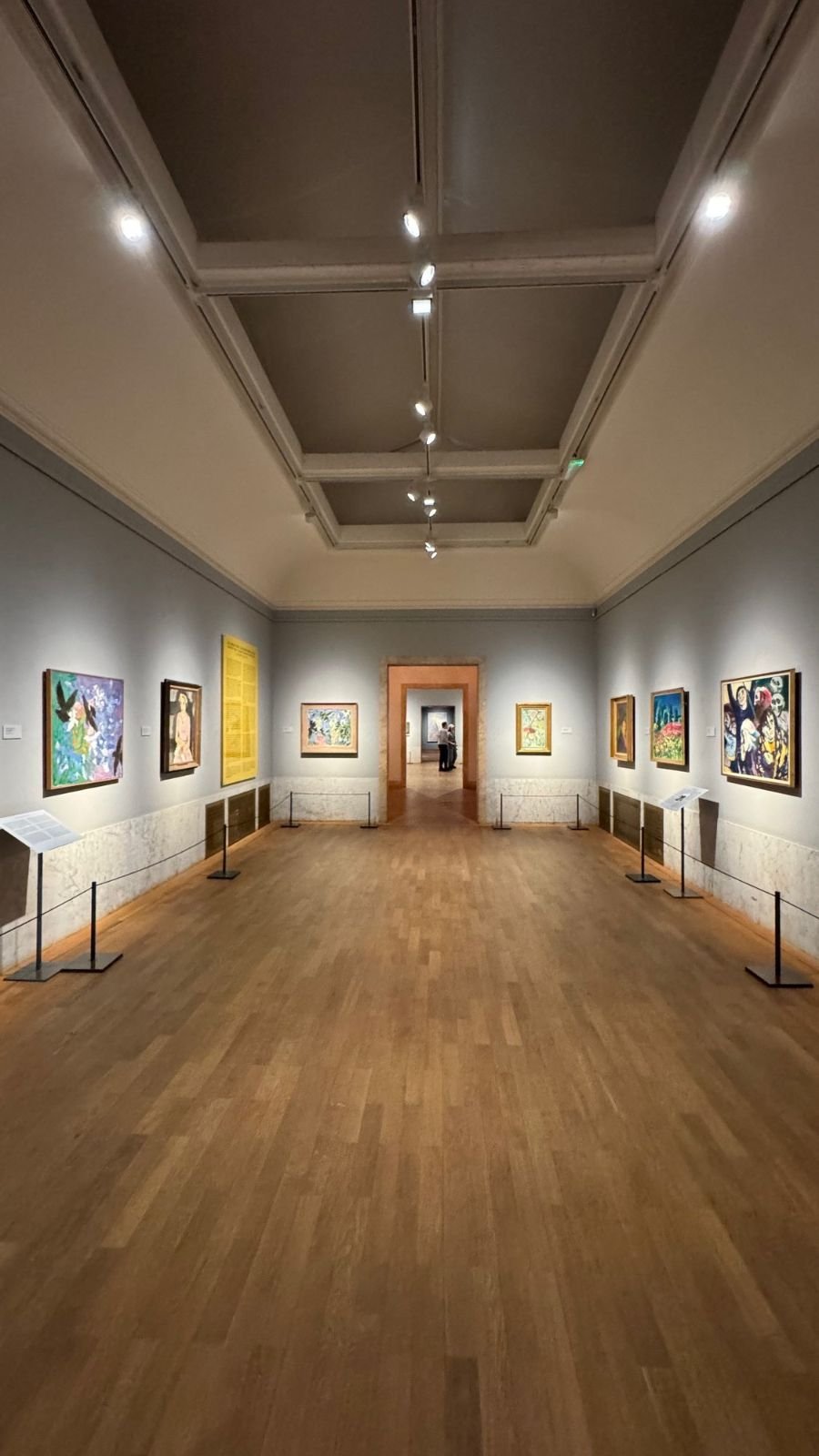
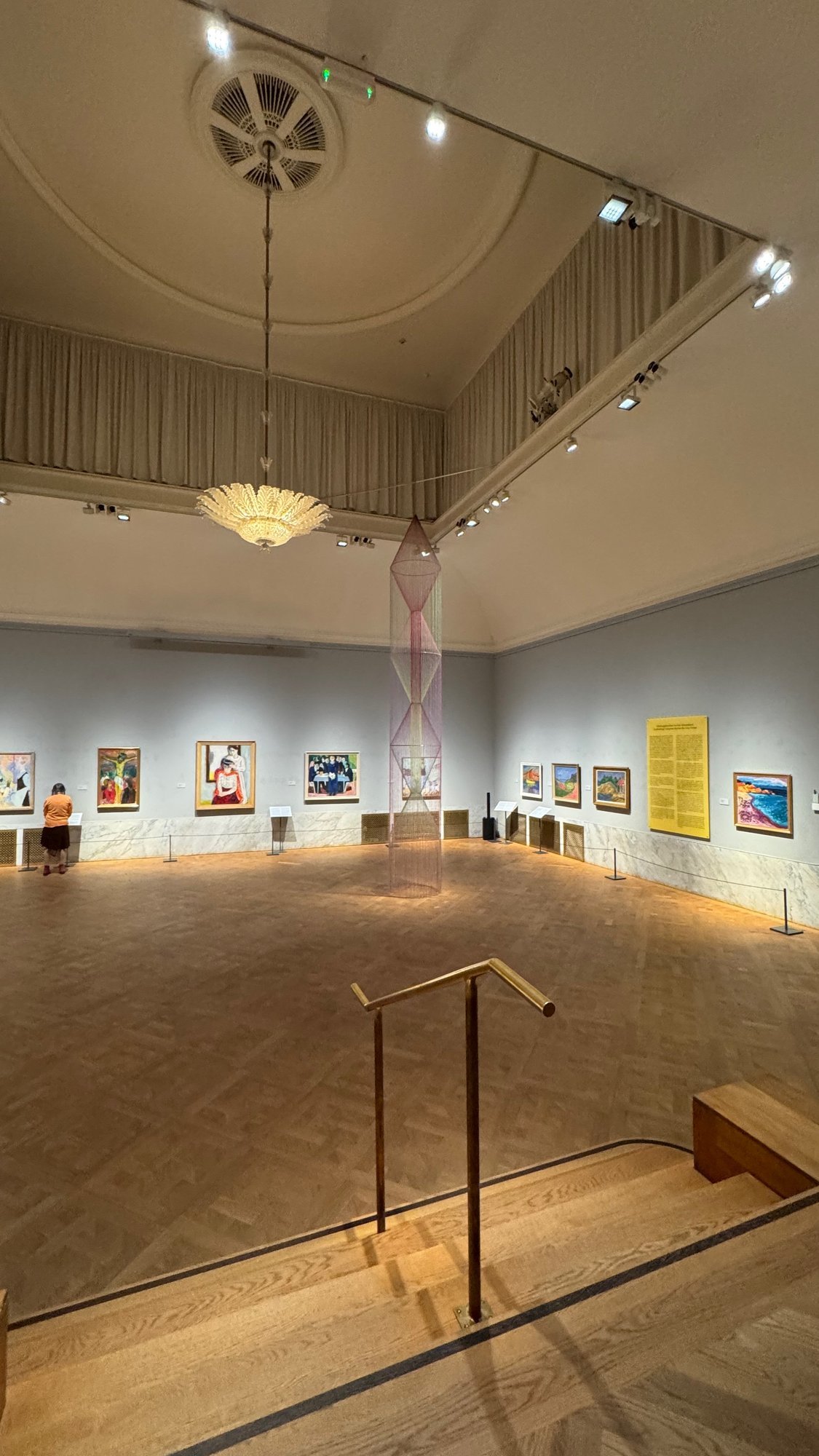
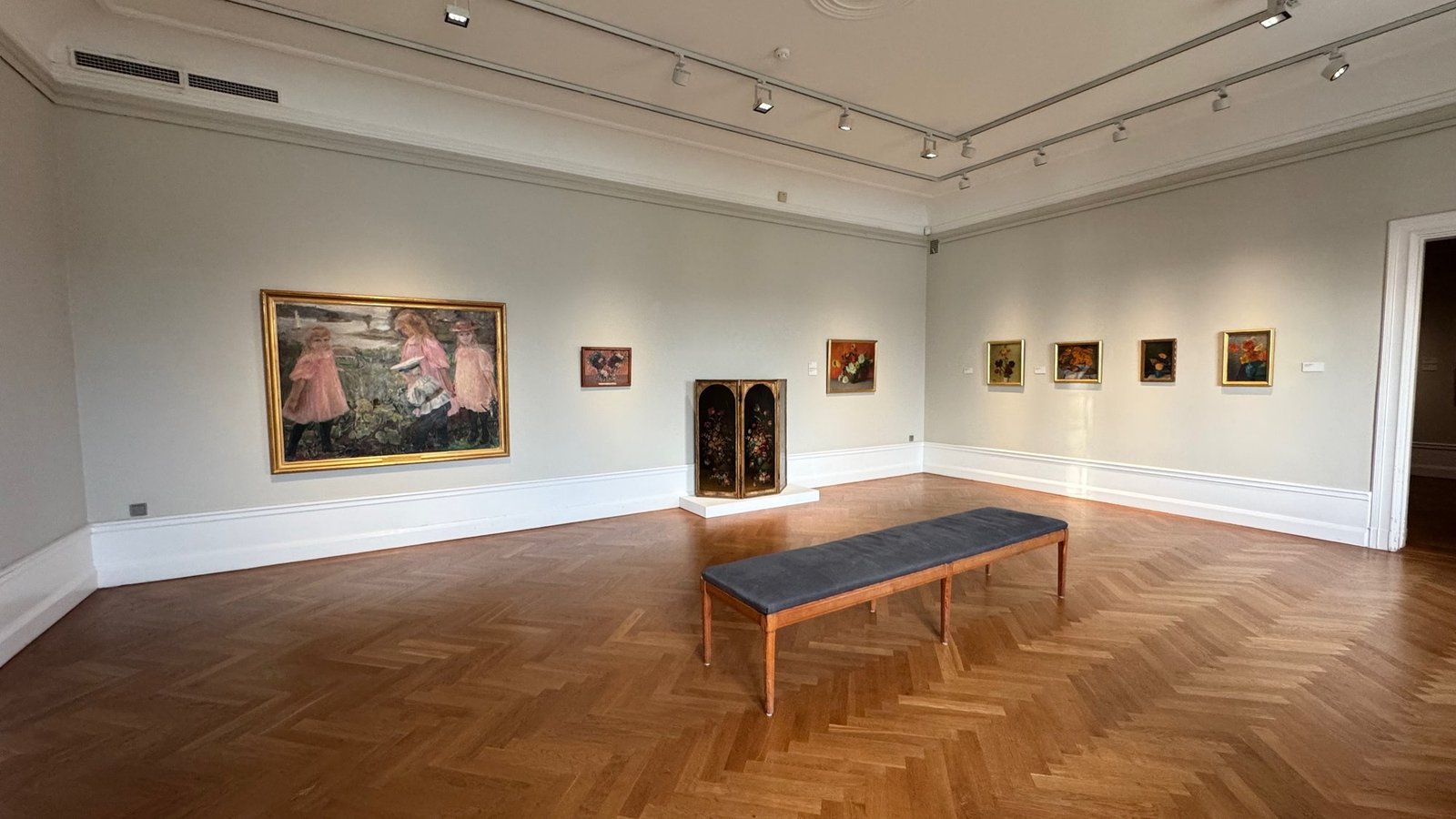
This season:
- Den underbara färgen – Göteborgskolorismen i nytt ljus (The Wonderful Color), 3 October 2026 to 28 February 2027. About 90 works by the Gothenburg Colorists, a group of painters who flourished in the 1930s. The show also lifts lesser-known names, among them Märta Taube-Ivarson and Karin Parrow. It is made with the Gothenburg Museum of Art.
- Verk ur museets samlingar – Natur- och blomstermotiv (Nature and Flower Motifs from the Collections), 31 March 2026 to 15 August 2027, on the middle and studio floors of the house. It shows works by Prince Eugen, Karl Nordström, Richard Bergh, Bruno Liljefors, Ivan Aguéli, Sigrid Hjertén, Paul Gauguin, Maja Fjæstad and others.
The garden and the sculptures
In 1901, the prince wrote to the Norwegian painter Erik Werenskiold: “Next to art, I think flowers are my greatest joy.”
The property covers 70,000 square meters, with water on three sides. The museum says the prince did not like conifers or ferns, so he had them removed. He made two big terraces toward the water. He planted a row of poplars along the shore and chestnut trees on the terrace. His favorite flower colors were blue, white, yellow and pink, and he liked flowers that people called old-fashioned. Two greenhouses still give the museum flowers all year.
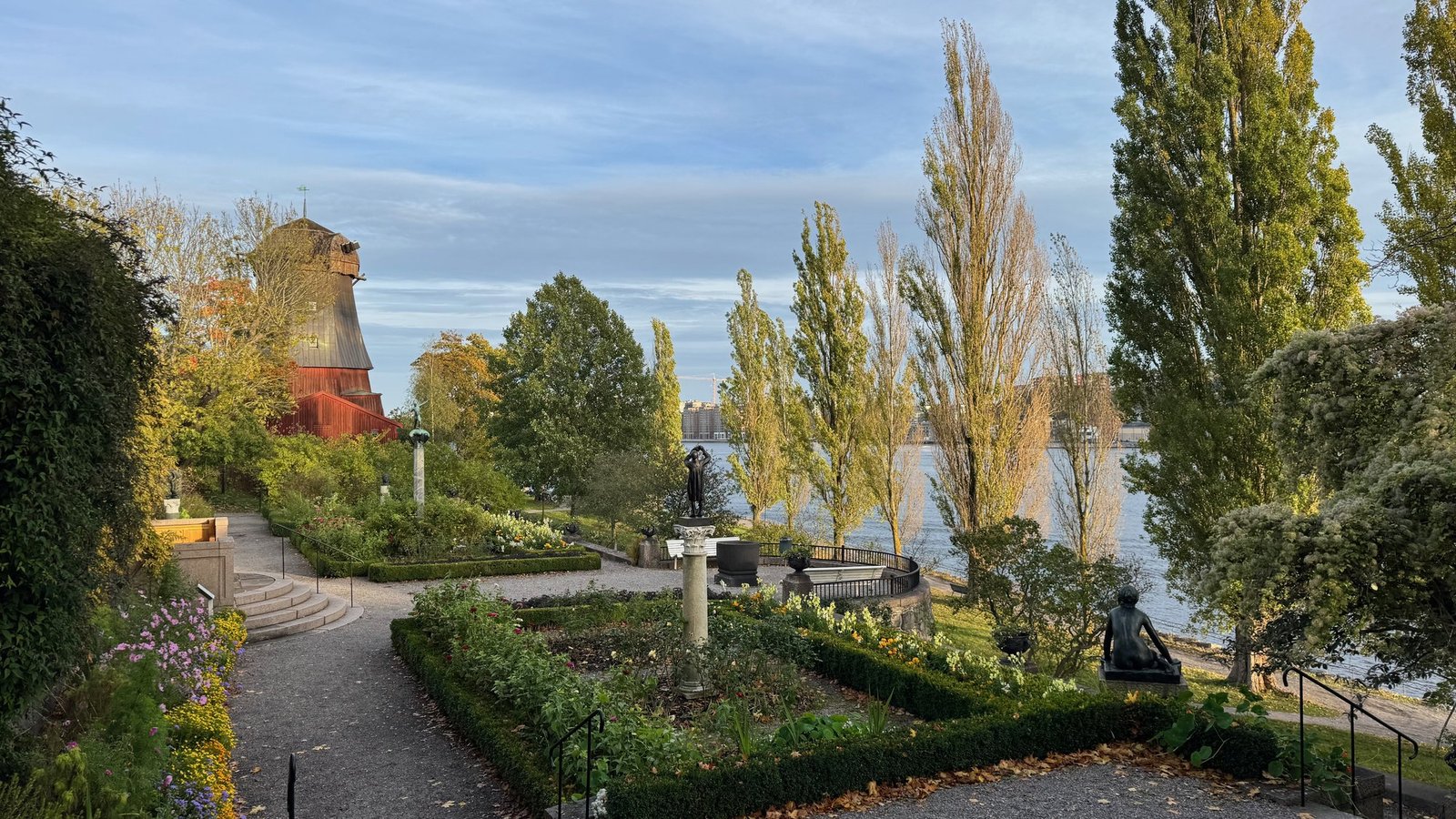
The sculptures. The museum says the prince bought every sculpture in the park himself, often for a chosen spot:
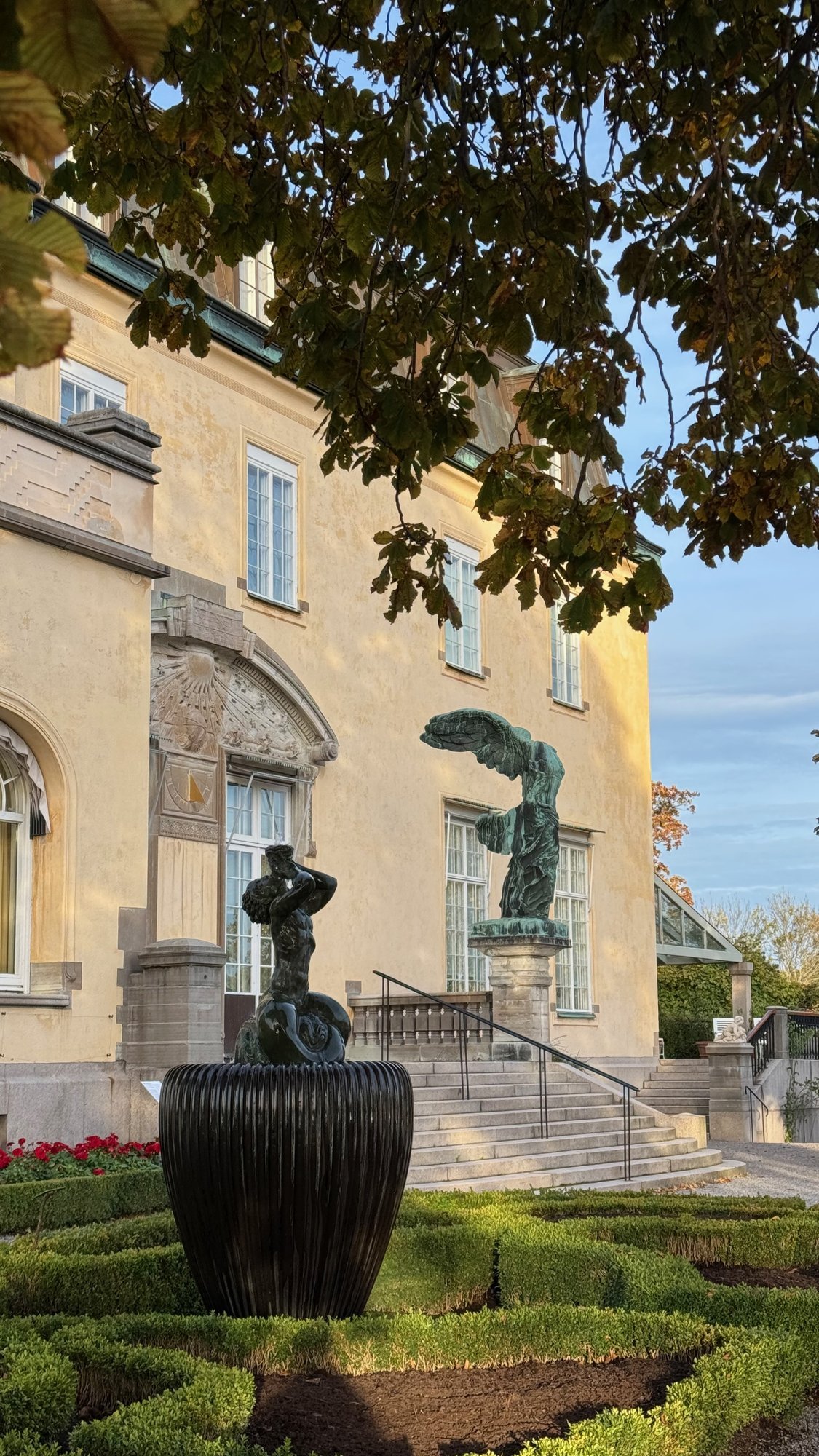
- A copy of the Winged Victory of Samothrace from the Louvre. It was built into the entrance steps in 1905.
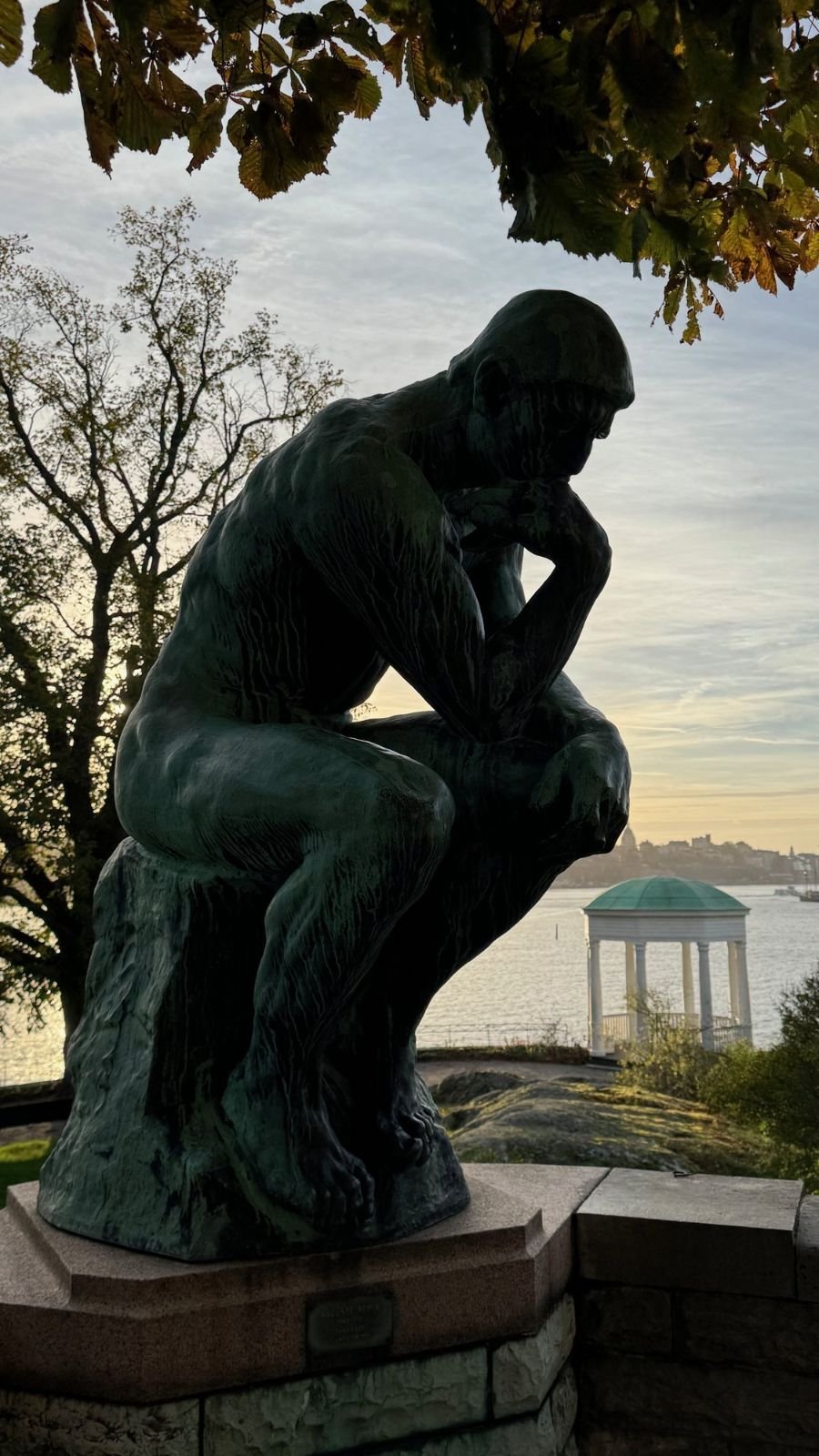
- The Thinker by Auguste Rodin, a bronze cast from 1909, on the terrace of the house.
- Carl Milles’ Eagles in black granite by the old main entrance, and his Triton, a fountain in a flower bed on the water side.
- Herakles by Antoine Bourdelle, north of the house, drawing his bow.
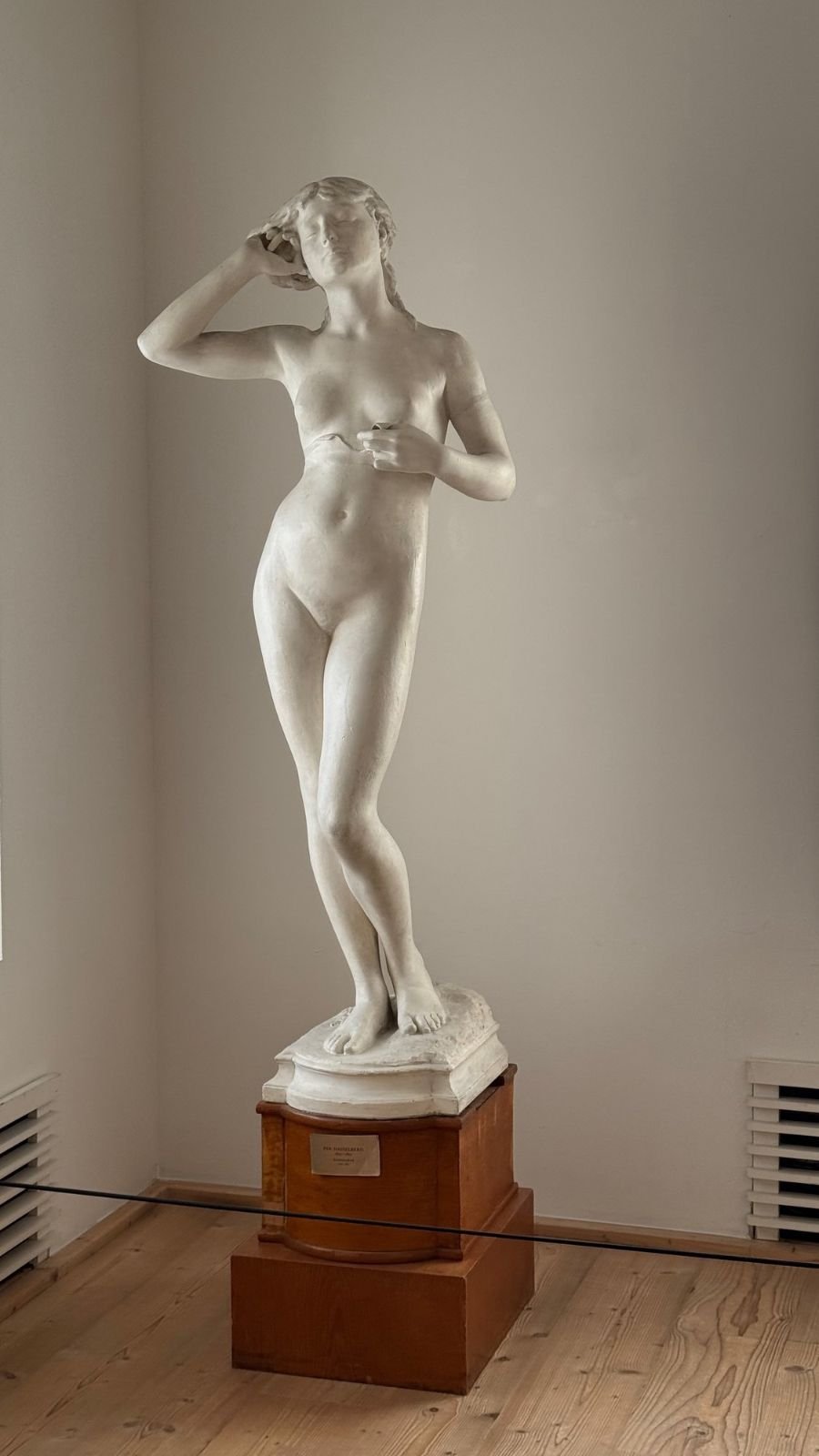
- The Young Carl Linnaeus by Carl Eldh. It was the last work the prince bought, in 1947. Carl Eldh also made a bronze portrait of Karl Nordström for the gallery terrace. You can see more of Eldh’s work at his studio museum: my visit to Carl Eldhs Ateljémuseum.
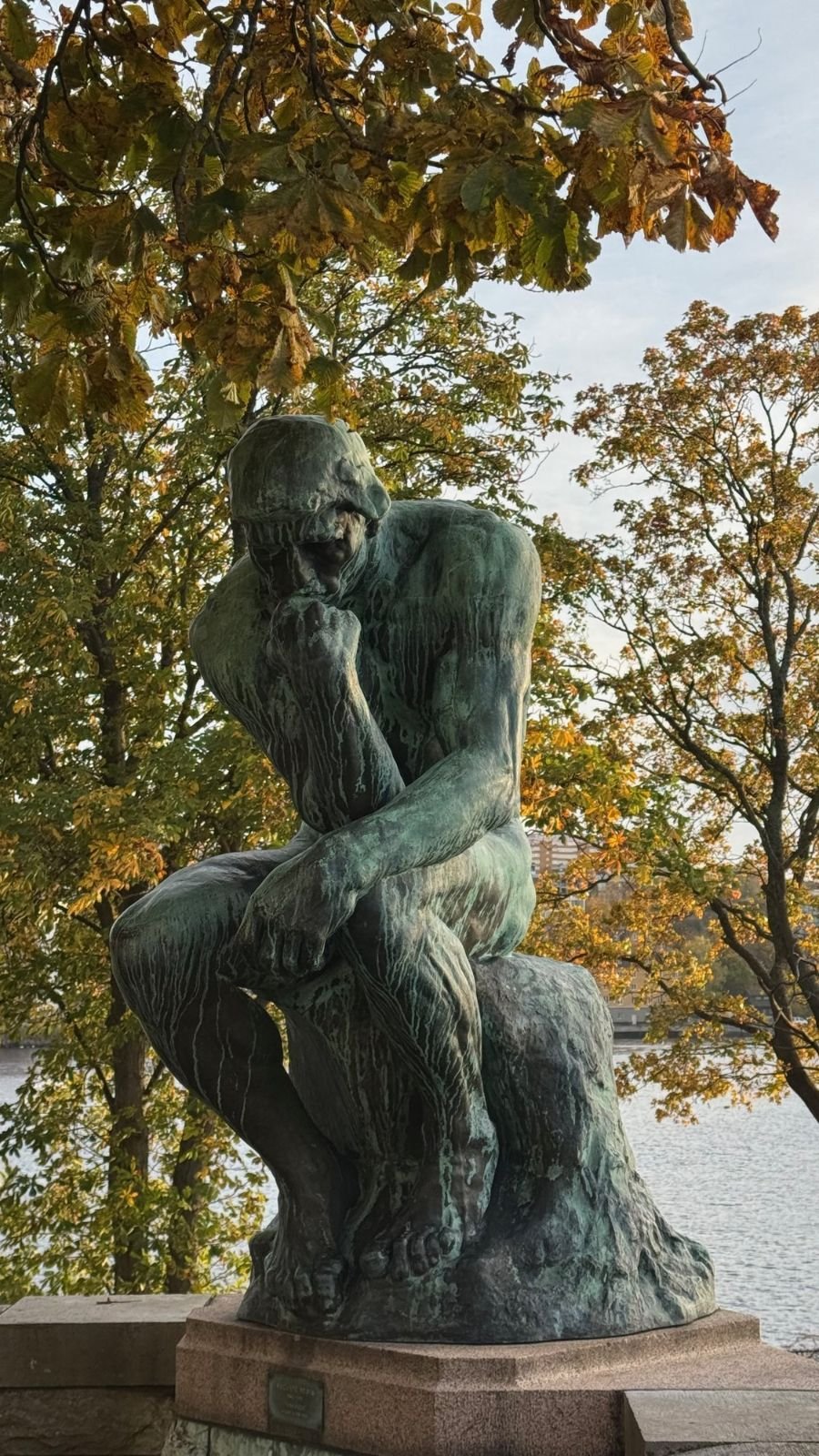
The park is open every day, from 08:00 to 21:00, and it is free. Dogs are welcome in the park.
The Old House and the mill
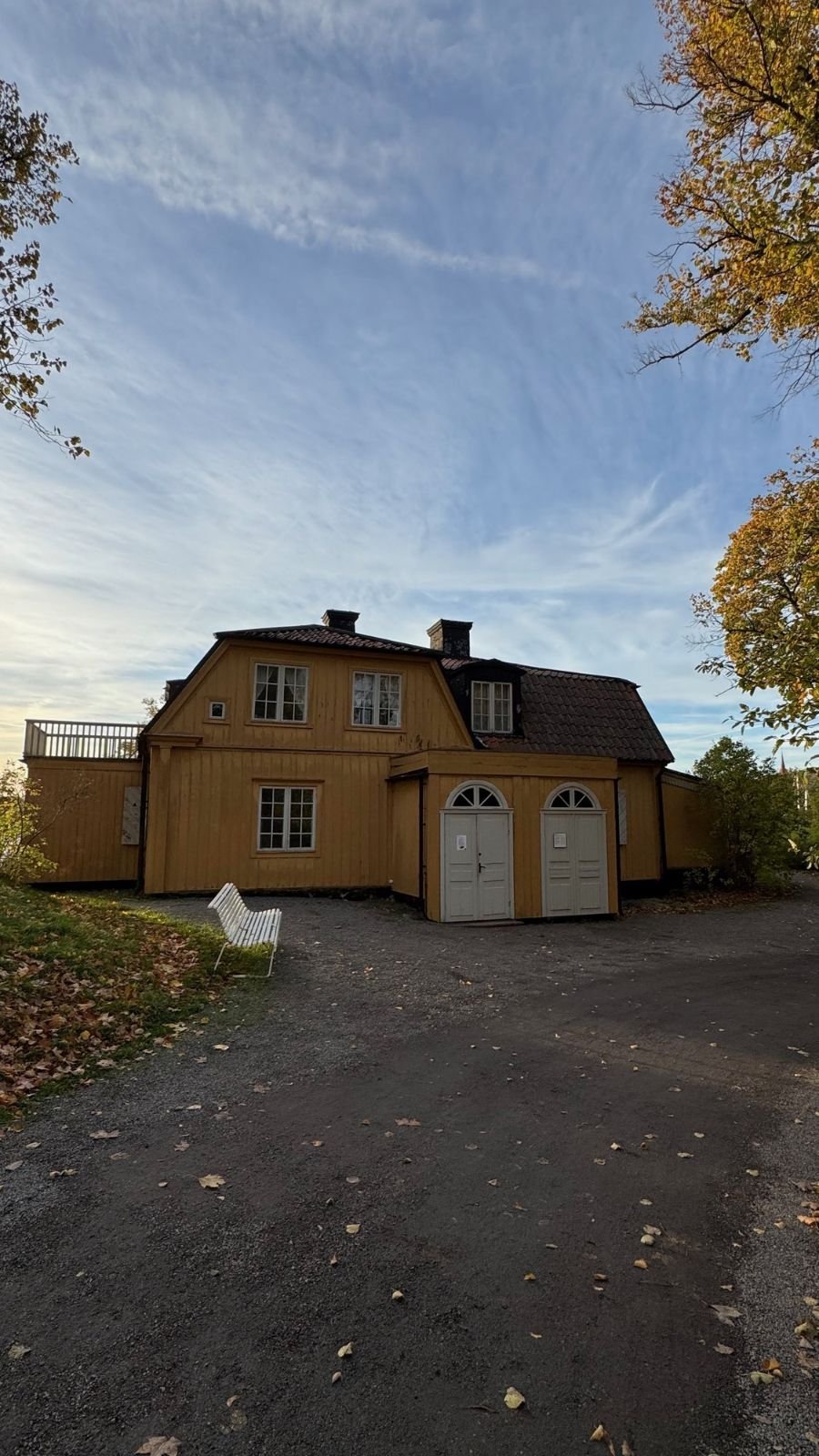
The yellow Old House is the oldest building on the point. It got its present look in the 1780s, when the owner Carl Magnus Fris rebuilt an older timber cottage. In the autumn of 1892, the young prince rented a room here. Wikipedia quotes his wish to paint and to “have some beautiful days with gold-shimmering evening light”. He used the whole house as a summer home while his new house was being built. Today, the ground floor is a studio for children and young people.
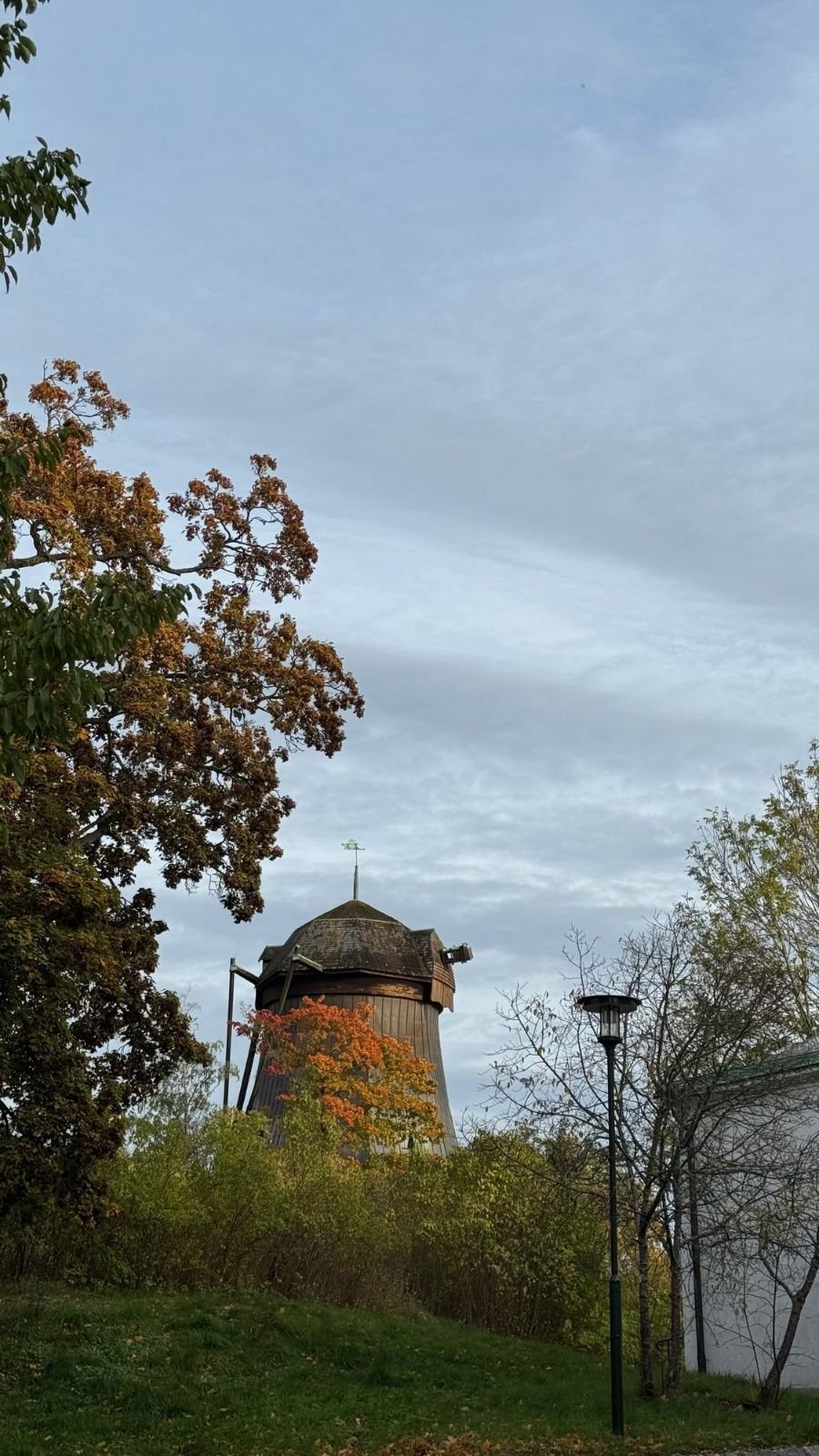
To the east stands the red linseed oil mill, built in 1785. In the 1700s and 1800s, Waldemarsudde was an industrial site with an oil mill, a sawmill and a timber yard. The prince turned it into a park.
Prinsens kök, Café Ektorpet and the shop
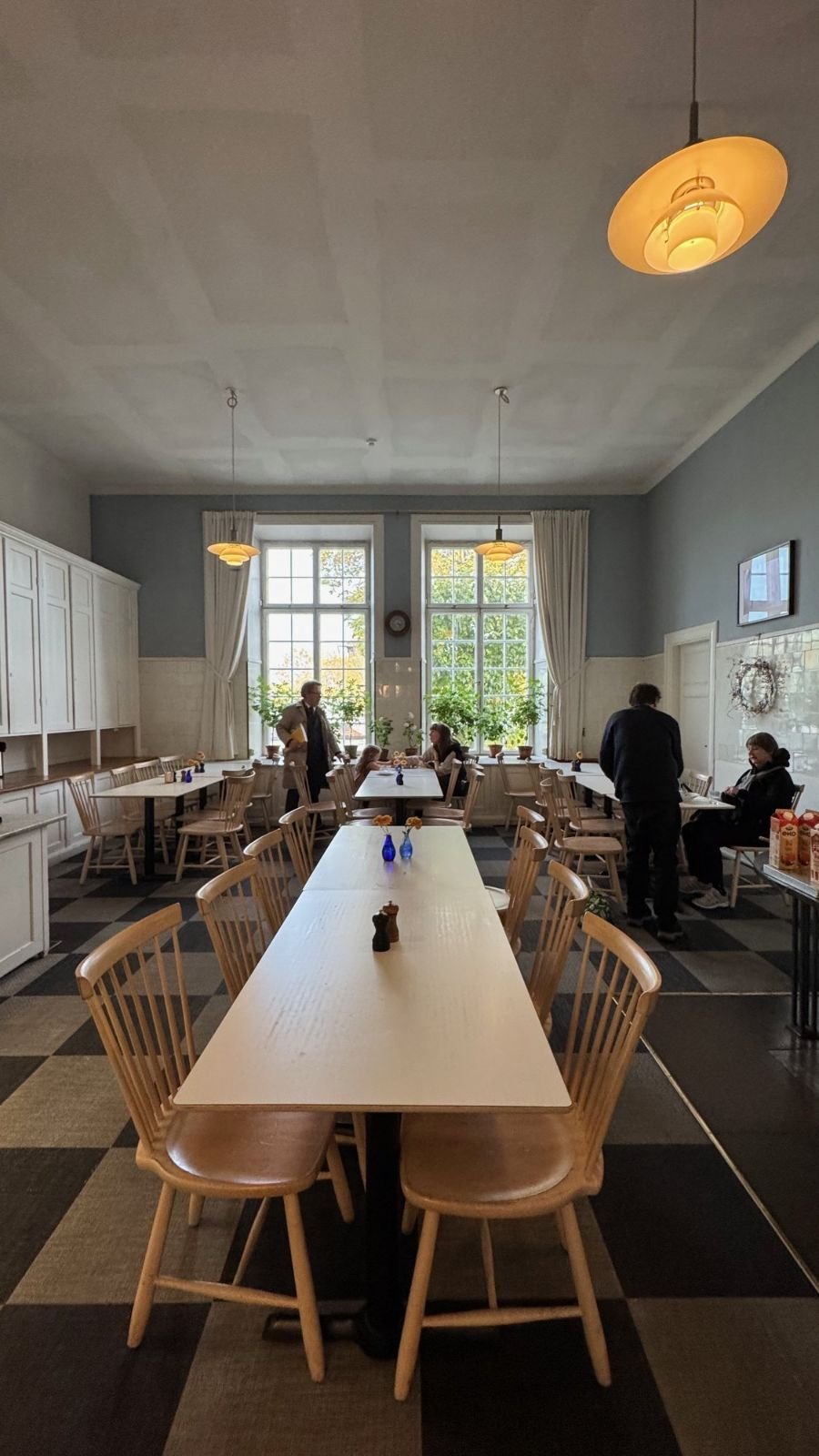
Prinsens kök is the restaurant inside the museum, with long wooden tables and tall windows. It has the same hours as the museum. You need a museum ticket to eat there, and it does not take table bookings.
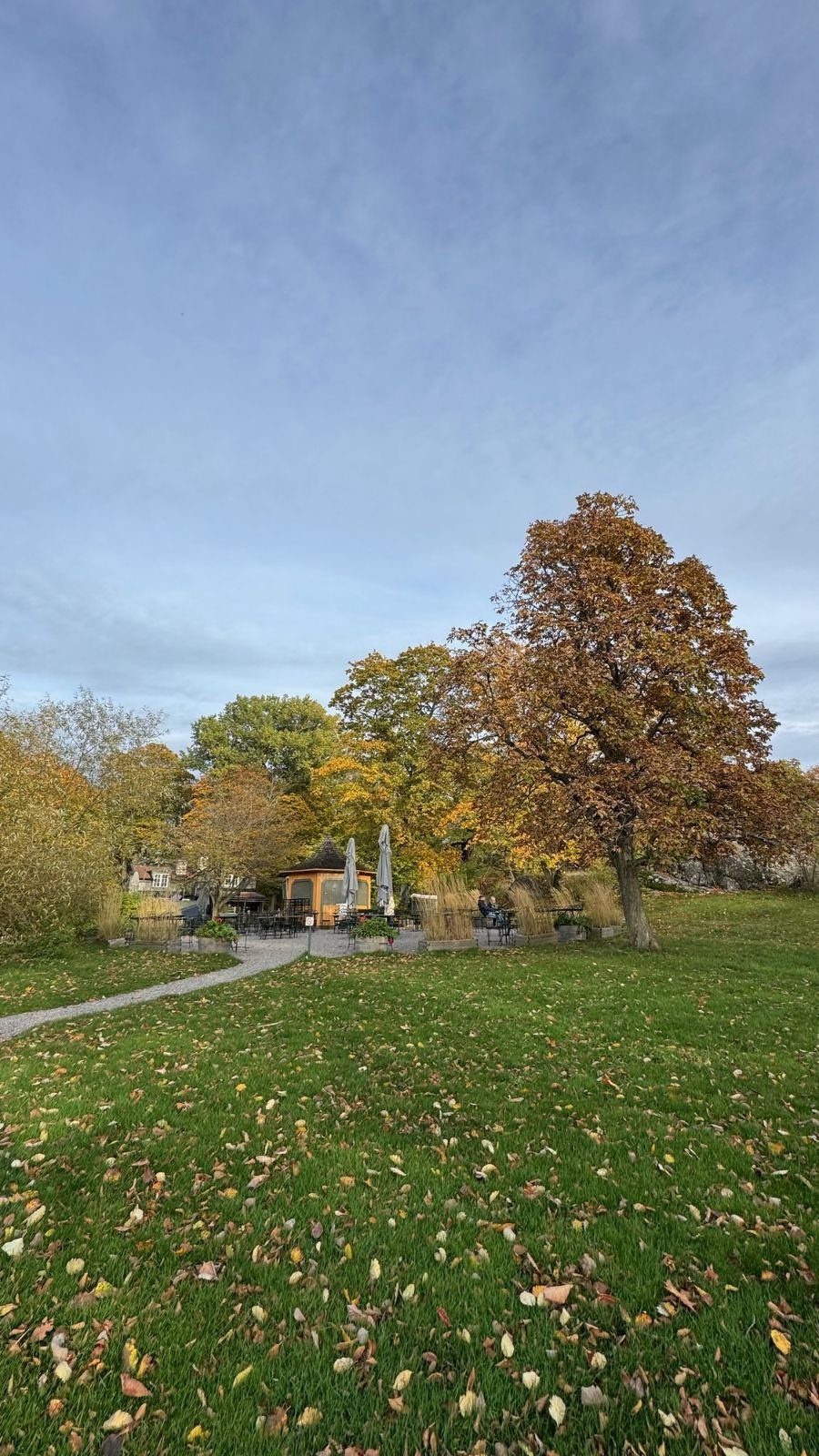
Café Ektorpet is in the park, with a large outdoor terrace and a view over the water. It serves waffles, lunch dishes, sandwiches and pastries. From 16 October, it is open only on Saturdays and Sundays, 11:00–17:00. The prince asked in his will for a café in this house.
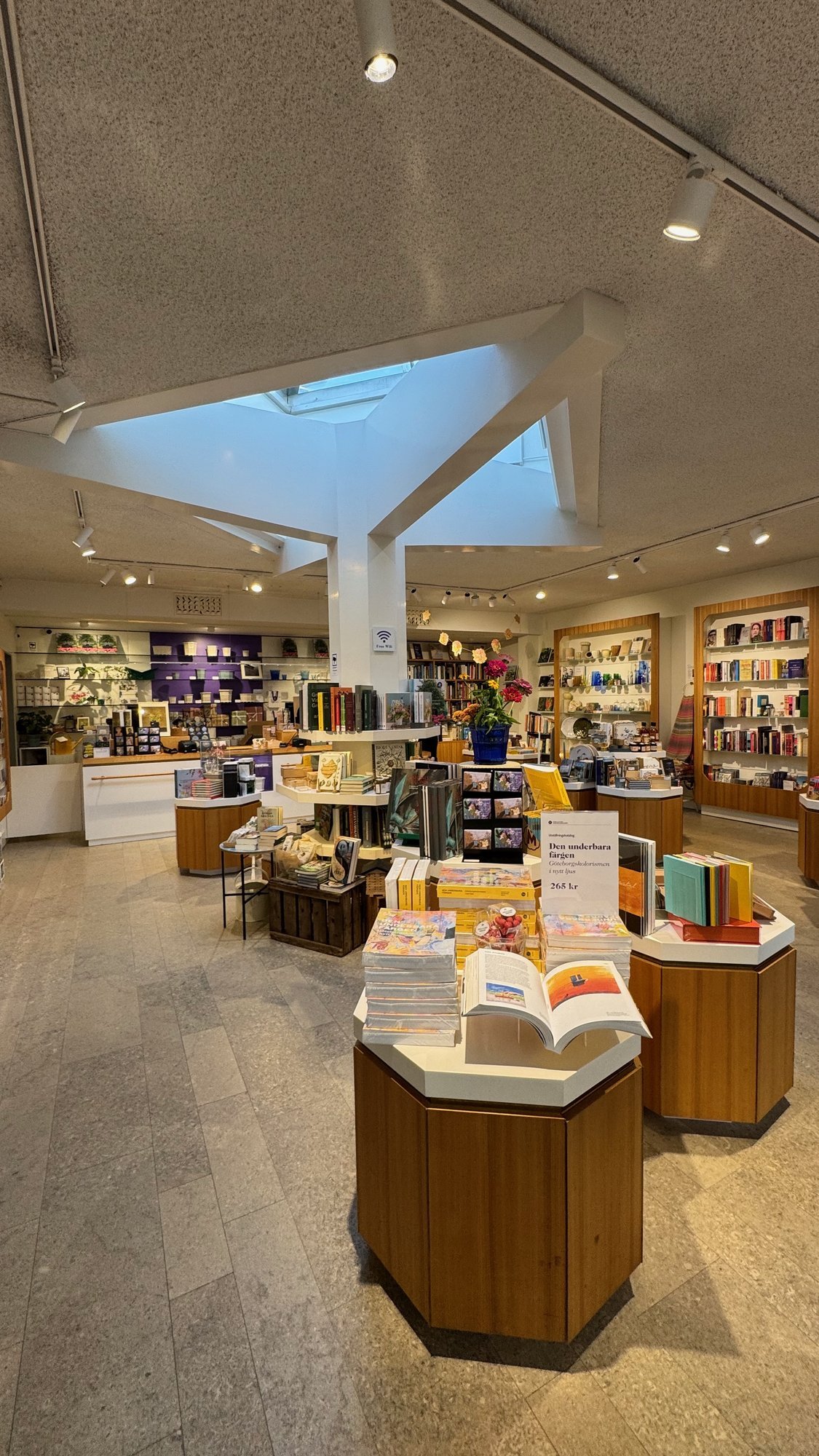
The shop sells the Waldemarsudde pot, made in Sweden in porcelain and in glass, as well as books and exhibition catalogs. In my photo, books, cards and gifts lie on wooden tables under a skylight.
This autumn and winter
- 22 October, 18:00: A book talk on Tisdagsklubben (the Tuesday Club) by Johan Erséus, about Prince Eugen and Countess Amelie Posse during the Second World War.
- 27 October, 13:00–15:00: An autumn break workshop for children from 6 years, in the Old House studio. The ticket also gives entry to the museum.
- 5 November, 11:00: Eugen Day, in memory of the prince.
- 18 November, 18:30: An autumn concert.
- 29 November and 6, 13 and 20 December, 10:00: Family Sundays where you bake the prince’s gingerbread.
- 1 December to 31 January: Menybilder, an exhibition of menu art from the Nobel Prize dinners in physiology or medicine.
The event pages are in Swedish. Some events need booking, and two Christmas wreath workshops are already sold out.
Tickets and prices
Adults 180 SEK. Pensioners and students 160 SEK. Groups of more than 10 people 160 SEK per person. Youth up to 20 years free. Annual pass 460 SEK.
You can buy tickets at the museum or online. A ticket bought online does not let you skip the line. The museum is cash-free and takes Visa, Mastercard and Swish. The park is free.
Getting there and access
Take tram 7 or bus 67. On some weekends, Djurgården is closed to cars: from 30 April to 28 September on Saturdays and Sundays, 12:00–16:00, and on the first three weekends of Advent, 12:00–15:00. Most parking is outside the park fence, about 200 meters from the museum entrance.
Entrance. Two parking spaces for visitors with a disability permit are next to the entrance. Special transport (färdtjänst) can stop there too. A stone ramp leads to the entrance, and the door opens automatically. The ticket desk has a lower section for wheelchair users.
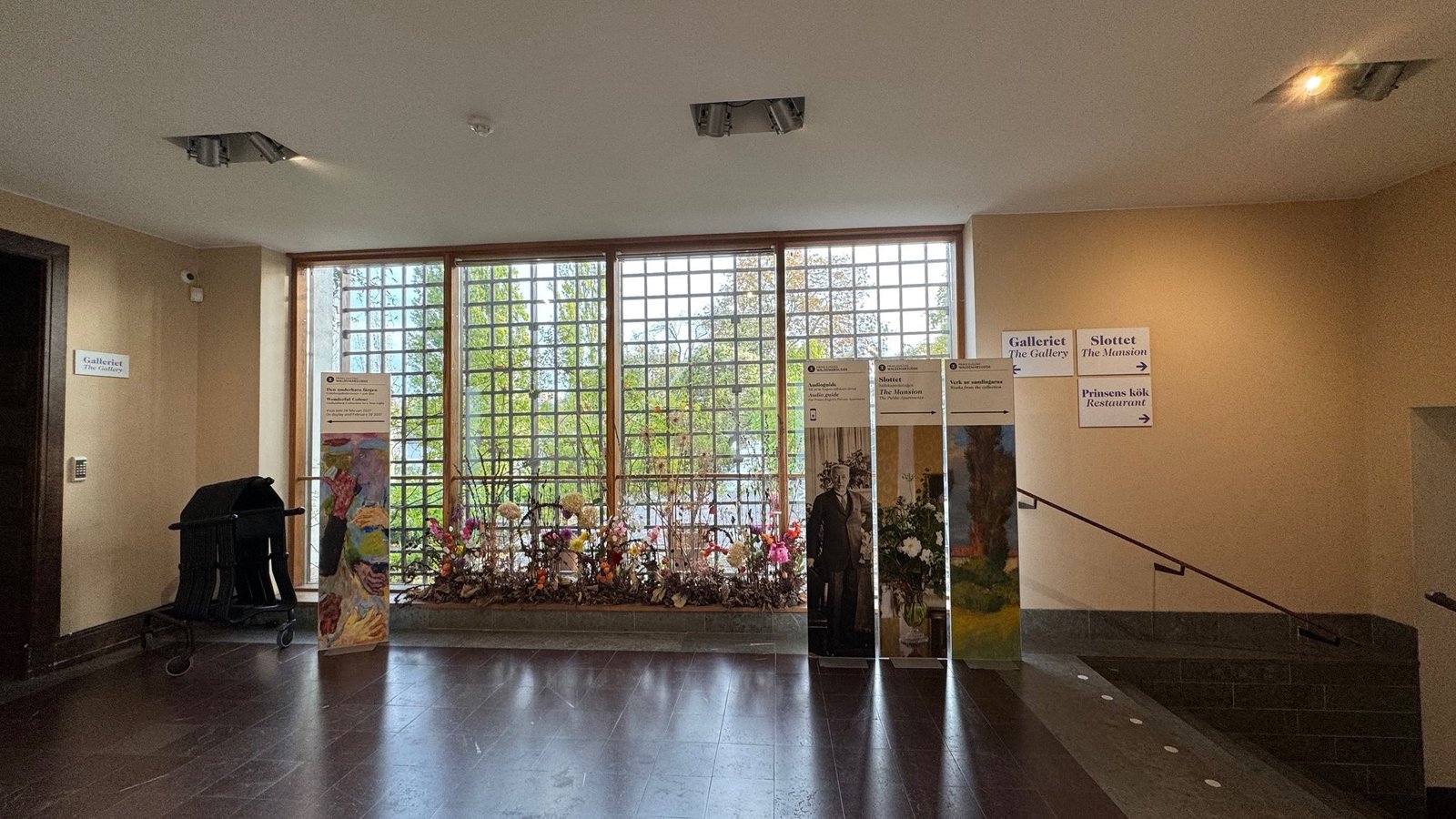
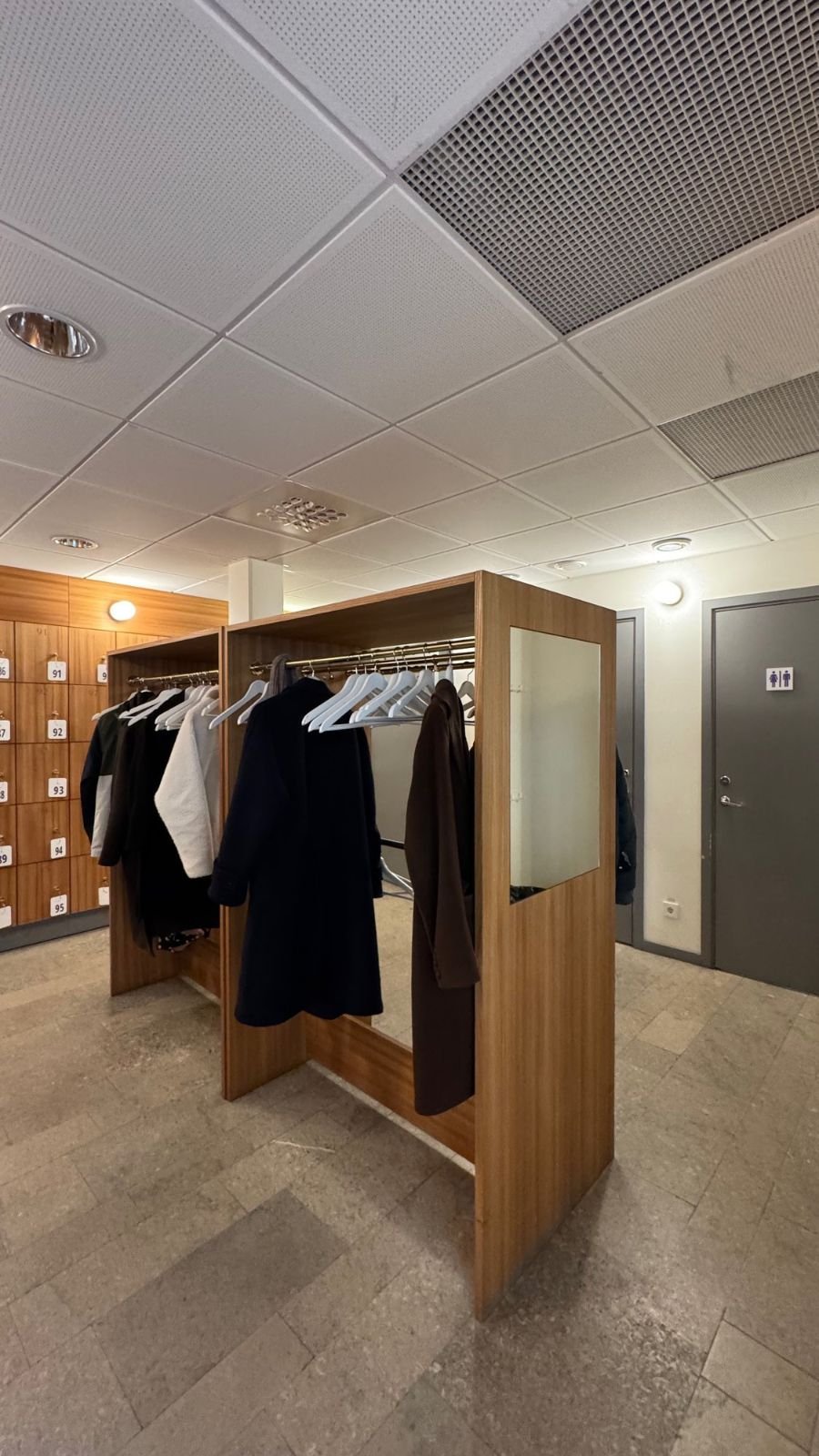
Inside. In the entrance hall, signs point the way to the gallery, the mansion and the restaurant. The stairs have a handrail. The cloakroom has coat racks and lockers, with a toilet next to it. The museum has lifts to all floors, marked with a wheelchair sign. Every room in the house has a threshold, but the museum says this is rarely a problem for wheelchairs. You can borrow a wheelchair. Accessible toilets are at the entrance and on the reception floor. Strollers may come into the museum, but not onto the reception floor, where the floors and carpets are fragile.
Dogs. Guide dogs and assistance dogs are welcome in the museum and the restaurant. Other dogs may come into the park and Café Ektorpet, but not into the museum.
The park. The park is hilly, with big differences in height in places. The museum says you can use most paths in a wheelchair.
Groups. The museum welcomes groups with special needs. If you need an interpreter, book one yourself and tell the museum when you book your visit.
What is my verdict?
I did not take a guided tour, and I did not need one to enjoy the place. The garden with its sculptures is an amazing place to stroll around, at any time of the year.
Waldemarsudde is a portrait of one man. A prince who wanted to be judged by his brush and not his title. A collector who bought art from his friends. A host who opened his home to the resistance during the war.
He asked himself all his life whether he had real talent or only “prince talent”. Stand in front of Molnet, and decide for yourself.
Photo gallery
All photographs of the walk, the house, the gallery and the garden on this page were taken by Zayera Khan during a visit to the museum, and are her own property. Please do not reuse them without permission. The images of Prince Eugen’s paintings come from Wikimedia Commons, with credits in each caption.
Prins Eugens Waldemarsudde: Waldemarsudde, Prins Eugen; Waldemarsudde, Konstnärshemmet; Waldemarsudde, Park och trädgård; Waldemarsudde, Samlingen; Waldemarsudde, Priser och öppettider; Waldemarsudde, Hitta hit; Waldemarsudde, Tillgänglighet; Waldemarsudde, Restaurang och café; Waldemarsudde, Introduktioner och gruppbokning; Waldemarsudde, Butik; Waldemarsudde, Den underbara färgen; Waldemarsudde, Verk ur museets samlingar; Waldemarsudde, Aktiviteter.
Royal Court and other sources: Kungahuset, Prince Eugen; Royal Djurgården, Prins Eugens Waldemarsudde; Populär Historia, Prins Eugen – blått blod och konstnärshjärta (2003).
Painting images (Wikimedia Commons): Commons file: The Forest; Commons file: The Old Castle; Commons file: A Summer Night at Tyresö; Commons file: Steamboats at Beckholmen; Commons file: Calm Water; Commons file: Late Winter, Waldemarsudde; Commons file: The Cloud.
Wikipedia: Wikipedia: Prins Eugen av Sverige; Wikipedia: Prins Eugens Waldemarsudde; Wikipedia: Waldemarsudde.