
Norwegian Nature: Trees, Wildlife, and Life Outdoors
Trees shaped by wind, berries born from frost, and animals moving quietly along ancient routes.
To spend time outdoors in Norway is to step into a living museum — one shaped by glaciers, wind and patient adaptation. You hike through birch forest, ski across a high plateau, or sit quietly by a fjord. And nature shows itself in layers.

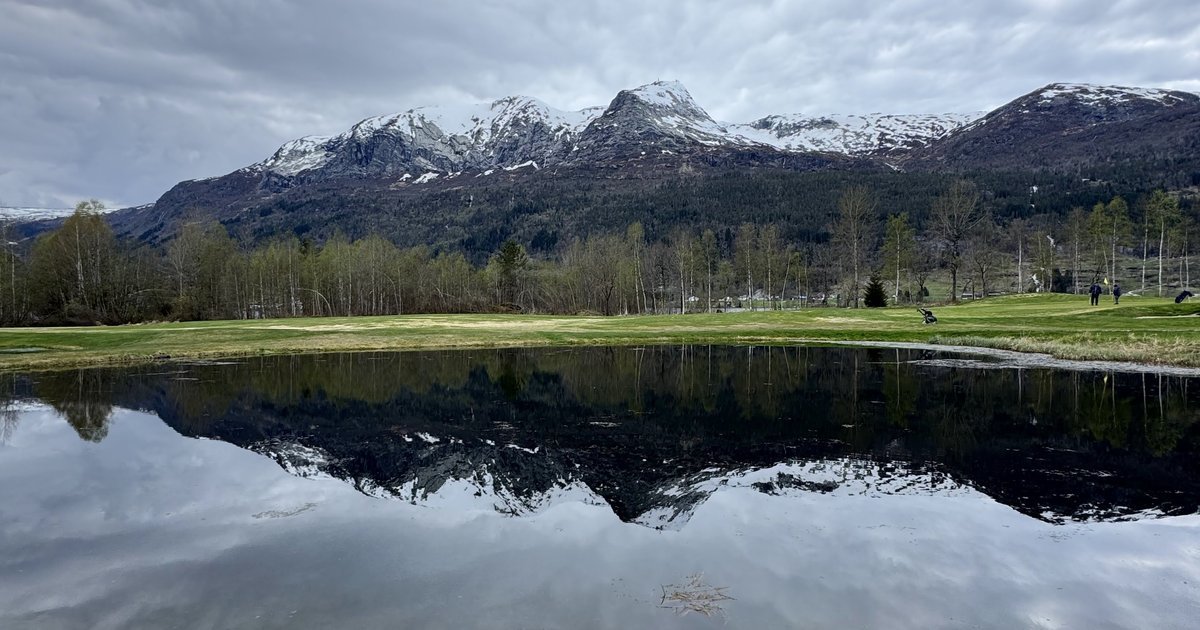
Snowy peaks mirrored in a still pond near Voss, in spring. Photo: Zayera Khan
Forests of the north
Norway’s forests are an archive of survival. From the deep valleys of Hardanger to the high ridges around Voss, every tree species tells how life goes on in cold, poor soil.
Pine, spruce and juniper
Scots pine (furu) and Norway spruce (gran) dominate. Both are evergreen conifers, and both have built houses, boats and stave churches. The resin-rich pine resists rot. Spruce gives long, straight planks — and the wood for violin tops.
Among them grows juniper (einer), a hardy shrub whose berries take two years to ripen. Their sharp taste flavors gin and traditional smoked meat.
Birch
Further north and higher up, birch (bjørk) takes over — the most typical tree of the Norwegian landscape. The bark burns even when wet, which makes it a winter fire-starter. Birch bark, never, was used under turf roofs and for baskets and shoes. The twisted, low mountain birch marks the tree line in the mountains and in the north.
Aspen, alder, willow and other broadleaf trees
Aspen (osp), with its trembling leaves, gives light wood for sauna benches and matchsticks. Beavers love it, both as food and building material. Alder (or) grows near water, and its wood gives a mild smoke for fish.
By the rivers you find goat willow (selje), one of the first trees to flower after winter, with early pollen for the bees. Higher up, the tiny dwarf willow (musøre) creeps close to the snow line.
Other important trees are hazel (hassel), used for barrel hoops; ash (ask), the tree of Yggdrasil in Norse mythology, with strong and flexible wood; and elm (alm), whose bark was once used as animal fodder.
Bird cherry (hegg) fills the spring with white, scented blossoms. Linden (lind), rare this far north, once gave tough fibers for rope. In milder valleys you can see Norway maple (spisslønn), and rowan (rogn) grows high up towards the tree line. Its red berries feed the birds in autumn and light up even the greyest fjord valley.
Berries and alpine plants
In summer the ground fills with color. Blueberries (blåbær) stain your fingers purple, and crowberries (krekling) and lingonberries (tyttebær) grow on mossy slopes. The prized cloudberry (molte) grows in bogs and mountain wetlands. It is golden and rich in vitamin C, and with whipped cream it becomes multekrem, a classic Norwegian dessert.
On the alpine meadows, herbs and flowers come with the snowmelt: angelica (kvann), used as food and medicine since the Viking Age; yarrow (ryllik), for healing; and foxglove (revebjelle), beautiful and poisonous.
These plants are part of Norway’s plant heritage — gathered for food, medicine and ritual through long winters.
Wildlife of the fjords and mountains
The Norwegian wilderness is large and quietly alive. Even near villages, you can see deer, moose or foxes.
Large mammals
- Brown bear: 185 individuals were registered by DNA in 2025, mostly near the borders in the east and north.
- Wolf: a small population near the Swedish border. Only 3.5 litters were found last winter, below the national goal.
- Lynx: 91 family groups were registered, above the national goal.
- Wolverine: 51 litters were registered in 2025.
- Reindeer: about 25,000 wild reindeer, around 10,000 of them on Hardangervidda. Far more domestic reindeer are herded by Sámi reindeer herders in the north.
- Others: moose, red deer, arctic fox and red fox.
All hunters in Norway must be registered and pay an annual hunting fee, and they need the landowner’s permission to hunt.
Birds
Norway’s national bird, the white-throated dipper (fossekall), dives into icy rivers even in midwinter. You can also see golden eagles, white-tailed eagles, and smaller forest birds such as thrushes, willow warblers and crossbills.
Fish
Norwegian waters have trout, char, salmon and cod — fish that have fed communities for centuries. Most of the fish caught in Norway is exported, but wild salmon from clear rivers is still a prize at home. Read more in my post on how salmon farming works in Norway.
Marine mammals
Harbor seals, harbor porpoises and orcas live along the coast. Dolphins are toothed whales, so all dolphins are whales — but not all whales are dolphins. In Norway, orcas hunt mostly herring and other schooling fish, and sometimes seals.
Adaptations and national symbols
Extremes shape Norway’s nature: midnight sun, polar night and sharp shifts between the seasons. Plants grow slowly but store energy. Animals migrate, hibernate or change their winter coat.
Many Norwegian symbols come straight from nature. Some were chosen in public votes:
- Bird: white-throated dipper (fossekall)
- Flower: pyramidal saxifrage (bergfrue)
- Animal: moose (elg)
- Stone: thulite, named after the mythical land of Thule
Others are unofficial favorites: the spruce, the cloudberry, cod, Linie Aquavit, and Kvæfjordkake, the cake Norwegians call “the world’s best”.
Living with nature: friluftsliv
Summer hike or winter ski, Norwegians practice friluftsliv — “open-air life”. It is not a hobby. It is a way of living: time outdoors renews body and mind.
You walk through a pine forest that smells of resin, ski past frozen birch groves, or rest by a fjord and watch eagles circle. Along the mountain trails you see traces of people before you — turf-roofed huts, summer farms, reindeer fences and cairns on old routes.

A farm with a small treehouse under a green hillside in western Norway. Photo: Zayera Khan
In early spring, bees hum around the willow flowers and eat the year’s first pollen. By late summer, reindeer graze on the high plateaus and trout jump in cold rivers. In winter, tracks in the snow show who passed in the night: hare, fox or lynx. Silence becomes the voice of the landscape.
A country of coexistence
What defines Norwegian nature is not abundance but balance. Forests are harvested with care, hunting needs a license, and the wilderness is respected. Under the right to roam (allemannsretten), everyone may walk freely in nature — with the duty to leave no trace.
The bond between people and landscape here is old and goes both ways. The same wood that built houses now warms them. The same rivers that now turn hydropower turbines carried people and goods long before.
To spend time in Norway’s outdoors is to understand that nature is not a backdrop. It is the stage, the script and the storyteller.
Sources: Rovdata (large carnivore monitoring, status report 2026); Store norske leksikon: rein; Wikipedia: List of national animals. Checked 30 September 2026.