
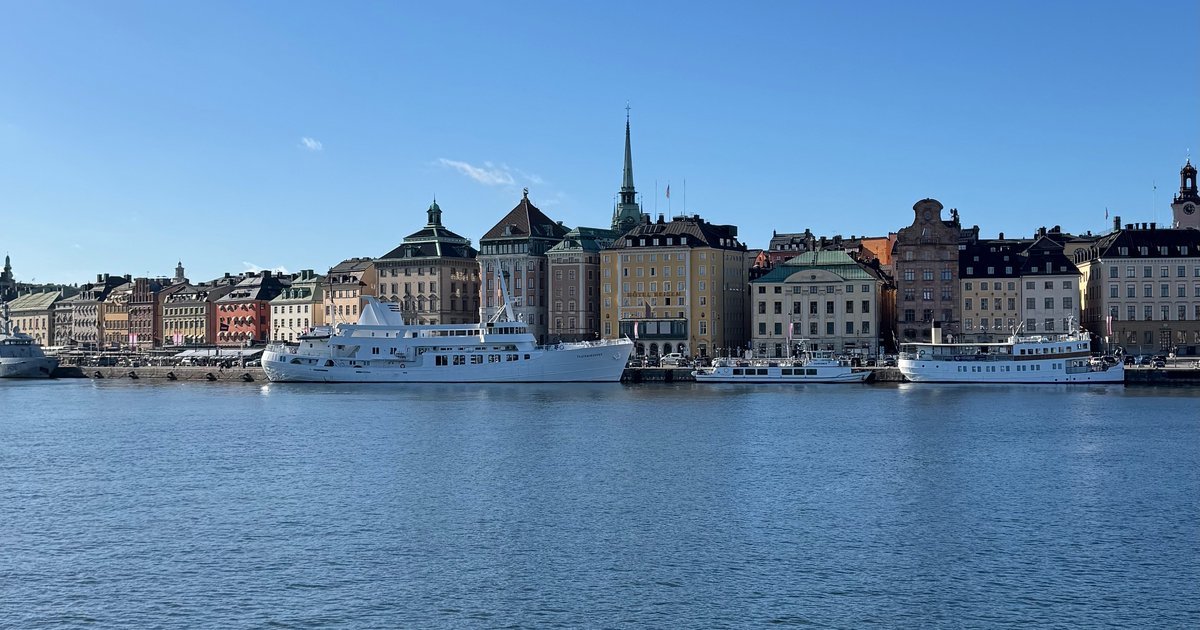
Gamla Stan Walking Tour: What to See in Every Season
Stockholm’s Old Town is small. What it shows you depends on the month you walk it.
Gamla Stan is where Stockholm began. The city is first named in writing in 1252, and most of the old street plan is still here. You can cross the whole island on foot in about fifteen minutes. You can also spend a full day and still miss half of it.
I have lived in Stockholm since 2008, and I guide in Gamla Stan. The streets stay the same all year. The light, the crowds and the events do not. A walk in December and a walk in August feel like two different towns.
This guide gives you a walking route through the main sights first, with opening hours and entrance fees. Then it shows what to look for in each season, with the yearly events you can plan a trip around. It ends where every good walk in Stockholm ends: with a fika.
A walking route through Gamla Stan
This route starts at the Royal Palace and ends at the water on Riddarholmen. It takes about two hours at a calm pace, with stops. Add time if you want to go inside the palace, the cathedral or the Nobel Prize Museum.
The Royal Palace and Slottsbacken
The Royal Palace (Kungliga slottet) stands where the old castle Tre Kronor burned down in 1697. The new palace has more than 600 rooms, and the royal family moved into it in 1754. The King still has his office here.
One ticket gives you the Royal Apartments, the Treasury with the crown jewels, and Museum Tre Kronor. The museum is in the cellars and shows what is left of the old castle. I wrote about it in my article on Museum Tre Kronor.
Visit: Open every day. In October 2026 the hours are 10:00–16:00, and they change with the season. The Royal Apartments can close for official receptions. Adults pay SEK 220 from October to April and SEK 240 from May to September. Children aged 7–17 pay SEK 110–120, and children aged 6 and under go free.
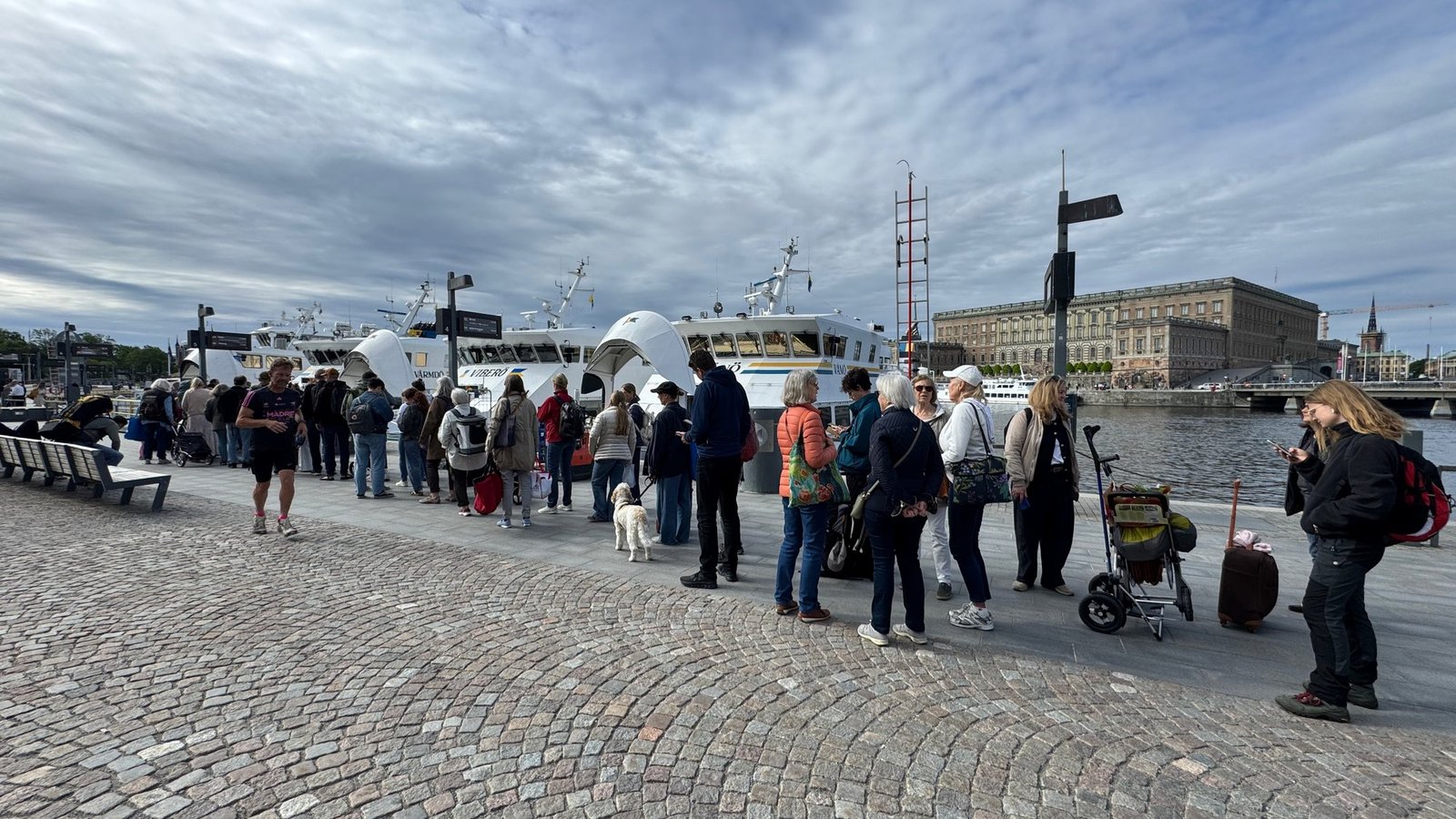
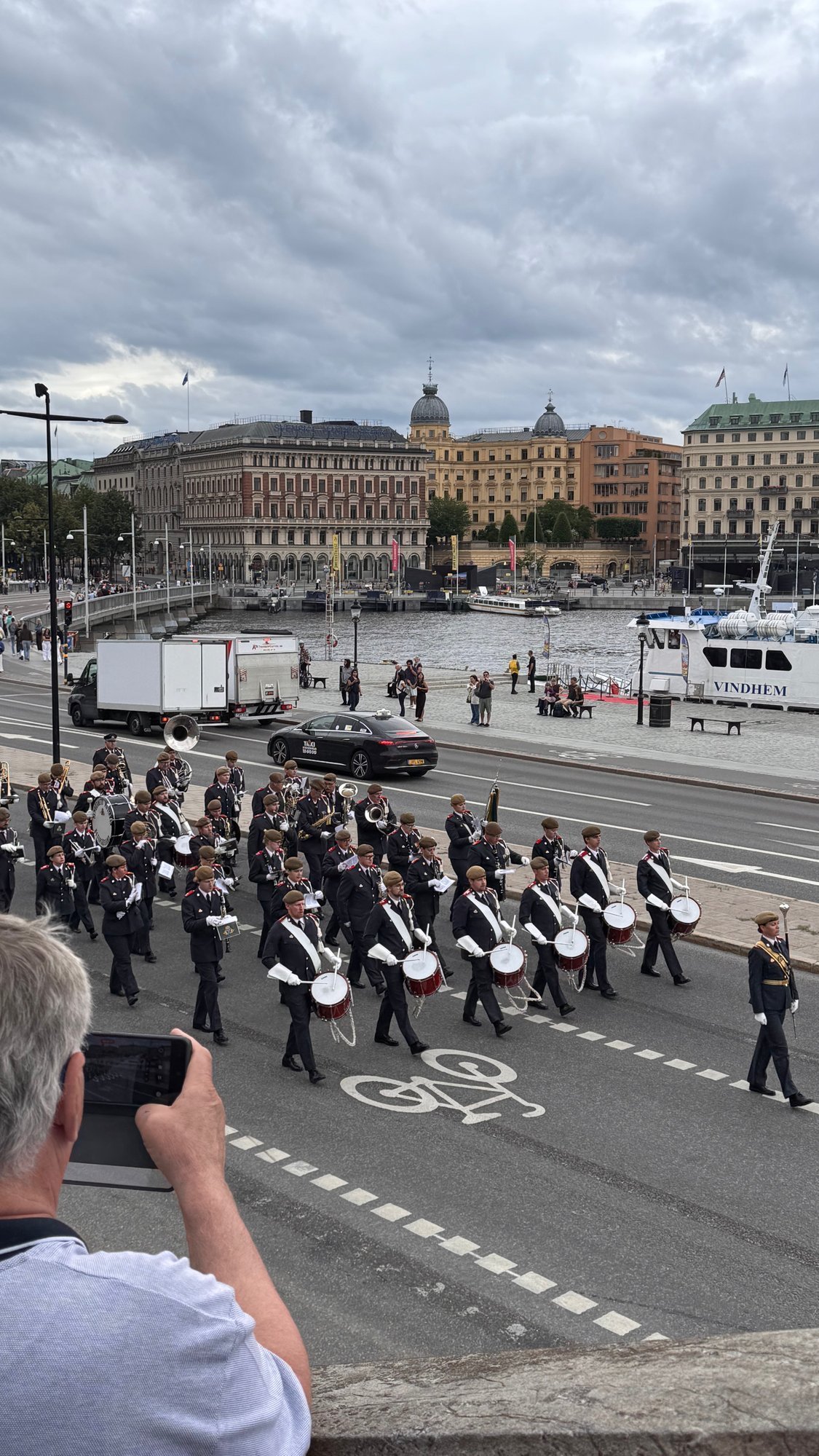
Walk up Slottsbacken, the wide slope on the east side. The changing of the guard takes place in the outer courtyard at 12:15, and at 13:15 on Sundays and public holidays. It takes about 40 minutes and it is free. Come early if you want to see it from the front.
Storkyrkan, the Stockholm Cathedral
At the top of Slottsbacken, next to the palace, stands Storkyrkan. It is the oldest church in Gamla Stan. Inside, look for the large wooden sculpture of Saint George and the Dragon from 1489. Also look for the Vädersolstavlan painting. It shows strange sun halos over Stockholm in 1535, and it is the oldest painting of the city in color. The version you see is a copy from 1636.
Visit: Open every day 09:30–17:00. From 1 June to 13 September it is open 09:00–18:00. Adults pay SEK 120 and seniors SEK 90. Visitors under 18 go free. An audio guide is included. Services and concerts can limit access, so check the calendar.
Stortorget and the Nobel Prize Museum
A short walk west takes you to Stortorget, the oldest square in the city. The colored merchant houses on the west side are the view you see on many Stockholm postcards.
The square also has a dark past. In November 1520, the Danish king Christian II had more than 80 people executed here. History calls it the Stockholm Bloodbath. For the story that leads up to it, read why Kristina Gyllenstierna surrendered Stockholm.
The large building on the north side is Börshuset, the old stock exchange. Today it holds the Swedish Academy and the Nobel Prize Museum.
Visit:
- Hours: September to May, Tuesday to Sunday 11:00–17:00, and Fridays until 21:00. Closed on Mondays. Some weekends in spring, autumn and December it stays open longer. In June it is open every day 10:00–18:00, and in July and August 10:00–19:00. Fridays are always open until 21:00.
- Tickets: Adults pay SEK 160, and students and seniors SEK 120. Visitors under 18 go free. A guided tour is included in the ticket.
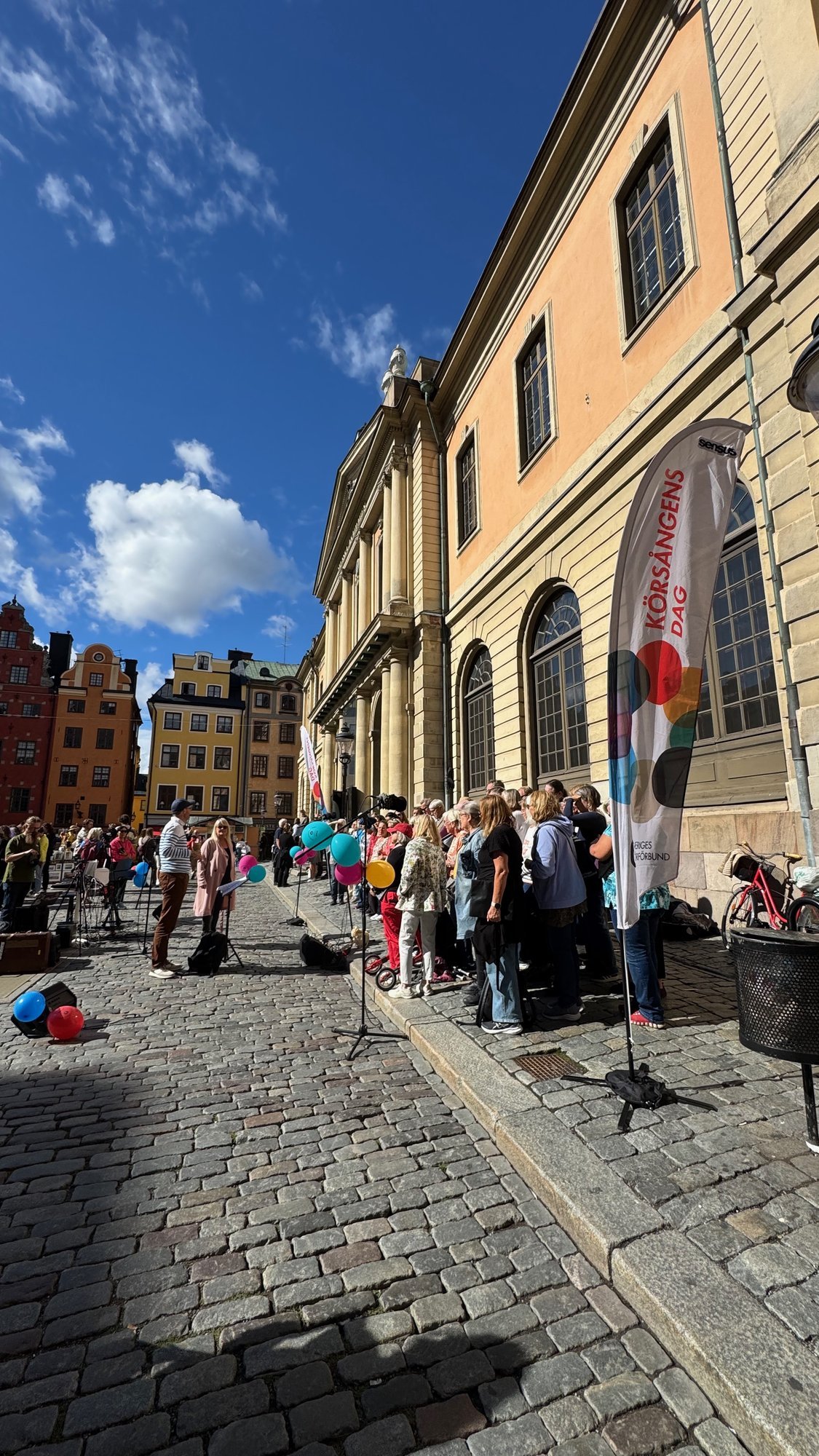
Västerlånggatan and Mårten Trotzigs gränd
Västerlånggatan follows the line of the old western city wall. It is the busiest shopping street in Gamla Stan. Walk it, but also turn into the narrow lanes on both sides.
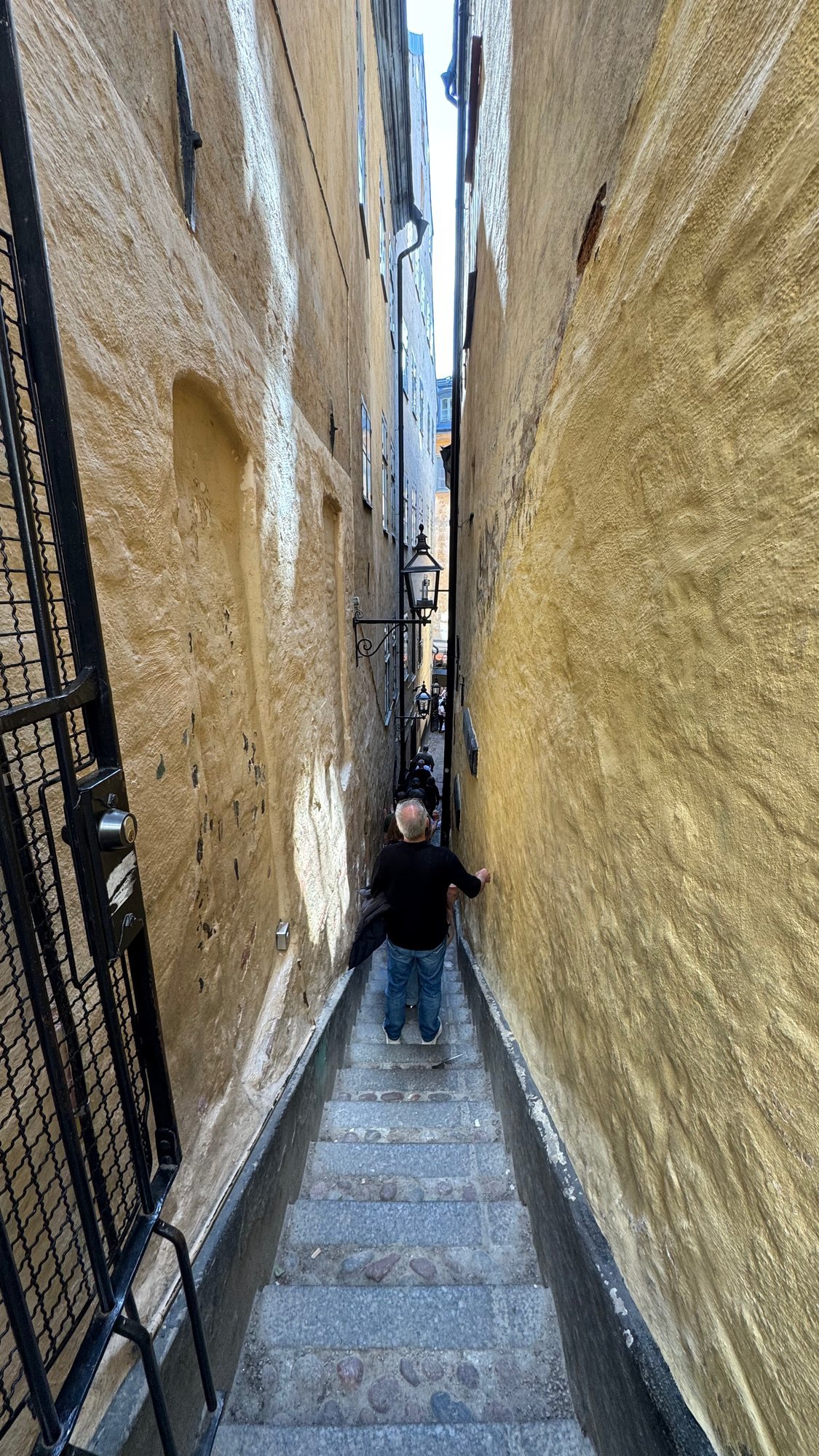
One of them is Mårten Trotzigs gränd, the narrowest street in Stockholm. At its narrowest point it is about 90 centimeters wide, with 36 steps. It is named after Mårten Trotzig, a German-born merchant who owned property here around 1600. Bring your friends. Leave your suitcase at the hotel. It is free and always open.
Järntorget, Österlånggatan and the runestone
At the south end you reach Järntorget, the Iron Square. Merchants once weighed and sold iron here. From here, Österlånggatan runs back north along the old eastern shore. It is quieter than Västerlånggatan, with small restaurants and galleries.
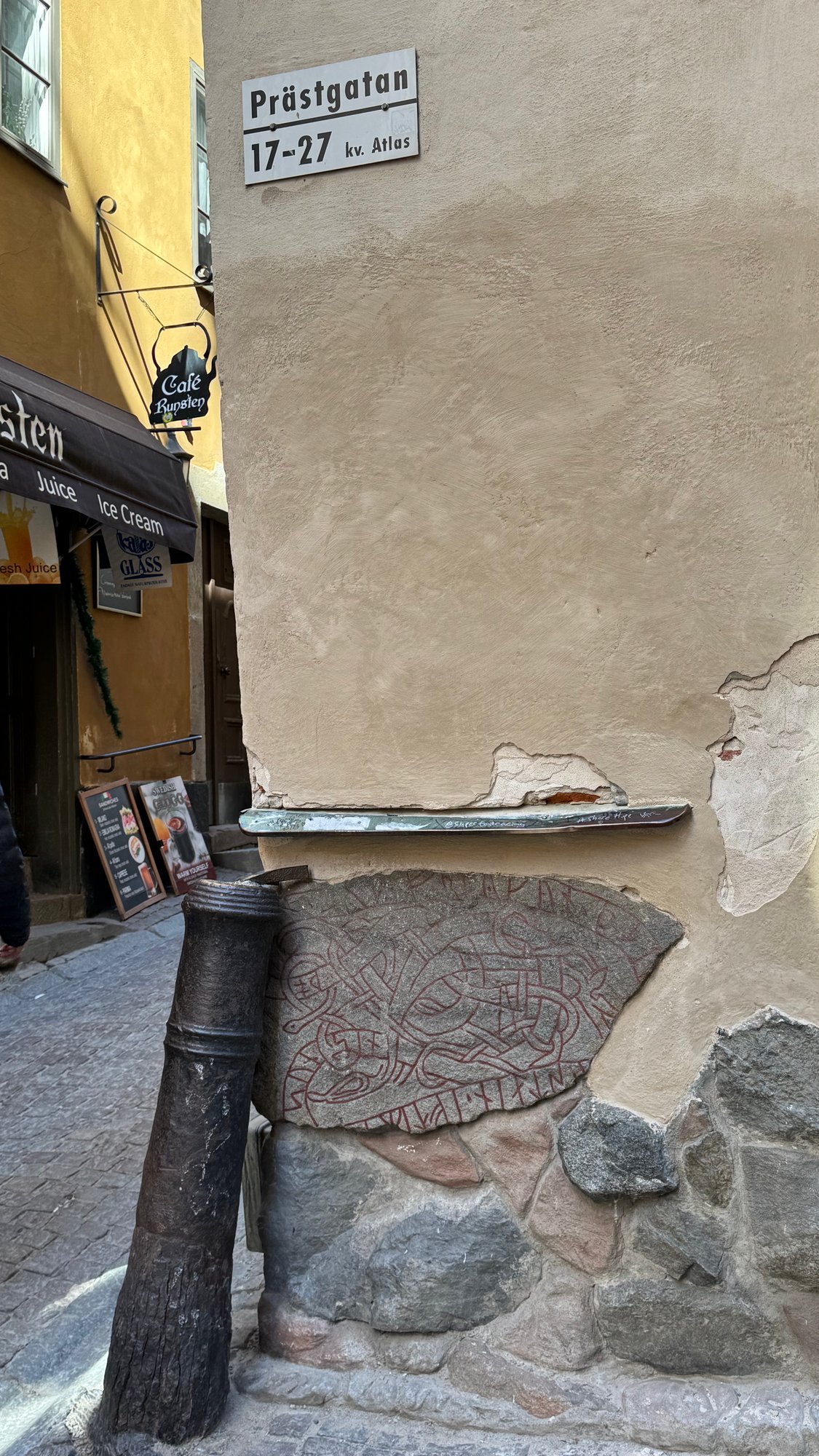
Walk up Kåkbrinken to the corner of Prästgatan. Look down at the wall. A runestone from the 11th century sits in the corner of the house. People walk past it every day without looking. Next to it, an old cannon stands in the street as a bollard.
Tyska kyrkan
The green copper spire you see from almost everywhere belongs to Tyska kyrkan, the German Church. German merchants had great power in medieval Stockholm, and this was their church. Stand in the lanes around it and look up.
Visit: Open Fridays and Saturdays 11:00–15:00, and Sundays 12:00–15:00, outside services. Entry is SEK 30.
Riddarholmen and Evert Taubes terrass
Cross the bridge west to Riddarholmen, the Knights’ Island. Riddarholmskyrkan is the burial church of the Swedish kings. The first king buried here was Magnus Ladulås, who died in 1290. All monarchs from Gustav II Adolf onward rest here except one: Queen Kristina, who is buried in Rome. If you want to know how these royal families connect, read how Swedish royal houses are linked through women.
Visit: The church opens only in the summer season, and it is closed for the rest of 2026. Adults pay SEK 65 and children aged 7–17 pay SEK 30. A combined ticket with the Royal Palace costs SEK 270.
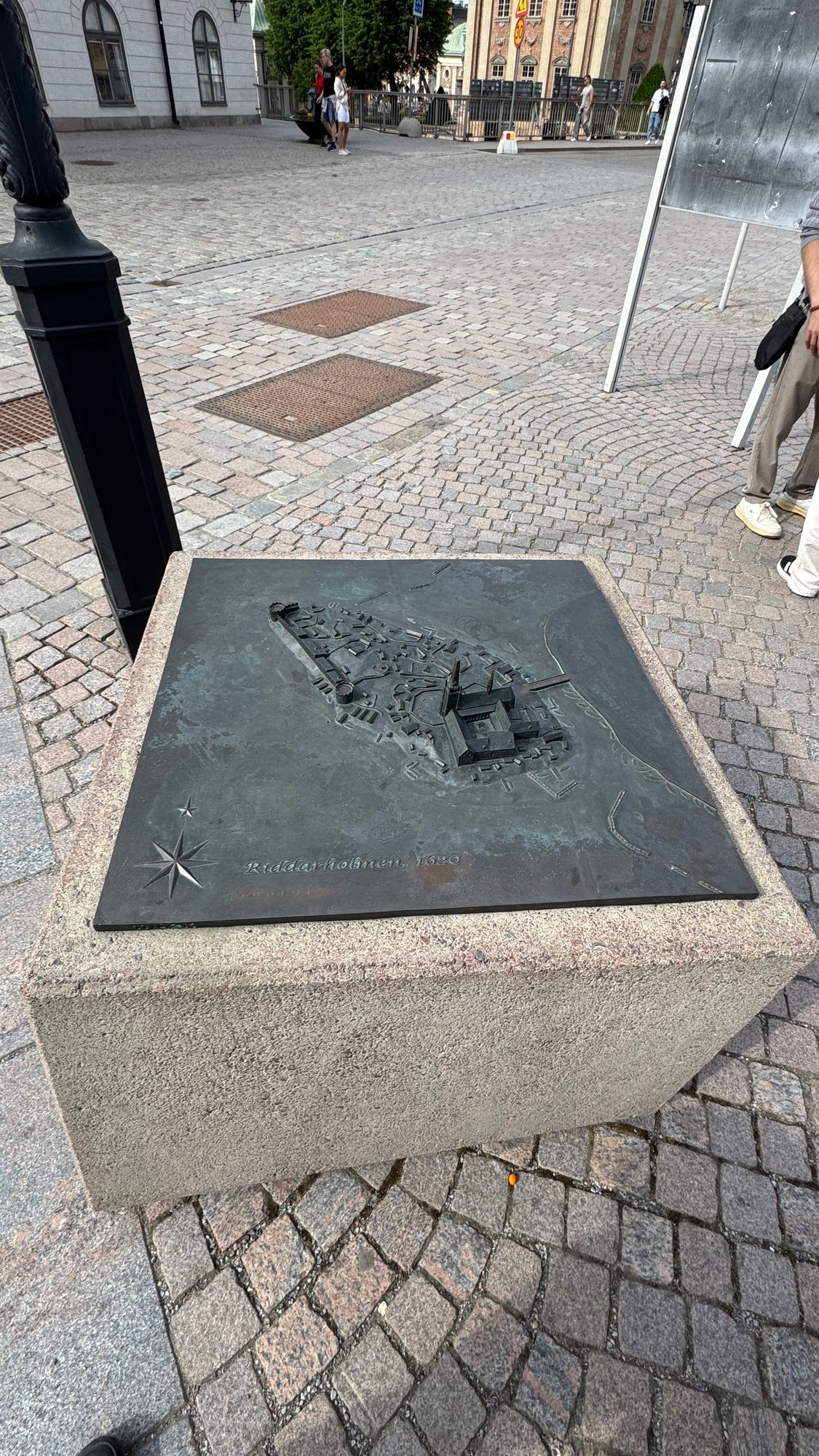
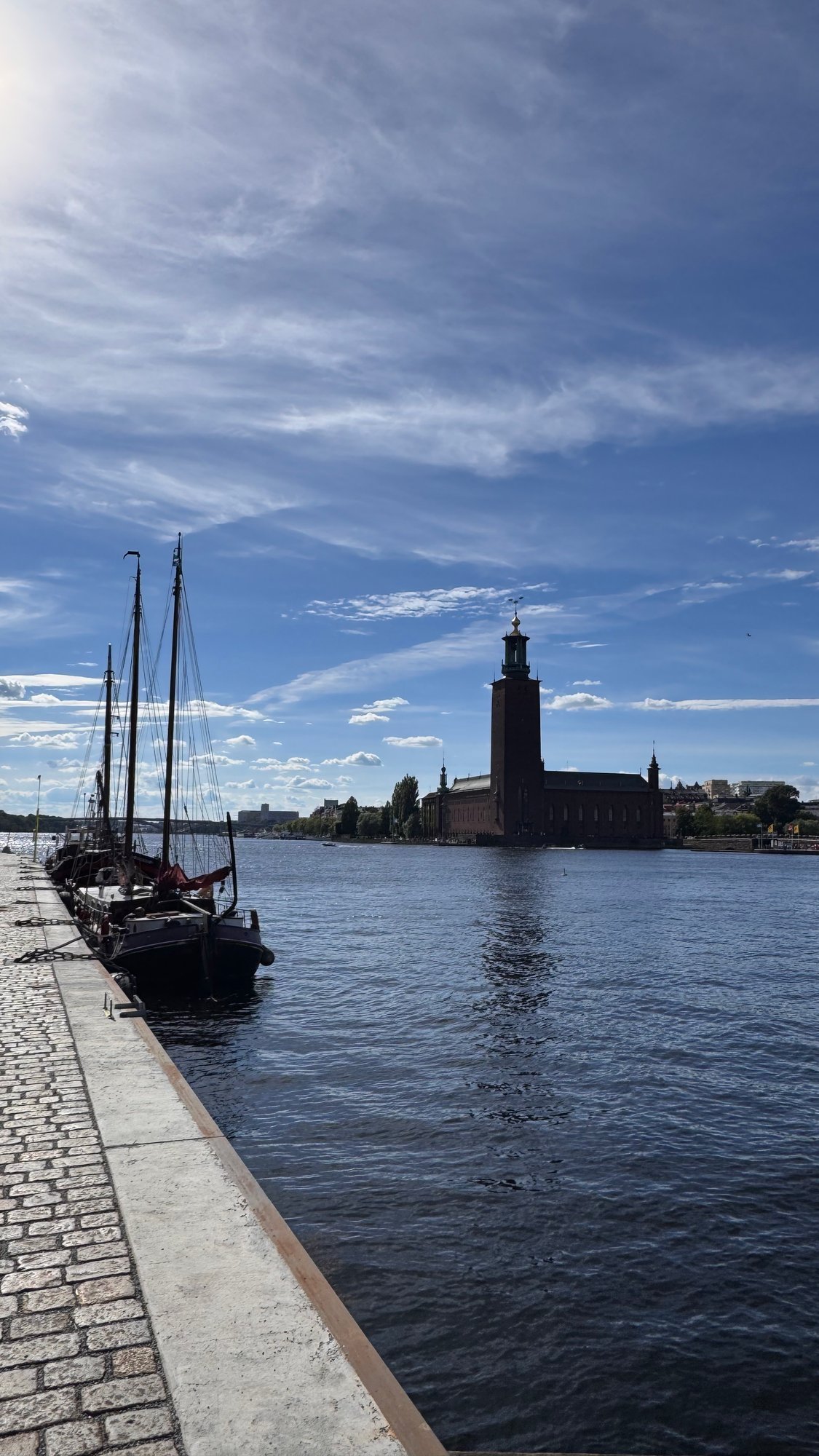
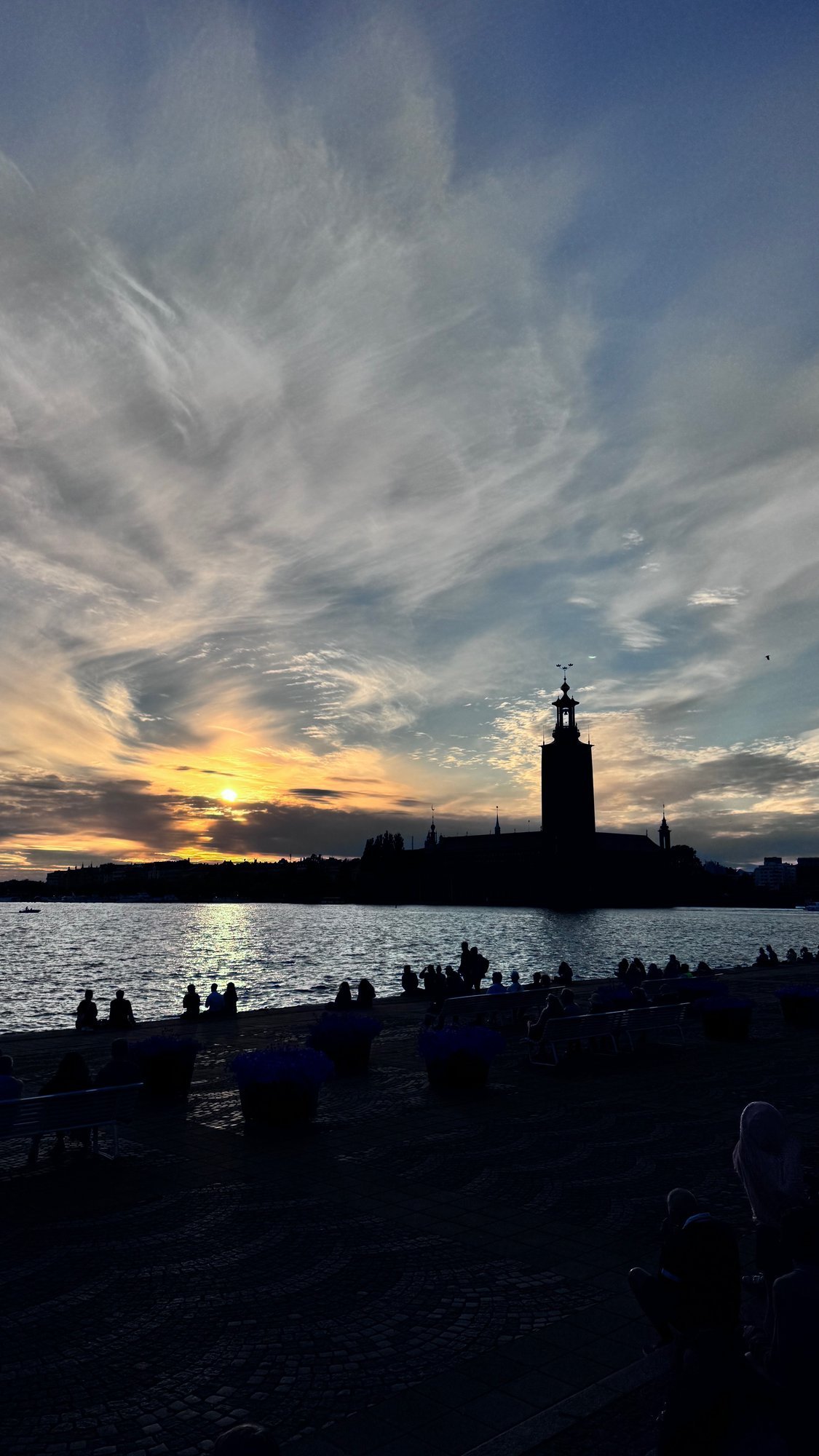
Look for a bronze relief model of Riddarholmen as it looked in 1620. End the walk at Evert Taubes terrass, on the west side of the island. You look across Riddarfjärden to the City Hall. In the evening, people sit along the stone edge and watch the sun go down.
Gamla Stan in spring (March–May)
March is still cold, and the light comes back fast. By May, the evenings are long and the cafés put their tables out on the cobblestones.
What not to miss in spring
- Kulturnatt Stockholm. On one Saturday night in April, museums, churches and cultural venues open for free from 18:00 to midnight. The 2027 date is 24 April.
- Cherry blossoms nearby. In April, the cherry trees in Kungsträdgården bloom. It is a short walk across Norrbro from the palace.
- The guard parade on horseback. On selected days from April to August, a mounted guard parade with music rides through the city to the palace.
- Riddarholmskyrkan opens. The royal burial church opens for its summer season.
Gamla Stan in summer (June–August)
Summer is the busiest time in Gamla Stan. The days are very long. Around midsummer, the sun sets after 22:00 and the sky never gets fully dark.
The main streets are full in the middle of the day. Walk early in the morning or late in the evening, and you get the lanes almost to yourself.
What not to miss in summer
- Stockholm Early Music Festival. Usually in the first week of June. Concerts take place in Gamla Stan venues such as Tyska kyrkan, Finska kyrkan and Storkyrkosalen.
- Sweden’s National Day, 6 June. In recent years, the Royal Palace has held an open day, Öppet slott, with free entry. Check the program for the year you visit.
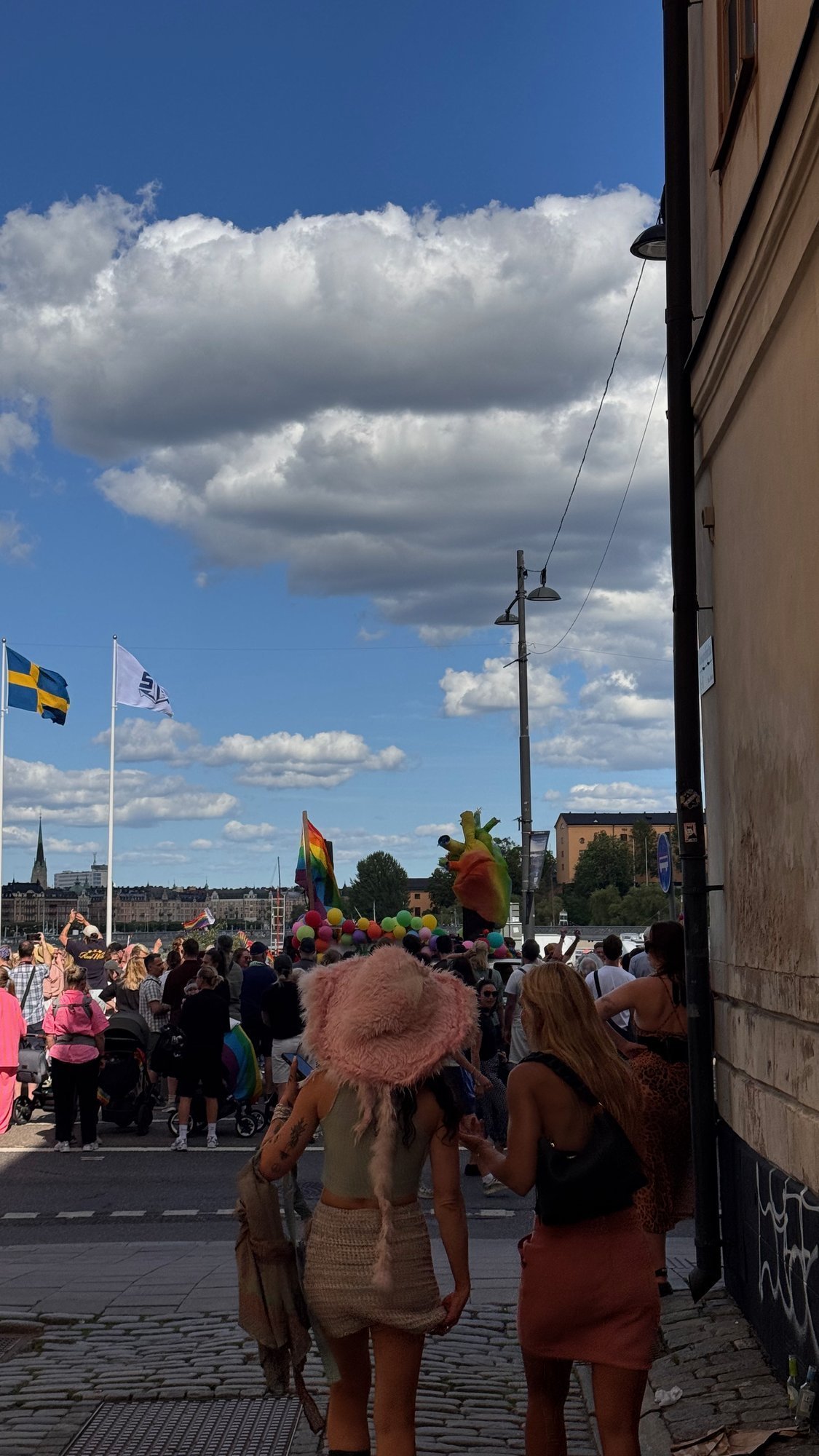
- Stockholm Pride. In 2026, Pride week ran from 27 July to 1 August. The parade on Saturday 1 August passed along the Gamla Stan waterfront and ended at Slussen. My Stockholm’s LGBTQ+ Story walk tells the history behind it.
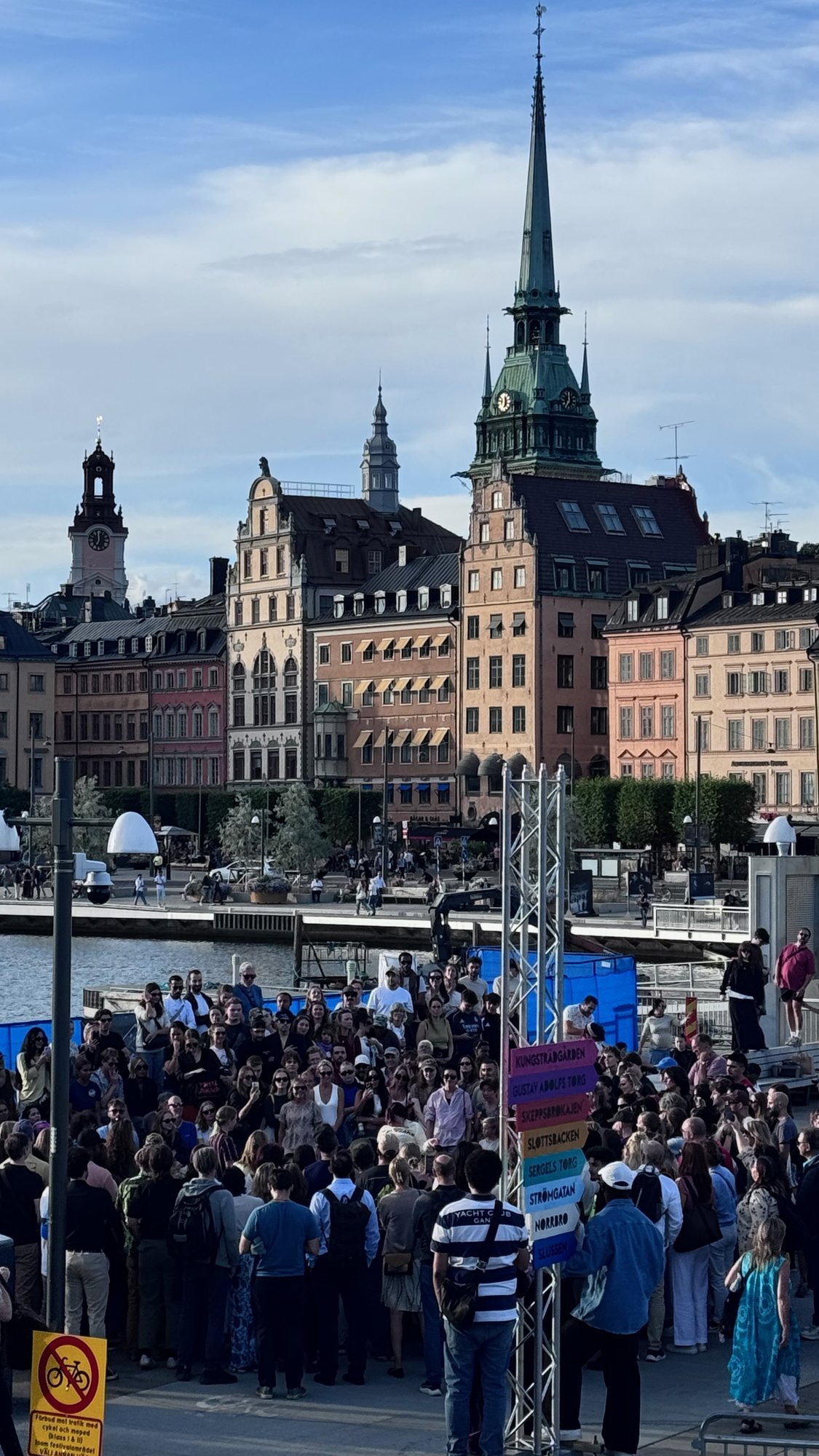
- Kulturfestivalen in August. Stockholm’s culture festival is free and runs for five days in the city center. In 2026 it ran 12–16 August. There were stages and markets on Skeppsbron, Slottsbacken, Skeppsbrokajen and Slussen, all on the edge of Gamla Stan. Read why Kulturfestival week is a good time to visit Stockholm.
- Sunset on Riddarholmen. Evert Taubes terrass is the place for it.
Gamla Stan in autumn (September–November)
After August, there are fewer visitors. The sun is lower, and the light on the facades turns warmer.
What not to miss in autumn
- Kanelbullens dag, 4 October. Cinnamon Bun Day. Every bakery and café in town sells them, so plan your fika for that day.
- The Nobel Prize in Literature. In early October, the Swedish Academy announces the prize from its home in Börshuset on Stortorget. In 2026 it was announced on 8 October.
- The guard parade in Gamla Stan. In November and December, the guard parade starts at Mynttorget in Gamla Stan. It goes around the palace and enters the outer courtyard.
- The Christmas market opens. In 2026, the market on Stortorget opens on Saturday 21 November.
- Museums on rainy days. The Nobel Prize Museum, Museum Tre Kronor, the Postmuseum and the Jewish Museum (Judiska museet) are all in Gamla Stan. You find more in my guide to museums in Stockholm.
Gamla Stan in winter (December–February)
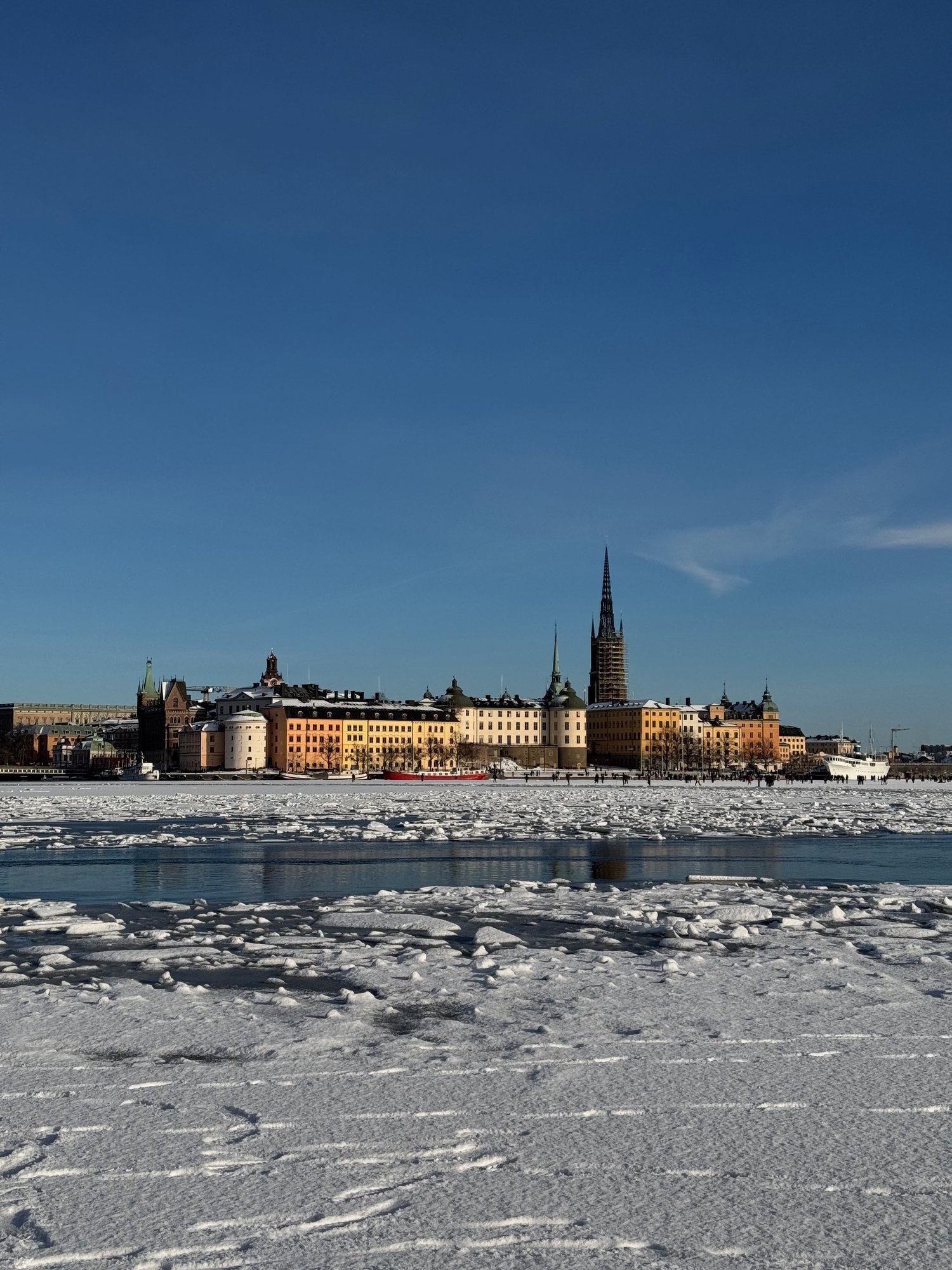
In mid-December, Stockholm has about six hours of daylight. The lamps in the lanes go on in the middle of the afternoon. It is cold. Expect temperatures around zero, and slush on the cobblestones. In a cold winter, ice covers Riddarfjärden.
What not to miss in winter
- The Christmas market on Stortorget. Red wooden stalls fill the square, with glögg (mulled wine), crafts and Swedish Christmas food. In 2026 it runs from 21 November to 23 December. Last year it was open 11:00–18:00 Sunday to Thursday, and 11:00–19:00 on Fridays and Saturdays. The association Stockholms-Gillet has organized it since 1915.
- Nobel Week Lights, 5–13 December 2026. Light artworks inspired by Nobel Prize ideas light up the city center from 16:00 to 22:00. Entry is free. Read why Nobel Week Lights is the best week to visit Stockholm in winter.
- Nobel Day, 10 December. The prize ceremony takes place at the Stockholm Concert Hall. The Nobel Prize Museum on Stortorget is a good stop in Nobel week.
- Lucia, 13 December. Choirs in white gowns sing by candlelight, and the cafés sell lussekatter, saffron buns. Storkyrkan usually holds ticketed Lucia concerts in the days before 13 December. Book early.
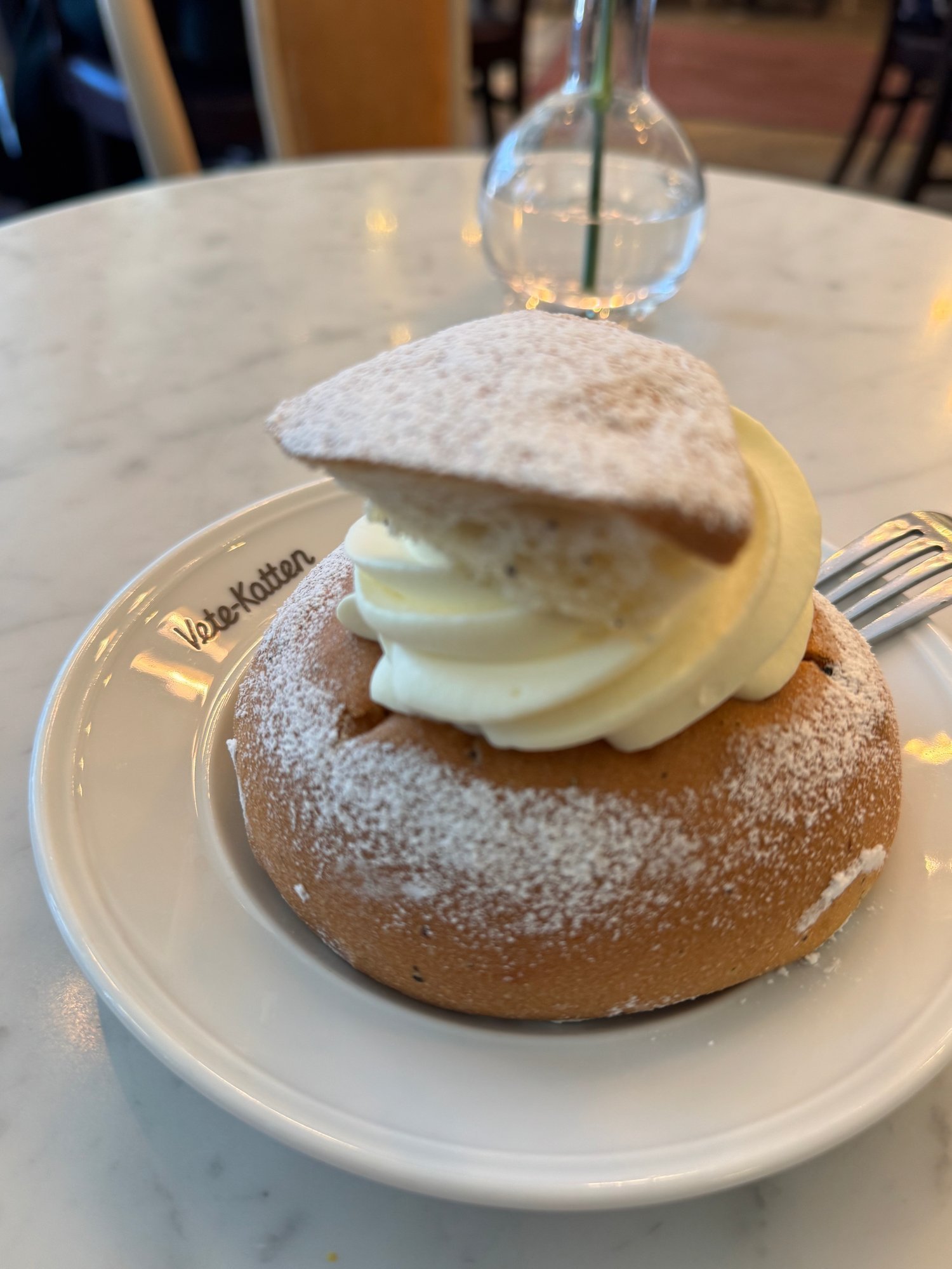
- Semla season. In late winter, the bakeries fill with semlor. Fettisdagen (Shrove Tuesday), the official semla day, is 9 February 2027.
- January and February. The quietest months. Often snow on the roofs, short queues, and time to sit long over fika.
Yearly events at a glance
| Event | When | Where | Cost |
|---|---|---|---|
| Kulturnatt Stockholm | 24 April 2027, 18:00–24:00 | Museums and venues across the city | Free |
| Stockholm Early Music Festival | Usually the first week of June | Churches and venues in Gamla Stan | Tickets |
| National Day, Öppet slott | 6 June | Royal Palace | Free (check the year’s program) |
| Stockholm Pride parade | Late July or early August (2026: 1 August) | Ended at Slussen in 2026 | Free to watch |
| Kulturfestivalen | Mid-August (2026: 12–16 August) | Skeppsbron, Slottsbacken, Slussen and more | Free |
| Kanelbullens dag | 4 October | Bakeries and cafés | Price of a bun |
| Nobel Prize in Literature announcement | Early October | Swedish Academy, Stortorget | Free to follow |
| Christmas market | 21 November–23 December 2026 | Stortorget | Free entry |
| Nobel Week Lights | 5–13 December 2026, 16:00–22:00 | City center | Free |
| Lucia | 13 December, concerts in the days before | Storkyrkan and other churches | Tickets |
| Fettisdagen (semla day) | 9 February 2027 | Bakeries and cafés | Price of a semla |
Most 2027 dates were not published when I wrote this. Check the official sites before you plan.
Opening hours and entrance fees
Checked on 11 October 2026. Prices and hours change, so check the official websites before you go.
| Sight | Open | Adults | Discounts |
|---|---|---|---|
| Royal Palace (Royal Apartments, Treasury, Museum Tre Kronor) | Every day; October 2026: 10:00–16:00; changes with the season | SEK 220 (Oct–Apr), SEK 240 (May–Sep) | Students SEK 200/220; ages 7–17 SEK 110/120; ages 0–6 free |
| Changing of the guard | 12:15; Sundays and holidays 13:15 | Free | — |
| Storkyrkan | 09:30–17:00; 1 June–13 September 09:00–18:00 | SEK 120 | Seniors SEK 90; under 18 free |
| Nobel Prize Museum | September–May: Tue–Sun 11:00–17:00, Fri to 21:00, closed Mon; June: daily 10:00–18:00; July–August: daily 10:00–19:00 | SEK 160 | Students and seniors SEK 120; under 18 free |
| Tyska kyrkan | Fri–Sat 11:00–15:00, Sun 12:00–15:00 | SEK 30 | Parish members free |
| Riddarholmskyrkan | Summer season only; closed for the rest of 2026 | SEK 65 | Students SEK 45; ages 7–17 SEK 30 |
| Royal Palace + Riddarholmskyrkan | When both are open | SEK 270 | Students SEK 250; ages 7–17 SEK 135 |
| Stortorget, Mårten Trotzigs gränd, the runestone, Evert Taubes terrass | Always | Free | — |
Tip: With the Swedish Kulturarvskortet (Cultural Heritage Card) you get 50% off at the royal palaces. Storkyrkan also accepts it.
Practical tips for your walk
Shoes. Gamla Stan is cobblestones, slopes and steps. Wear flat shoes with a good grip, and in winter, boots that can take slush.
Accessibility. Many streets are steep and uneven. Mårten Trotzigs gränd has steps only. You can reach several sights by other routes. If you have mobility or other access needs, contact me before you book, and I will plan an adapted route.
Getting there. Take the subway to Gamla stan station, on the red and green lines. From Slussen, you can also walk in over the bridge. For tickets, see my guide to SL tickets and day passes.
Time of day. The middle of the day is the busiest. Early morning and evening are calmer, in every season.
Mondays. The Nobel Prize Museum is closed on Mondays from September to May. Plan the palace or the cathedral for that day instead.
Frequently asked questions
How long does a Gamla Stan walking tour take?
About two hours covers the main sights at a calm pace. Add one to two hours for each museum you want to go inside.
What is the best season to visit Gamla Stan?
It depends on what you want. Summer has long light, Pride and Kulturfestivalen. December has the Christmas market and Nobel Week Lights. Spring and autumn have fewer crowds.
How much does it cost to visit the Royal Palace in Stockholm?
SEK 220 for adults from October to April, and SEK 240 from May to September. Children aged 6 and under go free.
When is the Christmas market in Gamla Stan in 2026?
From 21 November to 23 December 2026, on Stortorget.
When is the changing of the guard at the Royal Palace?
At 12:15 on weekdays and Saturdays, and at 13:15 on Sundays and public holidays. Times can change, so check the Swedish Armed Forces calendar on the day.
Is Gamla Stan wheelchair accessible?
Partly. The cobblestones, slopes and steps make some streets hard to use. Contact me before you book, and I will plan a route that works for you.
Walk Gamla Stan with me
The Stockholm Old Town Tour is a private two-hour walk for up to eight people, in English, German or Swedish. It includes a Swedish fika. We pass through the main square, and we also find the quieter corners. You hear about the people who lived here, not just the kings. Tell me what interests you, and I shape the route around it.
Tours run all year. Send me your date, group size and language, and I answer within 24 hours.
If you want more than the Old Town, these tours go further:
- Culinary & Cultural Tour: a three-hour walk through Stockholm’s food traditions, ending with fika.
- Full-Day Stockholm Experience: for example, the Old Town in the morning and the archipelago in the afternoon.
You find all my tours on my page of private tours in Stockholm.
Finish with a Swedish fika
Every walk in Gamla Stan should end the Swedish way. Fika is a coffee break with something sweet and time to talk. It is not a coffee to go. You sit down, and you stay a while.
What to order
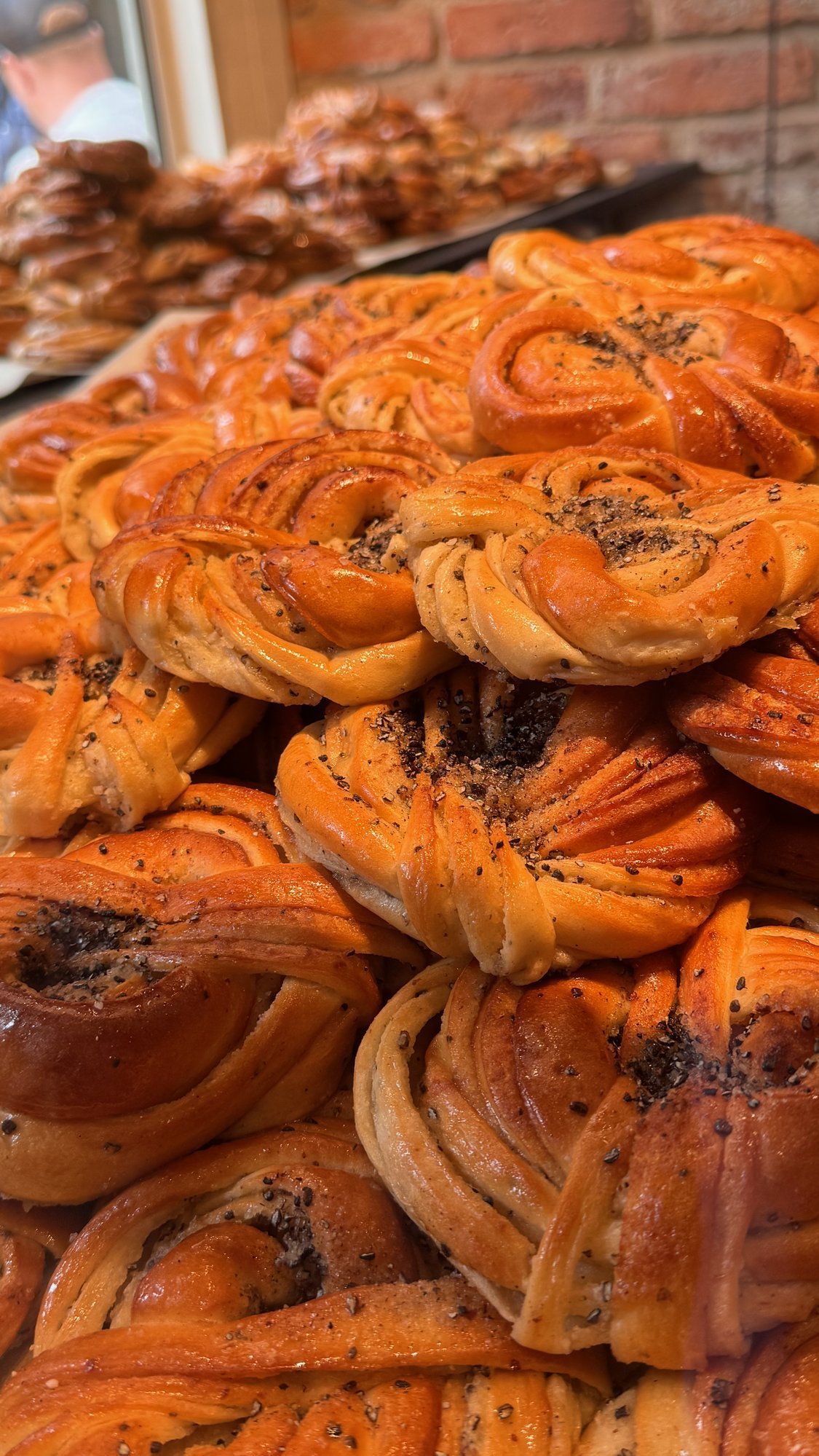
- Kanelbulle and kardemummabulle. The cinnamon bun and the cardamom bun. You find them all year, in every café.
- Semla. A cardamom bun filled with almond paste and whipped cream. It belongs to late winter and Fettisdagen.
- Lussekatt. A saffron bun in an S shape, for December and Lucia.
- Coffee. Swedes drink a lot of it, and a refill is often included with a filter coffee.
Where to have fika in Gamla Stan
- Stortorget. Three classic cafés sit in the old houses on the square: Kaffekoppen, Chokladkoppen and Grillska Huset. You sit with a view of the oldest square in the city.
- Sundbergs Konditori, Järntorget. The oldest konditori (bakery café) in Stockholm. It opened on Drottninggatan in 1785 and moved to Järntorget in 1793.
- Stora Nygatan. Panem is a younger bakery with an American touch.
- Bakery chains. Fabrique and Bröd & Salt also have cafés in Gamla Stan.
Café hours change with the season, so check before you go.
Then sit a while. Gamla Stan has waited more than 750 years. It can wait for you to finish your coffee.
Practical facts: Getting there: subway to Gamla stan station (red and green lines). Time needed: two hours for the main sights, a full day with museums. Best season: summer for long light and festivals, December for the Christmas market and Nobel Week Lights, spring and autumn for fewer people. Budget: walking is free and so are most yearly events. The Royal Palace costs SEK 220–240, Storkyrkan SEK 120 and the Nobel Prize Museum SEK 160, and visitors under 18 go free at the cathedral and the Nobel Prize Museum. Accessibility: cobblestones, slopes and steps, but adapted routes are possible. LGBTQ travelers: Sweden is one of the most LGBTQ-friendly countries in Europe, and Stockholm Pride is the largest Pride in Scandinavia.
All photos by Zayera Khan. Zayera Khan is the photographer and copyright owner.