
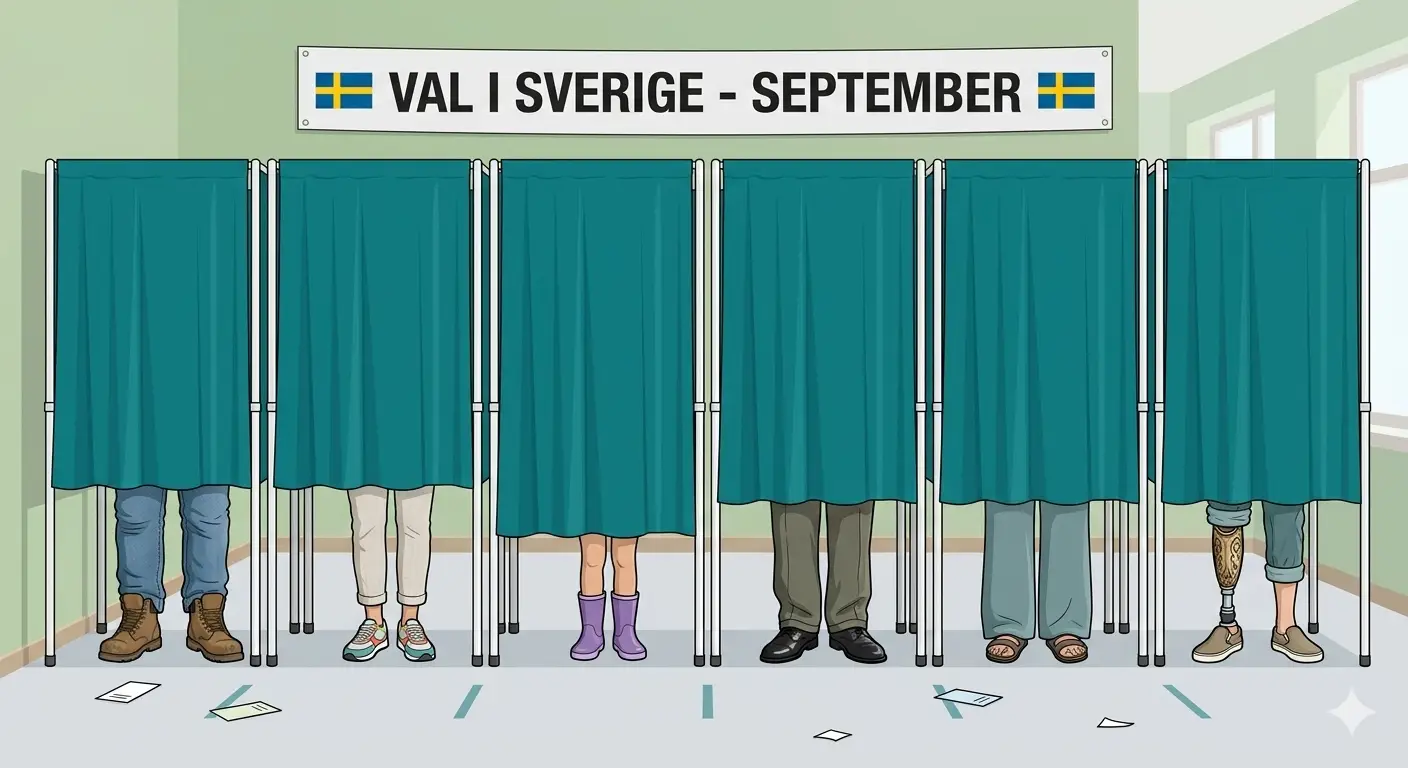
Sweden Votes: Your Guide to the 2030 General Election
CIVIC GUIDES
One day, three ballots, and a system built to make every vote count.
Updated 29 September 2026 · By Zayera Khan
I voted in September 2026. So did almost 7 million other people. In Sweden, voting is ordinary. You see it at the library, in the square, over coffee.
This guide explains how the Swedish election works, who can vote, and what the 2026 result tells us before the next election in 2030.
Next Election: 8 September 2030
Sweden holds a general election every four years, on the second Sunday of September. The next one is on 8 September 2030.
Early voting usually starts about 18 days before election day. The Election Authority publishes the exact dates closer to the election.
Three Elections, One Day
You do not vote once. You vote three times, for three different bodies, on the same day.
The Riksdag election (yellow ballot) chooses the national parliament. It has 349 members. They pass national laws and choose the government.
The Regionfullmäktige election (blue ballot) chooses your regional council. It runs healthcare and regional public transportation.
The Kommunfullmäktige election (white ballot) chooses your municipal council. It runs schools, elder care, and local services.
Each ballot is a separate decision. You can vote for a different party on each one.
Can Foreigners Vote?
It depends on your citizenship and how long you have lived here.
Citizens of an EU country, Iceland, or Norway can vote in the regional and municipal elections as soon as they are registered at a Swedish address. People with other nationalities can vote in those two elections after three years in a row of registered residence.
Only Swedish citizens can vote in the Riksdag election.
These rules can change before 2030. Check them with the Election Authority before you vote.
How Seats Are Won
Sweden uses proportional representation. A party’s share of seats is close to its share of votes.
A party needs at least 4 percent of the national vote to enter the Riksdag, or 12 percent in one constituency.
There are 349 seats across 29 constituencies. 310 are fixed seats. 39 are adjustment seats. They correct the national balance, so the result matches the vote share as closely as possible. A majority needs 175 seats.
Your Personal Vote
You can also vote for a person, not only a party. This is a personal vote, or kryss — a cross next to a candidate’s name.
If a candidate gets personal votes from at least 5 percent of their party’s voters in the constituency, they move to the top of the list. A popular candidate can pass the party’s own ranking.
What 2026 Told Us
On 13 September 2026, 84.9 percent of eligible voters voted. That is higher than in 2022. More than half voted early. The Election Authority confirmed the final result on 19 September 2026.
| Party | Share of votes | Seats |
|---|---|---|
| Social Democrats (S) | 28.0% | 99 |
| Moderates (M) | 19.9% | 70 |
| Sweden Democrats (SD) | 17.5% | 62 |
| Left Party (V) | 8.4% | 30 |
| Centre Party (C) | 7.0% | 25 |
| Christian Democrats (KD) | 6.2% | 22 |
| Green Party (MP) | 6.1% | 22 |
| Liberals (L) | 5.3% | 19 |
| Other parties | 1.6% | 0 |
No party won a majority alone. The four Tidö parties (M, SD, KD, L) won 173 seats. S, V, MP and C together won 176.
You can see the results for your own municipality and region on the Election Authority’s results site: 2026 election results at resultat.val.se (opens in a new tab). It is in Swedish, but the maps and tables are easy to follow.
After Election Night
Sweden rarely gets a single-party majority. Parties negotiate. The Speaker of the Riksdag meets the party leaders and proposes a Prime Minister. The Riksdag then votes. A candidate is accepted unless more than half of all members vote no.
This can take days, weeks, or months. Do not expect a government the morning after.
Vote Early
You do not have to wait for election day. Early voting (förtidsröstning) happens at libraries, community centers, and similar places across the country. Bring valid ID.
If you live abroad, you can vote at a Swedish embassy or consulate, or by mail. Postal votes must arrive before a deadline, so send yours early.
Why Your Vote Matters
Every one of these elections touches your daily life — the hospital that treats you, the school your child goes to, the laws of the country you live in.
I grew up as an immigrant in Sweden. Voting was one of the first things that made me feel I had a say here, not only a place to live. High turnout is not an accident. It is a habit, and a habit can be lost.
Official details, polling locations, and registration information are at val.se, the Swedish Election Authority (opens in a new tab).
Will you use your vote in 2030?
Quick Facts
Next election: 8 September 2030. Early voting: usually starts about 18 days before, ID required. Eligibility: Swedish citizens vote in all three elections. EU, Iceland, and Norway citizens vote in the regional and municipal elections from registration. Other nationalities after three years of residence. 2026 turnout: 84.9 percent. Results: Full 2026 results by municipality and region (opens in a new tab). Official information: Election Authority guide in English (opens in a new tab).
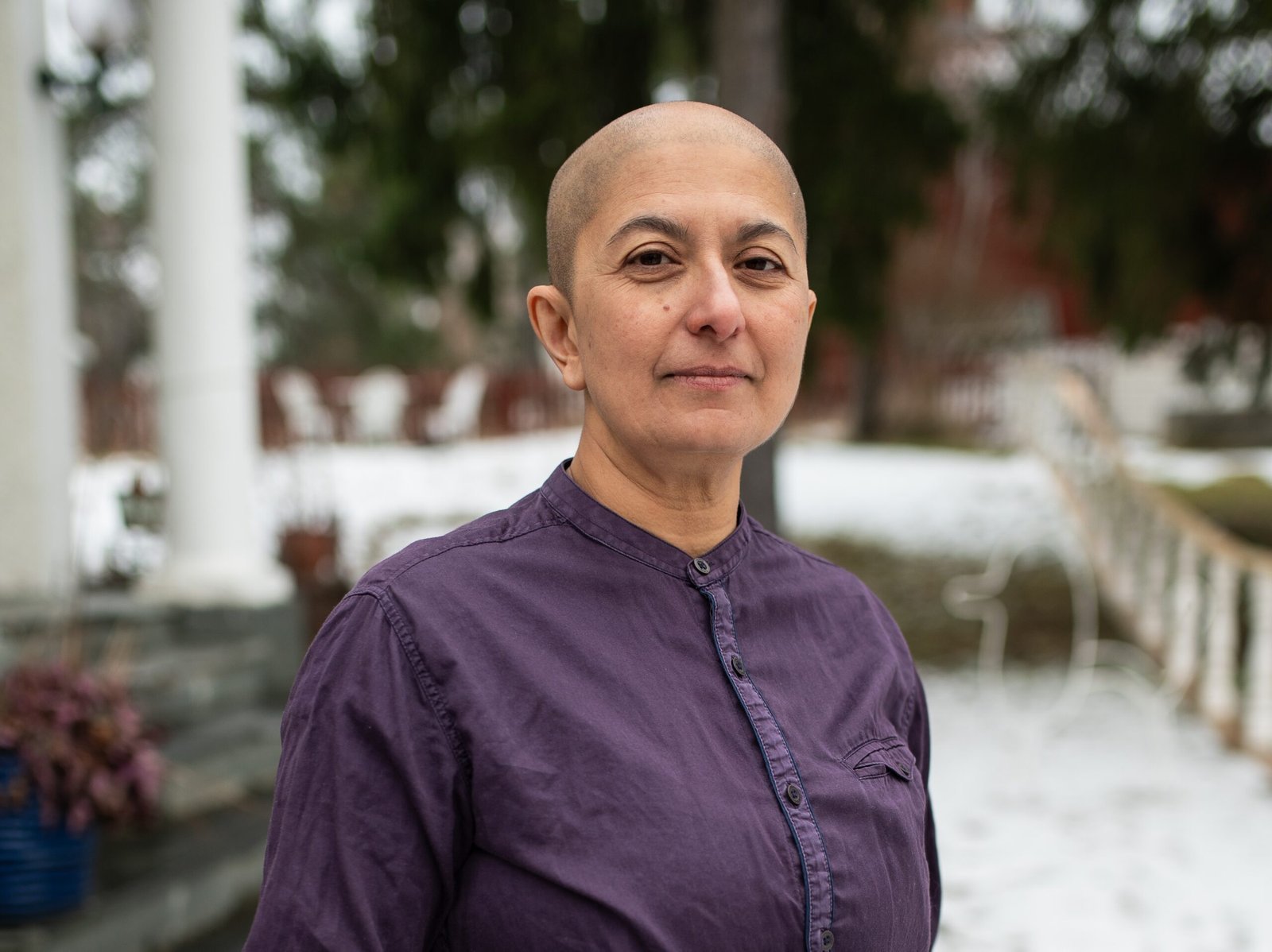
ABOUT THE AUTHOR
Zayera Khan is a certified tour guide and civic advocate based in Stockholm, Sweden. A former UX strategist, she now leads tours across the city and writes about travel, culture, and life in Sweden.
I talk about life in Sweden on my tours too — the good parts and the hard parts. We walk past the Riksdag and through Gamla Stan, and you can ask me anything. See my Gamla Stan walking tour.