
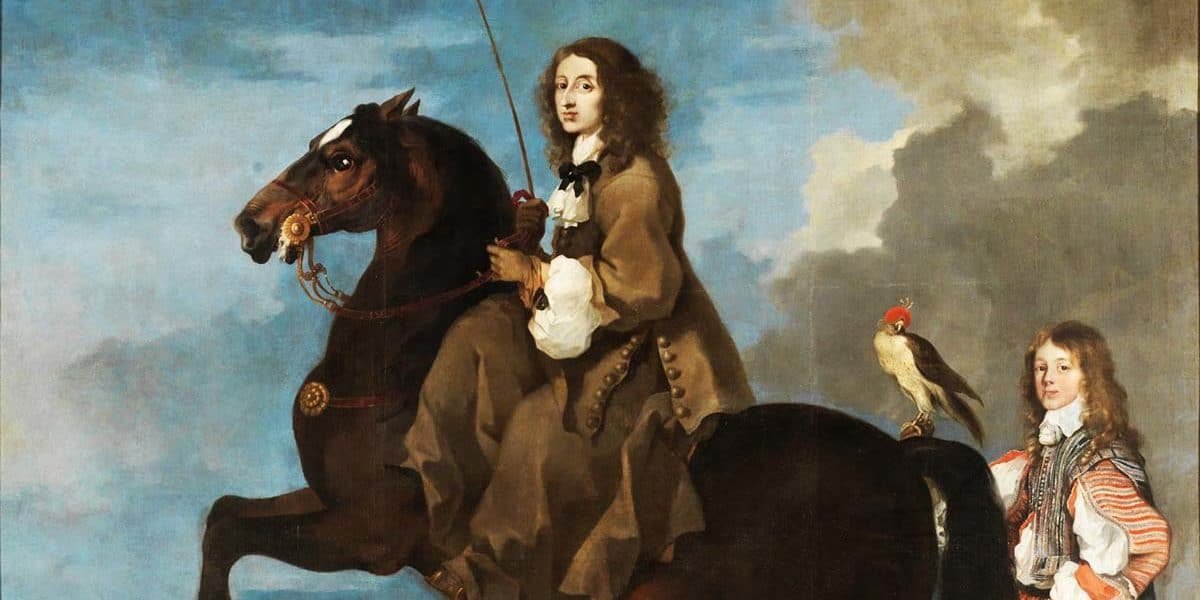
Queen Kristina of Sweden: Crowned King, Free by Choice
She was crowned king, refused a husband, gave away a crown and chose her own faith. Europe called her eccentric. Maybe she was only free.
I live in Stockholm. I first heard of Kristina as a teenager, in a history lesson at school. A queen who was crowned king, refused to marry and gave away her crown. I was fascinated, and I never quite let her go.
Few people in Swedish history have been described in so many ways: genius, traitor, lesbian icon, spoiled queen, philosopher, murderer, feminist. On 8 December 2026 it is 400 years since her birth. A good time to ask what is fact, what is theory and what is gossip that men wrote down and called history.
Quick facts
- Born: 8 December 1626 at Tre Kronor Palace, Stockholm (Livrustkammaren). SBL gives 7 December. In the calendar we use today, the date is 18 December.
- Parents: King Gustav II Adolf and Maria Eleonora of Brandenburg.
- Queen: from 6 November 1632. She ruled herself from 8 December 1644.
- Crowned: 20 October 1650 in Storkyrkan, Stockholm.
- Abdicated: 6 June 1654 in Uppsala.
- Became Catholic: in secret in Brussels on 24 December 1654, in public in Innsbruck on 3 November 1655.
- Died: 19 April 1689 in Rome (9 April in the old Swedish calendar).
- Buried: in the Vatican Grottoes under St Peter’s Basilica.
- Married: never. Children: none.
A girl in a kingdom that wanted a son
Kristina wrote about her own birth in her memoir, late in her life. The baby was born covered in a caul and with much hair. In the first confusion, the women in the room announced a prince. Then they looked again. (Rodén in Signum, about Kristina’s memoir.)
It is a good story. It is also a story that Kristina chose to tell, and she told it to show that she was “almost” a boy from the start. We will come back to that.
What matters more is a law. In 1604, at a meeting in Norrköping, the Swedish estates decided that a daughter could inherit the crown if there was no son. The aim was to keep the crown in Karl IX’s family line. So when Kristina’s father died, no one could stop a five-year-old girl from becoming monarch. (SKBL)
That law lasted exactly 50 years. Keep that in mind. It ended with Kristina herself.
Her mother: the most slandered queen
For a long time, Kristina’s mother was the villain of this story. Maria Eleonora of Brandenburg was described as hysterical, a bad mother, and “a cross for her household”. The Swedish women’s biographical lexicon (SKBL) calls her one of the most libelled queens in the historical records. Historian Karin Tegenborg Falkdalen shows that this image comes from her power struggle with the Swedish council after the king’s death.
Her background. Maria Eleonora was born on 11 November 1599 in Königsberg (now Kaliningrad). Her father was Johan Sigismund, Elector of Brandenburg. Her mother, Anna of Prussia, was an heiress to large lands and a strong-willed woman. It was Anna who had the last word on her daughter’s marriage. Maria Eleonora’s brother, the new elector, wanted another husband for her. Her mother and sisters made the Swedish match happen anyway. Other suitors included the future kings Władysław IV of Poland and Charles I of England. (SKBL)
Her marriage. She came to Sweden in the autumn of 1620 and married Gustav II Adolf. Axel Oxenstierna thanked God that the king had such a virtuous and well-formed wife. Maria Eleonora loved theater, architecture, art and music. She supported musicians, artists, actors and dancers. (SKBL)
Her children. A queen’s main task was to give birth to a son. Her pregnancies were hard. A daughter was stillborn in 1621. A second daughter, Kristina Augusta, lived from October 1623 to September 1624. A son was stillborn in 1625. Only the third daughter, our Kristina, lived to be an adult. (SKBL)
What happened to her. After the king died, she asked for a place in the regency government. Her mother-in-law, Kristina of Holstein-Gottorp, had held power before her. The council said no. She wanted to choose her daughter’s husband, and she even tried to marry Kristina to her cousin Karl Gustav. The council said she acted too independently. (SKBL)
She kept the king’s body unburied until 1634. Older history calls this madness. SKBL says it can also be seen as an attempt to get him a funeral fit for his status, which took time and money. Black-draped rooms were the custom for royal widows.
In 1636 the council took Kristina away from her. They said she neglected her daughter, taught her to dislike Sweden and kept a court that was “too German”. She was moved to Gripsholm. In the summer of 1640 she left Sweden. Wikipedia: Maria Eleonora of Brandenburg says she escaped at night through a window. She lived in Denmark and then in Brandenburg. The council had her name taken out of the church prayers. (SKBL)
The return. When Kristina became the ruling queen, she worked to bring her mother home. Maria Eleonora came back in 1648, after eight years abroad. She lived mostly at Nyköpingshus, and Kristina gave her the palace Makalös in Stockholm. (SKBL)
She lived to see her daughter give away the crown in June 1654. SKBL calls it a great grief for her. She died in Stockholm in March 1655 and lies next to her husband in Riddarholmskyrkan. Kristina was then on her way to Rome. Mother and daughter never met again.
Here is the feminist twist. In her memoir, Kristina distanced herself from her mother and from everything “feminine” her mother stood for. SKBL notes that this text has colored how later generations see Maria Eleonora. Kristina needed to look like her heroic father, to be accepted as a monarch. So one woman built her legitimacy partly by writing another woman down.
1632: the king dies at Lützen
Gustav II Adolf was killed at the battle of Lützen on 6 November 1632. Kristina was a few weeks short of her sixth birthday. SKBL calls her five years old, Livrustkammaren calls her six. Both are right, in a way.
A regency government ruled Sweden until she came of age. Its leading man was Chancellor Axel Oxenstierna. The estates swore their oath to her on 29 July 1634. (SBL) At the age of six she was presented to the four estates and received foreign envoys. It was the role of queen, not Kristina the person, that was in the spotlight. (Livrustkammaren)
The aunt who gave her a home
When the council removed Kristina from her mother in 1636, another woman stepped in. Katarina, the half-sister of Gustav II Adolf, took the girl to Stegeborg Castle in Östergötland. Katarina was married to Johan Kasimir, Count Palatine.
SKBL describes the years from 1636 to 1638 as a harmonious family life for Kristina. She became close to Katarina’s son Karl Gustav, her cousin. Then Katarina died suddenly in December 1638. Kristina lost a second mother before she was twelve.
Katarina is rarely named in the story of Kristina. She should be. She gave the queen her only safe childhood, and she gave Sweden its next king.
Raised to be a king
Gustav II Adolf left orders: his daughter should get a man’s education and learn what a young prince needs to rule. (SBL) Her guardian was Axel Banér, and Gustaf Horn was his deputy. (SKBL)
Her teachers. The theologian Johannes Matthiae Gothus taught her classical languages, history and religion. He had the longest influence on her. (SKBL) He was a peace-seeking theologian who wanted Christian unity, which worried stricter Lutherans. From 1636, Axel Oxenstierna himself spent three to four hours a day teaching her the art of ruling. (SKBL)
The rules. On 24 March 1635 the estates decided the content of her education. The core was God’s word and Christian faith. She must not be “infected” by Catholic or Calvinist errors. (SKBL) That plan did not work out.
What she learned. She learned to speak, and partly write, French, German, Italian and Dutch. She knew Latin well and had some Greek, Hebrew and Arabic. She studied classical philology, philosophy, theology, mathematics and astronomy. She also rode and hunted. (SBL)
What the men said. When she was seven, Gabriel Oxenstierna wrote that the young queen had an extraordinary mind. Axel Oxenstierna later told the council that he was glad she was “not like a woman” but brave and of good understanding. (SBL)
Read that again. The highest praise a man could give her was that she was not like a woman.
Coming of age and the coronation of a “Konung”
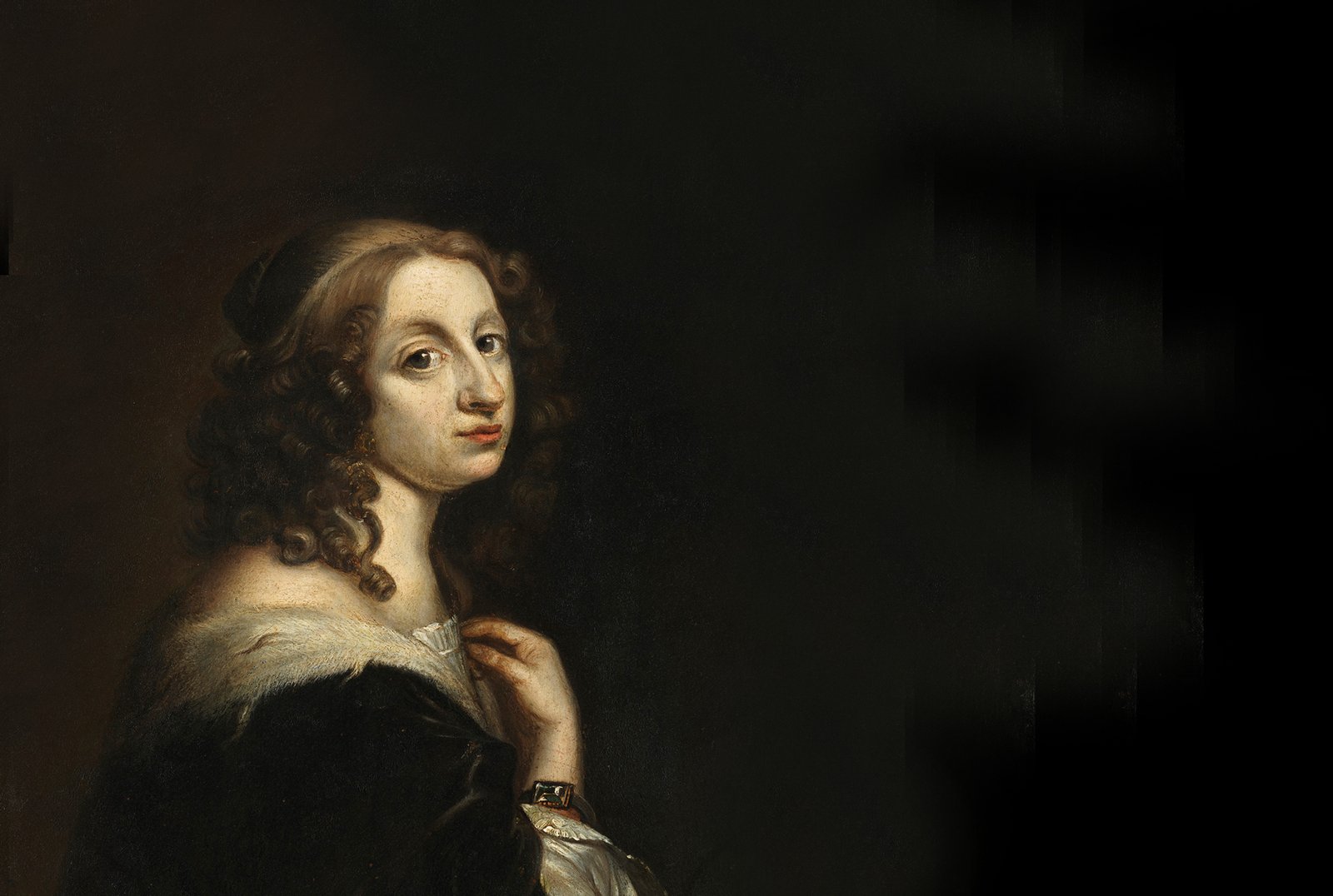
Kristina came of age on 8 December 1644, her 18th birthday. The French diplomat Pierre Chanut wrote that she spoke French as if born in the Louvre, and Latin as her mother tongue. She went to council meetings and studied every case. She wanted to rule herself. (SBL)
The coronation had to wait for peace. It took place on 20 October 1650 in Storkyrkan. Livrustkammaren calls it the most expensive coronation ever seen in Sweden. After the ceremony, a herald called out: “Nu är Kristina krönter Conung” — now Kristina is crowned king. (Livrustkammaren)
The procession started at Jakobsdal, the palace we now call Ulriksdal, north of Stockholm. It was so long that when the first carriages reached Tre Kronor, the last ones had not yet left Ulriksdal. Forty warships lay in Strömmen. (Kungliga slotten) Kungliga slotten also writes that she refused to wear the queen’s crown. She was proclaimed king.
There was one practical question. Kings rode a horse to church. Should she ride or go by carriage? She chose a carriage from Paris pulled by six white horses. The coronation horse walked behind her with an empty side-saddle. (Livrustkammaren)
So: a king in title, a lady’s saddle on the horse. That one picture says a lot about her position.
Her coronation carriage has been rebuilt. The original textiles and the harness for six horses were kept in Livrustkammaren for more than 300 years. The reconstruction began in the 1980s, and the whole carriage with six white horses was shown again for the first time since the 1600s. It now stands in the 18th-century stables at Ulriksdal. (Kungliga slotten)
Peace in Westphalia: her win or Oxenstierna’s?
The Peace of Westphalia ended the Thirty Years’ War in October 1648. Swedish propaganda called Kristina the “Queen of Peace”. (SKBL)
Historians do not agree on her role. SBL (Curt Weibull) says she pushed the peace through, partly because the war made the high nobility stronger. SKBL (Marie-Louise Rodén) is more careful. The papal negotiator Fabio Chigi thought Oxenstierna led the Swedish line. Chanut thought Kristina changed her mind with the war news.
My article on Margareta I shows that research does not support the idea that women rulers are naturally more peaceful. Kristina proves the point. She wanted peace when it served her power, and she later planned a war for Naples.
The Minerva of the North
Kristina wanted to make Sweden a cultural great power. (Livrustkammaren) Europe called her the “Minerva of the North”, after the goddess of wisdom. (SKBL)
Descartes. Chanut put her in contact with the French philosopher René Descartes in 1646. They wrote long letters on philosophy. She invited him to Stockholm, and he arrived in early October 1649. Later in his stay, he came to her study at five in the morning, two or three times a week. He died on 11 February 1650. SBL says an epidemic, most likely influenza. Most other sources say pneumonia. (SBL)
The story that Kristina “killed Descartes” with early lessons and a cold palace is popular. It is a theory, not a fact. An epidemic was going through Stockholm.
Descartes also wrote the statutes for her academy. (SBL) He was first buried in Stockholm, in the churchyard where Adolf Fredriks kyrka now stands. His remains went to France in 1666. (Svenska kyrkan, Adolf Fredrik)
Other scholars. Claude Saumaise lived at the palace with his family from the summer of 1650 to the autumn of 1651. Others came for short or long stays: Isaac Vossius, Nicolaas Heinsius, Christian Ravius, Johannes Freinshemius, Johannes Schefferus, Samuel Bochart, Hermann Conring, Gabriel Naudé and the doctor Pierre Bourdelot. The artists Sébastien Bourdon and David Beck painted her. (SBL, SKBL)
A woman guest. Among the visitors was Leonora Christina, daughter of the Danish king Christian IV. She later wrote Jammersminde, the famous account of her own long imprisonment. (SBL) Two of the most educated women in the North, in the same room.
Books and war loot. Her library at Stockholm Palace was one of the largest in Europe. (SBL) Much of it was bought by agents she sent across Europe. Much was also loot. After the Swedish army took Prague in 1648, Emperor Rudolf II’s great art collection was shipped to Stockholm. (SBL) Culture built on war. That is also part of her story.
Madame de Motteville, a French court lady, wrote that science was to Kristina what the needle and the spindle were to other women. (Quoted in SBL)
“It is impossible for me to marry”
Everyone wanted Kristina to marry and give birth to an heir. Candidates in 1647–1648 included Frederick William of Brandenburg, a duke of Saxony and her cousin Karl Gustav. (SKBL)
In the council in 1649 she said it plainly. Marriage was impossible for her. She would keep her reasons to herself. Her mind was not set on it. (SBL, translated from Swedish)
She never explained more. So all explanations are guesses. Here are the main ones:
- Power. A married queen had to share power with a husband, and often with his family. Historian Erik Petersson made this point on Sveriges Radio in 2013.
- Her body and her life. Marriage meant pregnancy after pregnancy. She had seen what that did to her mother.
- Her desire. She may simply not have wanted a man. See the next section.
From a feminist view, the most important fact is simple. A woman with absolute power said no, and the most powerful men in Sweden could not make her say yes.
Ebba Sparre, men’s clothes and the gender debate
This is the part of Kristina’s life with the most gossip. So here, facts and theories are kept apart.
Facts with good sources:
- Kristina refused to marry. (SBL)
- She left Sweden in men’s clothing, under the name “Count Dohna”. This is in many secondary sources, but not in SBL or SKBL.
- Livrustkammaren calls her “the woman who was crowned king”. In 2013, its exhibition Images of Kristina followed her from lonely child queen to independent woman in Rome and today’s “Queer Queen”.
Ebba Sparre. Ebba Sparre was a lady-in-waiting at court from 1644, known as la belle comtesse. According to Wikipedia: Ebba Sparre, Kristina introduced her to the English ambassador Bulstrode Whitelocke as her “bed-fellow”. After 1654 she wrote Ebba passionate letters. Kristina arranged Ebba’s marriage to Jakob Kasimir De la Gardie in 1653.
Two cautions. Sharing a bed was common at courts at that time. And a volume of “secret letters” from Kristina to Ebba, printed in 1761, is a forgery (Wikipedia). Historian Erik Petersson said on Sveriges Radio that historians agree Kristina had a relationship with Ebba Sparre. What kind of relationship, we cannot prove.
Sébastien Bourdon also painted Ebba Sparre in 1652–53. For a long time the painting was catalogued as a portrait of Kristina. It is now in the National Gallery of Art in Washington, under Ebba’s name. (National Gallery of Art)
The “intersex” theory. In 1937 the doctor Elis Essen-Möller suggested that Kristina was a “pseudo-hermaphrodite”. The writer Sven Stolpe spread the idea in his biography of 1960–61. (Rodén in Signum)
In December 1965 her grave in St Peter’s was opened. The anatomist Carl-Herman Hjortsjö led the work. The aim was to cast her silver death mask, but her skeleton and pelvis were also studied to see if she was “really” a woman. (Livrustkammaren) Livrustkammaren states the answer: yes, she was.
Historian Marie-Louise Rodén calls the genital theories tasteless speculation. They try to explain her education as a king and her refusal to marry with a “biological error”. (Signum, 2005)
Think about what happened here. A woman refused a husband and wore what she wanted. Three hundred years later, men opened her coffin to measure her pelvis. That is the feminist story in one act.
Her own view of women. It would be easy to make Kristina a feminist hero. She was not one. SKBL mentions her “problematic attitude toward women’s role”. In her memoir she distanced herself from women and from her mother. She wanted to be seen as an exception, not as a champion for other women.
Both things are true. She broke almost every rule for women of her time. And she did not like women very much as a group. Many women who got power in men’s worlds have done the same.
Why her cousin Karl Gustav?
Karl Gustav was the son of Aunt Katarina. He and Kristina grew up together at Stegeborg. He was even a marriage candidate. Her mother had tried to arrange that match. (SKBL)
Kristina did not marry him. She made him her heir instead. In 1649 the parliament accepted him as successor. In 1650 she wanted more: a hereditary right for him and his sons. The nobility fought it. The commoners were angry at the nobles, who had received huge amounts of crown land. Kristina used that anger and pushed the commoners against the nobility. On 9 October 1650 Karl Gustav and his male heirs were accepted as heirs to the throne. (SBL, SKBL)
Why him? The sources give these reasons:
- To protect the monarchy. SBL says the high nobility was close to turning the king into a decoration. A secure heir weakened the council.
- To be free to stay unmarried. With an heir in place, the main argument for marriage was gone.
- Because he was Vasa blood, through his mother Katarina, Karl IX’s daughter.
- Because she knew and trusted him from childhood.
Note the words “male heirs”. With that decision, Kristina herself closed the door that the 1604 law had opened for daughters. SKBL writes that the transfer of the crown to Karl Gustav and his male heirs ended the first 50 years when a woman’s right to inherit the Swedish crown was written into law.
The queen who used women’s right of succession was also the queen who ended it.
Why she gave up the crown
The first attempt. On 7 August 1651 Kristina told the council she had decided to abdicate. The council was shocked. Oxenstierna wrote to her and begged her to stay. She waited. In February 1654 she told them again. This time no one could stop her. (SBL)
The day. On 6 June 1654 in Uppsala she put down the crown. One popular account says that Per Brahe, the High Steward, refused to lift the crown from her head, so she took it off herself (Historiens Värld). It is not in SBL or SKBL.
Her own words. In 1651 she said there were reasons she could not yet reveal. In 1654 she said she had always kept quiet about the true cause, and that it would become clear in time. (SBL)
The explanations:
- Her Catholic faith. This is Curt Weibull’s view in SBL. On 2 August 1651 she sent the Jesuit Antonio Macedo to Rome to say she wanted to become Catholic. Two Jesuits, Paolo Casati and Francesco Malines, came to Stockholm in early 1652. (SKBL) Under the Swedish religion law of 1617, a person who became Catholic lost all rights to inherit and was exiled from the realm. (SBL) A Catholic could not rule Protestant Sweden.
- She first wanted to stay. SBL says she first planned to become Catholic in secret and to keep living in Sweden, on Gotland or in Stockholm. Only when the Jesuits said no in the spring of 1652 did she decide on Rome.
- Marriage and heirs. The pressure would never end while she was queen.
- Less interest in ruling. SKBL says her interest in her role as monarch clearly declined in her last years on the throne.
- Health. SBL mentions serious illnesses that made the question of an heir urgent.
Other historians, such as Nils Ahnlund (1931), Sven Ingemar Olofsson (1953) and Sven Stolpe (1959–61), weigh these reasons differently. (SBL) Perhaps one reason is not enough. Faith, freedom and power all point in the same direction.
She did not leave poor. The abdication agreement gave her a large lifelong income from lands in Sweden, Pomerania and the Baltic region. (SKBL) She also kept her status as a sovereign queen, with legal power over her own court. (SBL) Remember that. It matters in Fontainebleau.
The road south
Older sources say she said goodbye to her mother at Nyköping, then went to Halmstad, where she sent her Swedish servants home. She continued by way of Hamburg and Antwerp to Brussels (Catholic Encyclopedia, 1908).
In Brussels, in the Spanish Netherlands, she became Catholic in a private ceremony on Christmas Eve 1654. Almost a year later, on 3 November 1655, she made her faith public in the Hofkirche in Innsbruck. Pope Alexander VII wanted all of Europe to know before he received her. (SKBL, SBL)
Rome: Christina Alexandra
On 23 December 1655 she rode into Rome through the Porta del Popolo. Bernini had reworked the gate in her honor. The inscription is still there: Felici faustoque ingressui anno Dom MDCLV — for a happy and blessed entry in the year of our Lord 1655. (SBL) She took the name Kristina (Maria) Alexandra. (SBL)
For the Catholic world, her arrival was revenge for the Thirty Years’ War. The daughter of the Protestant hero had come to the Pope. (SKBL)
The meeting itself was a disappointment for both. The devout Alexander VII found her short on outward piety. She laughed, talked freely and spent time with young men. SBL calls her behavior “emancipated” and unheard of in Rome at that time.
Three palaces. She lived first in Palazzo Farnese, then in Palazzo Rospigliosi (Royal Society archive). In 1659 she moved to Palazzo Riario, below the Janiculum hill. She lived there for almost 30 years. (SBL) Today it is called Palazzo Corsini.
Decio Azzolino. The Pope asked Cardinal Decio Azzolino to introduce her to Roman society. He was her age and very clever. He led a group of cardinals called the Squadrone Volante, the “flying squad”, who wanted the papacy to be independent of France and Spain. Kristina became their royal protector. SKBL calls her bond with Azzolino a romantic friendship that lasted for the rest of their lives. He was her heir. He died a few weeks after her.
Her letters to him from Hamburg, written in 1666–1668, are kept in Riksarkivet. You can see scans of her letters to Azzolino on Wikimedia Commons. (Livrustkammaren)
Fontainebleau 1657: a queen who killed
In 1656 Kristina made a secret deal with Cardinal Mazarin of France. France would take the Kingdom of Naples from Spain, and Kristina would become its queen. The treaty, signed at Compiègne on 22 September 1656, still exists in the French foreign ministry archive. (SBL)
The plan leaked. Kristina found that the traitor was the head of her stables, the Marquis Gian Rinaldo Monaldeschi. She was at Fontainebleau. She held that her abdication agreement gave her sovereign justice over her own court. She sentenced him to death, and her men killed him in the Galerie des Cerfs. (SBL) Most sources give the date as 10 November 1657.
All of Europe was shocked. People saw it as murder and personal revenge. Her hope of Naples was gone. (SBL)
A feminist reading does not excuse this. A man was killed on her order without a trial. That is what kings did, and it is what she did. If we take her seriously as a ruler, we must also take her violence seriously. Power did not make her gentler. It made her a monarch.
Naples, Poland, Hamburg and two trips home
Money. Her income from Sweden often did not arrive. She feared that Stockholm wanted to take back her lands because she was Catholic. (SBL) Money worries drove many of her plans, including Naples.
Sweden. She visited Sweden in 1660–61, after the death of Karl X Gustav. According to SKBL, she came again in 1667 for a financial review, and parliament forbade her to return until the young king Karl XI came of age. Other sources say she only reached Hamburg that time.
Hamburg. She stayed in Hamburg in 1661–62 and from 1666 to 1668. (SBL) From there she helped arrange the 1667 papal election, which made a member of Azzolino’s group pope as Clement IX. (SKBL) The Catholic Encyclopedia says that her party for the new pope in Lutheran Hamburg ended in riots.
Poland. In September 1668 her second cousin, King John II Casimir Vasa, gave up the Polish throne.
Why did he leave? His 20 years as king were full of war and revolt. A Cossack uprising in Ukraine. War with Russia. The Swedish invasion of 1655, led by Karl X Gustav — the cousin Kristina had made king of Sweden. In January 1667, Poland gave Kyiv and all of Ukraine east of the Dnieper to Russia. (Britannica)
There was also a woman at the center of his politics. His wife, Marie Louise Gonzaga, pushed hard to have a French prince elected as the next king while her husband was still alive. The Polish parliament said no. The campaign led to a civil war, and the nobleman Jerzy Lubomirski defeated the king’s army in July 1666. (Wikipedia: Lubomirski’s rebellion; Lituanistika abstract)
On 10 May 1667 the queen died. Britannica writes that he was tired of war, faced a rebellion by the parliament and was in mourning for his wife. He abdicated in Warsaw on 16 September 1668 and moved to France, where he became abbot of Saint-Germain-des-Prés. He died in 1672, and the male line of the Vasa family died with him.
Poland elected its kings, so the seat was open. Kristina was a Vasa, she was now Catholic, and Pope Clement IX supported her. She stood as a candidate. (Britannica, Livrustkammaren) She lost. The nobles chose one of their own, Michał Korybut Wiśniowiecki, in 1669 (Wikipedia: Michał Korybut Wiśniowiecki). Britannica writes that the failure seemed to please her, because she could go back to Rome.
Think about it. Two Vasa monarchs, two cousins, both gave up their crowns. One for her faith and her freedom, one after war, revolt and grief. And she almost took his.
She returned to Rome in 1668. She did not leave Rome again.
Patron of Rome
In her last decades, her role in church politics became smaller and her cultural work grew. (SKBL)
- Her academy. In 1674 she founded the Accademia Reale, a learned academy she had dreamed of since Stockholm. (SKBL)
- Arcadia. After her death, her circle founded the Accademia dell’Arcadia. Its first meeting was on 5 October 1690, in the garden of San Pietro in Montorio. The members made her their symbolic queen (Wikipedia: Pontifical Academy of Arcadia; Britannica). It still exists. Note: she did not found Arcadia herself, as many texts say.
- Music and theater. She had her own theater and orchestra at times, and gave grand parties. (SBL) The composer Arcangelo Corelli had her as his first patron.
- Collections. She bought art, books, manuscripts, coins and medals, and had digs made in Rome. (SBL)
- Her own writing. She wrote an unfinished memoir, two collections of maxims in French, and a short history of the Vasa family. (SKBL)
SBL says the late 1600s in Rome are sometimes called il seicento di Christina — Christina’s century.
One of her lines, from a letter to Mazarin, fits her life well: the news of the day threatens the world with great calm, and “I love the storm and fear the calm”. (SBL, translated from Swedish)
Death and burial in St Peter’s
Kristina died in Rome on 19 April 1689, aged 62. (SKBL, SBL)
By order of the Pope, she was buried in St Peter’s, an honor SBL calls almost unique. Her tomb is in the Vatican Grottoes under the basilica. Some sources say she asked for a simple burial and that the Pope ignored her wish (stpetersbasilica.info).
Her monument stands at the first pillar of the right aisle in the basilica. Pope Innocent XII ordered it, and Carlo Fontana designed it. It was finished in 1702. A bronze medallion shows her profile above a crowned skull. A relief shows her conversion in Innsbruck. (stpetersbasilica.info)
Very few women are buried at St Peter’s. She lies near Charlotte, the last queen of Cyprus.
Her legacy
The dispersed treasure. After her death, her collections were split up. Her antique sculptures are now in the Prado in Madrid. Her paintings are in museums all over Europe. Most of her manuscripts, the codices reginenses, are in the Vatican Library. Her coins and medals went to Paris. (SBL)
The changing picture. For a long time, Swedish history saw her as a traitor and a spendthrift. SBL says she was blamed for destroying the crown’s finances by giving land to the nobility. But Weibull puts most of that blame on Axel Oxenstierna and the nobles. In French history writing she was
The changing picture. For a long time, Swedish history saw her as a traitor and a spendthrift. SBL says she was blamed for destroying the crown’s finances by giving land to the nobility. But Weibull puts most of that blame on Axel Oxenstierna and the nobles. In French history writing she was “la folle reine de Suède”, the mad queen of Sweden. (SBL)
, the mad queen of Sweden. (SBL)
Today, SKBL writes, researchers see her more positively: as a European who crossed national and cultural borders.
The queer queen. Since the 1930s she has been a figure in queer history, through Greta Garbo’s film and later through Livrustkammaren’s “Queer Queen” framing in 2013.
Women’s succession. Her abdication ended women’s right to inherit the Swedish crown. It came back in 1980, when the Act of Succession changed and Crown Princess Victoria became heir. That is 326 years.
Her place names. The town of Kristinehamn in Värmland is linked to her name. Kristinehamns Historiska calls her the town’s urmoder, its first mother.
Films, plays and other media
Film
- Queen Christina (1933), directed by Rouben Mamoulian, with Greta Garbo. A Hollywood romance with a Spanish envoy that never happened. It left out her faith and only hinted at her love for women. (TCM)
- The Abdication (1974), directed by Anthony Harvey, with Liv Ullmann as Kristina and Peter Finch as Cardinal Azzolino. Based on Ruth Wolff’s play (Bristol Old Vic, 1971). (TCM)
- The Girl King (2015), directed by Mika Kaurismäki, with Malin Buska as Kristina and Sarah Gadon as Ebba Sparre.
Stage and opera
- August Strindberg’s play Kristina, from the early 1900s. One source calls it the unacknowledged basis for the Garbo film.
- Hans Gefors’ opera Christina, with a libretto after Lars Forssell’s drama Christina Alexandra (1968). Premiered at the Royal Swedish Opera on 18 October 1986. It was Gefors’ breakthrough.
- Alltid densamme, Drottning Kristina av Sverige, a musical monologue at Confidencen on 24 October 2026. (Livrustkammaren jubilee program)
Books (a few)
- Marie-Louise Rodén, Drottning Christina: en biografi (2008).
- Curt Weibull, Drottning Christina (1931, several editions).
- Moa Matthis, Maria Eleonora: drottningen som sa nej (2010), about her mother.
- Veronica Buckley, Christina, Queen of Sweden (2004). Read it with care: Rodén criticized it harshly in Signum for errors and use of other researchers’ work.
Radio and more
Sveriges Radio has made several programs about her, among them Erik Petersson’s talk in 2013. She is even a playable leader for Sweden in the computer game Civilization VI, as a patron of books and art.
Kristina 400: the 2026 jubilee
Livrustkammaren and many partners celebrate her 400th birthday all through 2026. Some events still to come (Livrustkammaren program, checked 9 October 2026):
- 17 October: historical dance ball at Livrustkammaren.
- 24 October: musical monologue at Confidencen, Ulriksdal.
- 5 November: talk by historian Erik Petersson, Uppsala.
- 24 November: talk Queen Christina: a reader, a collector, Italian Cultural Institute, Stockholm.
- 2 December: small exhibition about her life at Riksarkivet, Marieberg.
- 8 December: birthday banquet in 1600s style at Vasamuseet, and a tour on Kristina as a letter writer at Postmuseum.
- 8 December 2026 – 7 January 2027: art exhibition Sempre Mia by Per Josephson at Livrustkammaren.
Check the Kristina 400 program at Livrustkammaren before you go. Dates change.
In her footsteps: places to visit
Stockholm
- Livrustkammaren (Slottsbacken 3): her silk bodice from about age two, the coronation mantle, a ceremonial sword from 1648, the coronation saddle, and textile fragments and a lock of hair from the 1965 grave opening.
- Ulriksdal Palace, Solna: where her coronation procession started in 1650. The rebuilt coronation carriage stands in the palace stables. It seems to be shown only on certain guided tours, so check before you go. The palace theater Confidencen, on the same grounds, shows a musical monologue about her on 24 October 2026.
- Museum Tre Kronor: the remains of the palace where she was born.
- Storkyrkan: where she was crowned in 1650.
- Riddarholmskyrkan: where her father and mother are buried. Seasonal; closed in winter.
- Adolf Fredriks kyrka: Sergel’s monument to Descartes, who was first buried here.
- Postmuseum: a tour on Kristina as a letter writer on 8 December 2026.
Elsewhere in Sweden
- Uppsala Castle: where she abdicated in 1654.
- Gripsholm Castle: where her mother lived after 1636.
- Nyköpingshus: her mother’s home after 1648.
- Stegeborg: the castle ruin where her aunt Katarina gave her a home.
- Skoklosters slott: a partner in the jubilee.
- Kristinehamn: the town that calls her its first mother.
Rome and the Vatican
- Porta del Popolo: the gate with her entry inscription from 1655.
- Palazzo Farnese: her first home in Rome.
- Palazzo Corsini (Galleria Corsini): her home for almost 30 years. The room where she died is part of the museum.
- Orto Botanico di Roma, opposite Palazzo Corsini: her stone bathtubs are now used as plant beds, according to the Royal Society archive.
- St Peter’s Basilica: Fontana’s monument at the first pillar of the right aisle.
- Vatican Grottoes: her tomb.
- Bosco Parrasio on the Janiculum: the later home of the Arcadia academy. It is private; you see it from the gate.
On the way
- Hofkirche, Innsbruck: where she made her faith public in 1655.
- Château de Fontainebleau: the Galerie des Cerfs, where Monaldeschi was killed.
- Museo del Prado, Madrid: her antique sculptures, and Bourdon’s portrait of her on horseback.
A last question
Every age has made its own Kristina. The traitor. The mad queen. The lesbian. The genius. The killer. She is said to have written: “Each one gets the Kristina he deserves.”
Next time someone calls her eccentric, will you ask who chose that word, and why?
Sources
Official and scholarly sources
- Marie-Louise Rodén, “Kristina, drottning”, SKBL
- Karin Tegenborg Falkdalen, “Maria Eleonora, drottning”, SKBL
- Curt Weibull, “Kristina”, Svenskt biografiskt lexikon
- Livrustkammaren: Drottning Kristina
- Livrustkammaren: Drottning Kristina 400 år
- Livrustkammaren: Images of Kristina (2013)
- Kungliga slotten: History’s grandest coronation procession
- Kungliga slotten: Kristina – a controversial queen
- Marie-Louise Rodén, review of Buckley, Signum 7/2005
- Svenska kyrkan: The church of Adolf Fredrik
- National Gallery of Art: Bourdon, Countess Ebba Sparre
- Royal Society: The Queen of Sweden’s baths in Rome
- Britannica: Christina, queen of Sweden
- Britannica: John II Casimir Vasa
- Britannica: Academy of Arcadia
- Lituanistika: John Casimir and monarchical power in Poland-Lithuania, 1648–68 (abstract)
- Catholic Encyclopedia (1908): Christina Alexandra
Media and secondary sources
- Sveriges Radio: Drottningen som var kung och klev ner från tronen (2013)
- Historiens Värld: Drottning Kristina
- stpetersbasilica.info: Monument to Christina
- stpetersbasilica.info: Women buried at St Peter’s
- TCM: The Abdication
- AFI Catalog: Queen Christina
- Wikimedia Commons: Letters by Christina to Cardinal Azzolino (1666–1668)
Wikipedia
- Wikipedia: House of Vasa
- Wikipedia: Hans Gefors
- Also linked in the text: Ebba Sparre, Maria Eleonora of Brandenburg, Pontifical Academy of Arcadia, Lubomirski’s rebellion, Michał Korybut Wiśniowiecki