Etnografiska museet in Stockholm: a park in autumn, a Japanese tea house and stories from the world
The Museum of Ethnography has objects from all inhabited continents, and outside it has a large park with Zui-Ki-Tei, a Japanese tea house.
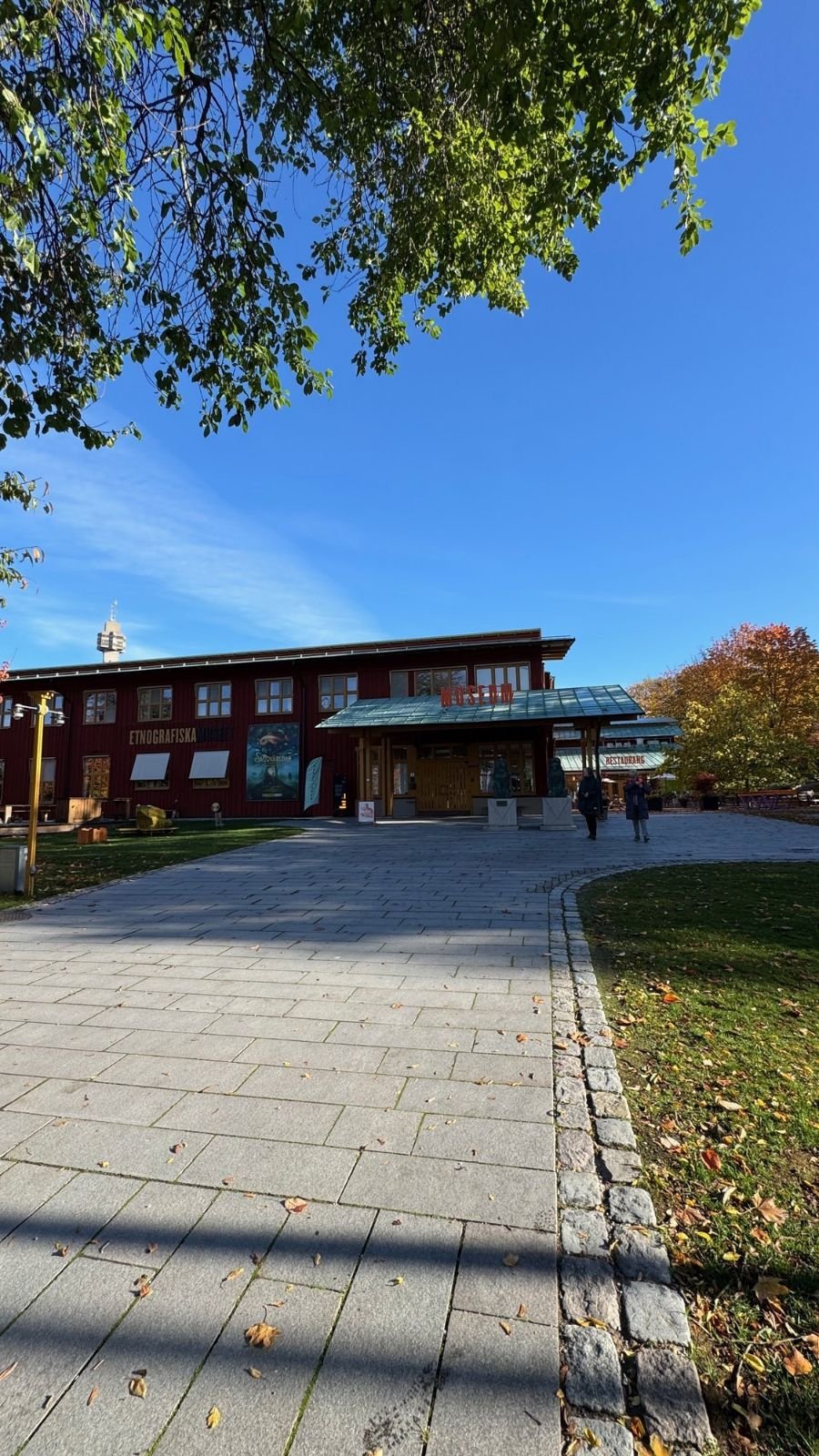
- Why visitObjects and stories from cultures around the world, a large park, and Zui-Ki-Tei. The museum says it is the only tea house in northern Europe that is open to the public.
- Best forFamilies with children, visitors interested in Japan and world cultures, and anyone who wants a walk in a park.
- AddressDjurgårdsbrunnsvägen 34, 115 27 Stockholm, in Museiparken.
- Getting thereBus 69 from Sergels torg to the stop Museiparken.
- Opening hoursTuesday 11:00–17:00. Wednesday 11:00–20:00. Thursday to Sunday 11:00–17:00. Closed on Mondays. The tea house is open for activities from May to October.
- AdmissionAdults 160 SEK. Seniors 140 SEK. Everyone under 19 free. Annual card from 200 SEK. Buy your ticket at the reception.
- FoodRestaurant Matmekka serves Asian food. You do not need a museum ticket to eat there.
- AccessibilityThe entrance is at street level with automatic doors. Two lifts, accessible toilets and a wheelchair to borrow. Details below.
- Official websiteetnografiskamuseet.se
I visited Etnografiska museet on 18 October 2026 and walked around on my own. I saw the Japanese tea house up close. I took the photos on this page that day.
A sign in the park says: dance masks from Oceania, a buffalo hunt on the prairie, golden Tibetan sculptures, samurai armor and a Japanese tea ceremony. The whole world in one house. Outside the house, there is a park with tall trees, carved wooden poles, a play boat and a tea house from Japan.
A museum of the world in a red wooden house
The Museum of Ethnography was founded in 1900. Its first director was Hjalmar Stolpe. The collection has about 220,000 objects. The oldest come from the Swedish colony New Sweden in North America and from the Cook expeditions in the 1700s. Most of the objects are from the years 1850 to 1950.
The sign in the park tells the history of the building. In the 1930s, the collections moved here from Wallingatan 2 in central Stockholm, into the old barracks of the Life Regiment (Livregementet). In the 1970s, the old barracks were no longer good enough. The architects Jan Gezelius and Gunnar Mattsson designed the present building. It opened in 1980, and the year after it got the Kasper Salin Prize, a Swedish prize for good architecture.
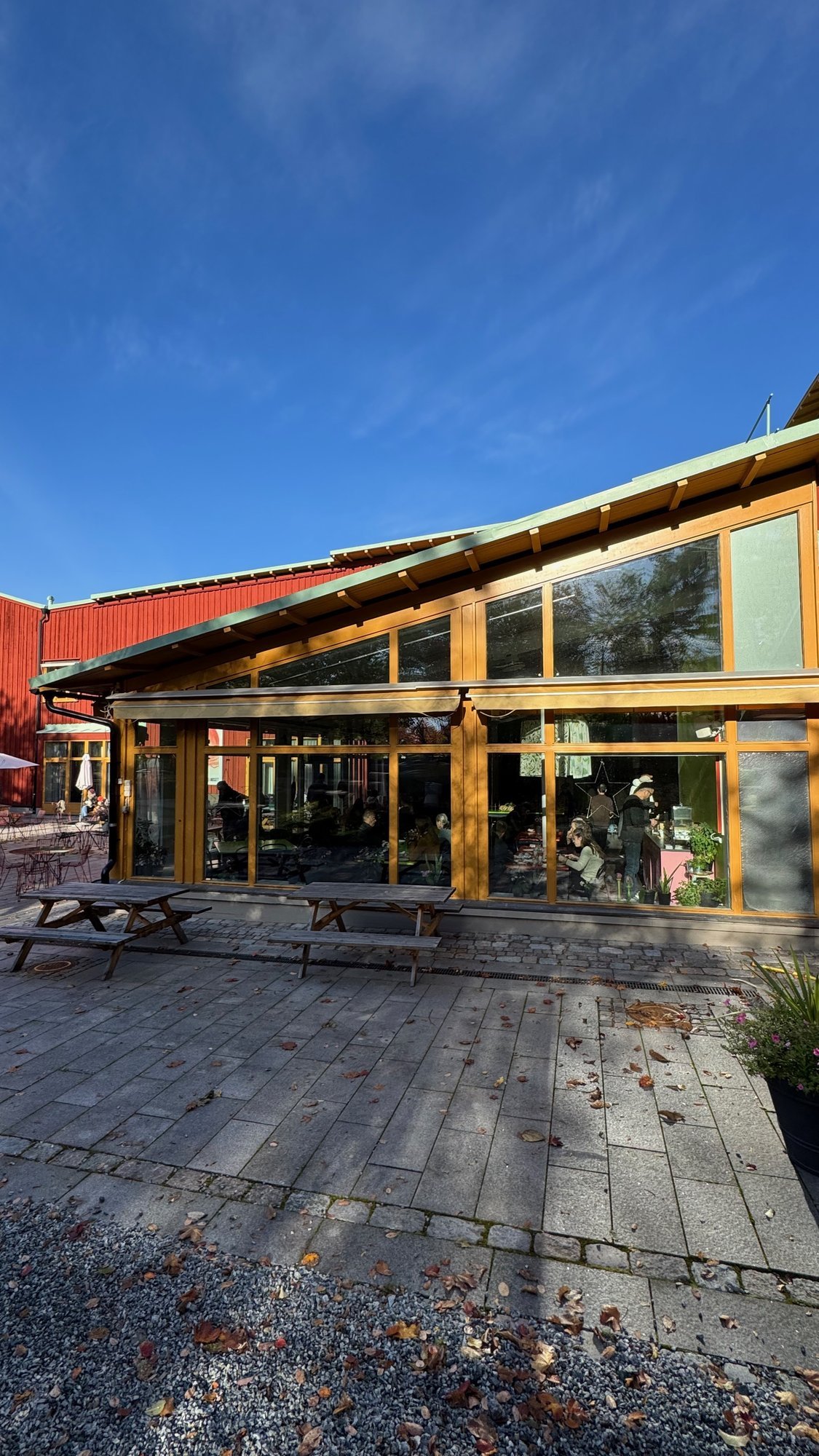
The Falu red wooden panels make the building look very Swedish. The sign says that behind the panels there is a frame of concrete. Since 2011, the roof has solar panels on 560 square meters. The sign says Etnografiska museet was the first museum in Stockholm to be heated with solar panels.
Since 1999, the museum is part of the National Museums of World Culture (Statens museer för världskultur), together with Medelhavsmuseet and Östasiatiska museet in Stockholm, and Världskulturmuseet in Gothenburg.
The park around the museum
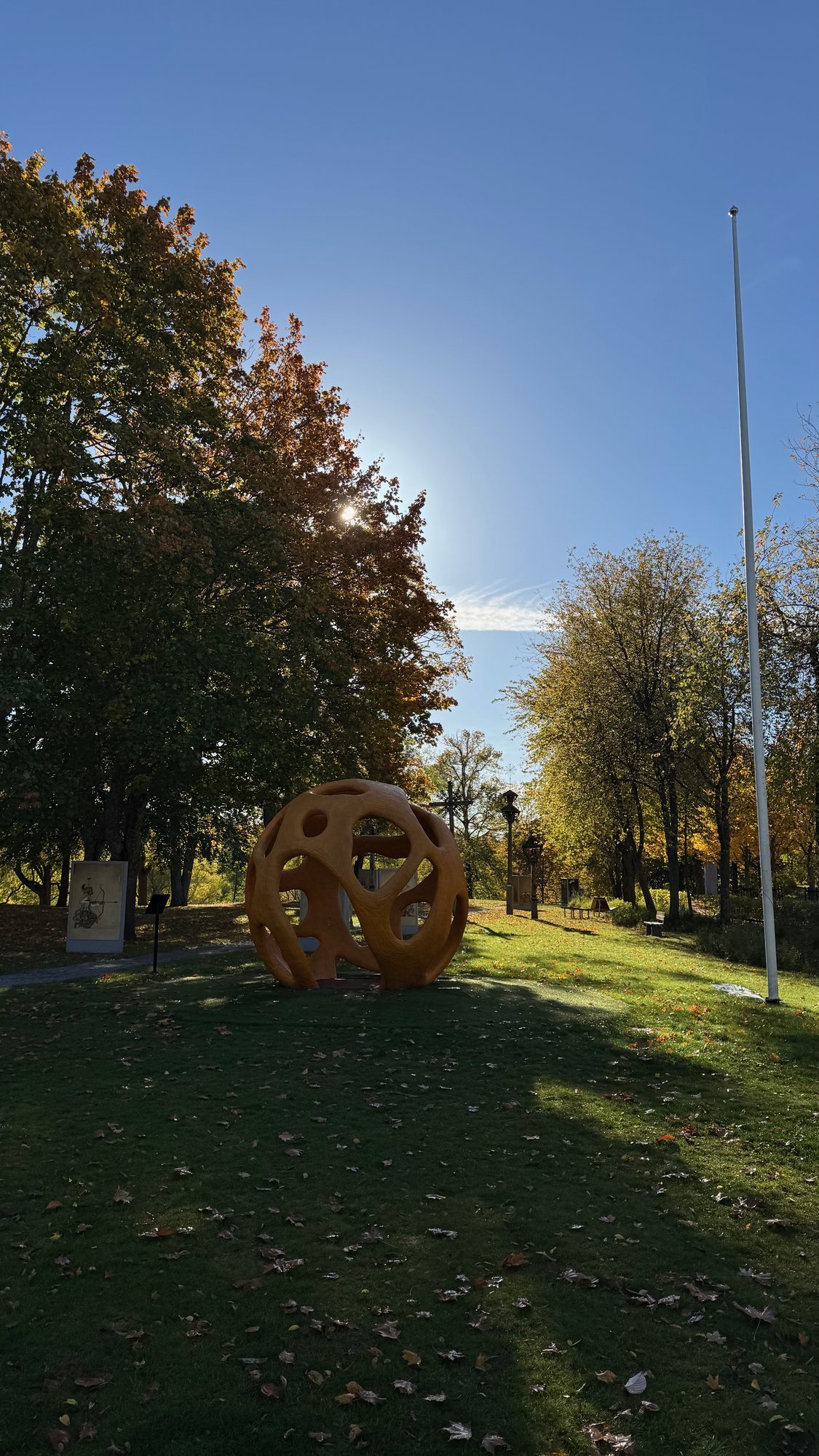
The museum stands in Museiparken, the museum park. The park around the museum is beautiful. In my photos from 18 October, the trees are yellow, orange and red, and the lawn is full of leaves.
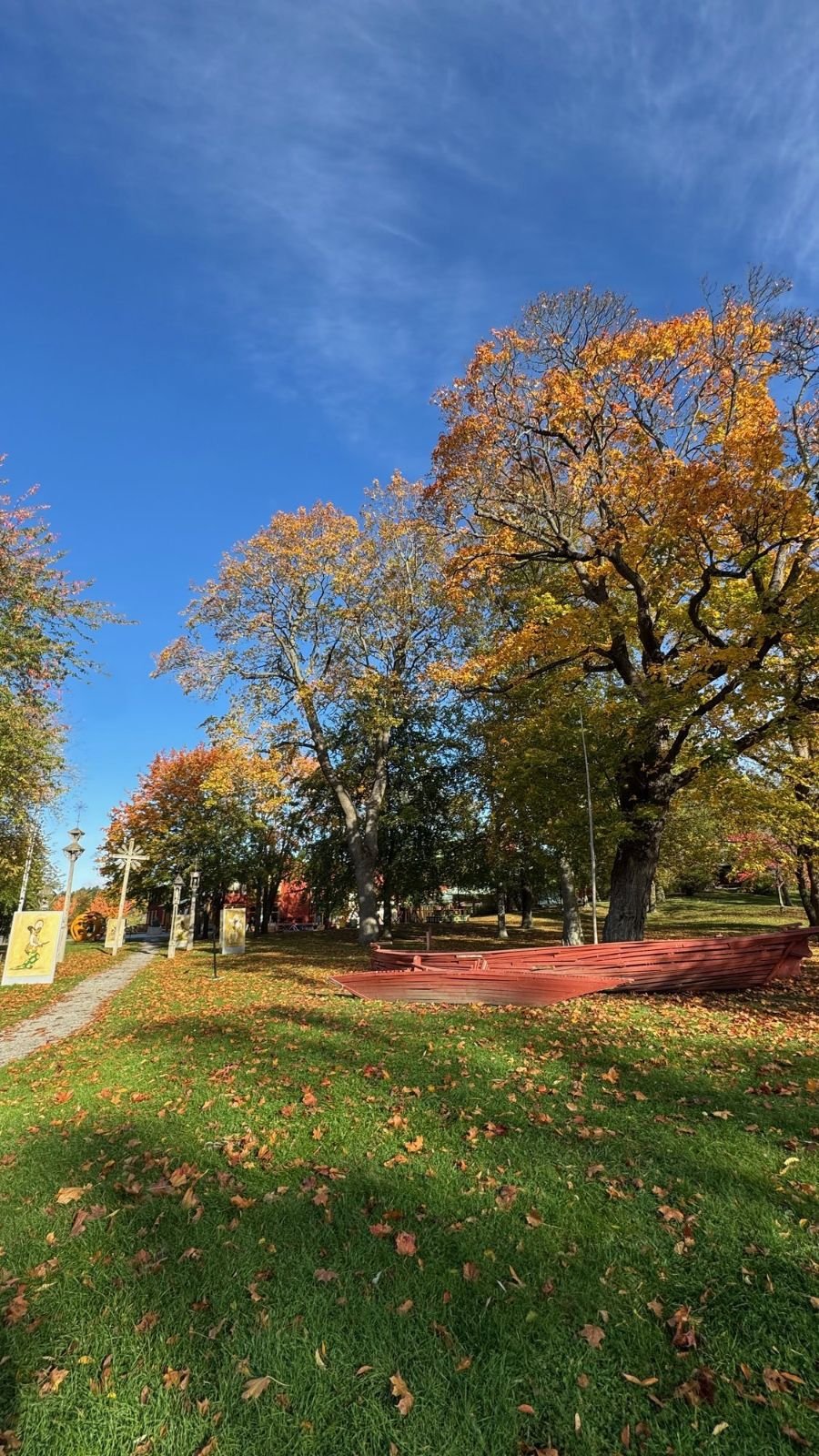
A gravel path goes past tall carved wooden poles with small roofs and crosses. They look like Lithuanian wayside shrines. A map of Lithuanian heritage in Sweden, from the Lithuanian State Commission for Cultural Heritage, lists Lithuanian wayside shrines (koplytstulpiai) in the park of the museum. On the lawn, there is a large orange metal sphere with round holes.
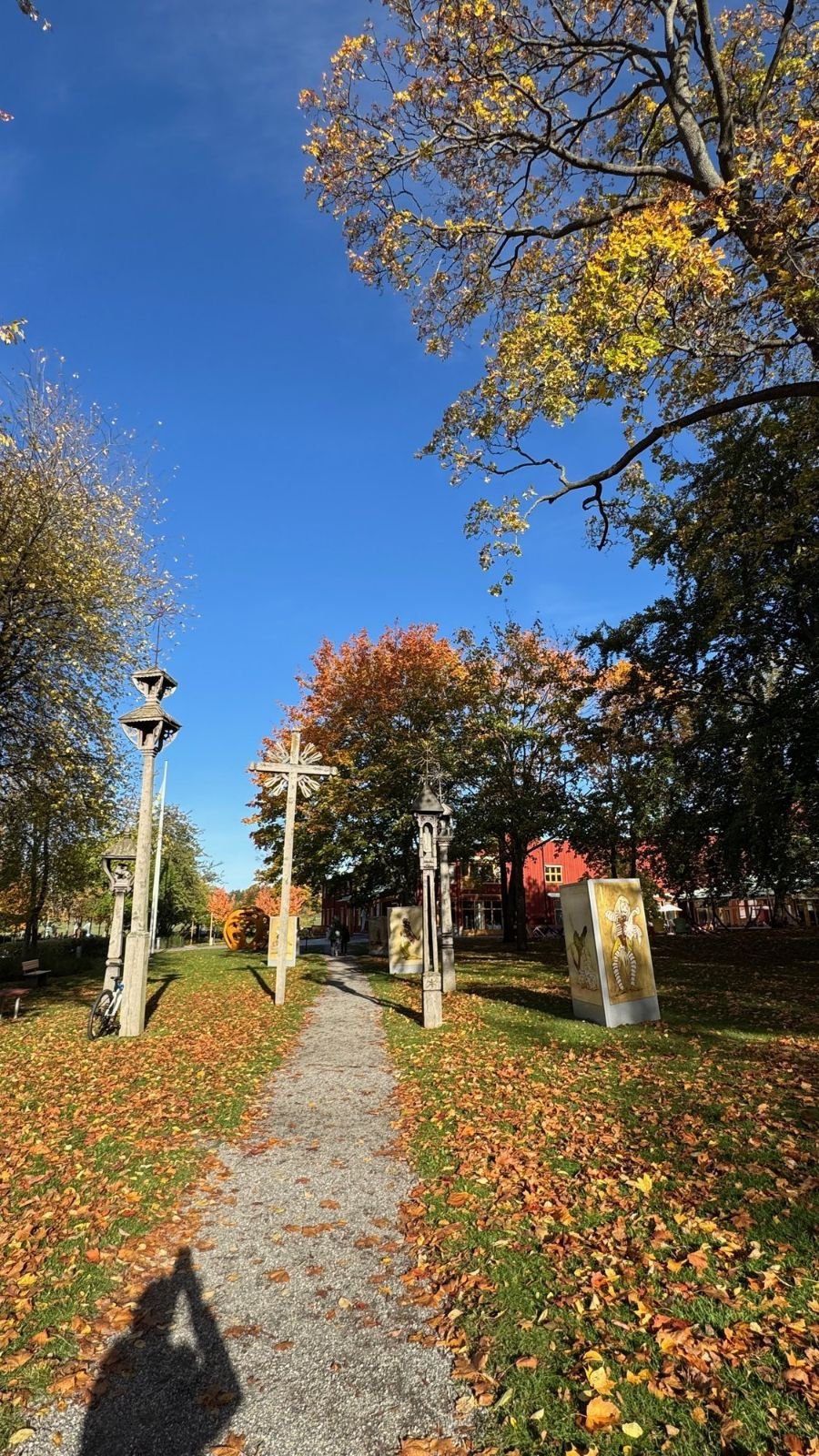
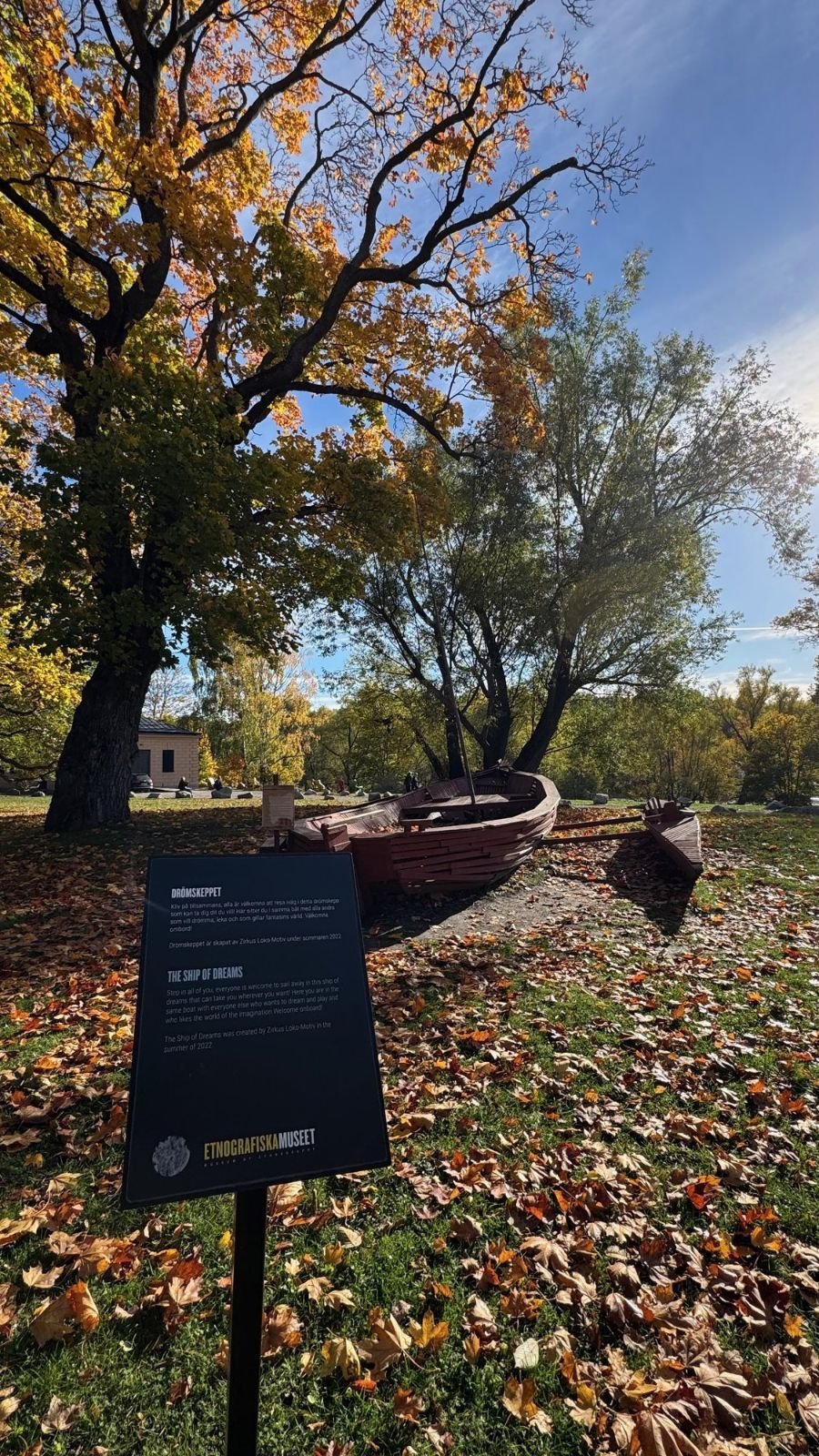
Under a large tree lies Drömskeppet, the Ship of Dreams, a wooden boat that children can climb into. The sign says: “Everyone is welcome to sail away in this ship of dreams that can take you wherever you want!” The circus group Zirkus Loko-Motiv made it in the summer of 2022.
The park also had an outdoor exhibition about Tyra Kleen (1874–1951), a Swedish artist who painted temple dances on Bali. The museum lists it until 30 September 2026. On 18 October, its sign was still in the park.
Zui-Ki-Tei, the Japanese tea house
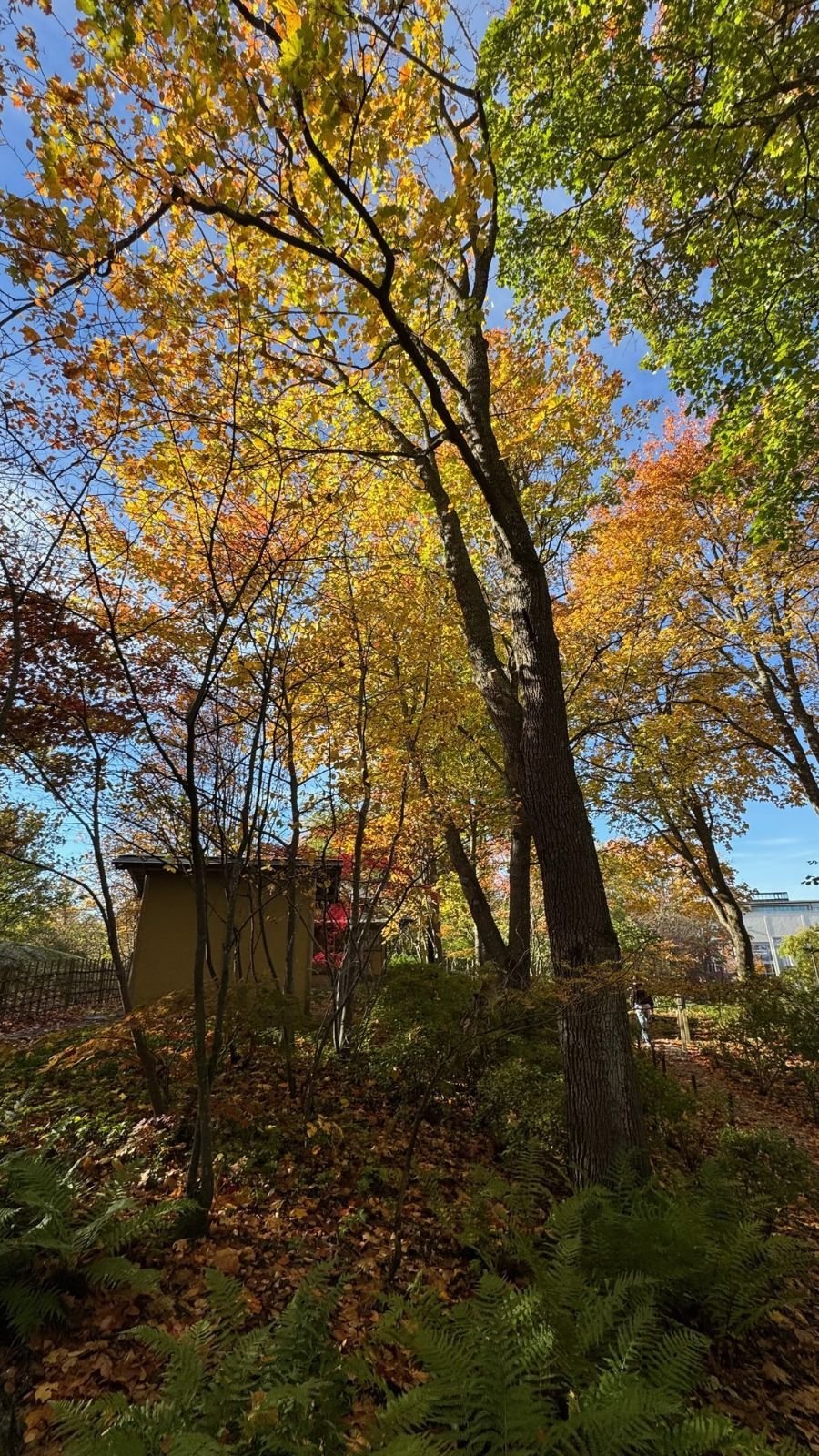
The tea house Zui-Ki-Tei stands in the park, close to Djurgårdskanalen. A garden surrounds it. The museum says the garden follows the ideal of the tea master Sen no Rikyu (1522–1591): the beauty of the greatest simplicity. In my photo, the small house stands among yellow and red trees and green ferns.
Two tea houses
The first tea house with the same name was built in the park in 1935. The museum says it was probably the first tea house in Europe. The idea came from the Japanologist Ida Trotzig (1864–1943). The first tea house burned down in 1969.
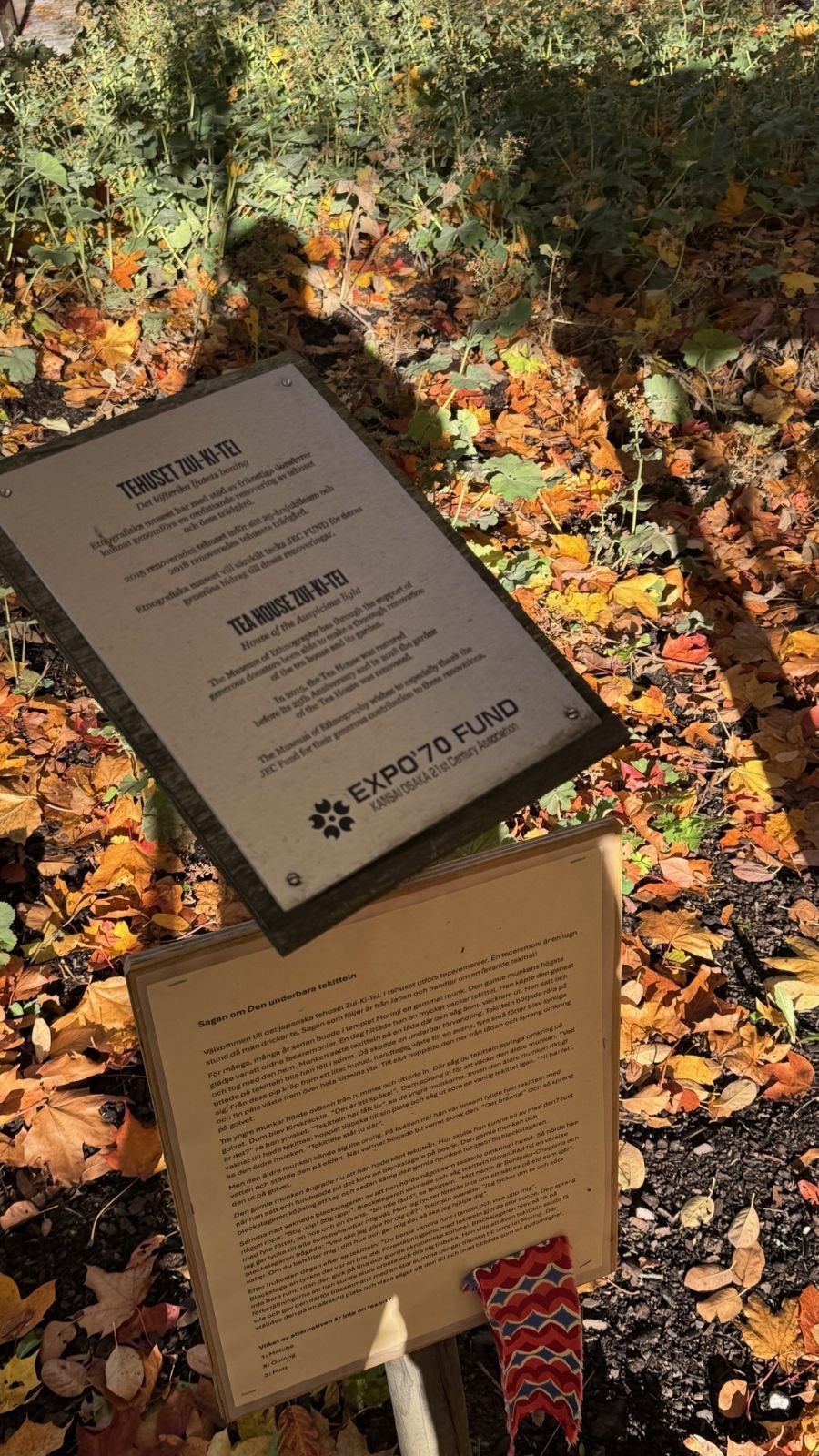
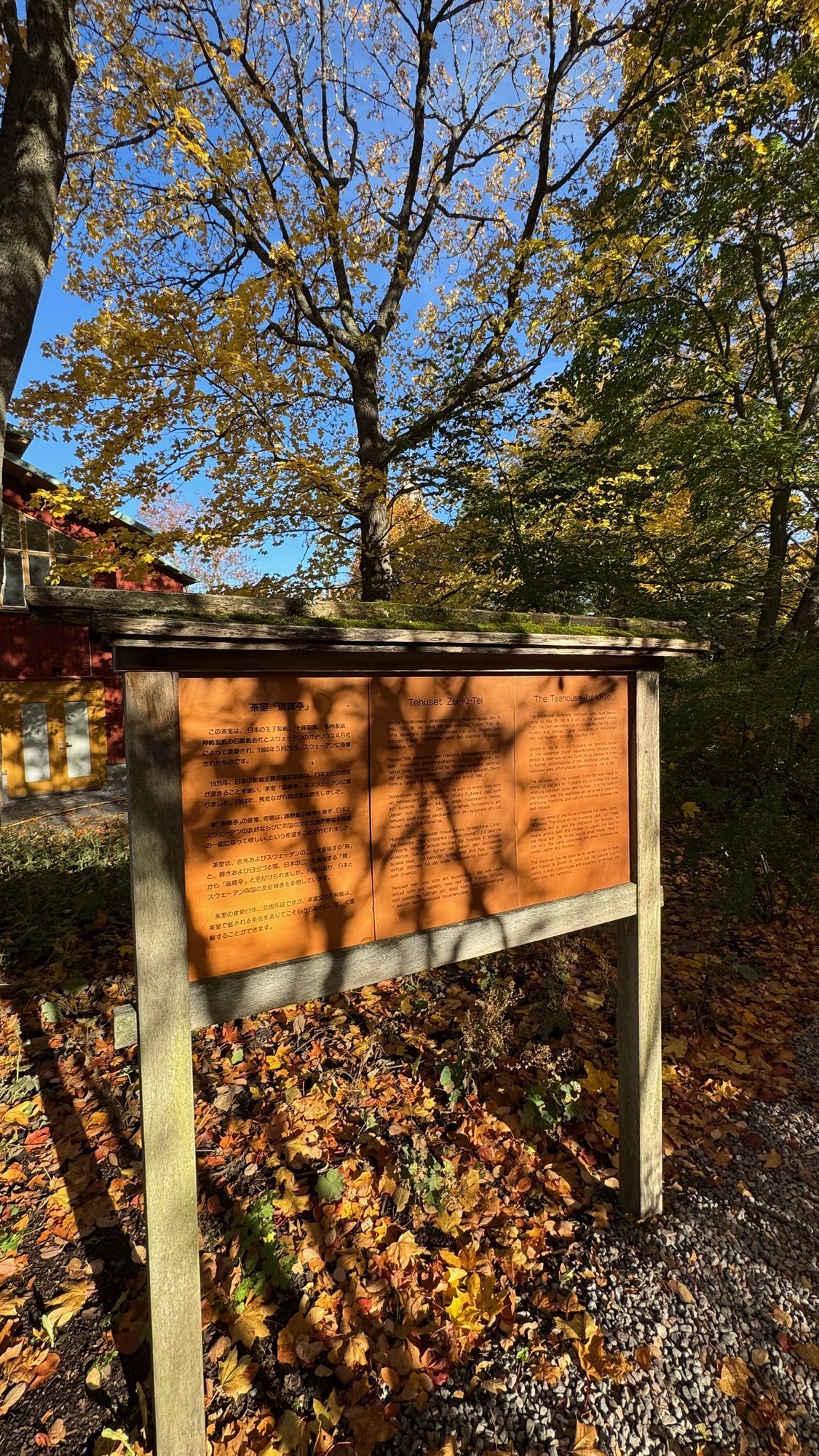
The present tea house was built in 1990, on the same site. Wikipedia says the architect was Professor Masao Nakamura, and that the tea house opened on 28 May 1990. A plaque in the park says the tea house and its garden were renovated in 2015, before the 25th anniversary, with support from the JBC Fund in Japan.
The name. The sources give the meaning in different words:
- The museum: the name joins words that mean “promising” (also a sign for Sweden), “the land of the morning glow” (Japan) and “small house”.
- Wikipedia: “the House of the Promising Light”.
- The plaque in the park: “House of the Auspicious Light”.
Tea ceremonies
From May to October, the museum offers traditional tea ceremonies, open tea house days and tours. Most activities are run with the Japanese tea society Chado Urasenke Tankokai Sweden Association. The dates and tickets are in the museum calendar.
The rest of the year, the tea house is closed. The museum says no activities are possible in the tea house from the middle of October to the middle of May. In the colder months, tea courses and lectures usually take place inside the museum.
Groups can book a 60-minute tour of the tea house and the garden, for at most 15 people. For a private tea ceremony or a private tour, the museum asks you to send an email to tehuset@etnografiskamuseet.se. During the closed months, the museum reads this email address less often.
The exhibitions inside
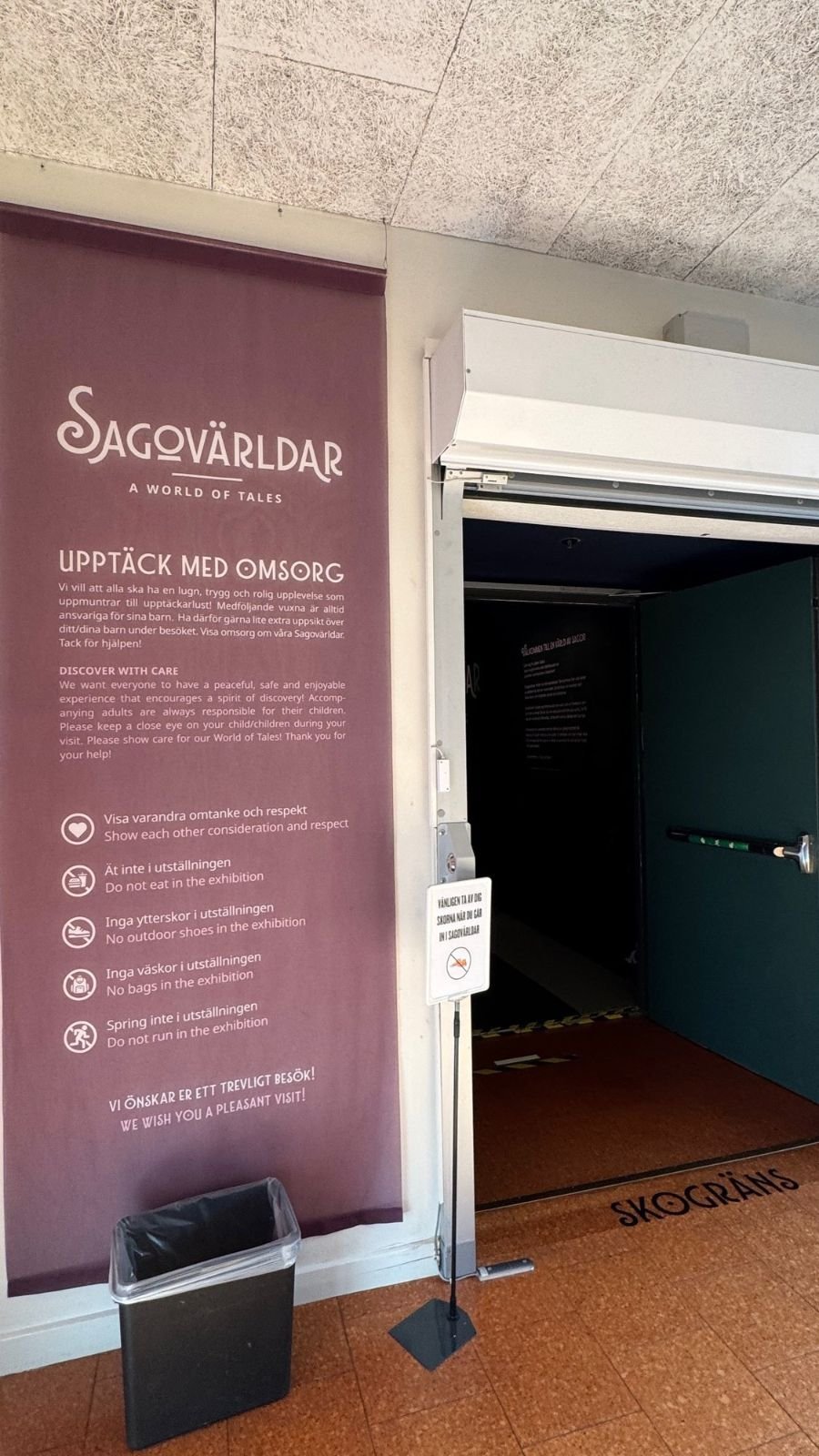
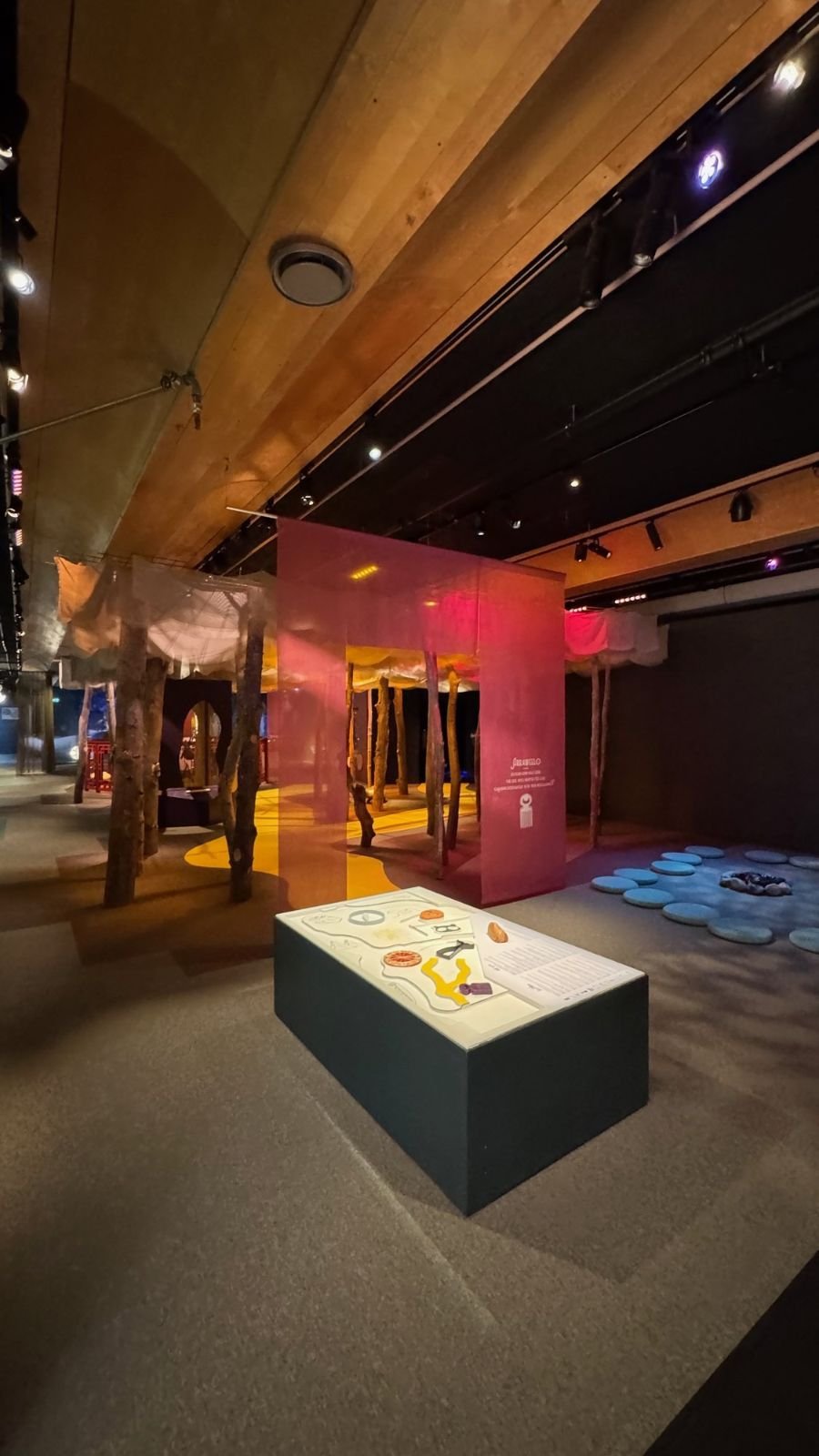
- Sagovärldar (A World of Tales): thirteen stories from all inhabited continents, with projections, interactive stations and objects from the collections. One story is the tale of Tiddalik the frog, from the Gunnai-Kurnai people in southeastern Australia.
- Yokai – Japanska väsen (Yokai – Japanese spirits), until 6 December 2026: supernatural beings from Japanese folk belief. Scroll paintings, woodblock prints and small carvings (netsuke) by artists such as Hokusai, Kuniyoshi and Kyosai, and modern yokai from films and games, such as Godzilla and Pokémon. The illustrator Johan Egerkrans puts Japanese yokai next to Swedish beings such as näcken.
- Japan – Bild och självbild (Japan – Image and Self-Image): traditional Japan from the 1600s to the late 1800s. Samurai armor, swords, masks, textiles, clothing of the Ainu people, and a Japanese tea house.
- Nordvästkusten (The Northwest Coast): Indigenous life on the Northwest Coast of North America, with masks, totem poles and ceremonial objects. It also shows how colonization, missions and laws changed life there. Outside the entrance stands a copy of a totem pole. Wikipedia says the museum gave the original back to the Haisla Nation in 2007, and the Haisla gave the museum the copy.
- Magasinet – En etnografisk skattkammare (The Storeroom): temporarily closed.
For children and families
Everyone under 19 enters free. The museum has activities indoors and outdoors, and creative work for all ages. Sagovärldar is made for children and the adults who come with them.
In the exhibition Yokai, children can collect stamps, get their fortune told by yokai and play a dance game. Note that the horror room in Yokai has an age limit of 15 years.
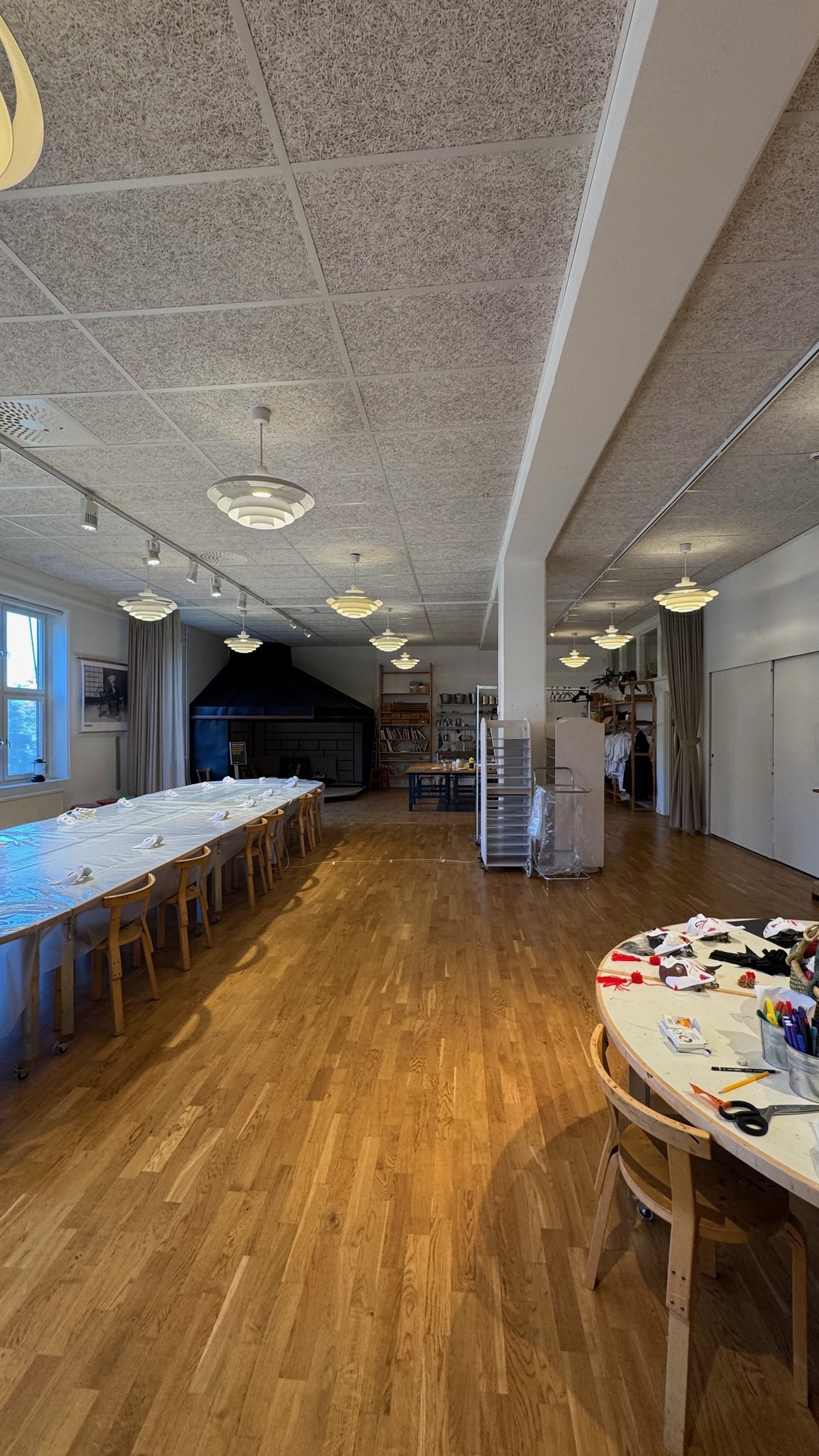
The sign in the hall points to Ateljén, the workshop. In my photo, it is a bright room with long tables and craft materials.
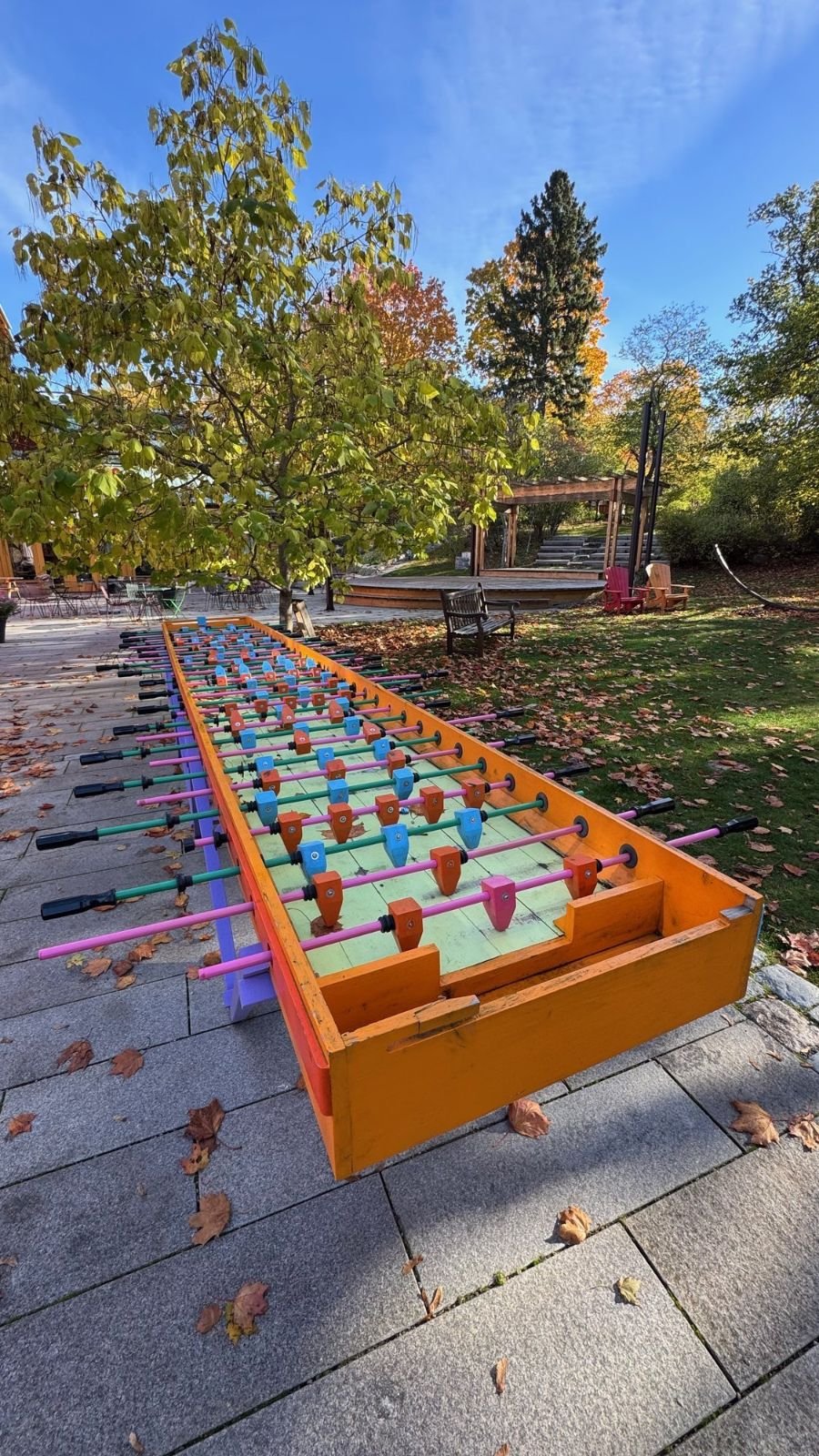
Outside, there is a very long orange foosball table on the stone terrace, and the Ship of Dreams in the park.
Restaurant Matmekka
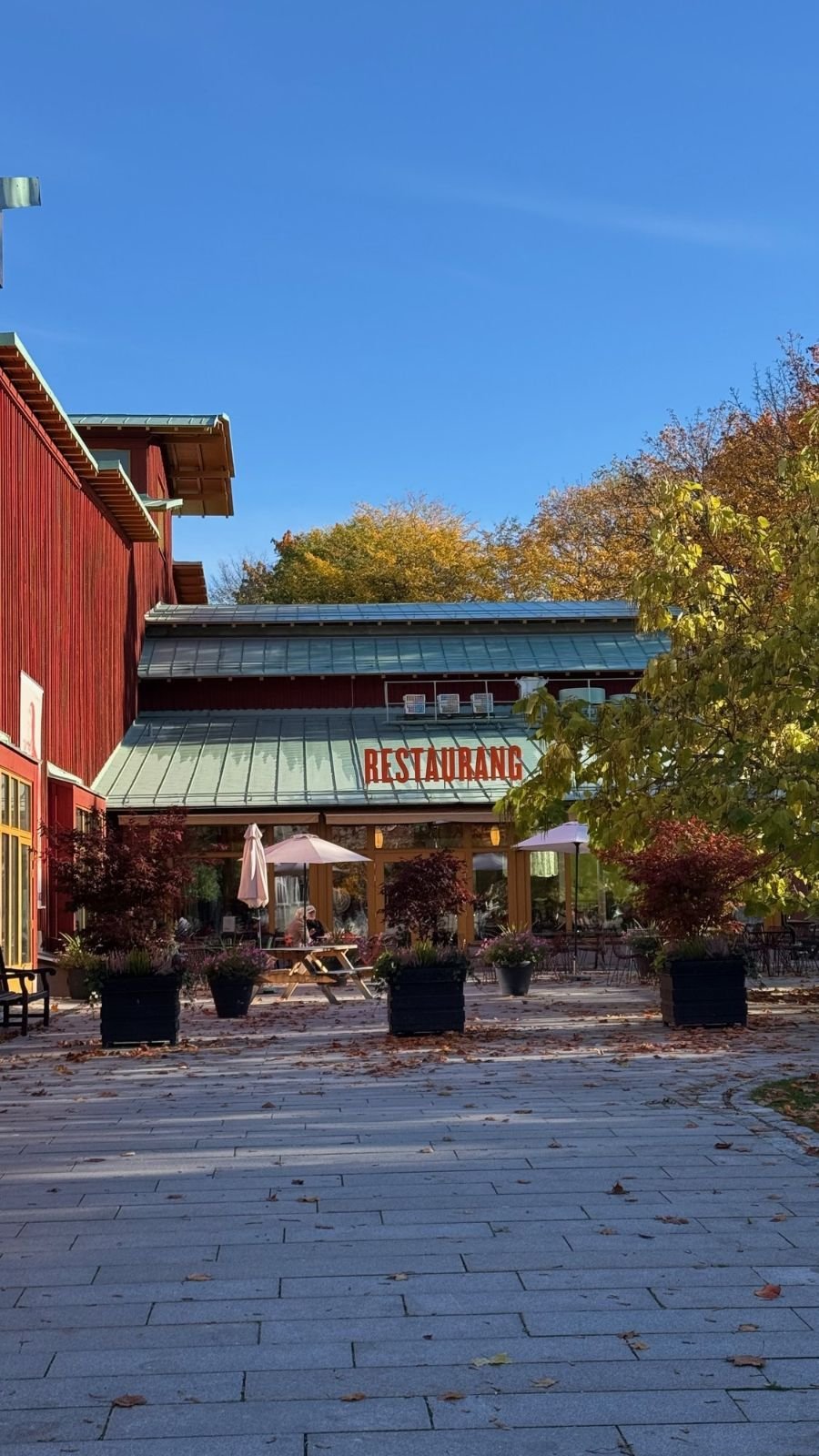
Restaurant Matmekka serves Asian food made from scratch. The museum says the cooks grind their own curry, and every day they bake sourdough bread from organic grain. You do not need a museum ticket or an annual card to eat at Matmekka.
- Tuesday, Thursday and Friday 11:00–17:00. The kitchen closes at 15:00.
- Wednesday 11:00–20:00. The kitchen closes at 19:00.
- Saturday and Sunday 11:00–17:00. The kitchen closes at 16:00.
Strollers are not allowed in the restaurant. There is stroller parking outside Matmekka.
Tickets and prices
A day ticket costs 160 SEK, and 140 SEK for seniors. Everyone under 19 enters free. You buy the day ticket at the reception. It is valid for Etnografiska museet for one day.
On the last Friday of every month, two people can visit for the price of one ticket. Asylum seekers with a valid LMA or UT card from the Swedish Migration Agency enter free, and so do holders of an ICOM card or a Sveriges Museer card.
Annual cards. The annual card for Stockholm costs 200 SEK. It gives free entry for 365 days to Etnografiska museet, Medelhavsmuseet and Östasiatiska museet. The annual card for all four museums of world culture, also Världskulturmuseet in Gothenburg, costs 350 SEK. You buy annual cards online.
Getting there and access
The easiest way is bus 69 from Sergels torg to the stop Museiparken. The nearest metro station is Karlaplan, and the nearest tram stop is Djurgårdsbron. From there it is about 20 minutes on foot. There is paid parking at the museum.
The museum is in Museiparken, with four other museums close by. I have written about Polismuseet, Tekniska museet, Riksidrottsmuseum and Sjöhistoriska museet.
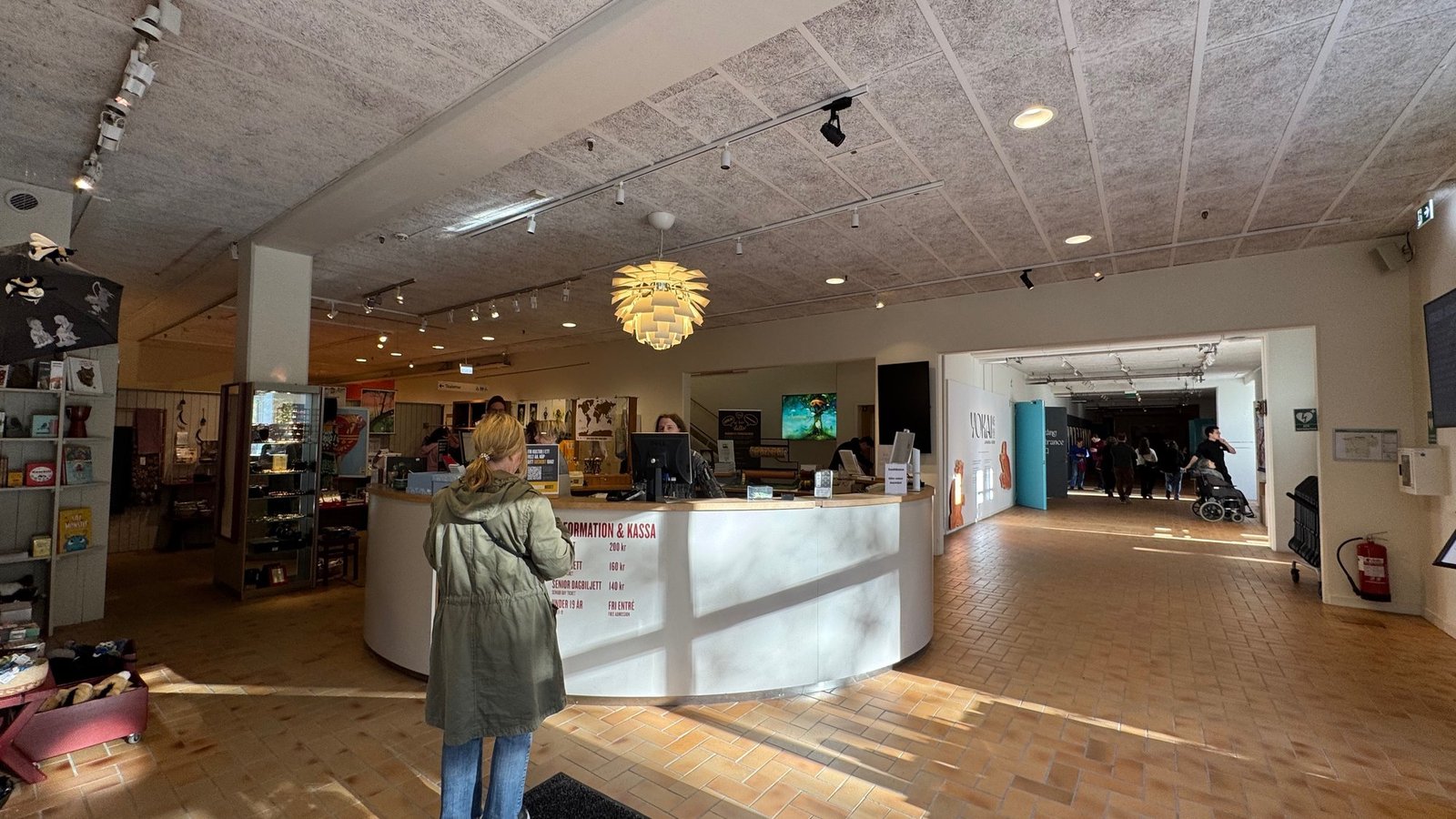
Entrance. The entrance is at street level, with no stairs and with automatic door openers. In my photo, the entrance hall is bright, with the reception desk and the shop.
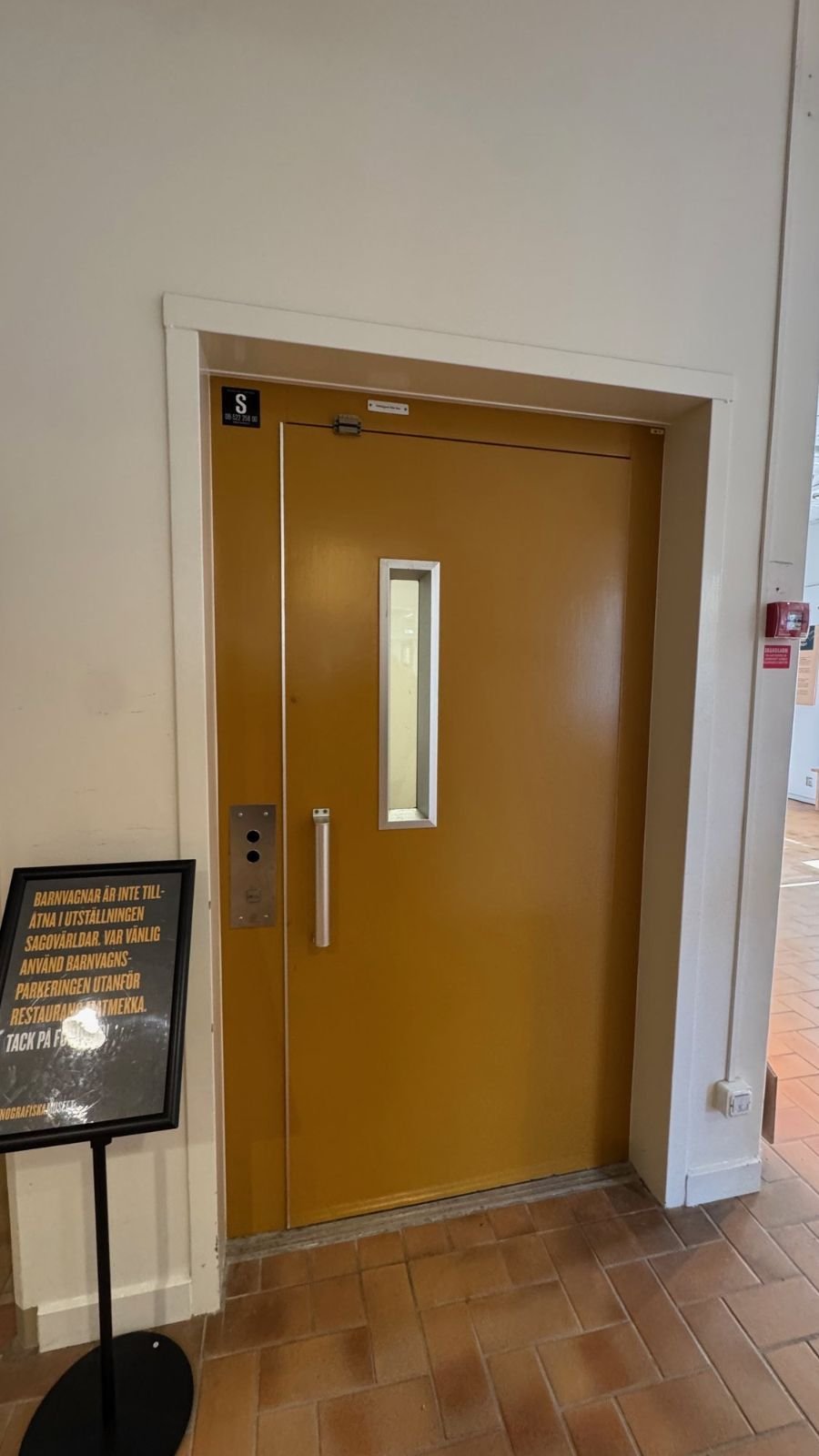
Lifts. There are two lifts for visitors: one next to the reception and one at the far end of an exhibition hall. Both are 115 cm deep and 110 cm wide, and have no automatic door opener. If they are too small, the staff can help you to the upper floor with a larger lift.
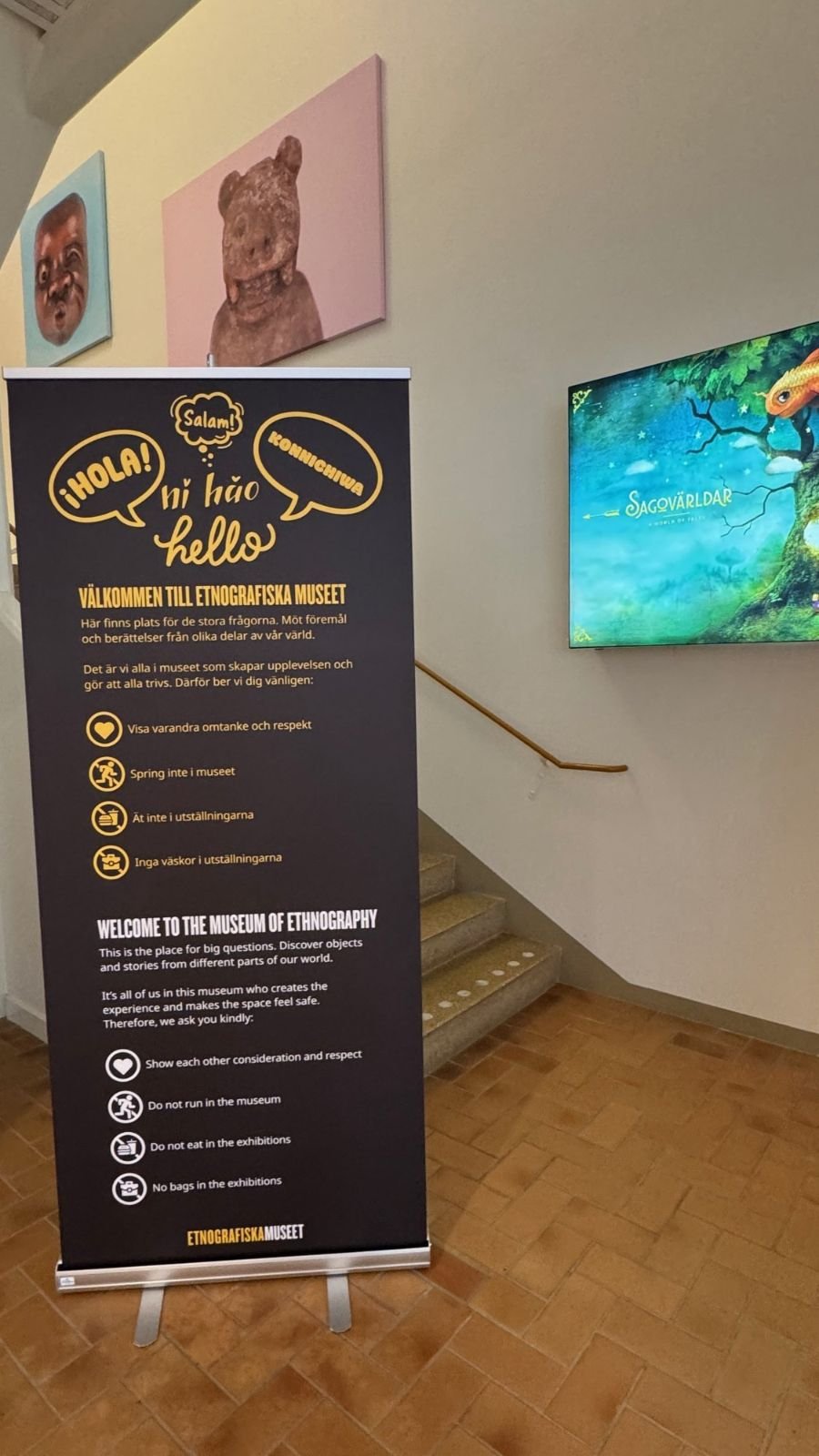
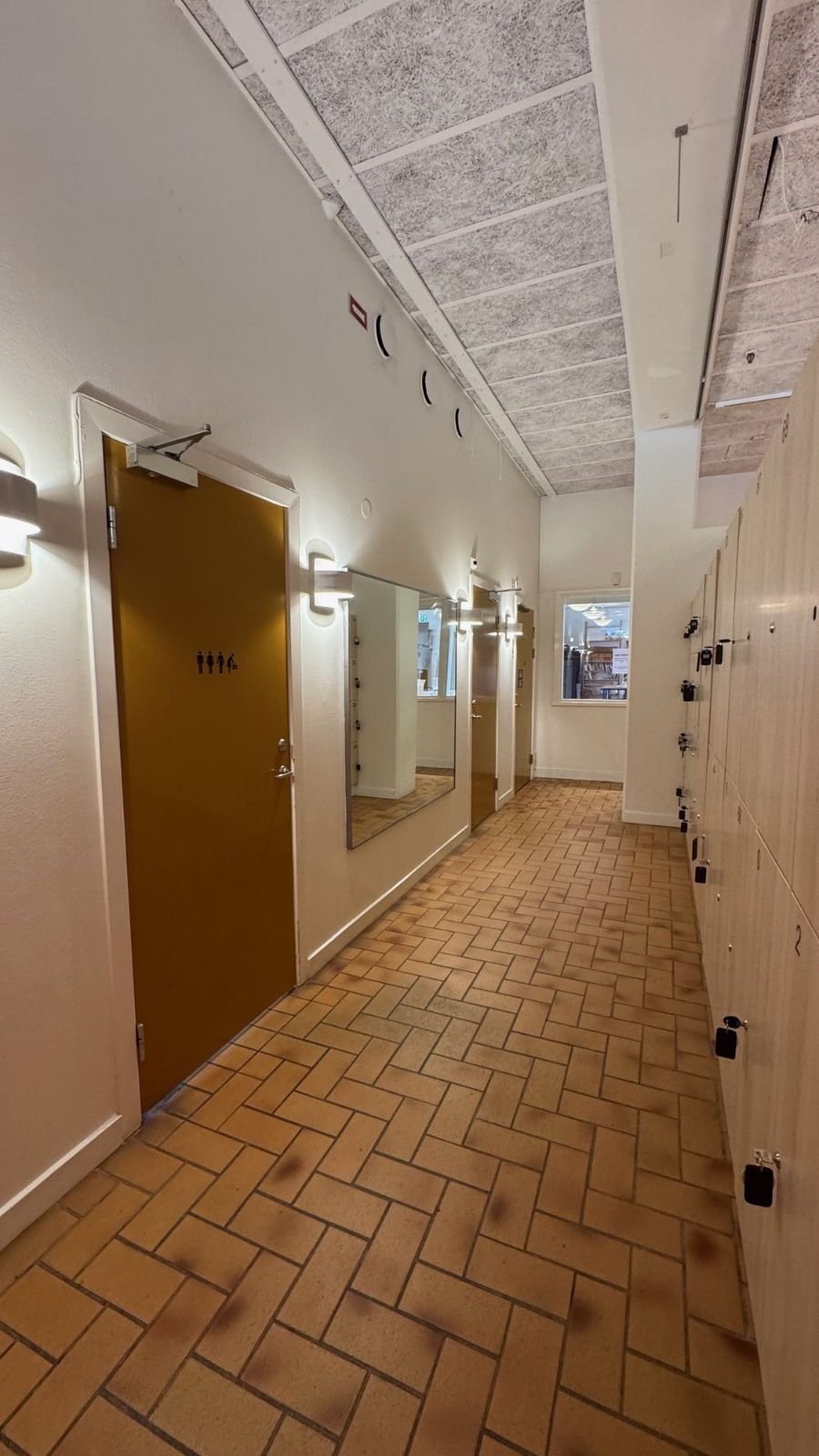
Wheelchairs and toilets. All exhibitions can be reached with a wheelchair. The museum has one wheelchair to borrow. Accessible toilets are at the entrance and in the library, with automatic doors and an alarm. All toilets have a changing table.
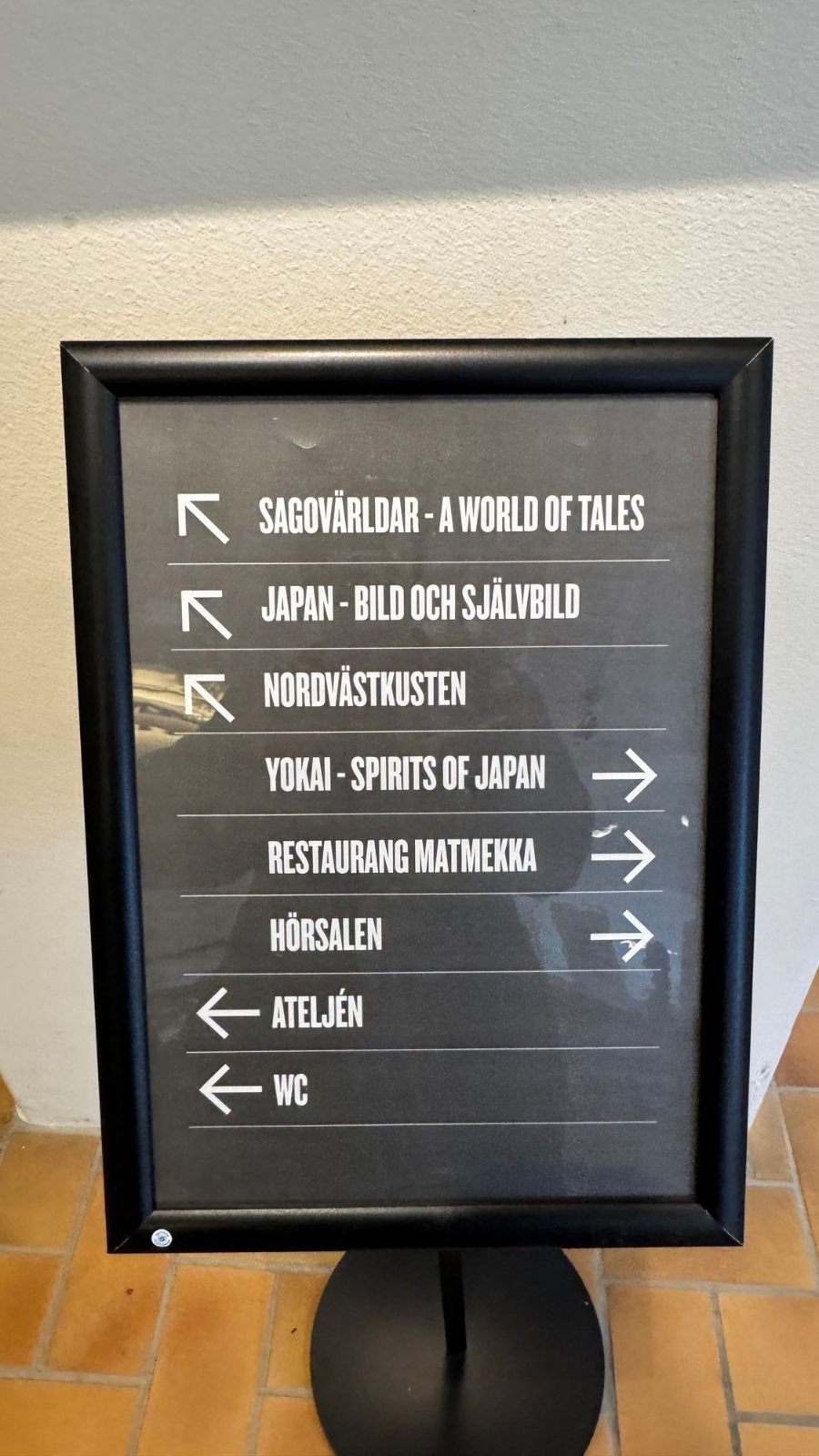
Signs. In my photo, a sign in the hall shows the way to the exhibitions, Restaurant Matmekka, the lecture hall, Ateljén and the toilets.
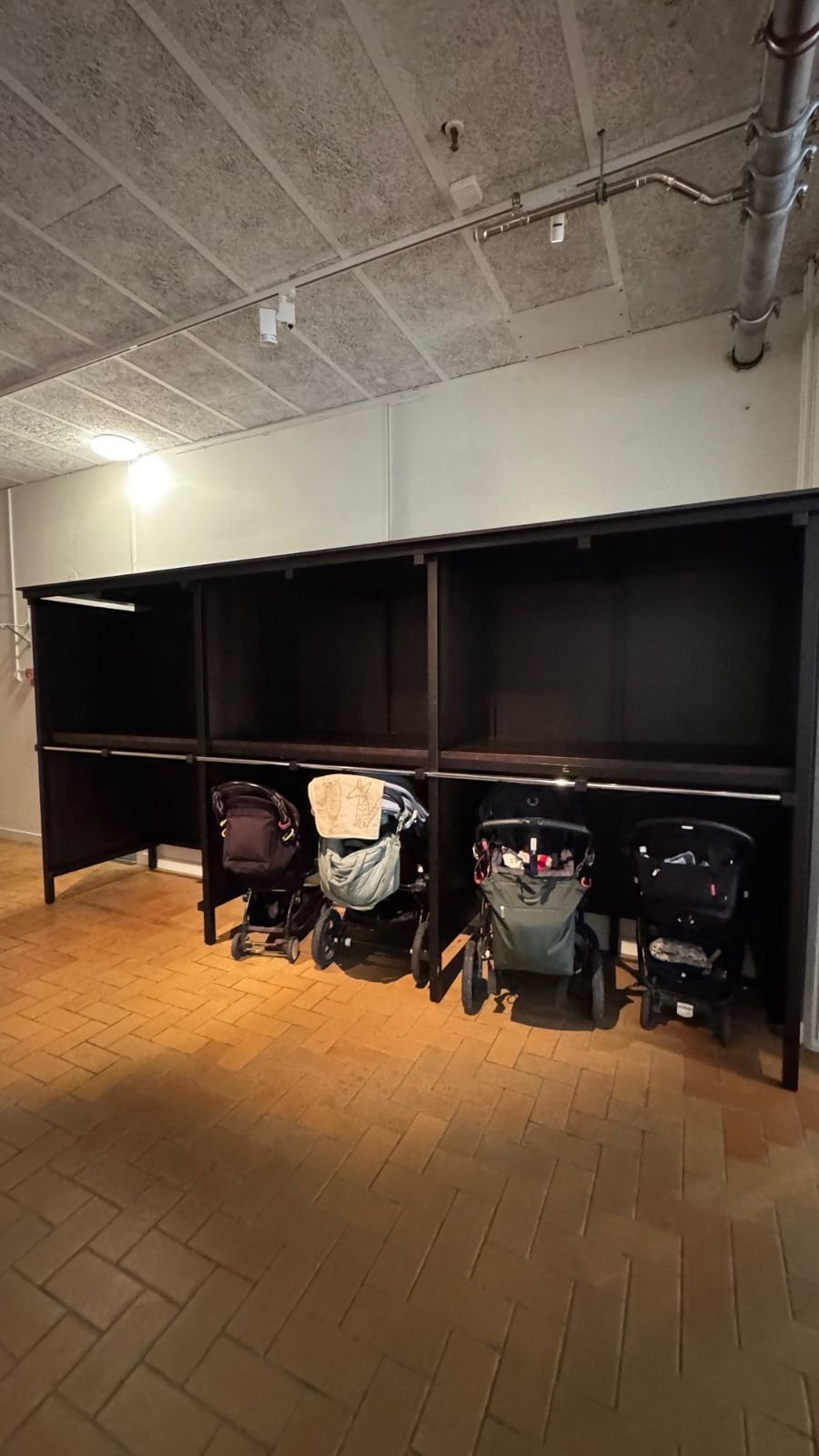
Strollers. You may bring a stroller into the museum, but not into the restaurant or into Sagovärldar. The museum page says the stroller parking is outside Matmekka. In my photo, there are also shelves for strollers and bags inside the building.
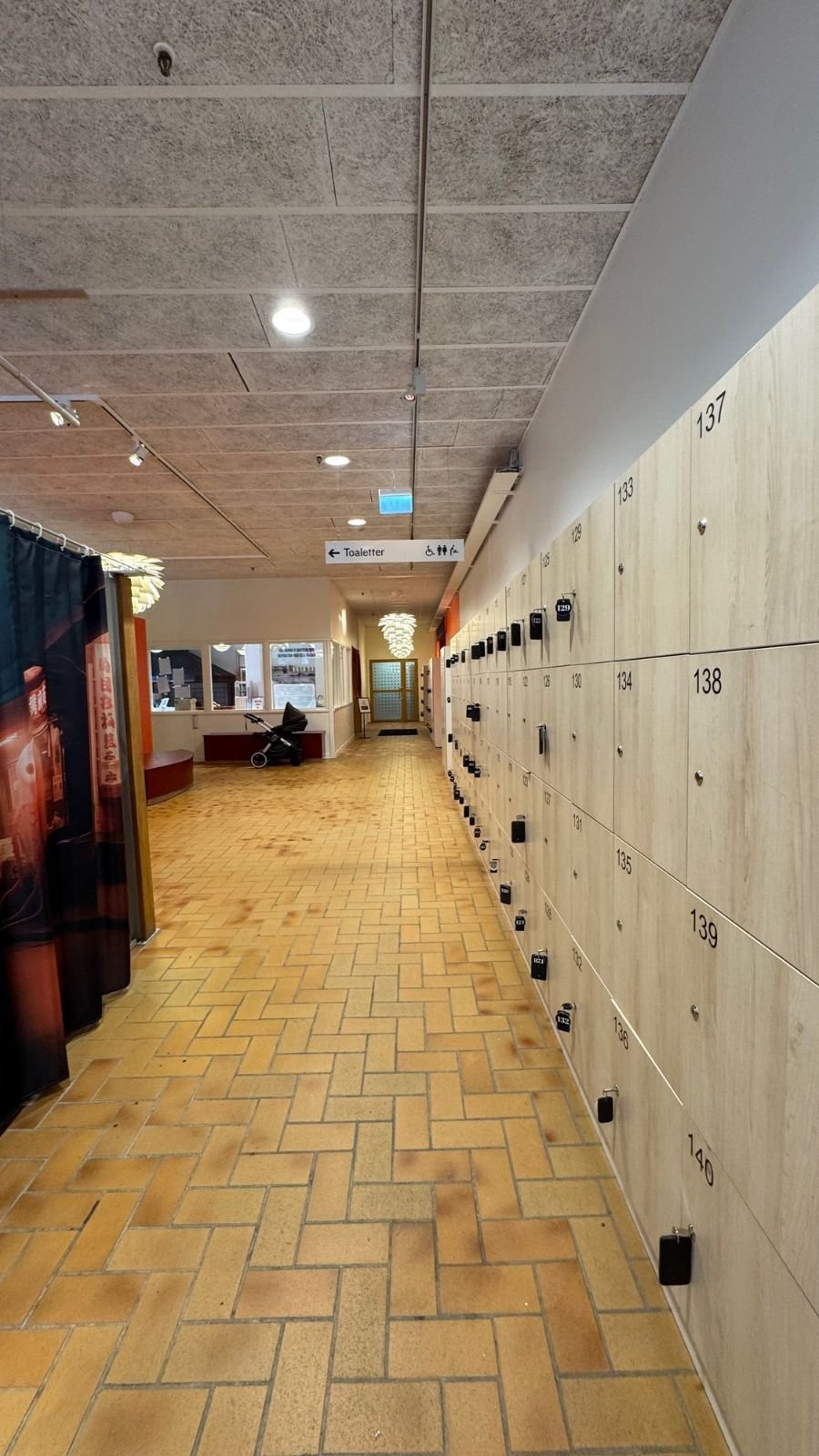
Lockers. The museum page does not mention lockers. In my photos, a long corridor has rows of lockers.
Hearing. The lecture hall has an induction loop.
Parking for disabled visitors. Two spaces are right in front of the entrance, two more in front of Tekniska museet and one in the visitor car park.
Tours for special needs. For a tour adapted to your needs, the museum asks you to send an email to visning.stockholm@varldskulturmuseerna.se.
What is my verdict?
The park around Etnografiska museet is beautiful. You can walk under tall autumn trees, past carved wooden poles and a play boat, and stop at a tea house from Japan. Children and young people under 19 enter the museum free.
From May to October, you can also take part in a tea ceremony in Zui-Ki-Tei. In the other months, you see the tea house from outside, in its garden.
Which would you choose first: the stories of thirteen continents and the yokai inside, or a walk to the tea house outside?
Photo gallery
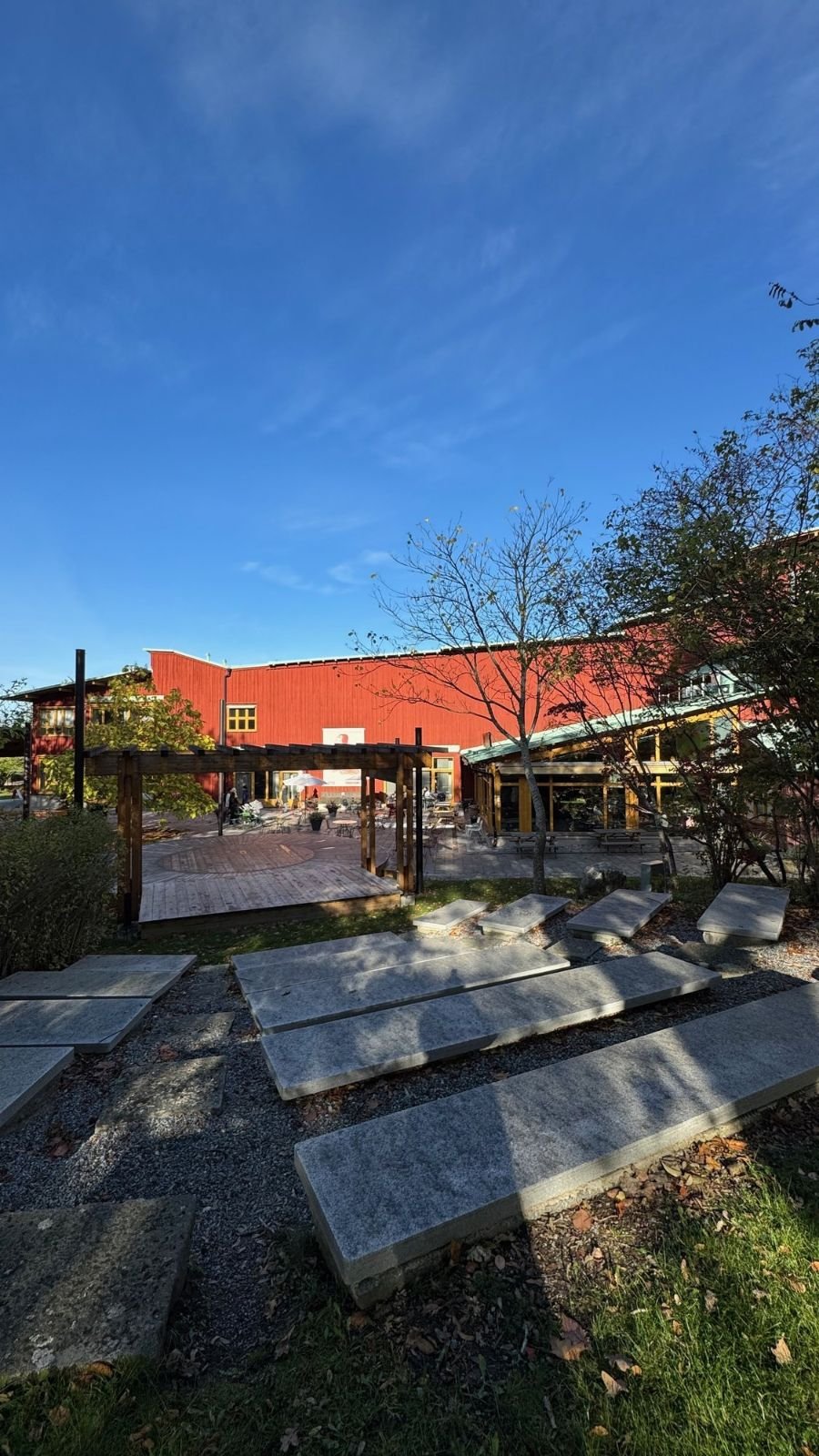
All photographs on this page were taken by Zayera Khan during a visit to the museum, and are her own property. Please do not reuse them without permission.
Etnografiska museet: Etnografiska museet, home page; Etnografiska museet, Besök; Etnografiska museet, Öppettider; Etnografiska museet, Biljett och årskort; Etnografiska museet, Tehuset; Etnografiska museet, Restaurang Matmekka; Etnografiska museet, Tillgänglighet; Etnografiska museet, Utställningar; Etnografiska museet, Sagovärldar; Etnografiska museet, Yokai; Etnografiska museet, Japan – Bild och självbild; Etnografiska museet, Nordvästkusten; Etnografiska museet, Tyra Kleen.
Other sources: Wikipedia, Museum of Ethnography, Sweden; Wikipedia, Zui-Ki-Tei; Lithuanian State Commission for Cultural Heritage, heritage map of Sweden (PDF); the signs and plaques in the museum park, photographed on 18 October 2026.