Riksidrottsmuseum in Stockholm: sport history, the 1912 Olympics and a lot of play
The national museum of Swedish sport history, in a yellow building next to Tekniska museet, where you can jump, play table tennis and time a 100-meter final from 1912.
- Why visitThe museum of Swedish sport history. An interactive exhibition about the 1912 Olympic Games in Stockholm, sport games to try, a play area for children, and Konsthall 16, an art hall about sport and art.
- Best forFamilies with children, school groups and anyone curious about Swedish sport history.
- AddressDjurgårdsbrunnsvägen 26, Stockholm, next to Tekniska museet.
- Getting thereBus 69 toward Blockhusudden or Kaknästornet. Get off at the stop Sjöhistoriska museet. Paid parking next to the museum.
- Opening hoursTuesday to Sunday 11:00–16:00. Closed on Mondays. Open on 31 October 2026. Closed on 24, 25, 26 and 31 December. Check the website for other changes.
- AdmissionAdults 80 SEK. Seniors and students 60 SEK. Children and young people up to and including 19 years free. Card payment only.
- FoodA café with hot and cold drinks, organic juices and ice cream. No room for packed lunches.
- AccessibilityA ramp to the entrance, a lift between the floors and a toilet adapted for wheelchair users. Details below.
- Official websiteriksidrottsmuseum.se
I visited Riksidrottsmuseum on 18 October 2026 and took the photos on this page that day.
Can hide-and-seek become an Olympic sport? The museum asks that question in one of its exhibitions. It shows what kind of place this is. Riksidrottsmuseum is a museum of sport history, but much of it is about doing things: jumping, aiming, balancing, playing.
From Globen to Museiparken
Riksidrottsmuseum is part of the Swedish Sports Confederation (Riksidrottsförbundet, RF) and SISU Idrottsutbildarna. Its task is to collect, care for and show the cultural heritage of Swedish sport.
Wikipedia says the museum first opened to the public in 1992, in rooms at the Globen arena. In five years it made more than 30 exhibitions. In 1997 it left Globen. In 2003, when RF turned 100, the government and the Riksdag gave money for a new museum. It opened on 16 June 2007 in the old rooms of the Telecom Museum, next to Tekniska museet. From 2007 to 2020 it was called Riksidrottsmuseet. Today the name is Riksidrottsmuseum.
The museum says it owns about 10,000 objects: objects of cultural history, printed matter, photos and art. Wikipedia gives about 8,000. Most are gifts from famous and unknown sports people, collectors and the public. Some objects are several hundred years old.
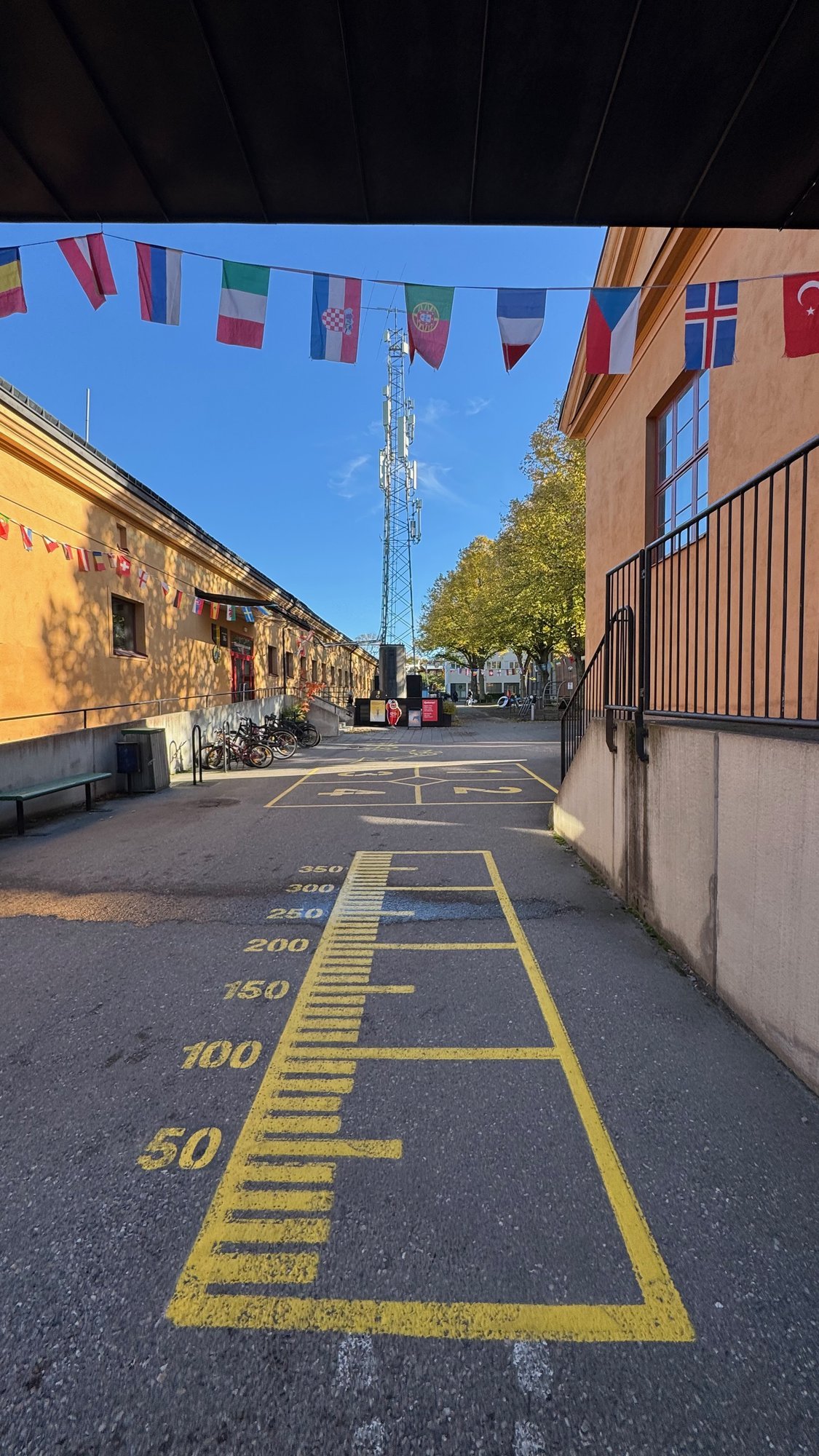
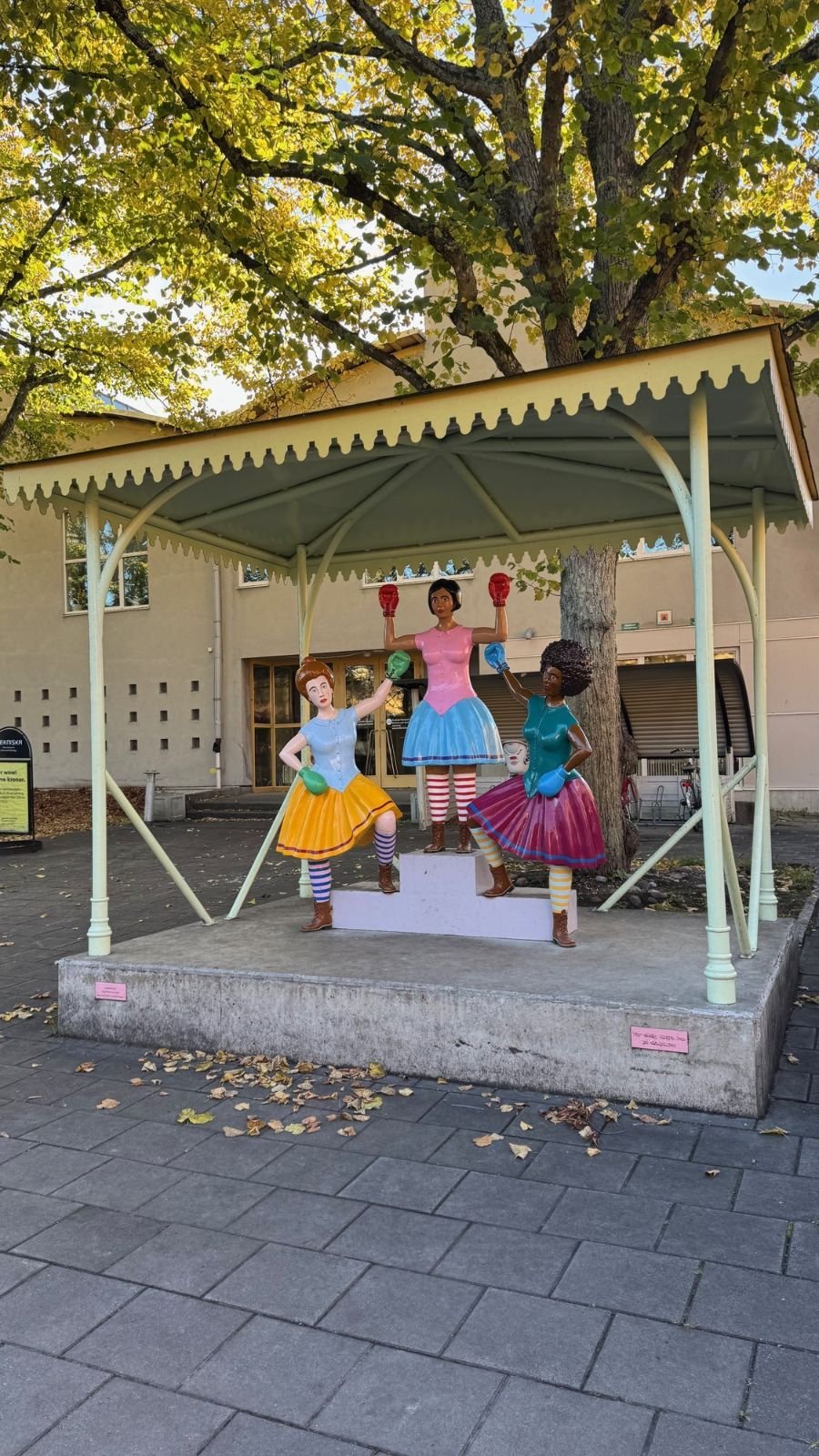
Sport starts outside the door. In my photos, yellow long jump marks are painted on the street under a line of flags, from 50 up to 350. In a small green pavilion under a tree, a colorful sculpture shows three girls.
Solskensolympiaden: the 1912 Olympics
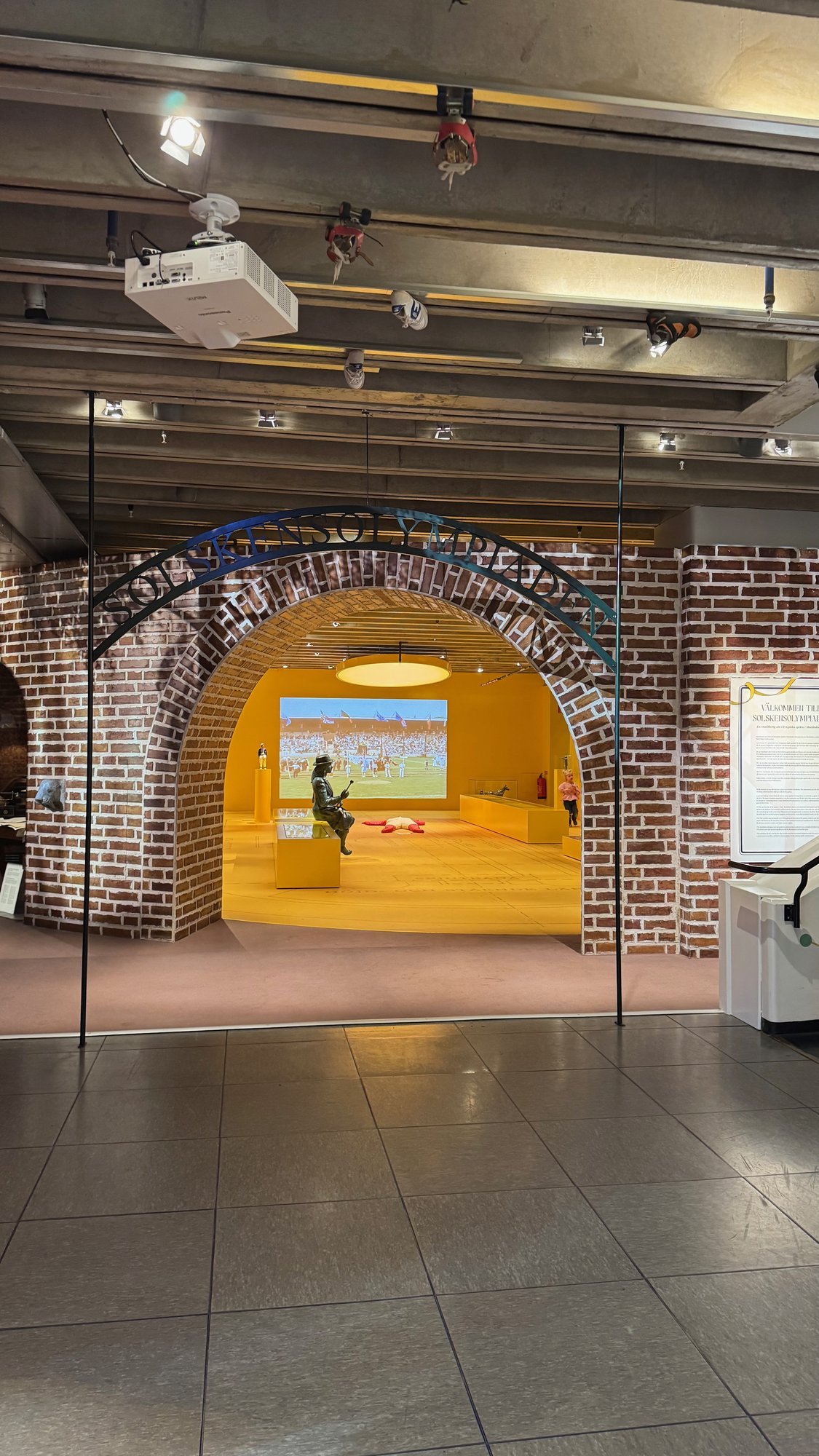
The new main exhibition, Solskensolympiaden (the Sunshine Olympics), opened on 7 July 2026. It is about the Olympic Games in Stockholm in 1912, the only Summer Olympics ever held in Sweden. The museum says the exhibition uses the Stockholm Olympic Stadium as its model.
You can try several events from the Games. You can dive from 10 meters like Greta Johansson, shoot a pistol with the Carlberg twins and time the 100-meter final. You also learn what visitors to Stockholm in 1912 did, how they dressed and how they had fun.
A central part is the 13 heroes of the Games, shown in sculptures by Lehna Edwall and film portraits by Jens Lind.
Shiso Kanakuri, the runner who did not disappear
In the upper stairwell on floor 2, a small exhibition tells the story of Shiso Kanakuri. In Japan he is a legend. In Sweden he became the main character of the made-up story of “the Japanese runner who disappeared” during the marathon in 1912.
The museum says it wants to end that myth once and for all. It shows a sportsman who spent his whole life helping more people find the joy of sport. The exhibition has been open since 31 May 2024, until further notice.
Tiden: sport history to play with
The museum calls Tiden – om idrottens historia (Time – the history of sport) a joyful exhibition. In my photo, tall yellow banners mark the entrance.
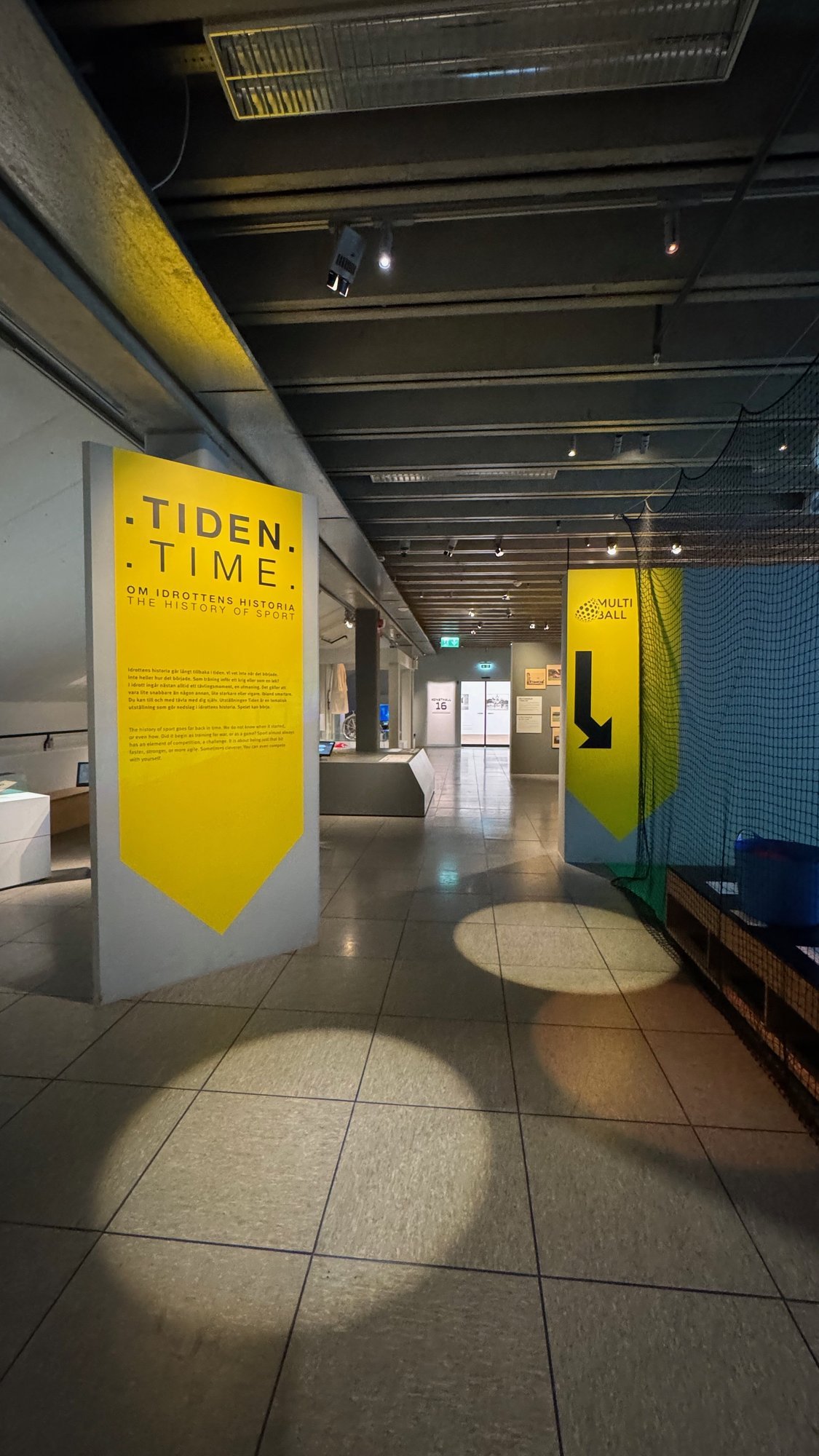
Families can challenge each other in a sports memory game. There are historic moments, places and profiles, models of old games and sports, and heavy weights from the late 1800s. In the film archive, you can watch a children’s Olympics from the 1940s and yo-yo competitions. The exhibition looks at how records have changed, and asks if hide-and-seek could one day be an Olympic sport.
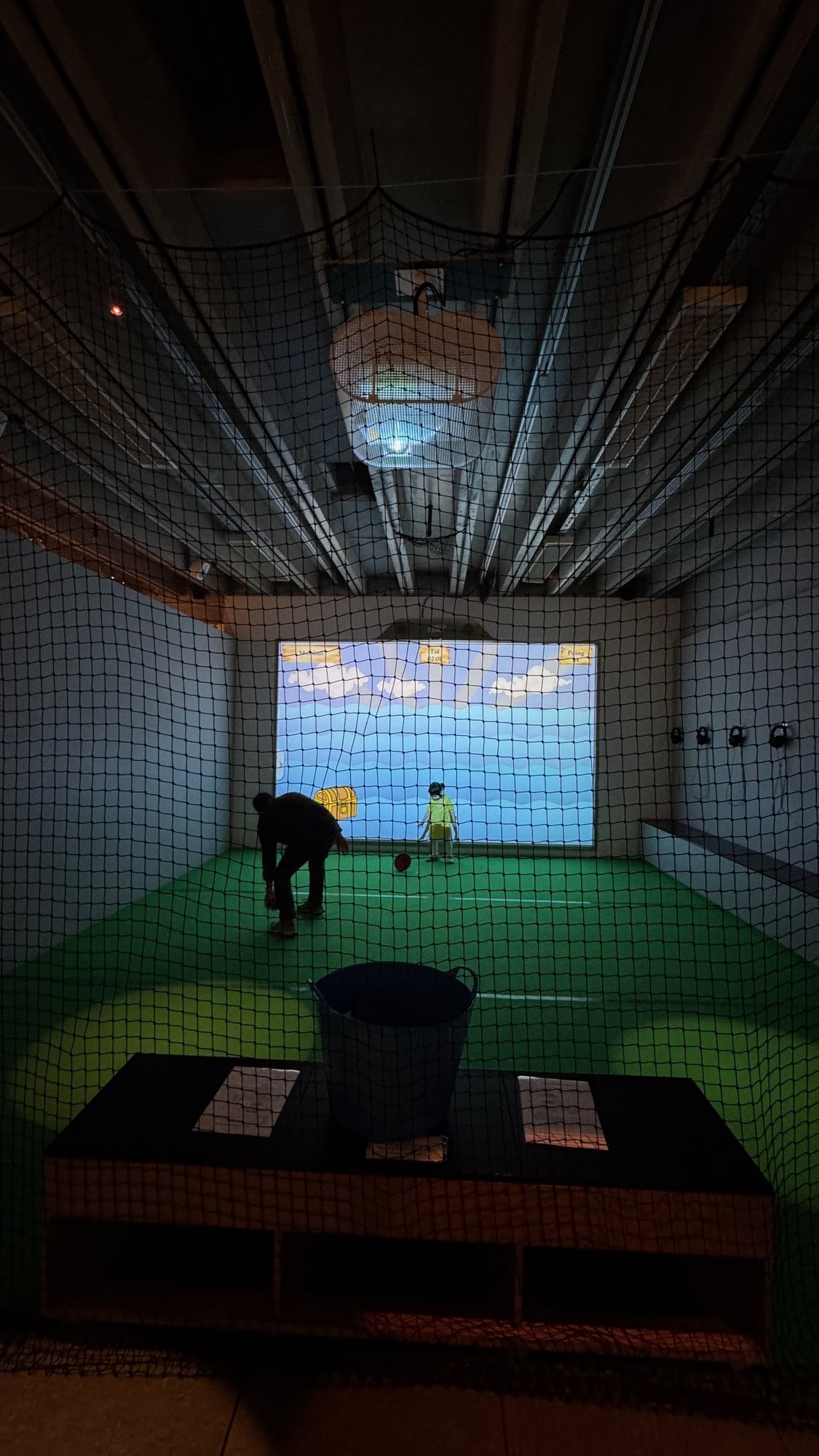
You can also try MultiBall, an interactive game with many digital games to play alone or with friends. In my photo of another room, a big screen shows a sports field, and a child kicks a ball on a green floor, inside a net.
Lilla SportLab: table tennis, wall bars and Mindball
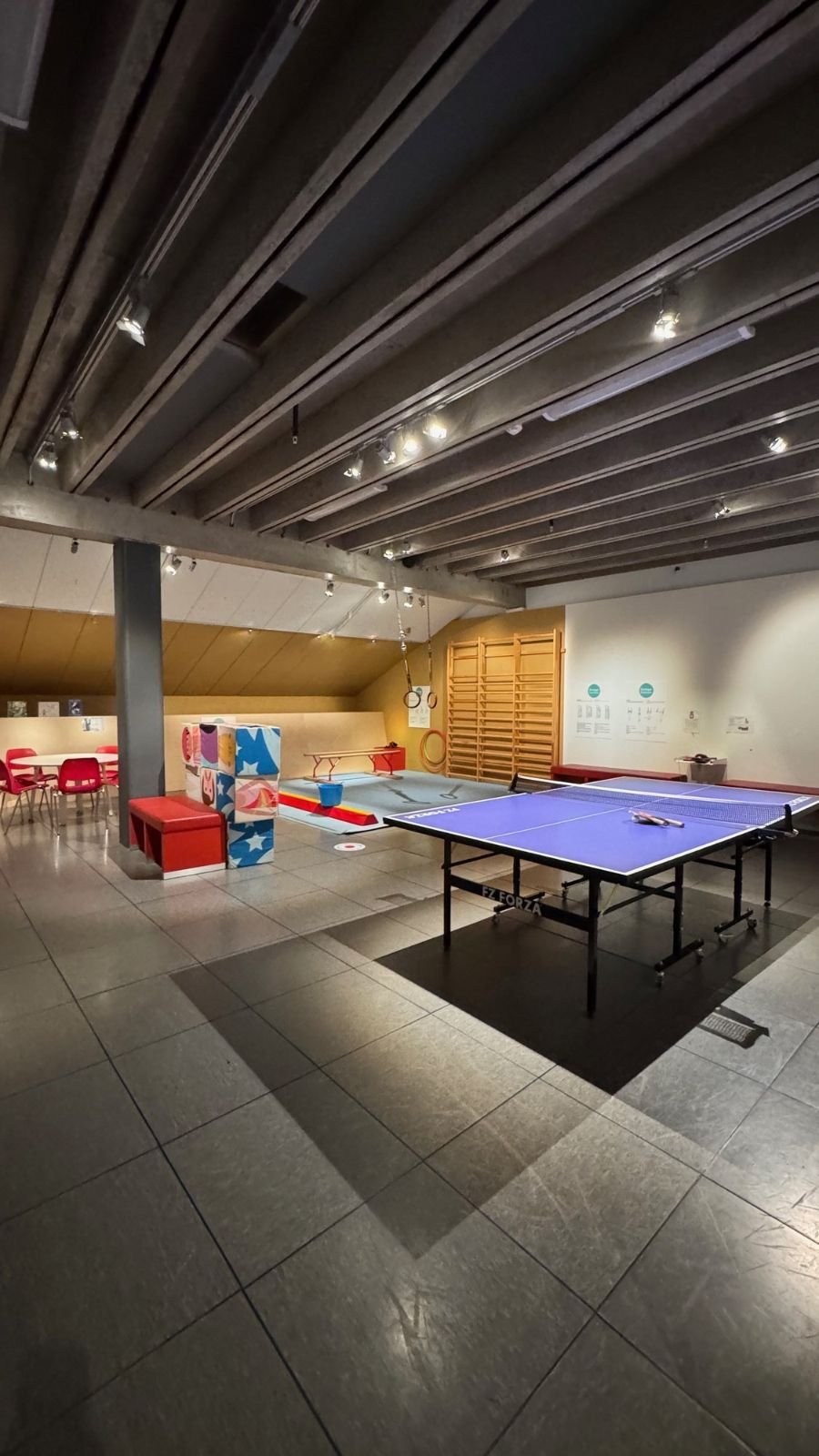
Lilla SportLab is a play area for children and families, about movement, creativity and playful competition. The museum says you can play table tennis, climb on wall bars, balance on Roman rings and make crafts in the workshop. In my photo, a blue table tennis table stands in a big room, with wall bars at the back.
There is also Mindball. The museum says it is a game where you move a ball with the power of your thoughts.
In another part of the museum, a brick arch leads into a yellow play area.
Konsthall 16: where sport meets art
Inside the museum is Konsthall 16. The museum calls it the first art hall in Sweden about the meeting between sport and art. It is run together with the Tore A Jonasson Foundation. The foundation shows exhibitions of contemporary art and works from Tore A Jonasson’s collection, buys sport-related art each year and gives grants to artists and sports people.
From 16 October 2026 to 24 January 2027, Konsthall 16 shows Mustang/Queens by the photographer Nadja Hallström. She photographed horses at a stable in a part of Queens in New York, and wild horses, mustangs, in the United States. The museum says both parts look at worlds far from the elite image that riding often has in Sweden.
Autumn break: horses everywhere
During the autumn break, the museum turns höstlov (autumn break) into hästlov (horse break). The program includes:
- The workshop: a horse maze and a mini hobby horse to build.
- A treasure hunt: find all the horses in the museum, draw your favorite and win prizes.
- The café: pin the tail on the horse, and a football game.
- The yard: hobby horses, if the weather is good.
- Pony rides: Tuesday 27 October, 12:00–14:00, with Häståkeriet Djurgården. For children aged 3 to 13, with a valid museum ticket. Children aged 3 to 5 must have an adult with them. Get a queue ticket at the reception, first come, first served.
The program page is in Swedish, and the museum adds more activities during the break.
The shop and the café
The museum shop sells games, crafts, gifts and books for all ages. The museum says its themes are the body, the mind, food, play and health. There are puzzles, toys, training gear and books about sport history, training and food.
The café sells hot and cold drinks, organic juices and ice cream. In summer you can take your ice cream out to the yard. There is no room to eat a packed lunch.
Tickets and prices
Adults 80 SEK. Seniors 60 SEK. Students 60 SEK. Children and young people up to and including 19 years enter free.
The museum is cash-free and takes cards only. It is open Tuesday to Sunday, 11:00–16:00, and closed on Mondays and some holidays.
Getting there and access
Take bus 69 toward Blockhusudden or Kaknästornet and get off at the stop Sjöhistoriska museet. The museum is next to Tekniska museet, which I wrote about here, and near Sjöhistoriska museet, the maritime museum. If you come by car, there is paid parking next to the museum.
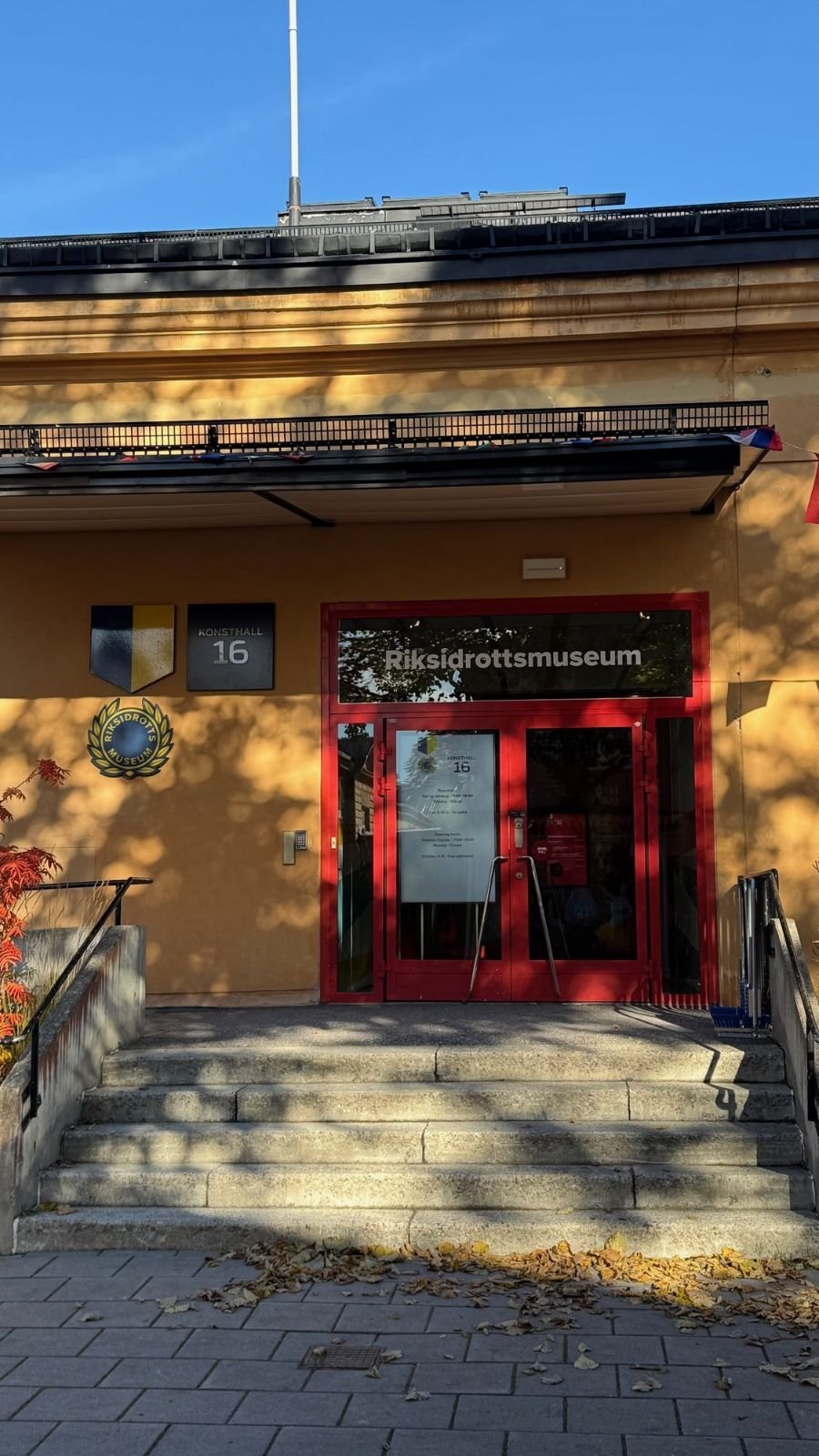
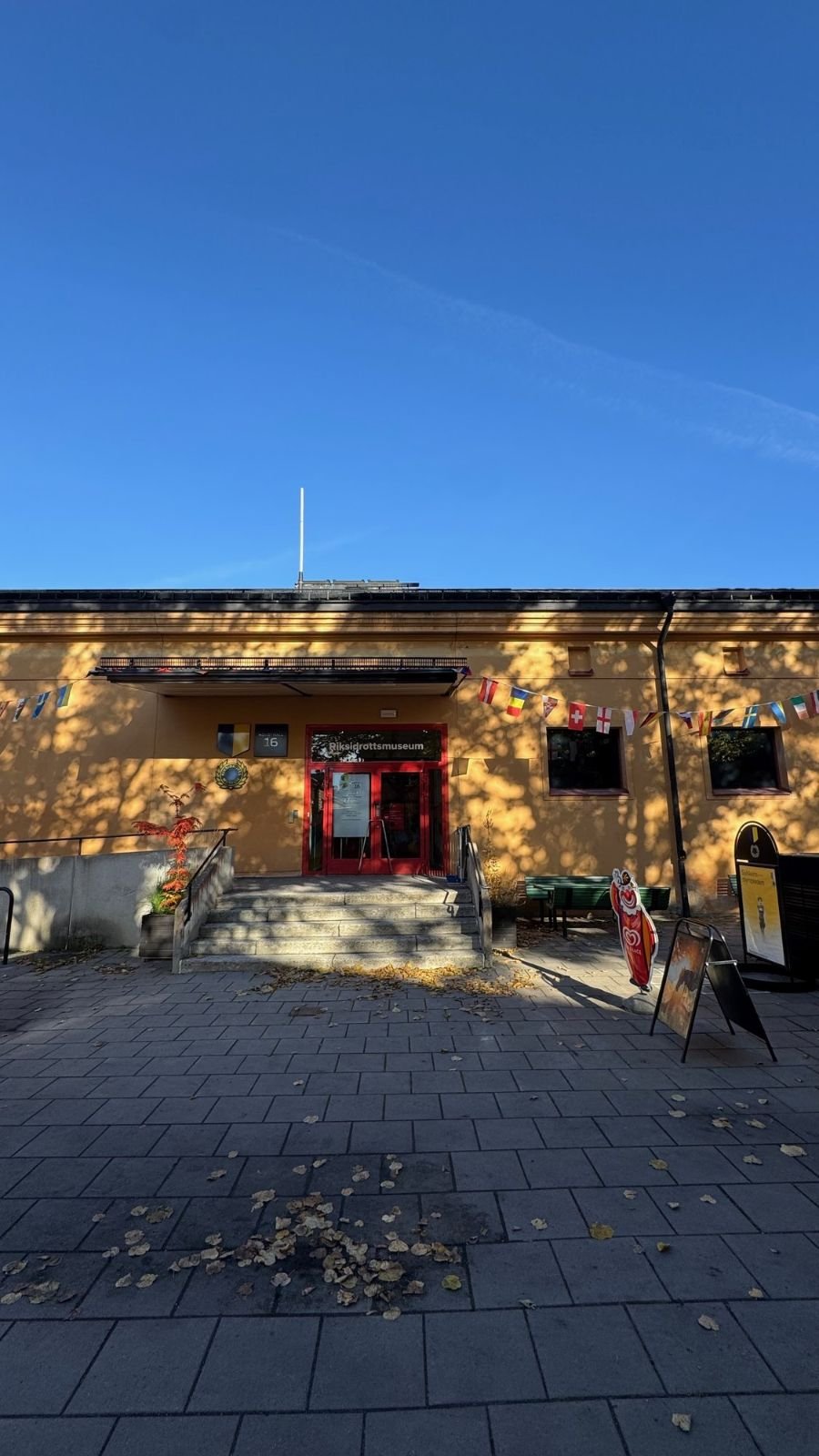
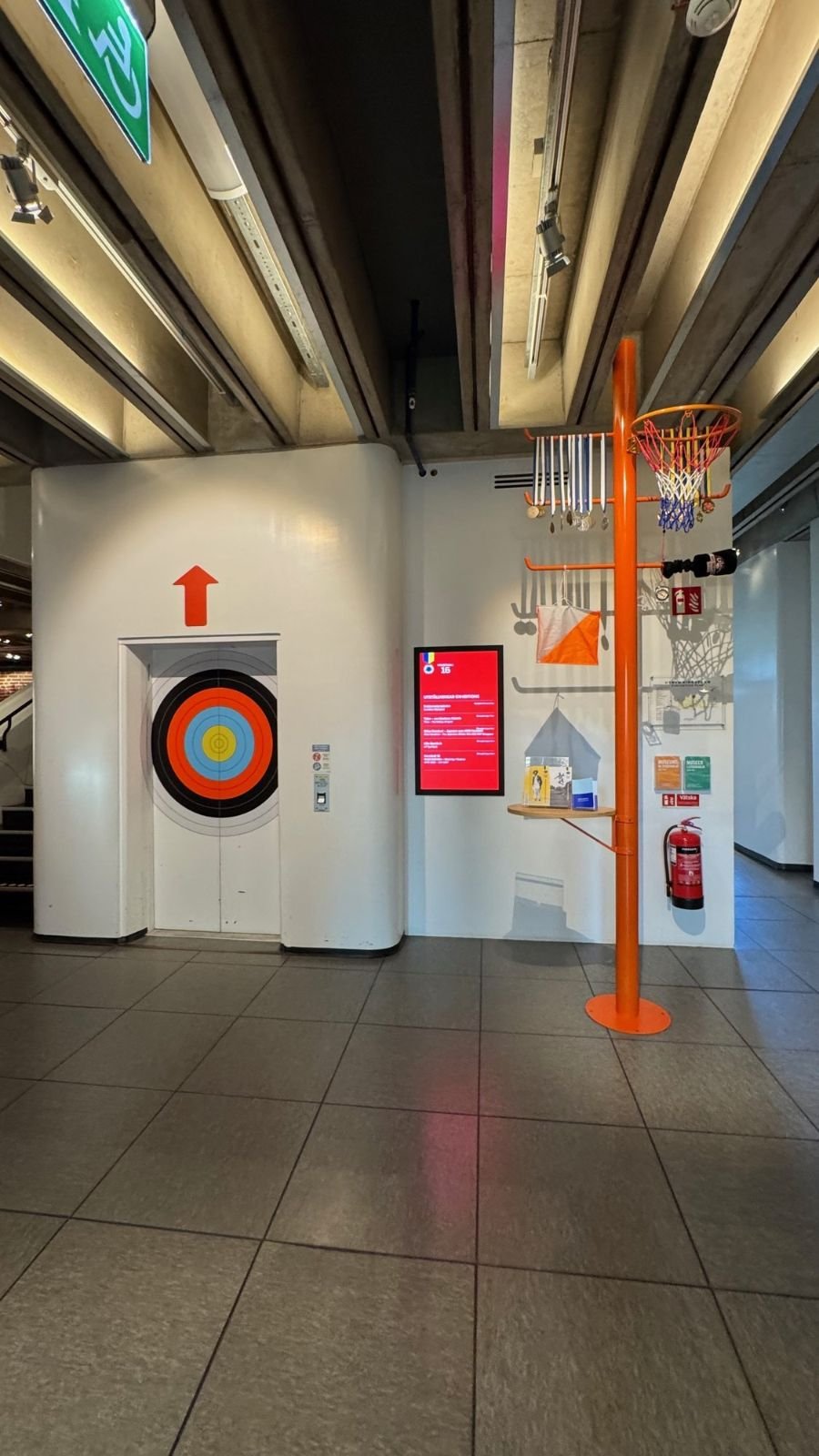
Entrance and lift. The museum says there is a ramp up to the entrance and a lift between the floors. In my photos, short steps with handrails lead to the red doors. Inside, a lift door with an arrow sign stands next to an archery target, a basketball hoop and an orange post with rackets.
Toilets. There is a toilet adapted for wheelchair users. One of the toilets has a baby changing table.
Bags and strollers. There are free lockers you can lock. There is no stroller parking indoors.
Animals. Pets are not allowed, except guide dogs.
I have written about why many museums are still hard to use in my Medium story Why Are Museums Inaccessible?
What is my verdict?
Riksidrottsmuseum is built on one idea: sport history is something you can try with your own body. A dive from 10 meters. A 100-meter final from 1912 to time. A table tennis match. A myth about a Japanese runner, finally put right.
Adults pay 80 SEK, and children and young people up to 19 enter free. The museum is next to Tekniska museet and close to Sjöhistoriska museet, so you can combine them in one day.
And the question from the exhibition stays: will hide-and-seek ever become an Olympic sport?
Photo gallery
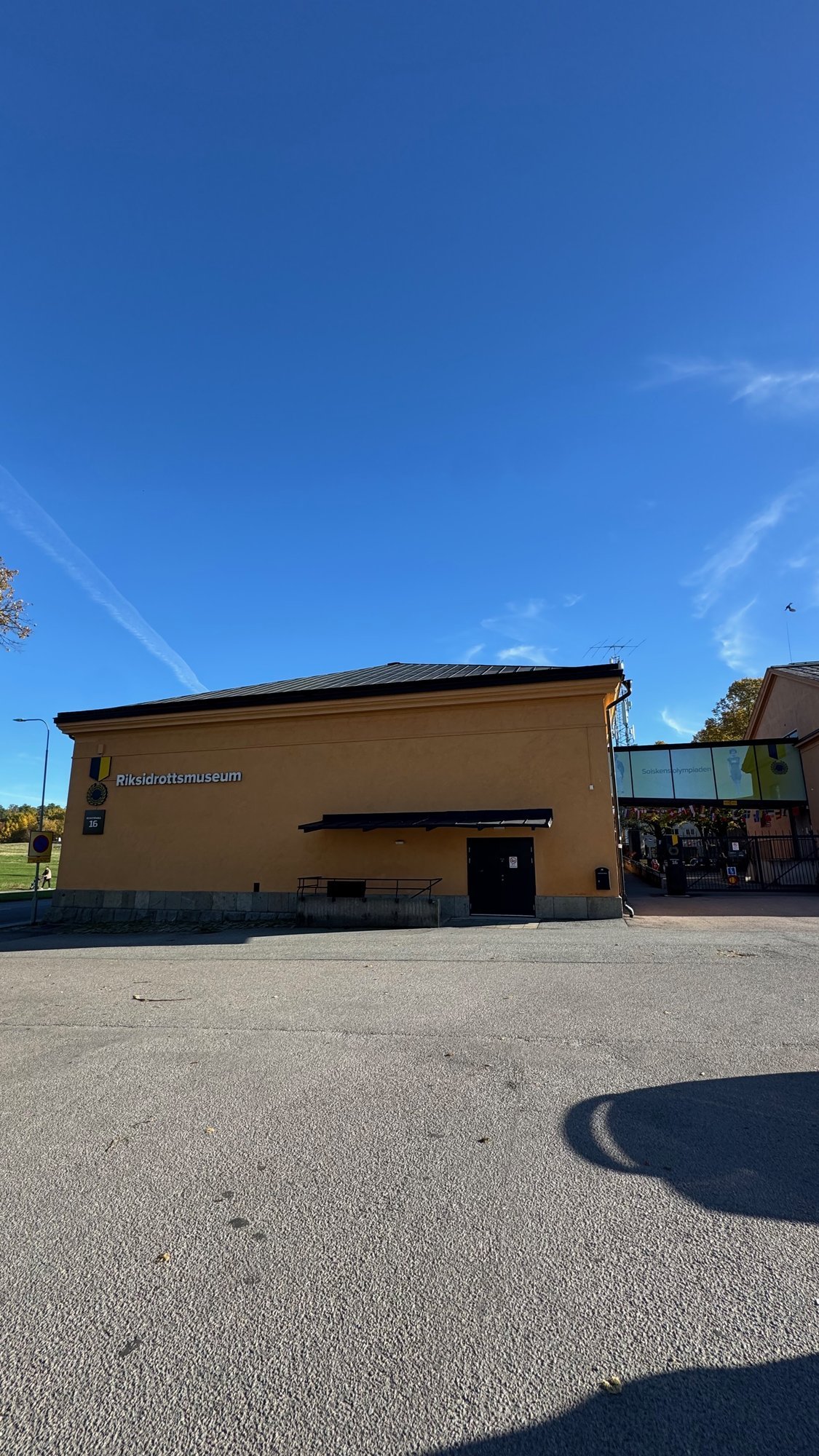
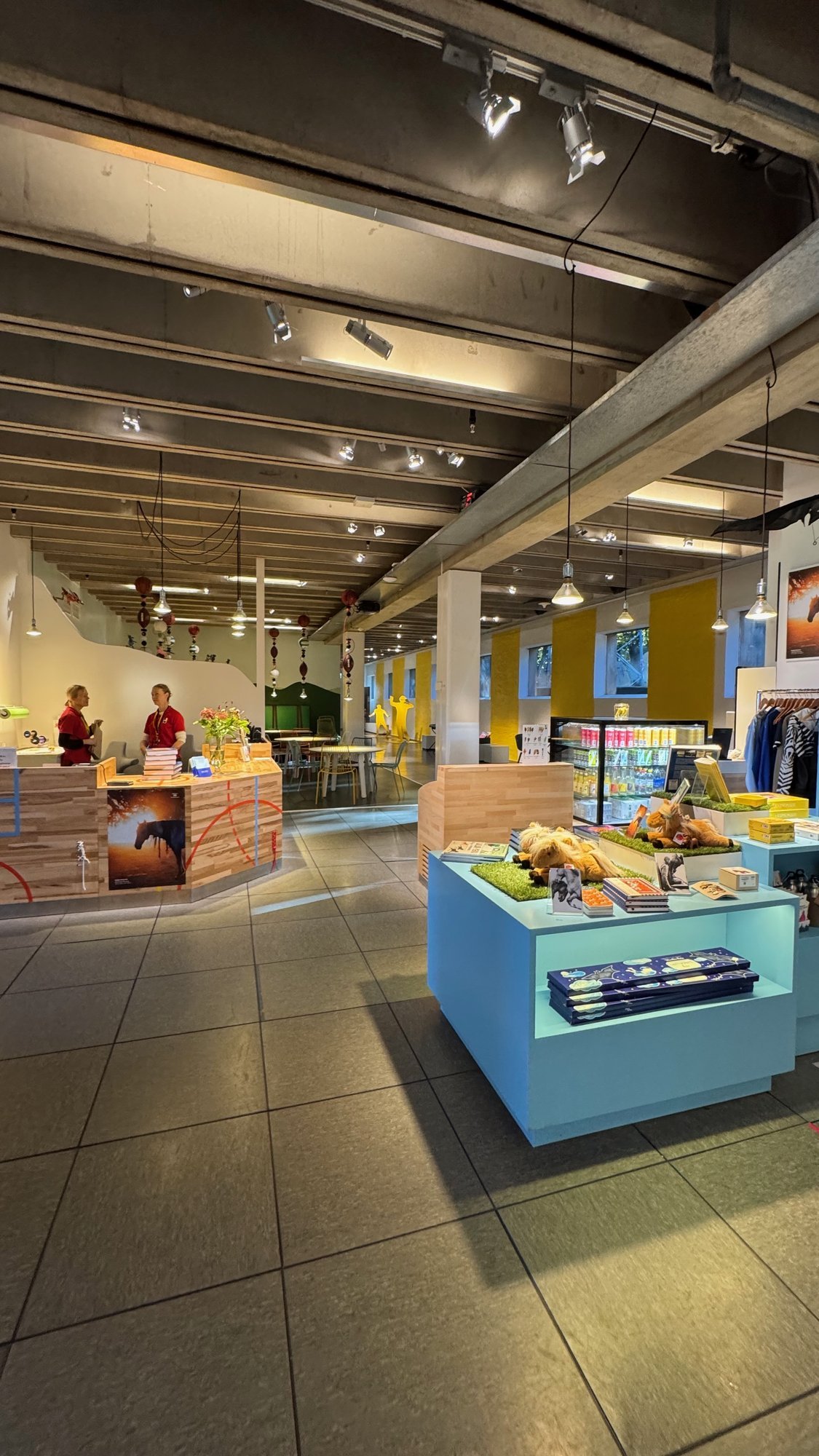
All photographs on this page were taken by Zayera Khan during a visit to the museum, and are her own property. Please do not reuse them without permission.
Riksidrottsmuseum: Riksidrottsmuseum, home page; Riksidrottsmuseum, Öppettider och priser; Riksidrottsmuseum, Hitta hit; Riksidrottsmuseum, Inför ditt besök; Riksidrottsmuseum, Butik och café; Riksidrottsmuseum, Solskensolympiaden; Riksidrottsmuseum, Shiso Kanakuri; Riksidrottsmuseum, Tiden; Riksidrottsmuseum, Lilla SportLab; Riksidrottsmuseum, Samlingar; Riksidrottsmuseum, Konsthall 16; Konsthall 16, Nadja Hallström – Mustang/Queens; Riksidrottsmuseum, Höstlov blir hästlov.
Wikipedia: Wikipedia: Riksidrottsmuseum.