
Stadsmuseet (Stockholm City Museum)
Free, in a 1680 city hall at Slussen, with an elevator straight down from Södermalmstorg: the first museum to visit in Stockholm
- Why visitThe story of Stockholm from a small town on the edge of Europe to a capital, told on three floors in a 1680 building that was itself the city’s southern town hall. Free entry. Start here, and the rest of the city makes sense.
- Best forEveryone visiting Stockholm, first-timers above all. Families, history lovers, and anyone with an hour to spare at Slussen.
- AddressRyssgården, Slussen, Södermalm. Metro: Slussen. An elevator and stairs lead down from Södermalmstorg to the museum courtyard.
- Opening hoursTuesday to Sunday 11:00–17:00, Wednesday until 20:00. Closed Monday. Checked October 2026.
- AdmissionFree. Some events and guided walks cost extra.
- Guided toursCity walks and private group tours on architecture, people and history can be booked. The museum also runs the historical apartments around town.
- FacilitiesCafé on the ground floor with lunch and fika, museum shop, cloakroom with lockers left of the entrance, toilets on every floor, picnic room Mellanrummet on floor 0 with microwaves (closed for a water leak in October 2026), stroller parking in the courtyard and by the lift lobby, free Wi-Fi.
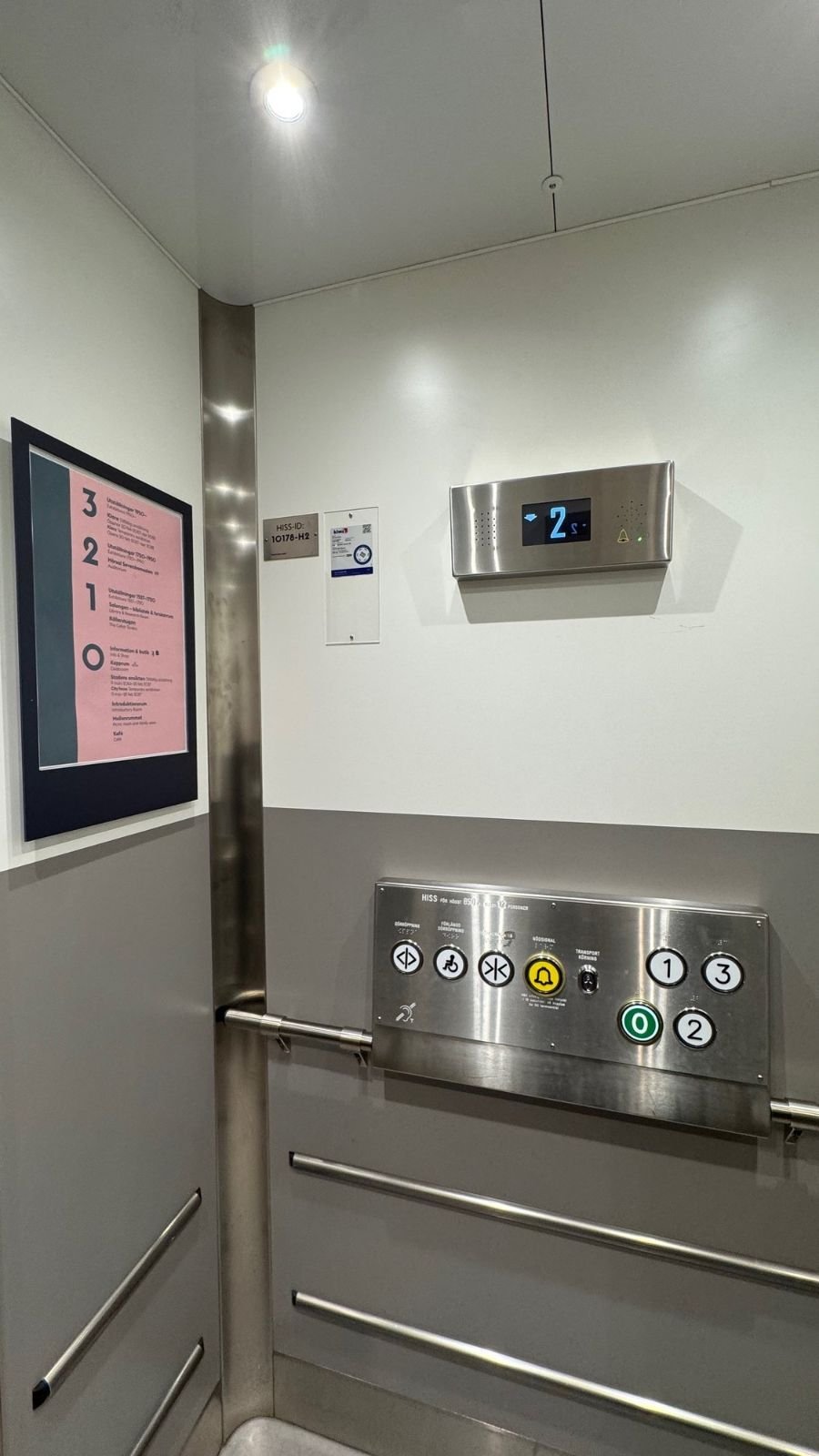
- AccessibilityElevator from the square to the entrance, lifts inside between all floors, accessible toilets on the ground, first and second floors, baby changing tables on the ground and first floors. The museum says the whole museum is accessible with a few exceptions.
- Official websitestadsmuseet.stockholm
About the museum
Stadsmuseet is Stockholm’s own museum, owned by the city. It was founded in 1937 and opened in 1942, and it is the largest municipal museum in Sweden: about 300,000 objects, 25,000 artworks and more than three million photographs. Most of it is in storage. What is on show is the permanent Stockholm Exhibition on three floors, a changing exhibition on the way in, and the café.
The museum went through a long renovation while the whole Slussen area around it was being rebuilt. The square outside, Ryssgården, is still partly fenced for works in October 2026. The museum is open as normal, and it is free.
The southern city hall of 1680
The building is older than the museum by 260 years. It was planned in the 1660s by Nicodemus Tessin the Elder, the architect of Drottningholm, as a trading house. The trade plans fell through, the city took over, and after almost twenty years of building it was finished in 1680 as Södra stadshuset, the southern city hall. The southern city court sat here from the 1670s. In 1685 the medical college held the first public dissection in Stockholm in one of its rooms, an anatomical theater, and at the last one, in 1729, a young Carl Linnaeus was in the audience. Later the same room became an Orthodox church for the Russian merchants outside.
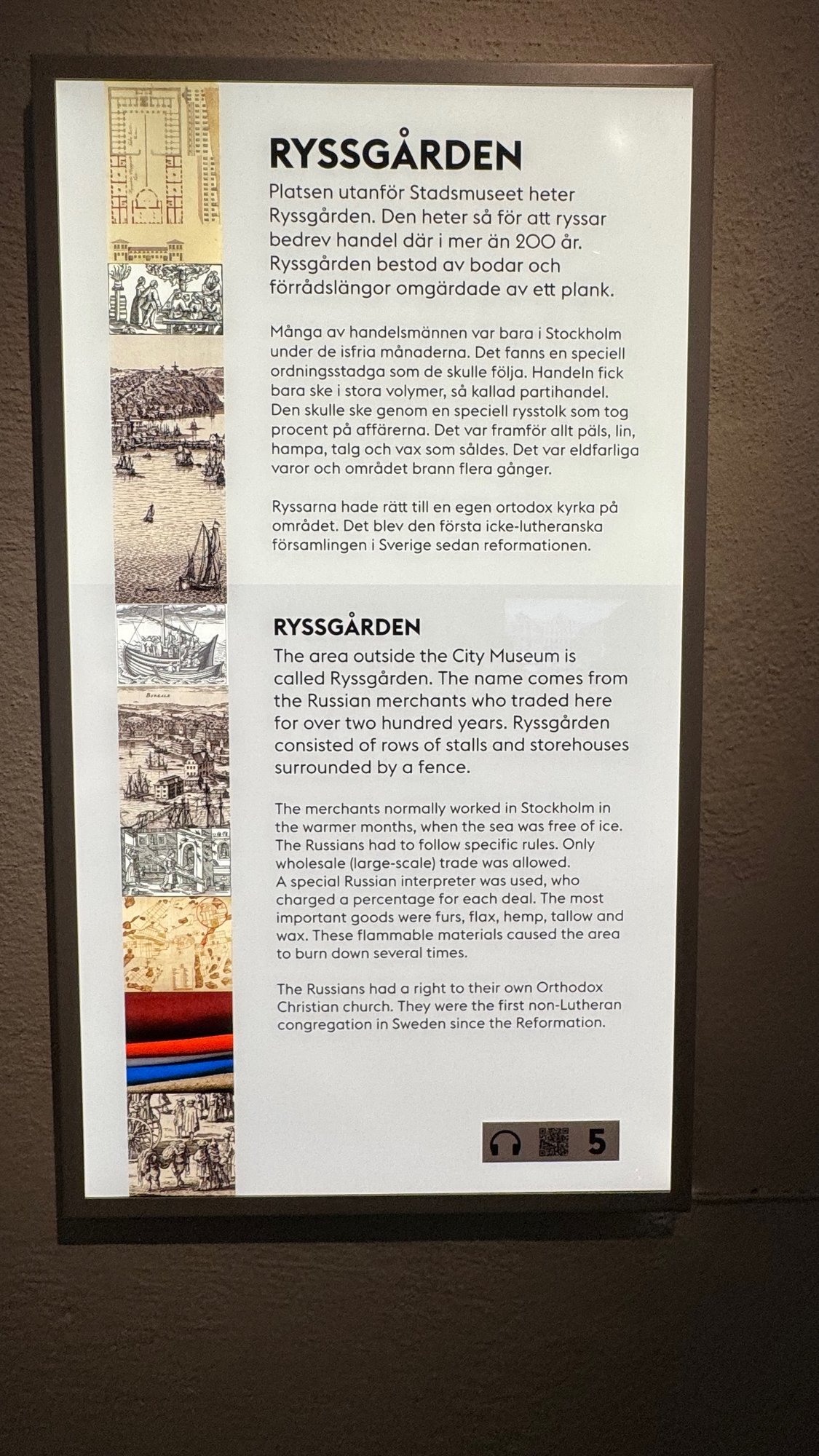
That is where the square gets its name. Ryssgården, the Russians’ yard, was for more than two hundred years the place where Russian merchants were allowed to trade in Stockholm: rows of stalls and storehouses inside a fence, open in the months when the sea was free of ice, with a sworn interpreter who took a cut of every deal. They sold furs, flax, hemp, tallow and wax, all of it flammable, and the yard burned down several times. The Russians had the right to their own church here, the first non-Lutheran congregation in Sweden since the Reformation.
The Stockholm Exhibition: from king’s city to world city
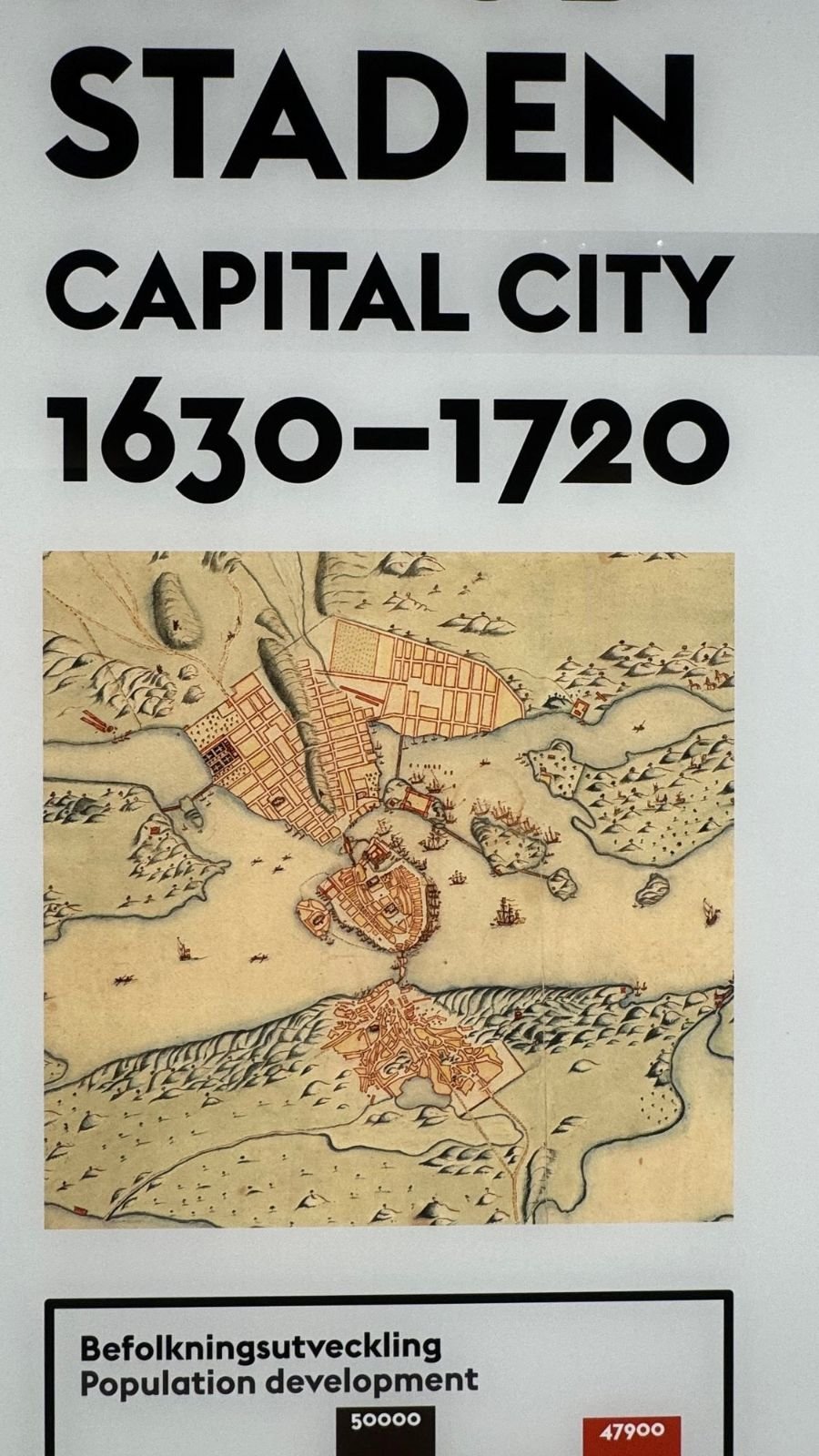
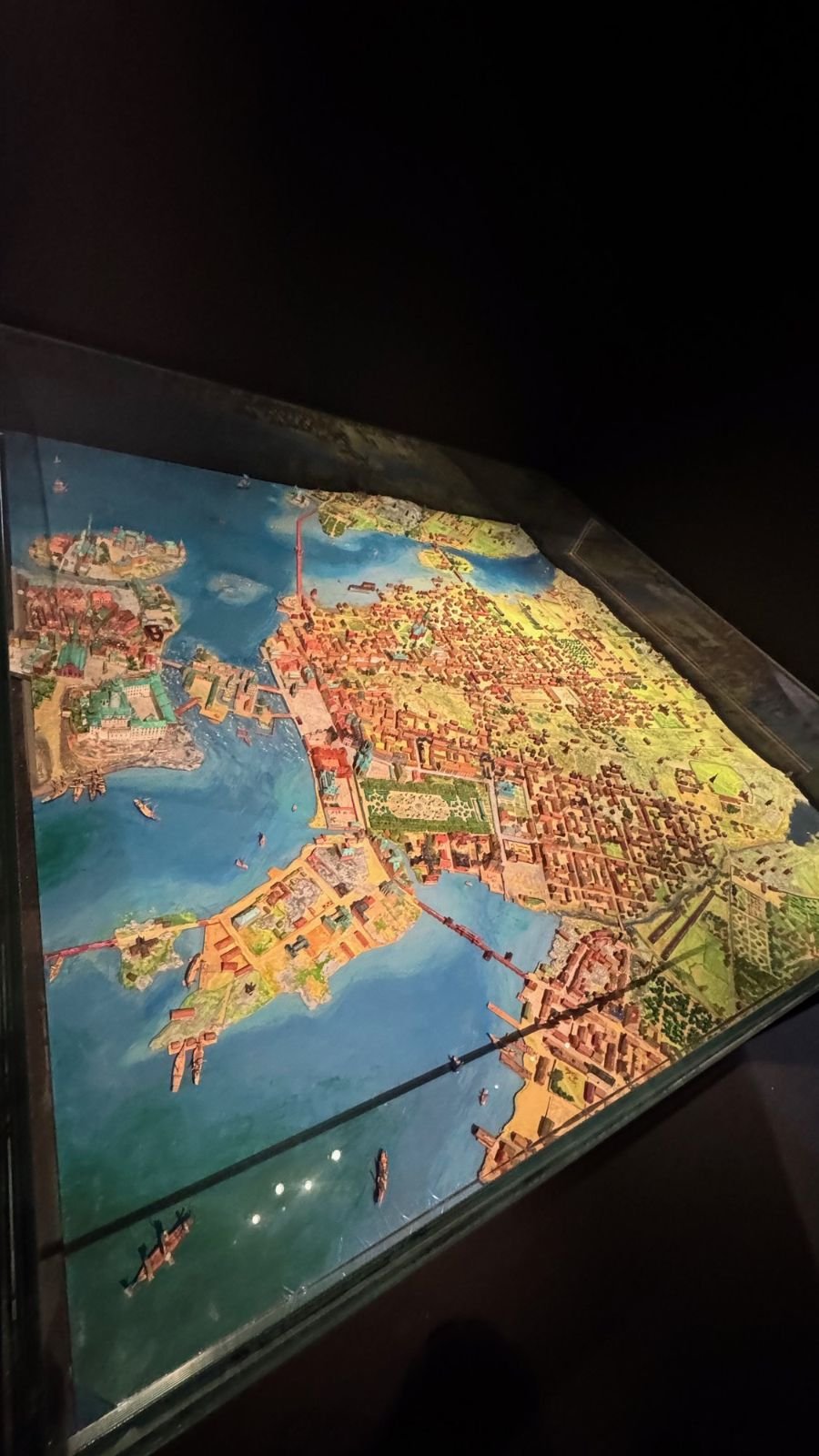
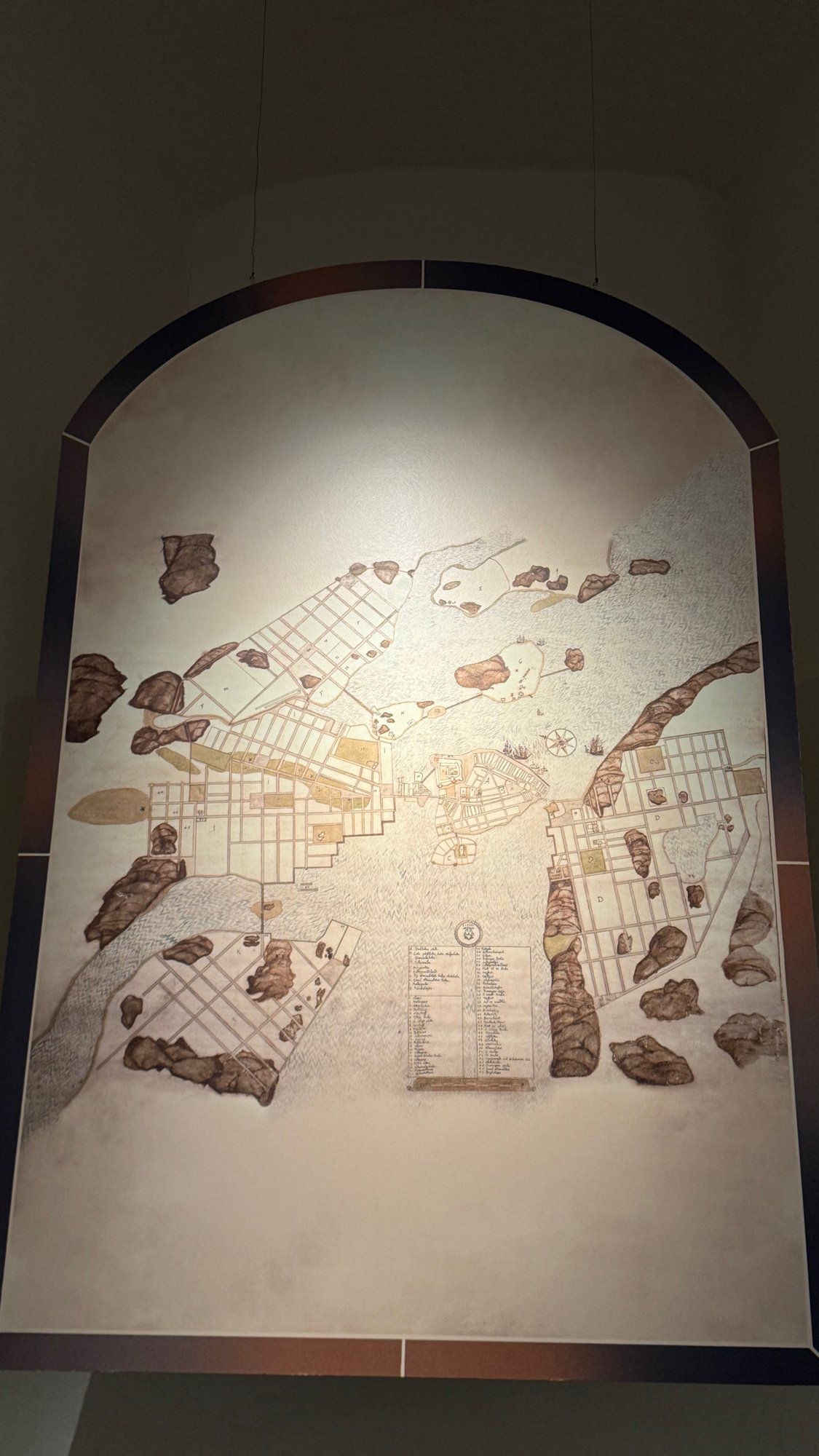
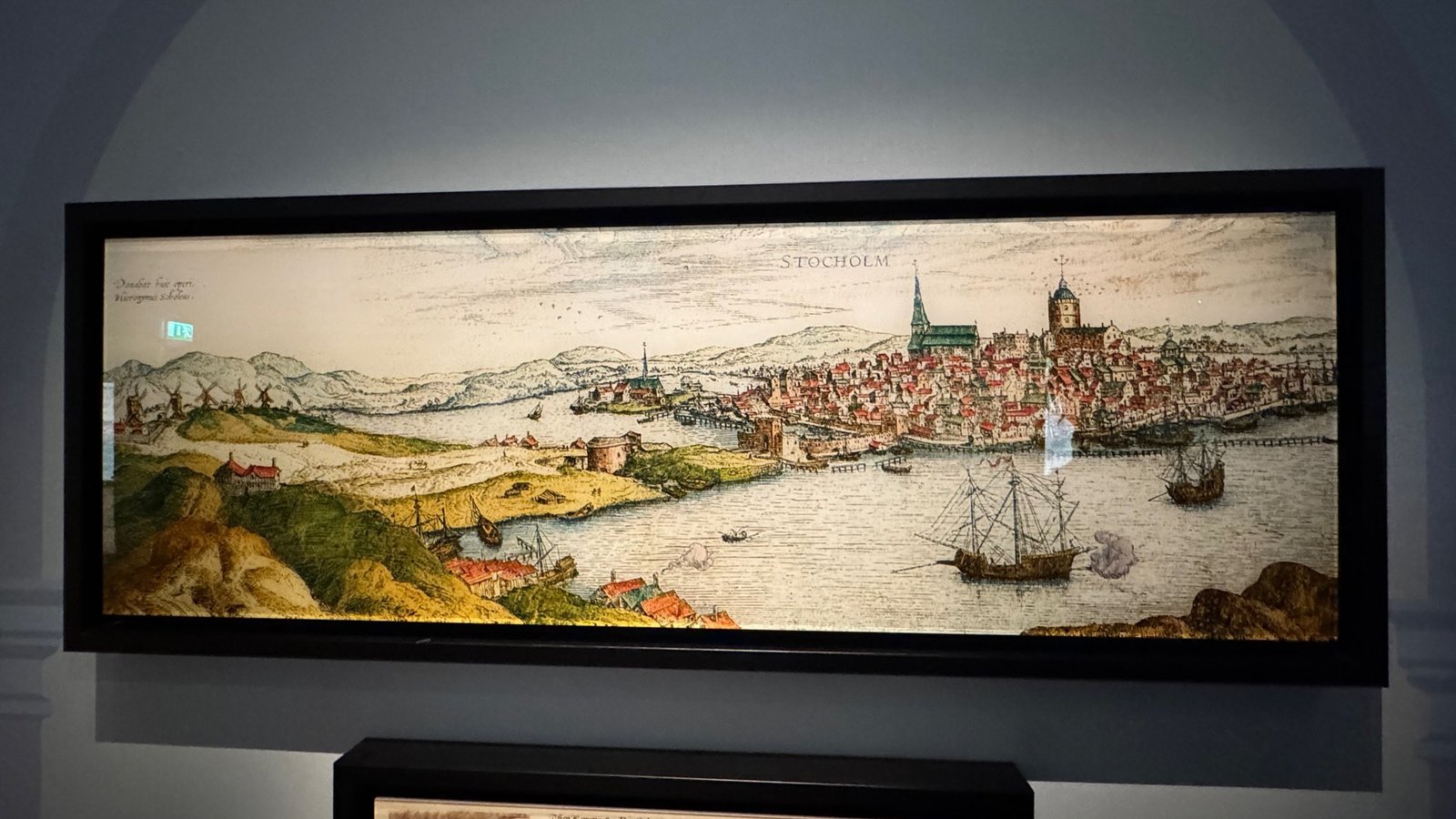
The permanent exhibition walks you through five hundred years in order. It starts with King’s City and Capital City, when Stockholm was a small town on the northern edge of Europe and then, between 1630 and 1720, the capital of an empire. A Danish map from the 1640s, the original in the Royal Library in Copenhagen, shows the town as its enemies saw it. A painted city model shows the same streets in color.
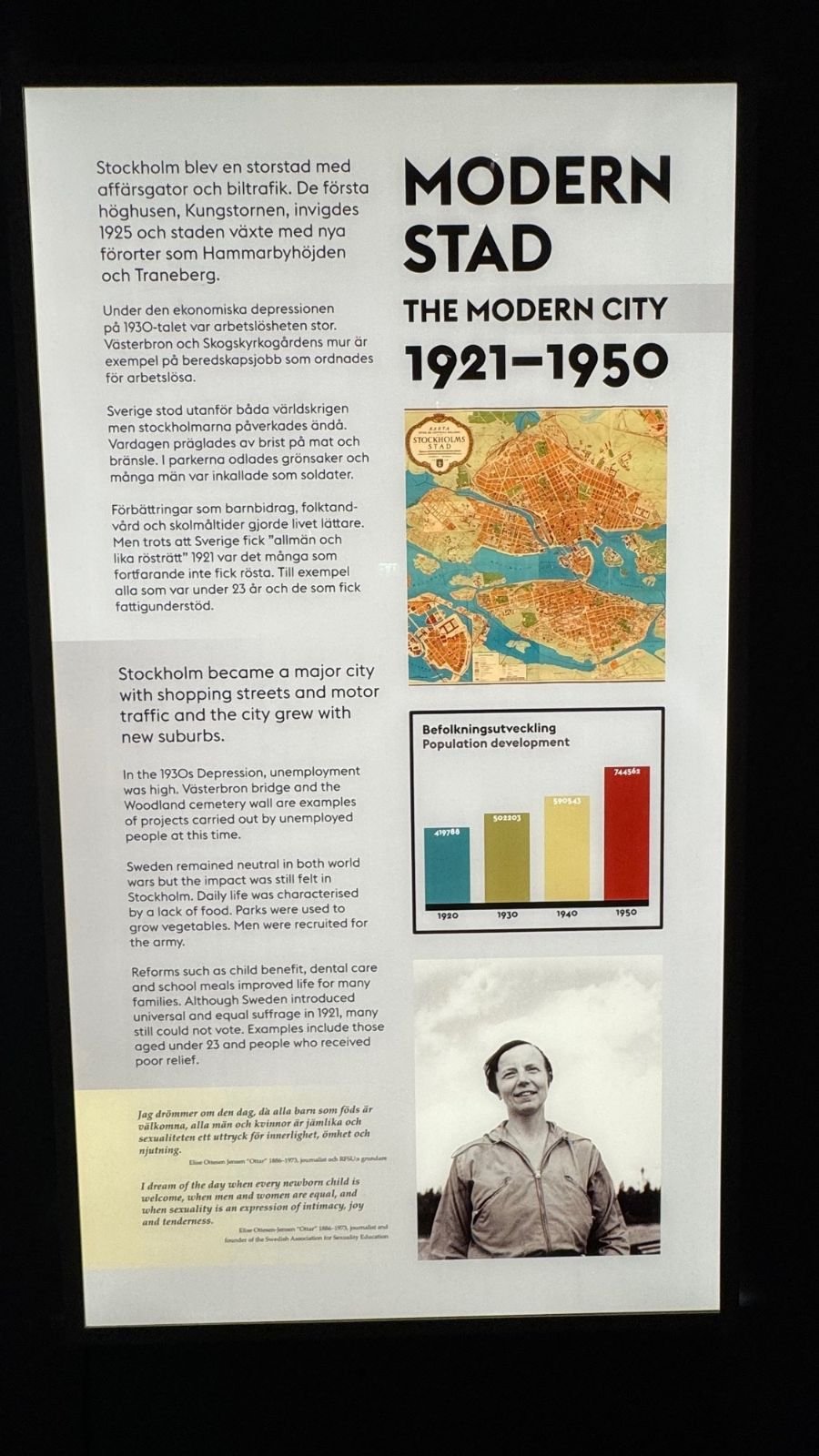
Then City of Commerce and City of Industry: a crowded, dirty city where people escaped to the theater, and later to the beer halls. Then The Modern City and World City: department stores, youth clubs, rubbish chutes and the welfare state. The texts are short, in Swedish and English, with an audio guide number on every panel.
Witches, Russians and a palace called Makalös
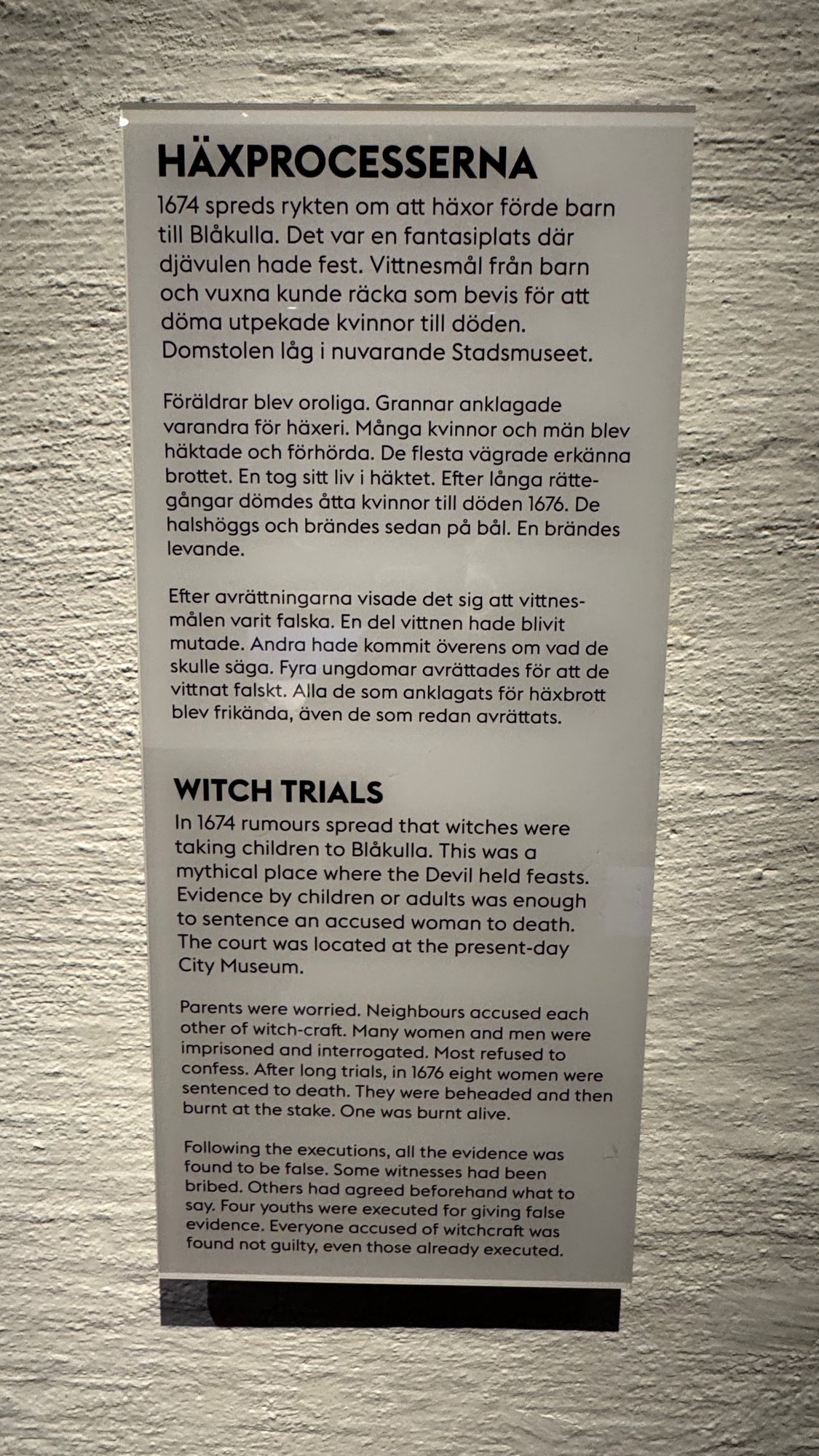
Three things stopped me on the capital-city floor. The first is a panel about the witch trials of the 1670s, when the panic that began in Dalarna reached Stockholm and children testified against women who were then executed on Hötorget. The museum tells it in a few plain sentences, which is the right way.
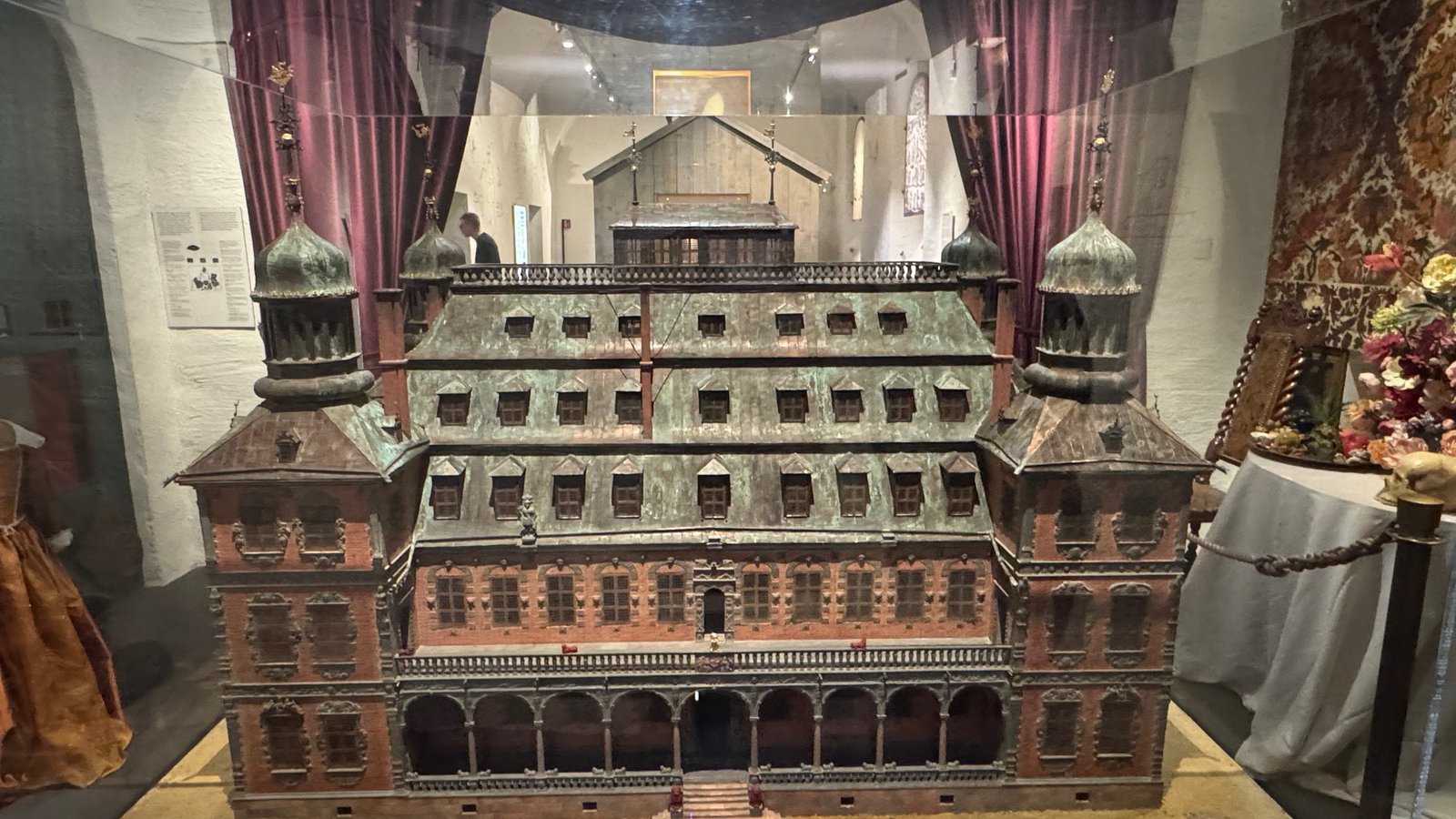
The second is the Russians’ yard outside the window, above. The third is the model of Makalös, “Matchless”, the palace that Jacob De la Gardie built in the 1630s on the spot where Kungsträdgården meets the water. It was the grandest private house in the empire, later an arsenal and an opera house, and it burned down in 1825 during a performance. Today nothing is left but the name on this model, and a plaque in the park.
The modern city and the Pihlqvist home
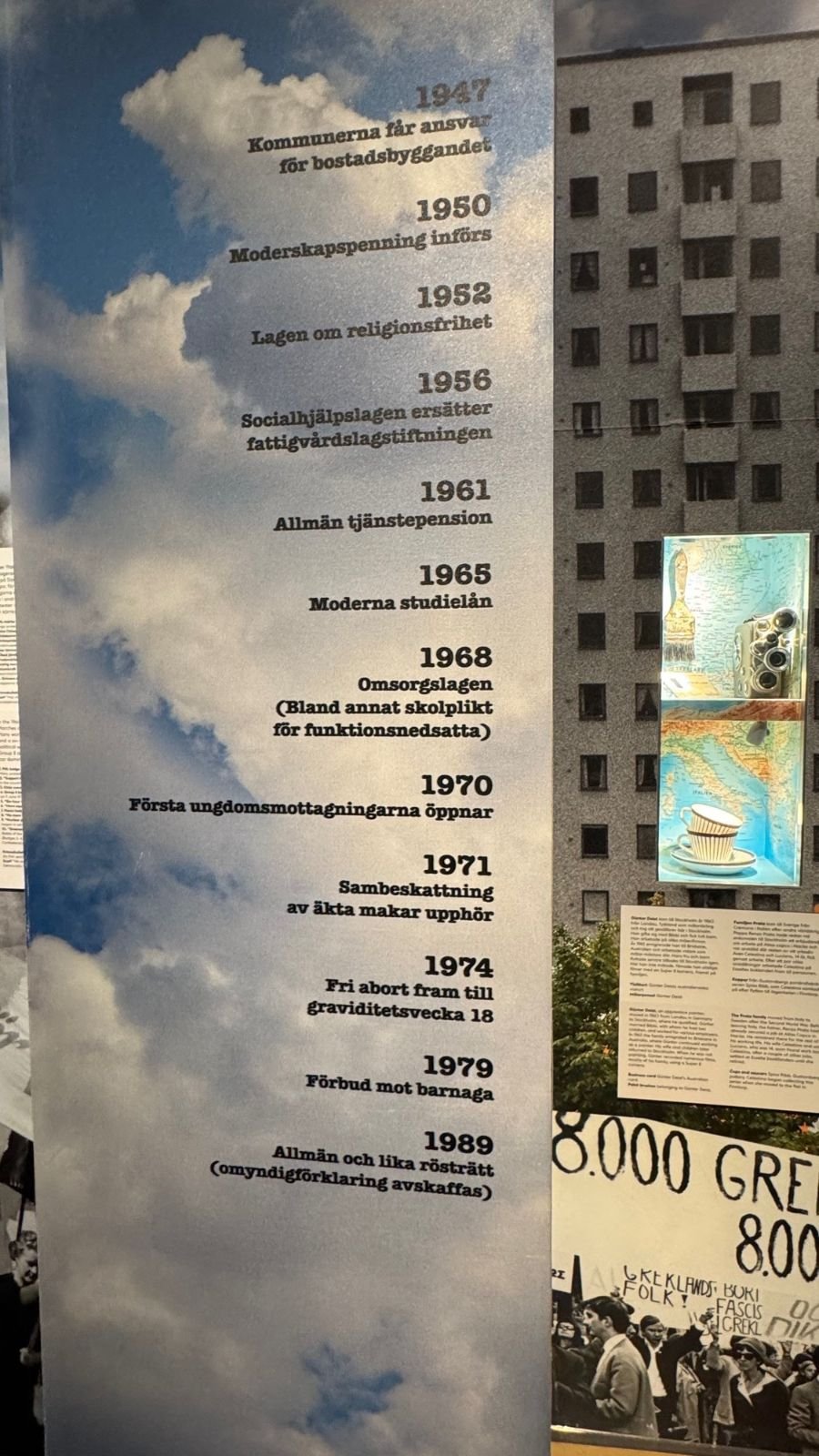
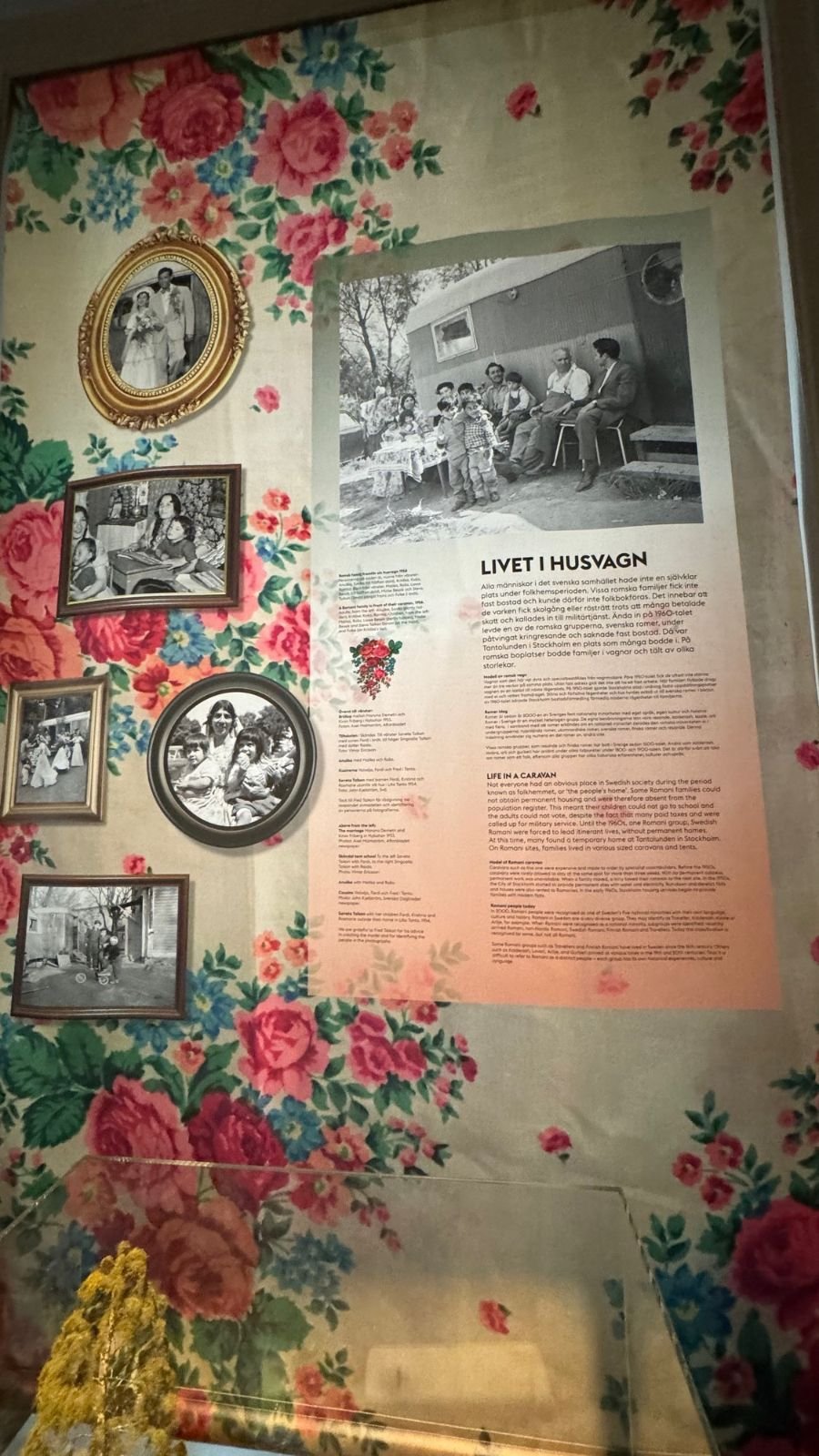
The top floors bring the city into living memory. A timeline of social reforms from 1947 to 1989 is printed on a sky with clouds: child allowance, pensions, free school lunches, the things a Swedish childhood takes for granted. A wall with pink flowers tells the story of a family that lived in a caravan. And at the very top is the Pihlqvist family home, an apartment as a Stockholm family had it in the early twentieth century, kitchen and all.
On the way in or out, City Faces uses modern technology to bring nineteenth-century portraits of Stockholmers to life. In March 2027 the photographer Hannah Modigh takes over the temporary space.
Accessibility: an elevator from the square
This is one of the easiest museums in Stockholm to visit on wheels. The museum lies below Södermalmstorg, and an elevator takes you straight down from the square to the courtyard and the entrance; the stairs are the alternative. Inside, lifts connect all floors, and there are toilets on every floor, with accessible toilets on the ground, first and second floors and baby changing tables on the ground and first. Strollers park in the courtyard, chained to a cable, or indoors by the lift lobby. The museum says that, with a few exceptions, the whole museum is accessible to everyone.
Café, shop and picnic room
The café is on the ground floor, by the entrance, with a light lunch, sandwiches and fika, and tables in the courtyard when the weather allows. The museum shop is excellent: almost everything in it is about Stockholm, from maps and books to prints and things for children, and it is a better place for a souvenir than any shop on Västerlånggatan. Lockers are in the cloakroom left of the entrance. If you bring your own food, Mellanrummet on floor 0 has microwaves; it was closed for a water leak when I visited, so check before you count on it.
What is my verdict?
Free, central, accessible, and about the city you are standing in. I recommend Stadsmuseet to everyone who visits Stockholm, and I would put it first on the list: an hour here and the streets outside have a story. Then take the elevator back up to Södermalmstorg, turn around, and look at the view.
Vi ses vid Slussen.
Photo gallery
All photographs on this page were taken by Zayera Khan during a visit to the museum, and are her own property. Please do not reuse them without permission.
Sources: Stadsmuseet – Your visit; Stadsmuseet – Practical information; Stadsmuseet – Exhibitions; Stadsmuseet – start page; Wikipedia: Stadsmuseet i Stockholm; the museum’s own panels, photographed on site by Zayera Khan.