
Scenkonstmuseet
A 1600s bakery full of puppets, costumes and instruments you are allowed to touch
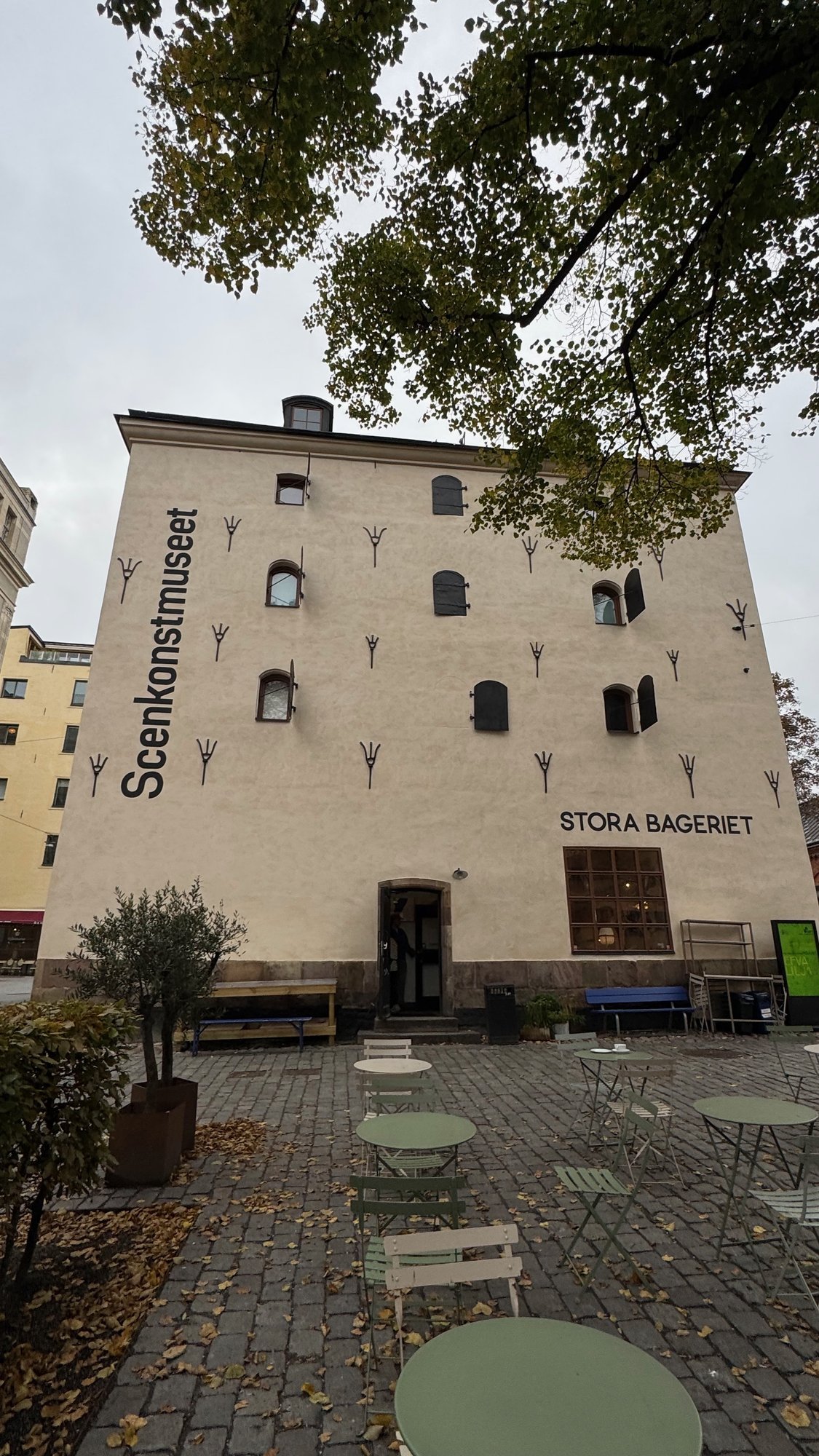
- Why visitSweden’s national museum for theater, music and dance, inside one of northern Europe’s oldest preserved industrial buildings. About 20 stations where you play, dance and try things yourself.
- Best forFamilies, theater and music lovers, architecture fans, and anyone who wants a museum where touching is allowed. A good rainy-day choice in Östermalm.
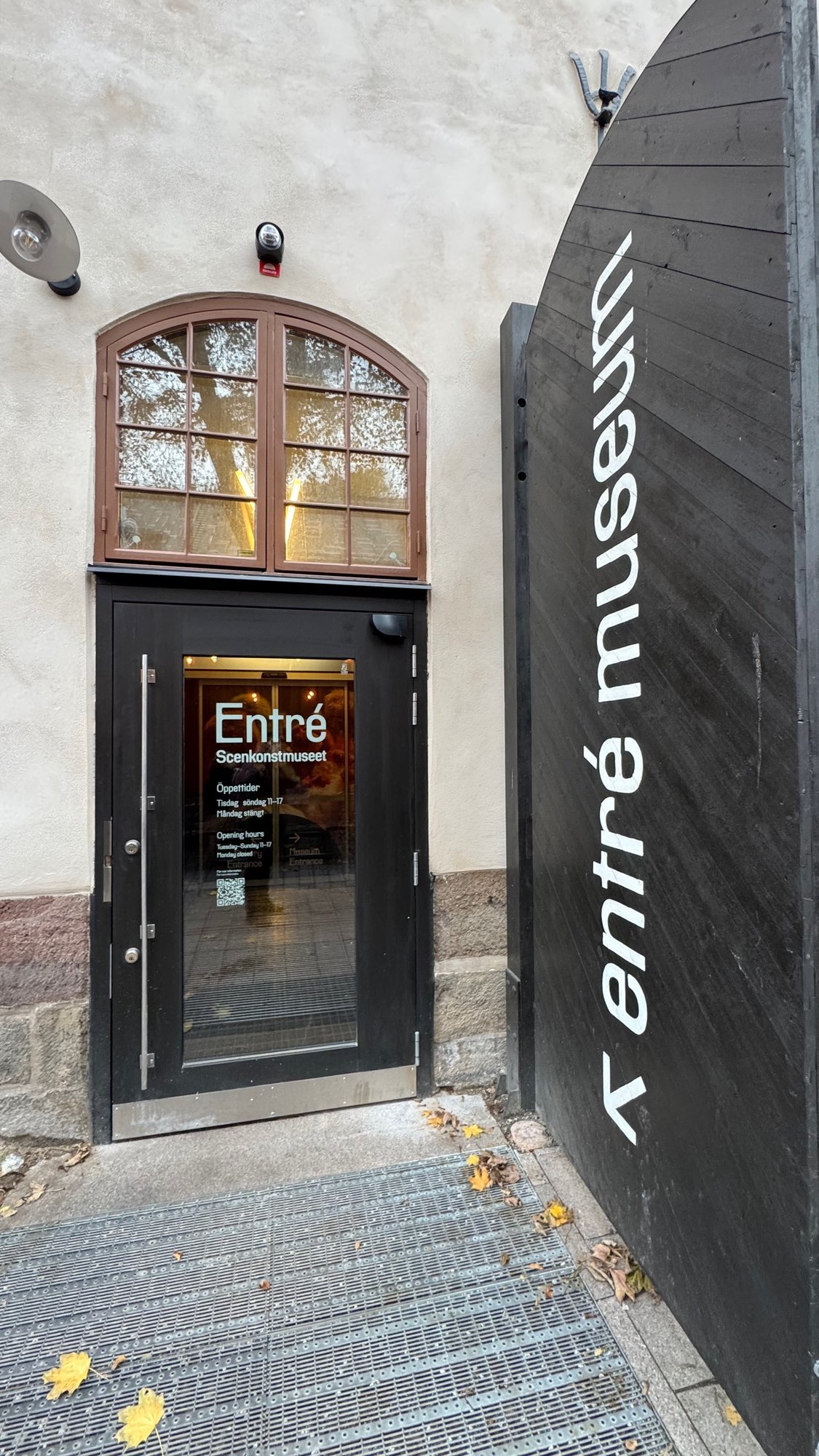
- AddressSibyllegatan 2, 114 51 Stockholm. Entrance via Väpnarplan or Riddargatan. Metro: Östermalmstorg. Bus and tram: Nybroplan.
- Opening hoursTuesday to Sunday 11:00–17:00. Closed Mondays and on some public holidays. Checked October 2026.
- AdmissionAdults 160 kr, seniors and students 120 kr, free for everyone up to 18. Annual pass 260 kr. Cashless: card or Swish only. Personal assistants enter free with a valid card.
- Guided toursShort tours in English are included in the ticket in summer (2026: daily at 15:15, 23 June to 16 August). Guided tours booked before 11:00 get the exhibition rooms to themselves.
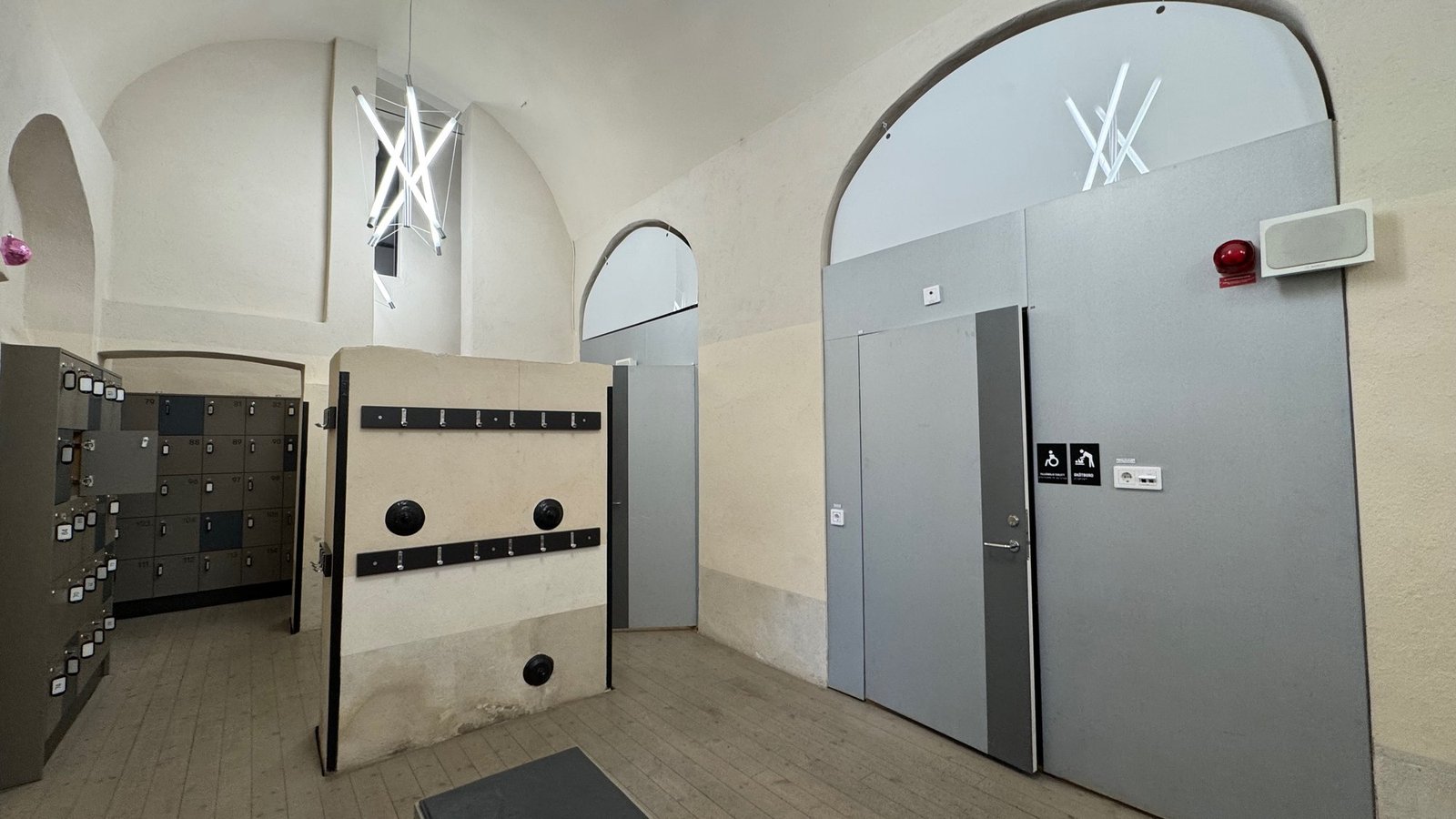
- FacilitiesCafé Stora Bageriet at the entrance, museum shop, lockers, a picnic room on floor 2 with microwave and sink, baby changing tables, covered stroller parking outside.
- AccessibilityStep-free entrance at street level on Väpnarplan, automatic doors, two elevators to all floors, accessible restroom on every floor, hearing loop in the Grand hall, subtitled films, handrails and contrast strips on stairs and slopes. Guide and service dogs welcome.
- ParkingNone at the museum. Vehicles can stop at the accessible entrance on Väpnarplan to drop off.
- Official websitescenkonstmuseet.se
About the museum
Scenkonstmuseet is the Swedish Museum of Performing Arts. It is a national museum for music, theater and dance, and it belongs to Statens musikverk, the state agency that also runs the music and theater library and the Swedish folk song archive.
The collection holds close to 50,000 objects: instruments, stage models, puppets and stage costumes. The instrument collection alone has more than 6,000 items, some from the early 1600s. Most of it sits in storage. What you see in the building is a selection, and the museum lets you visit the stores by appointment.
I went on a weekday in October. The rooms were quiet, the lights were low, and the old wooden beams above my head made the exhibition feel like a backstage area. That is the point of the place.
A bakery for the army
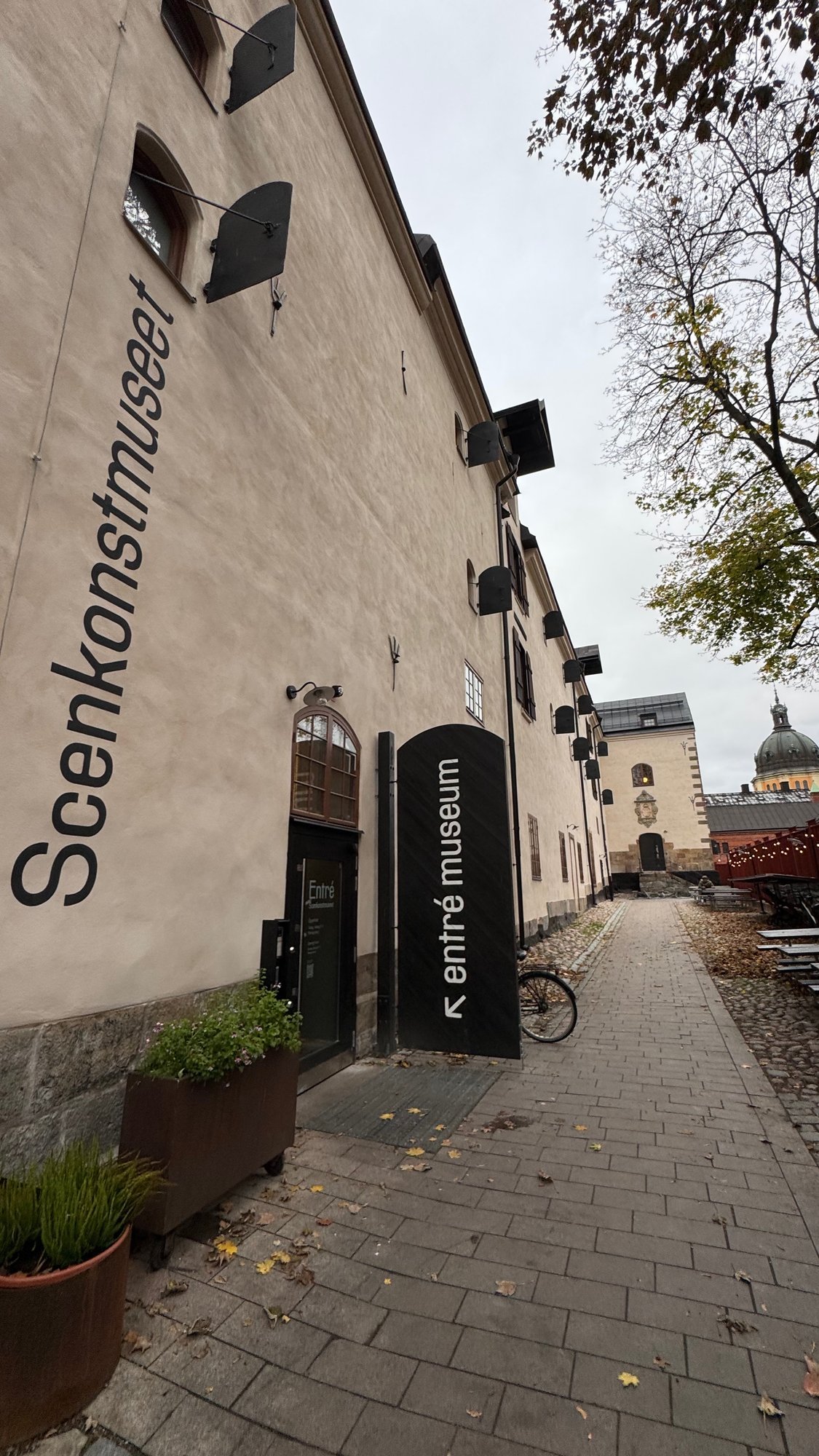
The building is called Kronobageriet, the crown bakery. It dates from the 1600s and once baked bread for the Swedish army. Later it served as an armory and as a liquor cellar. Today the museum calls it one of northern Europe’s oldest preserved industrial buildings, and the café downstairs still carries the name Stora Bageriet, the big bakery.
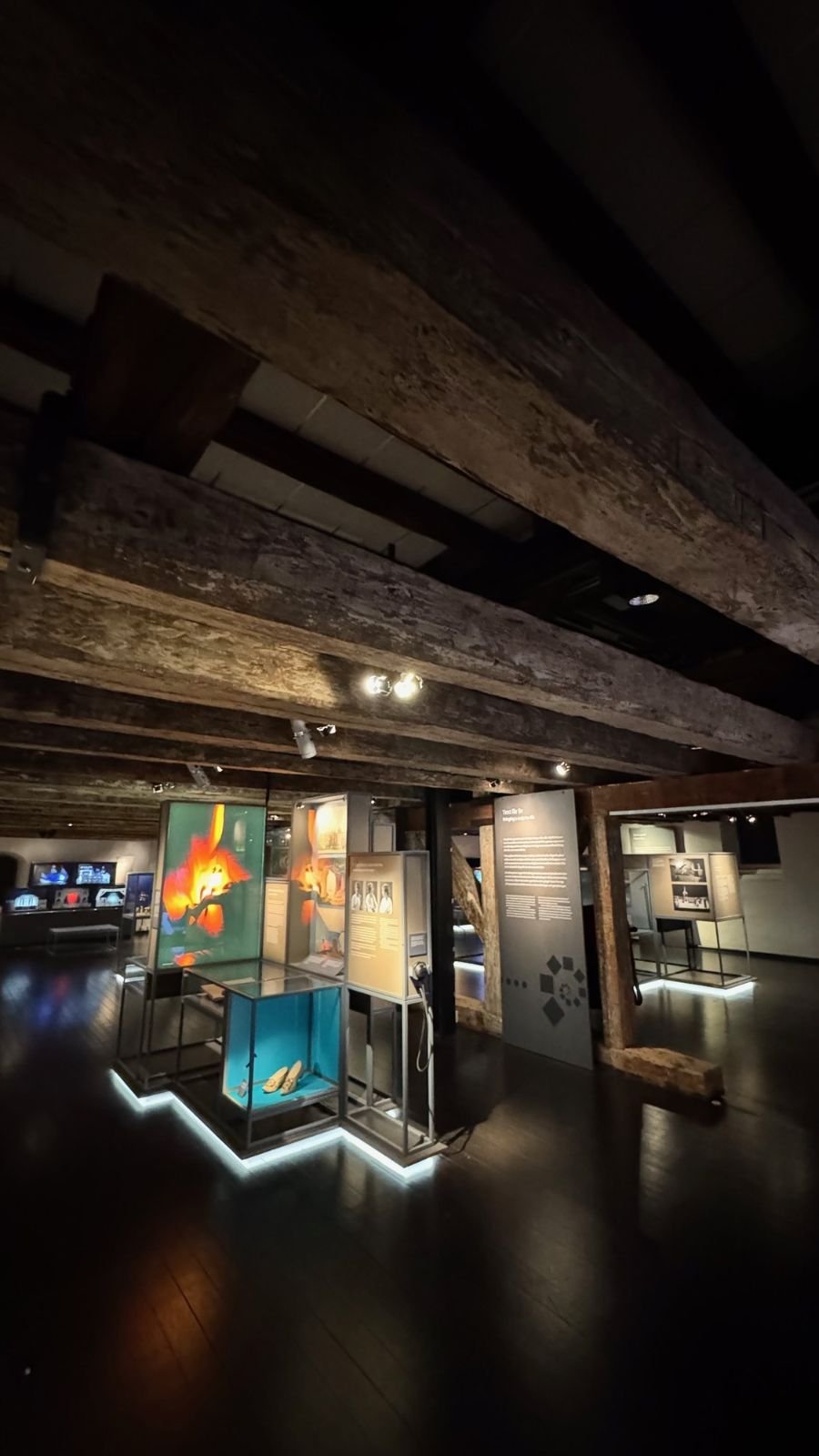
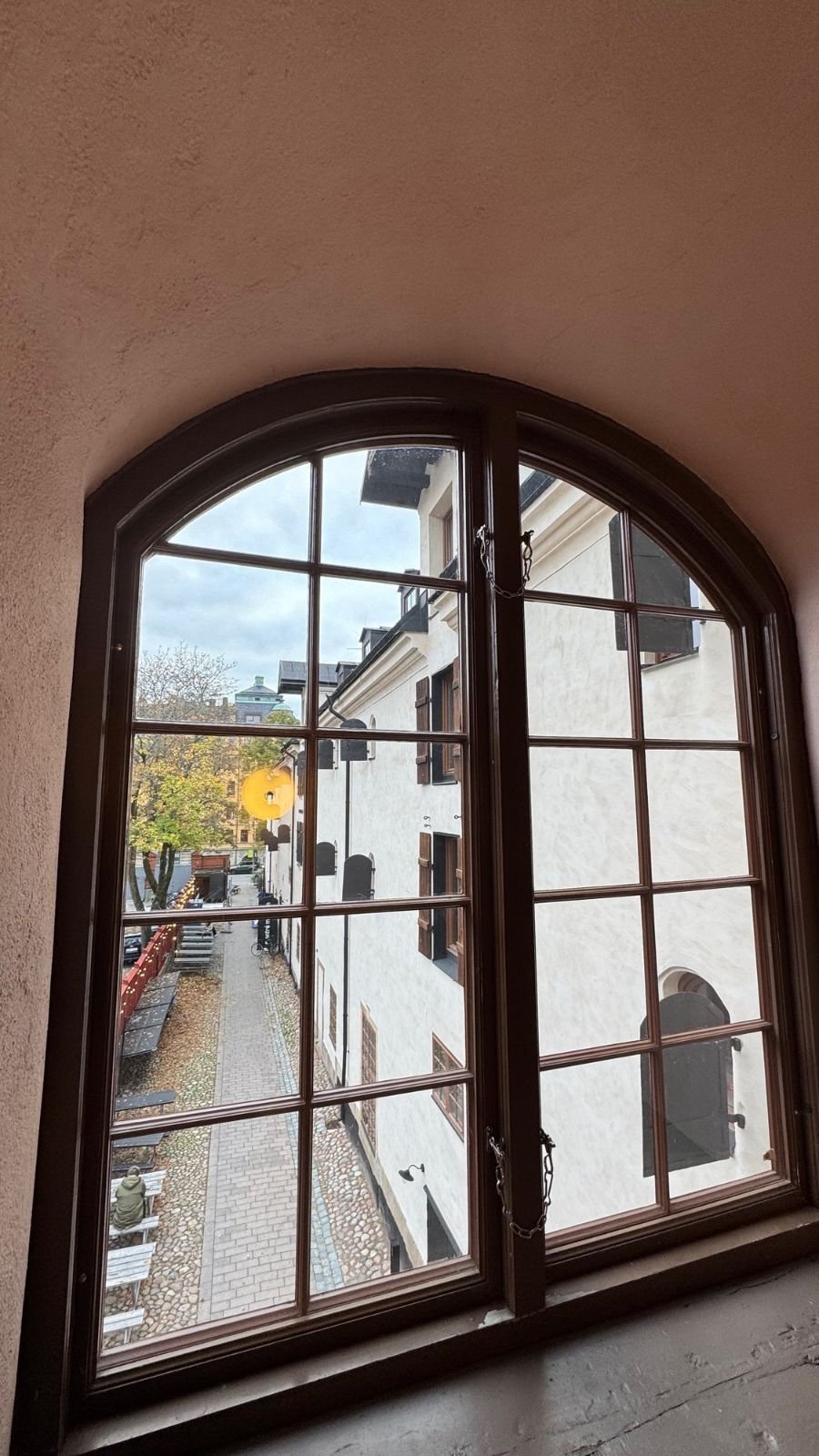
Come for the house even if you skip the exhibition. It is a grand, almost pompous building for a bakery: a long white facade, arched windows, thick walls and a courtyard that opens toward Sibyllegatan. Inside, the floors are not level. Some rooms slope, and the museum has marked the start and end of each slope with contrast strips. Beams, brick and the old walls stay visible between the glass cases. From an arched window on an upper floor you look down on the lane and the roofs of Östermalm.
On Stage: three floors of theater, music and dance
The main exhibition is called On Stage (På scen). It spreads over three floors and has four parts: dance, theater, music and puppetry. It does not tell the story of Swedish theater year by year. It looks at the work behind the show: the dancer’s daily training, the actor’s rehearsal, the people who make masks and costumes, and the question of who is allowed on a stage at all.
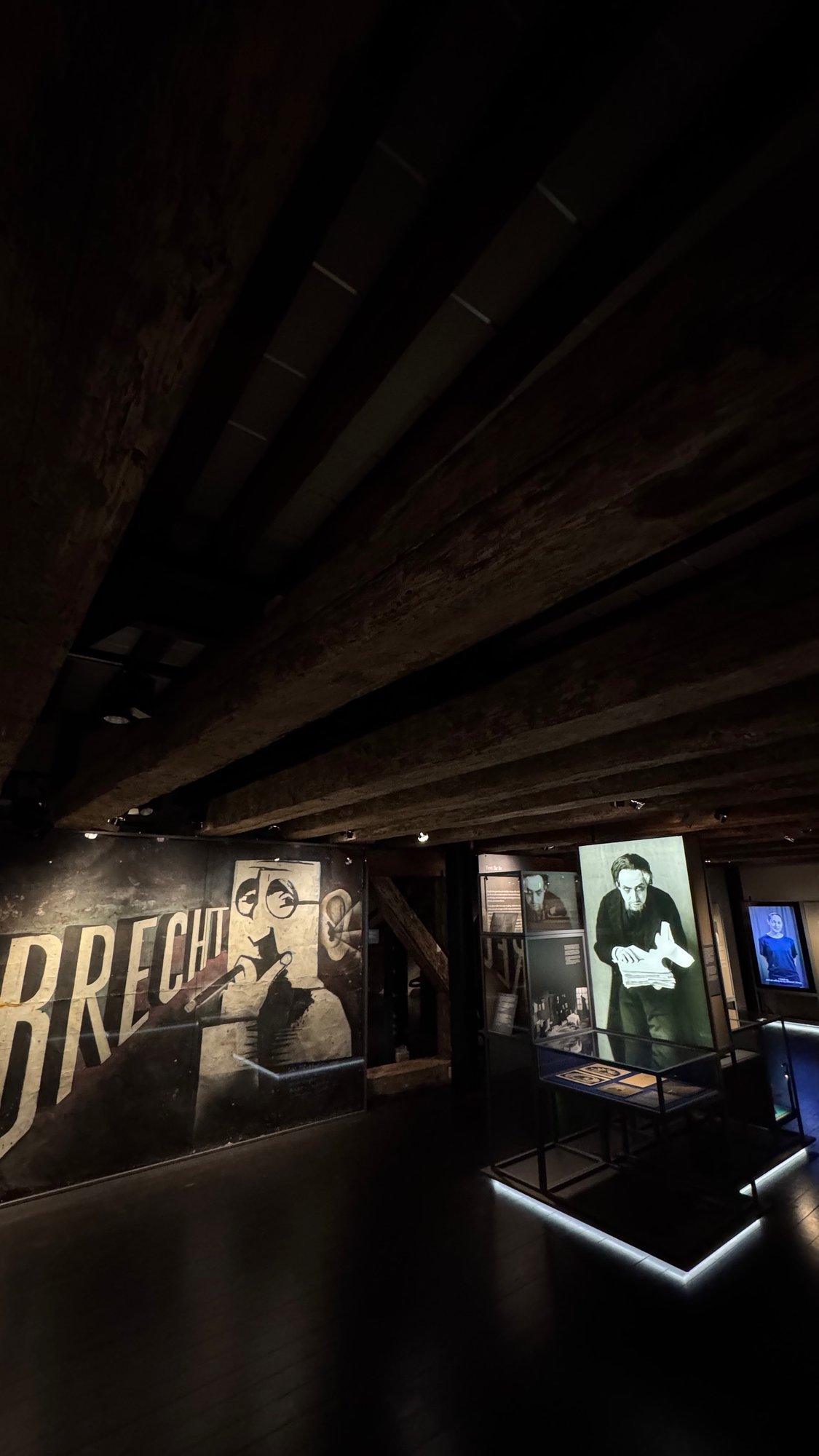
The objects range from a costume made for the court ballet of Louis XIV to the handwritten lyrics of rapper Erik Lundin. A doll house from a production by director Suzanne Osten stands in the theater section. On one wall the name BRECHT fills the whole surface, painted in big letters next to his portrait with a cigar.
What makes this museum different is that you are expected to do things. The museum counts about 20 interactive stations. A nine-meter glass wall holds instruments from the collection, with a touch surface in front where you pick instruments, play them and combine them. In one installation the usual order is reversed: your dance movements start the music, not the other way around. In the dance section you can stand face to face with a dancer from another century and copy the pose. In the theater section you can put your face behind a mask.
The World of Puppets
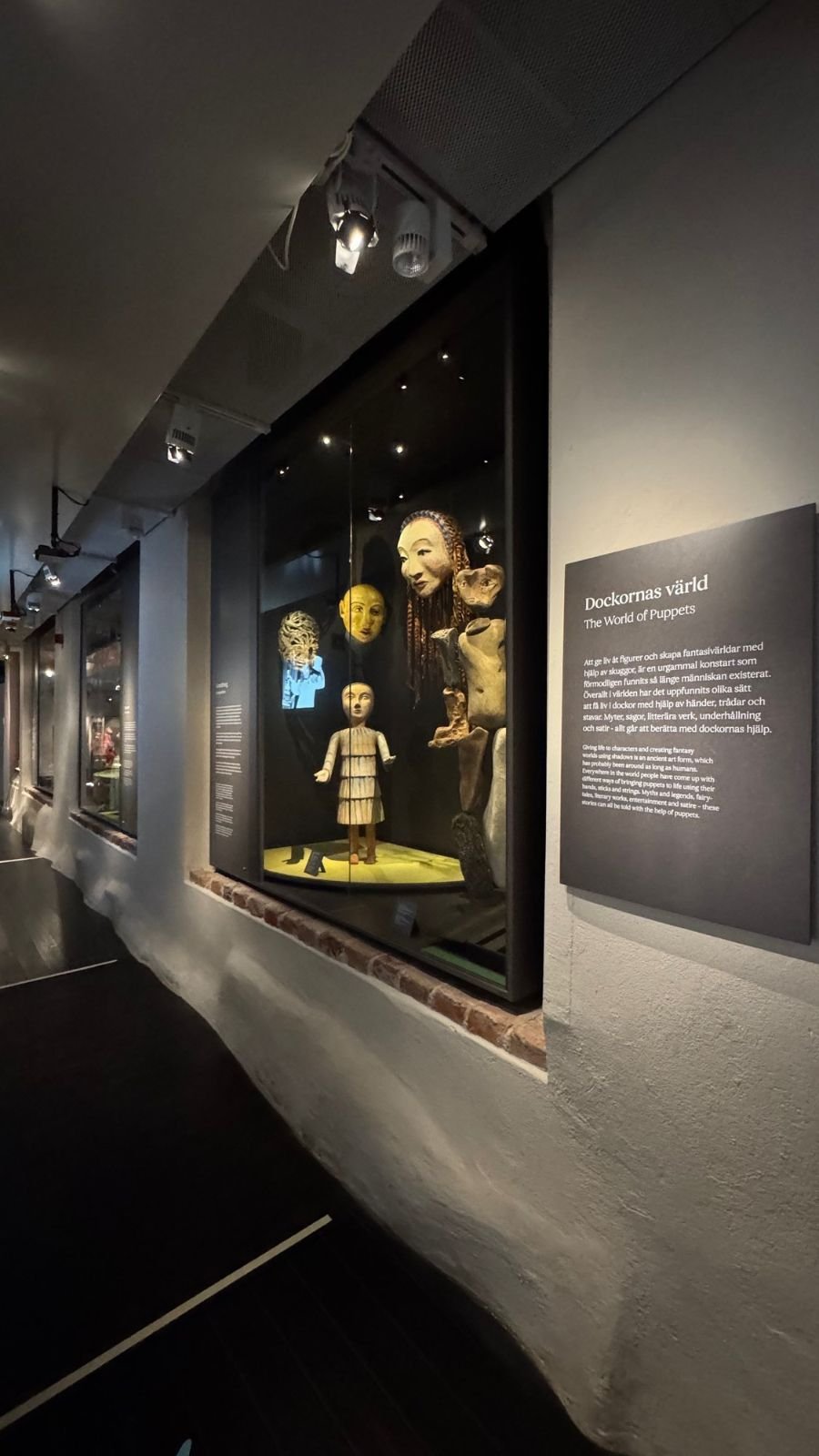
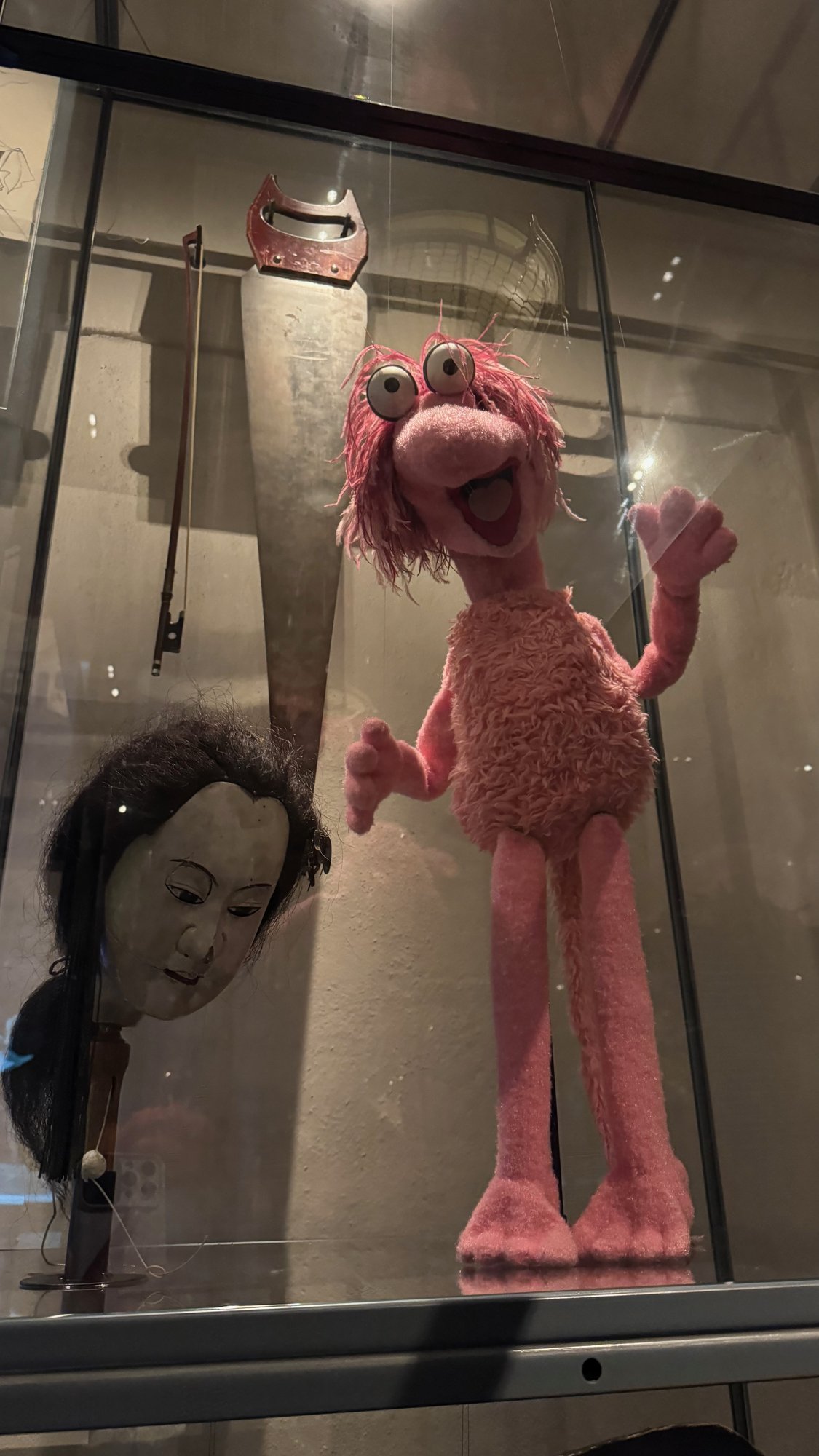
The puppet section, Dockornas värld, was my favorite. Lit cases line a white wall. Behind the glass stand hand puppets, marionettes, masks and puppet heads from different countries and centuries. A pale wooden figure in a tiered dress, a mask with long braids, a round yellow face. The text panel says puppets have probably been around as long as humans, and that myths, fairy tales, literature, entertainment and satire can all be told with their help.
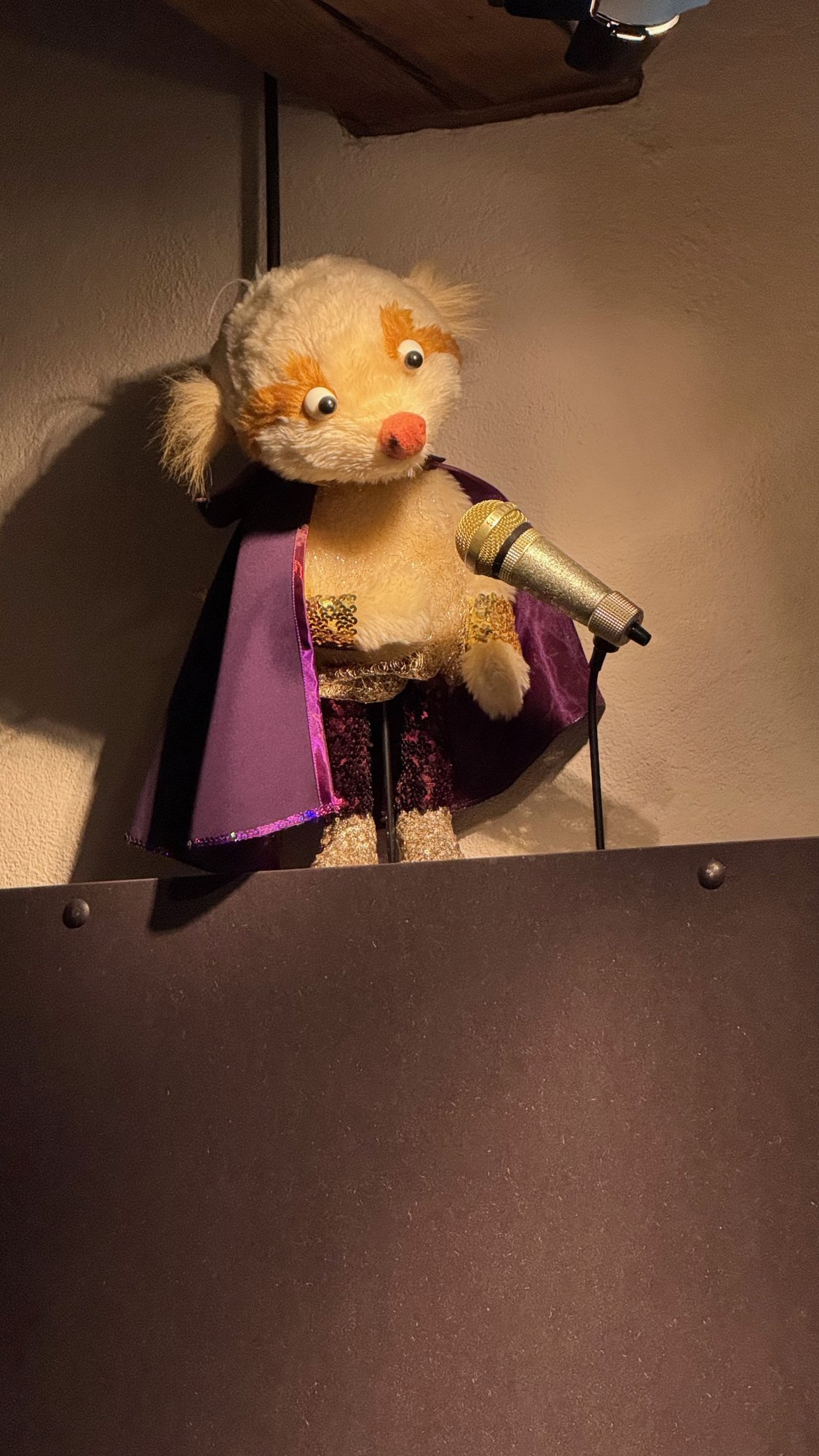
A furry puppet in a purple cape holds a microphone in another case, and a pink furry creature peers out next to a wooden puppet head. Children stop here. So did I.
Space to play
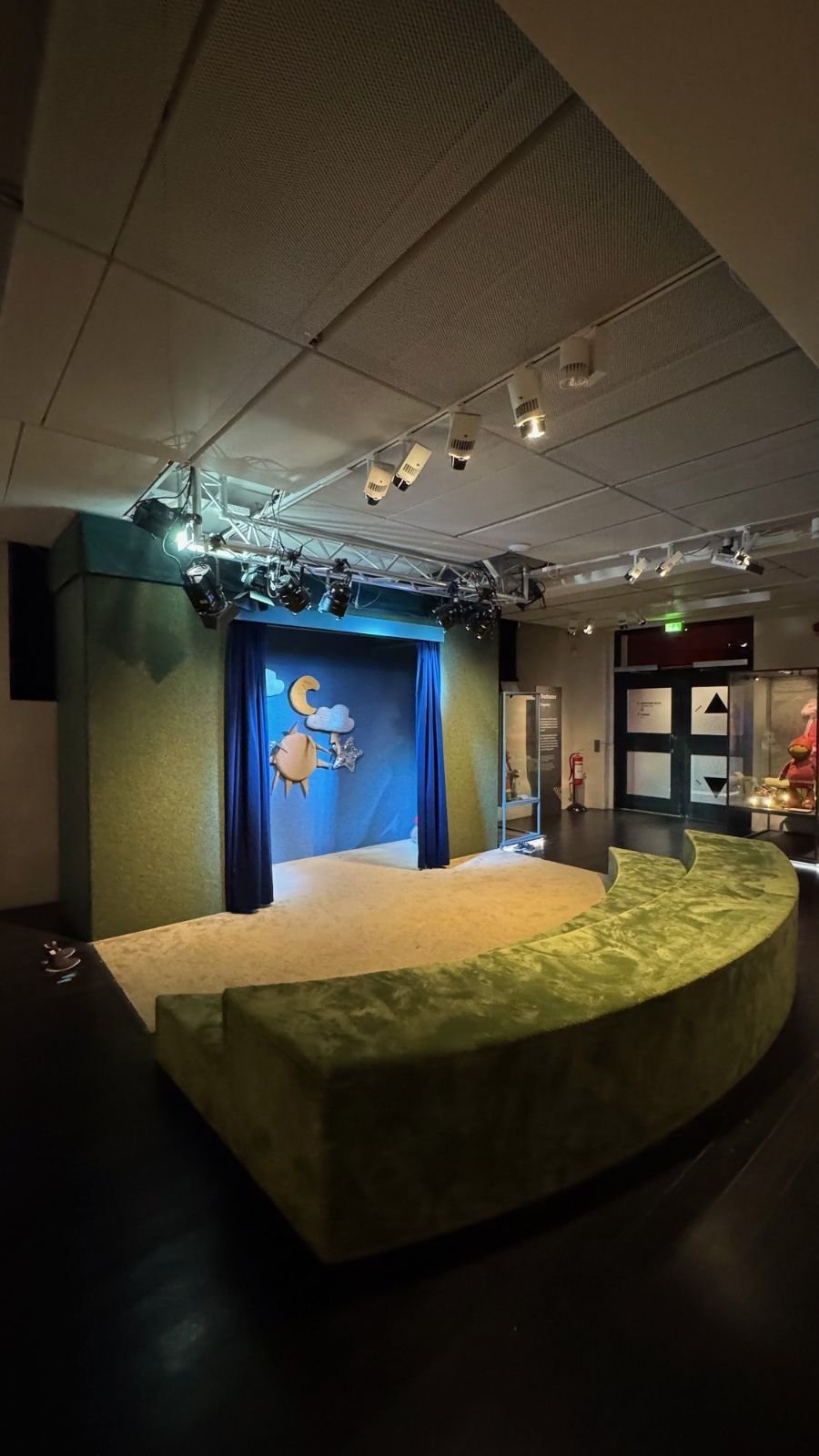
This is a museum where children are not told to keep their hands behind their backs. Next to the puppet cases stands a small stage with a dark blue curtain, a cardboard sun and moon on the backdrop, and a row of theater lights on a truss above it. A long green bench curves around the front like a tiny amphitheater. This is where children put on their own show, and where parents sit and watch.
There are instruments to try out, not only to look at. There is a dancing area where you move and the room answers with sound. There are drawing tables with paper and pens, so a child who has had enough of looking can sit down and make something. And there is a room where children can eat their own picnic, the Matsäcksrum on floor 2, with tables, benches, a microwave and a sink.
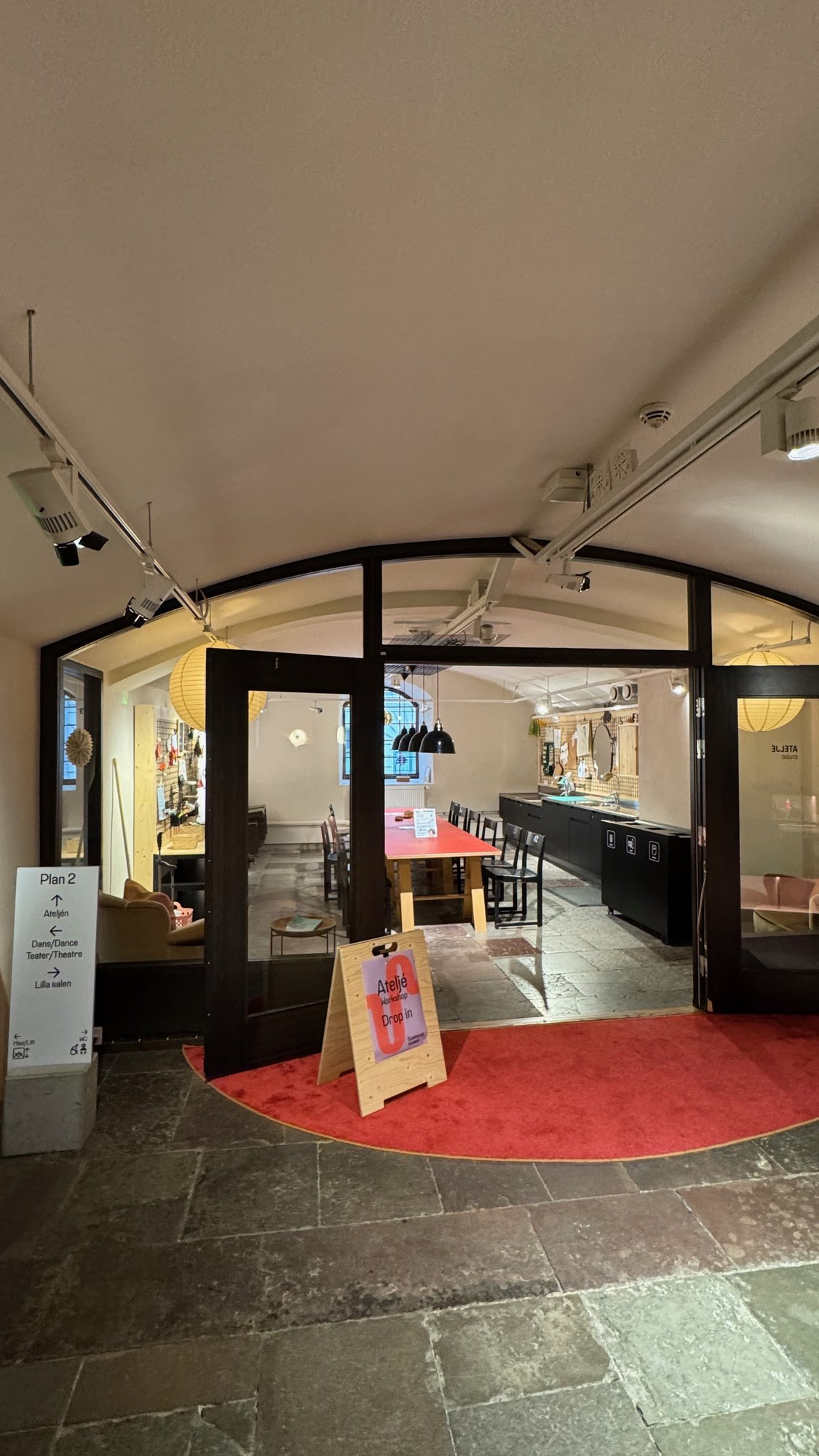
The museum also runs The Studio, a creative room with tools, materials and instructions. The theme changes. Earlier themes included building instruments from toilet paper rolls and designing a theater mask. It is a drop-in room on floor 2, open whenever the museum is open, and it costs nothing extra. Children up to 18 enter the museum free, so a family of four pays for two adults only.
Current exhibitions
On Stage is permanent. Two temporary shows are on the calendar when I write this, in October 2026.
Making the Impossible Possible – Five Decades with Efva Lilja runs from 14 to 31 October 2026. Efva Lilja is one of Sweden’s best-known choreographers. The museum shows fifty years of her work on body, space and society, with guided tours, talks, performances and a book release.
Icons – an exhibition about the right to exist opens on 4 February 2027 and runs until 25 April 2027.
Dates change. Check the museum’s exhibition page before you plan a visit around one of them.
Accessibility: elevators, doors and a floor called 3½
The museum has done its homework here, and I write this as someone who checks these things in every museum I visit.
The accessible entrance is at street level on Väpnarplan. All doors open automatically or with a push button. Two elevators, one large and one small, reach all floors. Handrails run along every indoor staircase, and the top and bottom steps carry contrast strips. Where the old building forces a slope, the slope is marked.
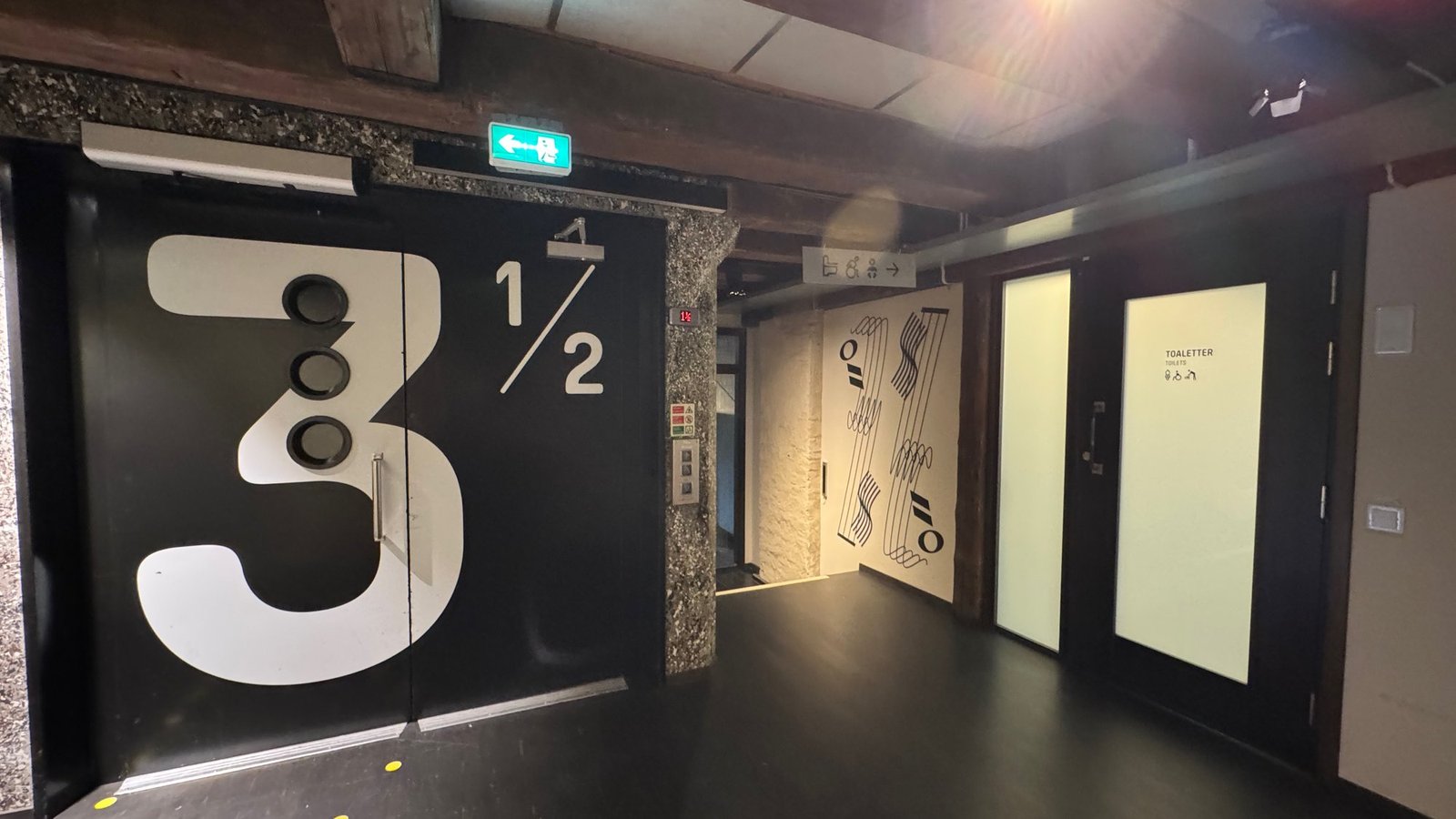
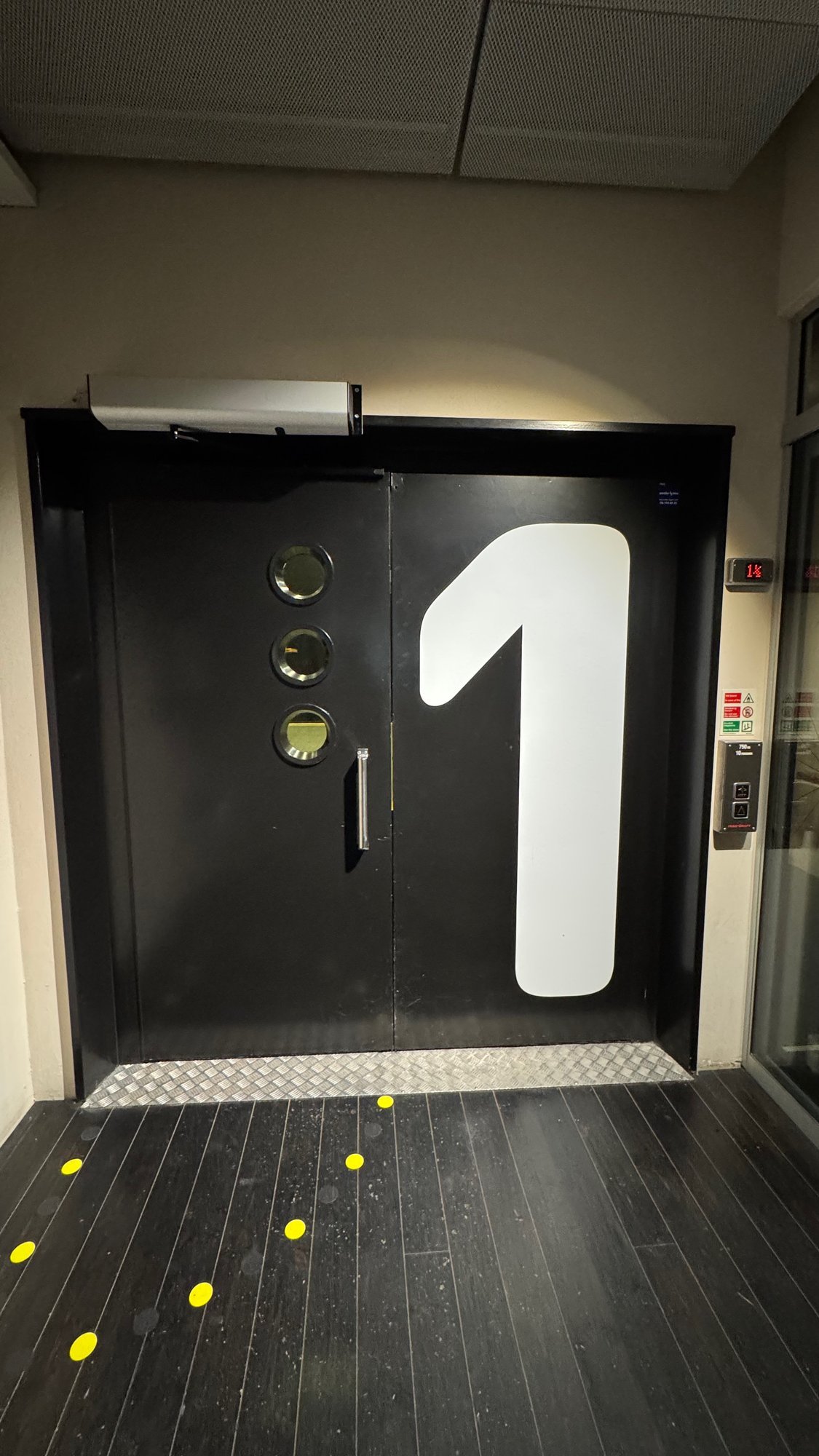
Every floor has an accessible restroom. Floors 1, 2 and 3½ also have baby changing tables. Yes, there is a floor called 3½. The doors on each level carry a big number, and the door on the half floor says 3 ½ in large white digits. I photographed it because it made me smile, and because big clear numbers on doors are exactly what good wayfinding looks like.
A hearing loop is installed in the Grand hall. Headphones hang at several stations, and the films have Swedish and English subtitles. Guide dogs and service dogs are welcome in the whole building. Personal assistants enter free. If flickering light is a problem for you, the staff at the desk can tell you which areas to avoid. The museum says weekdays after 14:00 are the quietest time.
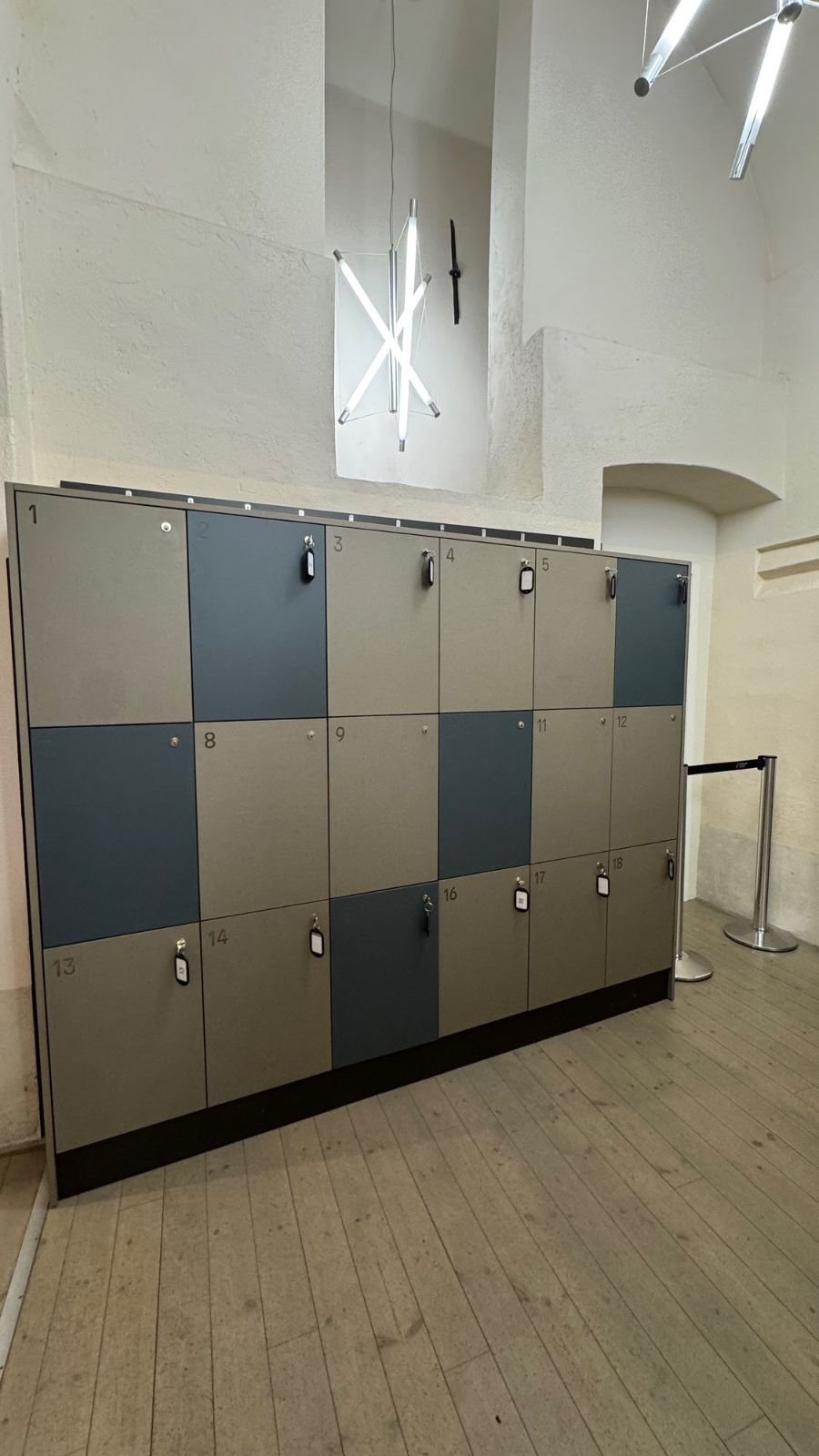
Strollers can be parked under cover outside, and you can borrow a lock at the desk. Lockers in the cloakroom take bags and coats.
Café, shop and picnic room
The café Stora Bageriet sits on the ground floor by the entrance, with tables in the courtyard. It serves breakfast, fika and lunch, and it is popular with people from the neighborhood, not only museum visitors. On my visit the courtyard tables were busy on an ordinary weekday. The café has its own opening hours, so check them if you plan to eat there.
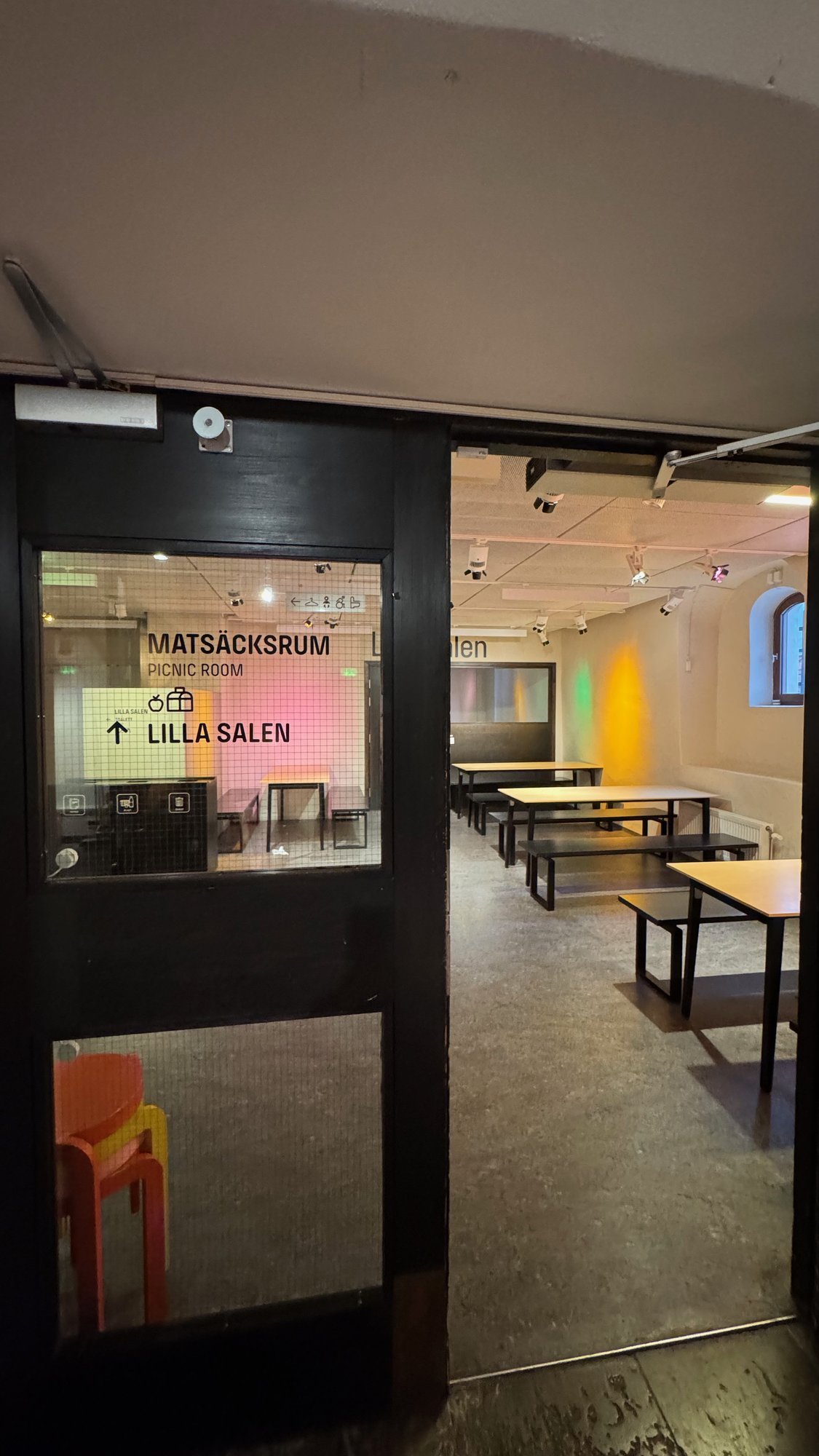
If you bring your own food, there is the picnic room on floor 2, marked Matsäcksrum. It is open during museum hours. That is rare in Stockholm museums, and families notice.
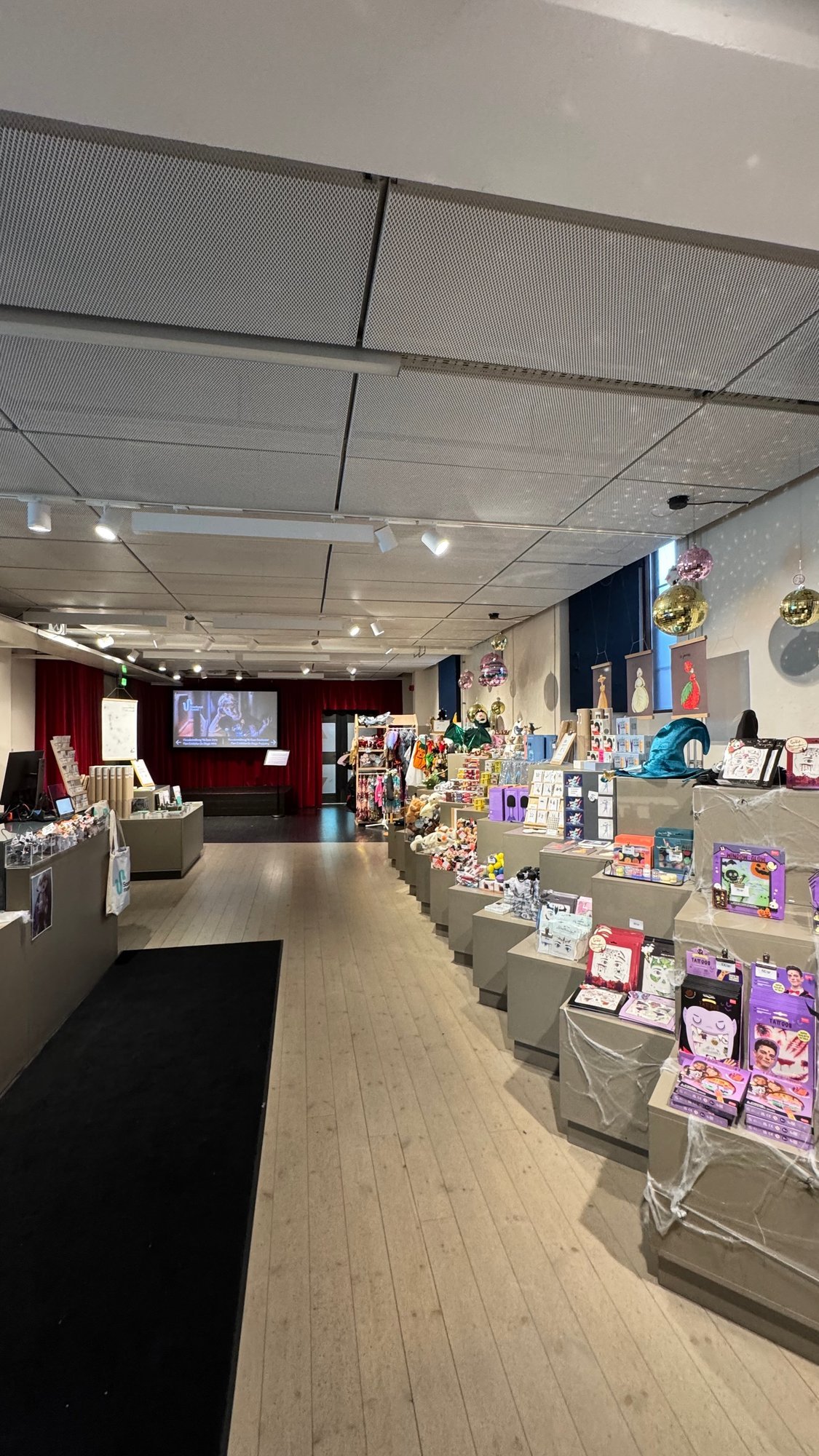
The museum shop is next to the ticket desk. It is small and full of things that make you pick them up: finger puppets, soft toys, masks, face paint and tattoo sheets, cards, books on theater and music, posters and children’s costumes. In October it was decorated for Halloween with fake cobwebs and a witch hat on the counter. On Tuesdays pensioners get 10 percent off in the shop.
What is my verdict?
Scenkonstmuseet is not a museum you walk through. It is a museum you play in. The building alone is worth the detour, and the museum has made every floor of it reachable and every door easy to find. Bring children if you have them. If you do not, go anyway, and put your face behind a mask.
Jag kommer tillbaka.
Photo gallery
All photographs on this page were taken by Zayera Khan during a visit to the museum, and are her own property. Please do not reuse them without permission.