
Hallwylska museet
A countess, a count, forty rooms and no elevator: how one of the richest families in Sweden left its house exactly as it was
- Why visitA private palace from 1898, kept exactly as the von Hallwyl family left it: salons, kitchen, bathroom, bowling alley and all. The most complete picture of how the very rich lived in Stockholm around 1900, told by guides who know the gossip.
- Best forAnyone interested in how the very rich lived around 1900, in interiors, in servants’ lives, or in collecting as an obsession. Take the guided tour.
- AddressHamngatan 4, 111 47 Stockholm, opposite Berzelii Park, next to Dramaten. Metro: Kungsträdgården or Östermalmstorg.
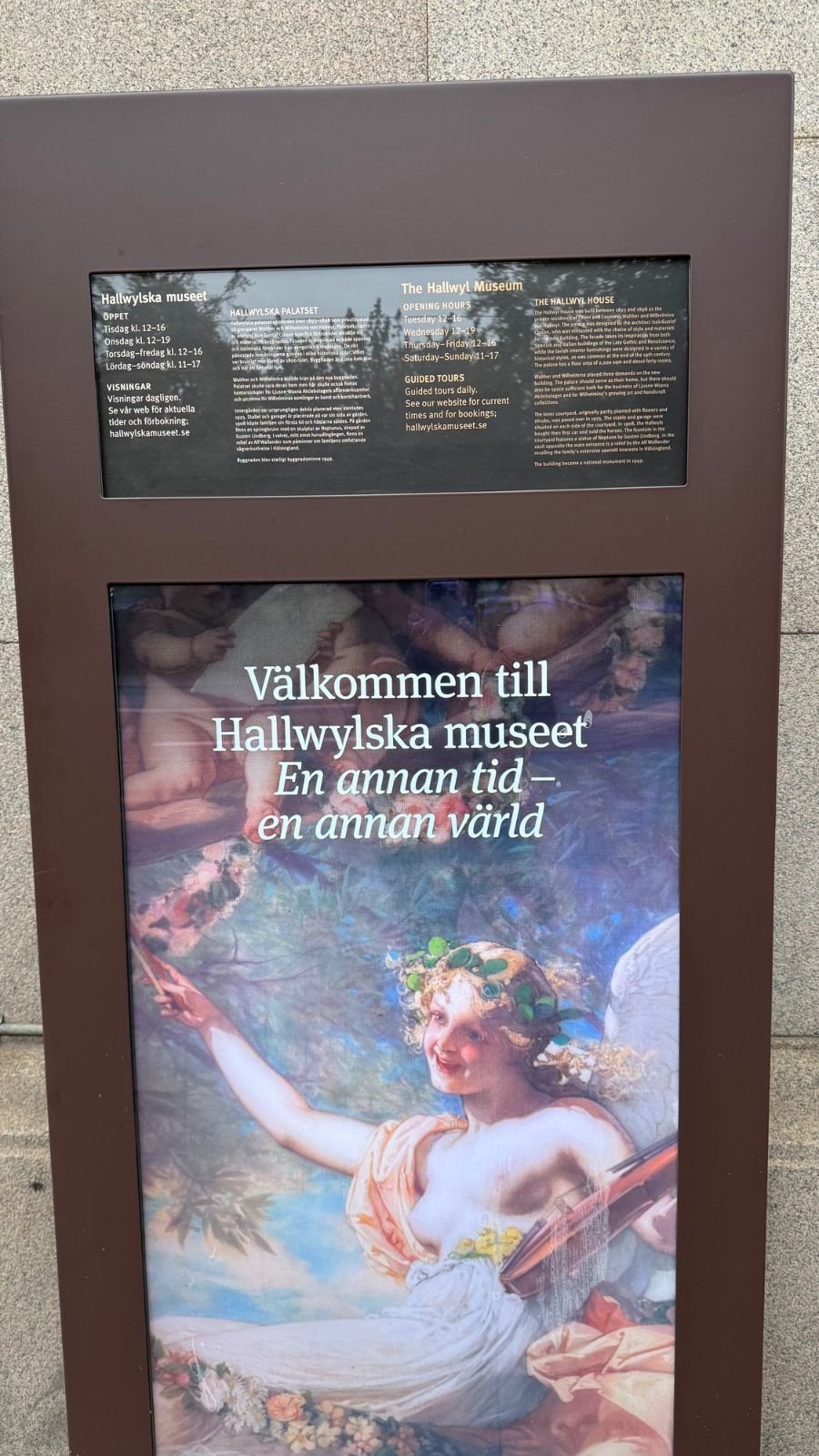
- Opening hoursTuesday 12:00–16:00, Wednesday 12:00–19:00, Thursday and Friday 12:00–16:00, Saturday and Sunday 11:00–17:00. Closed Monday and on some holidays. Checked October 2026.
- AdmissionAdults 150 kr, free up to 18. Guided tour 200 kr including admission. Annual pass 450 kr for the seven National Historical Museums. Two of the five floors are open on your own; the rest only with a guide.
- Guided toursIn English on Saturdays at 13:30, about 50 minutes. In Swedish Tuesday to Sunday at changing times, family tour on Sundays at 13:00. Digital tours by Zoom for 50 kr. Private group tours by booking, also outside opening hours.
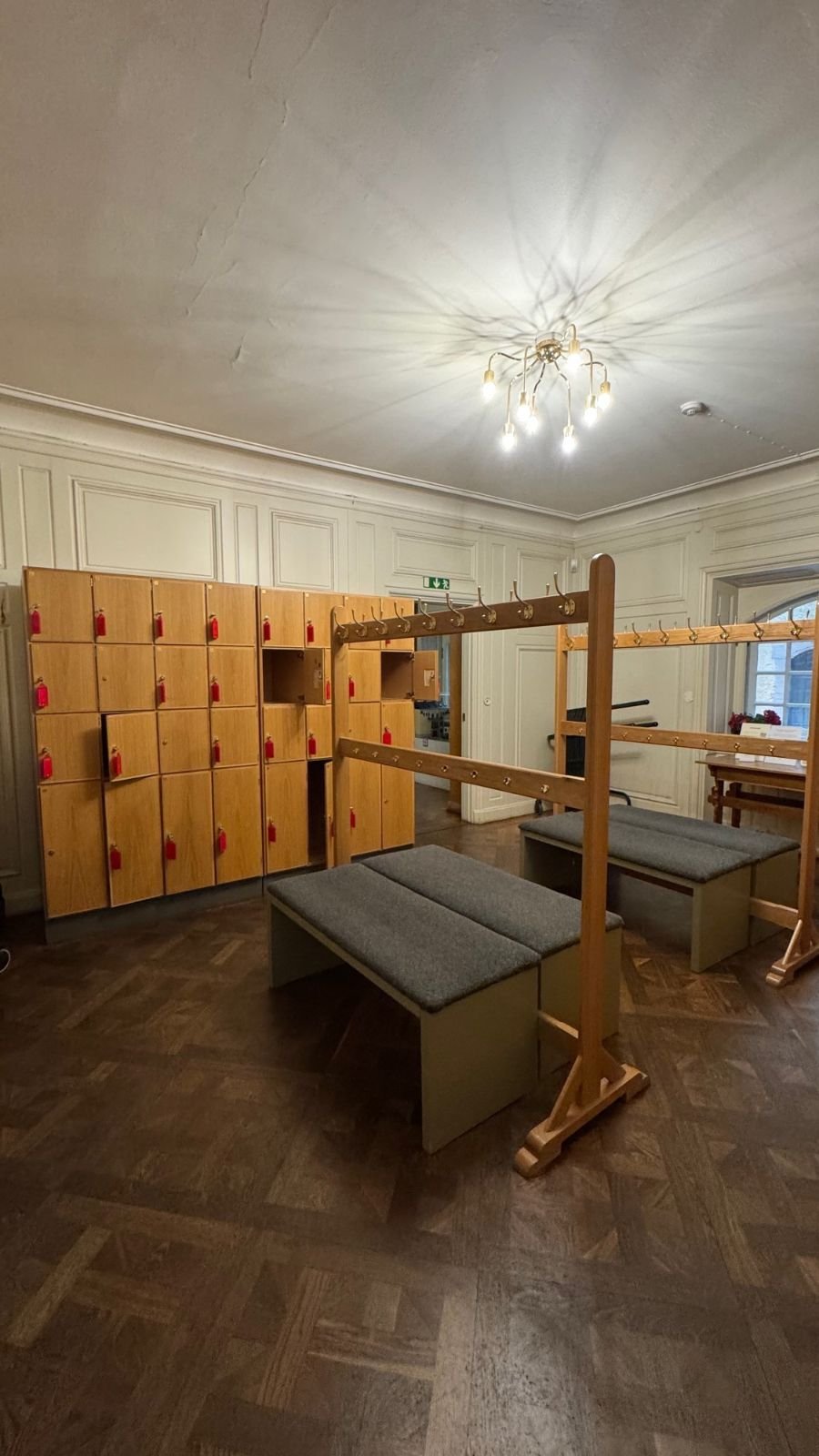
- FacilitiesMuseum shop by the entrance with items made for the museum, cloakroom with lockers and folding chairs to borrow, toilets one floor down (16 steps). Restaurant in the courtyard, run separately.
- AccessibilityNot accessible for wheelchairs or walkers. Five floors, no visitor elevator. A guided tour means at least 103 steps up and down. Portable guide system for hearing aids on request. A sensory map for neurodivergent visitors (NPF) is available. Companions enter free.
- Official websitehallwylskamuseet.se
About the museum
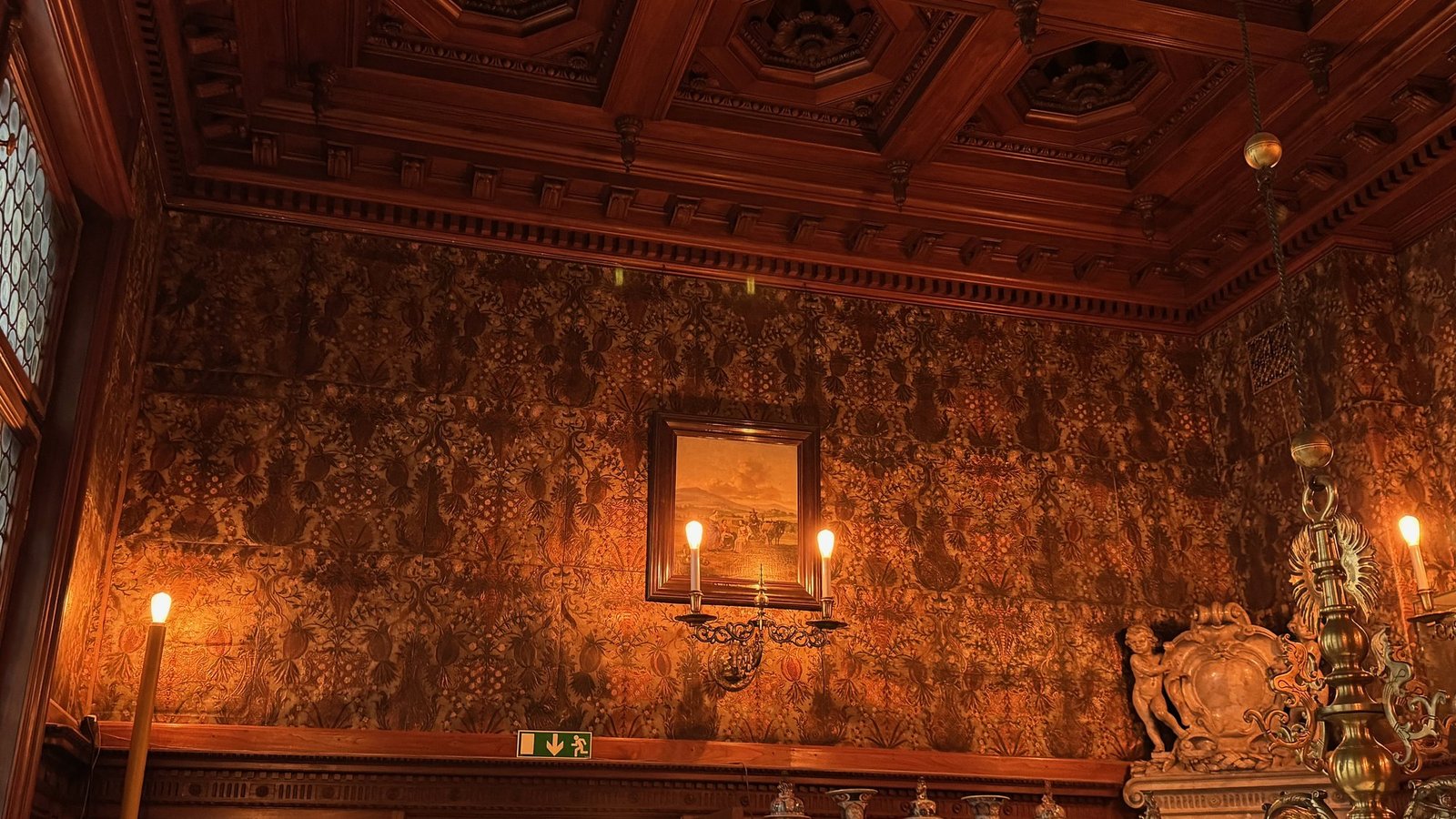
Hallwylska museet is a house, not a museum building. Count Walther von Hallwyl and Countess Wilhelmina von Hallwyl had it built as their Stockholm home. They moved in in 1898. Wilhelmina decided early that the house and everything in it would go to the Swedish state after her death, to be shown “undisturbed”, as it was when they lived there. The gift was made public in 1920, the countess died in 1930, and the museum opened in 1938. Her will even set the rules for the director: a woman, with a doctorate, of Protestant faith.
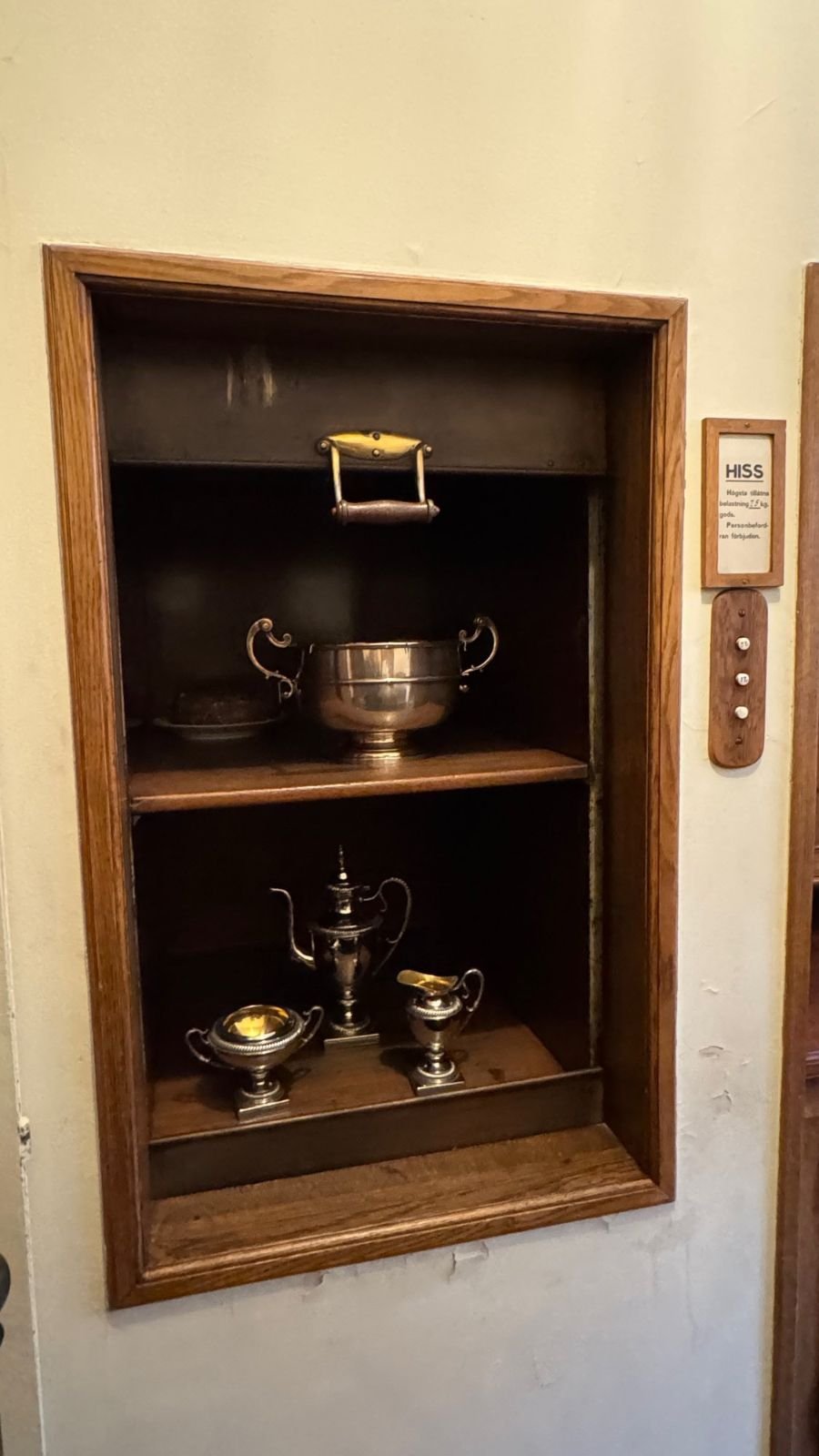
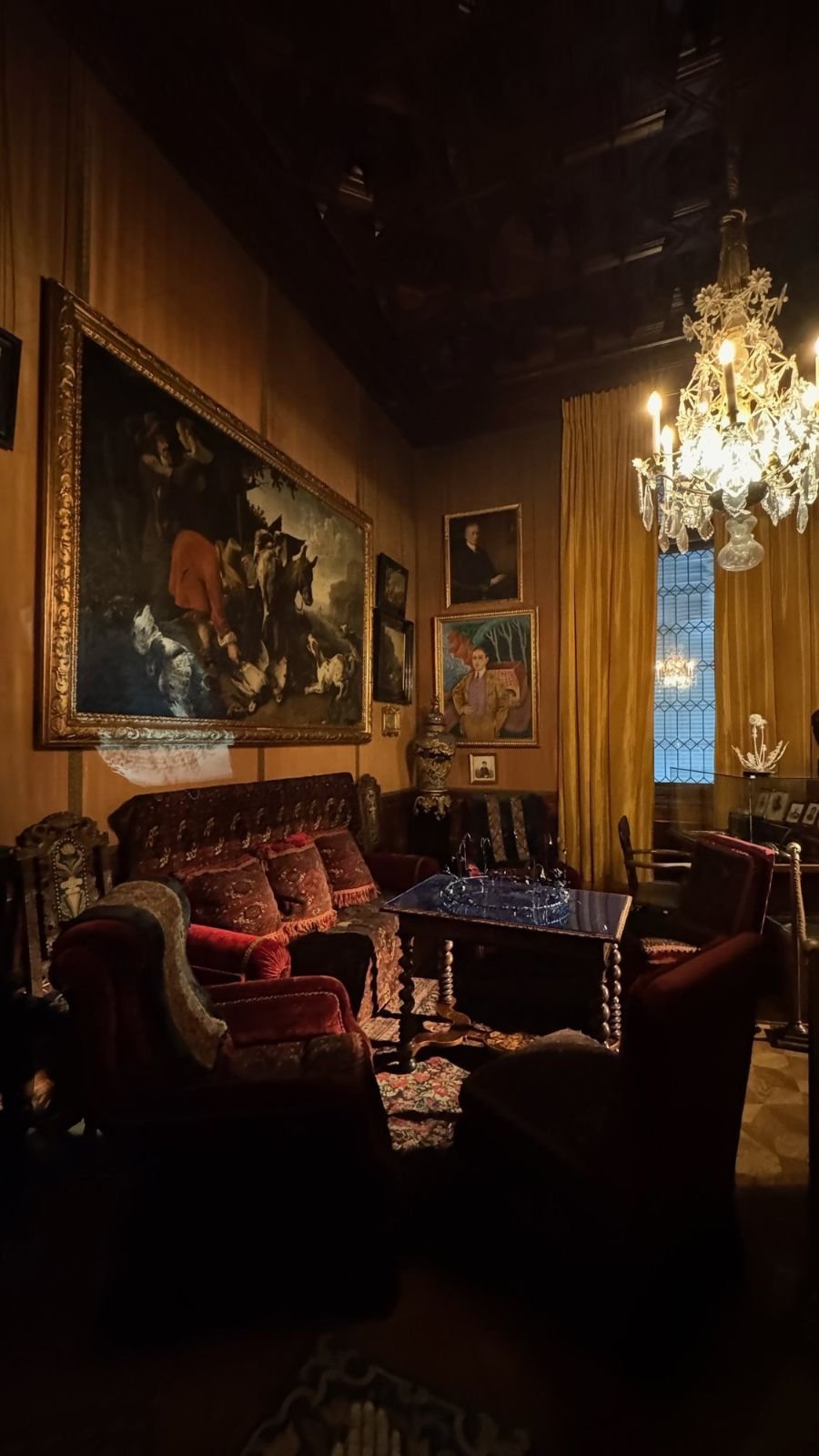
So what you see is not a reconstruction. The chairs stand where they stood. The silver sits in the food lift. The bowling balls are still on the bowling alley in the attic, half hidden behind the display cases that took over the room when the collection outgrew the house.
Where the money came from: the Kempe and Wallis fortunes
The money in this house is Kempe money, and before that, Wallis money. Wilhelmina’s father, Wilhelm Kempe, was born in 1807 in Stralsund, then a Swedish town in Pomerania, the son of a shipowner. At sixteen he came to Stockholm to learn trade from his uncle Albrecht Wallis, a shipowner who owned the Tanto sugar mill in Stockholm and the Dybäck estate in Skåne. In 1832 Wilhelm got his license as a wholesale merchant. He imported goods from the East Indies and South America and sold them across Sweden.
In 1843 he married his cousin Johanna Wallis, the daughter of that same uncle. The Wallis family were merchants and shipowners who had lived in Stralsund for generations and were said to come from Scotland or England. Johanna had grown up next door to Wilhelm on Fährstrasse, and she was rich in her own right. With her money Wilhelm bought out his business partner the same year and owned the firm alone. The capital in this story comes through a woman from the very start: Johanna’s shipping and sugar money paid for the company that paid for the forests. Johanna lived to 1909, long enough to see her daughter’s palace built, and gave much of her later life to charity, among other things a home for old maidservants.
Then Wilhelm went north. From 1848 he bought into Voxna bruk in Hälsingland, added sawmills, a blast furnace, a foundry and a workshop, and bought forest and more ironworks in Dalarna. He went bankrupt in the crisis of 1857, was saved by his brother, and built it all up again. In 1881 he merged everything into Ljusne-Woxna AB, one of the big timber and iron companies of the Norrland boom. His brother Johan Carl Kempe founded Mo och Domsjö, the company that became MoDo. Between them, the Kempe brothers from Stralsund owned a good part of the forests that made Sweden rich in the nineteenth century. When Wilhelm died in 1883 he was one of the richest men in Sweden, and his only child inherited.
If you want a modern comparison: think of a family whose brand was wealth, display and documentation. Wilhelmina had every object in the house numbered and catalogued, down to the things in daily use. The catalogue, started in 1906 and finished in 1955, runs to 78 volumes. The Kardashians film their houses; Wilhelmina catalogued hers, down to the last teaspoon. That is why the museum works.
Wilhelmina and Walther
Wilhelmina Kempe was born in 1844 in the Schinkel house on Kornhamnstorg in Gamla Stan. She grew up between Stockholm and Stralsund, under a German governess she disliked all her life, and spent summers at spas. At one of them, Bad Homburg near Frankfurt, a Swiss count turned up in the summer of 1864 on the recommendation of a childhood friend of hers. Walther von Hallwyl stayed two weeks, left, and a week later wrote to her father and proposed. They married on 10 June 1865.
Walther came from one of the oldest noble families in Switzerland, with a moated castle in Aargau and an address on Kramgasse in Bern. He was a captain in the Swiss general staff until 1870, when he moved to Sweden for good. He became a Swedish citizen in 1874, took over Ljusne-Woxna when his father-in-law died in 1883, and sat in the Riksdag’s first chamber for Gävleborg from 1896 to 1905. They had four daughters: Ebba, Ellen, Elma, who died as a baby, and Irma.
The collecting was Wilhelmina’s. Weapons, silver, Asian ceramics and bronzes, European porcelain, Dutch paintings from the seventeenth century, bought on travels through Europe, Africa and the Middle East. The first object in her collection was a seashell her father gave her as a child. It is still there.
The house on Hamngatan 4
The couple lived as tenants in the Fersen Palace until they fell out with the landlord over electric light. So they bought a plot on Hamngatan, in what was to become Stockholm’s new boulevard district with Birger Jarlsgatan and Strandvägen, and had the architect Isak Gustaf Clason build them a house. Wilhelmina was on site every Wednesday and Saturday with opinions.
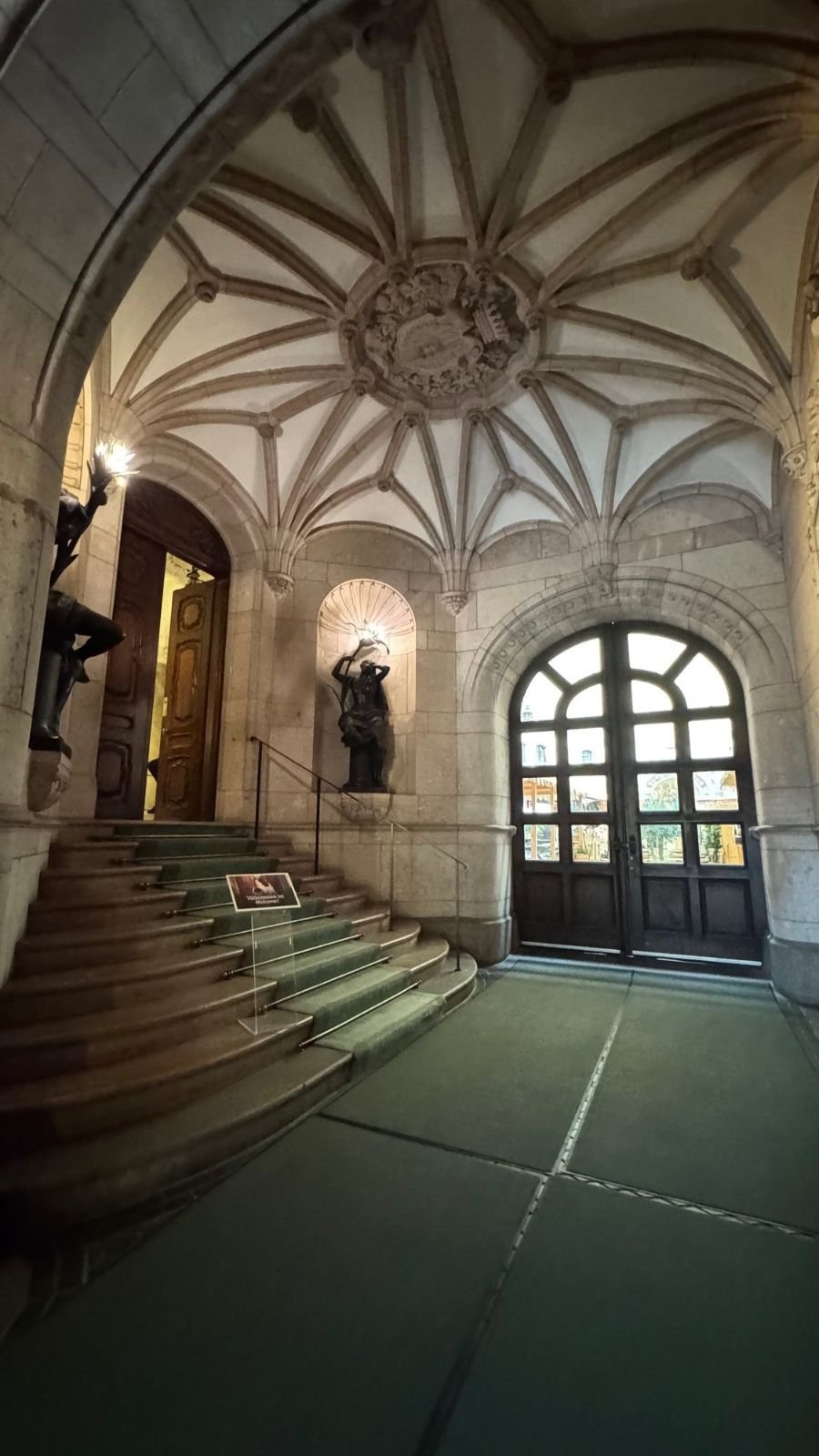
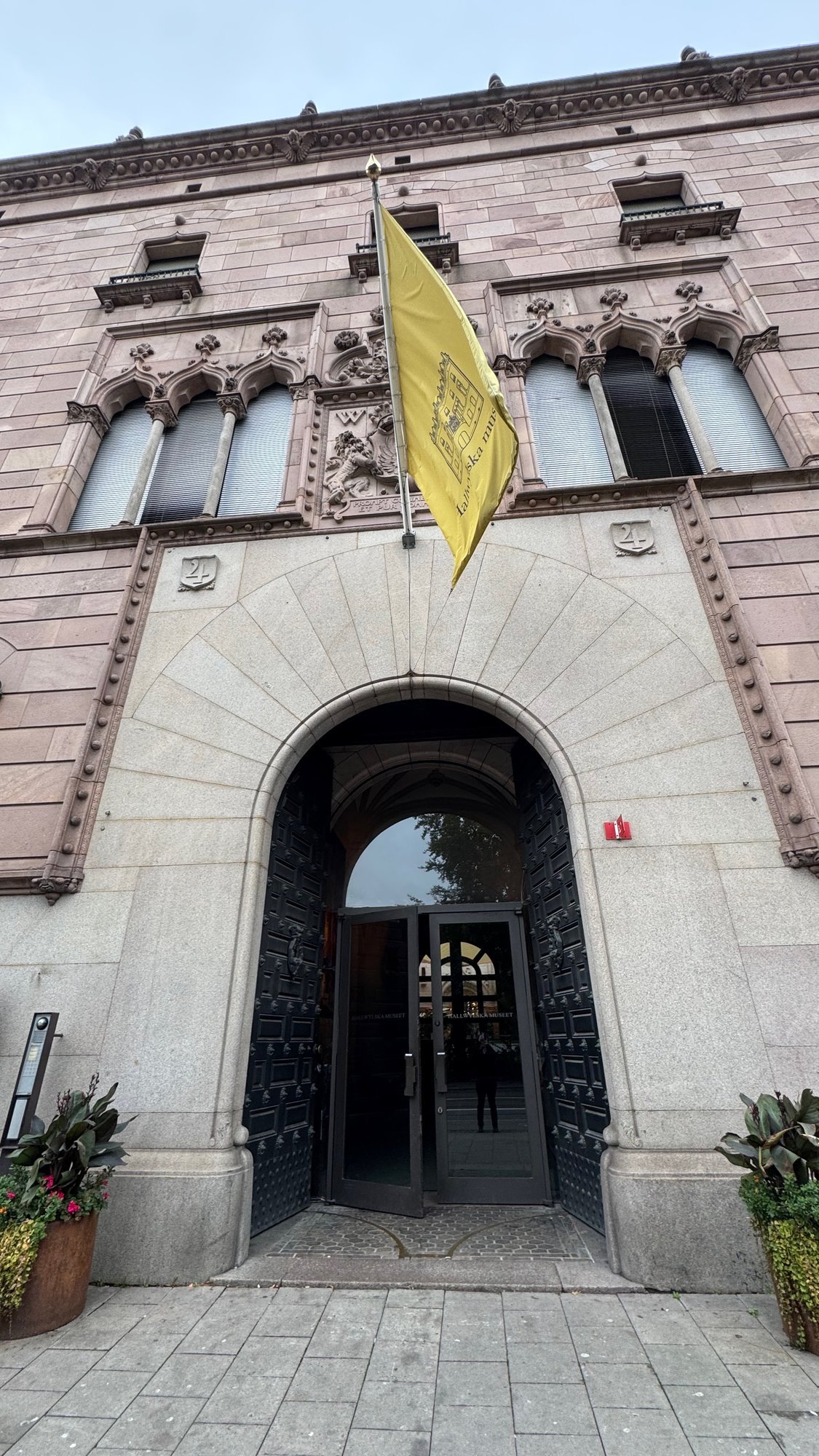
The house has about forty rooms on five floors, more than 2,000 square meters, and cost 2.5 million kronor to build and furnish. A church built in the same years, Johannes kyrka, cost 800,000. The facade is red Gävle sandstone on a granite base, with Spanish and Venetian motifs. Inside it is late nineteenth-century historicism: every room in a different old style, with real antiques from the baroque and rococo bought at Bukowskis and on the couple’s travels, and new furniture drawn by Clason to match. The thirty-six dining chairs are his. So are the beds. Art Nouveau, the style of the day, is not in the house at all.
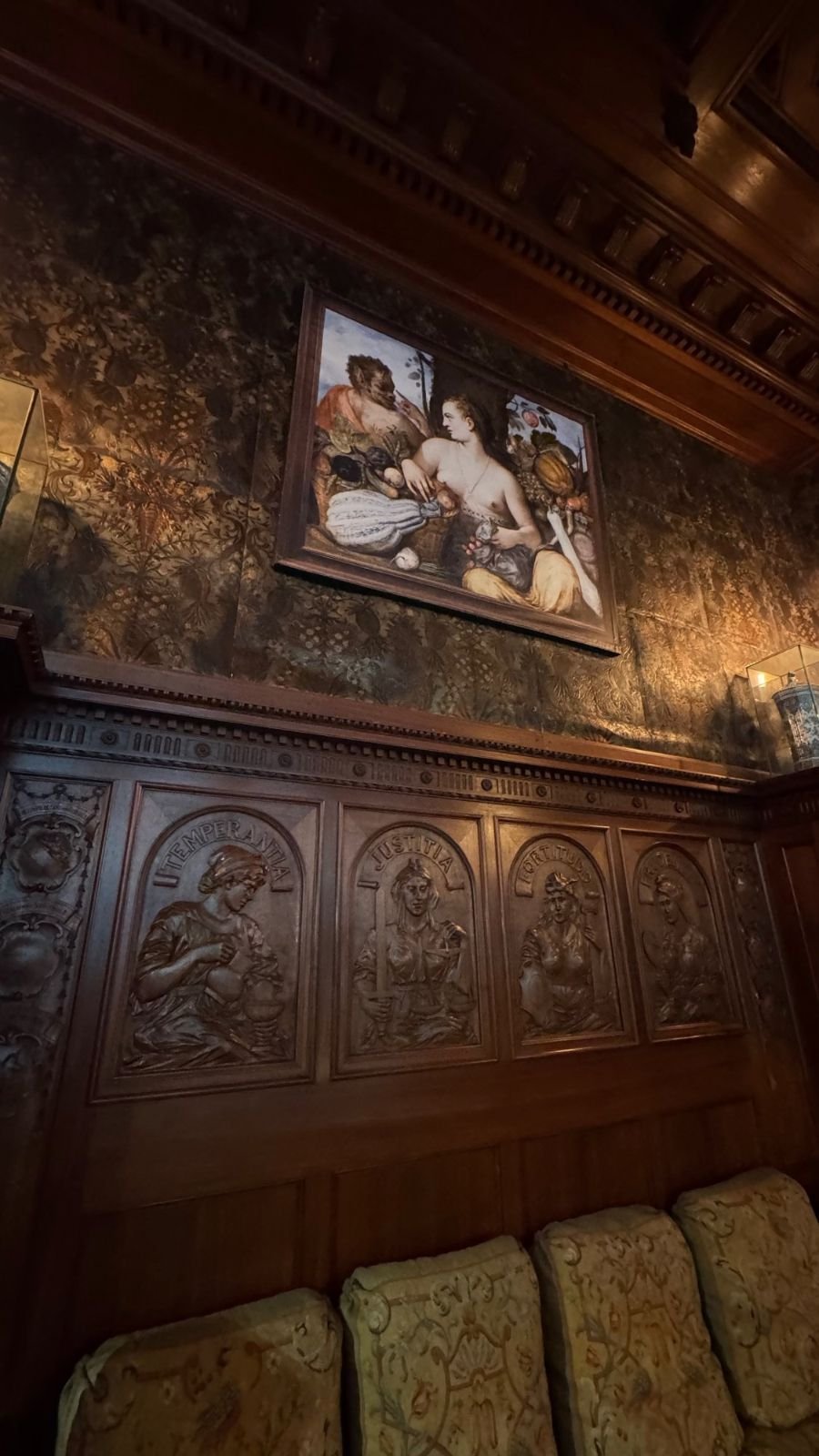
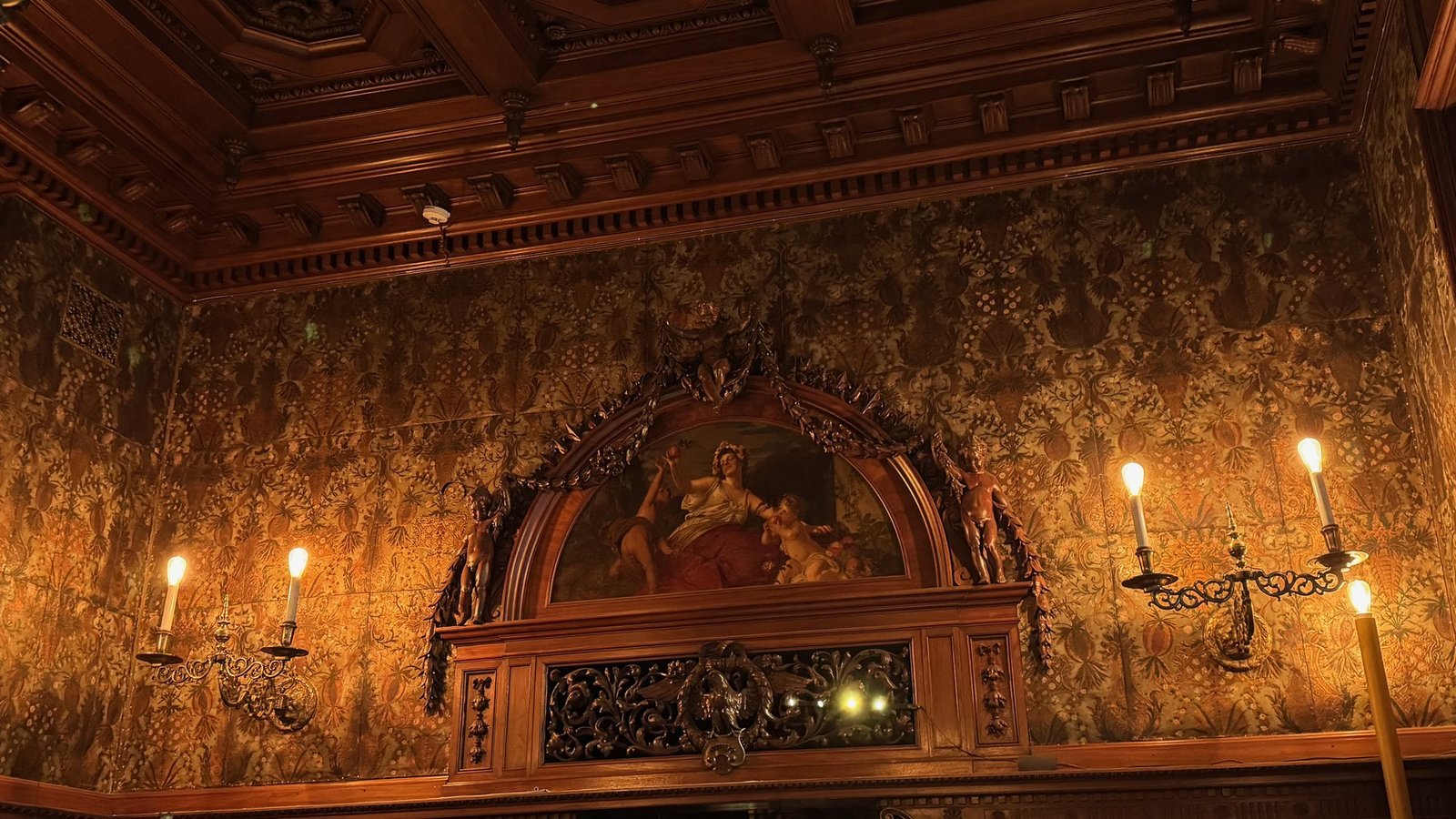
In my photo of the front, a yellow flag hangs above the arched granite entrance. Inside, one room has carved wooden panels with figures of women in arches, dark patterned walls and a painting above.
A model of the house stands in a glass case by a window. It is built from toy bricks and shows the roofs and the inner courtyard.
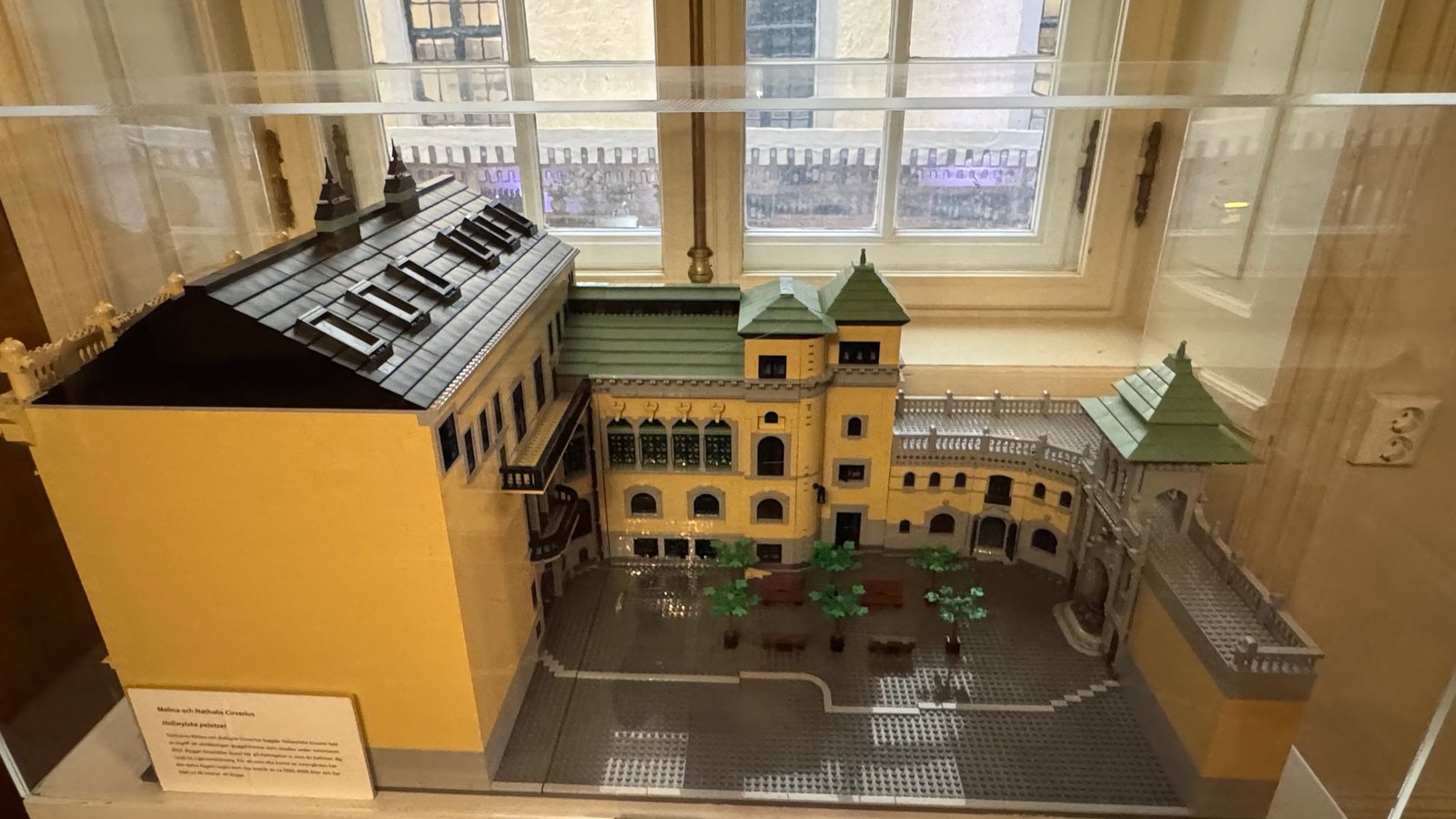
And yet the house was modern. Electric light in every room, central heating, hot and cold running water, a bathroom with a tub and a shower, a telephone, a food lift and a passenger lift. The lift was installed in 1896, used rarely, out of order from 1909 to 1920, and brought back for the count when his health failed. The countess disliked it and took the stairs. She died at 86 after a fall on one of them.
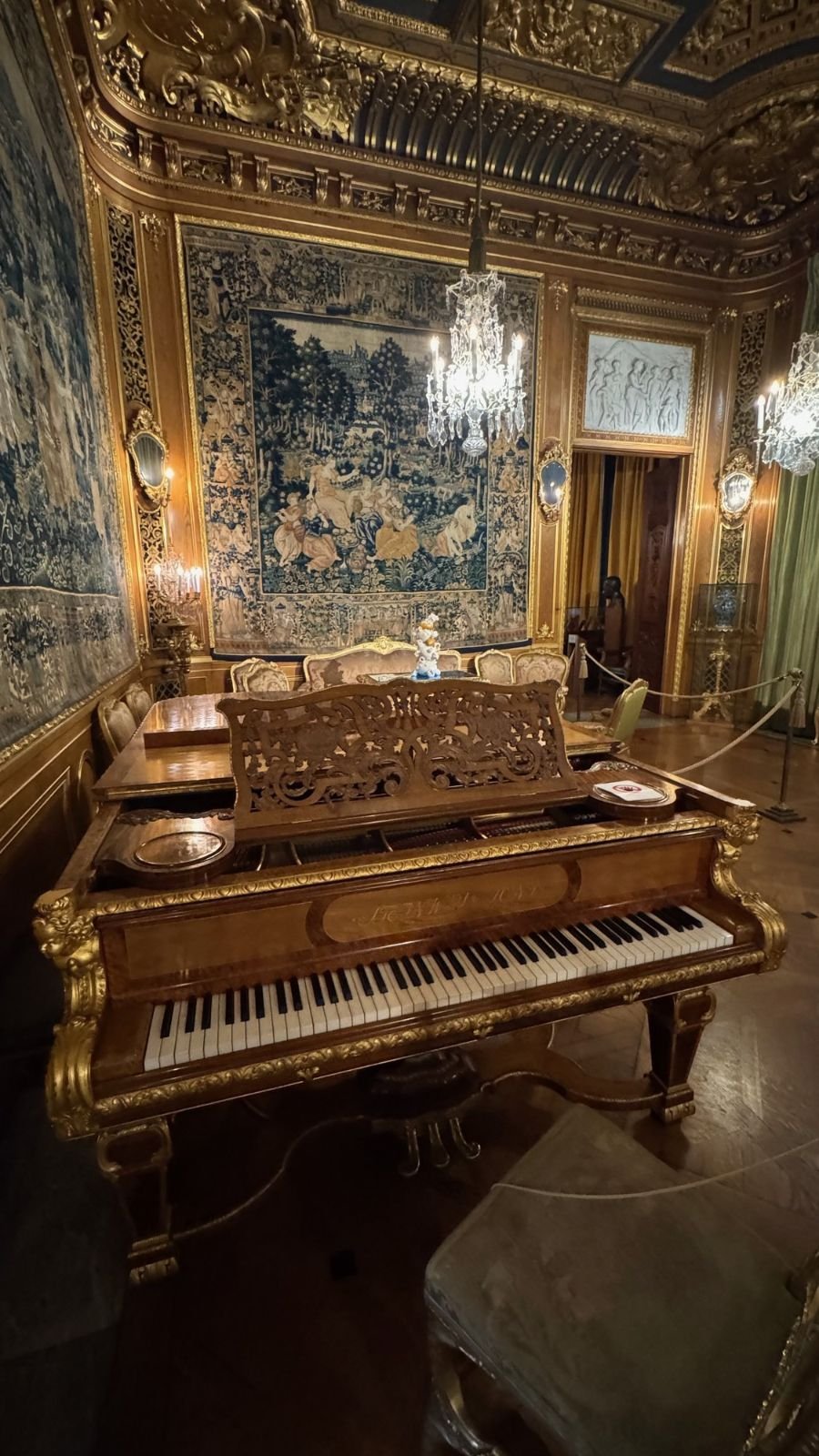
Famous relatives: a suffragist, a sculptor and the man behind the Swedish Ballet
The daughters did not stay quiet.
Ebba von Eckermann (1866–1960), the eldest, wanted to study to become an architect. Her parents wanted her married, so she was launched on the Stockholm season instead and married a naval lieutenant in 1886. She made her own career anyway. She sat on the board of the Fredrika Bremer Association, where she ran the scholarship fund for women’s education, worked in the women’s suffrage movement, and in 1911 founded the Stockholm Moderate Women’s Association, which became the national conservative women’s federation in 1915; she chaired it until 1922. She fought the compulsory medical examination of prostitutes, started a housekeeping school for girls in Ljusne in 1913, and lost a daughter, a doctor, to tuberculosis in 1914.
Ellen Roosval von Hallwyl (1867–1952), the second daughter, was a painter, sculptor and composer. She married Henrik de Maré in 1887 and lived in Berlin when he was military attaché there, taking painting lessons. In 1906 she divorced him and in 1907 married Johnny Roosval, the young tutor of her son, twelve years her junior and later Sweden’s great historian of medieval art. The scandal was total. Her parents broke with her and took in her 18-year-old son. Ellen went back to Berlin, studied under Lovis Corinth, saw Munch, and painted hard, dark figures. Then she turned to sculpture: a short time with Carl Milles, stone carving in Paris in 1913, long thin figures with an Indian and spiritual note. In 1915–17 the Roosvals built Villa Muramaris north of Visby on Gotland, an Italian villa with a walled baroque garden designed by Nils Dardel and full of her sculptures. The villa burned in 2013; Gotlands Museum keeps several of her works.
Rolf de Maré (1888–1964), Ellen’s son, is the famous one. His grandmother took him in after the divorce, found he had tuberculosis, and sent him to the mountains. He came back an art collector. With the painter Nils Dardel, his companion for years, he traveled the world and bought Picasso, Léger and Braque directly from the artists, and hung them at Hildesborg, the family estate outside Landskrona. In October 1920 he founded Les Ballets Suédois in Paris with the dancer Jean Börlin, his partner, and for five years it was the most controversial dance company in Europe, with Léger, Picabia, Satie and Cocteau on the bills and the film Entr’acte as an interval. He launched Josephine Baker at the Théâtre des Champs-Élysées.
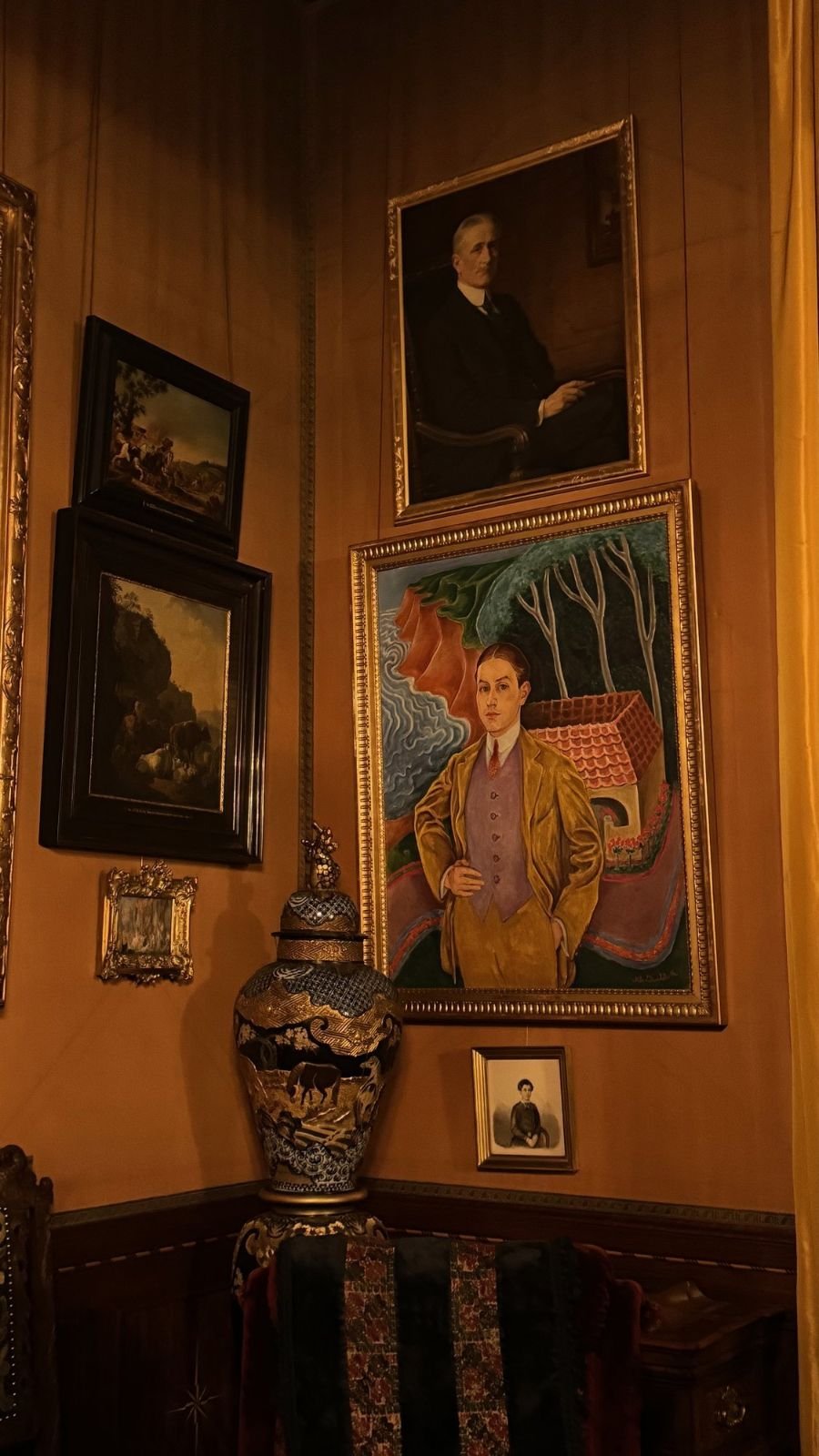
When Börlin died in 1930, de Maré turned to preserving dance: in 1933 he opened the world’s first dance museum and research institute in Paris, and what came home became Dansmuseet in Stockholm in 1953. His modern art went to Moderna Museet. He died in Barcelona in 1964. Dardel’s portrait of him hangs here, in his grandmother’s house.
Hallwyl Castle in Switzerland
The family’s name comes from a moated castle on two islands in the river Aabach, just north of Lake Hallwil in Aargau, about forty minutes by car from Zurich. The Hallwyls are first recorded in 1167, the castle in 1256. Bernese troops burned it in 1415; the family rebuilt it. In 1874 Walther’s brother went bankrupt and Walther bought the castle to keep it in the family, where it stood mostly unused for thirty years.
Then Wilhelmina took over. In 1910 she paid for a six-year restoration, with the Swedish archaeologist Nils Lithberg digging and the architect Anders Roland stripping away the neo-Gothic additions to get back to the medieval castle. After Walther’s death she set up the Hallwil Foundation in 1925 and opened the castle to the public. Since 1994 it belongs to the canton of Aargau and is part of Museum Aargau, open April to October.
I visited Hallwyl Castle around 2002, when I lived in Zurich. I did not know then that the same woman who restored it had also built a palace on Hamngatan in Stockholm and given both away. Standing in her Stockholm bathroom twenty-odd years later, it fell into place: she was not collecting things. She was collecting time, and fixing it in place.
Take the guided tour
Two floors are open on your own with the entrance ticket. The rest of the house, the private rooms upstairs, the kitchen, the attic, you only see with a guide. Take the tour. The guides wear uniforms inspired by the house, they know the family, the servants and the scandals, and they take you through rooms that would otherwise stay closed. The English tour is on Saturdays at 13:30 and lasts about fifty minutes. After the tour you can stay and walk the open floors again on your own.
The museum changes its themes through the year: dramatized tours for children, a spooky show in the autumn break, Christmas in the house, and special tours on the servants, the collections and the family. Check the program before you go, because the tour you get in October is not the tour you get in June.
Upstairs and downstairs
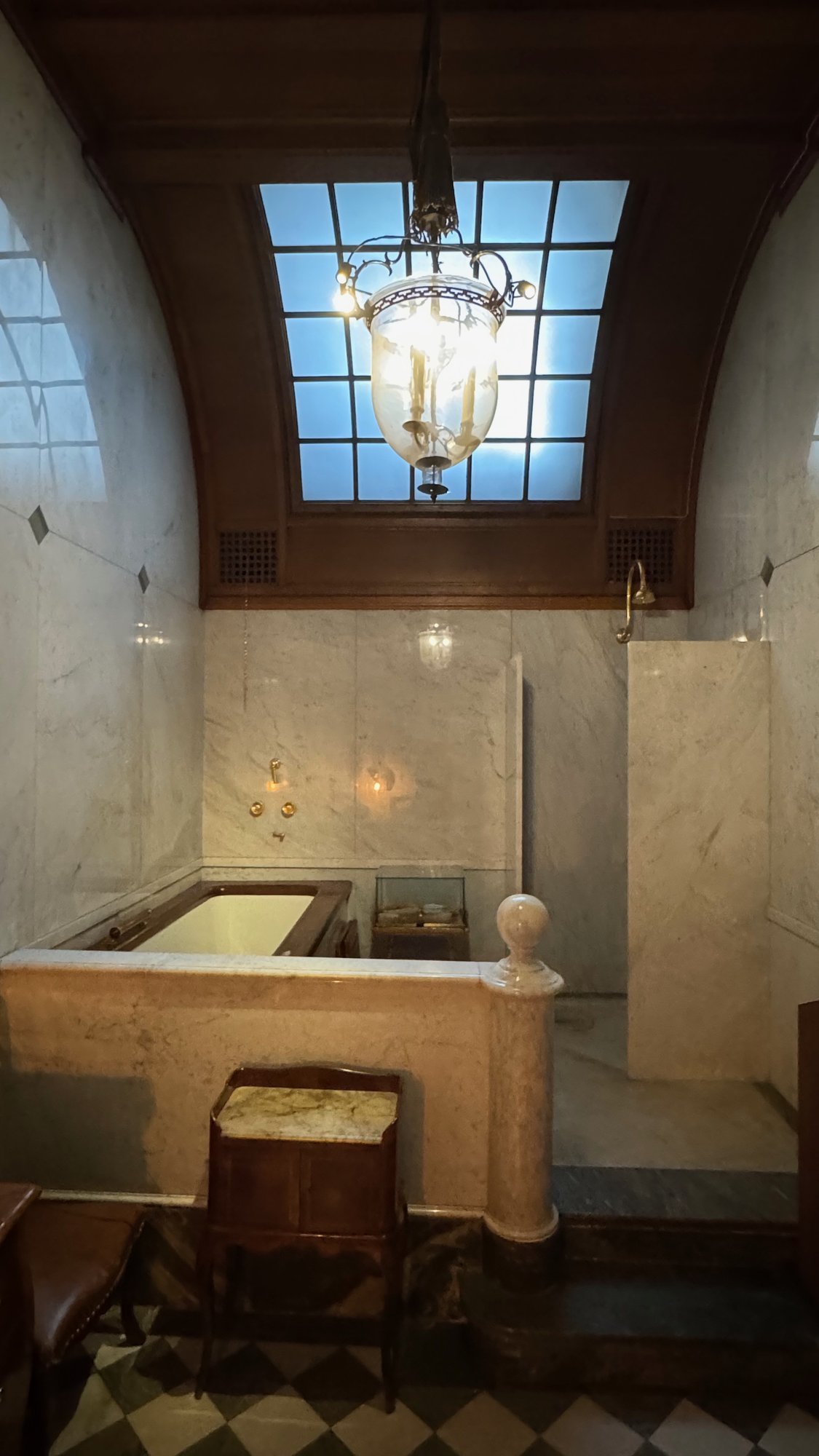
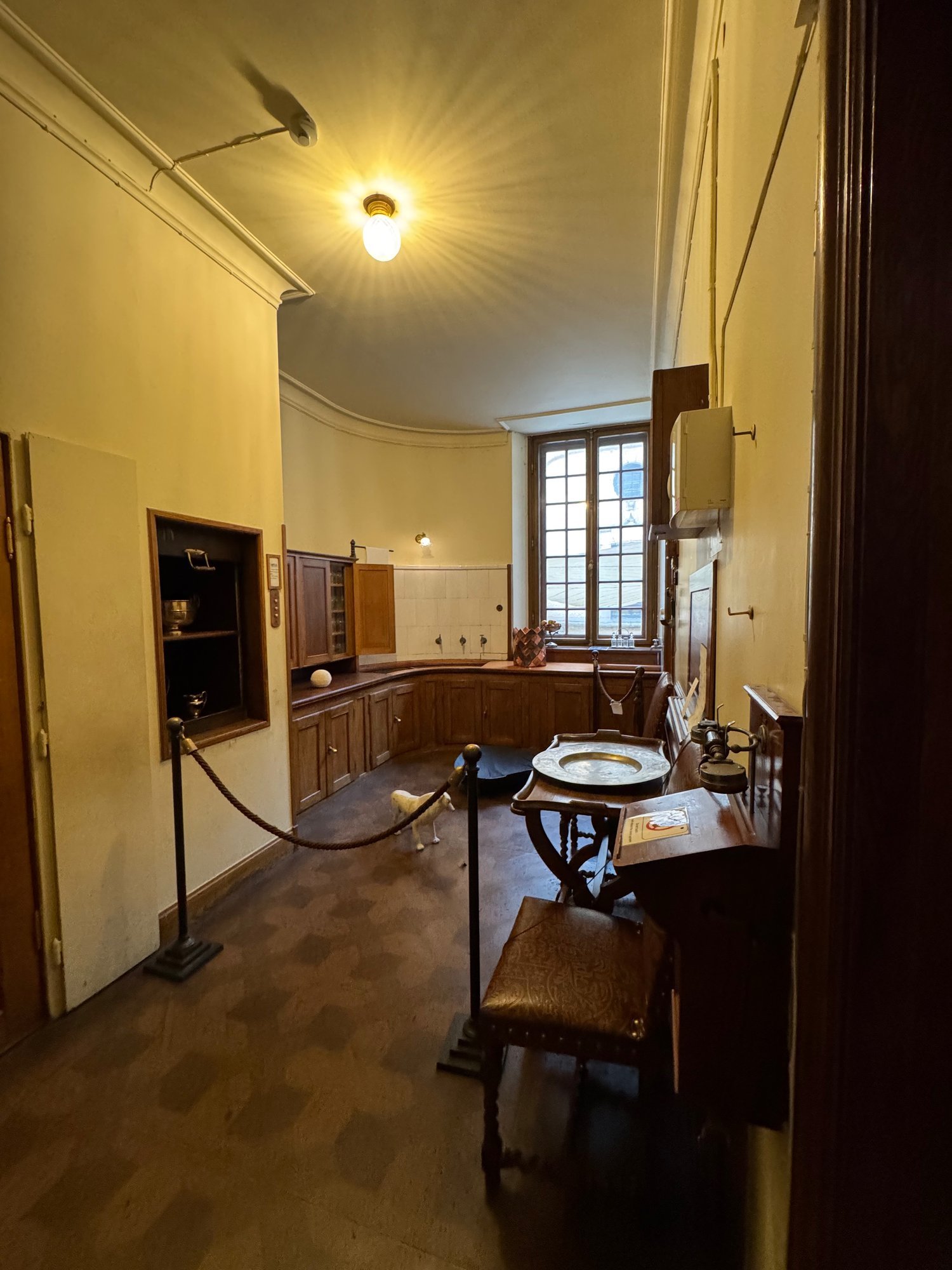
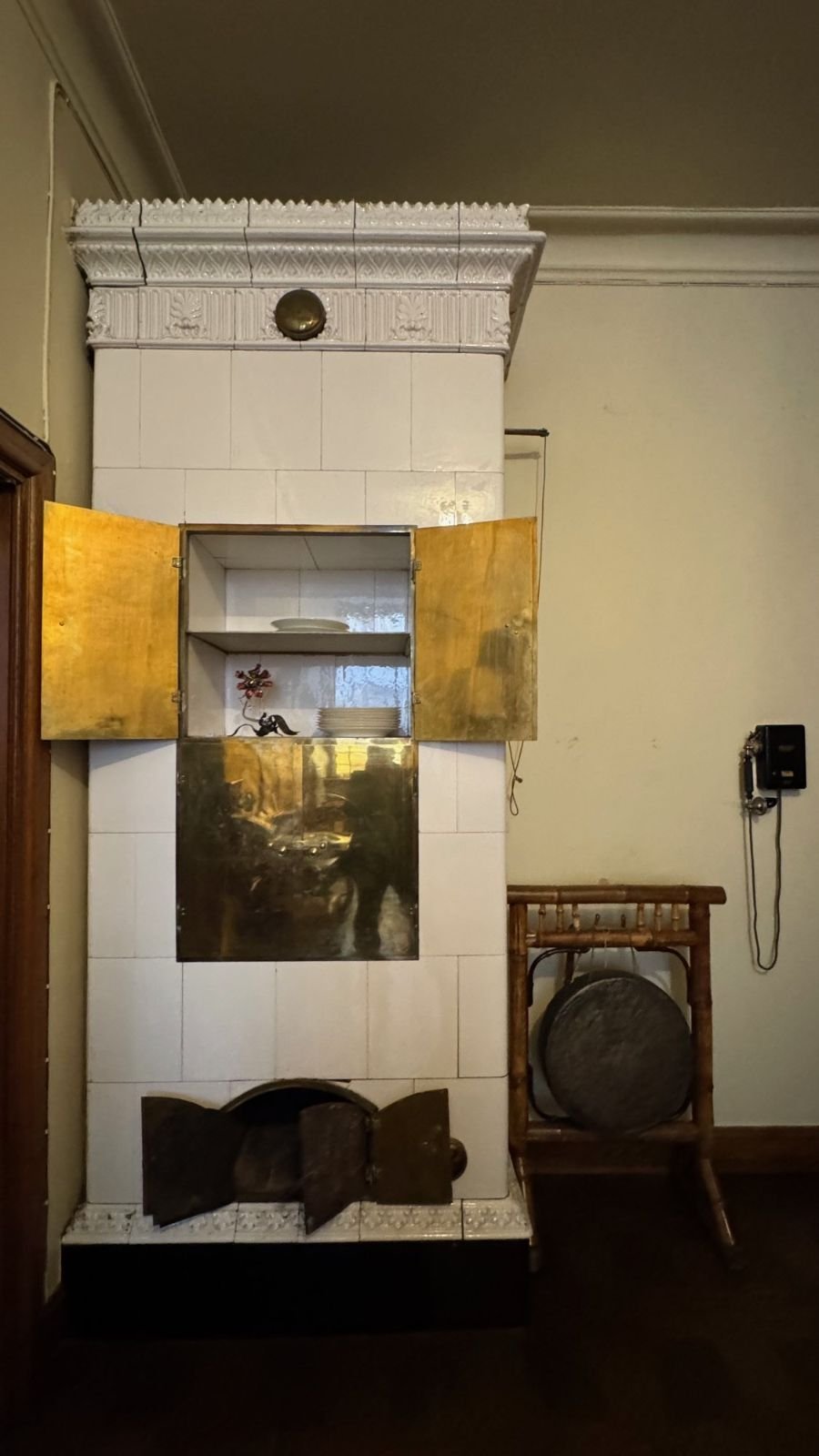
The best thing about this house is that the servants’ side was kept too. Downstairs, the kitchen with its stoves and copper pans, the pantries, the wine cellar, the serving room with the food lift and the silver. Upstairs, the bedrooms, the marble bathroom, the countess’s dressing room with its tiled stove and warming cabinet, a wall telephone and a gong to call the staff. The guide tells you how many people it took to run a house like this, and what they earned.
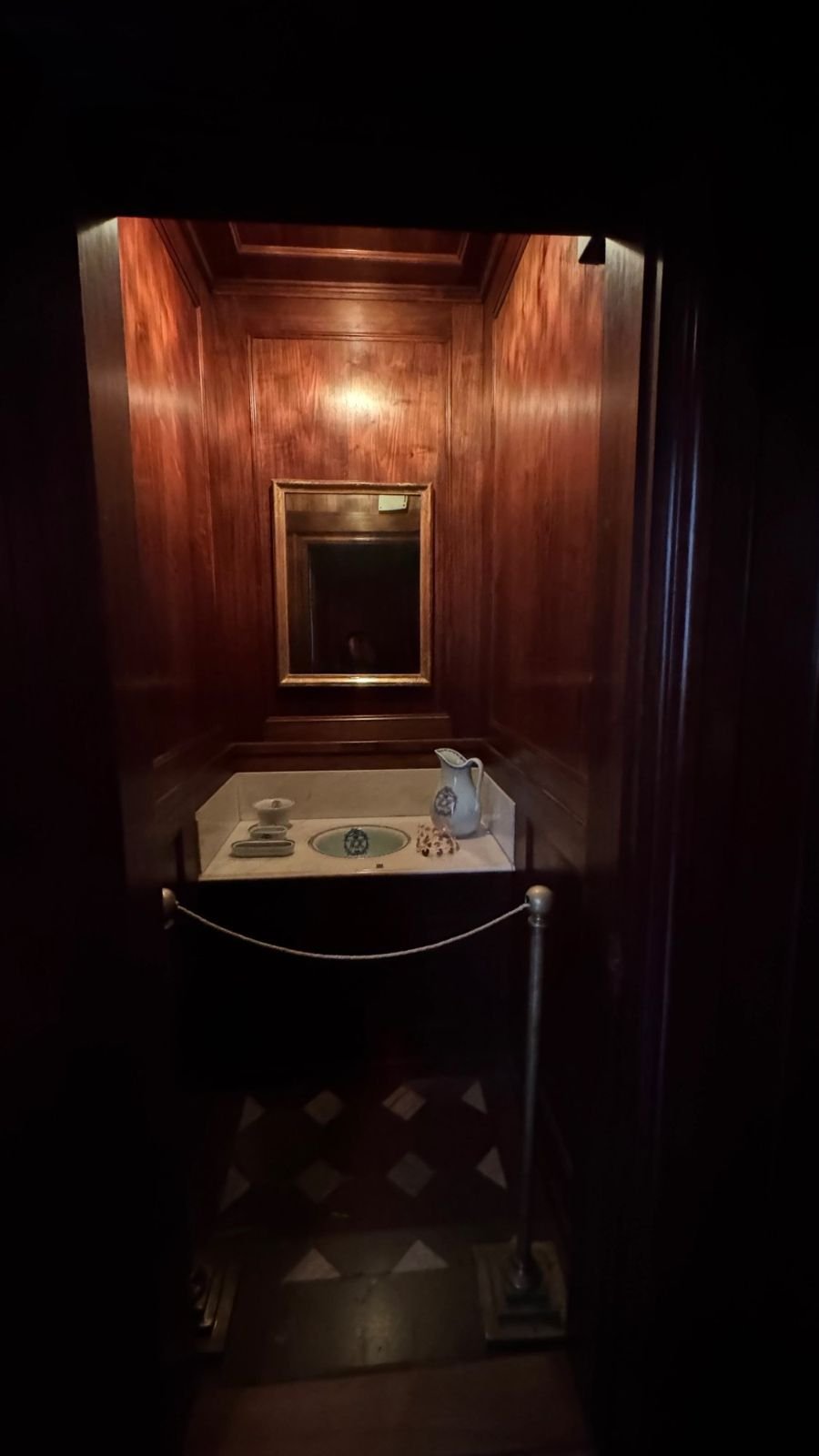
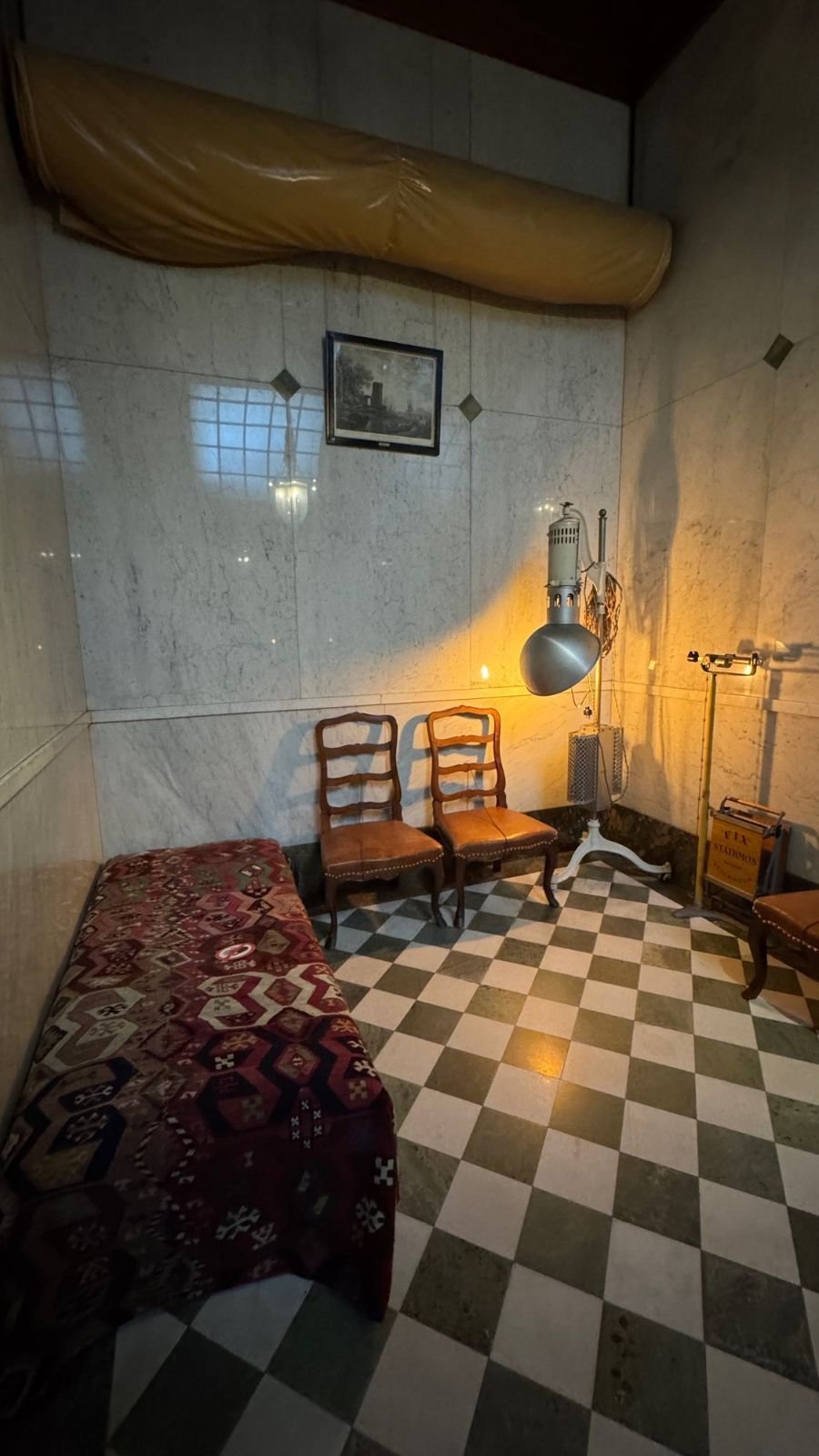
The marble bathroom has a bathtub, a shower and a skylight with a lantern. Next to it, a room with a checkered stone floor has a daybed under a patterned rug, two chairs and an old lamp on a stand.
Contemporary craft in a frozen house
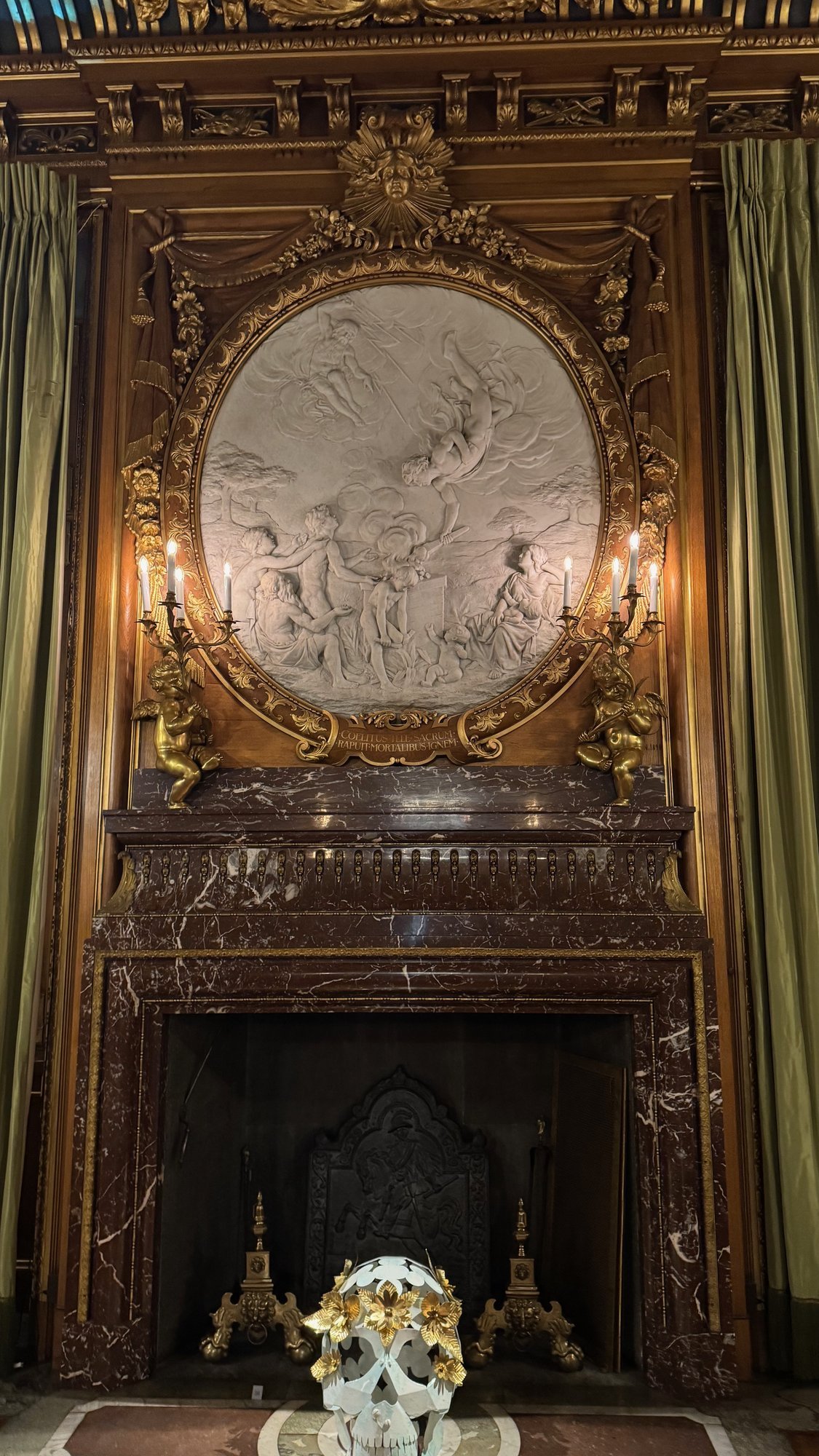
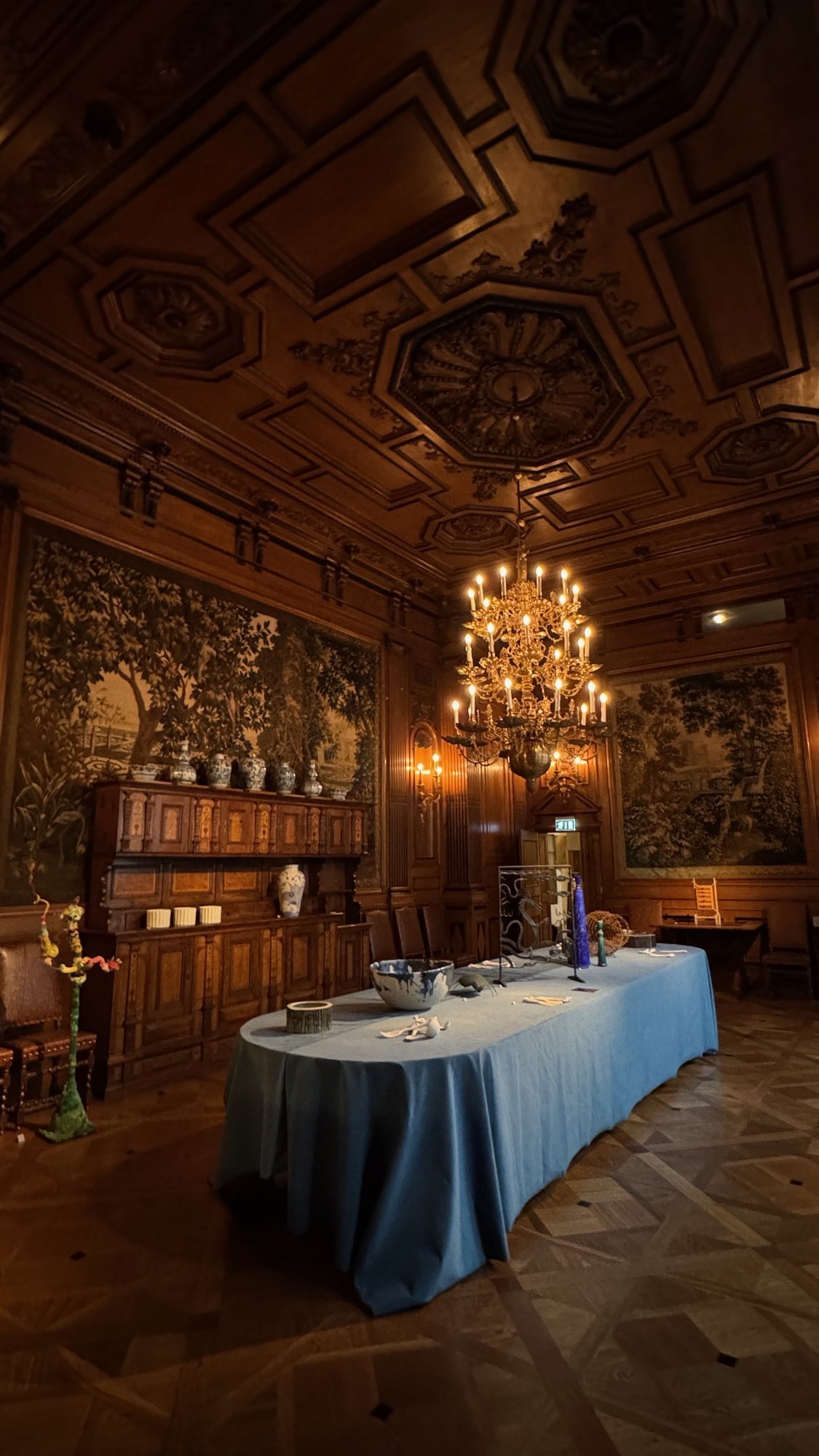
When I visited, the house was full of things that did not belong to Wilhelmina. A skull of white metal with gold flowers stood on the floor in front of the marble fireplace in the dining room. Glass, ceramics, textiles and paper objects were placed in the salons among the antiques, so quietly that you sometimes had to look twice.
This was Reflections through time (30 September to 1 November 2026), an exhibition for the 75th anniversary of Konsthantverkarna, the Swedish craft artists’ association. Members made new work in answer to the house, the family and the collections and installed it through the main apartment. It worked. A house that has not changed since 1930 needs a little friction, and the objects gave it. The museum does this kind of thing often: exhibitions placed inside the rooms rather than in a separate hall. At the same time, the house shows a second exhibition, about the corset war.
War of the corsets
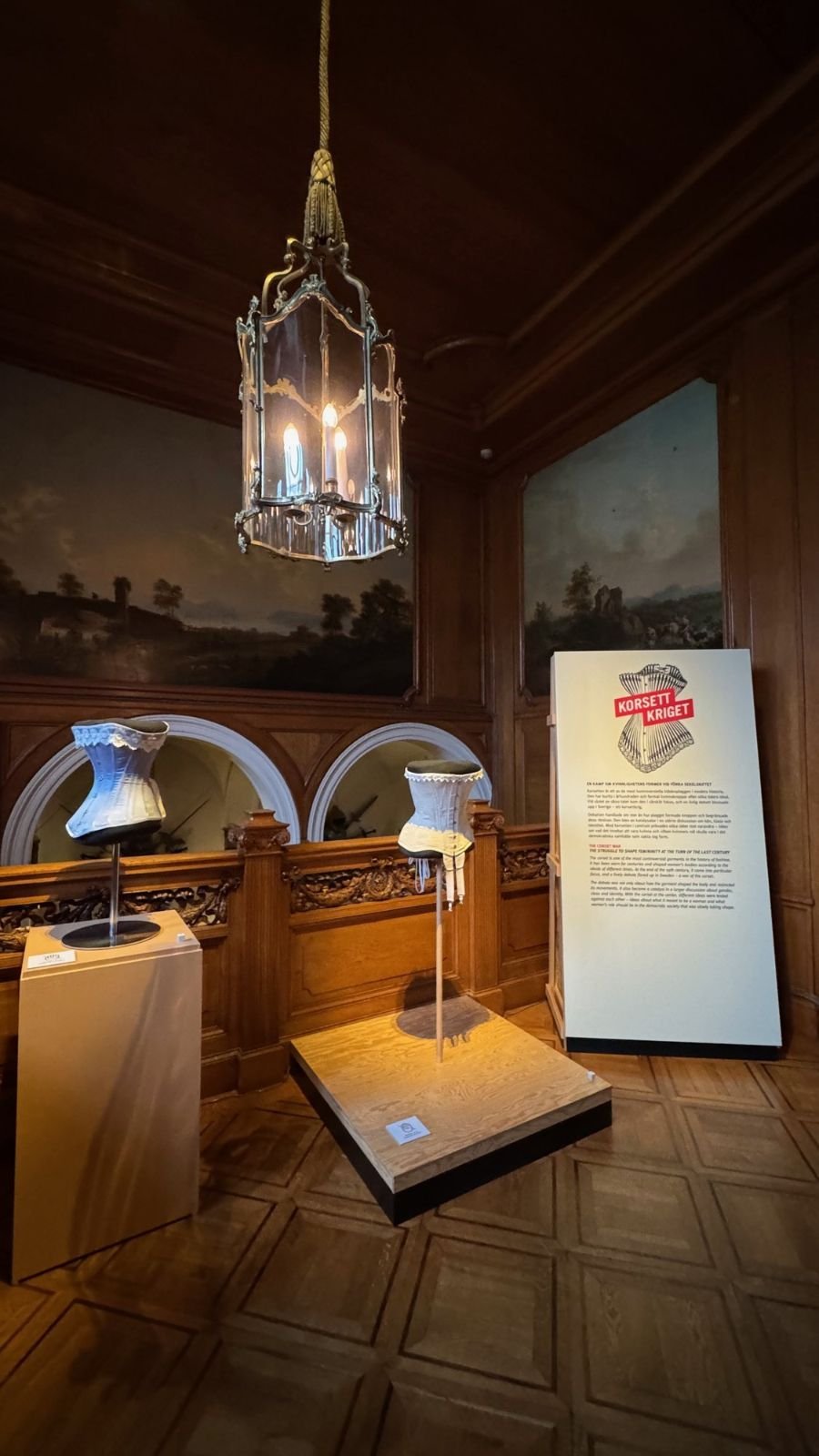
The house also shows War of the corsets (Korsettkriget), from 13 March 2026 to 10 January 2027. The museum says the corset is one of the most controversial garments in the history of fashion. At the end of the 1800s, a lively debate about it flared up in Sweden. It became a debate about gender, class and identity, and about the role of women in the democratic society that was slowly taking shape.
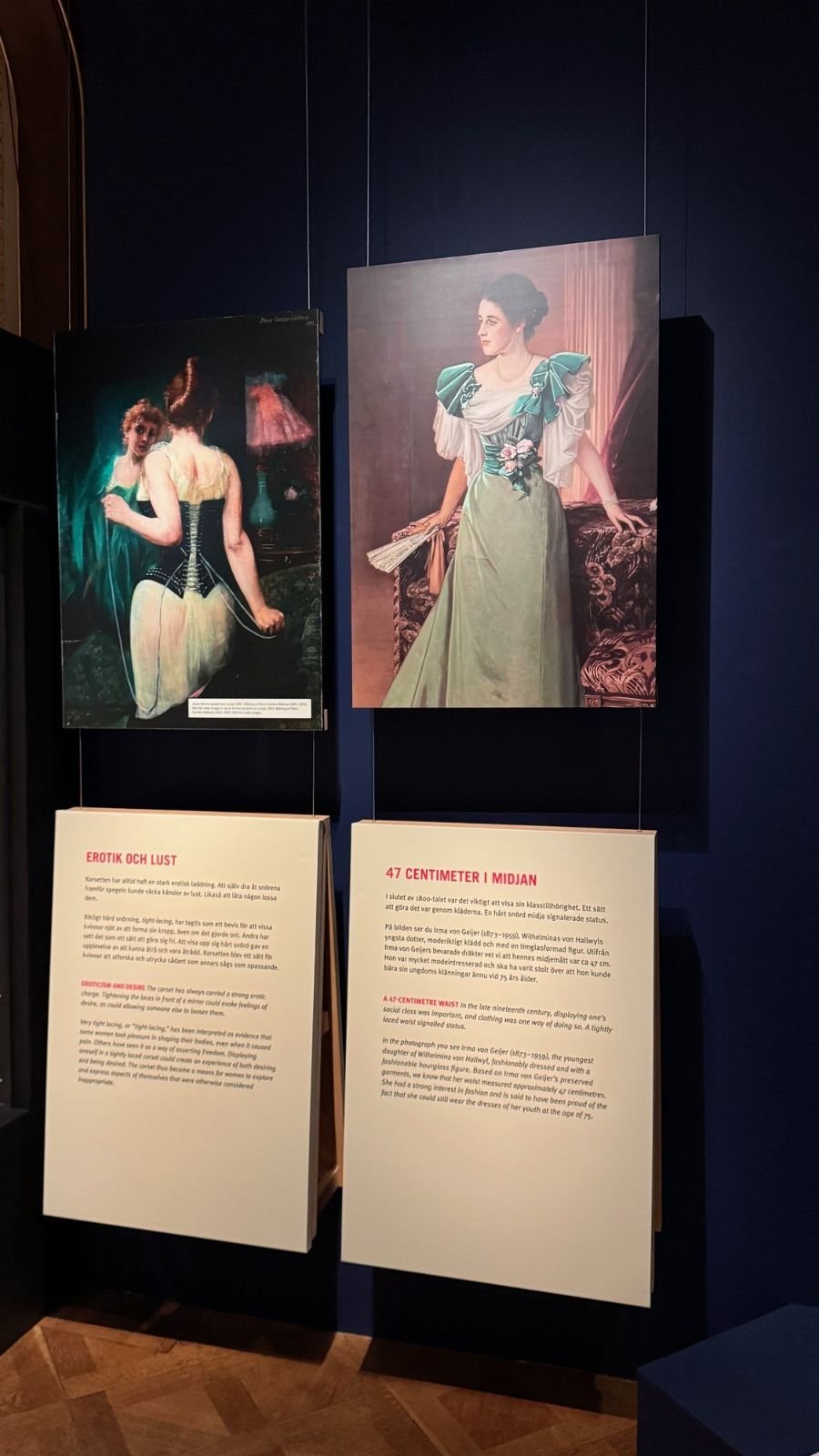
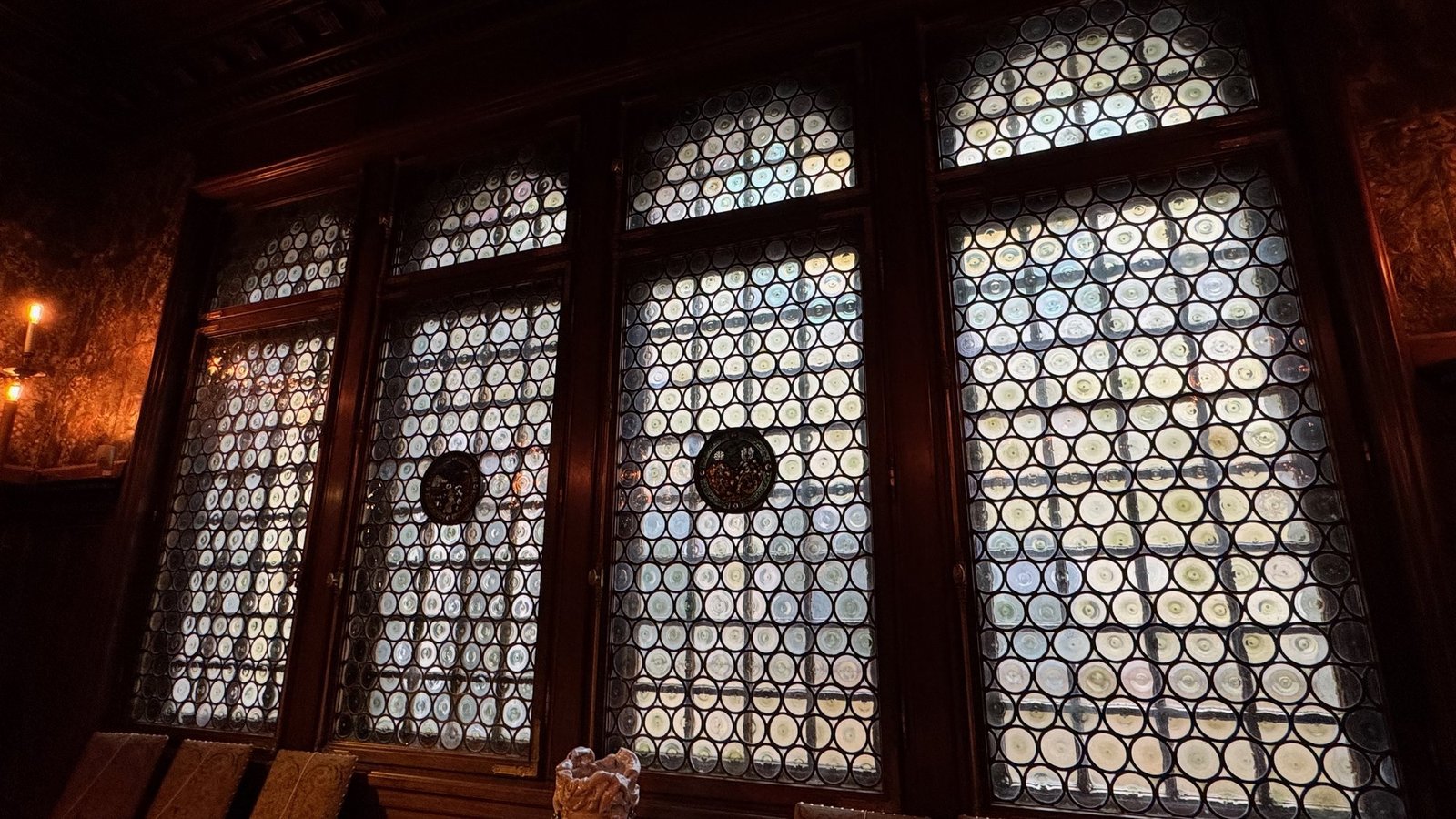
In my photos, white corsets stand on stands under a hanging lantern, in a room with dark wood walls and arched windows. In a room with dark blue walls, large pictures of women in corsets hang above text panels in Swedish and English.
One panel, 47 centimeters waist, is about Irma von Geijer (1873–1959), Wilhelmina’s youngest daughter. It says a tightly laced waist was a sign of status. Her preserved clothes show that her waist was about 47 centimeters. She had a strong interest in fashion, and the panel says she was proud that she could still wear the dresses of her youth at the age of 75.
The Women’s History Museum in Umeå made the exhibition with the historian Henric Bagerius of Örebro University. The Hallwyl Museum added costumes and corsets from its own collection. You can also try on a corset.
Accessibility: 103 steps and a sensory map
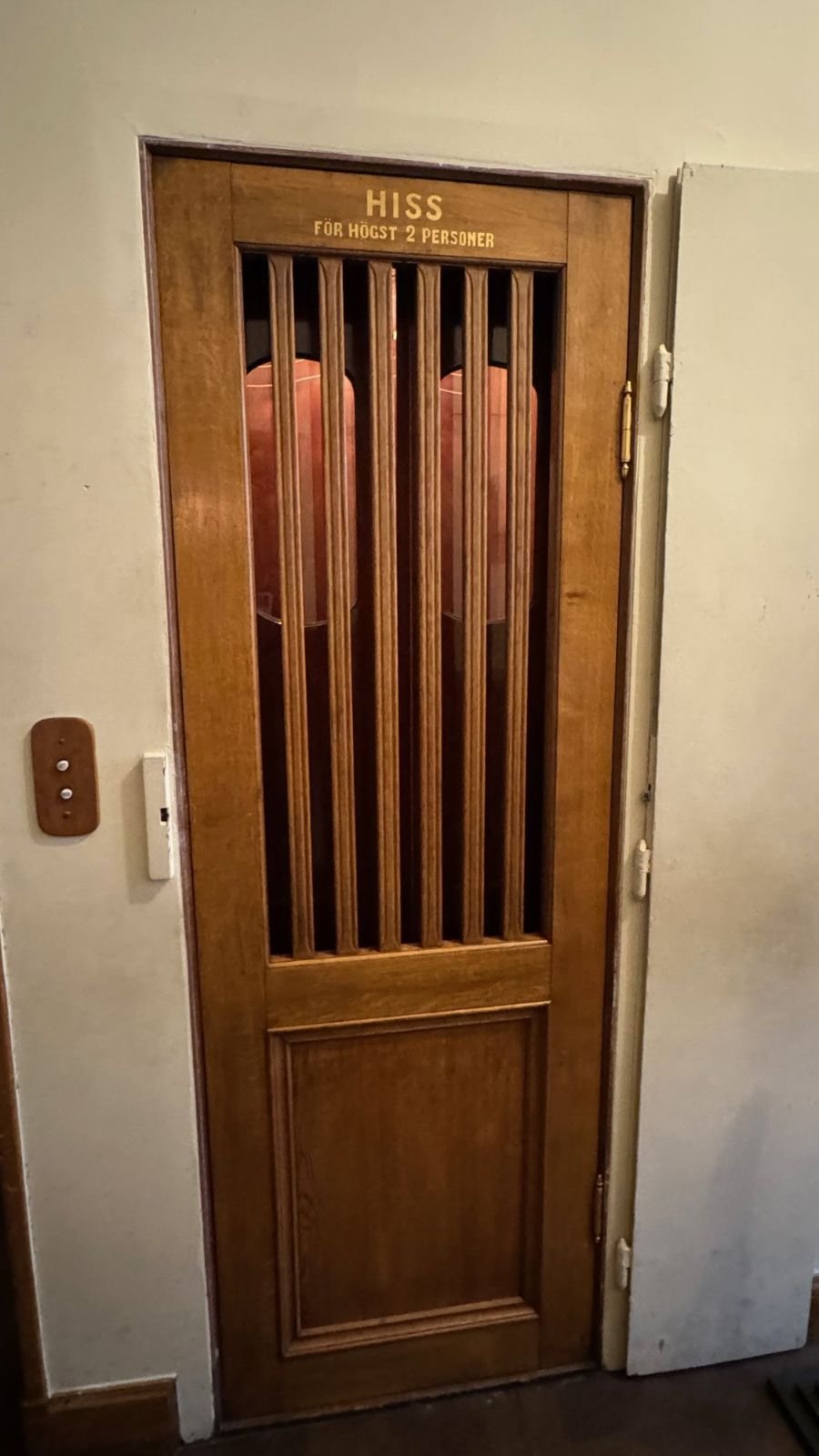
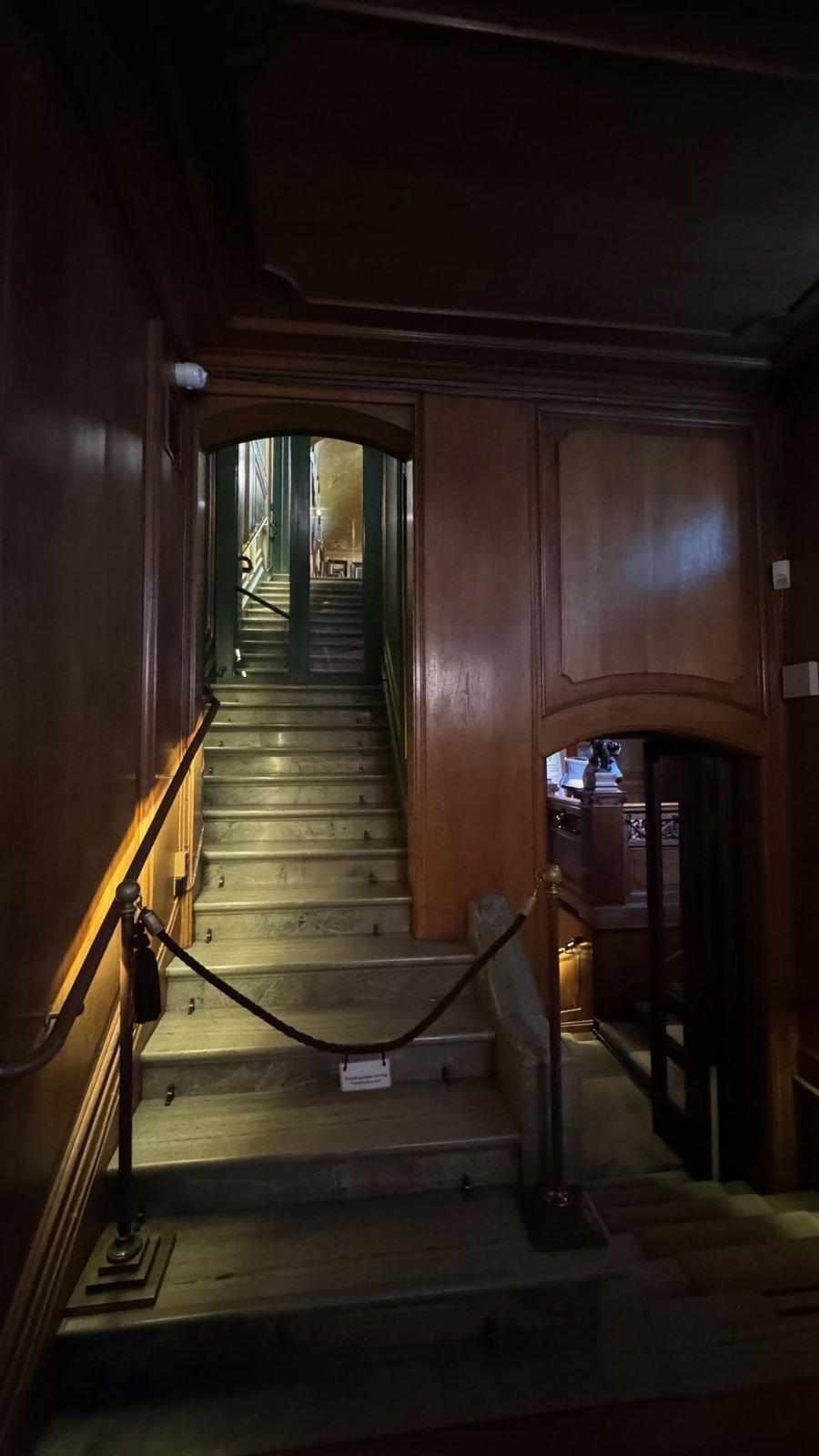
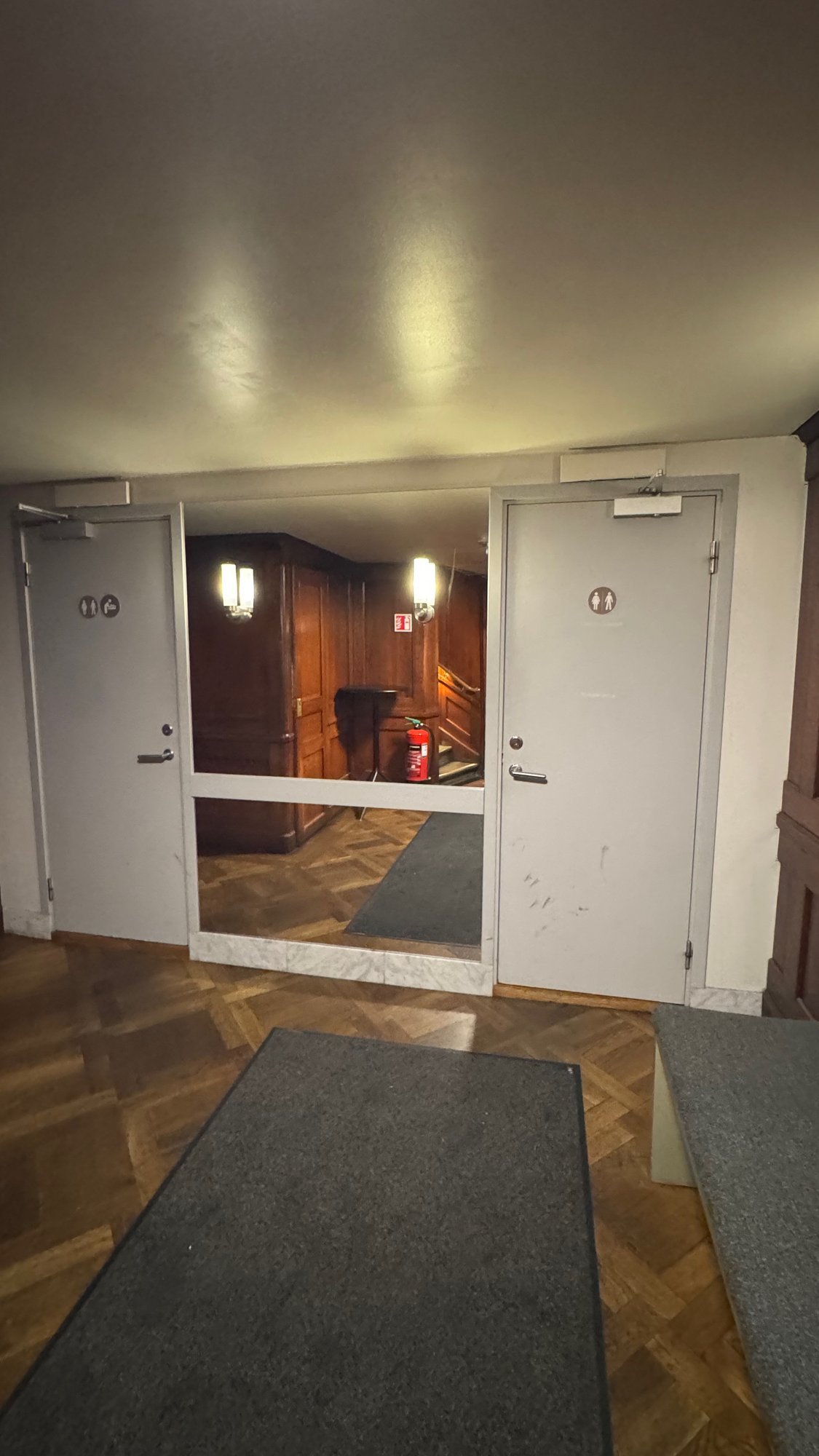
Here I have to be plain. This museum is not accessible. It has five floors and no elevator for visitors. The old lift from 1896 is a museum object, marked “lift for at most two persons”, and it is not in use. A guided tour means at least 103 steps up and down, and the toilets are 16 steps below the entrance hall. The museum says it in its own words: the public spaces are not accessible for anyone in a wheelchair or using a walker. Folding chairs can be borrowed in the cloakroom if you need to sit down on the way, and a companion enters free.
The stone stairs from the entrance hall have a handrail. Down by the toilets, one toilet has a baby changing table.
What the museum has done instead is think about other needs. For visitors with hearing aids there is a portable guide system that connects to your own device; ask for it when you book or at the desk. And for neurodivergent visitors, people with ADHD, autism and other NPF diagnoses, the museum has made a sensory map: a twelve-page guide, floor by floor, that marks where it gets crowded, where the sound is harder, where the light is stronger, where there are strong smells, and where music plays. It tells you how tickets work, where the cloakroom is, that you may bring a folding chair, and that there is a place to wait before a tour. It is the best document of its kind I have seen in a Stockholm museum. Download it from the museum’s accessibility page before you go.
So: a house that shuts out wheels, and a museum that thinks hard about the senses. Both are true.
Shop and restaurant
The museum shop by the entrance is small and unusual. It sells things made for the museum from the collections: a teacup after Wilhelmina’s porcelain, hand-blown glasses, linen towels, ostrich-feather dusters like the ones the maids used, and books. Most of it you cannot buy anywhere else. The shop is free to enter and keeps the museum’s hours.
Hallwylska restaurant and bar sits in the inner courtyard, under the arches, run by an outside restaurateur with its own hours. I could not visit it this time, and I did not see the old stables either, so I cannot tell you more. Both are on my list for next time.
What is my verdict?
A very special museum. I recommend it to everyone visiting Stockholm who is curious about how one of the richest families in the country lived, what they bought, and who carried the coal. Take the guided tour, wear shoes you can climb in, and look for the things that do not belong, because there will be some.
Vi ses på Hamngatan 4.
Photo gallery
All photographs on this page were taken by Zayera Khan during a visit to the museum, and are her own property. Please do not reuse them without permission.
Watch before you go
Two films from the museum’s own channel that show the house better than my photos can:
- Video: Välkommen till Hallwylska palatset (Hallwylska museet on YouTube)
- Video: The Art Collection at the Hallwyl Museum (Hallwylska museet on YouTube)
Sources: Hallwylska museet – Opening hours; Hallwylska museet – Admissions and tickets; Hallwylska museet – Guided tours; Hallwylska museet – Accessibility; Hallwylska museet – The museum shop; Hallwylska museet – Hallwylska restaurant; Hallwylska museet – Reflections through time; Hallwylska museet – War of the corsets; Hallwylska museet, Sensorisk karta / Vägledning för personer med NPF-diagnos (PDF); Museum Aargau – Schloss Hallwyl; Dansmuseet – Rolf de Maré; Moderna Museet Malmö – Från Stockholm via Landskrona till Champs-Élysées; Gotlands Museum – Ellen Roosval von Hallwyl; Wikipedia: Hallwylska museet; Wikipedia: Wilhelmina von Hallwyl; Wikipedia: Walther von Hallwyl; Wikipedia: Wilhelm Kempe; Wikipedia: Johanna Kempe; Wikipedia: Ebba von Eckermann; Wikipedia: Ellen Roosval von Hallwyl; Wikipedia: Rolf de Maré; Wikipedia: Hallwyl Castle; Wikipedia: Schloss Hallwyl.