
Armémuseum
Five hundred years of Swedish war and peace in a 1760s arsenal, and a museum that will soon pack its boxes
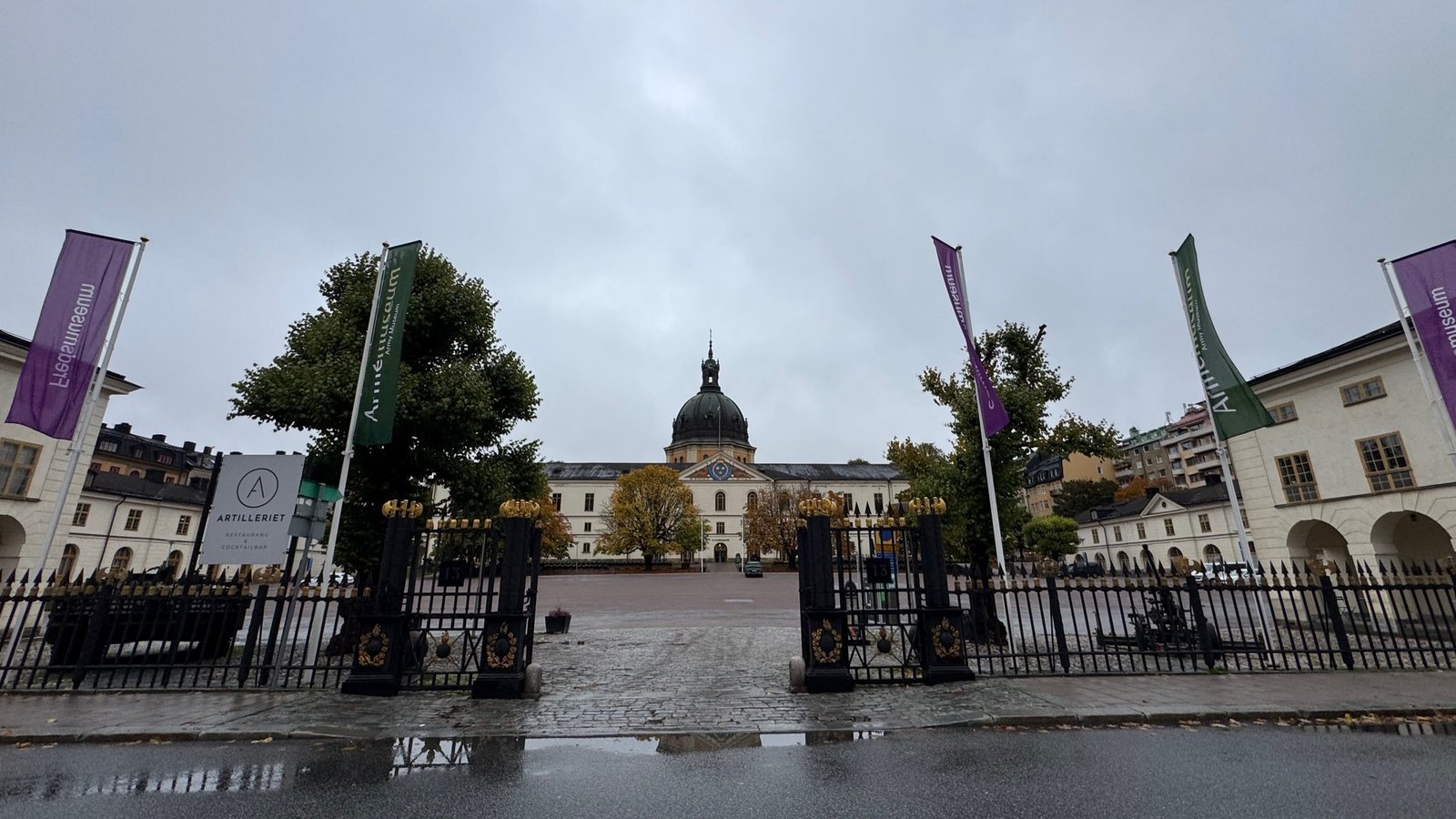
- Why visitSweden’s military history museum, from the Vasa kings to UN peacekeeping, told through objects, life-size scenes and plain texts about what war does to people. Raoul Wallenberg’s room. And the building: a royal arsenal from the 1760s on a cobbled square in Östermalm.
- Best forHistory lovers, anyone interested in how Sweden stayed out of war for two hundred years, and visitors with teenagers.
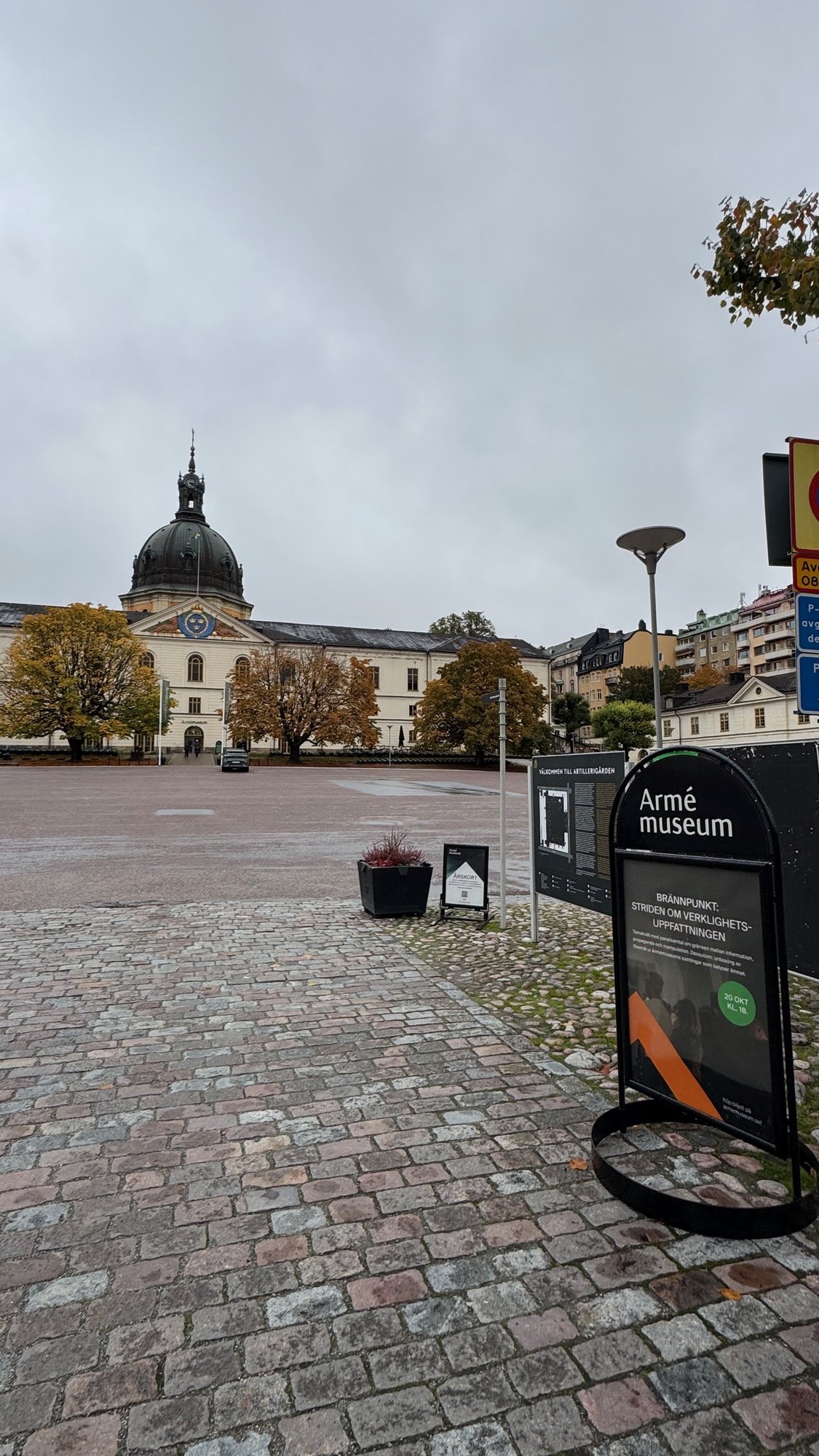
- AddressRiddargatan 13, 114 51 Stockholm. Metro: Östermalmstorg. The entrance is across the cobbled Artillerigården square.
- Opening hoursTuesday 11:00–19:00, Wednesday to Sunday 11:00–17:00, closed Monday. Checked October 2026.
- AdmissionAdults 140 kr, students and pensioners 95 kr, free under 19. Half price on Tuesday evenings 17:00–19:00. Annual pass available.
- NoteThe museum closes at Riddargatan in spring 2027 and will move. No new address or reopening date has been announced yet. Go before it closes.
- Guided toursAudio guide, group tours by booking, school programs.
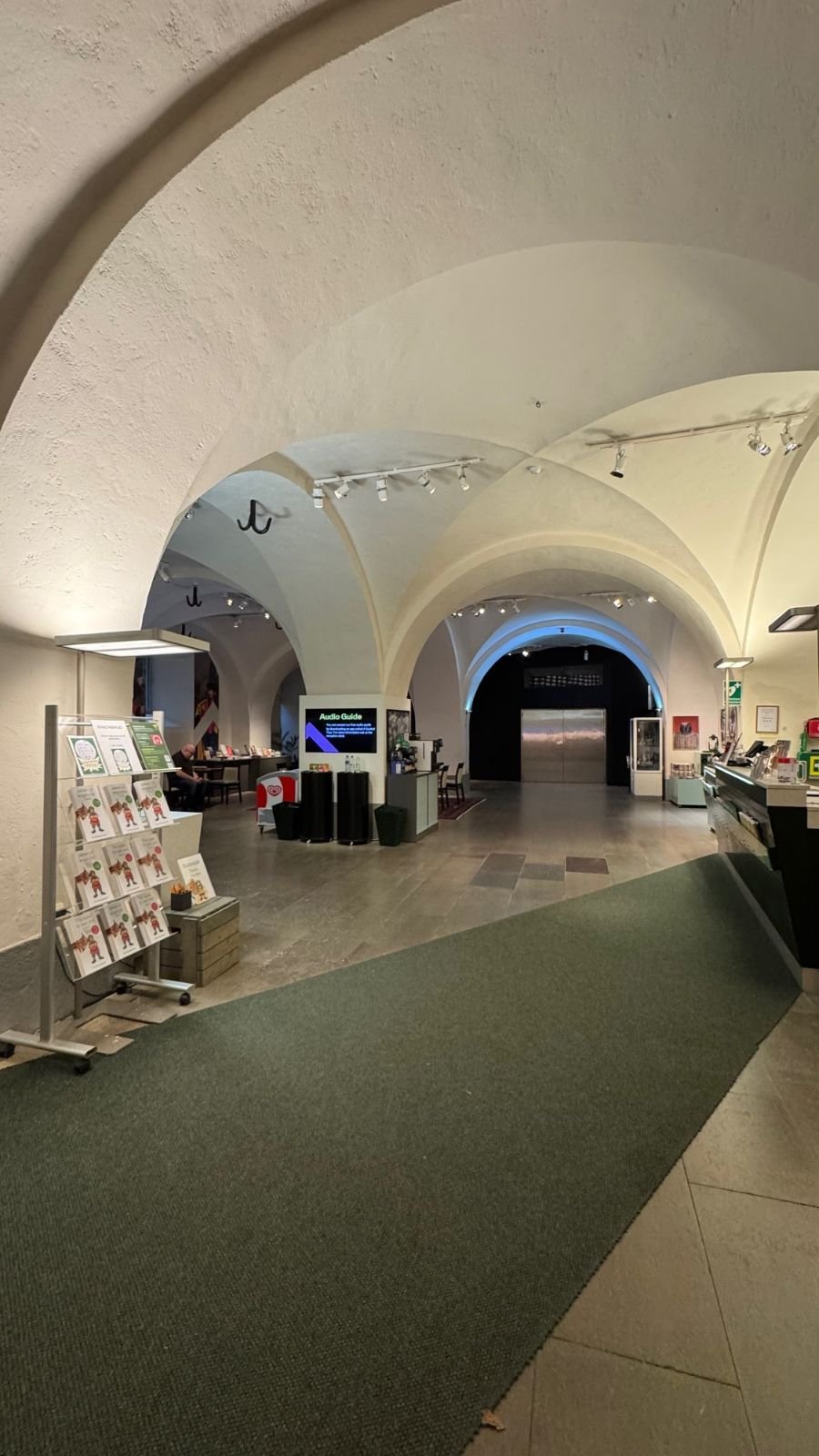
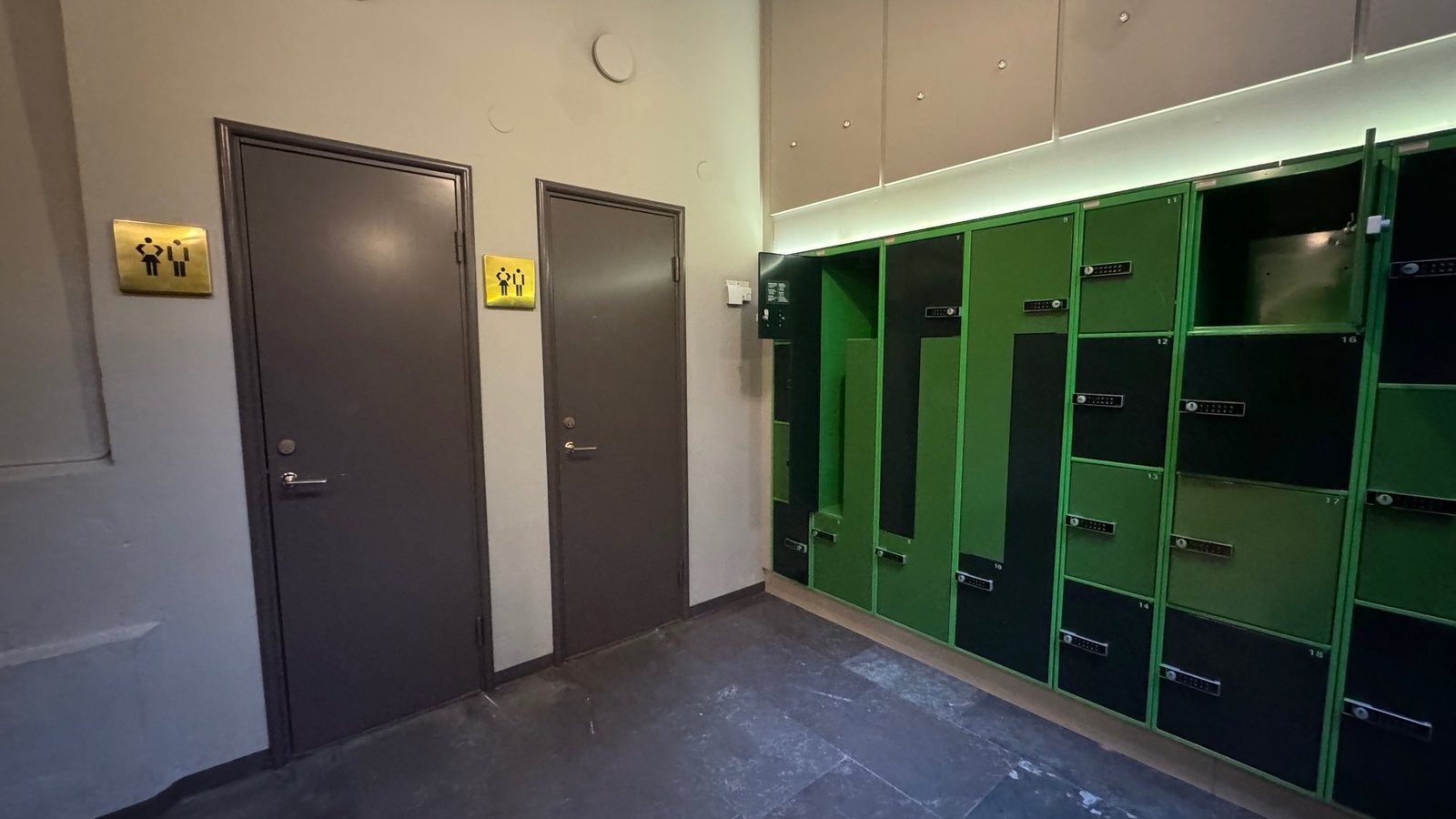
- FacilitiesRestaurang Artilleriet under the vaults on the ground floor, a picnic room (marketenteriet) on the second floor with microwaves, museum shop at the reception, lockers and toilets by the entrance.
- AccessibilityCobbled square with a slight uphill slope to the entrance, smoother stone on the last stretch. Doors are propped open or open with an elbow button. One lift to all floors with voice announcements and Braille, room for a wheelchair or stroller. Accessible toilet on the entrance level. Hearing loop in the lecture hall. Guide and assistance dogs welcome.
- Official websitearmemuseum.se
About the museum
Armémuseum is Sweden’s army museum. It holds more than 100,000 objects used by the Swedish army from the 1500s to today, from uniform buttons to command systems, plus about 5,000 war trophies, most of them from the Thirty Years’ War. Only about two percent of the collection is on show. Since 2026 the museum belongs to a new state agency for maritime, transport and defense history, together with nine other museums, among them Sjöhistoriska and Vasamuseet.
I went in October, on a weekday, with the wrong idea. I thought it would be a museum about weapons. It is a museum about people.
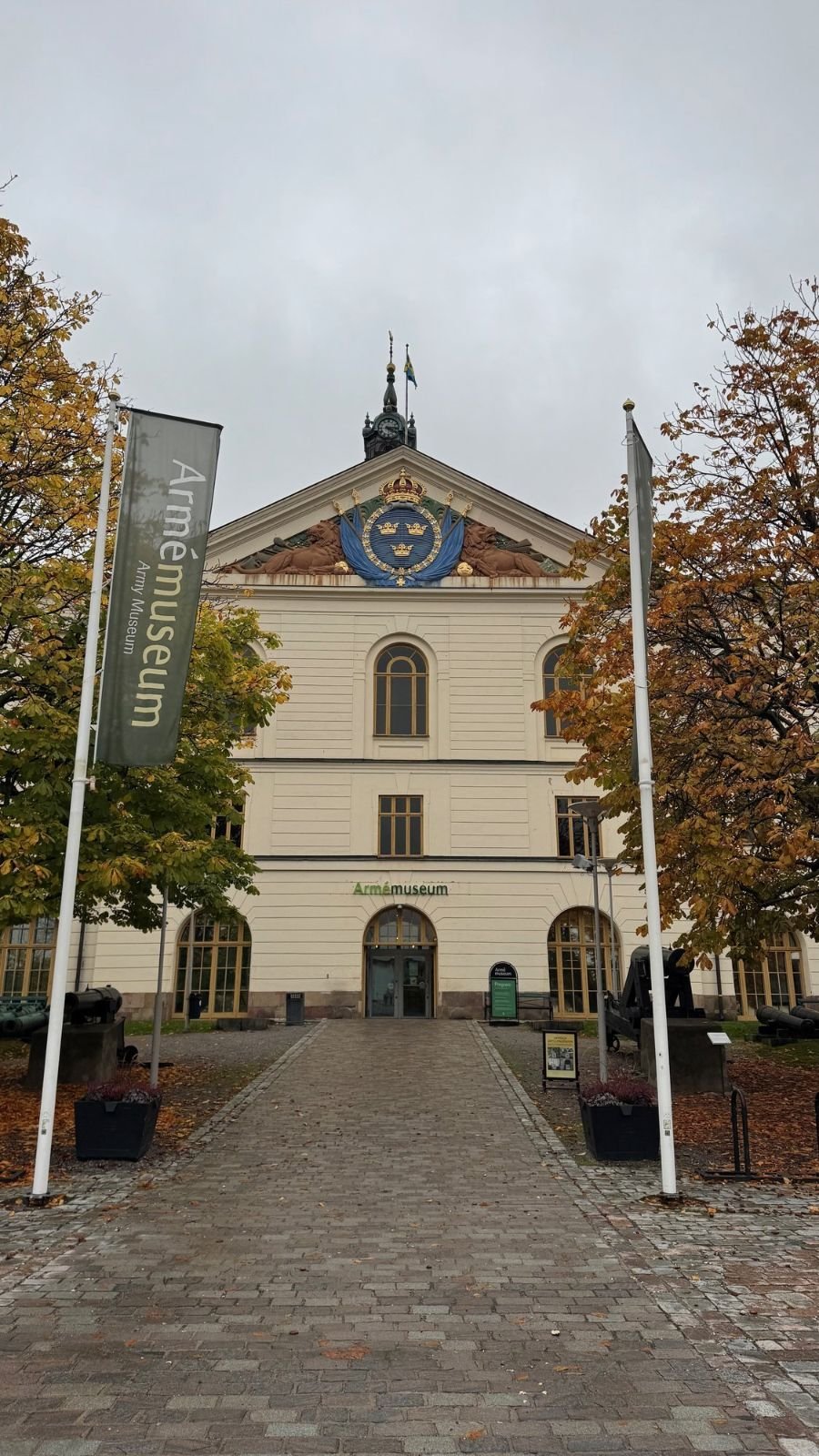
A royal arsenal from 1762
The building is a tyghus, an arsenal: a store and workshop for the artillery’s guns and equipment. Carl Johan Cronstedt drew it in 1762 to replace a wooden arsenal that had stood on the site since the mid-1600s, and it was built between 1763 and 1770. In 1879 an Artillery Museum opened here. A few years later the house got two more floors and its present look, and the artillery and engineering academy trained its officers inside. The museum closed in 1932 for rebuilding and opened again eleven years later under the name Armémuseum. Since 1935 every building on Artillerigården is a listed state monument, down to the cast-iron fence on Riddargatan.
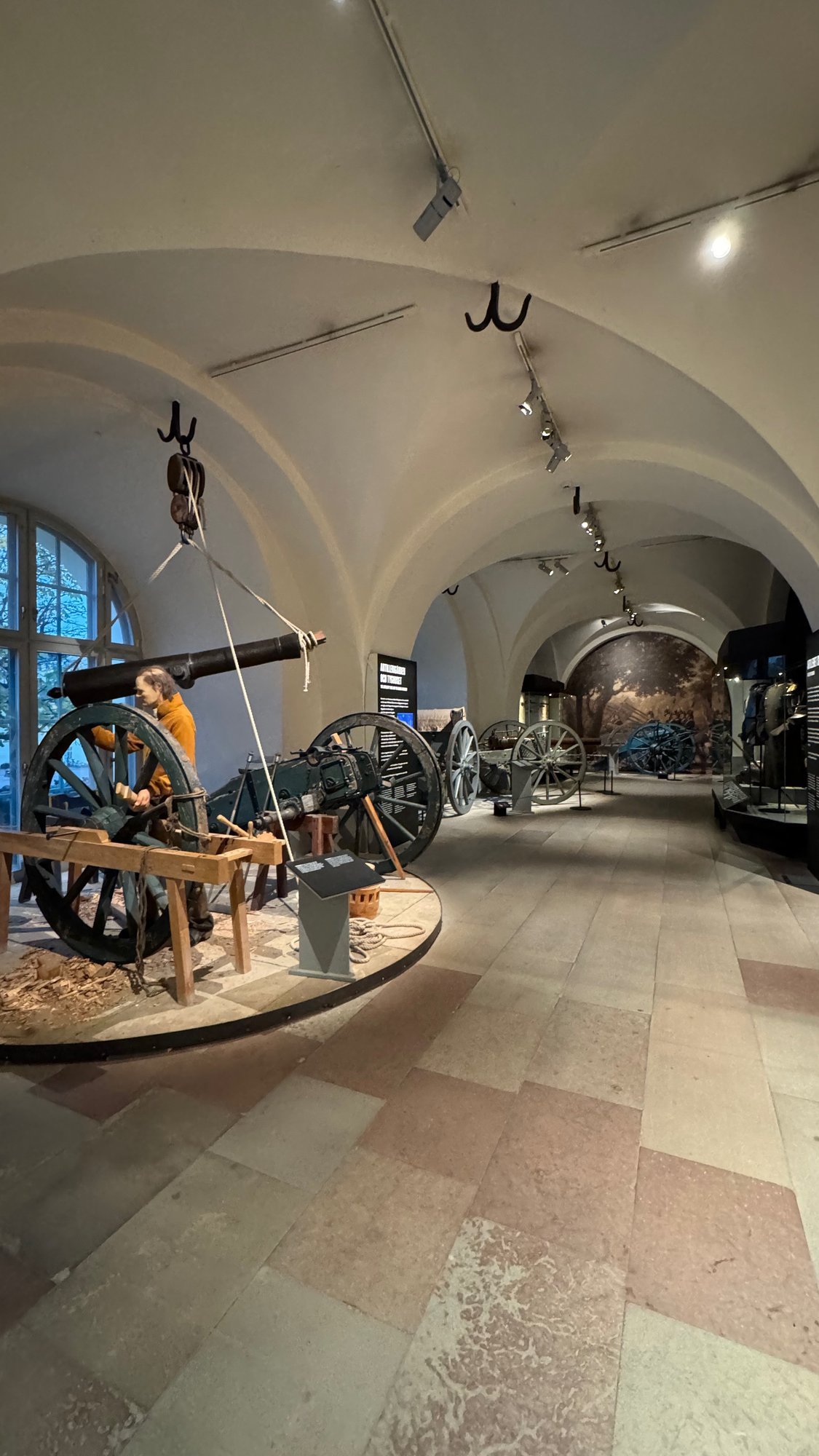
You feel the arsenal everywhere. The halls have thick white vaults, the floors are stone, and old cannons stand in rows under the arches as if they were still waiting for an order.
Under the square lie two air-raid shelters from the Second World War, built for the military staff who worked here. The museum opens them to the public now and then.
War and peace, 1500 to 1800
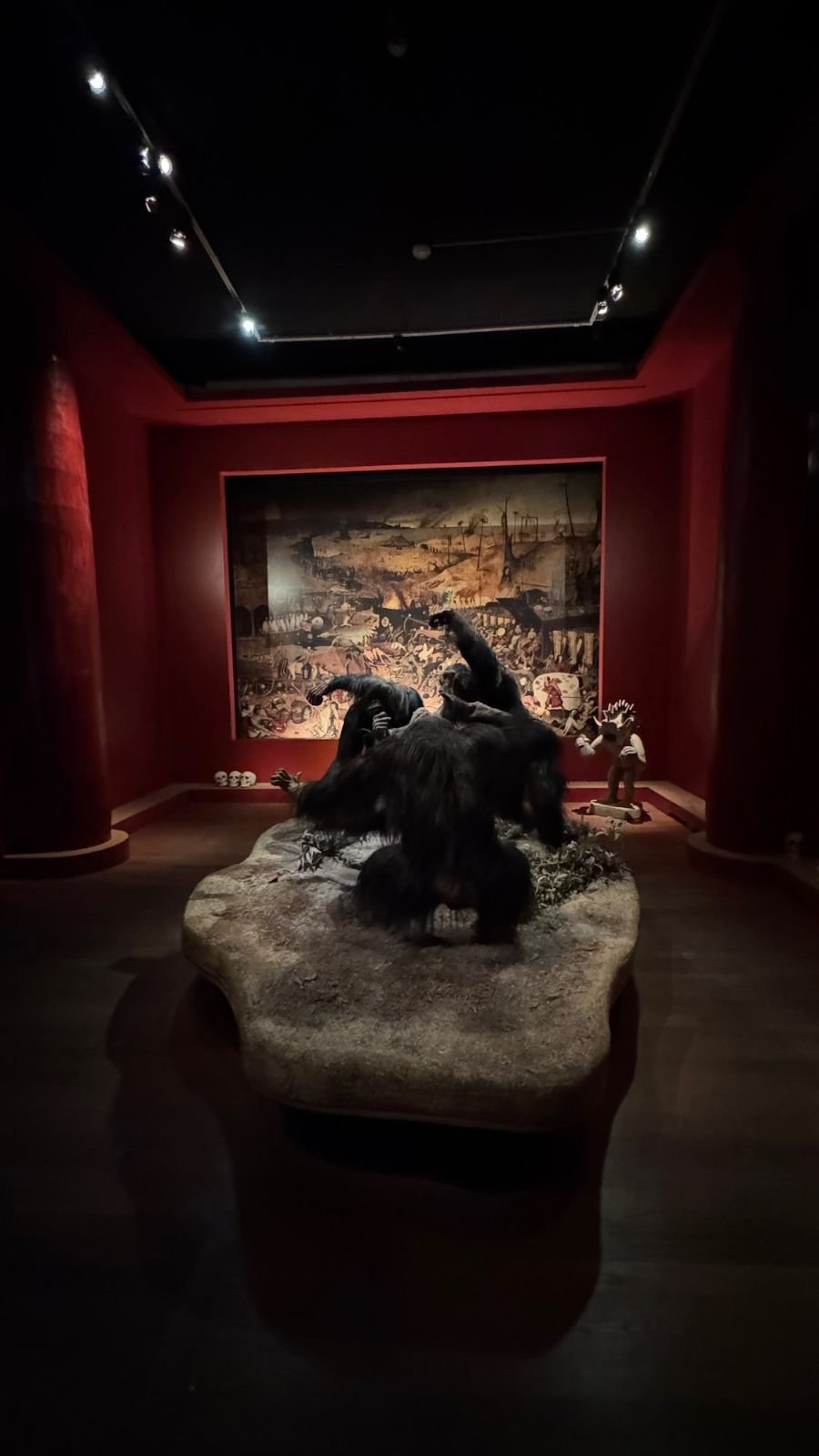
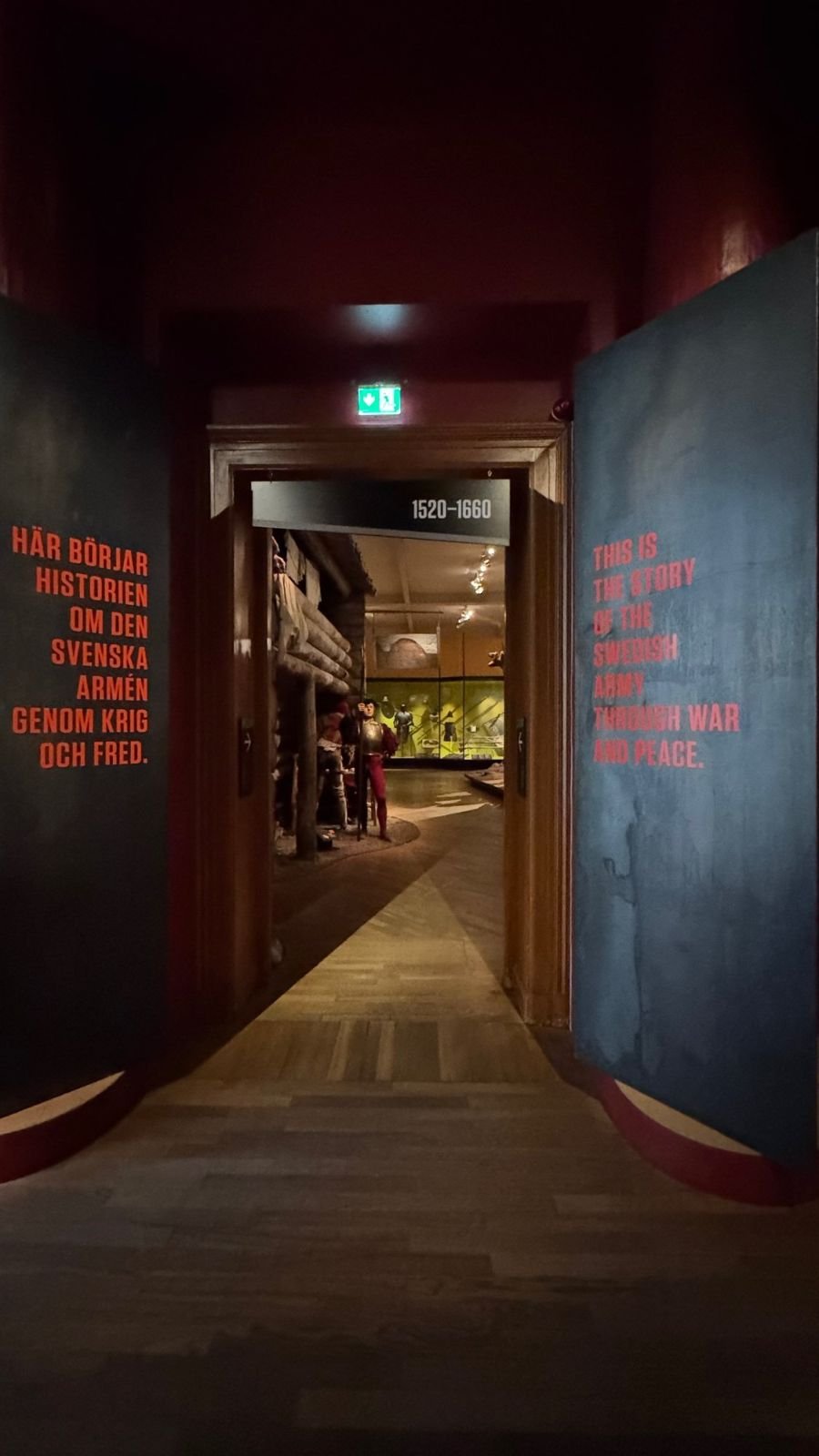
The permanent exhibition is called War and Peace and runs in two parts: the 1500s to the 1800s on one floor, the 1900s on another. It opens in a red room with a diorama of chimpanzees fighting on a rock, in front of a large copy of Bruegel’s The Triumph of Death. The museum does not pretend war began with kings. It began with us.
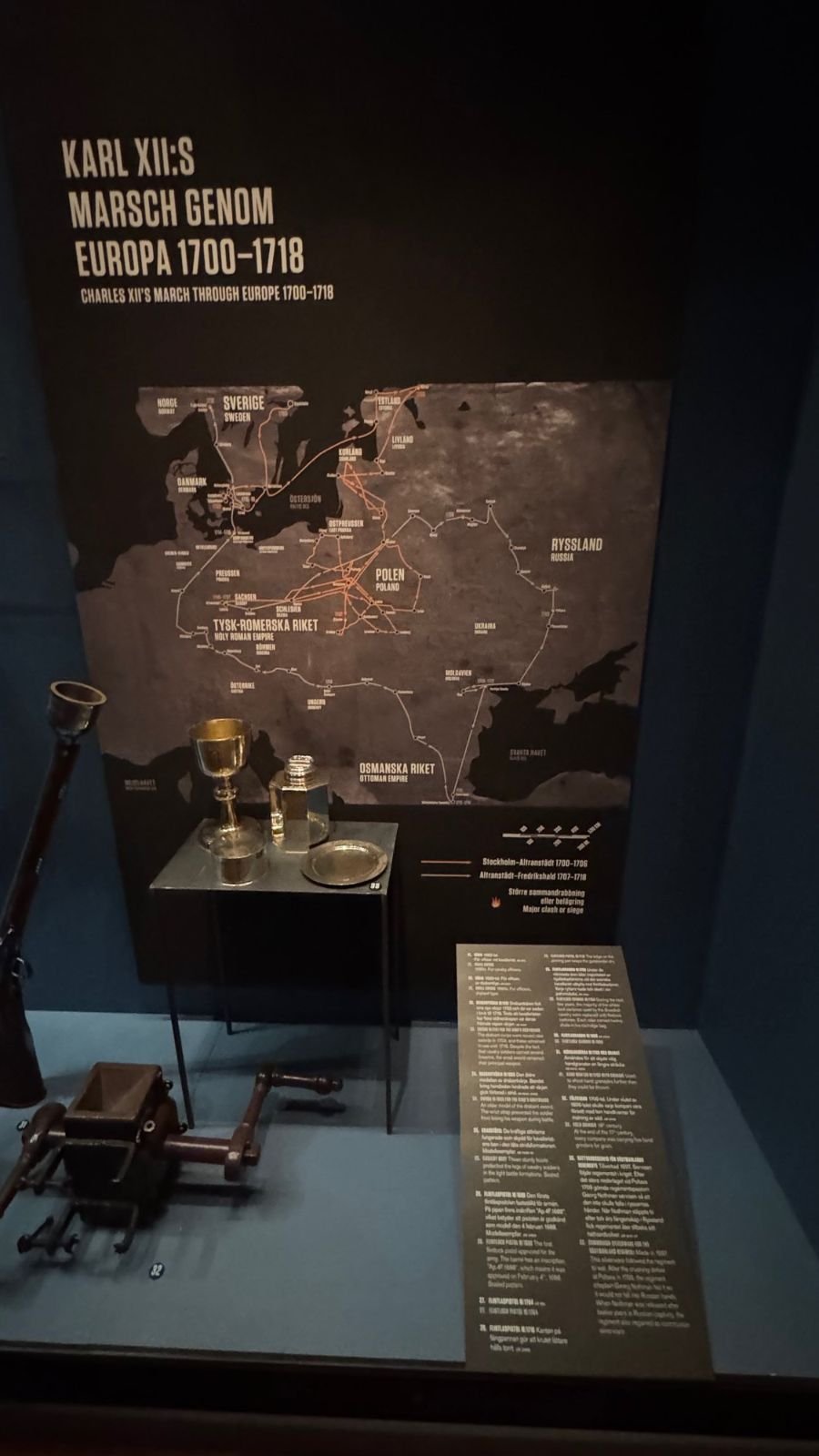
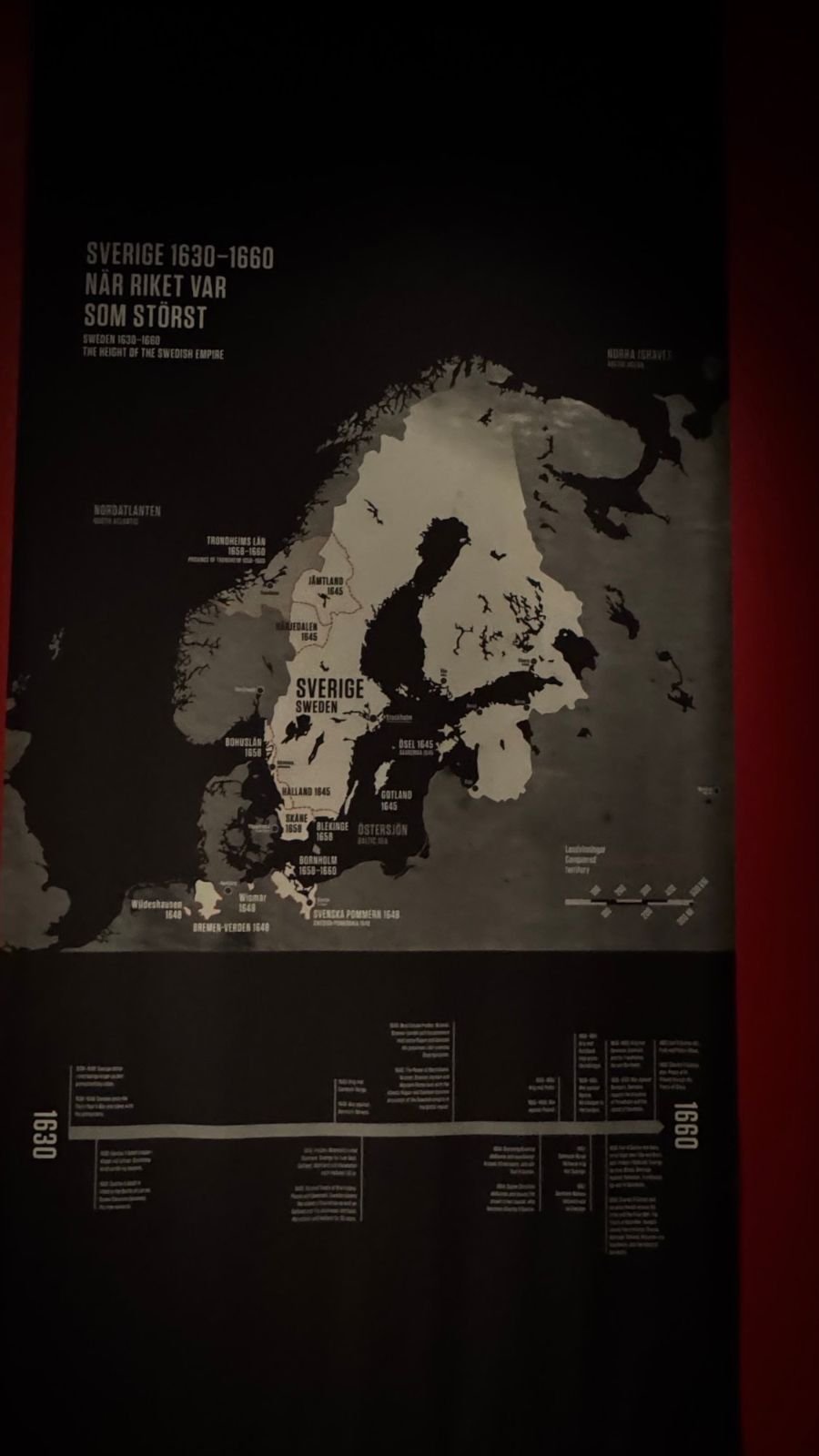
From there you walk through the Vasa era, the Thirty Years’ War and the Swedish empire. A wall map shows Sweden at its largest, from 1630 to 1660, when the Baltic was almost a Swedish lake. Life-size scenes show what the empire cost at home: a plague scene, a village scene, soldiers’ wives. Then comes Karl XII, and a map of his march through Europe from 1700 to 1718, from the Baltic to Poltava in Ukraine and back to his death at Fredrikshald in Norway. Under the map stands a glass case with a goblet and a plate, the things a king carried on eighteen years of campaign.
Kristina Gyllenstierna, the woman who held Stockholm
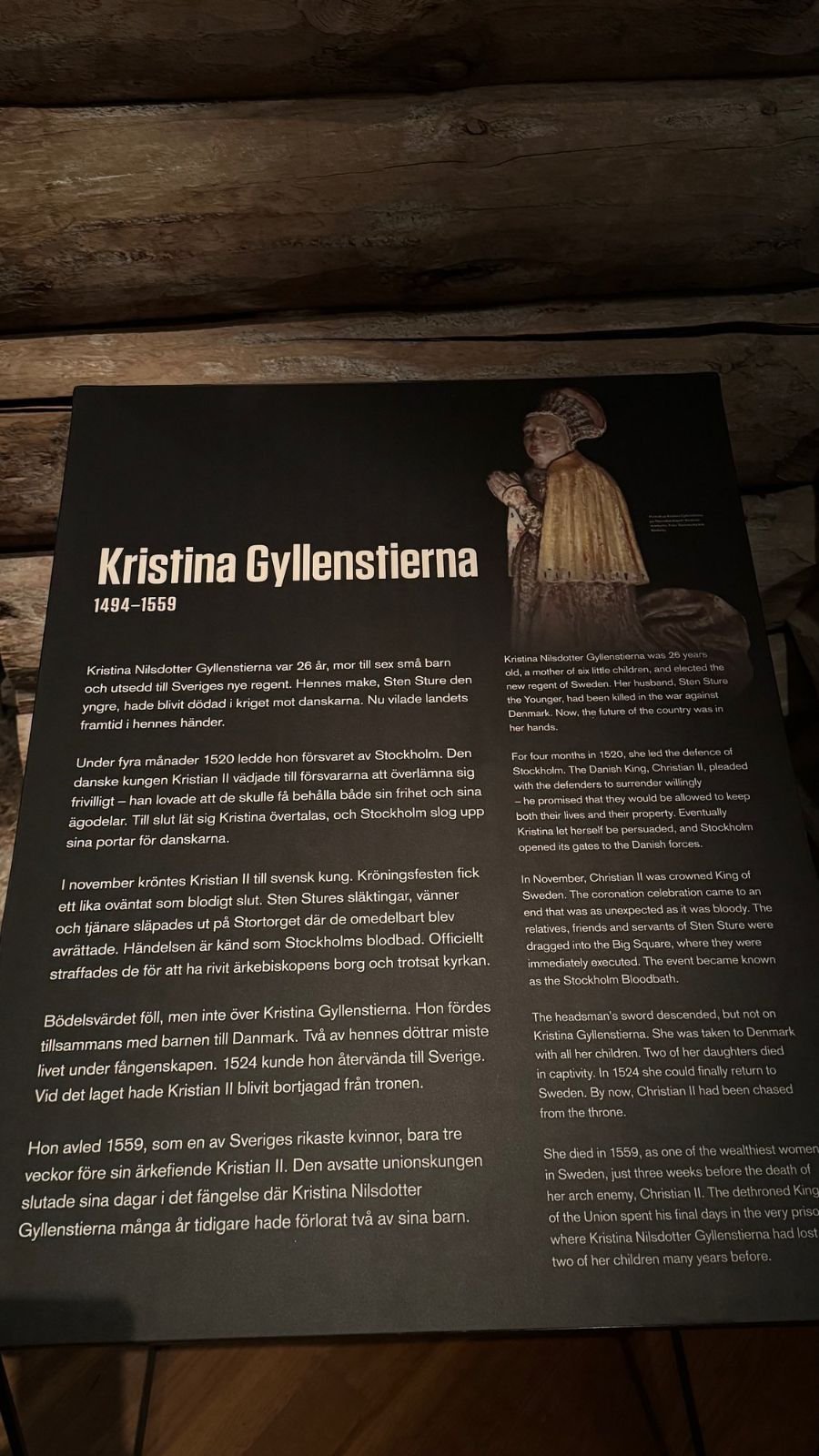
On a panel in the Vasa section I found a woman I have written about before. Kristina Nilsdotter Gyllenstierna was 26, a mother of six small children, and had just been named regent of Sweden when her husband, Sten Sture the Younger, was killed in the war against Denmark in 1520. For four months she led the defense of Stockholm. The Danish king Christian II promised the defenders their lives and property if they gave up. She let herself be persuaded. In November Christian was crowned, and the coronation feast ended in the Stockholm Bloodbath on Stortorget. Kristina was taken to Denmark with her children; two of her daughters died in captivity. She came back in 1524 and died in 1559, three weeks before her enemy Christian II, as one of the richest women in Sweden.
The museum gives her one panel. I have given her a whole article: Kristina Gyllenstierna: Why She Surrendered Stockholm. Read it before you go, and the panel reads differently.
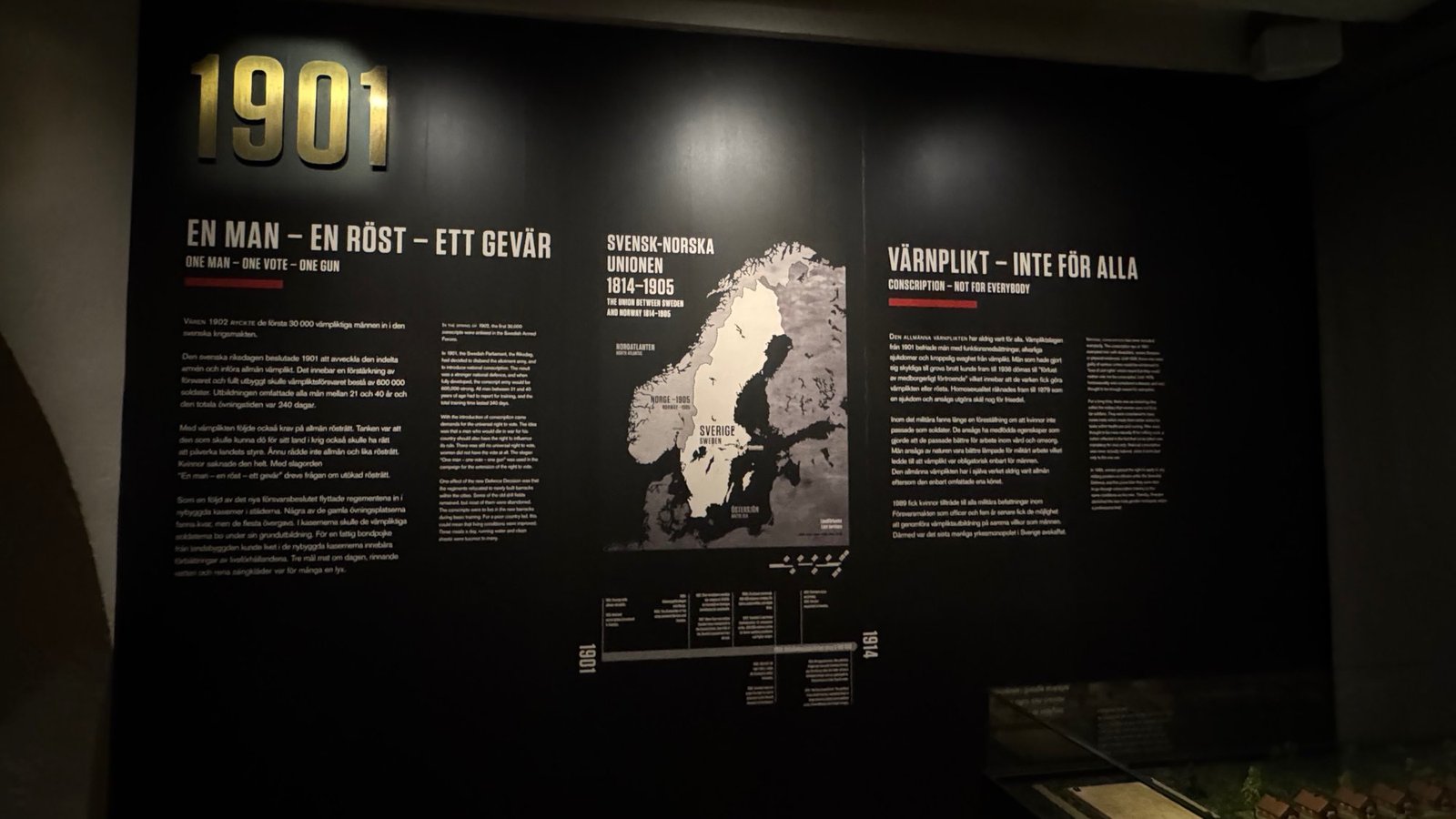
The twentieth century: one man, one vote, one gun
The 1900s floor starts with a black wall and a gold year: 1901. That year the Riksdag abolished the old allotment army and introduced general conscription. “One man, one vote, one gun” became the slogan: if a man had to die for his country, he should also have a say in how it was run. The vote came, for men, in 1909. Women waited until 1921. The same wall says in plain words that conscription was never for everyone: men with disabilities were excluded, and homosexuality counted as an illness that ruled you out until 1979. Next to it hangs a map of the Swedish-Norwegian union, 1814 to 1905, which ended without a shot.
Then the two world wars, which Sweden stayed out of, and what staying out meant: rationing, the transit of German troops to Norway, refugees from Finland, Norway and the Baltic states. The floor ends with the UN missions, from the Congo to Bosnia, where Swedish conscripts did go to war, in blue helmets.
Raoul Wallenberg’s room and the modern weapons
Since 2009 the museum has a room for Raoul Wallenberg, the Swedish diplomat who saved tens of thousands of Jews in Budapest in 1944 by handing out protective passports, and who disappeared into Soviet custody in January 1945. The room is small and quiet. It belongs here because it is the other side of neutrality: what one Swede did when his country did nothing.
The exhibition Modern Weapons follows the technical development of firearms over two hundred years. It is the part of the museum most visitors expect, and it is well done. It is not the part that stays with you.
Current exhibition: Scared or Prepared
Rädd eller beredd, Scared or Prepared, runs from 2 June 2026 to 17 January 2027. It is about civil defense and preparedness, the Swedish word beredskap, in a decade when the government again sends out the brochure “If crisis or war comes” to every household. It fits a museum that wants to widen its mandate from the army to the whole of total defense.
The museum is moving
In April 2026 the National Property Board, Statens fastighetsverk, terminated the museum’s lease and announced a rent increase of about 60 percent, from about 14 million kronor a year to 22 million. In October the museum’s agency said that Armémuseum will leave Riddargatan in spring 2027. The director, Lars Amréus, says rent was not the deciding factor: the old arsenal cannot take large objects, and the museum wants space for tanks, artillery and air defense, and for civil defense and the volunteer organizations.
So the museum knows where it is moving from. It does not yet know where it is moving to. No new building, no address, no reopening date, and no money for a new museum have been announced. The union DIK calls the wave of closures, which also hits Sjöhistoriska and threatens Medelhavsmuseet and Östasiatiska, a “museum slaughter”. The staff stay on and will work on temporary exhibitions. The 100,000 objects have to be packed.
I am not neutral about this. A city that closes its history museums to save rent on buildings the state already owns has its sums wrong. Go now, while the cannons still stand under the vaults.
Restaurant, picnic room and shop
Restaurang Artilleriet sits under the white vaults by the entrance, with wooden tables, brass lamps and a wood-paneled room that looks like an officers’ mess. It serves lunch with homemade bread, coffee and pastries during the day, and an à la carte menu in the evening. In summer there is a terrace on the square. It has its own entrance and its own hours, so you can eat here without a museum ticket.
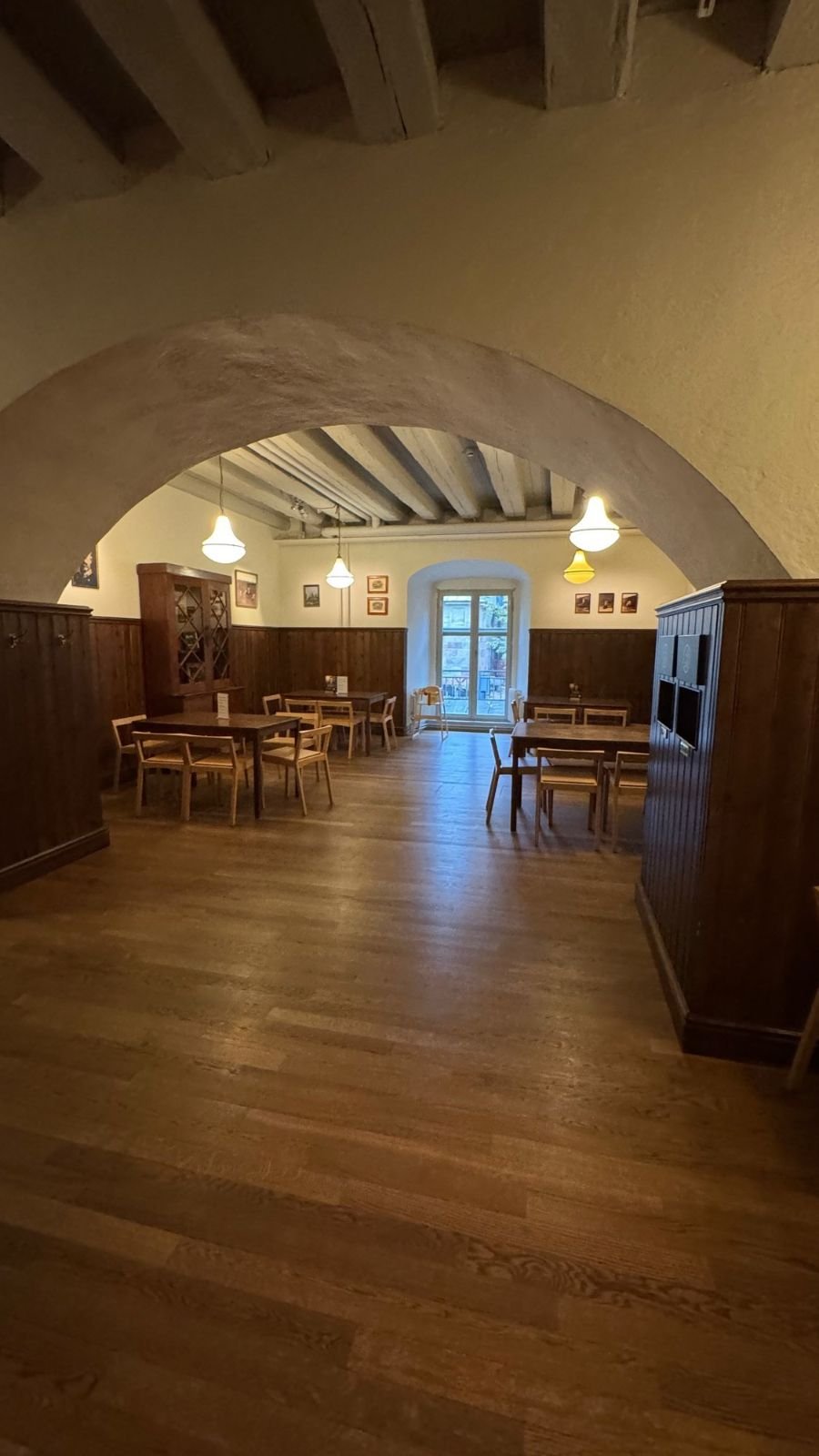
If you bring your own food, go up to the marketenteri on the second floor: a canteen from the 1920s in Art Nouveau style, where soldiers once bought snacks, now with tables, chairs and microwaves. The museum shop is at the reception, with books on military history, toy soldiers and the usual postcards. Lockers and toilets are in the corridor by the entrance.
Accessibility
The square in front of the museum is cobbled and uneven, with a slight uphill slope to the door; the last stretch is paved with smoother stone. Inside, the doors are either propped open or open with an elbow button. One lift serves all floors. It has voice announcements and Braille, room for a wheelchair or a stroller, and a floor guide inside that tells you what is on each level. The exhibitions themselves are spread over several floors, and the stairs between them are old stone stairs under the vaults, so take the lift.
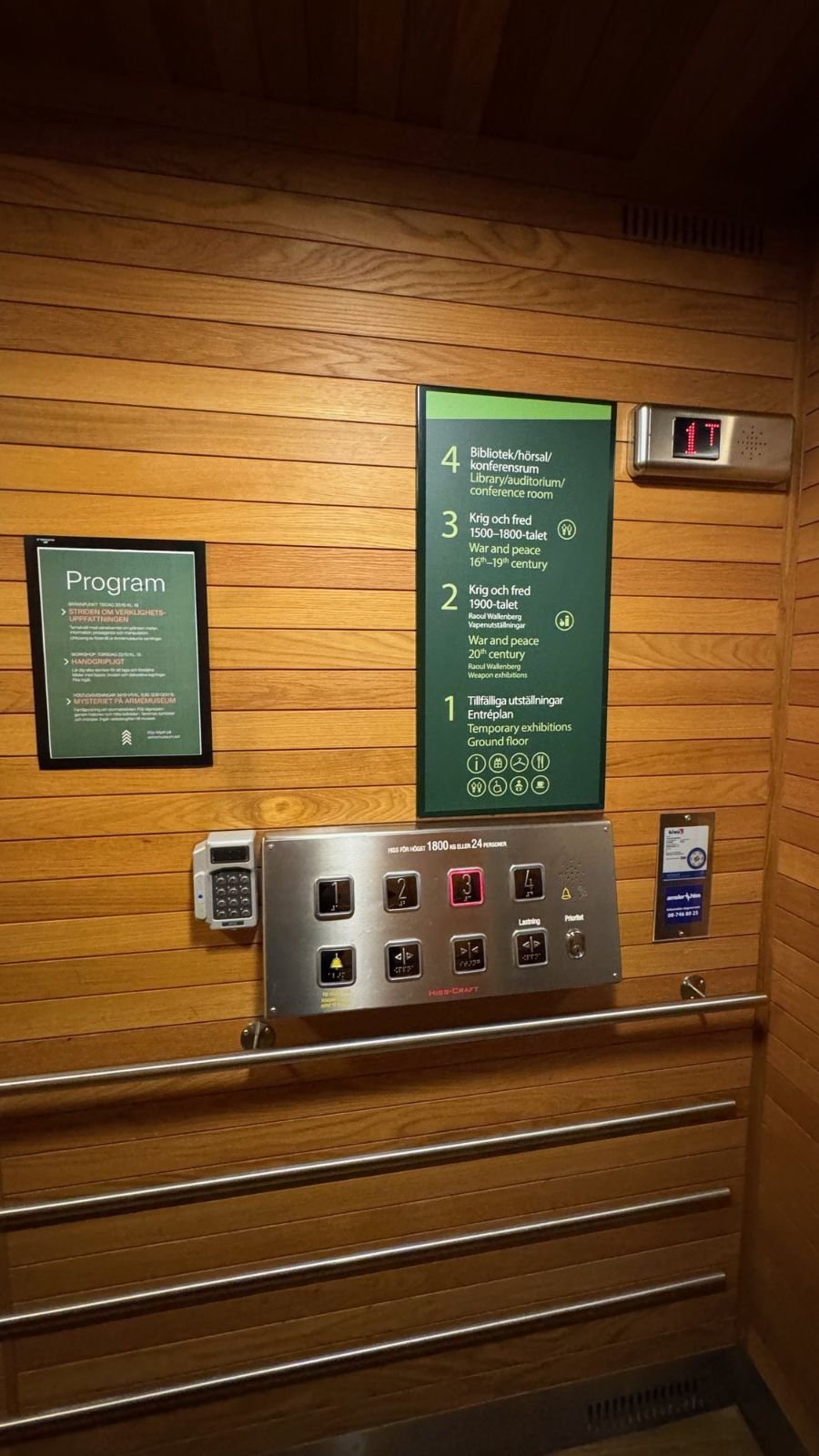
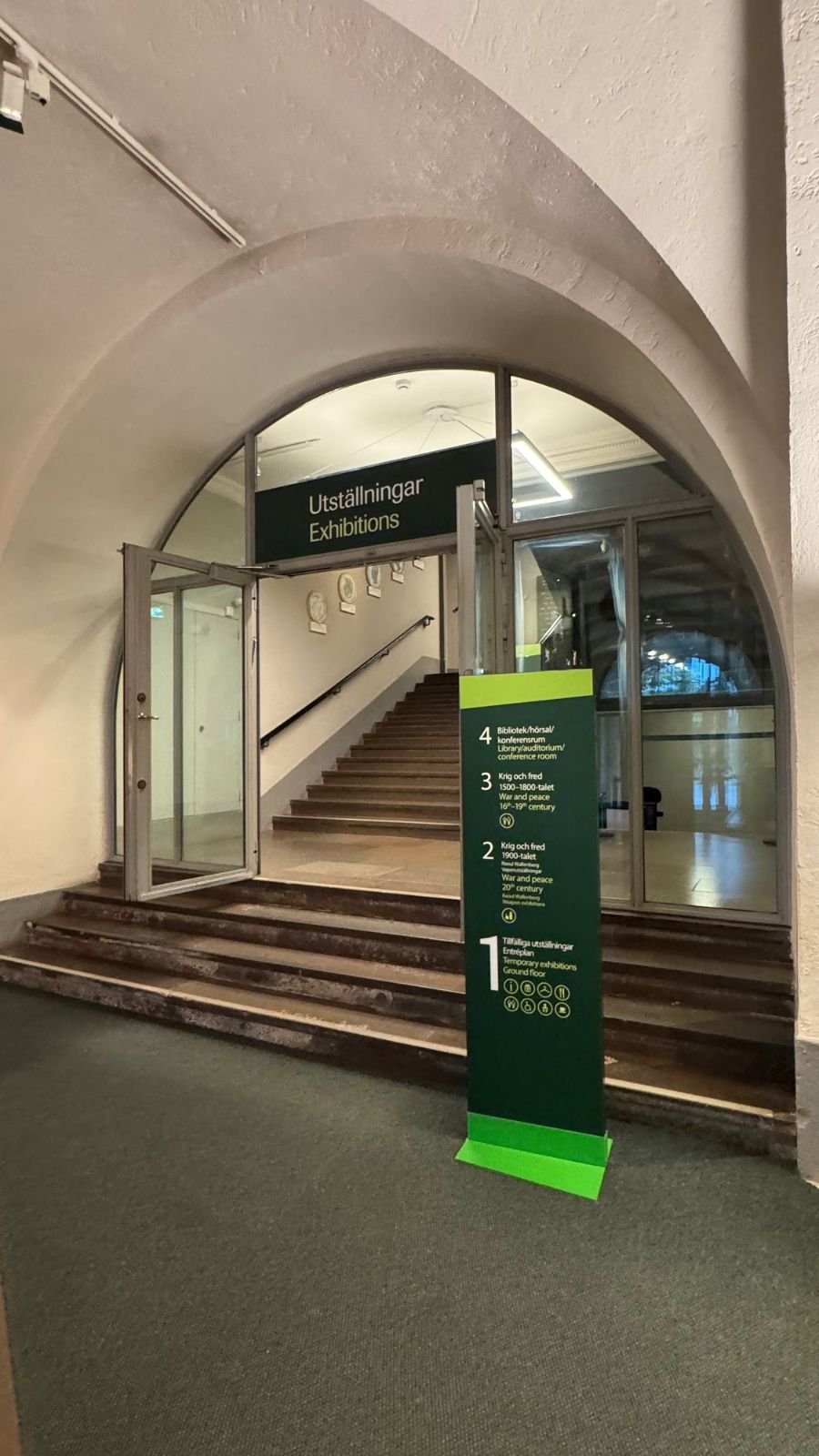
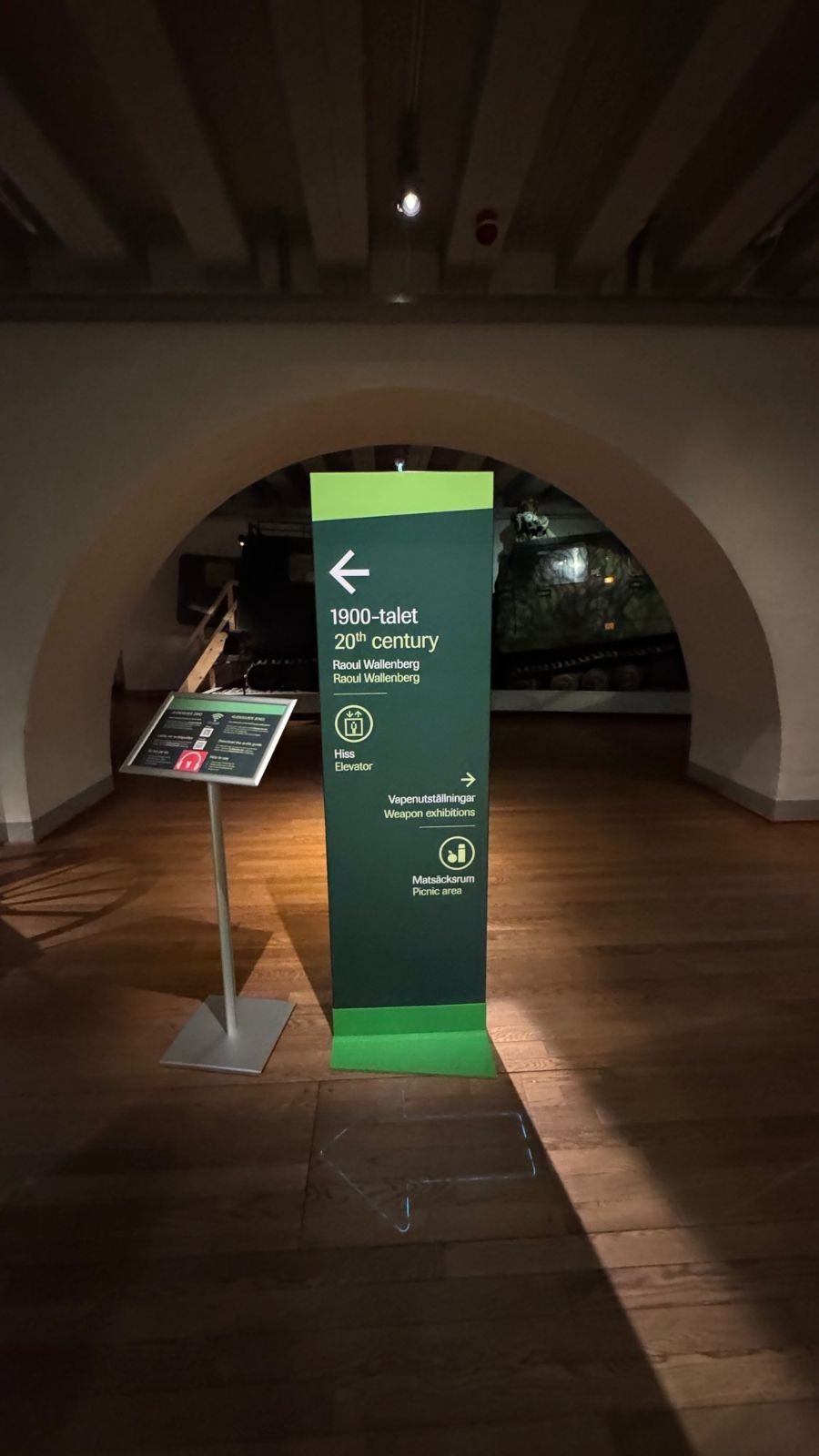
There is an accessible toilet on the entrance level and a hearing loop in the lecture hall. Guide and assistance dogs are welcome; tell the staff when you arrive. Green direction signs under the arches point to the exhibitions, the lift and the picnic room, in Swedish and English. The museum does not mention wheelchairs to borrow or a quiet room; ask at the desk.
What is my verdict?
Armémuseum is better than its name. It is a museum about what war costs, told in a building that was made to supply one. Read the small texts, find Kristina Gyllenstierna, sit a moment in Raoul Wallenberg’s room. And go before spring 2027, because after that the cannons go into boxes and nobody knows for how long.
Vi ses på Artillerigården, medan det går.
Photo gallery
All photographs on this page were taken by Zayera Khan during a visit to the museum, and are her own property. Please do not reuse them without permission.
Sources: Armémuseum – Öppettider; Armémuseum – Biljetter; Armémuseum – Tillgänglighet; Armémuseum – Mat och dryck; Armémuseum – Utställningar; SVT Kultur – Armémuseum stänger efter hyreschock (5 October 2026); SVT Kultur – Därför ska Armémuseum flytta (6 October 2026); Hurbra.se – Armémuseum stänger på Riddargatan (5 October 2026); Wikipedia: Armémuseum (Swedish); the museum’s own exhibition panels, photographed on site by Zayera Khan.