Tekniska museet
Sweden’s story told through machines, a Gripen over a bomb shelter, and a timber dome that is a reason to visit on its own
- Why visitSweden’s national museum of technology, with about 57,000 objects, a machine hall with the country’s oldest steam engine and a Gripen fighter jet, close to 50 hands-on stations in MegaMind, and Wisdome, a dome theater under a mass-timber roof opened in 2023.
- Best forFamilies with children of any age: this is one of Stockholm’s most popular family museums, so expect noise and crowds on weekends and school holidays. Also anyone who likes to touch what they look at, and architecture fans who come for the Wisdome roof.
- AddressMuseivägen 7, 115 27 Stockholm, on northern Djurgården. Bus 69 to Museiparken.
- Opening hoursDaily 9:00–21:00. Checked October 2026.
- AdmissionAdults from 200 kr. Reduced price for ages 7–18, students and seniors. Free under 7. Wisdome shows 50–100 kr extra per show (100 kr on the day I visited), and small children need a Wisdome ticket too. Annual pass 595 kr, reduced 495 kr. Personal assistants enter free.
- Guided toursDaily Wisdome shows in Swedish and English, and a program stage with talks. School groups book by email.
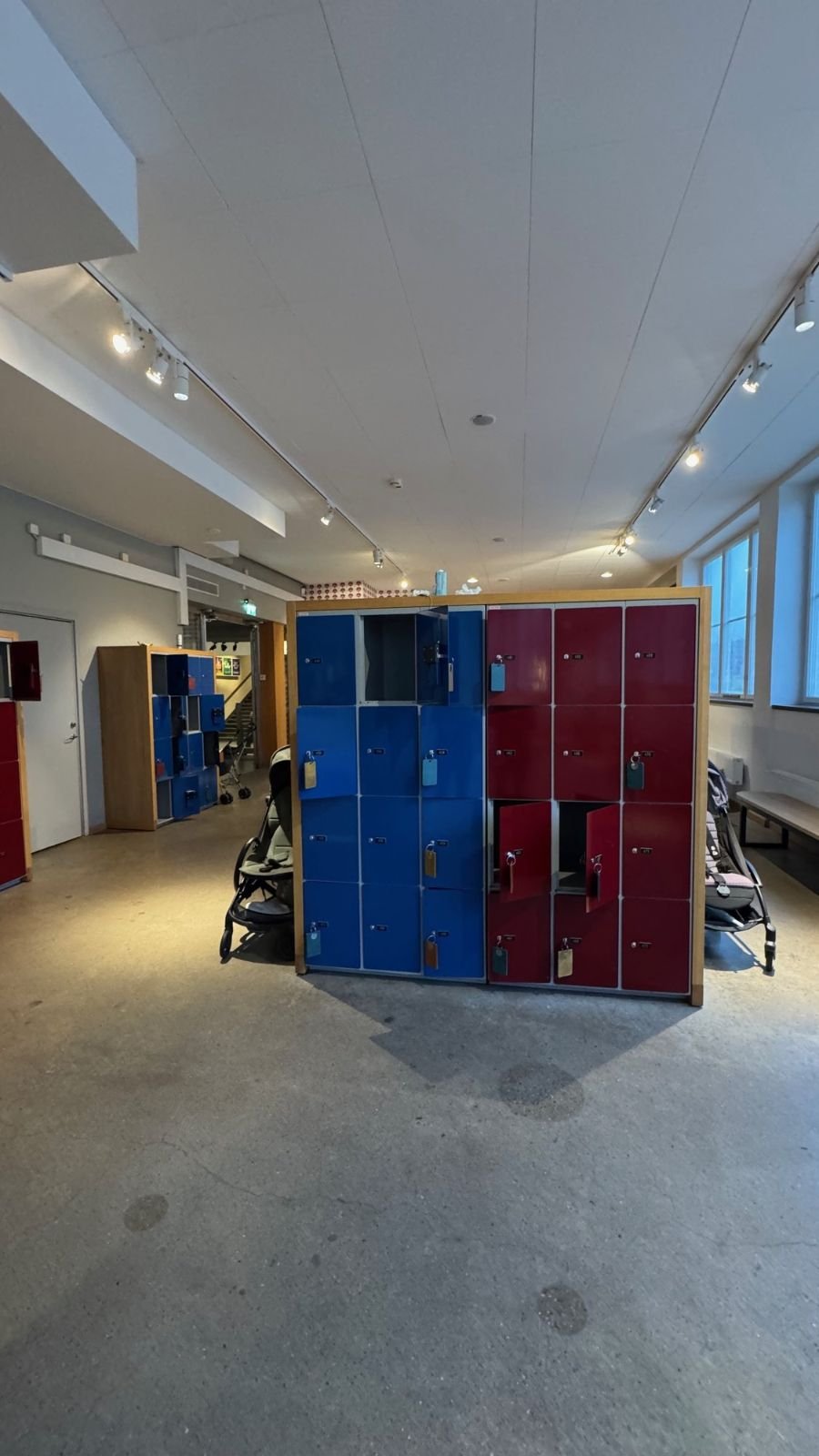
- FacilitiesRestaurant (daily 11:00–18:00), café in the wooden hall (daily 9:00–21:00), picnic area with microwaves and a coffee machine, lockers by the entrance, free loan of wheelchairs, strollers and baby carriers at the information desk, three parking spaces for permit holders at the entrance.
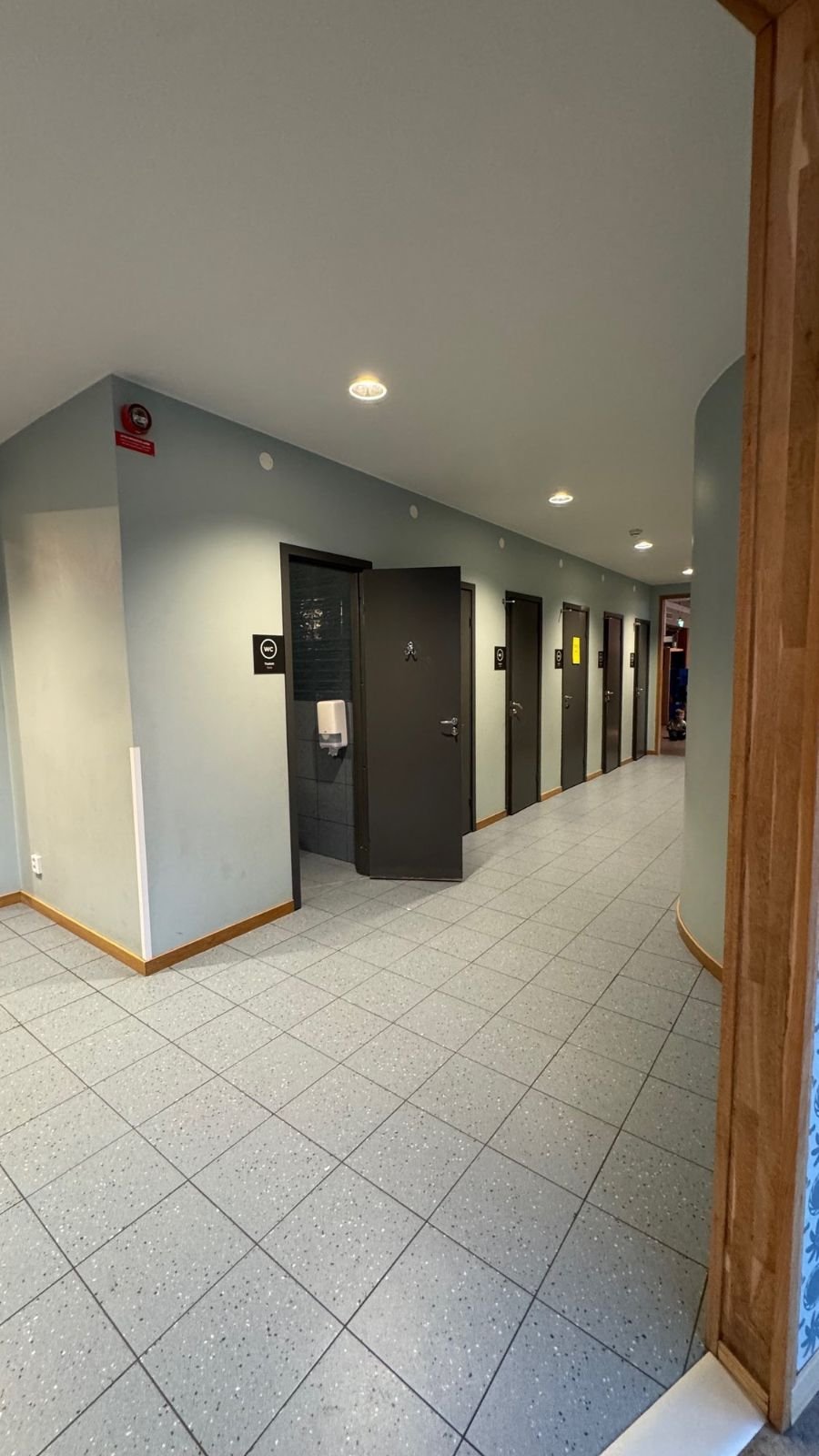
- AccessibilityRamps with a 2.5-degree slope and a lift for electric wheelchairs at the main entrance, elevators between all floors, accessible restrooms by the entrance, in the restaurant and at MegaMind, hearing loop in the auditorium, handrails and marked stair edges, a family room in MegaMind for feeding, changing and quiet rest. Guide dogs and hearing dogs welcome. Icon-supported texts in MegaMind.
- Official websitetekniskamuseet.se
About the museum
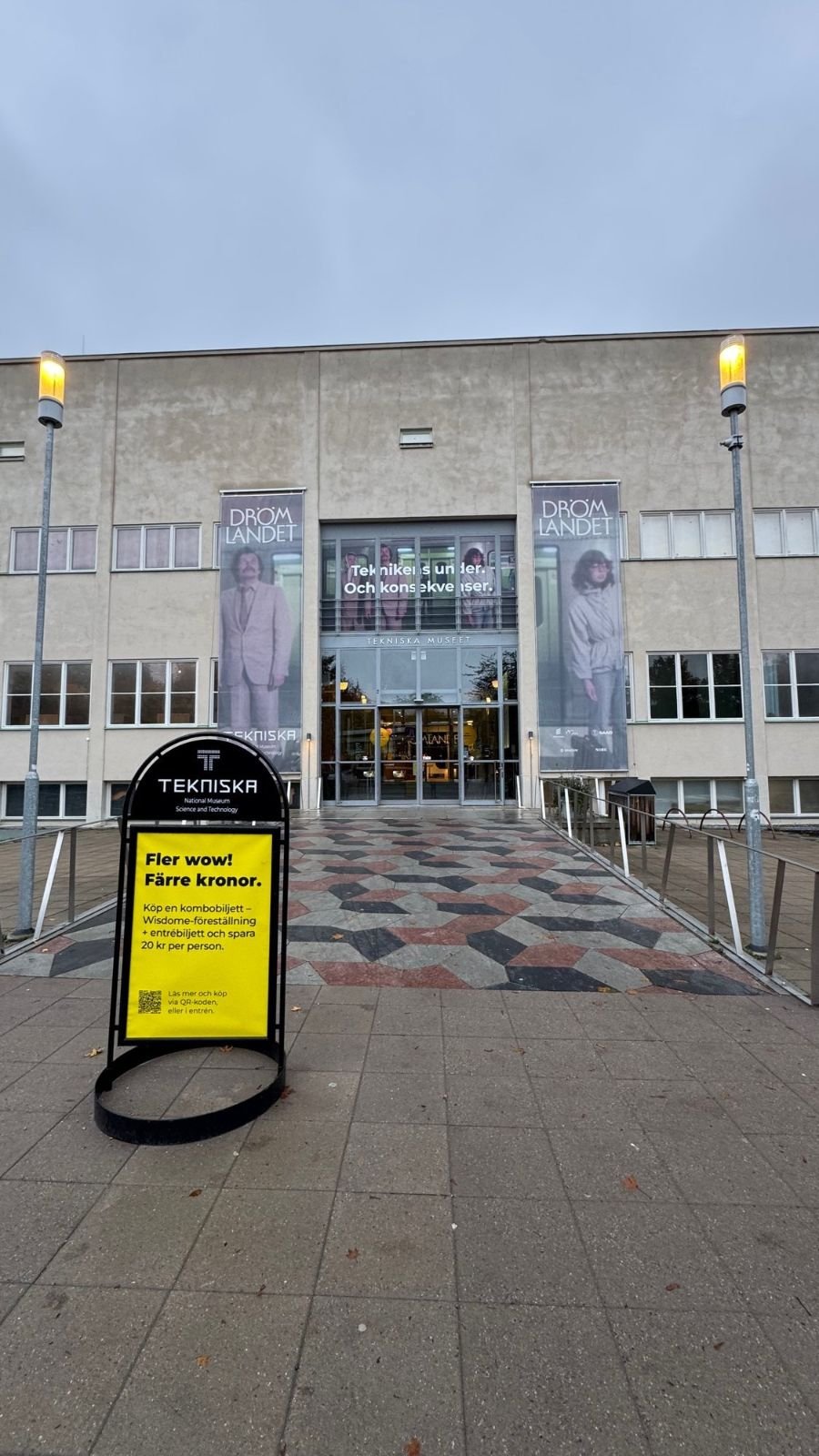
Tekniska museet is Sweden’s national museum of science and technology. It started as an association in 1923, on a proposal from the engineering society and the Academy of Engineering Sciences, with the Deutsches Museum in Munich as its model. The main building on northern Djurgården opened on 18 May 1936. The architect was Ragnar Hjorth, and the house is a clean example of Swedish functionalism: white plaster, a two-story window wall at the entrance, and elevators and boiler rooms placed behind glass so visitors could see how the building worked. The machine hall and the mine opened in 1938, and the mine is still there.
Today the collection holds about 57,000 objects on 10,000 square meters of exhibition space, and in 2025 the museum was named Museum of the Year in Sweden.
I went on a weekday in October. The museum opens at nine and closes at nine, which already sets it apart from most museums in Stockholm. I came for the machines and stayed for the roof.
Drömlandet: how a poor country became a technology nation
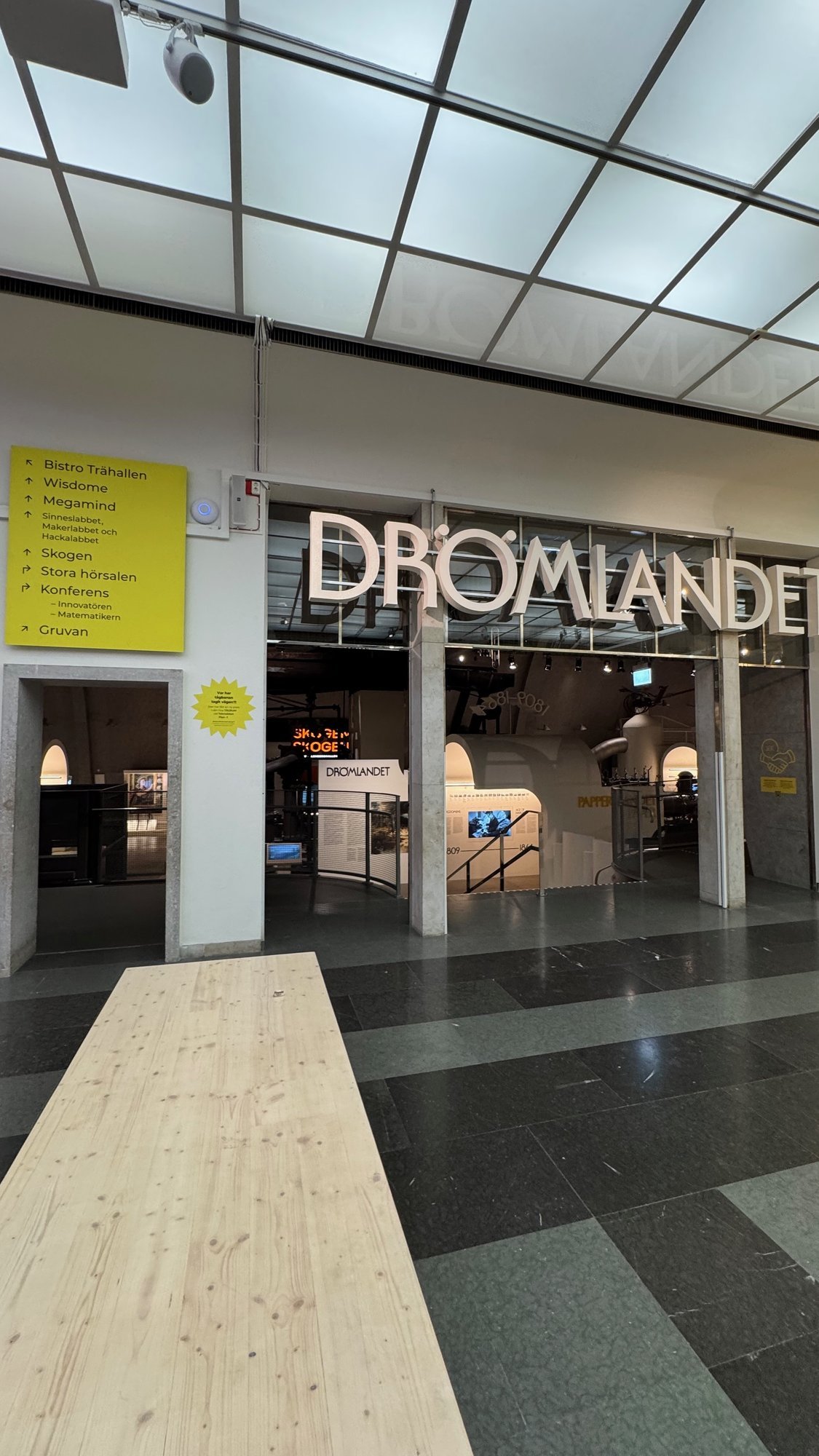
The big permanent exhibition is called Drömlandet, the dreamland. It tells how Sweden went from one of the poorest countries in Europe in 1809 to a technology nation, in seven eras from “A time of poverty” to “A time without borders”. The eras are written in big letters on the walls, so you always know which decade you are standing in.
It is not a hall of fame. The texts talk about conflict, compromise and choice: industry and welfare, but also pollution and inequality. Sections have names like Pappersland, the paper country, with a rotating paper machine and a wind turbine blade next to it.
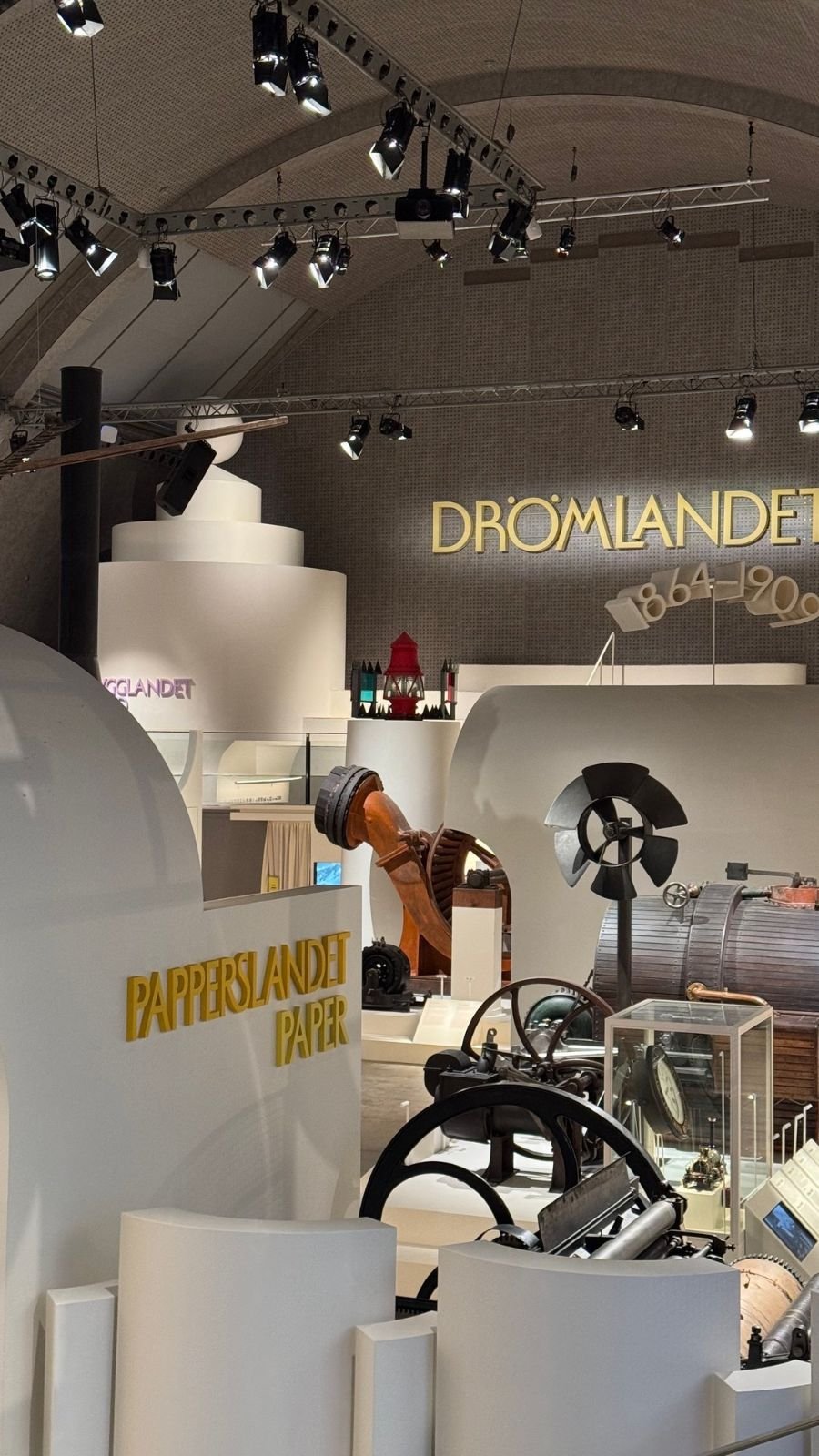
Some objects I recognized at once: the three-point seat belt, the station clock, H&M clothes. Some I did not expect in a museum, like the Pirate Bay server. Children slide through an oversized Electrolux vacuum cleaner. Adults read the small texts.
The machine hall
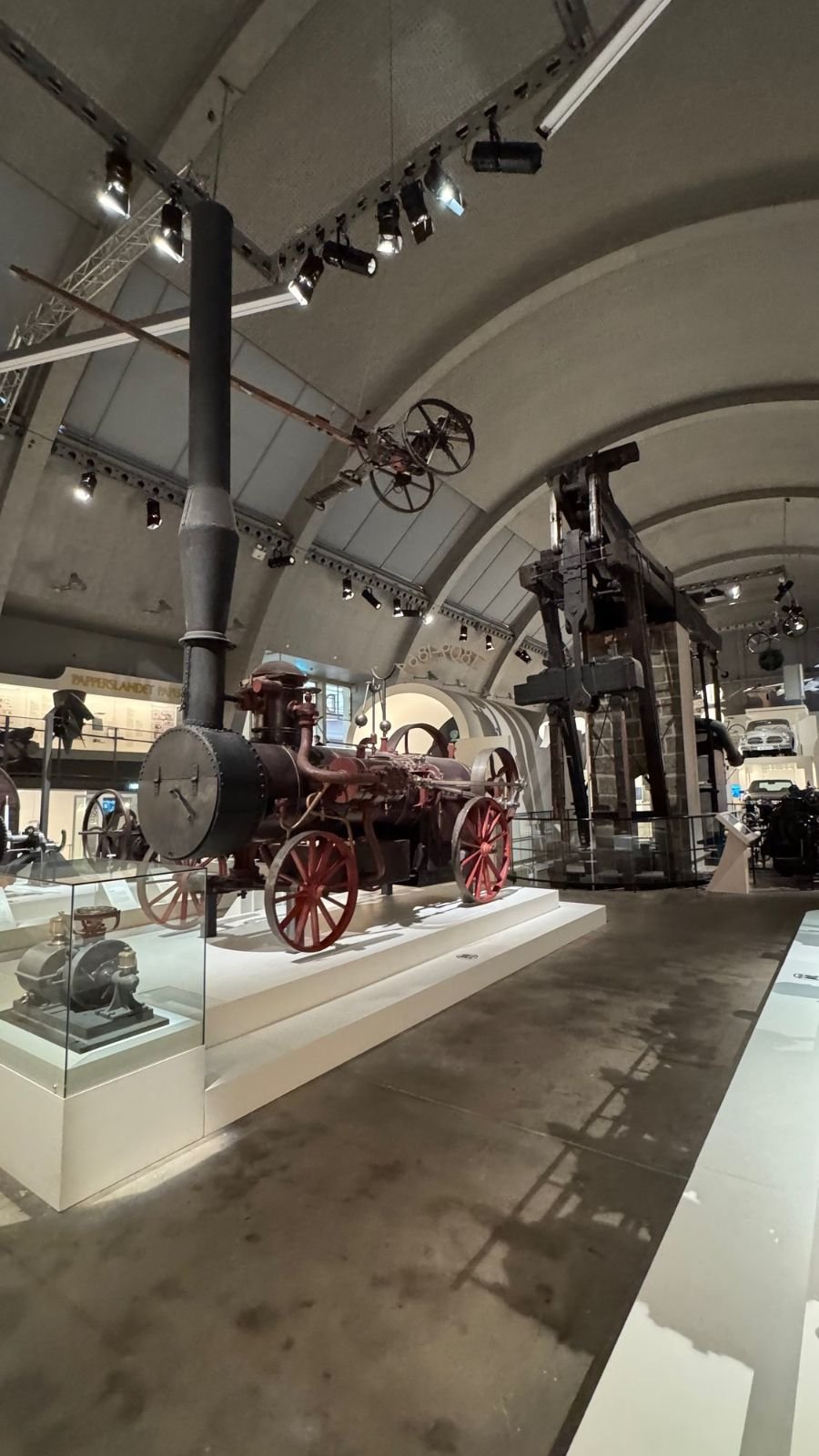
The machine hall is the oldest part of the museum and still the best. Under the arched copper roof hang a bicycle and a Gripen fighter jet with “FARA”, danger, painted on its side. Below the jet a white Volvo Amazon stands on top of a glass box with a black Saab 9000 inside it. The hall holds more than a hundred objects, and the oldest is a beam engine from Höganäs, Sweden’s oldest preserved steam engine, which once pumped water out of a coal mine.
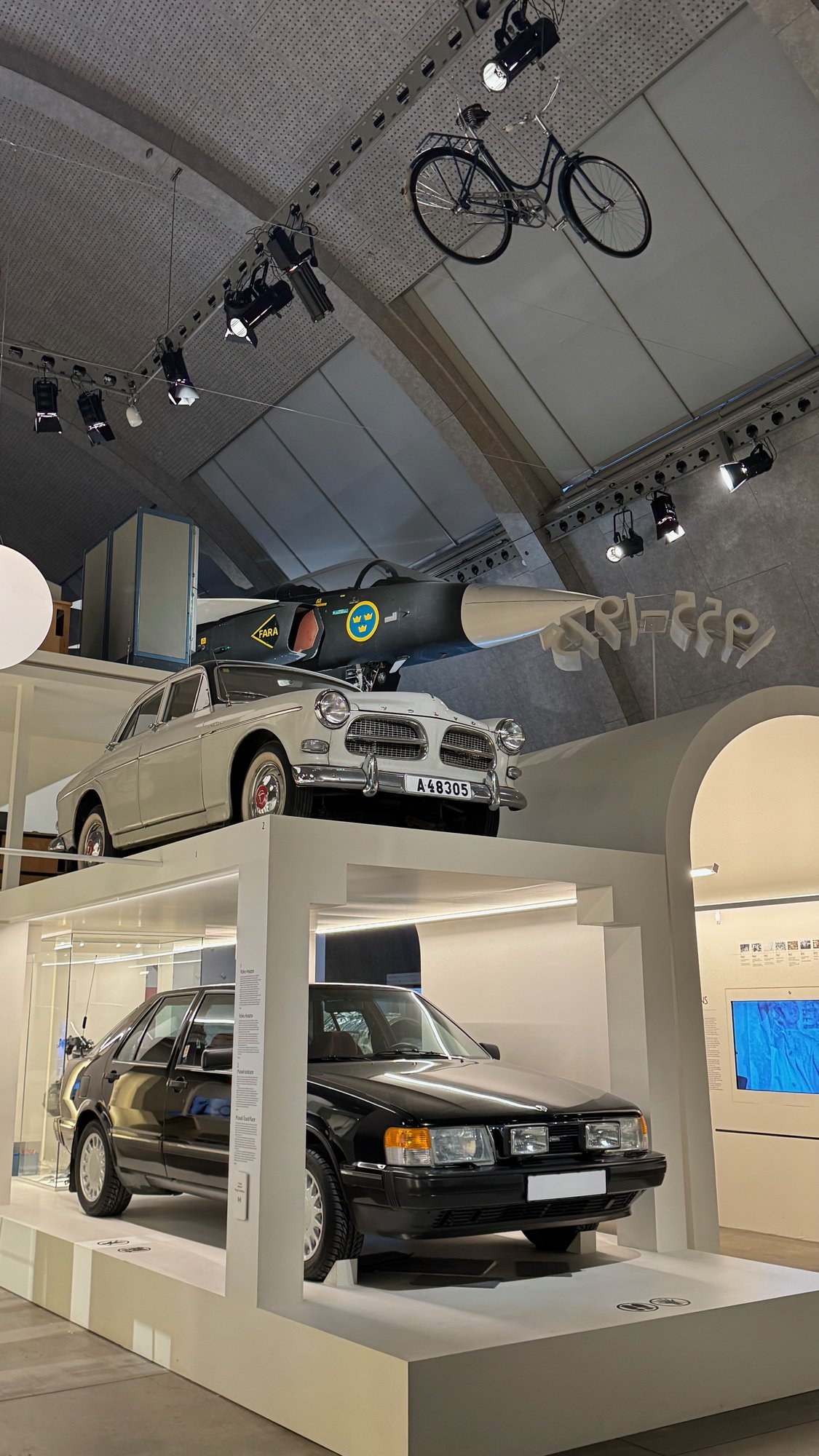
Every so often the lights in the hall go out and an audiovisual piece starts, with music by Christian Gabel. Stay for it.
Swedish innovations that changed the world
Sweden is a small country with a long list of things the world uses every day, and the museum is the place to see them in one walk. In Drömlandet I stopped at the three-point seat belt, which Volvo engineer Nils Bohlin designed in 1959 and Volvo gave away free of patent so every car maker could use it. Few objects in the building have saved more lives.
Look also for the station clock, the one with the plain face you see on every Swedish platform, and for the Electrolux vacuum cleaner that children slide through. And for the Pirate Bay server, which is an innovation too, whether you like it or not.
Other Swedish inventions you will meet on the way, in the machine hall or in the texts: the safety match, the adjustable wrench, the zipper, the ball bearing, dynamite, the pacemaker, Tetra Pak, and in the last era the mobile phone, Bluetooth and Spotify. Read the small texts. Each one tells you what the invention cost someone, not only what it earned.
Wisdome: the roof is the show
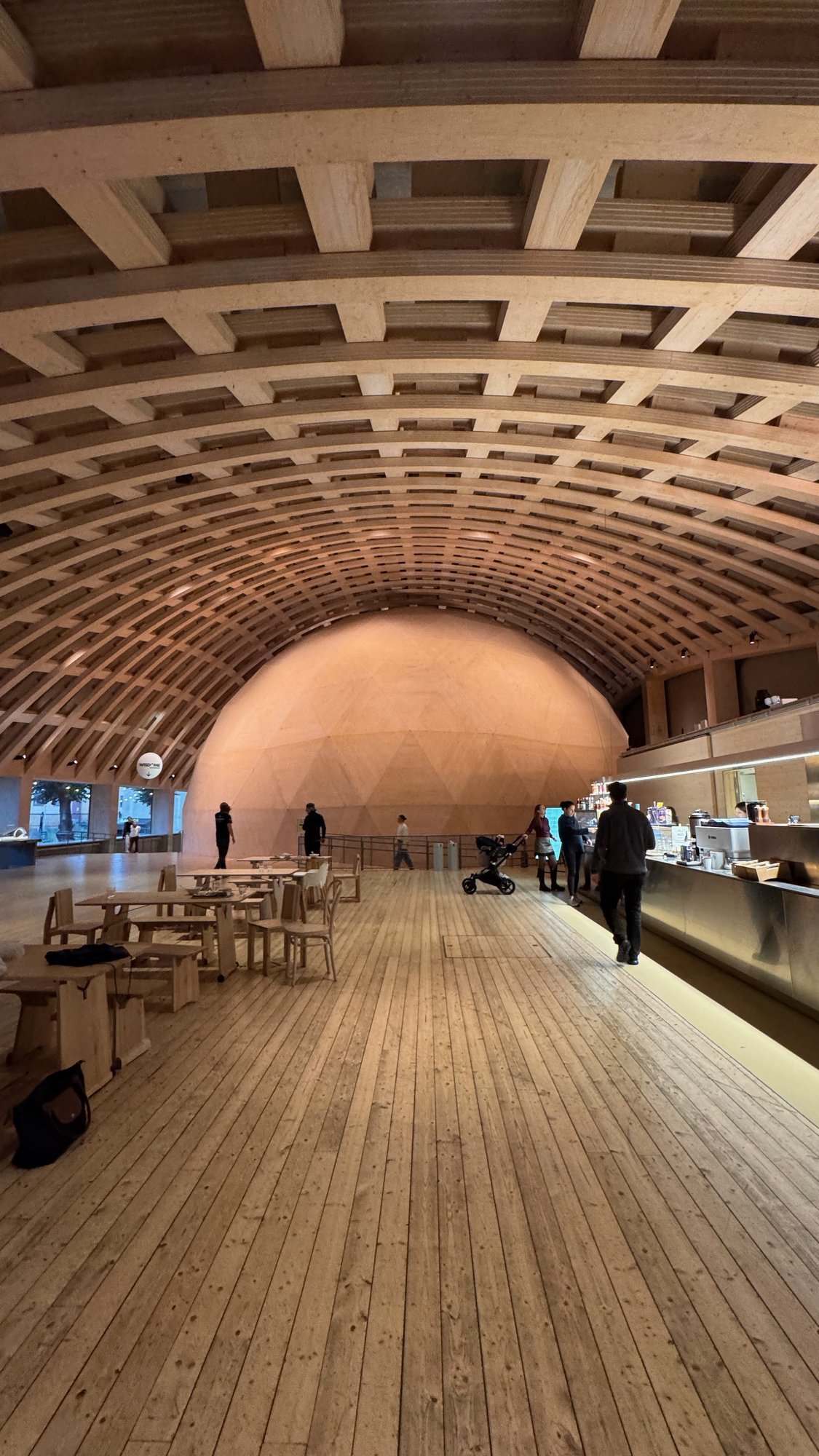
In December 2023 the museum opened Wisdome Stockholm, a new hall in the courtyard next to the old building. The architects are Elding Oscarson. The roof is a lattice vault of laminated veneer lumber, about 20 kilometers of timber strips in five layers, and it spans 48 meters without a single column in the middle. Outside it is covered with 85,000 hand-nailed wooden shingles. Inside, the vault is bare wood from end to end, and the dome theater sits under it like a wooden planet. The hall won the Kasper Salin Prize, Sweden’s top architecture award, in 2023, and it was paid for by a 150 million kronor gift from the Knut and Alice Wallenberg Foundation.
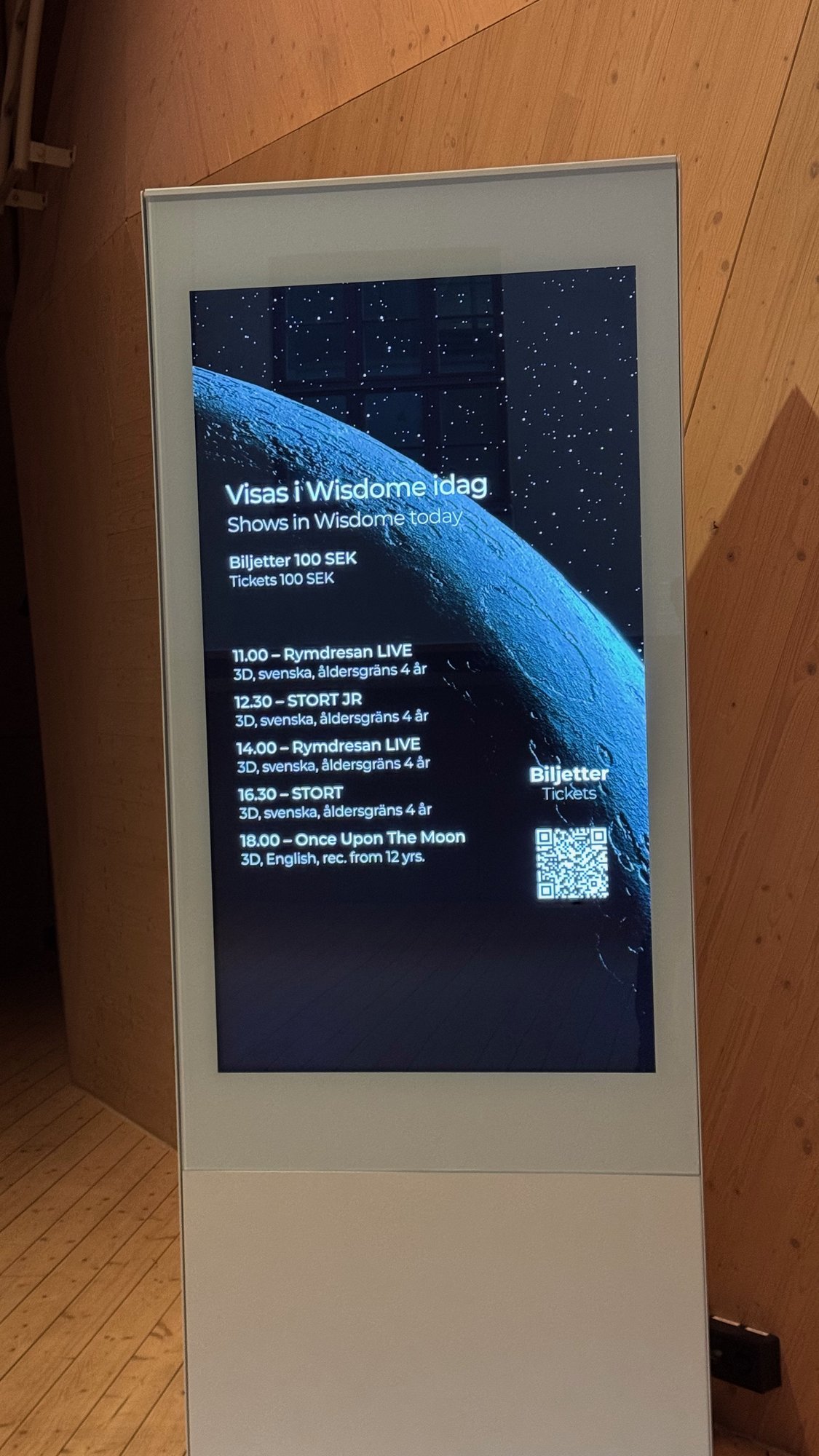
The dome has 100 seats, two of them reclining wheelchair places, and six projectors. The shows change through the day: Rymdresan LIVE, a space trip in Swedish with a pilot and a navigator using real NASA data; STORT and STORT Junior for the youngest; Once Upon The Moon in English for ages 12 and up. A show costs 100 kr on top of the entrance ticket.
I did not see a show. I sat in the hall and looked up. This is one of the best new timber buildings in Stockholm, and you can see it for the price of a museum ticket, or a coffee.
Space for children
This museum is built for children, and it does not hide it. MegaMind has close to 50 stations where you paint with your eyes, build virtual sculptures or make music with your brain waves. It won the Children in Museums Award in 2017. Teknoleket on floor one is for the youngest, with marble runs, cog wheels and a train room. Floor minus one has the mine, the model railway and more.
In a big white hall with a steel roof stands an obstacle course under a red arch: “Welcome to the obstacle course! Measure your pulse. Follow the yellow, green or pink track. Measure your pulse again.” A slide comes out of a red tower, tunnels and climbing nets stand on soft mats, and parents sit on red benches around the edge. There is a lot of space. Children run here, and nobody tells them to stop.
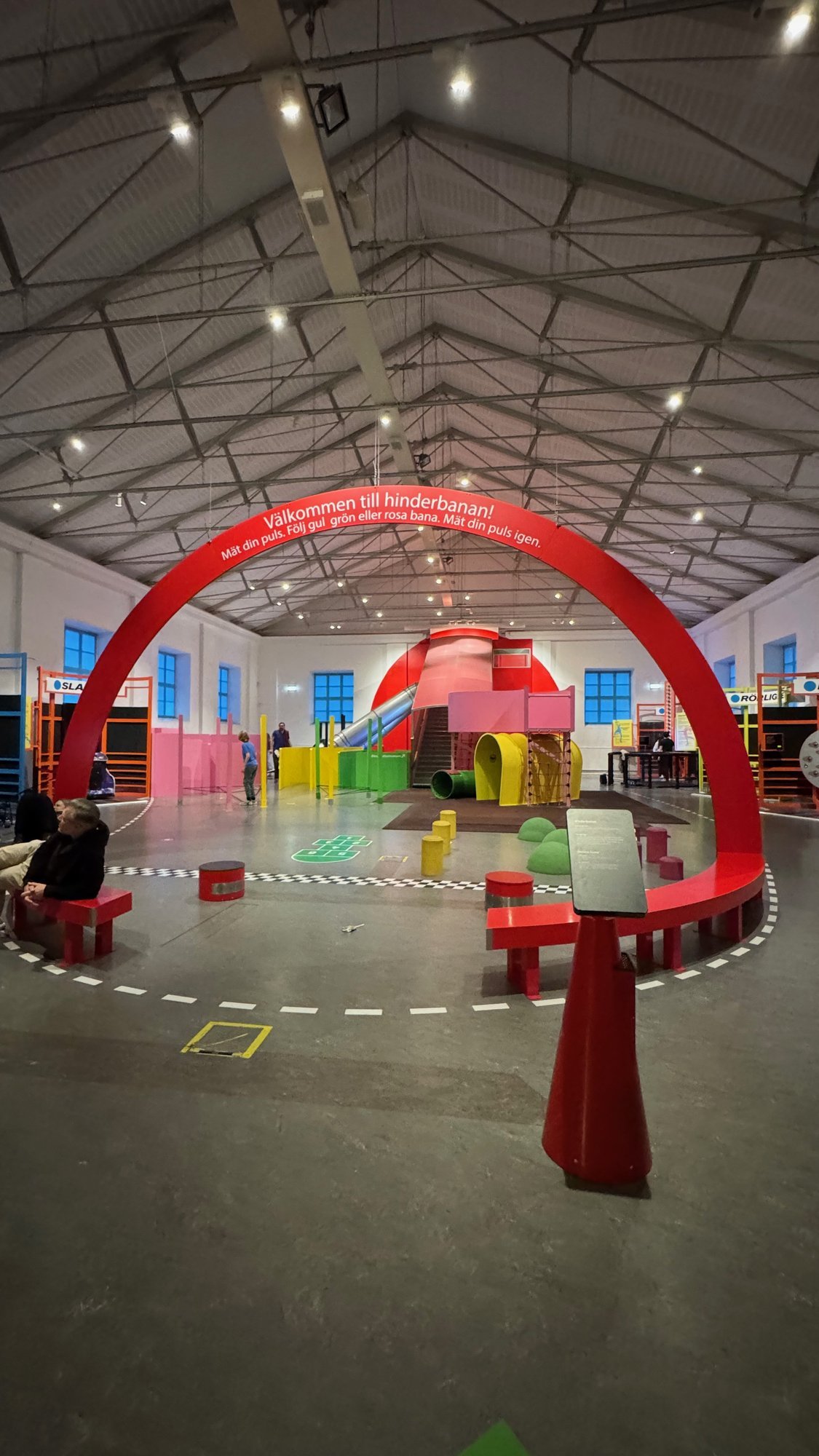
Strollers and baby carriers can be borrowed for free, and a family room in MegaMind gives a quiet corner for feeding and changing.
Be aware of the noise. The halls are big, hard and echoing, and on a weekend or in a school holiday the sound of a few hundred children fills them. If that is hard for you or your child, the museum says weekdays after 15:00 are quieter, and the family room in MegaMind is a place to rest. I went on a weekday morning and still heard the obstacle course two halls away.
Restaurant, café and picnic area
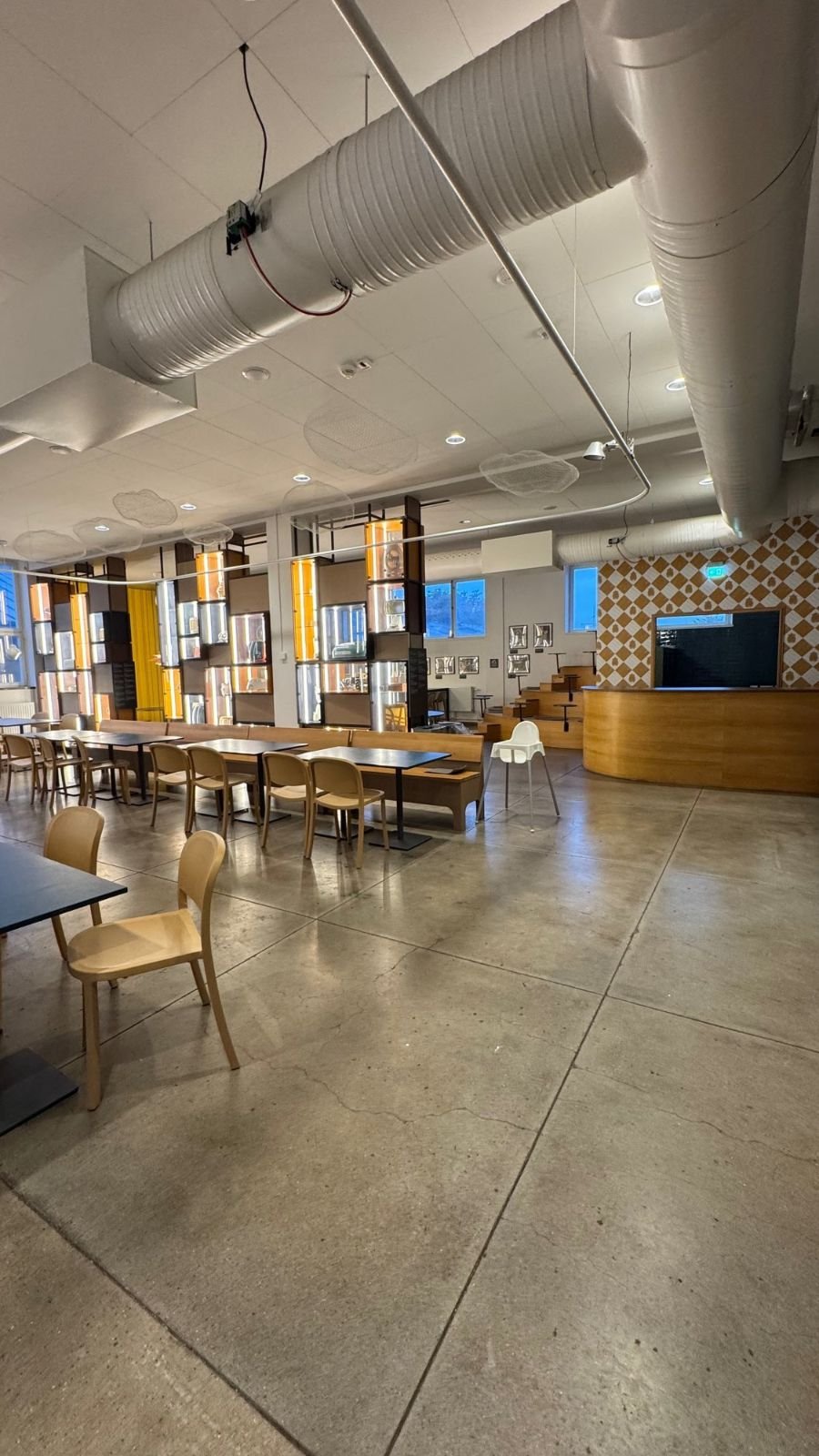
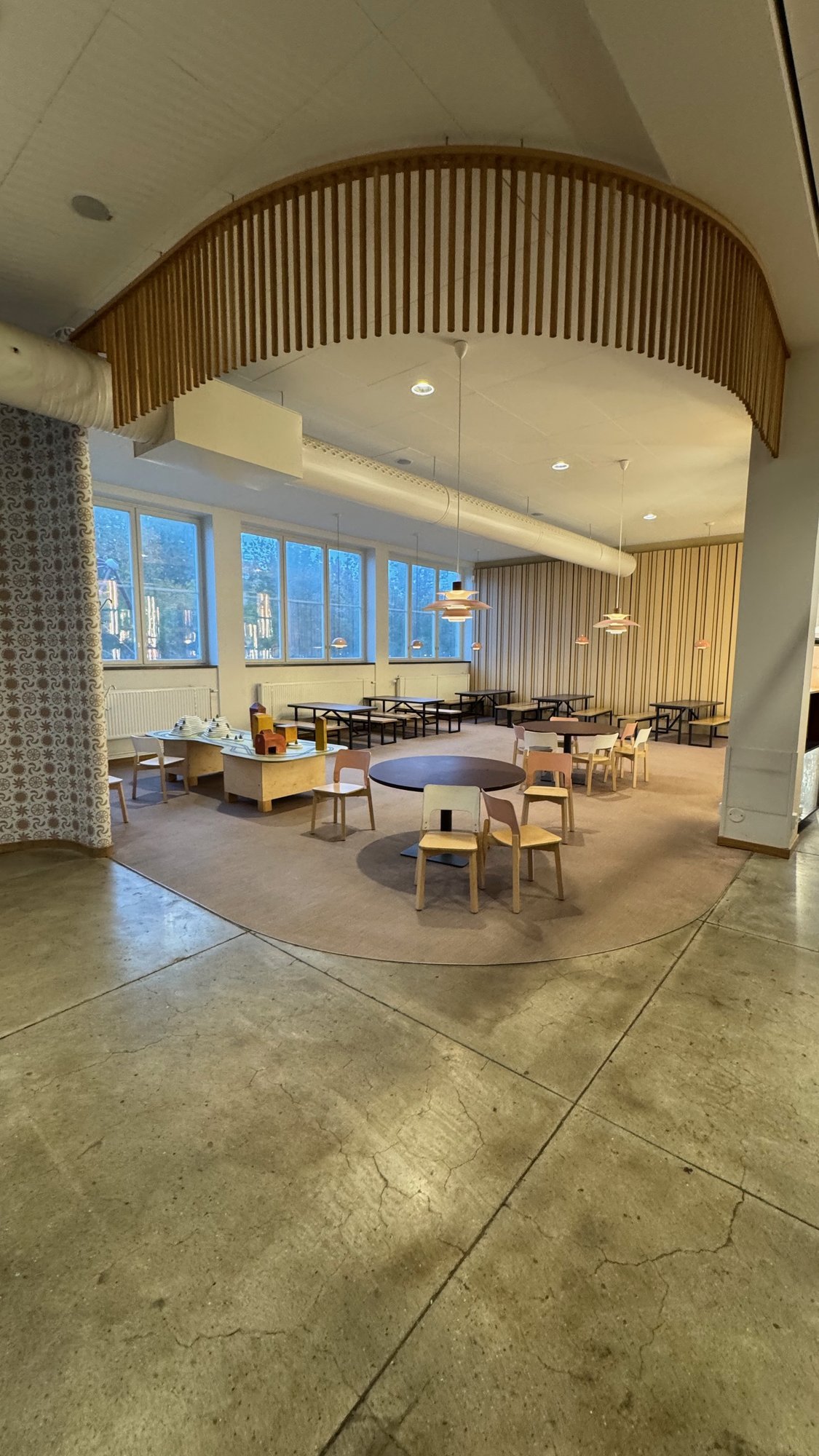
The eating space is huge. Tekniskas restaurang serves lunch daily from 11:00 to 18:00, mostly vegetarian with fish and meat on the menu, and the children’s portions are real portions: pancakes with jam and cream, chicken meatballs with mashed potatoes, pea soup with pork. The café in the wooden hall under the Wisdome roof is open all day from 9:00 to 21:00 with coffee, buns, sandwiches and soup. If you bring your own food there is a picnic area with microwaves and a coffee machine, so a family day here does not have to cost more than the tickets.
Accessibility
I did not test this myself, so here is what the museum says. The main entrance has ramps with a gentle 2.5-degree slope and a lift for electric wheelchairs. Elevators connect all floors. Accessible restrooms are by the entrance, in the restaurant and at the MegaMind entrance, with baby changing tables close to the entrance. Wheelchairs can be borrowed at the information desk. A hearing loop is installed in the auditorium. Handrails run along all staircases and the stair edges are marked. Guide dogs and hearing dogs are welcome, and a personal assistant enters free. MegaMind has texts with icon support, larger high-contrast text and sound navigation. Three parking spaces by the entrance are reserved for permit holders. The museum says weekdays after 15:00 are quieter.
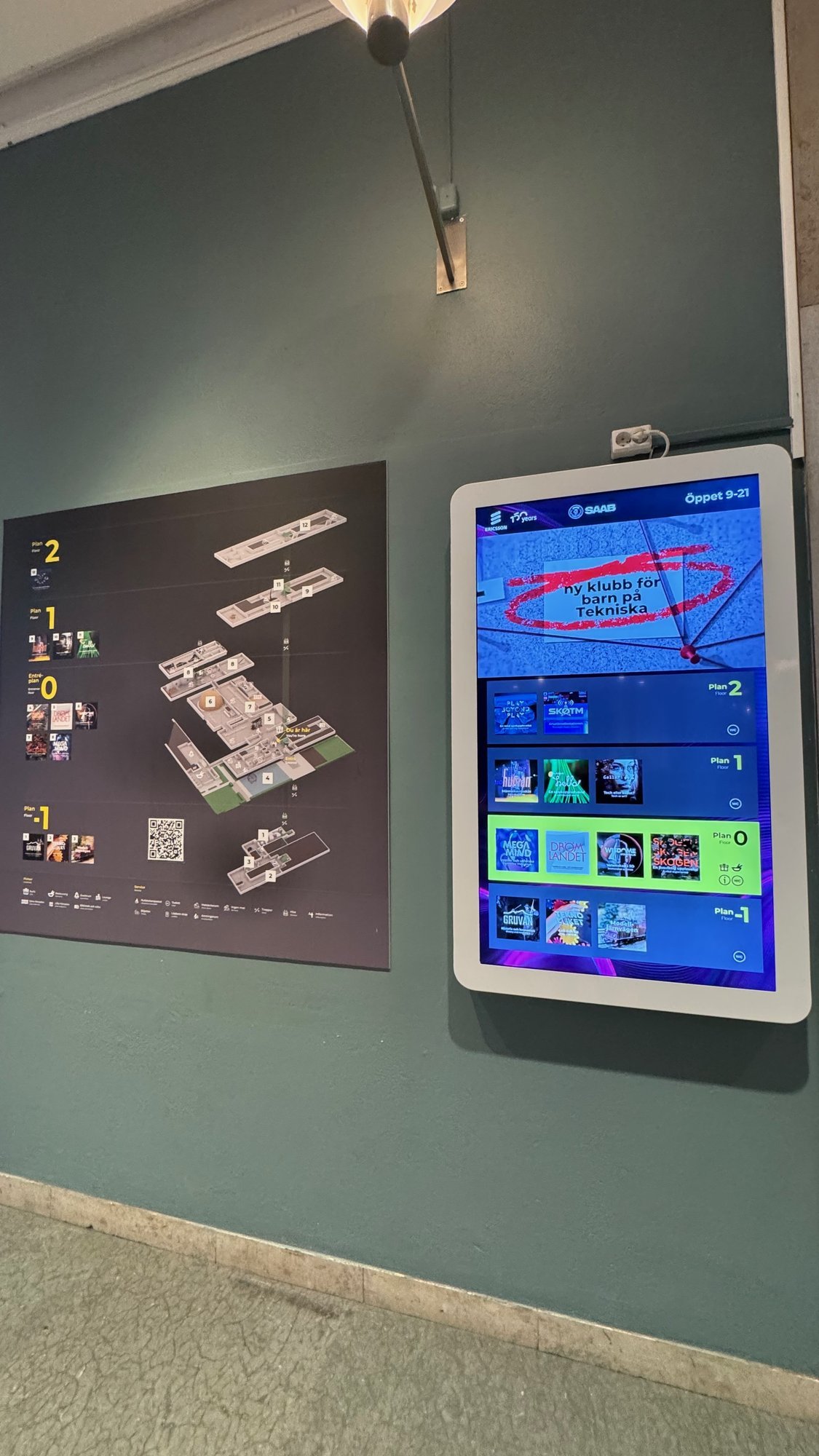
One small thing I noticed: the floor map at the entrance shows all five levels with every exhibition marked, and a screen next to it lists what is where. It is clear, and it is in two languages.
What is my verdict?
Tekniska museet is two museums in one. The old one tells you how Sweden built itself, with real machines and honest texts. The new one is a wooden vault with a planetarium inside, and it would be worth the trip even if it were empty. Bring children if you have them. Bring ear protection if you are sensitive to children running around, because they do, and they play in loud voices.
Vi ses där.
Photo gallery
All photographs on this page were taken by Zayera Khan during a visit to the museum, and are her own property. Please do not reuse them without permission.
Sources: Tekniska museet – Hours and admission; Tekniska museet – Prepare for your visit; Tekniska museet – Eat and drink; Tekniska museet – Drömlandet; Tekniska museet – Wisdome Stockholm; Tekniska museet – MegaMind; Tekniska museet – Teknoleket; Architectural Record – Wisdome at Tekniska Museet (2024); Wikipedia: Tekniska museet (Swedish).