
Nobel Prize Museum
A former stock exchange turned museum, on Stortorget in Gamla Stan, Stockholm
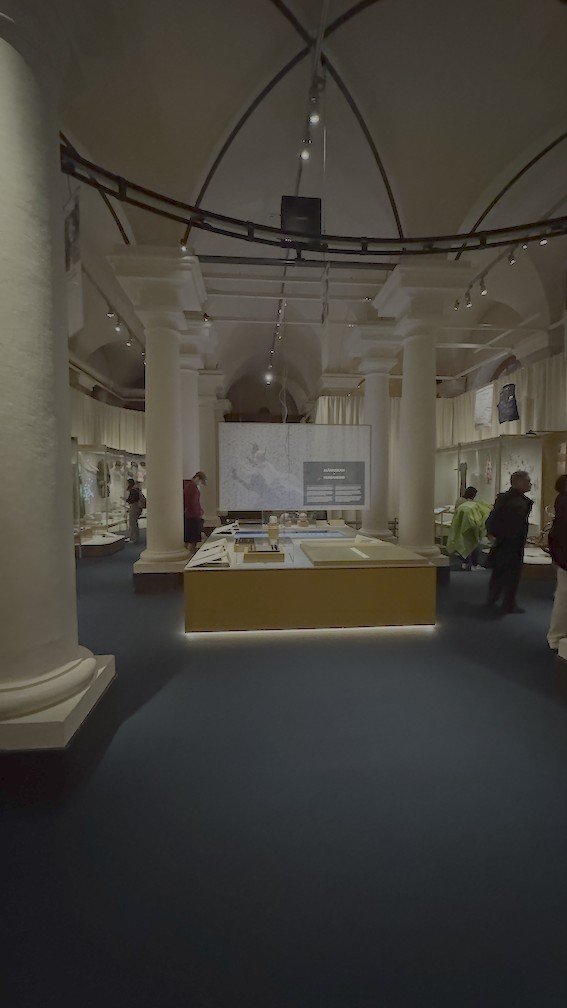
- Why visitYou walk through the objects and stories behind every Nobel Prize ever awarded, inside a 250-year-old building that still houses the Swedish Academy upstairs.
- Best forAnyone curious about science, literature, and peace work – and anyone who likes a museum with a sense of humour about itself.
- AddressStortorget 2, Gamla Stan, Stockholm
- Opening hoursClosed Mondays. Tuesday–Thursday 11:00–17:00. Friday 11:00–21:00. Saturday–Sunday 10:00–18:00. Check the museum’s website before you go, since hours can shift with seasons and holidays.
- Admission160 kr adults, 120 kr students and seniors, free for children and youth aged 0–18 and for museum members.
- Guided toursA short guided tour is included with every ticket, offered daily.
- Audio guideFree, used on your own phone at audio.nobelprizemuseum.se. Available in 8 languages, plus a separate children’s version in English and Swedish.
- Films16 short films, each 3–6 minutes, play on rotation throughout the museum.
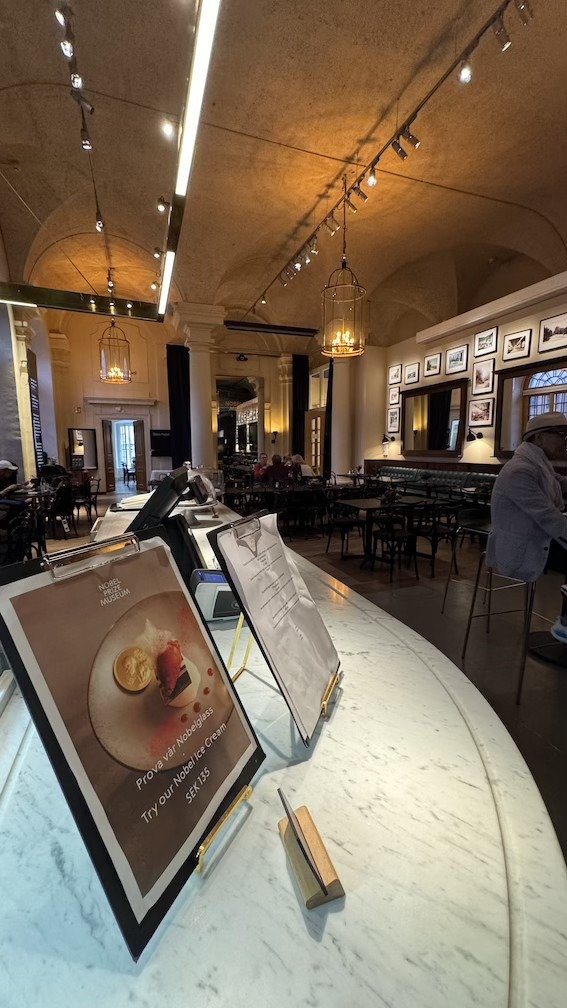
- CaféBistro Nobel runs regular lunch service Tuesday–Friday, with a “dagens lunch” (today’s lunch) for 175 kr, including water, coffee or tea, and bread. In the evening, the café takes bookings for private events: seated for up to 60, standing for up to 200. For something quick, try Nobelglass, the museum’s own ice cream, 135 kr, available any time.
- FacilitiesSeveral restrooms are located near the cloakroom and lockers, close to the main entrance.
- AccessibilityThe main entrance on Stortorget is narrow and gets crowded; a separate side entrance is available for wheelchairs, rollators, and prams. The museum does not have a hearing loop.
- ParkingNo dedicated museum parking; Gamla Stan is best reached on foot or by public transport.
- Official websitenobelprizemuseum.se
About the museum
The building is Stockholm’s old Stock Exchange, built in the 1770s. For two centuries it hosted trading, and its upper floor is still home to the Swedish Academy – the body that chooses the Nobel Prize in Literature – and the Nobel Library. The museum itself opened in 2001, on the 100th anniversary of the first Nobel Prizes, on the ground floor of a building already 200 years deep in Sweden’s civic and cultural life.
The permanent exhibition, “These Things Changed the World,” runs down the centre of the hall in a line of small object cases, one per laureate, each holding a single object chosen to say something about the person or the discovery. A second exhibition, “Cells, Nerves, Genes,” goes deeper into the science prizes. I watched a group of children crouch down to read labels about DNA at exactly knee height – some of this museum was clearly built for people much shorter than the average adult, and it works.
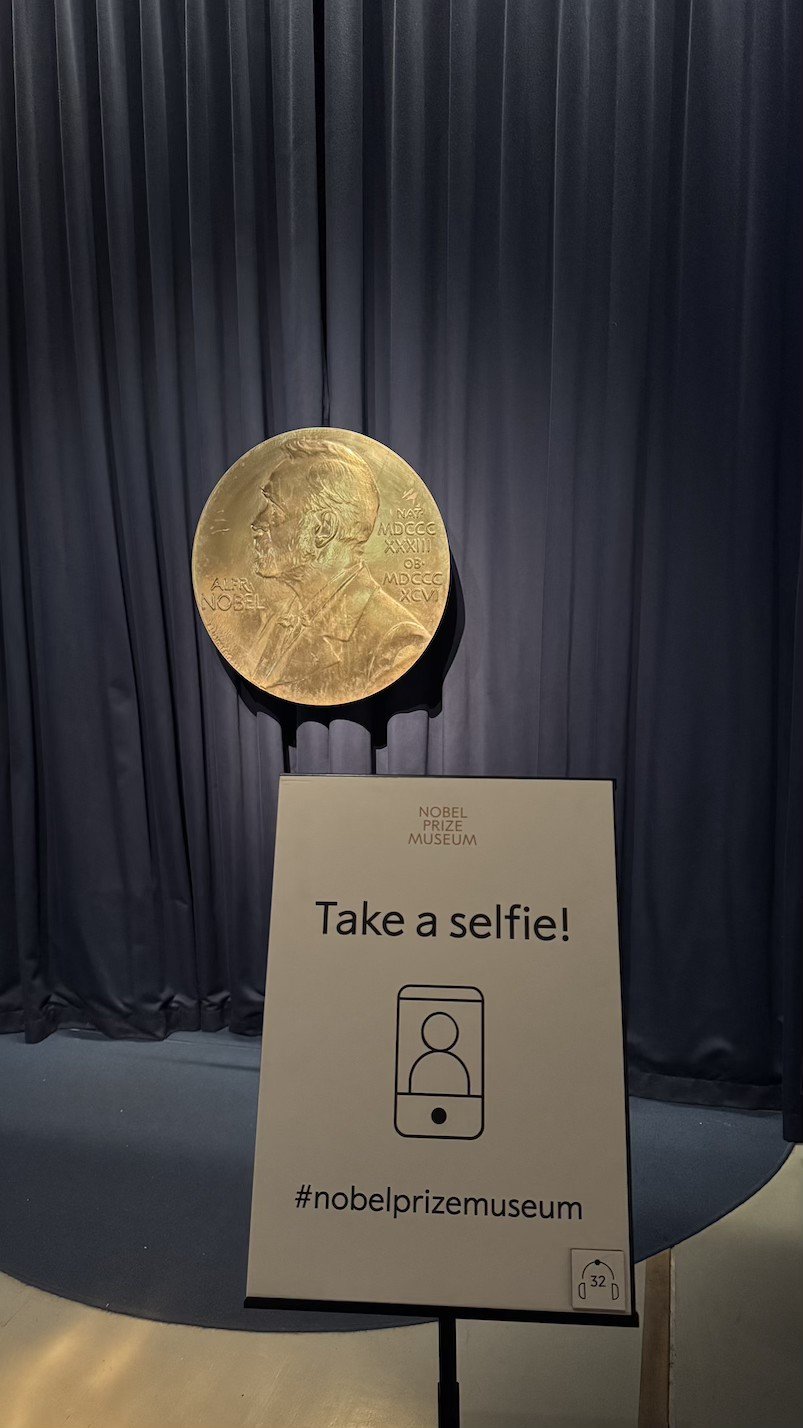
One tradition stuck with me more than any object case: at Bistro Nobel, the café inside the museum, every Nobel laureate who has eaten there has signed the underside of their chair. You can’t tell from the top which chairs carry a signature. Somehow that makes it better. Elsewhere in the museum, that giant gold replica of the Nobel medal hangs against a curtain with a simple sign: “Take a selfie!” It’s a small, unpretentious moment in a museum that could easily have taken itself too seriously.
Photo gallery
All photographs on this page were taken by Zayera Khan during a visit to the museum, and are her own property. Please do not reuse them without permission.
About Alfred Nobel
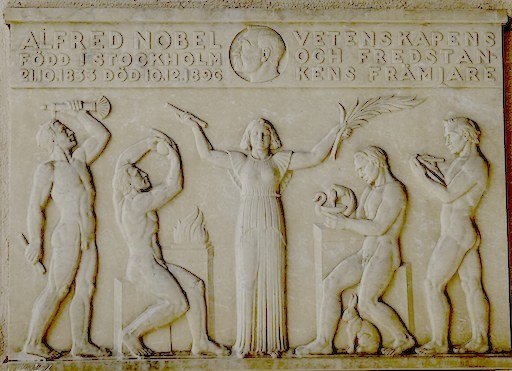
The museum tells the story of everyone who has won a Nobel Prize, but the man it’s named after is easy to walk past without a second thought. I’ve written his fuller story elsewhere – his life, the family’s business empire, how dynamite made him rich, and why he chose to leave his fortune to a set of prizes instead of to his relatives – in The Nobel Prize: Alfred Nobel, the Family Empire, and the Prizes That Shocked the World. Worth reading before or after your visit; the museum makes a lot more sense once you know what drove the man behind it.